.avif)



What Is an SQF Practitioner? Role, Requirements & Responsibilities


An SQF Practitioner is a qualified employee designated by a food facility to develop, implement, and maintain the site's SQF Food Safety Management System. Required by SQFI under Code Elements 2.1.1.4 and 2.1.1.5, the practitioner must have HACCP competency, a thorough understanding of the SQF Code, and is directly employed by the facility they serve.
What Is an SQF Practitioner?
SQF Practitioner Definition
The SQF Practitioner is the person inside your facility who owns your SQF Food Safety Management System. They are responsible for building it, implementing it, maintaining it between audits, and keeping your facility in compliance with the SQF Code year-round. If you want a broader foundation before diving into the practitioner role, start with our SQF certification guide or our full explainer on what is SQF.
The role is defined and required by the SQF Institute (SQFI), the body that administers the Safe Quality Food program. According to SQFI practitioner requirements, a practitioner must be a direct employee of the facility (not a contractor or external consultant) and must maintain documented competency in HACCP and the SQF Code applicable to their sector.
The practitioner is not the person who certifies your facility. That is the auditor, assigned by an independent certification body. The practitioner is your internal expert who ensures the program is audit-ready at all times.
Who Needs an SQF Practitioner?
Every facility seeking SQF certification needs a designated SQF Practitioner. This applies across all SQF sectors: food manufacturing, primary production, storage and distribution, food retail, and food packaging.
You cannot pursue or maintain SQF certification without formally designating a practitioner. SQFI requires facilities to identify this person by name in their SQF documentation and to keep that designation current. If your practitioner leaves, you must designate a replacement and notify your certification body.
For small facilities, the practitioner is often the food safety manager, quality manager, or plant manager. For larger operations, it may be a dedicated food safety role. The key requirement is that the person is employed by you and meets SQFI's qualification criteria.
SQF Practitioner vs. SQF Auditor vs. SQF Consultant
These three roles are the most frequently confused in the SQF ecosystem.
SQF Practitioner
- Works for: Your facility (internal employee)
- SQFI-required: Yes
- Certified by: Optional (CSP via Exemplar Global)
- Primary function: Build, implement, and maintain your SQF program
- Cost to facility: Salary/wages
SQF Auditor
- Works for: Certification body (independent)
- SQFI-required: N/A
- Certified by: SQFI-licensed CB
- Primary function: Conduct your third-party certification audit
- Cost to facility: Audit fees
SQF Consultant
- Works for: Their own firm (external)
- SQFI-required: No
- Certified by: Optional (SQFI-registered)
- Primary function: Advisory support for program development
- Cost to facility: Consulting fees
An SQF consultant can help you build your SQF program, develop documentation, and prepare for your first audit. What they cannot do is serve as your official SQF Practitioner. Per SQFI requirements, the practitioner must be directly employed by your facility. If an auditor discovers that your designated practitioner is an external contractor, that finding is treated as a major nonconformance.
SQF Practitioner Requirements (Edition 10)
Official SQFI Requirements
SQFI sets out the core requirements for practitioner designation in the SQF Code. To meet the official SQF practitioner training requirements, every practitioner must satisfy all of the following:
- Direct employment: The practitioner must be employed by the facility they serve. External consultants do not qualify.
- HACCP competency: The practitioner must have documented competency in HACCP principles, either through formal training or demonstrated, documented experience.
- SQF Code knowledge: They must have a thorough understanding of the SQF Code applicable to the site's sector and certification level.
- Recognized training: They must complete SQFI-recognized training. The primary course is "Implementing SQF Systems," available from multiple SQFI-approved providers.
- Senior management reporting: The practitioner must update senior management at least monthly on the status of the SQF program.
If your practitioner cannot demonstrate all five requirements with documentation, your facility is at risk during an audit. Auditors review practitioner qualification records as part of every certification audit. Keep training certificates, HACCP competency evidence, and your formal appointment letter in an easily accessible location.
SQF Edition 10 Changes for Practitioners
Edition 10 Update: SQF Edition 10 released in March 2026. Every SQF practitioner and certified facility should review the updated Code before their next audit cycle. At time of publication, the core practitioner qualification requirements under Sections 2.1.1.4 and 2.1.1.5 remain in effect. SQFI has not yet released a formal edition-to-edition comparison document for practitioners, so monitor SQFI.com for updated guidance as the Edition 10 rollout progresses. Check with your certification body for the transition timeline that applies to your audit schedule.
All facilities currently certified under Edition 9 should confirm what transition requirements apply and when Edition 10 compliance becomes mandatory. Being the first to update your program documentation to Edition 10 standards gives you an advantage during your next audit cycle.
Can a Facility Have Multiple SQF Practitioners?
Yes. The SQF Code allows you to designate more than one practitioner, and for most medium-to-large facilities, having multiple practitioners is a practical necessity.
SQFI also requires that you have a designated substitute practitioner: someone who can assume practitioner responsibilities when the primary practitioner is unavailable due to vacation, illness, or turnover. The substitute must meet the same qualification requirements as the primary practitioner. A placeholder with no SQF training does not satisfy this requirement.
Multi-site operations typically have a practitioner at each facility, plus a corporate-level food safety manager coordinating across locations. Each site practitioner is responsible for the SQF program at their specific site, not the broader organization.
SQF Practitioner Designation Checklist
Before formally designating someone as your SQF Practitioner, verify the following items. Gaps in any of these areas create audit exposure.
- The individual is a direct employee of the facility (not a contractor or third-party consultant)
- Documented HACCP training certificate or evidence of demonstrated HACCP competency is on file
- Completion certificate for "Implementing SQF Systems" or equivalent SQFI-recognized training is on file
- The individual has reviewed the SQF Code applicable to your facility's sector and certification level
- Senior management has formally appointed them in writing as the SQF Practitioner
- A substitute practitioner has been identified and meets the same qualification requirements
- The designation is reflected in your SQF documentation and communicated to your certification body
SQF Practitioner Responsibilities: What Do They Actually Do?
Daily Responsibilities
On a day-to-day basis, your SQF Practitioner is overseeing the living infrastructure of your food safety program. That includes:
- Reviewing and approving incoming food safety records: CCP monitoring logs, sanitation records, allergen checks, and GMP verification
- Addressing corrective actions (CAPAs) raised by the production floor or QA team
- Maintaining document control across SOPs, work instructions, and program records so that current versions are in use and obsolete documents are removed
- Training new employees on food safety SOPs and verifying that training completion is documented
For facilities with active production schedules, the practitioner is often the first call when something goes wrong. That might be a failed CCP, a foreign material find, or a supplier nonconformance. They determine whether an incident requires a product hold, a CAPA, or escalation to senior management.
Monthly Responsibilities
The SQF Code requires your practitioner to update senior management at least monthly on the status of the SQF program. This is a documented requirement that auditors verify, not a best practice. Monthly responsibilities typically include:
- Preparing and presenting the SQF program status report to senior management
- Reviewing internal monitoring data: CCP log trends, environmental monitoring results, and customer complaint patterns
- Updating or reviewing prerequisite programs: GMPs, sanitation, pest control, allergen management, and food defense plans
- Checking that calibration schedules are being followed for critical equipment
Monthly reporting is one of the most commonly cited nonconformances during SQF audits. Practitioners who document their monthly management updates consistently and keep records accessible take one of the biggest audit risks off the table. You can also find supporting structure in the SQF audit checklist to keep your monthly reviews aligned with what auditors look for.
Quarterly and Annual Responsibilities
On a longer cycle, your practitioner is responsible for the program-level reviews and audit preparation activities that keep your certification intact:
- Internal audits: Facilitating or conducting internal SQF program audits covering all Code elements applicable to your sector. For a detailed walkthrough of what this involves, see our guide on how to pass an SQF audit.
- Management reviews: Participating in formal management review meetings where food safety performance data, audit results, customer feedback, and program changes are discussed and documented
- Recertification audit preparation: Coordinating document readiness, scheduling mock audits if needed, and briefing the operations team before the certification body arrives
- Supplier qualification reviews: Reviewing and updating your approved supplier list, ensuring current certificates of analysis, food safety certifications, and supplier questionnaires are on file per the SQF Code guidance documents and checklists
SQF Practitioner Annual Responsibility Calendar
- January: Year-opening management review; annual training plan; supplier certificate renewal tracking
- February: Q1 internal audit schedule; update food defense plan if applicable
- March: SQF Code review (Edition 10 update review); prerequisite program review
- April: Q1 internal audit execution; CAPA follow-up verification
- May: Mid-year management update; allergen program review
- June: Supplier qualification review; mock audit preparation if recertification is due Q3
- July: Environmental monitoring trend review; GMP walkthrough
- August: Q3 internal audit; HACCP plan annual verification
- September: Recertification audit preparation; document control review
- October: Post-audit CAPA implementation (if applicable); staff retraining
- November: Annual program review; year-end management report
- December: SOP updates; substitute practitioner competency check; next-year audit scheduling
HACCP Competency: The Foundation of the SQF Practitioner Role
Why HACCP Competency Is Mandatory
HACCP competency is not optional for SQF practitioners. SQF Code Elements 2.1.1.4 and 2.1.1.5 require it directly, and the reason is structural: the SQF Food Safety Management System is built on a HACCP foundation.
Your practitioner needs to understand HACCP principles well enough to develop, implement, verify, and update a HACCP plan for your facility. The Codex Alimentarius HACCP guidelines define the seven HACCP principles that form the basis of every credible food safety management system. Your practitioner should be able to apply all seven to your specific processes and products.
If your practitioner cannot explain the difference between a Critical Control Point and a control point, or cannot identify your facility's critical limits with confidence, that is a gap auditors will find. It may also be a gap that leaves your program vulnerable to real food safety failures between audits.
What "HACCP Competency" Means in Practice
There is a meaningful difference between attending a HACCP training course and being HACCP competent. SQFI recognizes this distinction in how they evaluate practitioner qualifications.
Attending a two-day HACCP course gives you the certificate. Demonstrating HACCP competency means you have applied those principles to your actual facility: your products, processes, hazards, and critical limits. Getting the certificate and knowing how to apply the principles on your production floor are two different things.
Auditors may ask your practitioner to walk through your HACCP plan, explain how critical limits were determined, or describe how monitoring procedures function on the production floor. A practitioner who participated in building the plan can answer those questions. A practitioner who only reviewed a plan built by a consultant often cannot.
A strong practitioner either authored your HACCP plan directly or was closely involved in its development and verification. Keep documentation that shows the practitioner's role in HACCP plan authorship; this is the evidence that demonstrates genuine competency, not just certificate possession.
Accepted HACCP Qualifications
SQFI accepts several forms of HACCP qualification for practitioner designation:
- Formal HACCP training from an SQFI-recognized provider or accredited food safety training body
- PCQI training (Preventive Controls Qualified Individual under FSMA); PCQI training covers HACCP principles comprehensively and is widely accepted as meeting SQFI's HACCP competency requirement
- Demonstrated experience with documented evidence; this applies to practitioners who have built and maintained HACCP plans over years of hands-on experience, even without a recent formal training certificate
If your designated practitioner holds a current PCQI certificate, you are in a strong position. PCQI training under FDA requirements and the HACCP requirements in the SQF Code overlap significantly, and most SQFI-recognized training providers recognize PCQI as satisfying the HACCP competency prerequisite.
SQF Practitioner Training and Certification Options
Mandatory Training: "Implementing SQF Systems" Course
The "Implementing SQF Systems" course is the standard training pathway for SQF practitioners. SQFI requires practitioners to complete this course, or an equivalent it recognizes, before being formally designated.
The course covers the SQF Code structure, how to develop and document SQF program elements, and how to prepare for a certification audit. It is available in multiple delivery formats:
- Self-paced online: Typically 8-16 hours of content; most flexible option for professionals balancing training with operational duties
- Instructor-led virtual: Live sessions run over one to two days with real-time Q&A
- In-person: Offered periodically by approved providers; allows for hands-on application exercises
SQFI-approved providers for "Implementing SQF Systems" include NSF, Zosi Learning, Registrar Corp, Eurofins, and AIB International. Prices and schedules vary by provider and format. Check SQFI.com for the current approved provider list and available dates.
The Certified SQF Practitioner (CSP) Credential
The Certified SQF Practitioner credential is optional but increasingly valued in the industry. It is administered through Exemplar Global and demonstrates that the practitioner passed a formal competency exam covering the SQF Code.
The CSP is not required for SQFI compliance. Facilities can designate a practitioner without it. The credential signals to auditors, senior management, and prospective employers that the practitioner has validated Code knowledge beyond completing a training course.
To earn the CSP, you must meet SQFI's prerequisites and pass the exam. The Certified SQF Practitioner Examinee Guide outlines the exam format, blueprint, passing requirements, and renewal process. Credential renewal requires continuing education to keep knowledge current as new editions of the Code are released.
Advanced SQF Practitioner Designation
SQFI offers an Advanced SQF Practitioner designation for practitioners who have demonstrated a higher level of knowledge and experience with the Code. This designation requires passing an additional exam and typically applies to practitioners working in more complex food manufacturing environments.
The Advanced designation is relevant if you work in a high-complexity or multi-standard facility, or if you are building toward a senior food safety leadership role. It differentiates practitioners in competitive hiring markets and in facilities where auditors expect deeper Code mastery.
How Long Does It Take to Become an SQF Practitioner?
- "Implementing SQF Systems" course: 1-2 days instructor-led or 1-2 weeks self-paced online
- HACCP training (if needed): An additional 1-2 days for a formal HACCP course
- Facility implementation: Reviewing and documenting your facility's SQF program elements typically adds 4-8 weeks for an existing program; longer for first-time implementations
For practitioners at facilities with an established SQF program, formal designation can happen quickly once training is complete. For facilities implementing SQF for the first time, plan for a more significant ramp-up period before your facility is audit-ready.
How Much Does SQF Practitioner Training Cost?
- Free: SQFI provides guidance documents, checklists, and Code documents on SQFI.com at no cost. These are essential references but not a substitute for the required formal training.
- $300-$800: Most individual "Implementing SQF Systems" courses from approved providers fall in this range, depending on format and provider.
- $599+: Full SQF template packages from third-party consulting firms typically start around $599 and scale up based on scope and customization.
- CSP exam fee: Separate from training costs; check Exemplar Global's current pricing for exam registration and renewal fees.
For facilities new to SQF, the "Implementing SQF Systems" course is the required baseline investment. The CSP exam is a discretionary cost most practitioners pursue after gaining practical implementation experience on the floor.
SQF Practitioner Within the GFSI and Regulatory Framework
SQF as a GFSI-Benchmarked Standard
SQF is one of the few food safety standards fully benchmarked by the Global Food Safety Initiative (GFSI). GFSI benchmarking means the SQF program has been independently evaluated against GFSI's requirements, meaning facilities certified under SQF are recognized as meeting the food safety standards required by most major retailers and foodservice buyers.
For practitioners, GFSI benchmarking raises the bar beyond basic regulatory compliance. It also means that if your facility later pursues another GFSI-benchmarked certification scheme like BRCGS or FSSC 22000, your SQF experience translates directly to those programs.
The practitioner-equivalent roles across the major GFSI standards:
SQF
- Equivalent role: SQF Practitioner
- Employment requirement: Must be employed by facility
- Certification required: Optional (CSP)
BRCGS
- Equivalent role: Food Safety Manager / HACCP Team Leader
- Employment requirement: Internal; consultant support permitted
- Certification required: BRCGS-recognized training
FSSC 22000
- Equivalent role: Food Safety Team Leader
- Employment requirement: Internal
- Certification required: ISO 22000-recognized training
If your facility holds or pursues BRCGS certification or is navigating FSSC 22000 requirements, your SQF practitioner's skills map directly to those program manager roles.
SQF Practitioner and FSMA Compliance
One of the most underappreciated overlaps in food safety management is between the SQF Practitioner role and the FDA's Preventive Controls Qualified Individual (PCQI) requirement under the FDA Food Safety Modernization Act (FSMA).
Under 21 CFR Part 117 food safety requirements, US food facilities subject to FSMA's preventive controls rule must have a PCQI oversee their food safety plan, covering hazard analysis, preventive controls, monitoring, and corrective actions. The SQF Practitioner is responsible for comparable documentation under the SQF Code.
Can one person serve as both the SQF Practitioner and the PCQI? Yes, and for most facilities, this is the standard setup. The PCQI and SQF Practitioner roles have complementary responsibilities, and the documentation they require overlaps significantly. If your practitioner is not yet PCQI-qualified, investing in PCQI training efficiently satisfies both SQFI's HACCP competency requirement and FSMA's qualified individual requirement in a single training pathway.
Multi-Certification Scenarios
Many food manufacturers hold or pursue multiple certifications simultaneously: SQF plus BRCGS, SQF plus ISO 22000, or SQF alongside a customer-specific audit protocol. This is increasingly common as retailer and foodservice customers require compliance with multiple schemes.
In multi-certification facilities, the SQF Practitioner often manages the food safety program elements that satisfy multiple standards. A well-integrated food safety management system that aligns SQF, FSMA, and BRCGS requirements avoids documentation duplication and makes it feasible for one practitioner to manage the combined program. Building that kind of integrated system also strengthens your food safety culture by creating consistent processes across departments rather than separate compliance silos.
SQF Practitioner Salary and Career Path
Typical Job Titles That Hold the SQF Practitioner Designation
SQF Practitioner is a designation, not a job title. The people who hold it typically carry one of these titles: Food Safety Manager, Quality Assurance Manager / QA Manager, FSQA Manager, Quality Systems Manager, FSQA Coordinator, or Plant Manager (at smaller facilities).
The job title reflects your organizational structure. The SQF Practitioner designation reflects your SQFI qualification status. Both matter to auditors reviewing your program, but only the designation has a formal SQFI requirement attached to it. Make sure your appointment letter, program documentation, and audit records all use consistent language when referencing your practitioner.
SQF Practitioner Salary Range
- QA Coordinator / FSQA Coordinator: $50,000-$70,000
- Food Safety Manager / QA Manager: $65,000-$95,000
- FSQA Director / VP of Quality Assurance: $95,000-$130,000+
Holding the Certified SQF Practitioner (CSP) credential, combined with PCQI certification and multi-standard program experience, positions food safety professionals at the higher end of these ranges. Facilities managing complex SQF programs or holding multiple GFSI certifications actively seek practitioners with verified credentials and documented audit track records.
Career Path: From SQF Practitioner to FSQA Leader
QA Technician / Food Safety Technician: floor-level HACCP application and SOP compliance
SQF Practitioner / FSQA Coordinator: formal training completed; leading the facility's SQF program
Food Safety Manager / QA Manager: managing the broader quality system; holding CSP and PCQI credentials; leading internal audit programs
FSQA Director / VP of Quality: strategic oversight of multi-site or multi-standard programs; direct senior management reporting
One of the most valuable aspects of SQF practitioner experience is its transferability. A practitioner who has implemented and maintained a full SQF program has directly applicable skills for BRCGS, FSSC 22000, and ISO 22000 programs. That cross-scheme competency broadens career opportunities across the food industry and positions practitioners well for director-level roles as their facilities scale.
How Technology Helps SQF Practitioners Stay Audit-Ready
Document Control for SQF Practitioners
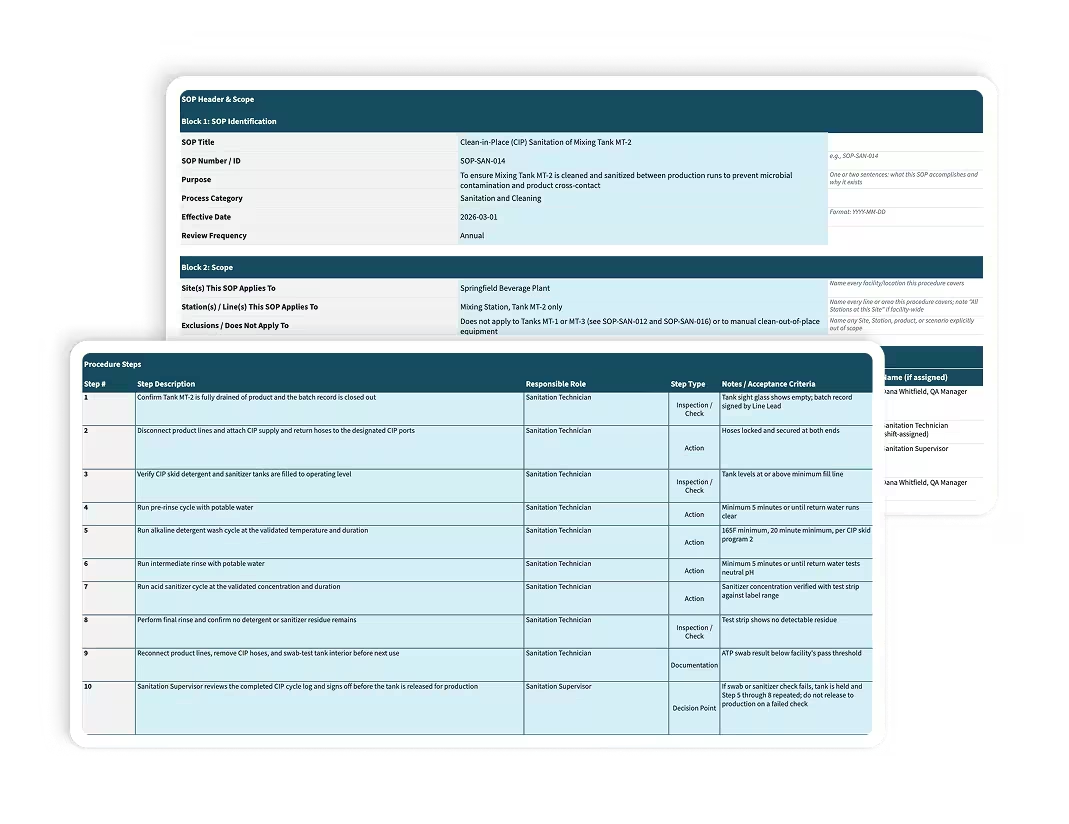
Document control is one of the heaviest operational burdens for SQF practitioners, and it is one of the most common sources of audit nonconformances. The SQF Code (Section 2.1) requires all program documentation to be current, version-controlled, accessible to relevant personnel, and cleared of obsolete versions.
Managing that across paper-based systems is difficult at any facility size. Version drift, where different departments operate from different versions of the same SOP, is a recurring finding during SQF audits. Missing signatures on training records, lost calibration logs, and SOPs that have not been reviewed in years are all issues paper systems routinely produce.
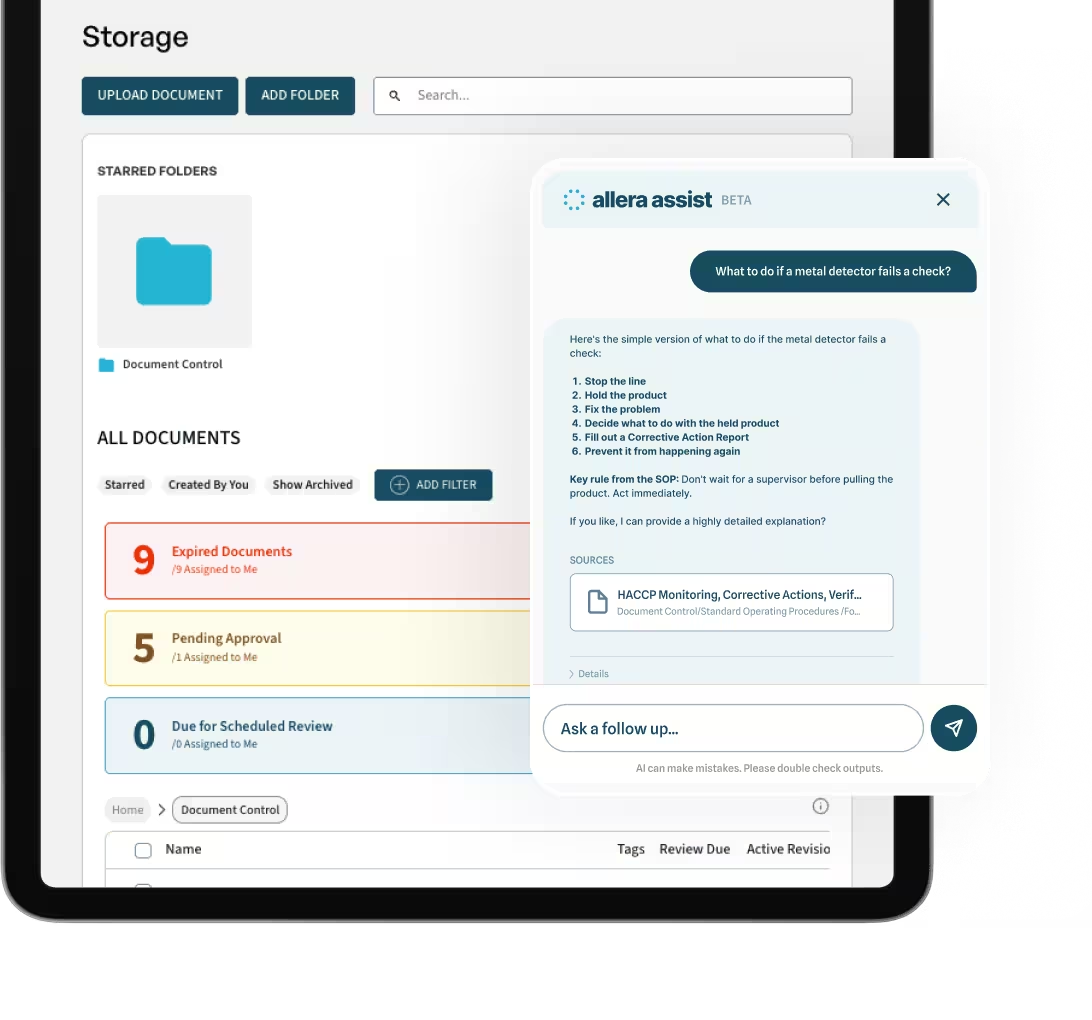
Document control software built for food safety programs keeps all SOPs, work instructions, and program records in a single controlled environment. When auditors review your SQF program, they get immediate access to current, signed, version-controlled records. That removes one of the most stressful variables from your certification audit.
Digital Forms and FSQA Records
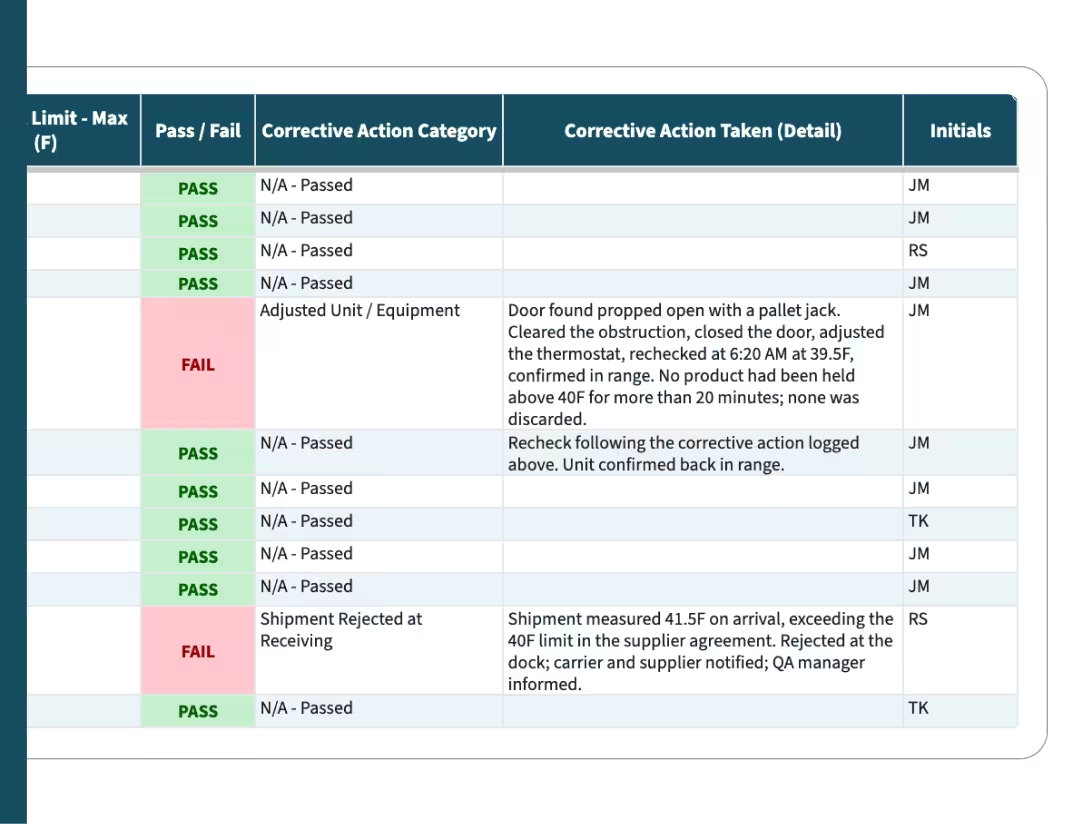
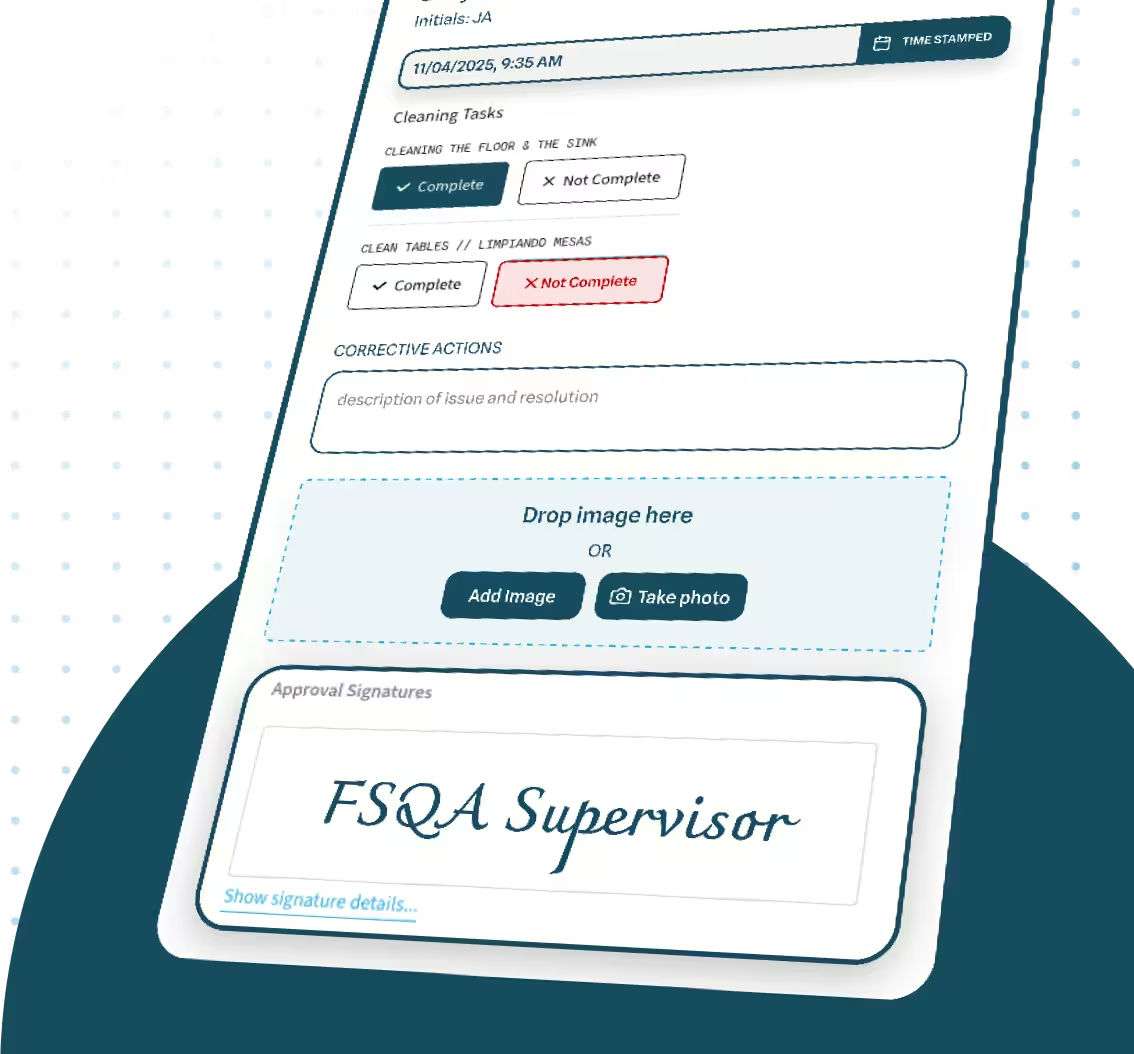
Paper logs create risk in SQF programs. They can be filled in retrospectively, they are difficult to trend, and retrieving 30 days of CCP monitoring records during an audit can take hours. Moving your GMP verification logs, sanitation records, allergen checks, and CCP monitoring to digital forms changes the audit experience significantly.
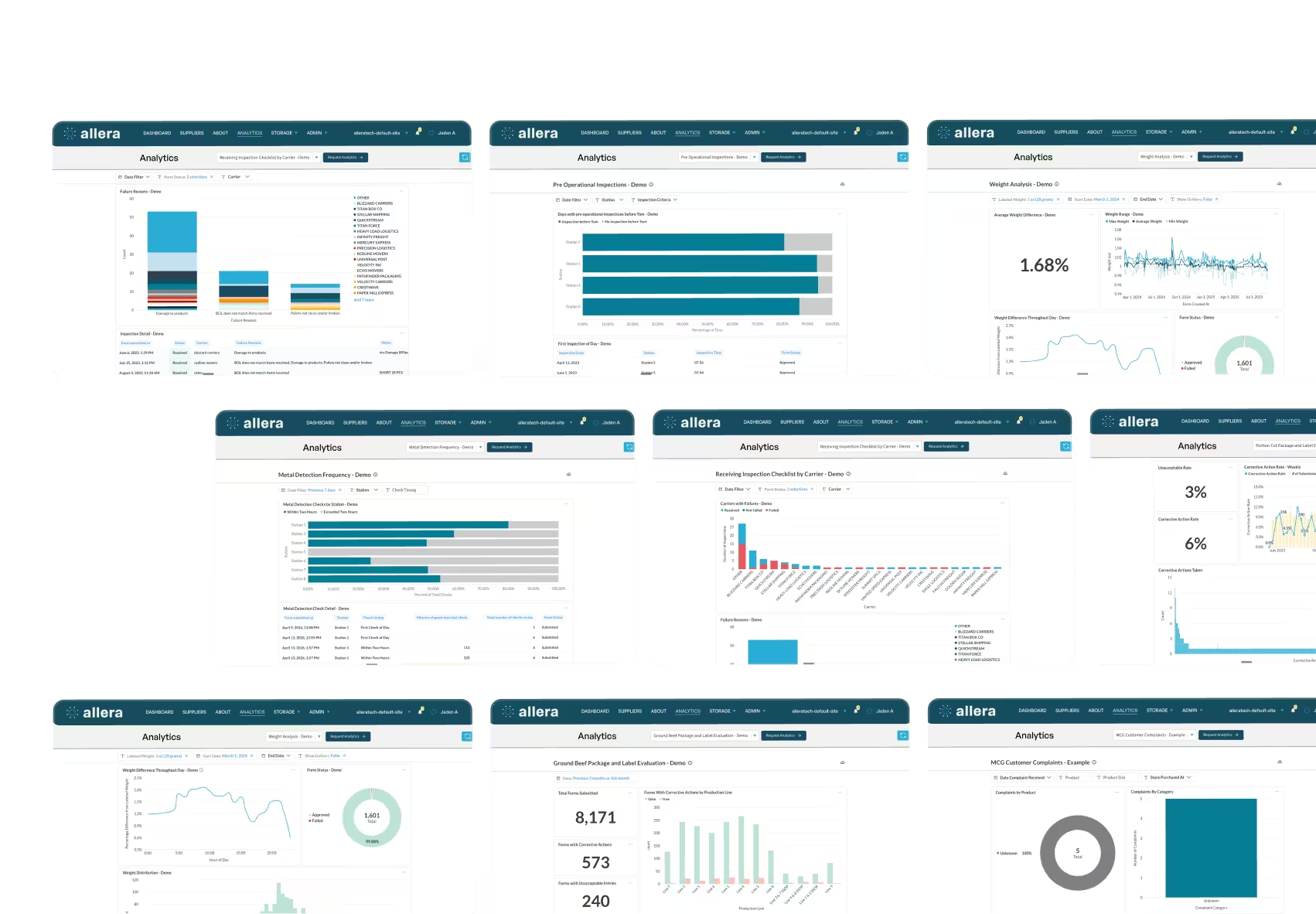
Digital forms linked to your SQF program requirements capture monitoring data in real time, automatically dated and timestamped, and instantly retrievable. When an auditor requests the last 30 days of CCP records, your practitioner can pull them in seconds. When a trend emerges in your sanitation data, your practitioner can identify it before it becomes an audit finding. Using SQF software for food manufacturers that integrates digital forms with your broader program turns daily compliance activity into automatically organized audit evidence. Our broader food safety software guide covers what to look for when evaluating platforms for SQF and FSMA programs.
Supplier Management for Approved Supplier Programs
The SQF Code requires every practitioner to maintain an approved supplier program. That means keeping current documentation on every supplier of food, food packaging, food contact materials, and key services: certificates of analysis, food safety certifications, supplier questionnaires, and audit results. Per the SQF Food Manufacturing Checklist, supplier documentation is a core element auditors verify at every certification audit.
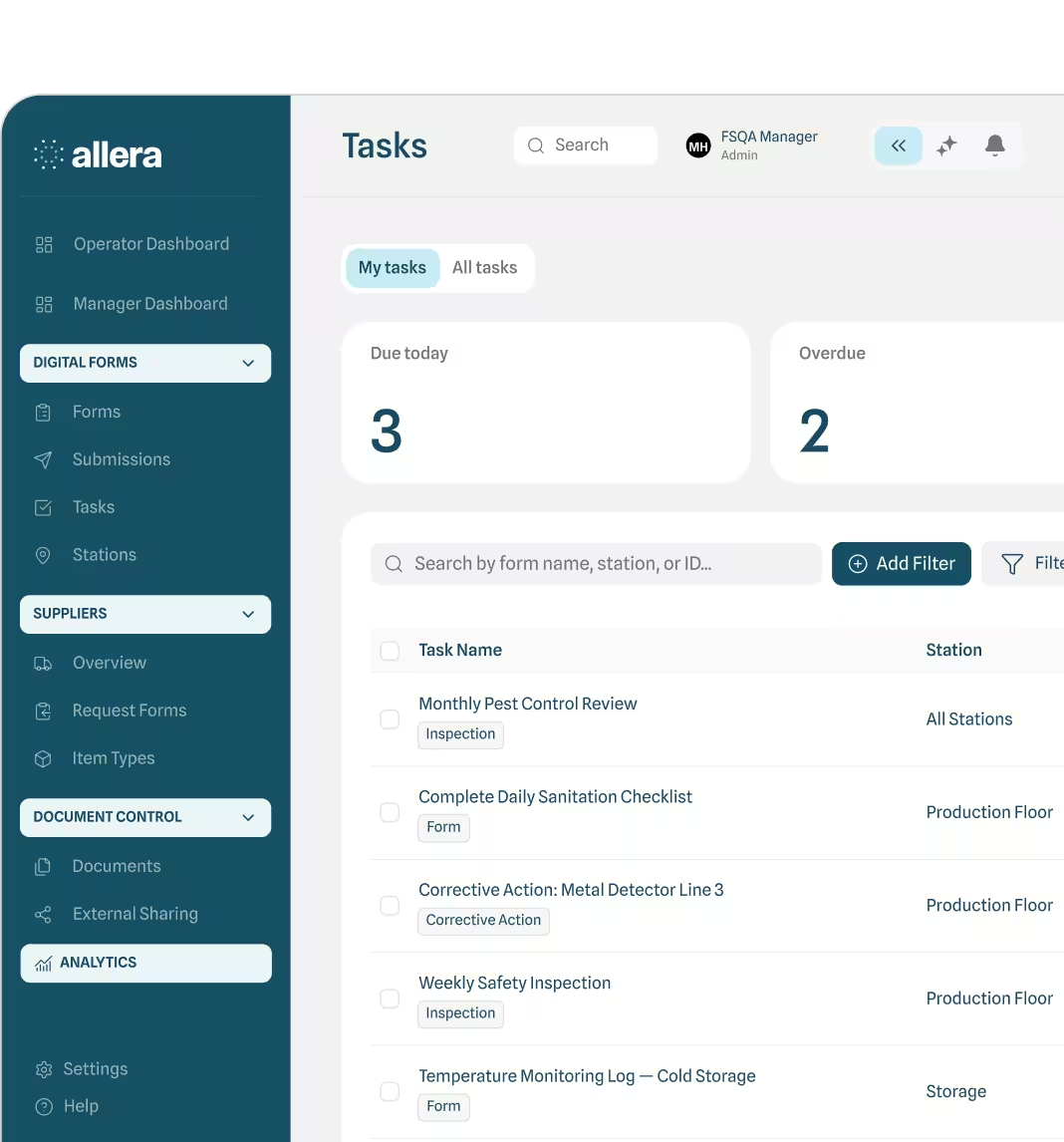
For most facilities, supplier documentation is one of the hardest things to keep current. Certificates expire, questionnaires go unanswered, and manually following up with dozens of suppliers drains practitioner time that should go toward program management. A digital supplier management system automates tracking of supplier documentation, sends renewal reminders before certificates expire, and keeps all supplier records organized and audit-ready at all times.
Allera's document control and supplier management tools were built for food safety teams managing SQF programs year-round, not just during audit season. See how it works. [Schedule a Demo]
Frequently Asked Questions About SQF Practitioners
Q: What is an SQF practitioner?
An SQF Practitioner is a qualified, facility-employed individual responsible for developing, implementing, and maintaining the site's SQF Food Safety Management System under the SQF Code. They must be directly employed by the facility, hold documented HACCP competency, and have completed SQFI-recognized training. Every facility pursuing SQF certification is required to formally designate one.
Q: How do you become an SQF practitioner?
You must be employed by the facility, hold documented HACCP competency, complete SQFI-recognized training (the standard course is "Implementing SQF Systems"), and be formally designated by senior management in writing. There is no mandatory exam for designation. The optional Certified SQF Practitioner (CSP) credential through Exemplar Global is recommended for practitioners who want to validate their knowledge with a formal credential.
Q: What does an SQF practitioner do?
They develop and maintain all SQF program documentation, conduct or coordinate internal audits, manage corrective actions (CAPAs), train employees on food safety SOPs, maintain the approved supplier program, and update senior management monthly on the SQF program's status. On a daily basis, they review monitoring records, address nonconformances as they arise, and keep document control current across all SQF-required records.
Q: What is the difference between an SQF practitioner and an SQF auditor?
An SQF Practitioner is an internal employee who manages your facility's SQF program day-to-day. An SQF Auditor is an independent third party, assigned by an SQFI-licensed certification body, who conducts your certification audit. These are separate roles with a built-in independence requirement: you cannot hire your own auditor, and an auditor cannot simultaneously serve as your practitioner.
Q: What is the difference between an SQF practitioner and an SQF consultant?
An SQF Consultant is an external advisor who helps build your SQF program, develops documentation, and prepares you for audits. A consultant can also be SQFI-registered. The critical distinction is employment: per SQFI requirements, the official SQF Practitioner must be directly employed by your facility. A consultant cannot serve as your designated practitioner regardless of their credentials or SQFI registration status.
Q: How much does it cost to become an SQF practitioner?
Training costs range from free to $300-$800 for the "Implementing SQF Systems" course from an approved provider. SQFI guidance documents and Code documents are available at SQFI.com at no cost, but these are reference materials rather than a substitute for formal training. The optional CSP exam through Exemplar Global carries a separate registration fee. Full SQF template packages from third-party consultants typically start at $599, and HACCP training adds another $200-$500 depending on provider and format.
Q: How long does it take to become an SQF practitioner?
The "Implementing SQF Systems" course takes 1-2 days in instructor-led format or 1-2 weeks self-paced online. Adding HACCP training if needed takes another 1-2 days. Most practitioners are formally designated within 4-8 weeks of beginning preparation, though first-time SQF implementations at facilities building a program from scratch typically require a longer runway before the site is audit-ready.
Q: Can a facility have more than one SQF practitioner?
Yes. The SQF Code allows multiple practitioners and requires a designated substitute practitioner who can assume responsibilities during absences. The substitute must meet the same qualification requirements as the primary practitioner; a backup with no SQF training does not satisfy this requirement. Large facilities and multi-site operations frequently have more than one fully qualified practitioner.
Q: What HACCP training qualifies for SQF practitioner designation?
SQFI accepts formal HACCP training from recognized providers, PCQI training under FSMA's preventive controls rule, or demonstrated HACCP experience with documented evidence of competency. If you hold a current PCQI certificate, it satisfies SQFI's HACCP competency requirement. SQFI maintains a list of accepted training programs and recognized providers on SQFI.com, and your certification body can also advise on what qualifications are accepted in your sector.
Q: What changed for SQF practitioners in Edition 10?
SQF Edition 10 was released in March 2026. At the time of publication, SQFI has not released a complete practitioner-focused edition-to-edition comparison document. The core practitioner designation requirements under Code Elements 2.1.1.4 and 2.1.1.5 remain in effect under Edition 10. All facilities should review the full Edition 10 Code text, confirm the transition timeline with their certification body, and update their practitioner qualification documentation accordingly. SQFI.com is the authoritative source for Edition 10 updates as they are published.
SQF certification is not a one-time event. Your practitioner needs to maintain the program every day. Allera gives SQF practitioners the document control, digital forms, and supplier management tools to stay audit-ready year-round. [Book a Free Demo]
FAQs

.avif)
.avif)
.avif)
.avif)
%20(1).avif)
.avif)
.avif)

%20(1).png)

.avif)



.avif)