.avif)



SQF Certification Levels Explained: Fundamentals, Food Safety & Quality (2026 Guide)

SQF (Safe Quality Food) certification has three levels: SQF Fundamentals, SQF Food Safety (Code), and SQF Food Safety and Quality (Code). Each level builds on the last in complexity, documentation requirements, and audit rigor. Levels 2 and 3 are recognized by the Global Food Safety Initiative (GFSI) and are most commonly required by major retailers and food buyers.
SQF Fundamentals
- GFSI recognized? No
- Primary focus: Food safety basics
- Best for: Small/developing suppliers
- Typical cost: $5K–$15K
- Audit duration: 1 day
SQF Food Safety
- GFSI recognized? Yes
- Primary focus: Full HACCP-based system
- Best for: Most food manufacturers
- Typical cost: $10K–$35K
- Audit duration: 1–2 days
SQF Food Safety & Quality
- GFSI recognized? Yes
- Primary focus: Safety + quality management
- Best for: Advanced quality programs
- Typical cost: $25K–$60K+
- Audit duration: 2–3 days
What Are the SQF Certification Levels?
The SQF program started in Australia in 1994 as a farm-to-fork food safety certification system. The Food Marketing Institute (FMI) adopted it in 2003, and the SQF Institute (SQFI) now manages the program and publishes the SQFI Food Safety Certification Programs that define each certification level.
The three-level structure exists because not every food operation has the same risk profile or food safety maturity. A small farm selling to a regional distributor has different needs than a large-scale manufacturer supplying Walmart or Costco. The tiered system lets you pursue certification that matches your current capabilities, buyer requirements, and growth plans.
Under the SQF Code, each level represents a distinct certification scope. Level 1 covers food safety fundamentals. Level 2 adds a full HACCP-based food safety management system. Level 3 layers quality management on top of everything in Level 2. You can start at any level, though most facilities begin with Level 2 since that is where GFSI recognition starts.
For a broader look at the SQF program, including implementation and maintenance, check out the complete SQF certification guide. If you are a food manufacturer evaluating SQF for the first time, our guide to SQF for food manufacturers walks through the full process.
Which SQF Certification Level Do I Need?
Choosing the right SQF level depends on three factors: what your buyers require, your operation type, and your current food safety maturity. Here is a straightforward framework to help you decide.
The Decision Framework
Start with your buyer requirements. If your customer or retailer requires GFSI recognition, Level 1 (Fundamentals) is off the table. You need Level 2 at minimum. If your buyer specifically requires a quality management system on top of food safety, you need Level 3.
If you are a small supplier just starting your food safety journey and your buyers do not require GFSI recognition, Level 1 (Fundamentals) gives you a solid baseline. It demonstrates commitment to food safety without the full HACCP system investment.
If quality management and continuous improvement are strategic priorities for your business, or your customers include premium brands and major food companies with elevated quality standards, Level 3 is the right target.
Retailer and Buyer Requirements by Level
Regional distributors, small grocery chains
- Typical minimum level required: Level 1 or Level 2
Walmart, Costco, Kroger, major grocery retailers
- Typical minimum level required: Level 2 (GFSI-recognized)
Premium brands, major food companies (co-pack/contract manufacturing)
- Typical minimum level required: Level 3
Foodservice distributors (Sysco, US Foods)
- Typical minimum level required: Level 2
Most major grocery retailers require at minimum a GFSI-recognized certification, which means Level 2 or higher. Some buyers will accept Level 1 for low-risk products, but this is becoming less common. For more context on retailer GFSI expectations, see the Food Marketing Institute research reports.
Operation Type and Risk Level
Your operation type also points you toward the right level:
- Primary production (farms, growing operations): Often start at Fundamentals (Level 1), especially for low-risk commodities.
- Food manufacturing and processing: Level 2 minimum. This is the most common SQF certification level for manufacturers.
- Packaging, storage, and distribution: Level 2.
- Advanced quality-focused manufacturers and co-packers: Level 3, particularly when serving customers with formal quality agreements.
SQF Level 1: Fundamentals — Requirements and What to Expect
What SQF Fundamentals Covers
SQF Fundamentals is the entry point to the SQF program. It focuses on food safety basics: good manufacturing practices (GMP), sanitation programs, and basic hazard controls. The SQF Code's Fundamentals modules cover management commitment, document control, and core food safety practices.
The critical limitation to understand: SQF Fundamentals is not GFSI-recognized. If your buyers require GFSI benchmarking, Fundamentals will not satisfy that requirement. The program is designed for new-to-certification suppliers, low-risk operations, and small businesses building their food safety foundation before advancing to Level 2.
SQF Fundamentals Audit Requirements
The Fundamentals audit uses a verification assessment format rather than a full third-party certification audit. SQFI provides free self-assessment templates (available as DOCX downloads) to help you prepare. The typical audit takes one day and uses a percentage-based scoring system with a minimum passing threshold.
Your assessor will review your documented programs, walk the facility, and verify that your food safety fundamentals are implemented and maintained. The verification assessment is less intensive than a Level 2 or 3 audit, but it still requires documented evidence of your food safety programs.
SQF Fundamentals Documentation Requirements
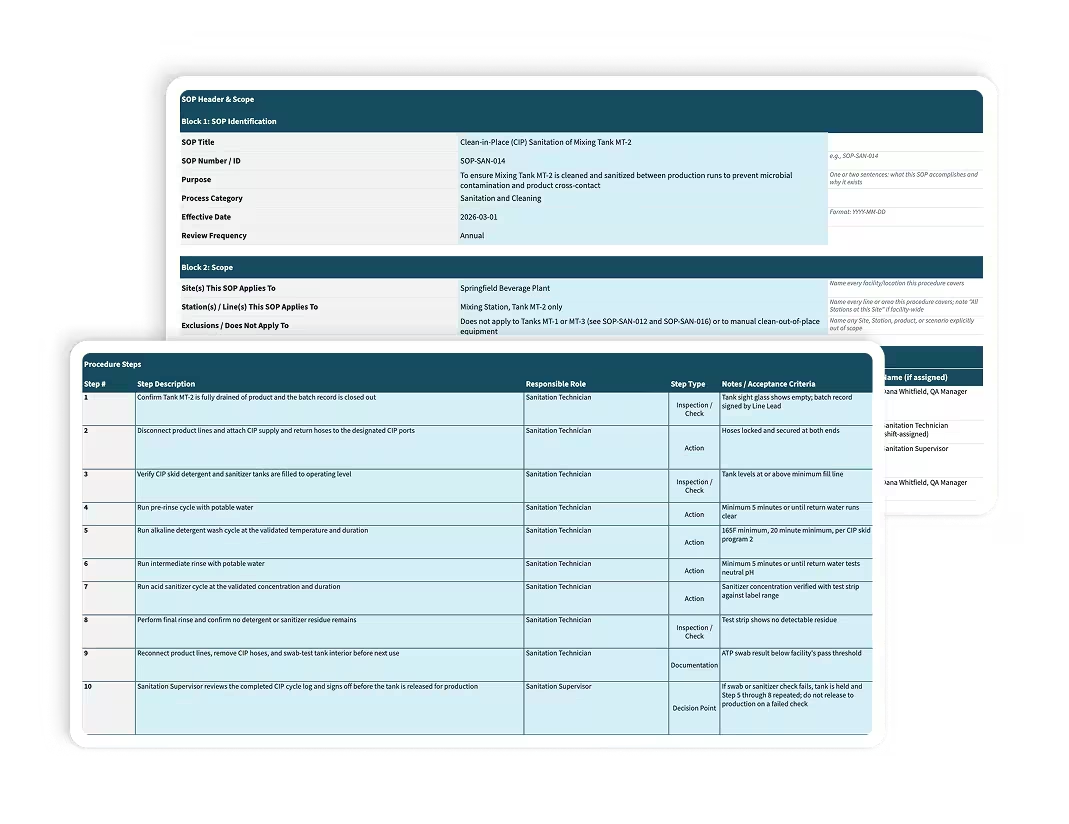
Even at Level 1, you need organized records. Your documentation package should include your food safety policy, sanitation procedures, pest control records, employee training logs, and basic supplier records.
Managing these records manually with binders and spreadsheets works at the Fundamentals level, but it becomes unsustainable if you plan to advance to Level 2. Many facilities start with document control software early to build good habits and make the Level 2 transition smoother.
SQF Level 2: Food Safety Code — Requirements and What to Expect
What SQF Food Safety Code Covers
Level 2 is where most food manufacturers land. It requires a full HACCP-based food safety management system built on the Codex HACCP guidelines (CXC 1-1969). The SQF Code organizes Level 2 requirements into mandatory modules that apply to every certified site, plus sector-specific modules for manufacturing, primary processing, packaging, storage, and distribution.
Level 2 is GFSI-recognized, which is the key differentiator from Fundamentals. This means major retailers and food buyers accept SQF Level 2 as meeting the GFSI benchmarking requirements under the GFSI-benchmarked scheme recognition framework.
Mandatory Requirements at Level 2
Your Level 2 system must include:
- Management system: A formal food safety policy with defined responsibilities and a designated SQF Practitioner.
- Good manufacturing practices (GMP): Documented and implemented across your facility.
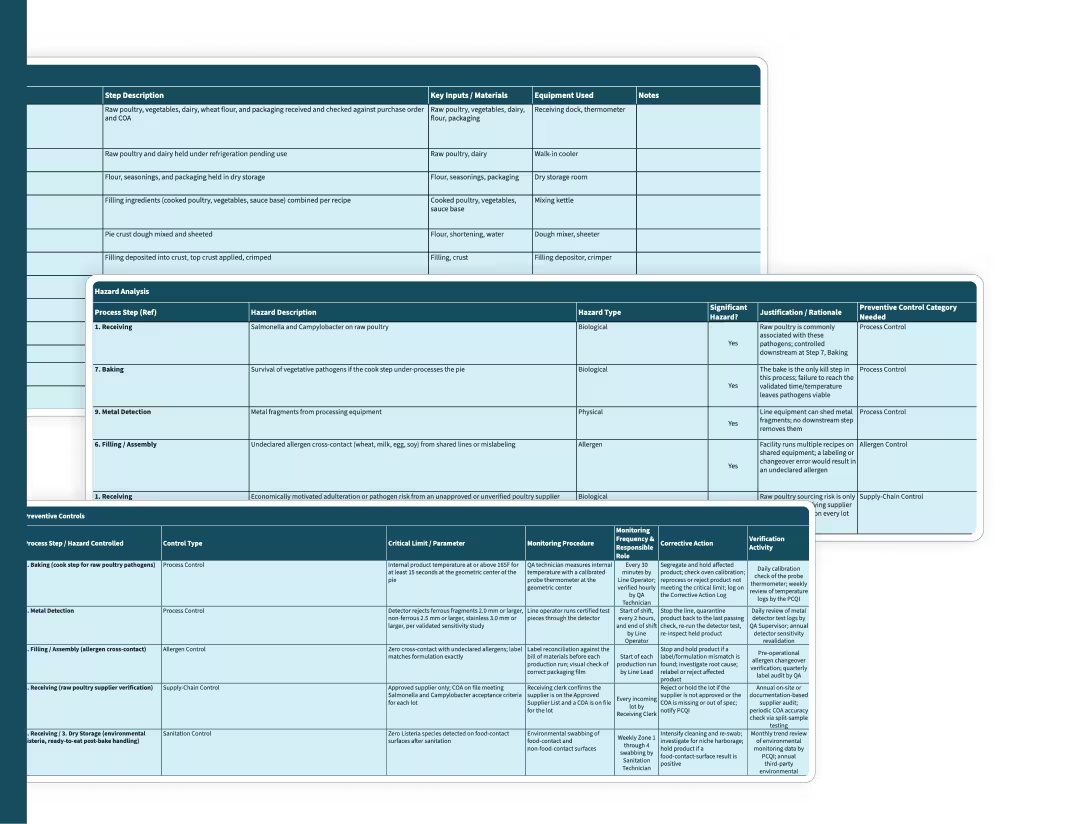
- Food safety plan (HACCP-based): A complete hazard analysis with critical control points, monitoring procedures, and corrective actions built on HACCP principles.
- Verification and validation activities: Scheduled reviews confirming your food safety system works as intended.
- Corrective and preventive actions: A documented CAPA system for addressing non-conformances.
- Traceability system: The ability to track ingredients and finished products through your supply chain.
SQF Level 2 Audit Requirements
A Level 2 certification audit follows a structured process: document review, site inspection, and employee interviews. The typical audit takes 1 to 2 days, depending on your facility size and complexity.
The scoring system categorizes findings as critical, major, or minor non-conformances. A critical non-conformance results in an automatic audit failure. Major non-conformances must be corrected within a set timeframe. Minor non-conformances are documented for improvement but do not block certification. Your overall score determines your certification rating (C, B, A, or AA/Excellence).
For strategies on audit day, read how to pass an SQF audit. You can also use an SQF audit checklist to make sure nothing gets missed during preparation.
SQF Level 2 Documentation Requirements
Level 2 documentation is significantly more extensive than Fundamentals. You will need:
- SQF System Manual: Your overarching document describing your food safety management system.
- Food safety plan documentation: Your hazard analysis, CCP monitoring records, and verification logs.
- GMP records: Sanitation logs, environmental monitoring data, allergen controls.
- Supplier approval program records: Approved supplier lists, risk assessments, and incoming material verification.
A food safety management system platform helps you centralize these records and keep them audit-ready. For managing your approved supplier program, dedicated supplier management tools can streamline risk assessments and document collection.
SQF Level 3: Food Safety and Quality Code — Requirements and What to Expect
What SQF Food Safety and Quality Code Covers
Level 3 includes everything in Level 2 plus a formal quality management layer. You are not just certifying that your food is safe. You are certifying that your products consistently meet defined quality specifications. The quality management plan covers product specifications, quality monitoring, customer complaint handling, and continuous improvement.
Level 3 is GFSI-recognized at the highest SQF benchmark. Facilities pursuing Level 3 are typically premium brands, contract manufacturers for major food companies, and operations where quality consistency is a competitive differentiator.
Additional Requirements Beyond Level 2
On top of your complete Level 2 food safety system, Level 3 adds:
- Formal quality management plan: Documented quality objectives, monitoring procedures, and improvement targets.
- Product quality specifications and standards: Defined sensory, physical, and chemical quality parameters for each product.
- Customer complaint system: A structured process for receiving, investigating, and resolving quality complaints.
- Management review processes: Regular quality performance reviews at the leadership level.
- Continuous improvement program: Data-driven initiatives to improve quality metrics over time.
SQF Level 3 Audit Requirements
Level 3 audits typically take 2 to 3 days. The auditor reviews your entire food safety system (same as Level 2) and then conducts an extended review of your quality management plan. You receive separate scoring for the food safety and quality components of the audit.
The extended scope means more records to prepare, more employees to interview, and more documentation to keep current. Facilities with a mature Level 2 system handle this well. Facilities that try to jump directly to Level 3 without a solid Level 2 foundation often struggle.
Is Level 3 Worth It for Your Business?
Level 3 makes sense when your customers explicitly require quality management certification, when you are a co-manufacturer producing for brands with strict quality agreements, or when quality consistency is a market differentiator for your products.
The ROI calculation is straightforward: the additional audit cost and documentation effort is offset by access to premium customers and contracts that require Level 3. If none of your current or target customers require quality management certification, Level 2 delivers full GFSI recognition at lower cost.
See how Allera's quality management module supports Level 3 requirements. Schedule a Demo
SQF Certification Levels and Costs
Cost Breakdown by Level
SQF Fundamentals
- Implementation/consulting: $2,000–$8,000
- Certification body audit fee: $1,500–$4,000
- Annual maintenance (surveillance, training): $1,500–$3,000
- Estimated first-year total: $5,000–$15,000
SQF Food Safety (Level 2)
- Implementation/consulting: $5,000–$20,000
- Certification body audit fee: $3,000–$8,000
- Annual maintenance (surveillance, training): $3,000–$7,000
- Estimated first-year total: $10,000–$35,000
SQF Food Safety & Quality (Level 3)
- Implementation/consulting: $15,000–$35,000
- Certification body audit fee: $5,000–$12,000
- Annual maintenance (surveillance, training): $5,000–$13,000
- Estimated first-year total: $25,000–$60,000+
These are ranges based on typical facility sizes. Your actual costs will depend on several variables.
Factors That Affect SQF Certification Cost
The biggest cost drivers are your operation size and complexity, number of products and production lines, existing food safety documentation (starting from scratch costs more), whether you hire a consultant or use in-house staff, and your choice of certification body.
Consulting fees are often the largest single expense, especially for first-time certifications. An experienced SQF consultant can accelerate your timeline and reduce the risk of audit failures. For help finding the right fit, see our guide to top SQF consultants.
Reducing Certification Cost With Technology
SQF software reduces certification costs by cutting consulting hours and audit prep time. Platforms that handle document management, corrective action tracking, and supplier management eliminate the manual work that drives up consulting fees and internal labor costs. Facilities using dedicated food safety software typically report 30-50% reductions in audit preparation time.
The SQF Certification Process by Level
Step-by-Step Process for All Three Levels
The certification process follows the same core steps regardless of level:
- Gap analysis against the applicable SQF Code modules for your target level.
- Select and register with an SQFI-approved certification body. Use SQFI's directory to find an SQFI-approved certification body.
- Implement your SQF system including all required documentation, training, and operational records.
- Designate an SQF Practitioner who is responsible for maintaining and overseeing your SQF system. Learn more about SQF Practitioner requirements.
- Conduct internal audit and self-assessment to identify gaps before the certification audit.
- Third-party certification audit by your chosen certification body.
- Corrective actions and certification decision based on audit findings.
For a step-by-step walkthrough of audit preparation, see how to prepare for an SQF audit.
Timeline Differences by Level
- Fundamentals: 3 to 6 months from start to certification.
- Food Safety Code (Level 2): 6 to 12 months for first-time certifications.
- Food Safety and Quality Code (Level 3): 9 to 18 months, since it requires a mature quality management system in addition to your food safety system.
These timelines assume you are building your system from scratch. Facilities with existing food safety programs (such as a current HACCP plan or another GFSI certification) can often move faster.
Choosing an SQFI-Approved Certification Body
Not all certification bodies are the same. Look for one with expertise in your specific food industry sector, geographic coverage for your facility locations, and experience conducting integrated audits if you hold or plan to hold multiple certifications.
SQF Certification Levels and FSMA Compliance
A common question is whether SQF certification satisfies FDA FSMA requirements. The short answer: SQF Level 2 and Level 3 align closely with FSMA Preventive Controls, but certification does not replace FSMA compliance. They are complementary systems.
The FDA has acknowledged that GFSI-recognized certification programs like SQF address many of the same food safety requirements as FSMA. Your SQF food safety plan and your FSMA Preventive Controls plan cover similar ground, including hazard analysis, preventive controls, monitoring, corrective actions, and verification.
One area of overlap worth noting: FSMA requires a Preventive Controls Qualified Individual (PCQI), while SQF requires a designated SQF Practitioner. These can be the same person, but the training requirements differ. For more on PCQI requirements, see PCQI training programs.
For the full regulatory framework, refer to the FDA Food Safety Modernization Act (FSMA).
How SQF Levels Compare to BRCGS, FSSC 22000, and ISO 22000
If you are evaluating GFSI-recognized standards, SQF is one of several options. Here is how it compares to the other major schemes.
SQF vs. BRCGS
SQF (Level 2/3)
- GFSI recognized: Yes
- Primary market: North America
- Audit structure: Announced or unannounced
- Quality component: Level 3 only
- Tiered levels: Yes (3 levels)
BRCGS
- GFSI recognized: Yes
- Primary market: Global (strong in UK/EU)
- Audit structure: Announced or unannounced
- Quality component: Built into base standard
- Tiered levels: Single standard with grading (AA, A, B, C)
SQF tends to be more popular in North America, while BRCGS certification has stronger recognition in Europe and the UK. If you export to EU markets, BRCGS may carry more weight with your buyers. The BRCGS Global Standard for Food Safety integrates quality requirements into its base standard, while SQF separates quality into Level 3.
SQF vs. FSSC 22000
FSSC 22000 is built on the ISO 22000 framework with additional requirements. It is particularly popular with ingredient manufacturers and companies focused on EU export markets. The FSSC 22000 certification scheme and the ISO 22000 food safety management standard form the foundation of this approach.
Facilities that already operate within ISO management systems often find FSSC 22000 a natural fit. SQF is more prescriptive in its requirements, which some facilities prefer because it provides clearer guidance on what exactly to implement. For a deeper comparison, see FSSC 22000 requirements.
Can You Hold Multiple GFSI Certifications?
Yes. Some facilities hold both SQF and BRCGS to satisfy different customer requirements in different markets. Several certification bodies offer integrated audits that combine multiple standards into a single visit, reducing audit fatigue and costs.
Moving Between SQF Certification Levels
Upgrading from Level 1 (Fundamentals) to Level 2 (Food Safety)
The biggest gaps to close when moving from Level 1 to Level 2 are developing a full HACCP-based food safety plan, building a comprehensive document control system, and implementing supplier verification programs. You will also need to designate a trained SQF Practitioner.
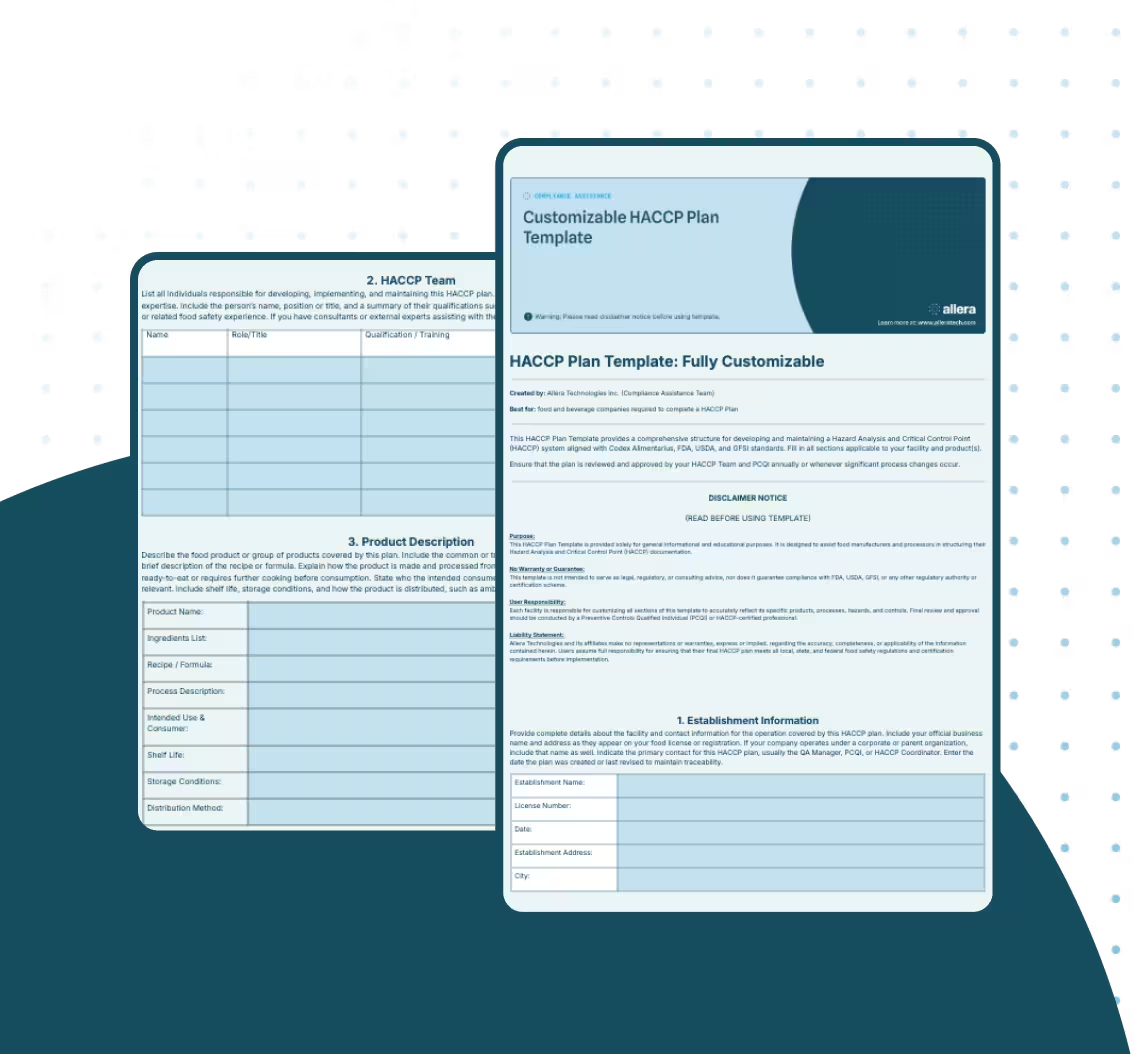
The typical transition timeline is 6 to 12 months. The most common challenges are limited HACCP expertise in-house (which often requires external training or consulting) and the jump in documentation volume. Using a HACCP plan template as a starting framework can accelerate the food safety plan development.
Upgrading from Level 2 to Level 3
Moving from Level 2 to Level 3 adds quality management on top of your existing food safety system. The key additions are a formal quality management plan, product quality specifications, a customer complaint system, and a continuous improvement program.
If your Level 2 system is mature and well-maintained, the Level 3 upgrade typically takes 3 to 6 months. The quality management components build on processes many facilities already have informally. The work is in formalizing, documenting, and integrating them into your SQF system.
SQF Edition 10: What Changes for Each Level (2025-2026)
SQFI has been developing SQF Edition 10, with release and implementation rolling out through 2025 and 2026. Edition 10 represents the first major revision to the SQF Code structure since Edition 9 and introduces updates that affect all three certification levels.
Key changes in Edition 10 include restructured module organization for clearer navigation, updated requirements reflecting current food safety science and regulatory expectations, enhanced food fraud and food defense requirements, and alignment updates to maintain GFSI benchmarking compliance under the latest GFSI benchmarking requirements.
For the complete Edition 10 documents, timelines, and training resources, visit the SQF Code documents and editions page on the SQFI website.
If you are currently certified under Edition 9, your certification body will communicate the transition timeline and any gap assessment requirements. The transition typically involves a gap analysis between your current system and Edition 10 requirements, followed by documentation updates before your next surveillance or recertification audit.
Allera's document control module automatically tracks SQF Code updates so your system stays audit-ready. See How It Works
Ready to Streamline Your Path to SQF Certification?
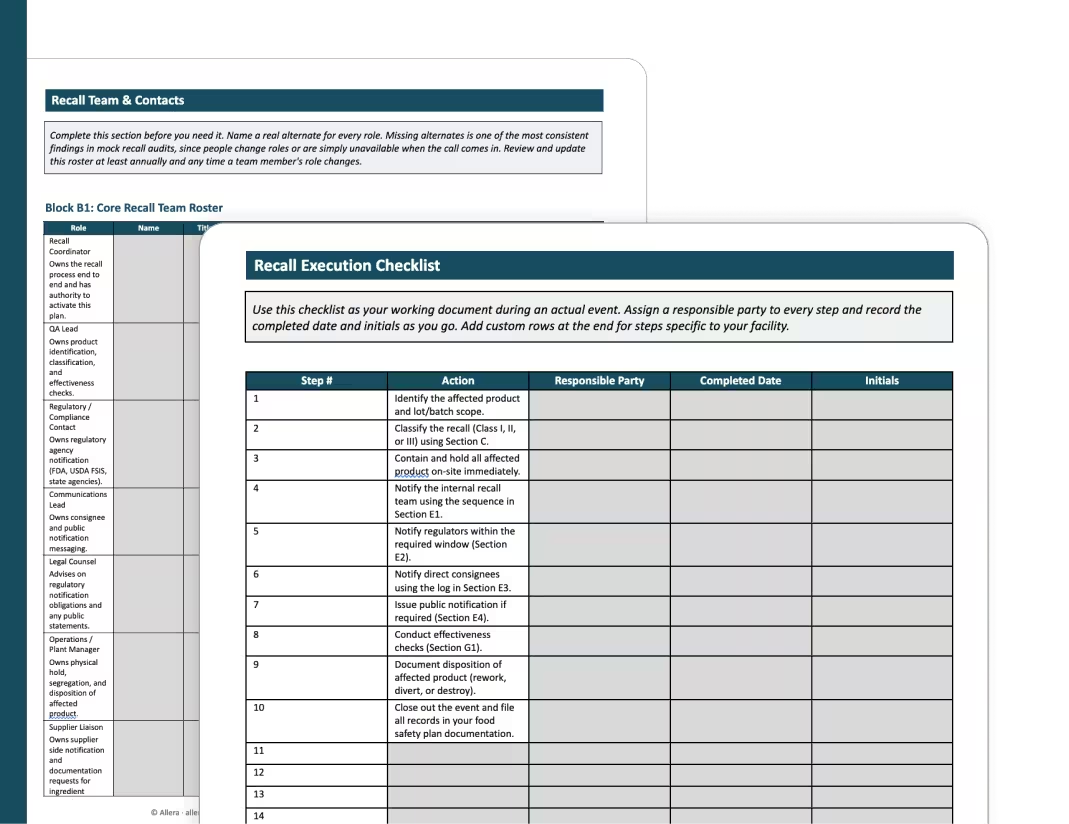
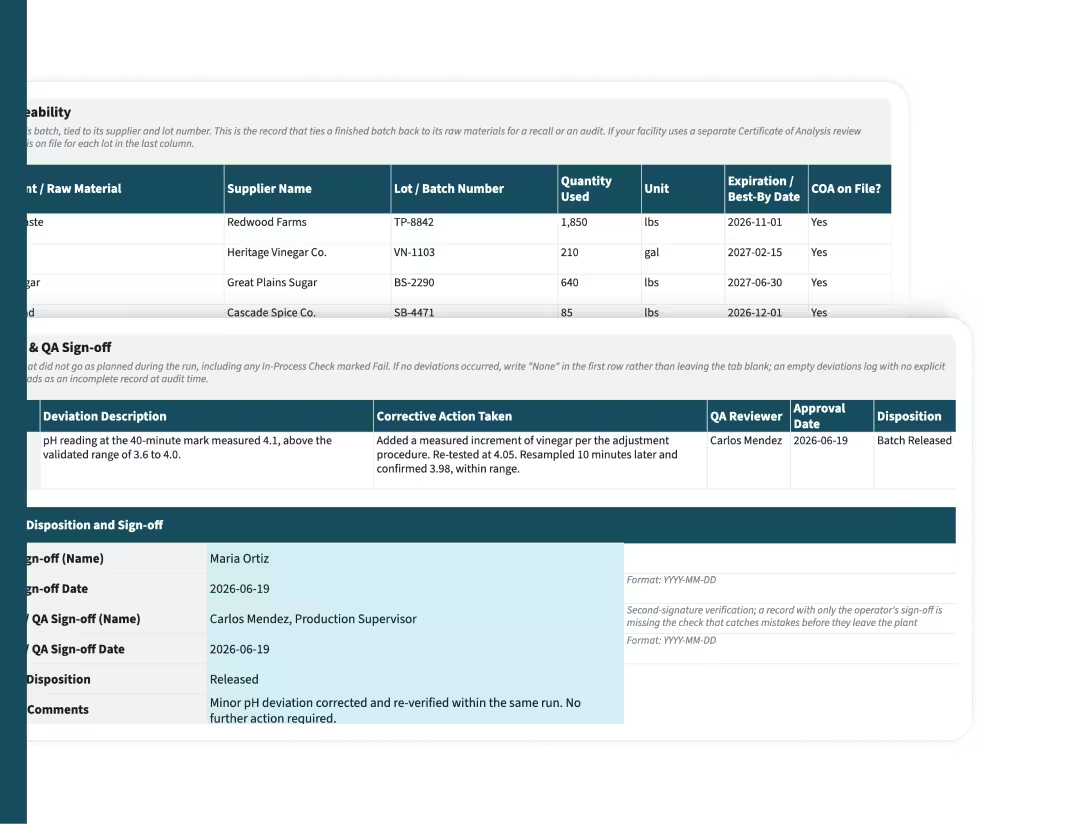
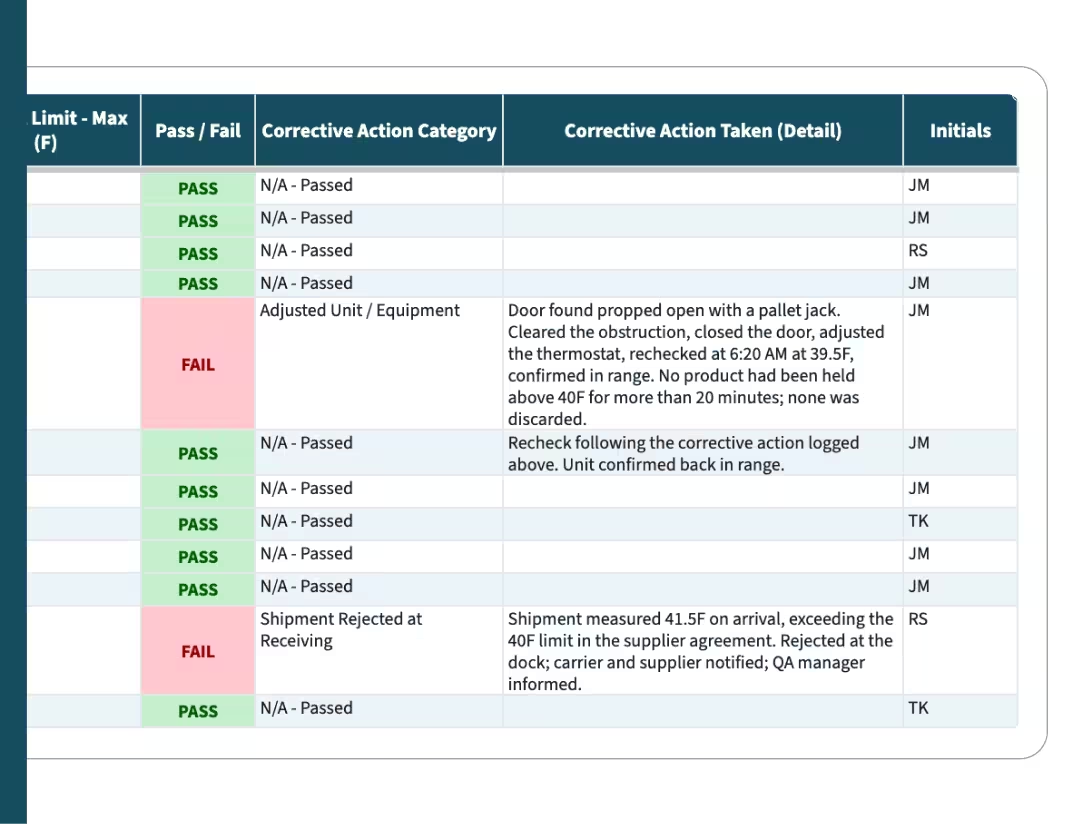
Allera is built for food manufacturers preparing for SQF Level 2 and Level 3 certification. From automated document control to audit-ready corrective action logs, our platform maps directly to SQF Code requirements. Whether you are pursuing your first SQF certification or upgrading from one level to the next, Allera keeps your documentation organized and your team aligned.
Book a Demo
FAQs
.avif)
.avif)
.avif)
.avif)
%20(1).avif)
.avif)
.avif)

%20(1).png)

.avif)


.avif)