.avif)



5 Best Food Safety Software for Food Manufacturers in 2026


If you're still running FSQA on paper binders, shared drives, and spreadsheets, audits are harder than they need to be — and recall readiness is a real liability. The right food safety software replaces those manual systems with automated workflows, digital records, and audit-ready documentation. The best platforms deploy in weeks, not months.
We reviewed five leading platforms for food manufacturers and ranked them by compliance coverage, ease of use, traceability, scalability, and support. Here's the short list:
.avif)
- Allera — best for food manufacturers needing AI-powered FSQA and fast deployment (~30 days)
- FoodReady — best for GFSI certification prep with built-in expert consulting
- FoodDocs — best for hospitality, retail, and multi-location food businesses
- SafetyChain — best for large manufacturers managing plant-floor data at enterprise scale
- TraceGains — best for manufacturers managing complex supplier networks and ingredient traceability
Jump to the full reviews below, or read our food safety guide if you're still early in the research process.
Why trust our reviews? Allera Technologies is a food safety software company. We review this category honestly, including our own product's limitations. Our top pick is Allera — but the right choice depends on your operation size, certification targets, and current infrastructure.
1. Allera — Best AI-Assisted Food Safety Software for Manufacturers
500 companies use Allera for compliance. Allera is built exclusively for food and beverage manufacturers, replacing paper FSQA workflows with digital forms, a two-sided supplier portal, and version-controlled document management in one platform, with clause-level AI review against SQF layered across it. Rollout runs about 30 days, which makes it the practical choice for mid-market manufacturers who need to be audit-ready this quarter.
Best For: Multi-site food & beverage manufacturers working toward or maintaining SQF certification
Pricing: Contact Allera for pricing.
Implementation: ~30 days
Deployment: Web (installable on mobile from the browser)
Key Features
Digital FSQA Forms
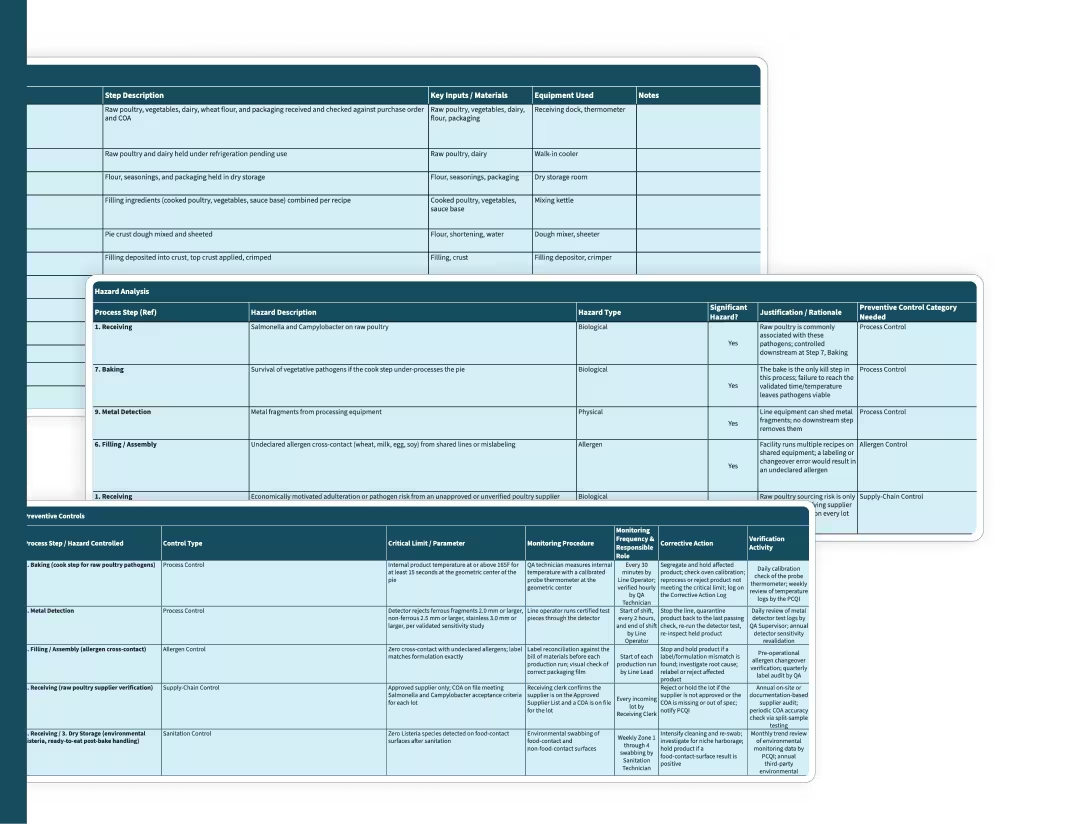
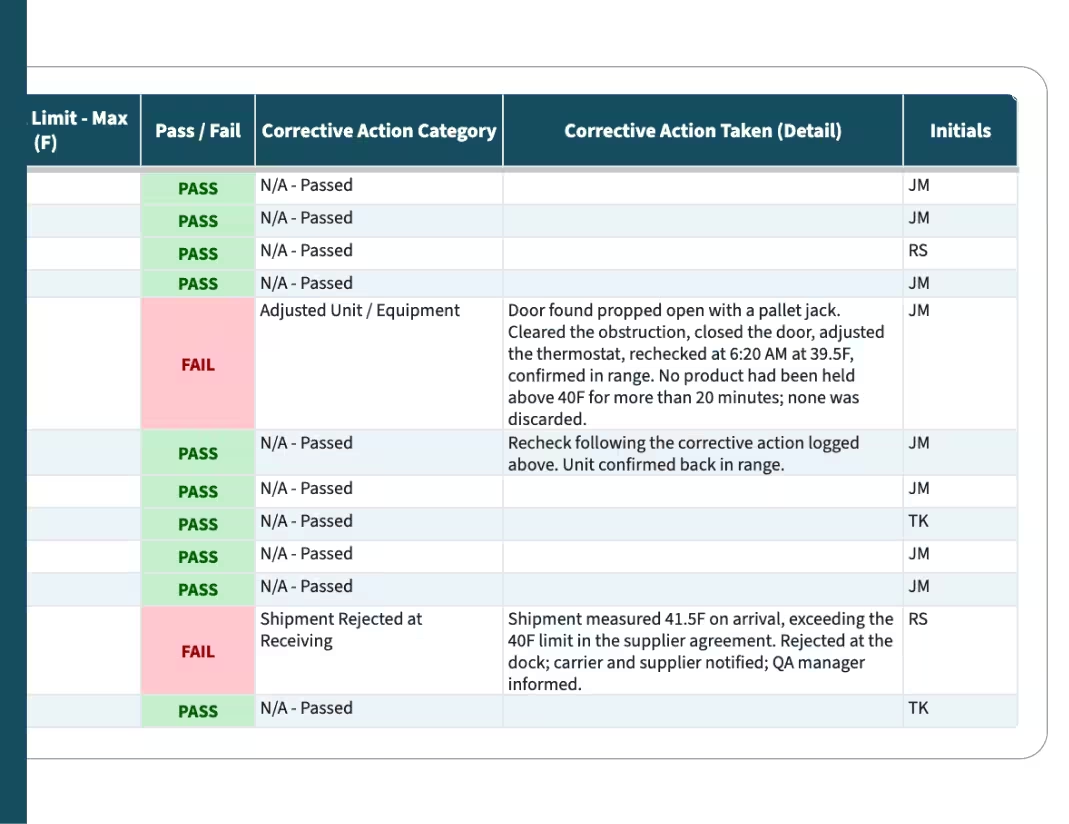
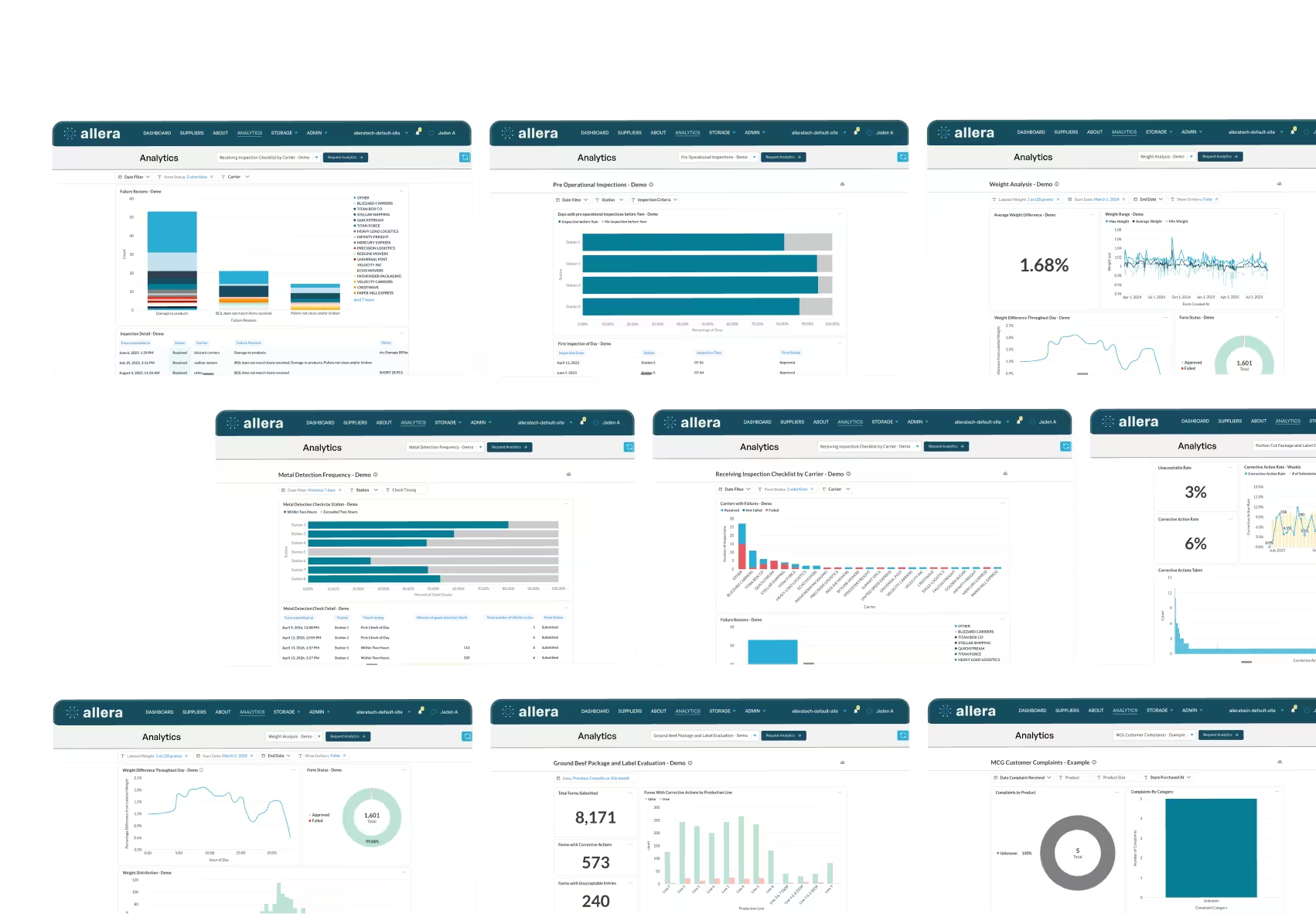
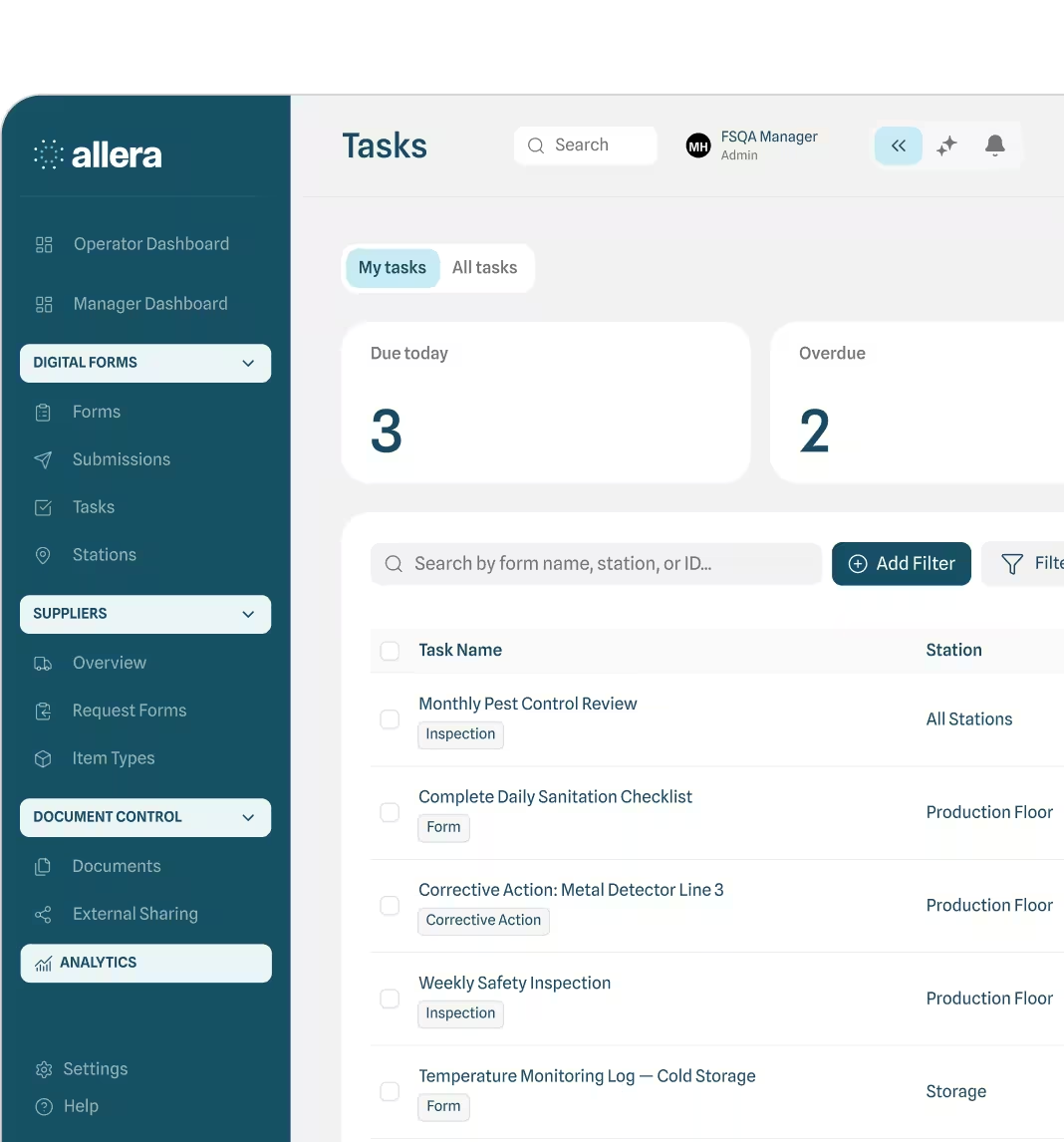
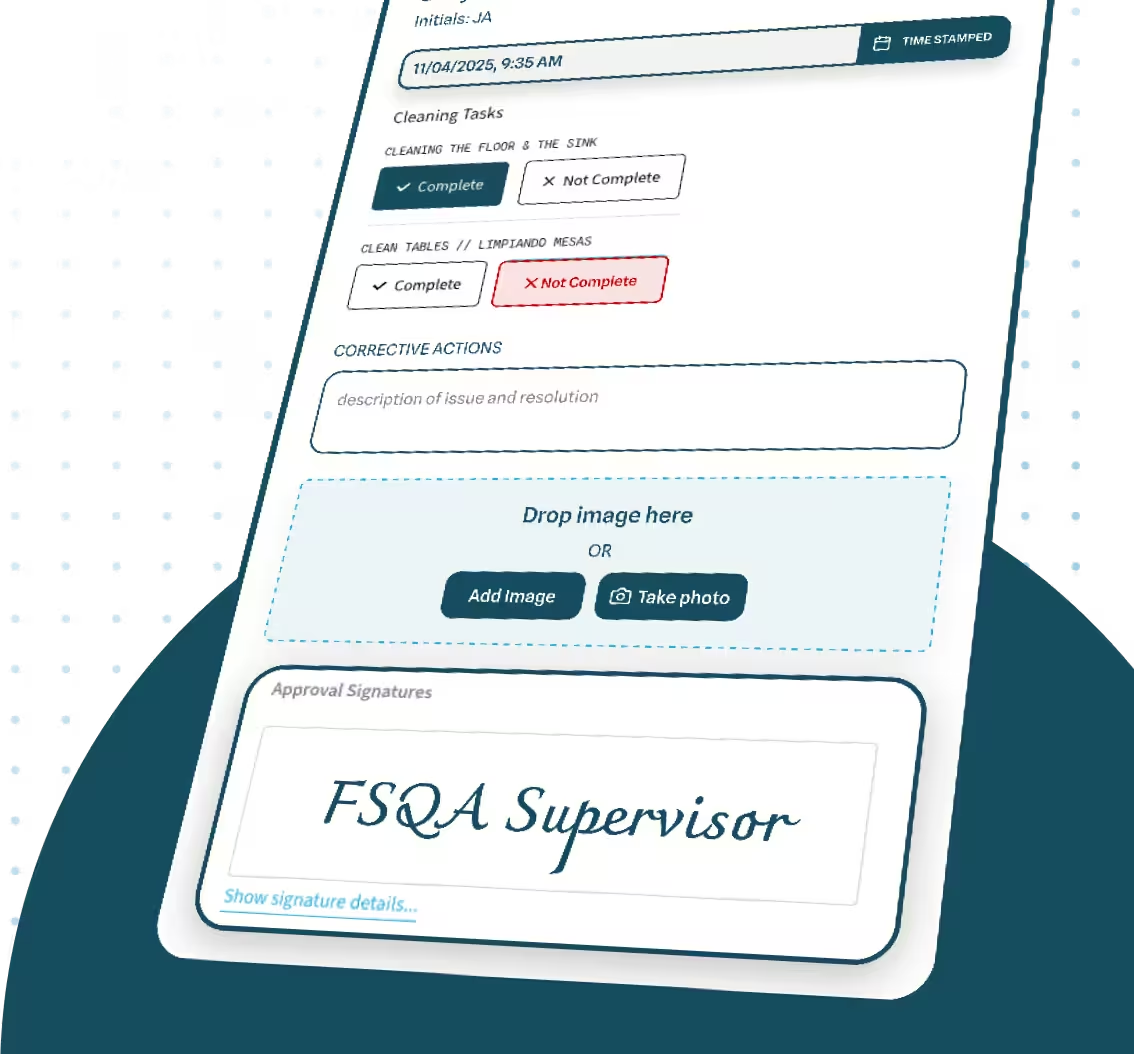
Allera's Form Builder combines conditional logic, validation, and failure rules, so operators are guided through every check with little room for error. A breached limit automatically creates a Corrective Action task with an owner and a due date. Tasks are assignable to people or teams and tracked as Completed On Time, Late, or Skipped with a documented reason, so nothing falls through the cracks between shifts. Offline autosave keeps entry working through dropped connectivity and recovers automatically. Role-based access, role-aware dashboards for Operator, Manager, and Admin, and an analytics view you can query in plain language round out the module.
Document Control
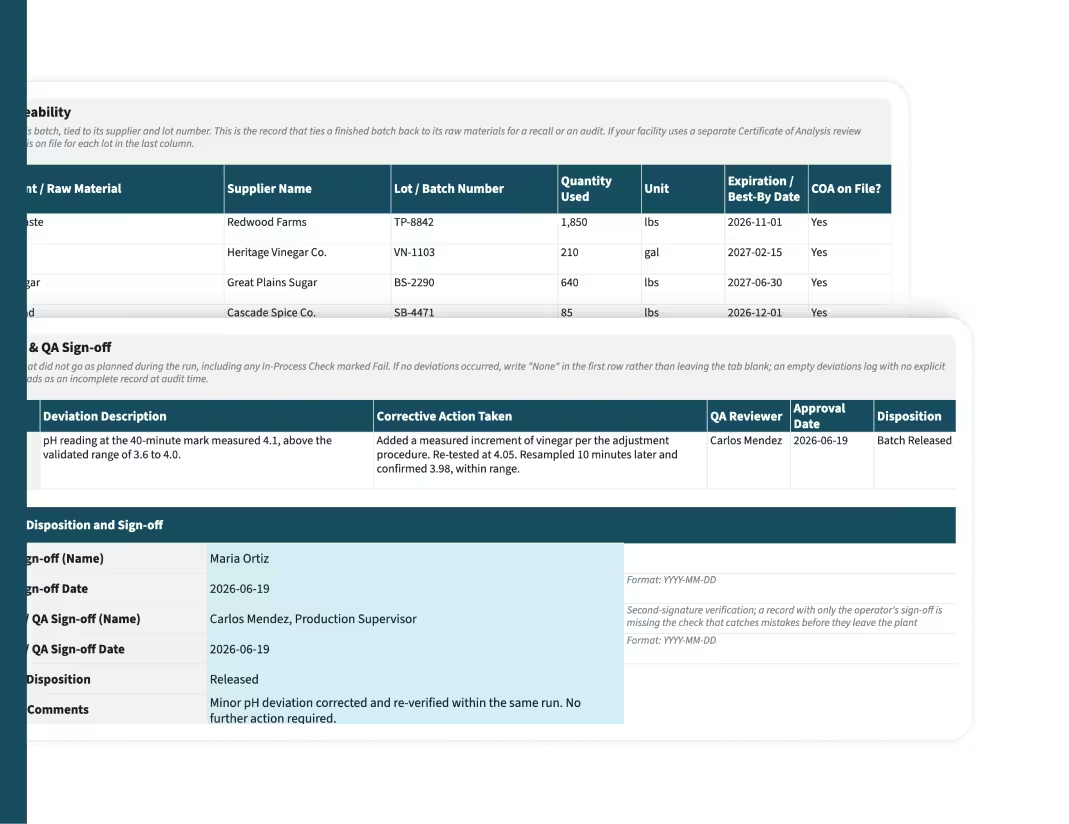
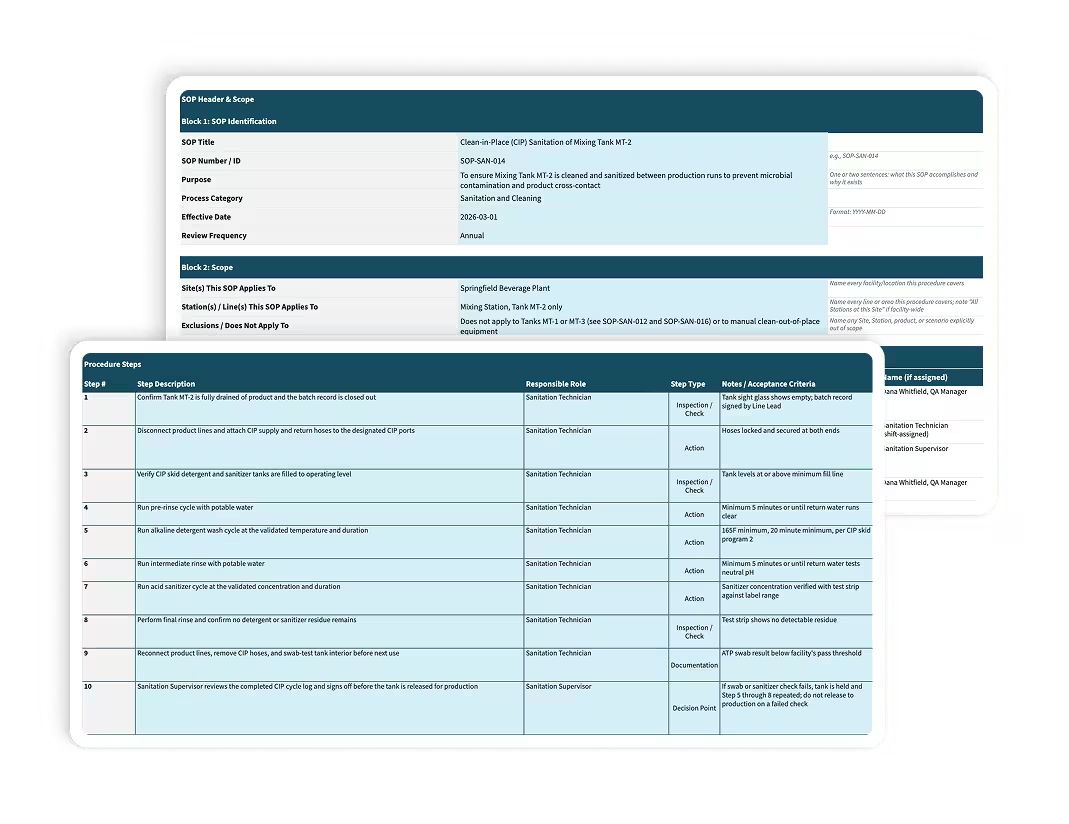
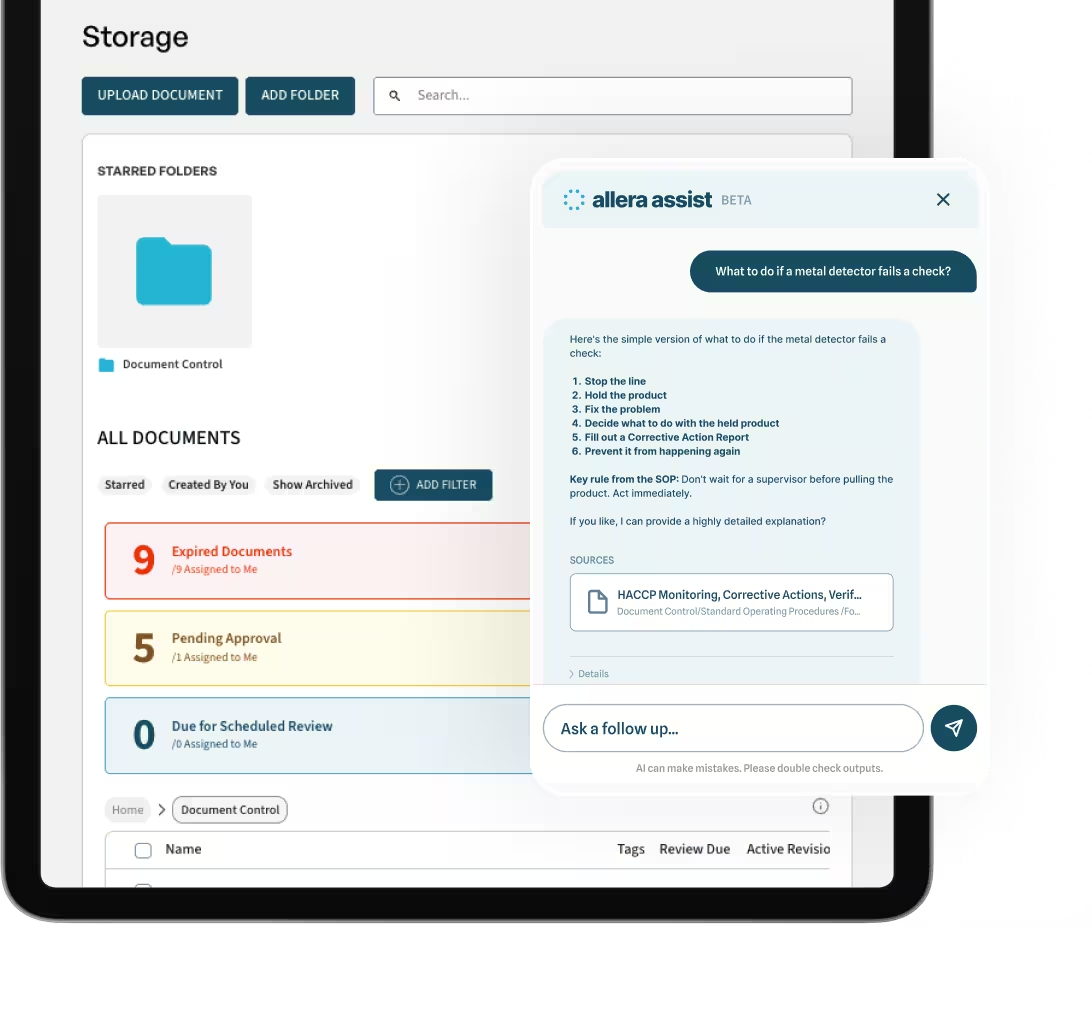
Every SOP, work instruction, and procedure lives in a version-controlled library with approval workflows, four access levels inheriting down the folder tree, and a complete exportable audit trail. AI Compliance Review reads a document clause-by-clause against SQF and returns findings rated Critical, Major, or Minor, each with a rationale and a suggested corrective action tied to the exact clause — worked through an accept, reject, or not-applicable queue, so your QA team stays the approver. Training acknowledgments tie each revision to the people who must follow it, and Scheduled Review forces re-approval on your own cycle. Word and Excel documents edit directly in the browser, and PDFs annotate in place.
Supplier Management
Request Forms go out as Requests, assignable per Site. Suppliers respond through a passwordless magic-link portal with no account to create. Renewals pre-fill from the last approved submission, overdue items flag themselves, and reminder nudges are one click with a visible history. A live dashboard shows Total Suppliers, Fully Approved %, Pending Requests, and Overdue, with every supplier rolled up to Not Started, Action Required, or Fully Approved.
Pros
- About 30 days to rollout
- AI review is part of the platform, not sold as an add-on, and cites the SQF clause rather than returning a score
- Built specifically for food manufacturers, not restaurants or retail
- Offline autosave designed for real plant floors
- Auditors get scoped, expiring access through Document Vault with no login to provision
- Word and Excel documents edit directly in the browser
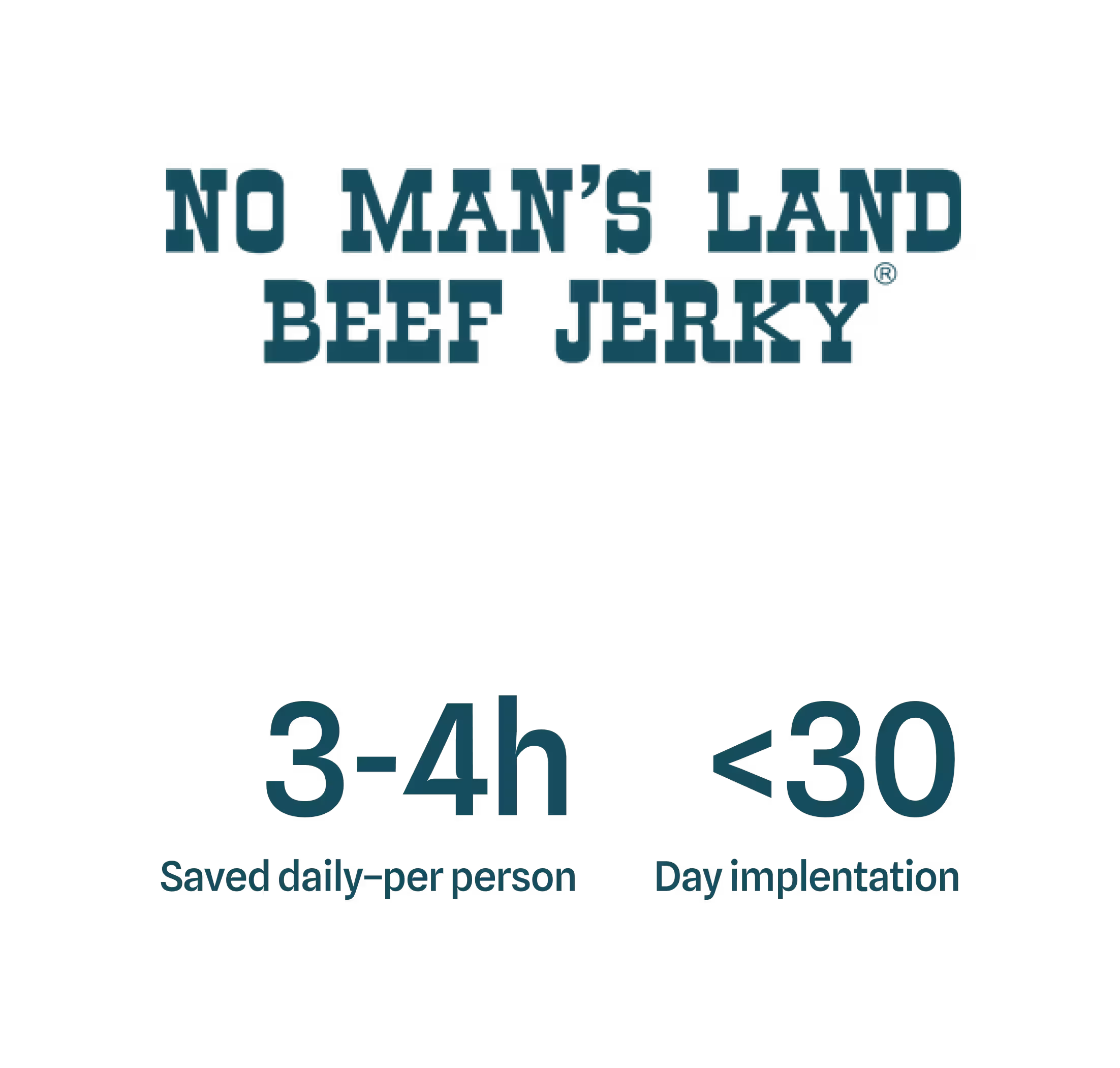
- Eden Green cut SQF audit time by 75%; No Man's Land Beef Jerky cut 3–4 hours of daily FSQA paperwork per person
Best fit
- Purpose-built for food and beverage manufacturing
- Designed for multi-site quality teams standardizing across facilities
- Built to run alongside your ERP
Book a free 30-minute demo | Explore Allera's full feature set
2. FoodReady — Best for GFSI Certification with Built-In Consulting
FoodReady combines food safety software with integrated expert consulting, making it a strong option for companies pursuing multiple GFSI certifications simultaneously. The AI-powered platform covers HACCP plan development, SOP management, supplier compliance, and CAPA — and pairs it with on-call food safety professionals. If you want guided implementation rather than a self-service tool, this is the platform to evaluate first.
Best For: Food businesses pursuing SQF, BRCGS, FSSC 22000, or ISO 22000 who want hands-on consulting alongside softwarePricing: Quote-basedImplementation: Consulting-led; timeline not publicly statedDeployment: Web
Key Features
FoodReady's AI-assisted HACCP plan generator draws from 80+ pre-built templates to accelerate plan development without requiring deep in-house food safety expertise. The platform covers SOP and procedure management, CAPA workflow tracking with root cause analysis, supplier document management, and audit readiness checklists — all under one subscription. What sets it apart is the integrated consulting layer: on-call food safety professionals are available throughout implementation and certification prep. Multi-standard support spans SQF, BRCGS, ISO 22000, FSSC 22000, FDA/USDA, and GMP/cGMP.
Pros
- Only platform in this list that bundles food safety consulting with software
- Broadest multi-standard coverage in the category
- 80+ pre-built HACCP and PCP templates accelerate plan development
- Strong option for companies undergoing first-time GFSI certification
- AI-powered plan generation reduces dependency on internal food safety expertise
Cons
- Pricing not publicly disclosed — harder to self-qualify before engaging sales
- Consulting-heavy model may be more than needed for manufacturers with in-house FSQA teams
- Implementation timeline less transparent than competitors
- Interface may feel less purpose-built for plant-floor operations vs. office/QA team use
3. FoodDocs — Best for Hospitality and Multi-Location Food Businesses
FoodDocs targets hospitality, retail food-to-go, and multi-location food businesses. Its AI-powered setup generates a complete HACCP plan in under an hour and gets monitoring tasks running in 15 minutes — making it the fastest platform to get off the ground from scratch. With 1,200+ customers and top ease-of-use ratings on Capterra, Software Advice, and GetApp, it's the go-to for teams with limited food safety expertise.
Best For: Restaurants, hospitality chains, retail food-to-go, healthcare food service, and multi-location operatorsPricing: Quote-based; free trial availableImplementation: 15 minutes to first monitoring task; HACCP plan in under 1 hourDeployment: Web, iOS, Android
Key Features
FoodDocs leads the category on setup speed — its AI generates a full HACCP plan in under an hour and has monitoring tasks running in 15 minutes. A real-time compliance dashboard gives multi-location operators visibility across all sites from a single screen, with push notifications keeping frontline staff on track via the mobile app. Smart sensor integrations handle automated temperature monitoring, while AI-generated compliance reports surface heatmaps and trend data for continuous improvement. The platform includes 200+ free food safety templates and supports ISO 22000:2018.
Pros
- Fastest initial setup in the category (15 minutes to first monitoring task)
- Rated #1 for ease of use on Capterra, Software Advice, and GetApp
- 200+ free food safety templates available without gating
- Strong mobile experience for frontline staff
- AI generates HACCP documentation without requiring expert food safety knowledge
Cons
- Primarily designed for foodservice/hospitality — less purpose-built for manufacturing environments
- SQF, BRCGS, and FSSC 22000 coverage not explicitly documented — verify before committing if GFSI certification is a requirement
- Sensor integrations require compatible hardware
- Less depth in supplier management compared to Allera or TraceGains
4. SafetyChain — Best for Enterprise Manufacturers Managing Plant-Floor Operations
SafetyChain is an enterprise-grade platform built for large food and beverage manufacturers. It unifies quality, safety, and production data from the plant floor through a no-code digital forms engine, real-time statistical process control (SPC), and multi-facility deployment. With 2,500+ manufacturing facilities and enterprise customers like Tyson Foods, it's the heaviest-duty option in this list — and priced accordingly.
Best For: Large-scale food and beverage manufacturers with complex multi-facility operations and plant-floor data collection needsPricing: Quote-based (enterprise)Implementation: Days to weeks — enterprise complexity may varyDeployment: Web (Chrome, Firefox, Safari, Edge)
Key Features
SafetyChain's no-code form builder handles inspections, quality checks, and audits across every facility without requiring IT involvement. Real-time SPC with deviation alerting is the platform's standout capability — it catches process drift as it happens, not after the shift ends. CAPA management, pre-operational hygiene scheduling, receiving inspections, and supplier scorecards are all included. The "configure once, deploy everywhere" architecture makes it uniquely efficient for manufacturers running multiple plants, and ERP and LIMS integrations connect plant-floor data to enterprise systems.
Pros
- 2,500+ manufacturing facilities — proven at scale
- Real-time plant-floor SPC that no other platform in this list matches
- Customers report up to 5x ROI within 4 months; Tyson Foods cited $2M in annual savings
- Implementation team staffed with former plant managers, which accelerates deployment
- "Configure once, deploy everywhere" is powerful for multi-site manufacturers
Cons
- Enterprise focus means higher cost and complexity — may be overkill for SMBs
- No mobile iOS/Android app confirmed — primarily web-based
- Supplier management and traceability depth less prominent than Allera or TraceGains
- FSSC 22000 and ISO 22000 support not explicitly documented in primary product marketing
5. TraceGains — Best for Supplier Network Management and Ingredient Traceability
TraceGains operates as the world's only Networked Ingredients Marketplace, connecting food manufacturers with suppliers to automate compliance document management, specification control, and ingredient traceability. Now integrated with Veralto, it's particularly valuable for large manufacturers managing hundreds of suppliers and needing automated COA collection, FSMA 204 Critical Tracking Event (CTE) monitoring, and GFSI audit readiness across a complex supply chain.
Best For: Large food and beverage manufacturers with extensive supplier networks requiring automated ingredient traceability and FSMA 204 compliancePricing: Quote-basedImplementation: Varies by supplier network sizeDeployment: Web (cloud-based SaaS; Tableau integration for dashboards)
Key Features
TraceGains' Networked Ingredients Marketplace is its defining feature — suppliers push compliance documents directly to manufacturers rather than requiring manual collection. COA, spec sheets, allergen declarations, and SDS are all automated through this network. FSMA 204 CTE and Key Data Element (KDE) tracking is industry-leading, making it the strongest choice for manufacturers who need to demonstrate lot-level traceability under the FSMA 204 final rule. Tableau integration powers enterprise-grade dashboards, and audit readiness workflows cover BRCGS, FSMA, and ISO 22000.
For a deeper look at traceability platforms, see our best food traceability software guide.
Pros
- Unique networked marketplace model — suppliers push docs to you rather than requiring manual collection
- Industry-leading FSMA 204 CTE/KDE tracking for ingredient-level traceability
- Broad GFSI scheme coverage (BRCGS, SQF, ISO 22000)
- Tableau integration provides enterprise-grade analytics and reporting
- Veralto integration adds significant enterprise resource depth
Cons
- Value depends heavily on supplier cooperation — the network effect only works if your suppliers are enrolled
- Steeper learning curve; complex interface for teams without a dedicated implementation resource
- Less suited to manufacturers with small supplier bases
- Pricing not disclosed; typically positioned for larger manufacturer budgets
- Not the strongest choice if plant-floor quality monitoring (SPC, line checks) is your primary need
Comparison Takeaways
Allera suits food manufacturers from SMB to mid-market. It deploys in ~30 days and leads the category with AI compliance review that cites the exact SQF clause. Controlled documents, timestamped records, and exportable audit trails support audit preparation across FSMA, HACCP, and GFSI-scheme programs.
FoodReady is the right pick for businesses actively pursuing GFSI certification. Onboarding is consulting-led, so timelines vary. Its standout feature is built-in expert consulting plus 80+ pre-built plan templates. Covers SQF, BRCGS, ISO 22000, and FSSC 22000.
FoodDocs targets hospitality and multi-location operators. Initial setup takes 15 minutes, making it the fastest option to get running. Best for HACCP and ISO 22000 compliance.
SafetyChain is purpose-built for enterprise manufacturers with multiple facilities. Deployment takes days to weeks depending on complexity. Its standout capability is real-time plant-floor SPC across 2,500+ facilities. Covers SQF and BRCGS via audit module.
TraceGains is best for large manufacturers managing complex supplier networks. Implementation timeline depends on network size. Its unique value is FSMA 204 CTE tracking and the Networked Ingredients Marketplace. Covers BRCGS, SQF, and ISO 22000.
For most food and beverage manufacturers — especially those navigating FSMA, SQF, or BRCGS — Allera delivers the broadest compliance coverage with the fastest deployment. Choose FoodReady if you need certification consulting built in. Choose SafetyChain for large-scale multi-facility operations. Choose TraceGains if supplier traceability is your dominant challenge.
What Is Food Safety Software?
Food safety software is a digital platform that replaces paper-based FSQA records, manual inspections, and spreadsheet tracking with automated workflows, real-time monitoring, and audit-ready documentation. It helps food manufacturers meet regulatory requirements from the FDA, USDA, and global certification bodies including SQF, BRCGS, and ISO 22000.
The principles behind modern food safety software trace back to Codex Alimentarius HACCP guidelines, the international framework that established CCP-based food safety management. What software does is make those principles executable at scale without the paperwork burden that manual compliance creates.
Key functions food safety software performs include digital HACCP plan management and CCP monitoring, supplier compliance tracking and document automation, corrective and preventive action (CAPA) management, food traceability from raw ingredients to finished goods, audit evidence storage and retrieval, and FDA FSMA preventive controls documentation.
For a broader overview of how these functions fit into a complete food safety program, see our food safety management system guide.
Why Food Safety Software Is Important for Food Manufacturers
The CDC estimates foodborne illness costs the US economy $15.6 billion annually — and the FDA issued over 700 food recalls in 2024 alone. Those numbers represent the operational and financial backdrop for every food manufacturer evaluating their FSQA systems today.
Regulatory pressure has intensified through the FDA Food Safety Modernization Act (FSMA). Every domestic food facility now needs documented preventive controls, supplier verification records, and traceable lot-level data. The FSMA 204 traceability requirements, effective 2026, require lot-level forward and backward trace on high-risk foods — and paper systems cannot meet that requirement at any meaningful scale.
On the commercial side, GFSI benchmarked schemes including SQF, BRCGS, and FSSC 22000 are now required by most major retailers — Walmart, Costco, and Whole Foods among them. These schemes require documented evidence that food safety software generates automatically. Manual records rarely survive a third-party GFSI audit intact.
The outcome data makes the case clearly. Eden Green cut SQF audit prep time by 75% after implementing Allera. No Man's Land Beef Jerky cut 3–4 hours of daily FSQA paperwork per person. Those results are consistent with what mid-market manufacturers typically experience after replacing manual systems with purpose-built software.
Key Benefits of Implementing Food Safety Software
Faster audit preparation. Searchable digital records replace binder-digging. Auditors request a document and your team retrieves it in under 30 seconds.
Fewer deviations. Automated triggers flag CCP exceedances in real time, not at the next shift review when corrective action is too late.
Supplier confidence. Automated COA and certificate tracking keeps every supplier file current without someone manually chasing renewal emails.
Faster batch release. Digital approval workflows eliminate the signature bottlenecks that hold up production.
Regulatory defensibility. Timestamped, operator-attributed records withstand FDA and third-party auditor scrutiny in a way that handwritten logs do not.
Labor savings. Manufacturers typically save 20–50+ hours per week of QA paperwork after a full digital transition.
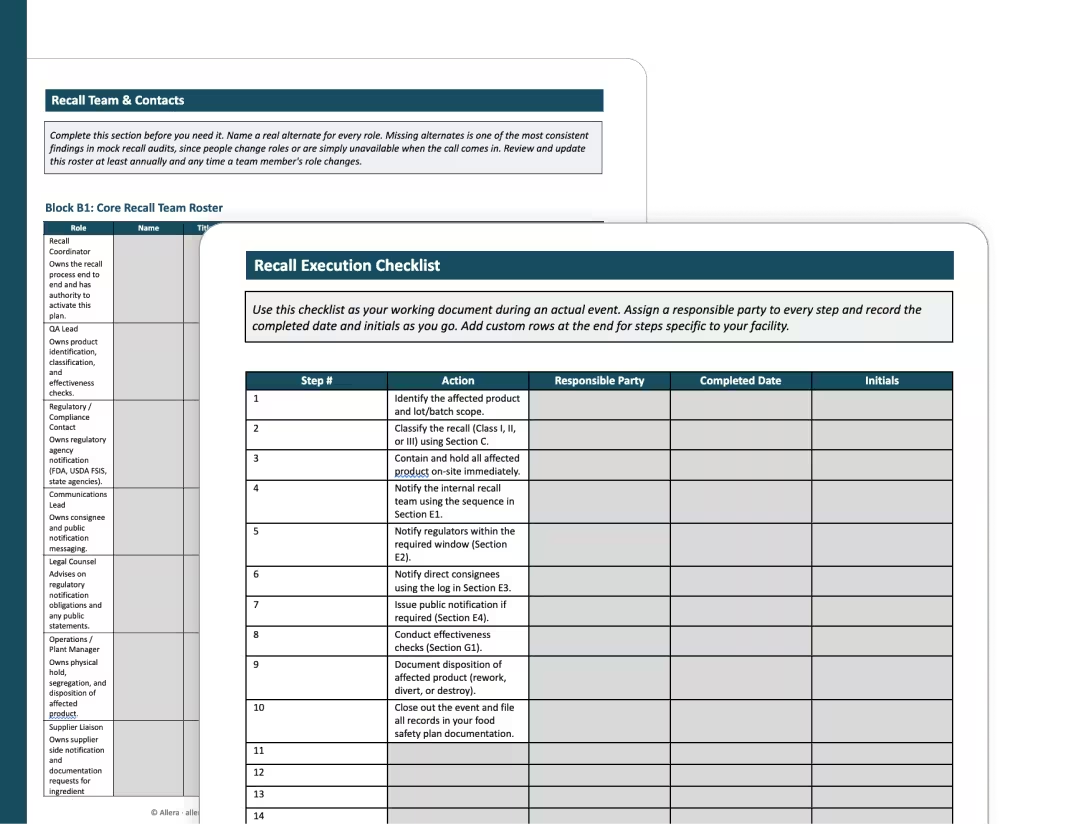
Recall readiness. Lot-code traceability enables sub-2-hour mock recalls vs. multi-day paper-based searches.
Who Needs Food Safety Software?
Mid-size food and beverage manufacturers pursuing SQF certification or BRCGS certification are the clearest fit. Both schemes require documented evidence that software generates automatically — trying to pass a GFSI audit on spreadsheets and binders is a consistent failure point. The sooner digital records start accumulating, the stronger your audit evidence base when the auditor arrives.
FDA-regulated facilities under FSMA preventive controls are another core use case. If you process human food in the US, you need documented preventive controls, supplier verification, and recall procedures. FSMA compliance software automates the recordkeeping side of that obligation and makes FDA inspections significantly less stressful.
Co-manufacturers and co-packers managing multi-client FSQA requirements benefit especially from digital systems. When you're running audit schedules for five clients with different certification requirements and audit calendars, a unified digital platform is the only practical way to keep records straight.
High-turnover environments also see strong ROI. When staff rotate every few months, paper-based SOP knowledge doesn't transfer. Digital procedures accessible on a tablet — with training records tied to each operator — give new hires a structured onboarding path and give your QA team a clear record of what's been completed.
Essential Features to Look For
Use this checklist when evaluating any platform. These are the capabilities that separate purpose-built food safety software from generic document management tools.
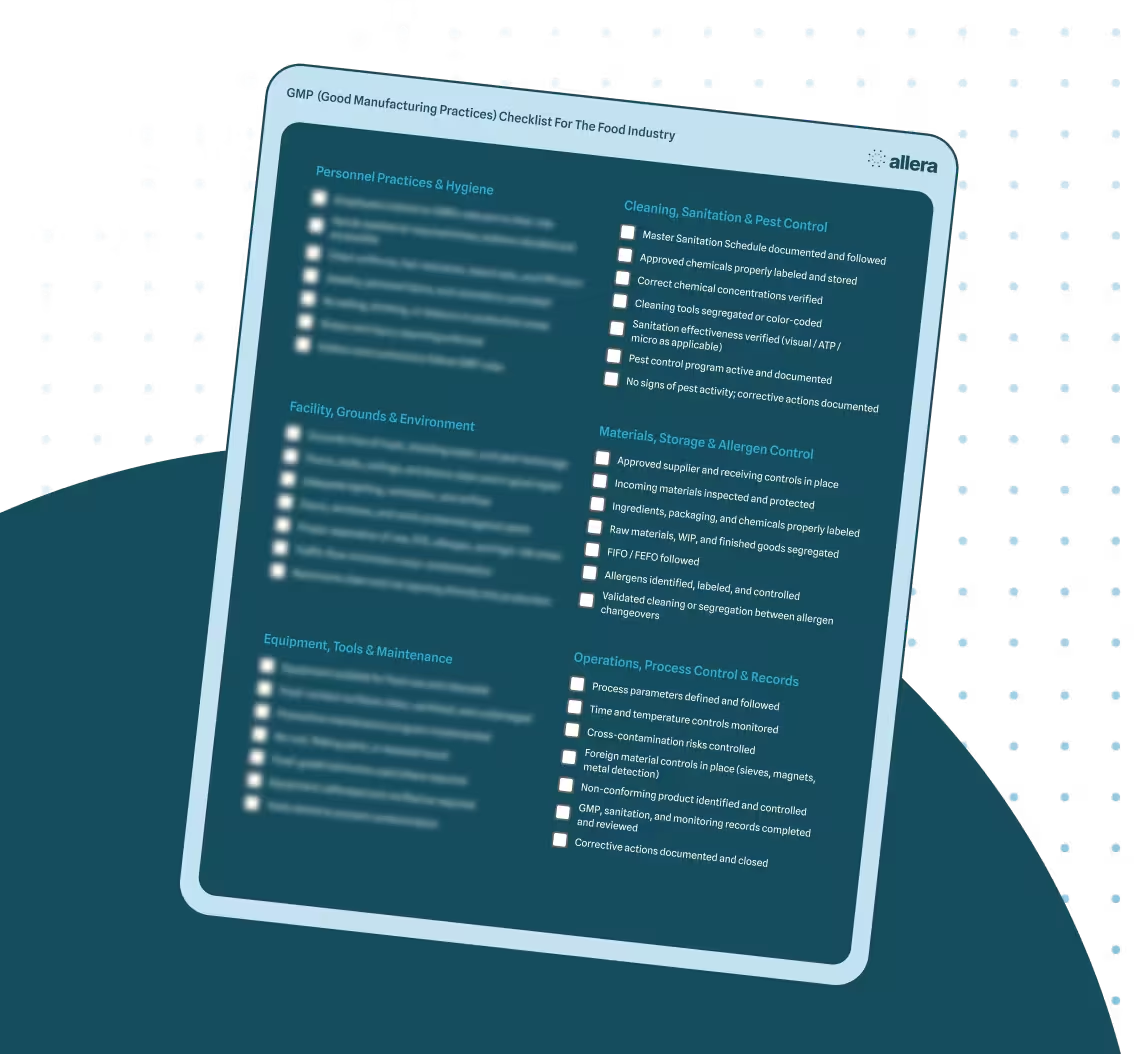
HACCP and preventive controls documentation should be a dynamic digital system, not just a PDF upload. Look for HACCP compliance software that maps your CCPs to monitoring forms automatically and flags out-of-range readings in real time.
Supplier management portal with automated document requests, certificate expiration alerts, and a supplier-facing upload interface. Manual supplier document collection is where most food safety programs break down.
Lot-code traceability covering receiving through shipping, with the ability to complete a mock recall in under 2 hours. The FSMA 204 final rule sets explicit CTE and KDE requirements that your traceability module must support.
Document control with version history, approval workflows, and SOP access on the plant floor. If your staff can't pull up the current SOP on a tablet during production, document control isn't working.
CAPA management with root cause analysis fields and evidence attachment. Auditors will ask to see corrective action records and want to verify that root causes were addressed, not just symptoms.
21 CFR Part 11-compliant records. FDA guidance on 21 CFR Part 11 requires unique user IDs, electronic signatures, and full audit trails for electronic records at FDA-regulated facilities. Not all food safety software meets this standard.
Mobile accessibility. Plant-floor staff need forms on a tablet or phone. Desktop-only platforms create workarounds that undermine data integrity.
Audit-ready record search. Sub-30-second record retrieval is the benchmark. If retrieving a record takes minutes, that gap will show during an audit.
Analytics and trend dashboards for continuous improvement tracking under SQF and ISO 22000 requirements.
Role-based permissions. Separation of duties is a core requirement in SQF Edition 10 and BRCGS. Every user should only see and edit what their role requires.
Common Challenges Food Safety Software Solves
"We lost a batch record during our SQF audit." A searchable digital archive with never-expiring storage means every record is retrievable in seconds from any authorized device. The auditor asks, you pull it up immediately.
"Our supplier sent an expired COA and no one caught it." Automated certificate expiration alerts and a supplier portal with real-time document status tracking eliminate this gap. The system flags the expiry before the document is ever used in production.
"Our HACCP plan lives in a shared drive that no one updates." Version-controlled document control with mandatory review cycles ensures your HACCP plan is always current, approved, and accessible. Old versions are archived but no longer the working document.
"It takes us a week to run a mock recall." Lot-code trace in minutes, not days. Forward and backward chain visible in a single query. A well-implemented food safety software platform should complete a mock recall in under 10 minutes.
"Our QA manager is the only one who knows where anything is." Structured digital records accessible to any authorized user, from anywhere, remove this single point of failure. When your QA manager is out, audits don't stop.
"We failed our pre-audit because records were incomplete." Real-time task completion tracking catches gaps before the auditor does. Daily dashboards show exactly which checks are overdue and who is responsible for closing them.
Next Steps for Choosing Food Safety Software
Define your certification target first. SQF, BRCGS, ISO 22000, and FSSC 22000 each have different documentation requirements. Choose a platform that explicitly maps to your target scheme — not one that lists it in a marketing page without showing how the system actually supports it.
Ask every vendor for a mock recall demo. If they can't show you a 10-minute lot-code trace in their live system during the demo, that tells you something important about how their traceability module actually works in practice.
Get an implementation timeline in writing. "A few months" is not a commitment. Ask for a go-live milestone, the steps between now and that date, and who owns each one on their side.
Involve your QA team in the demo. The people using the platform daily will spot usability gaps faster than anyone in procurement or IT. If it doesn't work well for them on a tablet during a shift, it won't be used consistently.
Check for 21 CFR Part 11 compliance if you're FDA-regulated. Not all food safety software meets electronic recordkeeping standards — this is a non-negotiable for facilities subject to FDA inspection.
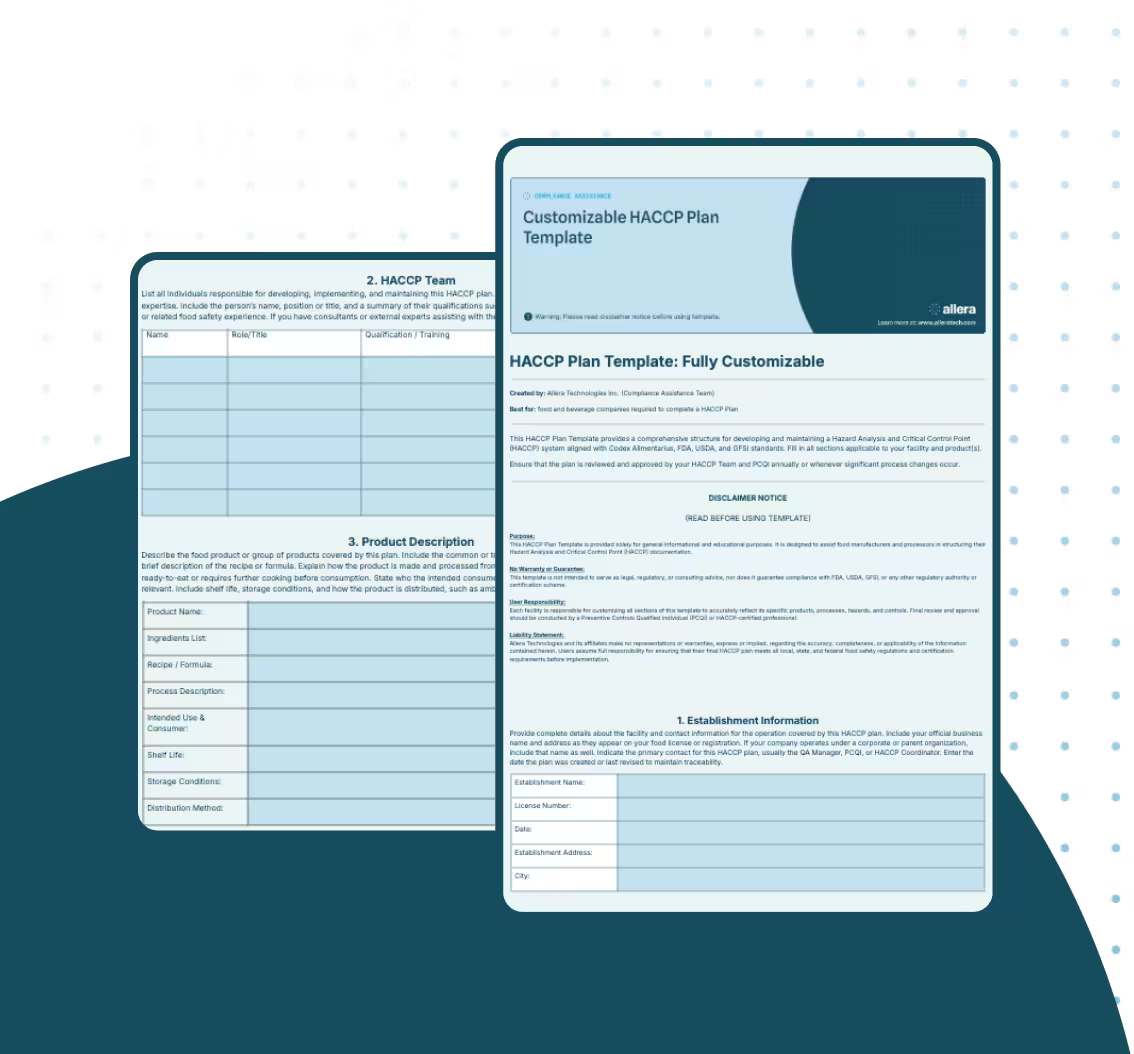
Download our free HACCP plan template to work through your HACCP documentation before starting vendor conversations. Coming in with a draft plan helps vendors show you exactly how their system would digitize and manage it.
Ready to See Food Safety Software Built for Manufacturers?
500 companies use Allera for compliance. Allera digitizes FSQA workflows for food and beverage manufacturers, pass audits faster, and stay ahead of FSMA and GFSI requirements. With approximately 30-day implementation and AI-powered compliance built in, it's the fastest path from paper chaos to audit-ready operations.
FAQs
.avif)
.avif)
.avif)
.avif)
%20(1).avif)
.avif)
.avif)

%20(1).png)

.avif)


.avif)