.avif)



Top SQF Consultants by State (2026)


How to use this list?
Every listing below was pulled from the Exemplar Global SQFI Search Register, filtered for Grade = SQF Consultant, Country = United States, and certification expiry after February 2026. The register is maintained continuously by Exemplar Global on behalf of SQFI.
What these listings include: full name, phone number as publicly listed on the official register, and certification expiry date. Company affiliations are not shown in the official register; contact consultants directly to confirm their firm and current availability. The register is the authoritative source, and we recommend verifying any listing there before making contact.
To verify a listing yourself, visit the Exemplar Global register and search by name. You can also browse the SQFI Consultant Directory on sqfi.com for the live, searchable version. Registrations expire annually, so always confirm the expiry date before engaging a consultant.
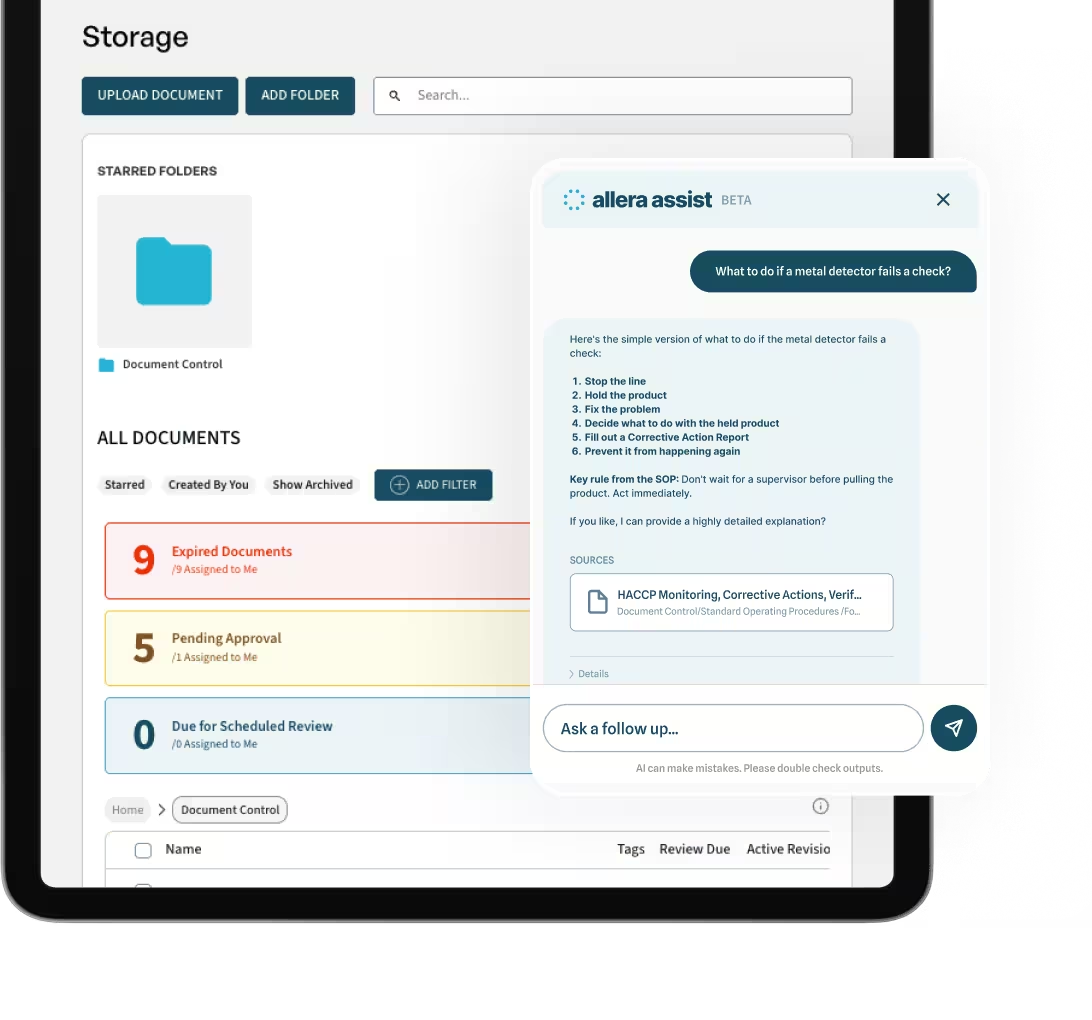
If you are building your SQF program alongside a consultant, Allera's SQF software handles the documentation side so your consultant can focus on implementation rather than chasing paperwork.
SQFI-Registered SQF Consultants by State
The listings below reflect active US-based SQF Consultant registrations as of February 2026. The Exemplar Global register is a live database; check it directly for the most current results. For states not represented below, no active SQF Consultant registrations were found in the register at the time of this update.
SQF Consultants in California
| Name | Phone | Certification Expires |
|---|---|---|
| Oscar Camacho | (707) 337-5727 | April 9, 2026 |
| Jocelyn C. Lee | (510) 467-5110 | April 6, 2026 |
| Fatima Azzahra Karim | (831) 428-5497 | May 1, 2026 |
| Katie Das | (224) 715-9289 | October 10, 2026 |
| Peter Neumann | (916) 764-6789 | December 20, 2026 |
| Carissa Marzouk | (916) 628-9243 | January 4, 2027 |
SQF Consultants in Colorado
| Name | Phone | Certification Expires |
|---|---|---|
| Amanda Moore | (719) 337-6744 | September 27, 2026 |
| Vijay Bachus | (720) 271-7907 | October 16, 2026 |
SQF Consultants in Florida
| Name | Phone | Certification Expires |
|---|---|---|
| Ghislaine Laraki | +1 (514) 586-8626 | March 20, 2026 |
| Shannon Wilson | (561) 267-8301 | October 11, 2026 |
SQF Consultants in Georgia
| Name | Phone | Certification Expires |
|---|---|---|
| Jeff Chilton | (706) 264-1054 | November 4, 2026 |
| Bobby Pace | (706) 799-5279 | July 7, 2026 |
| Darryle Guarino | (678) 209-5762 | May 3, 2026 |
SQF Consultants in Illinois
| Name | Phone | Certification Expires |
|---|---|---|
| Jeff Strout | (813) 748-1558 | August 13, 2026 |
| Bartosz Dobek | (815) 641-6404 | October 1, 2026 |
| Forouzan Zakeri | (937) 541-1744 | May 25, 2026 |
| Ami Jo Akins | (724) 961-0465 | November 7, 2026 |
| Robert Moore | (312) 938-5151 | July 17, 2026 |
| Ziqing Wu | Not publicly listed | December 9, 2026 |
SQF Consultants in Iowa
| Name | Phone | Certification Expires |
|---|---|---|
| Charles Giambrone | (515) 218-3675 | September 15, 2026 |
SQF Consultants in Maryland
| Name | Phone | Certification Expires |
|---|---|---|
| Thomas Hoffman | (410) 693-2815 | September 15, 2026 |
| Abreham Geleta | (240) 491-7112 | March 30, 2026 |
| Sierra Deuber | (925) 819-6457 | January 18, 2027 |
SQF Consultants in Massachusetts
| Name | Phone | Certification Expires |
|---|---|---|
| Steven Ham | (774) 364-2749 | April 22, 2026 |
| Kara Scherer | (413) 417-6439 | July 3, 2026 |
SQF Consultants in Michigan
| Name | Phone | Certification Expires |
|---|---|---|
| Andrew Bender | Not publicly listed | October 6, 2026 |
SQF Consultants in Minnesota
| Name | Phone | Certification Expires |
|---|---|---|
| Patricia Atherton | (208) 371-1550 | September 23, 2026 |
SQF Consultants in Missouri
| Name | Phone | Certification Expires |
|---|---|---|
| Fay Bailey Gregory | (314) 764-8607 | May 3, 2026 |
SQF Consultants in New Jersey
| Name | Phone | Certification Expires |
|---|---|---|
| Richard Gibson | (800) 996-4402 | September 15, 2026 |
| Mark Dargay | (800) 996-4402 | August 21, 2026 |
SQF Consultants in New York
| Name | Phone | Certification Expires |
|---|---|---|
| Ibrahim Musa | (347) 874-2907 | August 16, 2026 |
SQF Consultants in Ohio
| Name | Phone | Certification Expires |
|---|---|---|
| John Paul | (513) 616-7400 | October 16, 2026 |
| Brian Kellerman | (614) 309-3414 | June 8, 2026 |
| Jaime Miller | (614) 859-5412 | October 28, 2026 |
| Tim Grady | Not publicly listed | June 16, 2026 |
SQF Consultants in Pennsylvania
| Name | Phone | Certification Expires |
|---|---|---|
| Arlen Keller | (844) 367-3772 | January 28, 2027 |
| Haijun (Daniel) Wu | (610) 823-2519 | August 22, 2026 |
SQF Consultants in Texas
| Name | Phone | Certification Expires |
|---|---|---|
| Praveen Yerramsetti, Ph.D | (405) 412-4648 | July 18, 2026 |
| Alvaro Falquez | (832) 813-9252 | July 3, 2026 |
| Jalesa Gray | (903) 746-2892 | December 5, 2026 |
| Jorge Chong | Not publicly listed | November 10, 2026 |
SQF Consultants in Utah
| Name | Phone | Certification Expires |
|---|---|---|
| Anagha Deshpande | (385) 202-3903 | August 14, 2026 |
SQF Consultants in Virginia
| Name | Phone | Certification Expires |
|---|---|---|
| Parisa Delfan | (757) 940-8221 | December 23, 2026 |
SQF Consultants in Washington
| Name | Phone | Certification Expires |
|---|---|---|
| Alesia Obronova | (206) 992-4216 | February 28, 2027 |
| Brett Holman | (509) 663-8753 | March 3, 2026 |
| Anita Jones | (509) 860-6213 | March 12, 2026 |
| Laura Swanson | (253) 753-0838 | November 1, 2026 |
SQF Consultants in Wisconsin
| Name | Phone | Certification Expires |
|---|---|---|
| Andrew Schmitt | (920) 370-2220 | January 7, 2027 |
Don't See Your State?
We recommend that you search the live SQFI Consultant Directory directly for the most current state-by-state results, or contact a consultant listed above. Several registered SQF Consultants work nationally and can support facilities remotely or with on-site visits depending on project scope.
What to Look for When Hiring an SQF Consultant
No two consultants are alike, and the cheapest option is rarely the right one for a GFSI-benchmarked certification. Use this checklist before signing any agreement.
- Verify SQFI registration: search the Exemplar Global register by name before anything else. If they are not listed, they are not registered.
- Confirm the expiry date: registrations expire annually. A consultant whose certification lapsed six months ago is not currently registered, regardless of what they claim.
- Ask about your specific sector: SQF covers food manufacturing, primary production, distribution, and retail. Your consultant should have direct, hands-on experience in your sector, not just general food safety credentials.
- Clarify the scope in writing: confirm whether they will write your program documentation or only advise. Some consultants coach; others do the writing. Know which you are getting before you sign.
- Ask about SQF level experience: Level 2 (Food Safety Fundamentals) and Level 3 (Quality) have meaningfully different requirements. Make sure your consultant has guided facilities at the level you are targeting.
- Request references: ask for two or three food facilities they have guided to SQF certification. A confident, experienced consultant will have them ready.
- Get a written scope of deliverables: gap assessment, program documentation, mock audit, and audit support should all be explicitly defined. Vague scopes lead to scope creep and budget overruns.
- Check FSMA alignment: if your facility is subject to FDA FSMA Preventive Controls requirements, confirm your consultant understands how SQF maps to PCQI obligations. Not every SQF-registered consultant has deep FSMA expertise.
Pair this checklist with your food safety audit preparation and your HACCP plan development to get the most value from the engagement from day one.
What Is an SQFI-Registered SQF Consultant?
An SQFI-registered SQF Consultant is an external advisor who has met SQFI's formal requirements to help food facilities achieve SQF certification. They guide your program from gap assessment through certification audit. That responsibility for managing the program internally stays with your in-house SQF Practitioner, not the consultant.
To earn SQFI registration, a consultant must complete one of three SQFI-approved training courses (Implementing SQF Systems, Auditing the SQF Code, or the SQF Practitioner Training Program) and pass the corresponding exam. They also need at least five years of experience in a food-related technical or professional role, including at least two years working with SQF or another GFSI-benchmarked standard. Registration must be renewed each year through a four-hour SQF Professional Update course.
The "registered" designation matters because anyone can call themselves an SQF consultant. Only those listed on the Exemplar Global register have passed SQFI's training requirements, signed the SQFI Professional Code of Conduct, and maintained their annual re-registration. Before you hire, verify the consultant's name on the SQFI consultant requirements page or the register directly.
For a broader look at the certification process, see our SQF certification guide.
SQF Consultant vs SQF Practitioner vs SQF Auditor: What's the Difference?
These three titles cause more confusion than any other part of the SQF ecosystem. Here is what each role actually means.
SQF Consultant
An SQF Consultant is an external advisor your facility hires to guide the certification process. They advise, write documentation, and support audit preparation. Registration with SQFI through Exemplar Global is required, and they must maintain that registration annually.
One critical boundary: a registered SQF Consultant cannot manage your facility's SQF program. That restriction is written into SQFI's rules. If you need ongoing internal program ownership, that requires a different arrangement entirely.
SQF Practitioner
An SQF Practitioner is your internal employee who owns and operates the SQF program day-to-day. They keep the program compliant between audits, manage records, and serve as the point of contact during the certification audit. This person is on your payroll, not in a consultant arrangement.
Consultants often train and set up the Practitioner as part of their engagement scope. Once the consultant leaves, the Practitioner carries the program forward independently.
SQF Auditor
An SQF Auditor works for a licensed SQF certification body. They conduct the official third-party audit that determines whether your facility passes or fails. You cannot hire an SQF Auditor directly; they are assigned through your chosen certification body.
The key rule to keep straight: one role advises (Consultant), one role manages (Practitioner), and one role judges (Auditor). For a broader look at working with food safety consultants across different standards, see our guide on choosing a food safety consultant.
How Much Does an SQF Consultant Cost?
Most SQF consulting engagements fall between $2,500 and $12,000 for a full certification project. That range covers gap assessment through audit support for a single facility.
Several factors move the price in either direction:
- Facility size and complexity: a 50,000 sq ft multi-product plant takes significantly more work than a small processing operation
- SQF level: Level 2 (Food Safety Fundamentals) is less intensive than Level 3 (Quality), which adds additional program elements
- Starting point: building a program from scratch costs more than updating an existing one that has drifted out of compliance
- On-site visits: consultants charge travel and day rates for in-person work; remote-heavy engagements cost less
- Region: consultant rates vary by state, with coastal markets generally higher
For hourly work (mock audits, document review, specific gap assessments), expect $150 to $300 per hour for a registered consultant with SQF-specific experience.
A full engagement typically includes gap assessment, program documentation, implementation support, employee training, a mock audit, and certification audit support. For more on what that audit process looks like from your side, read our guide on how to pass an SQF audit.
What Does an SQF Consultant Actually Deliver?
Understanding what you are paying for helps you scope the engagement correctly and hold your consultant accountable. A full SQF consulting engagement under SQF Code Edition 9 typically includes six phases.
- Gap Assessment: the consultant reviews your current operations against SQF Code requirements and produces a prioritized action list. This is the foundation everything else builds on, and it tells you exactly how far your facility is from certification-ready.
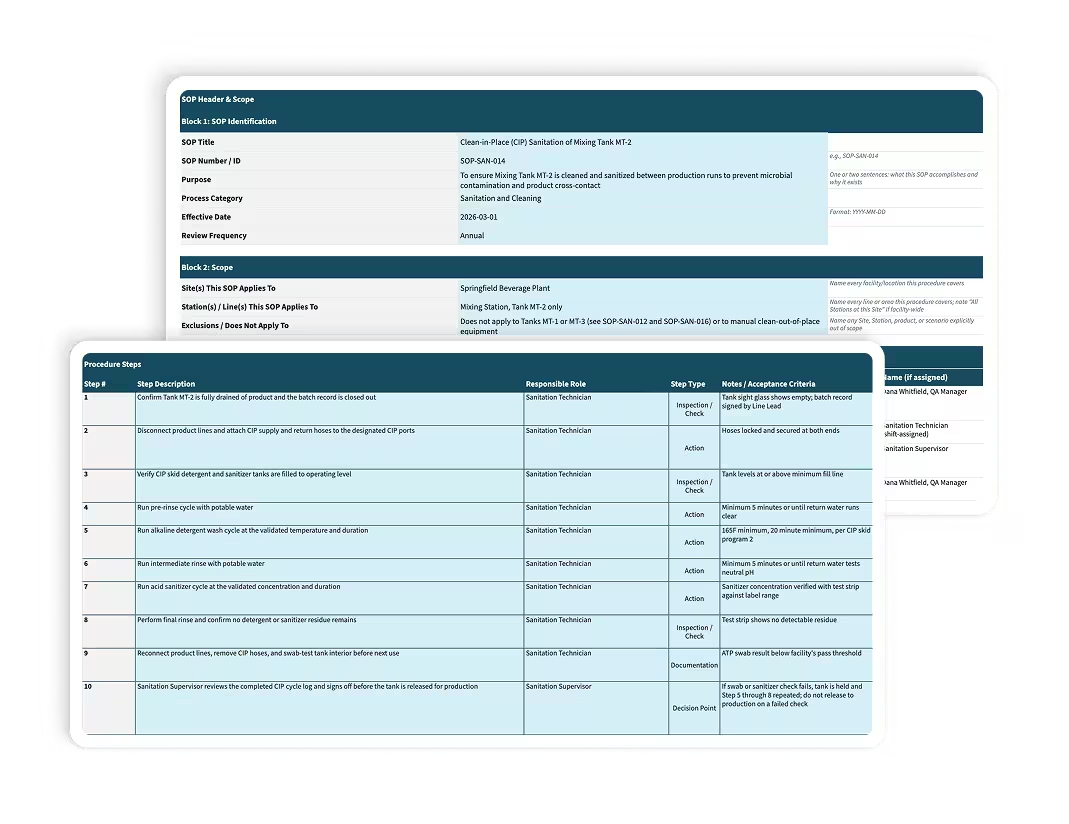
- SQF Program Documentation: writing or updating your SQF manual, food safety plan, HACCP plan, and all prerequisite programs including GMPs, sanitation standard operating procedures, pest control, allergen management, and more.
- Implementation Support: hands-on guidance for your team as you roll out the program. This is where strong consultants separate themselves from those who hand over a document package and disappear.
- Employee Training: training your SQF Practitioner and relevant staff so they understand the program and can sustain it after the consultant's engagement ends.
- Internal or Mock Audit: a pre-certification dry run that surfaces any remaining gaps before the official audit. Think of it as a rehearsal with real consequences for what gets found.
- Certification Audit Support: on-call guidance during the official third-party audit, so your team has experienced backup when the auditor asks questions.
For a detailed breakdown of what auditors look for, use our SQF audit checklist. To see what a successful implementation looks like in practice, read how Eden Green cut their SQF audit prep time by 75% with a structured approach to documentation and record-keeping.
How SQF Software Complements Your SQF Consultant
A consultant builds your SQF program. Software keeps it running.
The gap most facilities run into is what happens after certification. The consultant finishes, hands off the documentation, and your SQF Practitioner is left managing a paper-based or spreadsheet-based system that gets harder to sustain every month. Records become scattered, corrective actions go untracked, and supplier certificates quietly expire. By the time the re-certification audit comes around, the program has drifted from what was originally written.
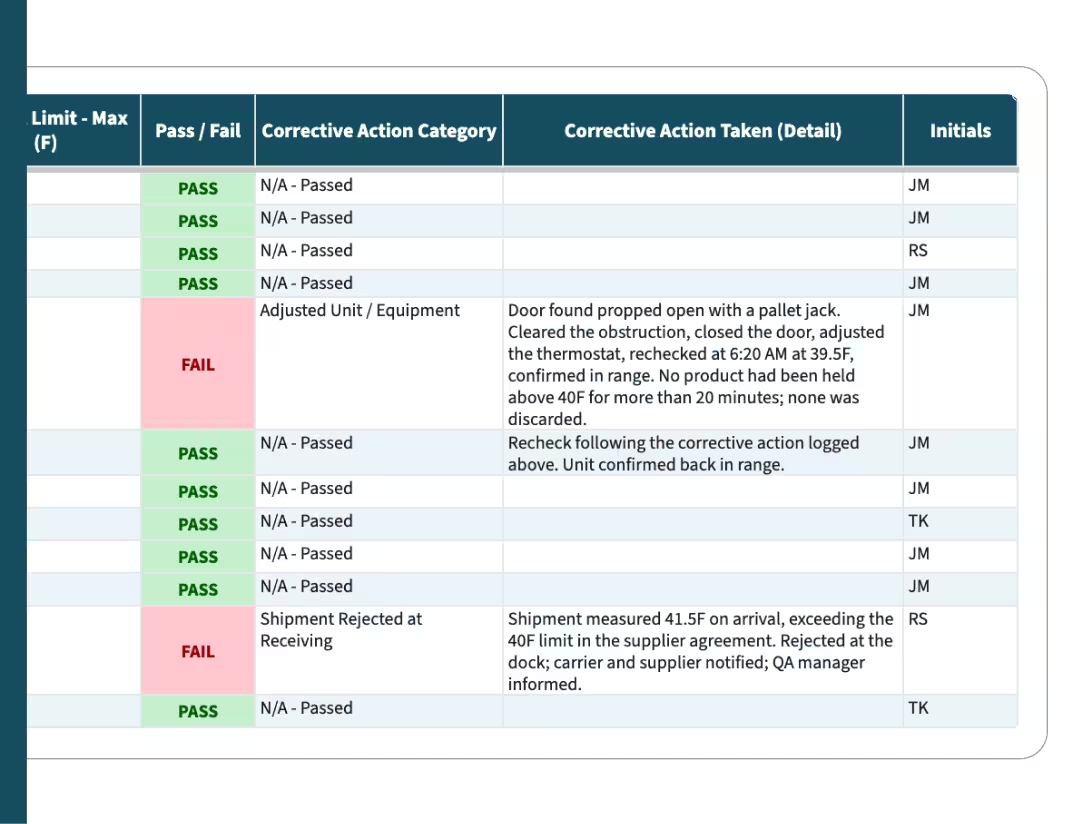
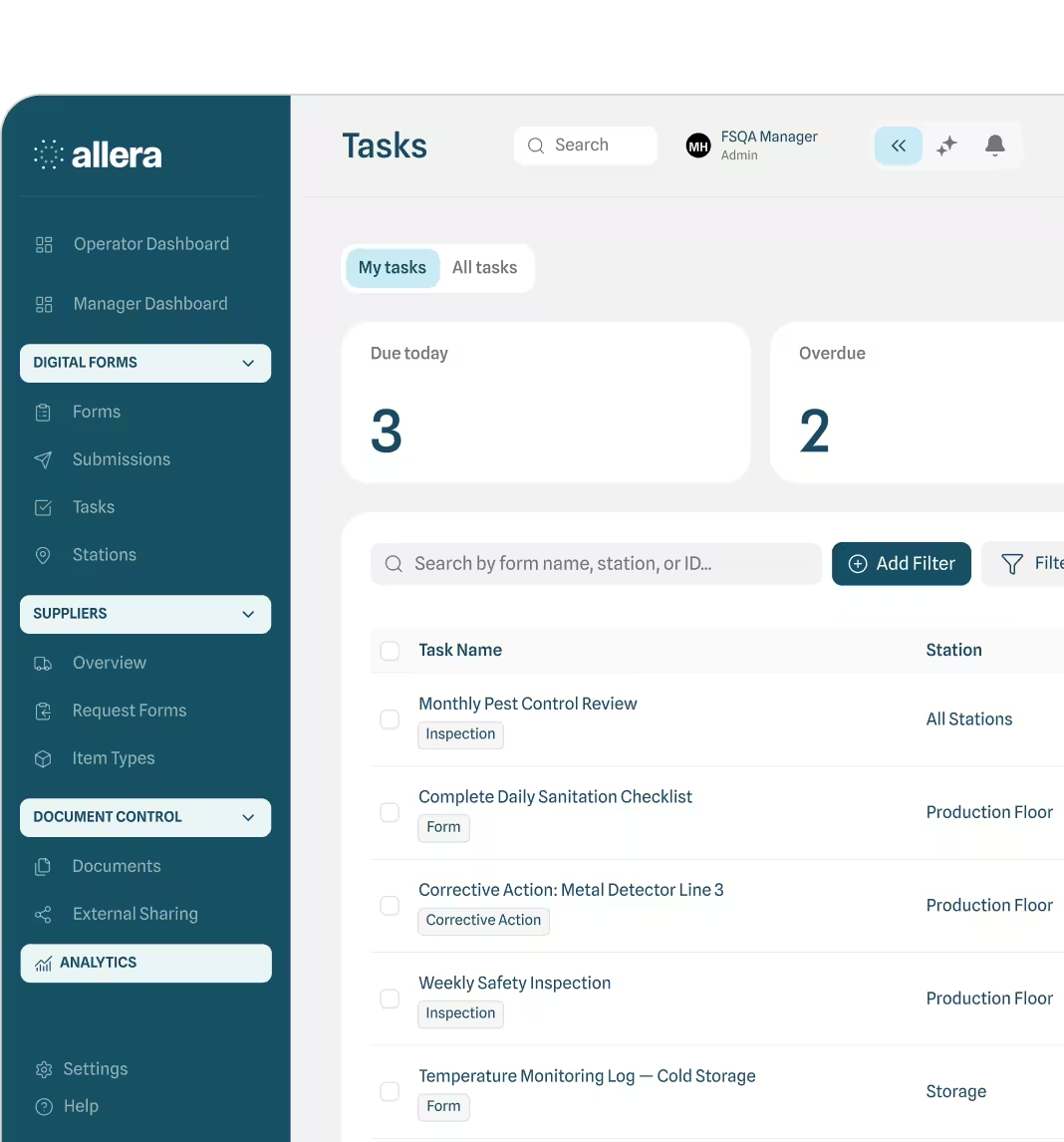
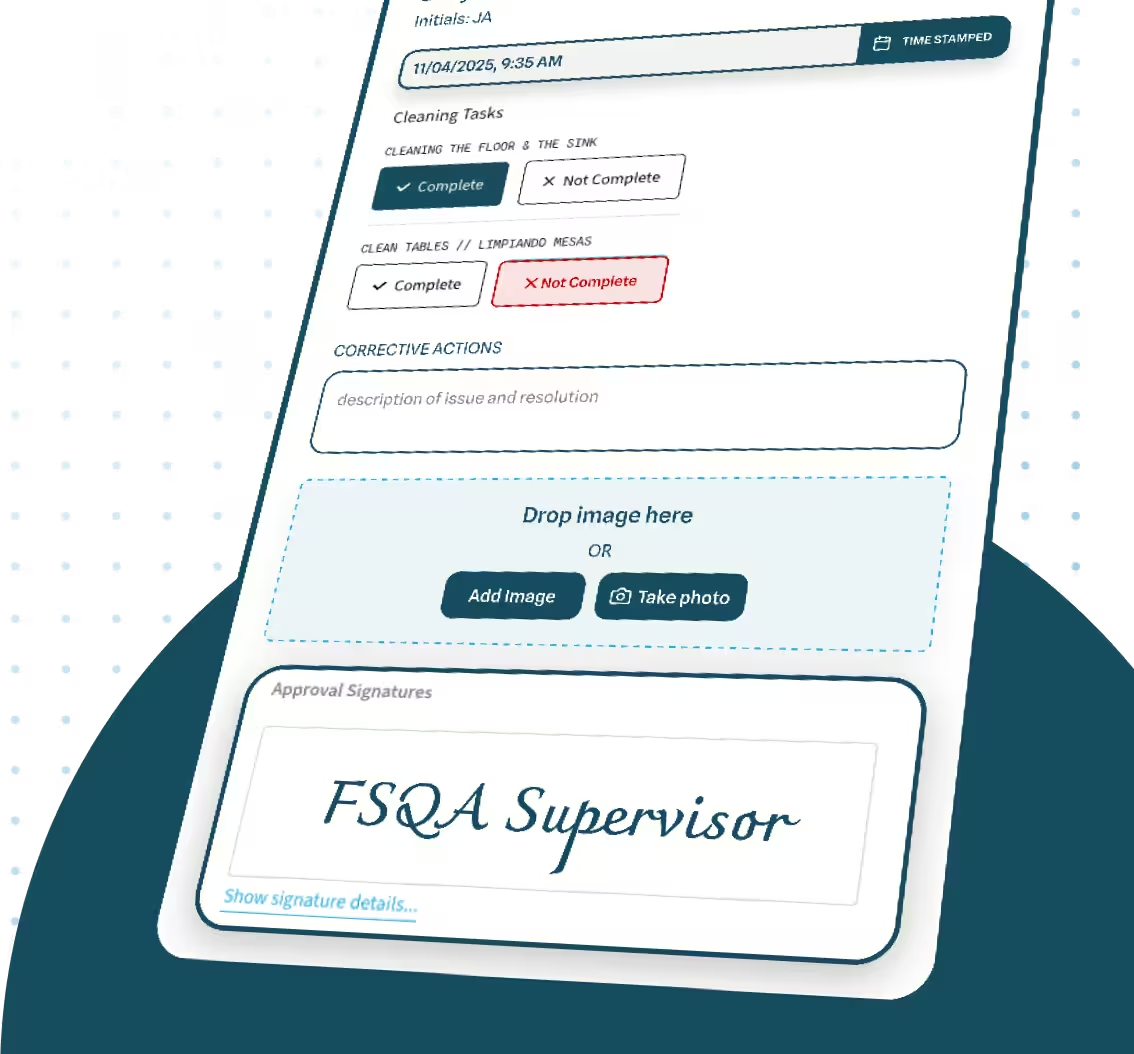
Allera handles the ongoing compliance layer that consultants are not designed to cover: document control software keeps your SQF manual and SOPs version-controlled and accessible, digital FSQA forms replace paper records and link directly to your program requirements, and supplier management software tracks certificates and approvals so nothing lapses without someone knowing.
The consultant and software combination works best when both are in place before the certification audit. Your consultant writes the program; Allera organizes and maintains it so your Practitioner is not managing compliance out of a binder when the auditor arrives.
Preparing for your first SQF audit? See how Allera keeps food manufacturers audit-ready year-round at alleratech.com/blog/sqf-software.
Frequently Asked Questions About SQF Consultants
How much does an SQF consultant cost?
Most SQF consulting engagements range from $2,500 to $12,000 for a full certification project, depending on facility size, SQF level, and whether the program is being built from scratch. Hourly rates for registered consultants typically run $150 to $300 per hour for scoped work like mock audits or document review.
How do I find a registered SQF consultant near me?
The official source is the Exemplar Global SQFI Search Register, which lists all active registered SQF Consultants with their state and contact information. This page provides a curated state-by-state snapshot sourced from that register. You can also search the SQFI Consultant Directory on sqfi.com for the live, searchable version.
What is the difference between an SQF Consultant and an SQF Practitioner?
An SQF Practitioner is an internal employee who manages the facility's SQF program day-to-day. An SQF Consultant is an external advisor hired to guide certification. SQFI rules prohibit registered consultants from managing the facility's program themselves; that responsibility must stay with a qualified Practitioner on the facility's payroll.
How do I become an SQF consultant?
You need to complete an SQFI-approved training course, pass the exam, have at least five years of relevant food industry experience including two or more years with SQF or a GFSI-benchmarked program, attest to the SQFI Professional Code of Conduct, and register through Exemplar Global. The Implementing SQF Systems training course is one of the qualifying pathways.
Can an SQF consultant manage my SQF program for me?
No. SQFI prohibits registered SQF Consultants from managing a facility's SQF program. They can advise, write documentation, train staff, and support audits, but a qualified SQF Practitioner employed by the facility must own and operate the program day-to-day.
Do SQF consultants need to be recertified?
Yes. SQFI registration expires annually. Consultants must complete the four-hour SQF Professional Update each year to remain active on the register. Always check the expiry date on a consultant's registration before hiring.
Once you have found your SQF consultant and your program is built, the next step is keeping it audit-ready through every re-certification cycle. A consultant gets you certified; a solid compliance system keeps you there long-term. SQF certification is not a one-time event. Annual re-certification means your program needs to be maintained and documented every single day. See how Allera supports SQF programs year-round and book a free demo.
FAQs
How long is SQF certification good for?
SQF certification is valid for one year.
Facilities must:
• Pass an annual recertification audit
• Maintain ongoing compliance
• Address any non-conformances
Failure to maintain compliance can result in suspension or withdrawal of certification.
Can a person be SQF certified?
No, SQF certification applies to facilities, not individuals.
A company, plant, or manufacturing site becomes SQF certified after passing an accredited third-party audit.
Individuals can complete SQF training, but they do not receive “SQF certification.” Instead, they may serve as an SQF practitioner within a certified facility.
What does an SQF practitioner do?
An SQF practitioner is the designated person responsible for developing, implementing, and maintaining a facility’s SQF system.
Their responsibilities include:
• Conducting hazard analysis
• Managing food safety plans
• Ensuring compliance with SQF Code requirements
• Overseeing documentation and recordkeeping
• Training staff on food safety procedures
• Preparing for audits
• Leading corrective actions after non-conformances
The SQF practitioner is the primary contact during certification audits.
How to become a SQF consultant?
To become a SQF consultant, you need strong food safety experience and formal SQF training.
The typical path includes:
1. Gain industry experience (food manufacturing, QA, food safety management)
2. Complete SQF Practitioner training
3. Complete SQF Implementation training
4. Gain hands-on experience implementing SQF systems
5. Build a portfolio of successful certifications
Many consultants also hold certifications such as:
• PCQI (Preventive Controls Qualified Individual)
• HACCP certification
• Lead Auditor certification
Most successful SQF consultants have 5–10+ years of food safety experience before consulting independently.
How much does SQF cost?
SQF certification costs typically range from $8,000 to $40,000+ per year, depending on facility size and scope.
Costs include:
• Certification body audit fees ($5,000–$15,000+)
• Annual registration fees
• Consultant fees (if used)
• Training costs
• Internal labor and system development
• Upgrades or corrective actions
Multi-site and high-risk facilities generally pay more.
How much does a SQF consultant cost?
An SQF consultant typically costs between $150 and $300 per hour, depending on their experience, industry specialization, and geographic location.
For a full SQF implementation project, most food manufacturers spend:
• $5,000 to $25,000+ for small to mid-sized facilities
• $30,000+ for complex, multi-site operations
Costs depend on:
• Facility size and product risk level
• Current food safety program maturity
• Whether you are pursuing initial certification or upgrading to a higher SQF code
Some consultants offer flat-rate packages for gap assessments, documentation development, training, and audit preparation.
How long does it take to become an SQF practitioner?
Becoming an SQF practitioner can take anywhere from 3 to 12 months, depending on your experience.
If you already work in food safety:
• Training can be completed in a few weeks
• Practical implementation experience may take several months
If you are new to food safety:
• Expect 1–3 years of industry experience before qualifying
You must complete approved SQF training and demonstrate competency in HACCP principles.
What does SQF stand for?
SQF stands for Safe Quality Food.
It is a globally recognized food safety and quality certification program administered by the Safe Quality Food Institute (SQFI) and benchmarked by the Global Food Safety Initiative (GFSI).
.avif)
.avif)
.avif)
.avif)
%20(1).avif)
.avif)
.avif)

%20(1).png)

.avif)


.avif)