.avif)



Allergen Control Program for Food Manufacturers

An undeclared allergen is one of the fastest paths to a Class I recall. It puts consumers at risk, triggers FDA enforcement action, and can destroy the trust your facility has built with customers and retailers. Building a documented, validated allergen control program is how you prevent that outcome.
This guide covers every component of an effective allergen control program, from hazard analysis and supplier controls to cleaning validation and rework management. It also maps requirements across FSMA, SQF, BRCGS, FSSC 22000, and ISO 22000 so you know exactly what each standard expects.
What Is an Allergen Control Program?
An allergen control program is a set of written procedures designed to identify, manage, and prevent allergen hazards throughout your facility. It covers every point where allergen cross-contact could occur: receiving, storage, production, packaging, labeling, and shipping.
A well-built allergen control program documents what allergens are present in your facility, how they are stored and handled, how production is scheduled to prevent cross-contact, how equipment is cleaned and validated, and how finished products are labeled accurately. It functions as a standalone program but connects directly to your food safety plan and HACCP plan.
Allergen controls differ from general food safety controls in one important way: there is no safe threshold for allergen cross-contact. A residue that falls well below a microbiological action level can still trigger a severe allergic reaction in a sensitized individual. That distinction shapes how you approach cleaning validation, labeling, and rework decisions.
For facilities covered under FSMA, allergen controls are mandatory preventive controls under 21 CFR Part 117. For GFSI-certified facilities operating under SQF, BRCGS, or FSSC 22000, a formal allergen management program is a scheme requirement. For non-regulated facilities, it represents the industry baseline expected by major retail buyers.
Why Allergen Control Programs Are Non-Negotiable in 2026
Undeclared Allergens Are the #1 Driver of Food Recalls
Undeclared allergens have been the leading cause of FDA Class I food recalls for several consecutive years. Class I means there is a reasonable probability that consuming the product will cause serious adverse health consequences or death. These are not administrative technicalities.
The financial exposure from an allergen recall is significant. Direct costs include product retrieval, destruction, and replacement. Indirect costs include regulatory investigations, customer chargebacks, litigation, and reputational damage with retail and foodservice buyers. Facilities with documented, validated allergen programs fare substantially better during post-recall FDA inspections because they can demonstrate the controls were in place and functioning.
Most undeclared allergen events trace back to a small number of root causes: label artwork not updated after a supplier reformulation, rework incorporated without verifying allergen profiles, production scheduling errors, or cleaning procedures that were never validated for allergen removal. Each of these failure modes is preventable with a structured program.
The FASTER Act Added Sesame as the 9th Major Allergen
The Food Allergy Safety, Treatment, Education, and Research (FASTER) Act added sesame as the ninth major food allergen, effective January 1, 2023. Manufacturers were required to declare sesame on product labels and update their allergen programs accordingly.
Three years after the effective date, many facilities are still working through the downstream program updates. If sesame is present in your facility as an ingredient or processing aid, your allergen hazard analysis must address it. Your supplier questionnaires need sesame-specific declarations. Your production scheduling and cleaning validation must account for sesame as a distinct allergen.
The practical challenge with sesame is cross-contact risk from shared equipment and airborne contamination in facilities that process seeds and spice blends. If sesame was not previously treated as a major allergen in your program, a gap assessment is a necessary first step before your next audit.
FDA's 2026 Allergen Threshold Framework
FDA has been moving toward a risk-based allergen threshold framework that would establish reference doses for individual allergens, potentially allowing manufacturers to use analytical data to inform labeling decisions for advisory statements. The agency held listening sessions in 2025 and early 2026 to gather industry and consumer input.
No final rule has been issued. The current regulatory requirement remains clear: any allergen present in a product must be declared, and an undeclared allergen from cross-contact is a Class I recall trigger regardless of the amount. Manufacturers should not make labeling decisions based on anticipated threshold guidance that has not yet been codified.
What you can do now is build the analytical foundation. A validated cleaning procedure with documented allergen-specific test results, a sampling plan with established acceptance criteria, and accurate records of every allergen present in your facility will position you well regardless of how the threshold framework ultimately develops.
The 9 Major US Food Allergens (And the EU's Big 14)
The USDA FSIS identifies the nine major food allergens in the United States as: milk, eggs, fish, crustacean shellfish, tree nuts, peanuts, wheat, soybeans, and sesame. These are the allergens that must be declared on food labels under FALCPA and the FASTER Act.
If your facility exports to or produces for the European market, the EU's allergen list is broader. EU Regulation No 1169/2011 requires declaration of 14 allergens: the US Big 9, plus celery, lupin, molluscs, mustard, and sulphur dioxide and sulphites above 10 mg/kg. The practical difference matters for label artwork review and supplier declaration requirements.
| Allergen | Required in US | Required in EU |
|---|---|---|
| Milk | Yes | Yes |
| Eggs | Yes | Yes |
| Fish | Yes | Yes |
| Crustacean shellfish | Yes | Yes |
| Tree nuts | Yes | Yes |
| Peanuts | Yes | Yes |
| Wheat | Yes | Yes |
| Soybeans | Yes | Yes |
| Sesame | Yes (FASTER Act, 2023) | Yes |
| Celery | No | Yes |
| Lupin | No | Yes |
| Molluscs | No | Yes |
| Mustard | No | Yes |
| Sulphites (>10 mg/kg) | No | Yes |
If your facility produces products for both markets, your allergen inventory and label review process need to account for both lists. Food traceability systems that capture allergen data at the lot level are particularly useful for managing dual-market production runs.
7 Core Components of an Allergen Control Program
A complete allergen control program addresses seven functional areas. Each one represents a point where allergen cross-contact can occur and where written procedures, monitoring, and records are required. The following sections walk through each component and what a well-documented program looks like in practice.
1. Allergen Hazard Analysis and Risk Assessment
Your allergen program starts with a complete inventory of every allergenic ingredient, processing aid, and rework stream in your facility. This includes raw materials that contain allergens as declared ingredients, processing aids that may carry allergenic proteins, and any rework that introduces allergen profiles from prior production runs.
For each allergen present, you assess the risk of cross-contact: What is the likelihood that this allergen could unintentionally end up in a product that does not declare it? What is the severity of exposure if it does? A risk matrix plots probability against severity to prioritize controls. High-probability, high-severity combinations, such as shared equipment used for both peanut-containing and peanut-free products, require the most robust controls.
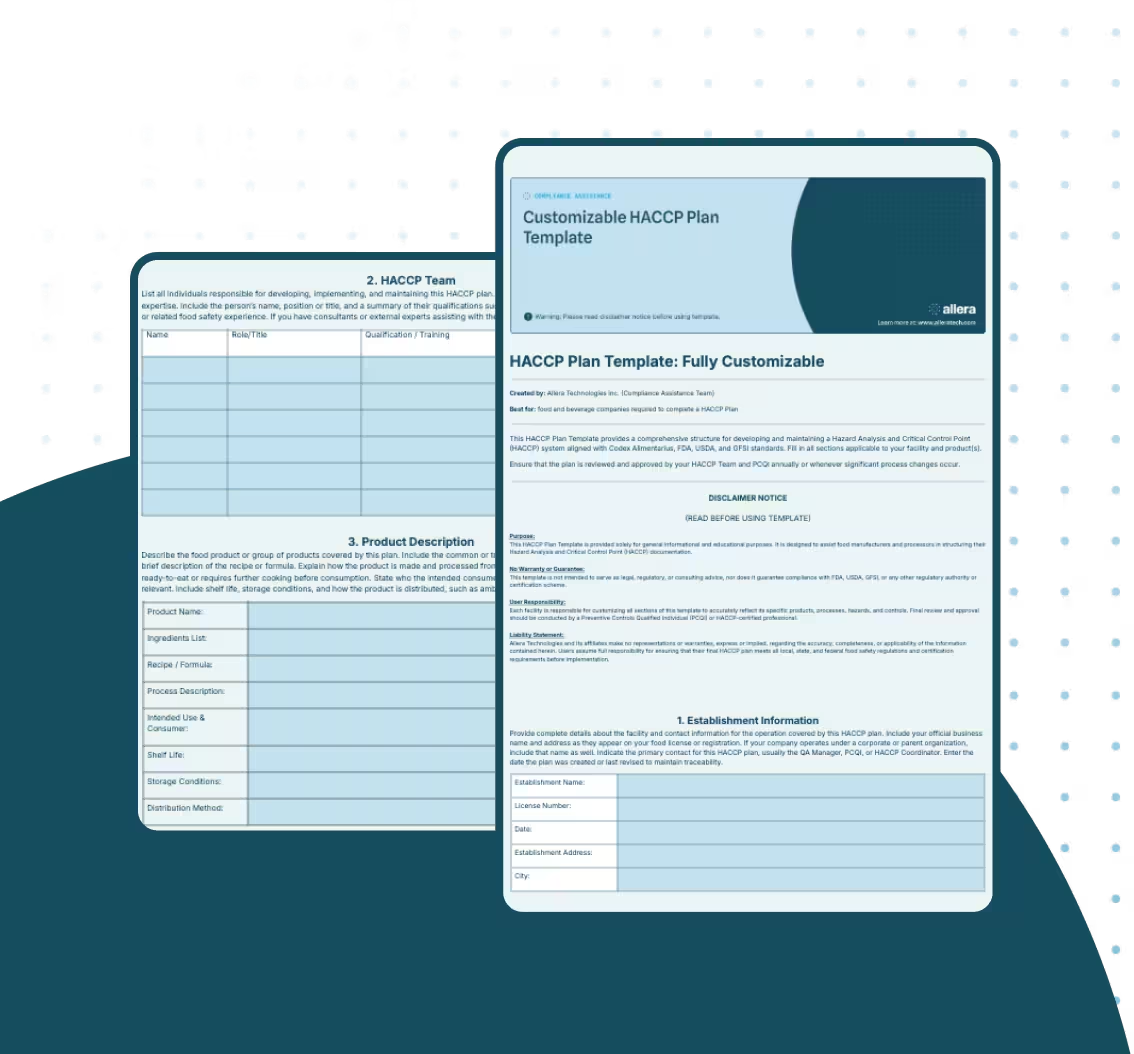
This hazard analysis feeds directly into your HACCP principles, where allergen cross-contact hazards are typically addressed as prerequisite programs or, in high-risk scenarios, as CCPs or preventive controls. If you are building your allergen hazard analysis as part of a new HACCP system, a free HACCP plan template can help you structure the foundational documents. The allergen hazard analysis must be documented, reviewed by a qualified individual, and updated whenever your ingredient portfolio or production processes change.
2. Ingredient Purchasing and Supplier Controls
Every allergen that enters your facility arrives through your supply chain. Your supplier controls program must require allergen declarations from every supplier for every raw material, not just ingredients you already know contain allergens. Formulations change, and a supplier can introduce an allergenic processing aid without notifying customers unless your agreement explicitly requires disclosure.
Your supplier questionnaires should ask whether each ingredient contains any of the Big 9 (or Big 14 for EU-market products) as a declared ingredient, a processing aid, or a shared-equipment risk. Request certificates of analysis that confirm allergen content and cross-contact risk for each lot. When a supplier makes a formulation change, your program needs a defined process for reviewing and approving that change before the material enters production.
Centralizing allergen declarations and certificates of analysis in a supplier management software platform makes this process significantly more reliable than email chains and shared folders. When an auditor asks for allergen declarations for every active supplier, you need to be able to produce them quickly.
3. Storage and Segregation
Physical separation of allergenic and non-allergenic ingredients is a fundamental control. Allergen-containing materials should be stored in designated areas or on dedicated shelving, clearly labeled with their allergen content, and separated from non-allergenic materials by physical barriers or sufficient distance to prevent cross-contact.
During receiving, verify that allergen declarations match what is on the label and certificate of analysis before ingredients are put away. Materials with undisclosed or unexpected allergen content should be quarantined until resolved. In cold storage environments, allergen-containing materials should be stored below non-allergenic materials to prevent cross-contact from condensation or spills.
Labeling in storage areas should be clear enough that any employee, including temporary workers on their first day, can identify what allergens are present. Color coding, consistent signage, and clearly marked allergen zones reduce the likelihood of mix-ups during production staging.
4. Production Scheduling and Line Changeover
Production scheduling is one of the most effective allergen controls available, and it is one of the most frequently mismanaged. The core principle is to run products with the most allergens last in a production sequence, so that the risk of cross-contact from prior allergens affects products that are already labeled for those allergens.
An allergen matrix maps every product to its allergen profile. Before scheduling a production run, you verify that the products running on a given line are sequenced to minimize allergen risk. If a peanut-containing product runs before a peanut-free product on the same line, you need either a validated changeover procedure that removes peanut residues or a documented decision that the peanut-free product will carry a "may contain peanuts" advisory statement.
Changeover protocols define what cleaning steps are required between allergen-containing and allergen-free production runs, who performs the cleaning, who verifies it, and what documentation is required before the next run can start. Sign-off requirements ensure that no production run begins on equipment that has not been formally cleared.
5. Cleaning, Sanitation, and Validation
Standard microbial sanitation procedures are not sufficient for allergen control. Many cleaning methods that effectively remove microbial contamination do not remove allergenic proteins to safe levels. Allergen proteins can be heat-stable, deeply embedded in equipment surfaces, and resistant to the cleaning chemistry used in routine sanitation programs.
Wet cleaning generally removes allergen residues more effectively than dry cleaning. For facilities that use dry cleaning methods due to product or process requirements, the validation burden is higher, and supplementary allergen-specific testing is typically necessary to demonstrate that dry methods achieve adequate removal.
Validation methods for allergen cleaning include ELISA (enzyme-linked immunosorbent assay) test kits, lateral flow immunoassay strips, and ATP bioluminescence swabbing. ELISA is the most sensitive and is preferred for formal validation studies. Lateral flow strips are faster and useful for routine verification. ATP bioluminescence does not detect allergens directly but can indicate whether cleaning removed organic residues, which makes it a useful complementary tool rather than a standalone allergen test.
Your validation sampling plan should identify the highest-risk swab locations for each allergen, typically the areas hardest to clean: threads, crevices, bearings, belt joints, and product-contact surfaces that cannot be fully disassembled. Acceptance criteria define what test result constitutes a clean surface. Under FSMA 21 CFR 117, cleaning validation must be conducted at least annually and after any significant change to your cleaning procedures or equipment.
6. Labeling and Packaging Controls
Under the Food Allergen Labeling and Consumer Protection Act (FALCPA), major food allergens must be declared either in the ingredient list using the allergen's common name or in a separate "Contains" statement immediately after the ingredient list. The FASTER Act added sesame to these requirements effective January 1, 2023.
Advisory statements such as "May Contain" or "Manufactured in a facility that also processes" are not regulated by FALCPA and are not a substitute for a declared allergen. Advisory statements are only appropriate when an unintentional allergen cross-contact risk exists that cannot be eliminated through controls. Overuse of advisory statements as a liability shield without an underlying risk assessment is not appropriate and can result in products being rejected by retail buyers or flagged during audits.
Your label artwork review process should require sign-off from a qualified individual whenever a new product is launched, an existing formulation changes, a supplier ingredient changes, or a label artwork revision is made for any reason. Document control procedures that require formal change control for label artwork prevent the most common undeclared allergen scenario: a supplier changes an ingredient, and the label is never updated because no one connected the formulation change to a label review requirement.
7. Employee Training and Awareness
Every person who works in your facility needs allergen awareness training, not just production workers. Sanitation staff, maintenance technicians, supervisors, QA personnel, and anyone who handles ingredients or product-contact surfaces needs to understand what allergens are present, why cross-contact is dangerous, and what their specific responsibilities are for preventing it.
Training frequency requirements vary by standard. FSMA requires that all food handlers receive allergen training, with records maintained. SQF and BRCGS both require documented allergen training that covers the facility's specific allergen hazards, not just general awareness. Temporary workers and contractors represent a recurring gap: many facilities train permanent staff thoroughly but have inconsistent processes for ensuring temps and contractors receive equivalent training before they start working on the floor.
Training records must document who was trained, what the training covered, when it occurred, and who delivered or verified it. During food safety audit preparation, allergen training records are a standard auditor request. Facilities with complete, well-organized records demonstrate a functioning program. Facilities with gaps in contractor training records or outdated materials often receive observations that affect their audit score.
PCQI training programs provide the regulatory and technical foundation for the individual responsible for your allergen program and your broader food safety system. If your lead food safety and quality assurance professional is not yet PCQI-certified, that certification is worth prioritizing alongside your allergen program build.
Rework Management for Allergens
Why Rework Is a High-Risk Allergen Control Point
Rework is one of the most frequently cited allergen control failures in FDA warning letters and GFSI audit nonconformances. The scenario is almost always the same: product from a prior run is incorporated into a later run without verifying that the allergen profiles are compatible, and the later product ends up containing an allergen that is not declared on its label.
Under FSMA 21 CFR 117, rework that contains allergens must be controlled to prevent cross-contact in products that do not declare those allergens. This is not a recommendation; it is a regulatory requirement. The requirement applies to any rework, including trim, startup product, and product that has been removed from packaging and reintroduced into production.
The practical challenge is that rework decisions are often made under time pressure on the production floor, without reference to a documented procedure. Establishing a written rework decision protocol and training production supervisors to use it before any rework decision is made is the most effective way to prevent this failure mode.
Allergen Rework Decision Tree
A rework decision tree reduces allergen risk by turning rework authorization from an informal judgment call into a documented process. Before any rework is incorporated into a production run, the following questions must be answered:
- Does the rework contain any declared allergen?
- Is the product receiving the rework labeled for all allergens present in the rework?
- Is the rework from the same product code, or a product with an identical allergen profile?
- Is the rework within its shelf life and quality specifications?
- Has the quantity and lot number of the rework been recorded?
If the answer to question 1 is yes and the answer to question 2 is no, the rework cannot be incorporated into that product. The rework must either be used in a product that declares all of its allergens or disposed of. A "yes to all" result allows incorporation, but only with documented lot traceability recorded before the run begins.
This decision logic should be posted at rework staging areas, built into your batch record or production order, and included in allergen awareness training for production supervisors. It removes ambiguity from a decision that is otherwise made differently by different people on different shifts.
Documentation Requirements for Rework
Every rework incorporation event must be documented. Records should capture the lot number and quantity of rework incorporated, the product code it was incorporated into, the date and shift, the name of the person who authorized the decision, and a confirmation that the allergen profile was verified. These records support FSMA 204 traceability requirements and provide the lot-level chain of custody needed for an effective allergen recall if one becomes necessary.
Rework disposition records are among the first documents an FDA investigator will request following an undeclared allergen incident. Facilities without clear records of rework decisions are unable to reconstruct what happened, which compounds the regulatory and reputational impact of an already serious event.
Validating Your Allergen Control Program
Validation vs. Verification: The Critical Distinction
Validation and verification are two distinct activities that every major food safety standard requires, and confusing them is a common source of audit findings. Validation means demonstrating that your control procedure is capable of consistently achieving its intended outcome. Verification means confirming that the procedure was actually followed and that the outcome was achieved.
For allergen cleaning, validation means running a scientific study that demonstrates your cleaning procedure removes the target allergen from your equipment to an acceptable level under your actual production conditions. You do this once, or whenever your procedure or equipment changes significantly. Verification means testing regularly, through swabbing or product testing, to confirm that the procedure is being followed correctly and achieving the expected result.
FSMA, SQF Edition 9, BRCGS Issue 9, and FSSC 22000 Version 6 all require both validation and verification for allergen controls. ISO 22000:2018 requires validation of control measures for significant hazards. If you have a cleaning procedure but no validation study supporting it, you have a verification program without a foundation.
How to Validate Allergen Cleaning Procedures
Allergen cleaning validation is a structured study, not a single swab result. The process has five steps.
Step 1: Select representative allergen and surface types. Identify the highest-risk allergen in your facility and the equipment surfaces most difficult to clean. Focus your validation study there. If you can demonstrate effective removal on your hardest-to-clean surface, you have stronger evidence that the procedure works across the facility.
Step 2: Choose your test method. ELISA is the most sensitive and widely accepted method for validation studies. It can detect allergen residues at the microgram-per-square-centimeter level and is commercially available for all major allergens. Lateral flow immunoassay strips are faster but typically less sensitive; they are better suited for routine verification once your procedure is validated.
Step 3: Conduct trial runs with your sampling protocol. Run your cleaning procedure under actual production conditions, then collect swab samples from your designated high-risk locations before and after cleaning. Run three to five replicate cleaning trials to establish consistency. Document every detail of the procedure as performed, including chemical concentrations, water temperature, contact times, and rinse volumes.
Step 4: Establish acceptance criteria and corrective action triggers. Acceptance criteria define the maximum allowable allergen residue level at a swab location for the surface to be considered clean. Corrective action triggers define what happens if a swab result exceeds the acceptance criteria: re-clean, revalidate the procedure, or quarantine product produced on the equipment.
Step 5: Document and retain validation records. Your validation study documentation should include the test protocol, raw data, results, the name of the person who performed and reviewed the study, and the date. This record must be retained for as long as your cleaning procedure is in use, and it becomes the evidence base for your allergen program during regulatory inspections and audits.
Ongoing Verification Testing
Once your cleaning procedure is validated, verification testing confirms it is working consistently in practice. Verification swabbing frequency varies by standard: FSMA requires monitoring of preventive controls at the frequency specified in your food safety plan; SQF Edition 9 requires documented verification of cleaning effectiveness; BRCGS Issue 9 requires a documented testing program for allergen removal.
A practical baseline for most facilities is swabbing after each allergen changeover, with a defined number of sample sites per line. If results consistently pass, the frequency and sample size can remain stable. If failures occur, the frequency should increase and the root cause must be investigated and corrected before production resumes.
Product testing for allergen residues provides additional verification for high-risk products. Testing the first unit of product off a line after an allergen changeover gives you evidence that the cleaning procedure protected the product, not just that the equipment surface met the swab acceptance criteria.
Annual re-validation is required if you make significant changes to your cleaning procedure, the equipment on a line, the chemistry used, or the allergen inventory in your facility. A new allergen, such as a new ingredient or a reformulation that introduces an allergen not previously present, requires re-validation of affected cleaning procedures before the ingredient can be used in production.
Allergen Control Requirements Across Major Food Safety Standards
FSMA Preventive Controls (21 CFR 117)
Under the FSMA Final Rule for Preventive Controls for Human Food, allergen controls are one of the four mandatory preventive control types for covered facilities, alongside process controls, sanitation controls, and supply-chain controls. The requirement applies to any facility required to register with FDA under 21 CFR Part 1 that manufactures, processes, packs, or holds human food.
Your FSMA compliance software and food safety system must document the allergen hazard analysis, the written allergen preventive controls, the monitoring procedures, the corrective action procedures, and the verification activities. The FDA Draft Guidance Chapter 11 on Food Allergen Programs provides detailed implementation guidance on what each of these elements should include.
Records must be retained for two years and be available for FDA inspection. During a routine inspection or a for-cause inspection following an allergen incident, an investigator will request your hazard analysis, allergen preventive controls, monitoring records, verification records, and corrective action logs. Having all of these organized and accessible is a practical requirement, not just a compliance checkbox.
SQF Code (Edition 9, Element 2.8.1)
SQF Edition 9 requires a documented allergen management program for all sites that handle allergenic materials. Element 2.8.1 specifies that the program must identify all allergens present at the site, document controls for cross-contact prevention, and include procedures for cleaning and sanitation validated to remove allergens.
SQF requires an annual documented re-assessment of the allergen management program. This is not just a review of whether the program is current: it requires evidence that the re-assessment was conducted, who conducted it, what was reviewed, and what changes were made. The SQFI Tip Sheet 17 on Allergen Management provides practical guidance aligned to the SQF Code requirements.
Verification of cleaning procedures is explicitly required, including documentation of test methods used, swab locations, frequency, and results. Auditors examining SQF allergen programs look for the validation study, the ongoing verification records, and the annual re-assessment documentation as the three core evidence pillars.
BRCGS Food Safety Issue 9 (Clause 5.3)
BRCGS treats allergen management as a Fundamental requirement under Issue 9. A Fundamental nonconformance results in an automatic critical finding, which means a failed audit regardless of performance in other sections. This reflects the severity of undeclared allergen risk and the expectation that allergen management is non-negotiable for BRCGS certification.
Clause 5.3 requires a documented allergen policy, a site-specific allergen risk assessment, controls for segregation and cross-contact prevention, validated cleaning procedures, and allergen-specific labeling controls. The BRCGS Effective Allergen Management guidance document provides detailed implementation guidance and is considered the authoritative reference for BRCGS allergen program development.
BRCGS auditors conduct allergen-specific verification during unannounced audits. They will ask to see the risk assessment, the cleaning validation records, the production scheduling controls, and evidence that label reviews are conducted following formulation or supplier changes. Any single missing element can generate a major finding.
FSSC 22000 Version 6 Additional Requirements
FSSC 22000 Version 6 added enhanced allergen management requirements to the scheme's Additional Requirements module. The requirements include maintaining a documented allergen list for the site, a formal allergen management plan, validation and verification of allergen cleaning procedures, and annual review of the program. The FSSC 22000 Additional Requirements on allergen management clarify the specific documentation and testing expectations.
A key addition in Version 6 is the explicit requirement for verification testing when multiple allergen profiles are produced in the same area. This directly targets the risk scenario where validation proves a cleaning procedure works, but verification testing confirms it is being applied correctly on every changeover. Both elements are now explicitly required, not implied.
FSSC 22000 certification bodies evaluate allergen management through a combination of document review and floor verification. The auditor will cross-reference the allergen list against the ingredients in use, verify that the cleaning procedure matches the validation study, and confirm that verification records are complete and current.
ISO 22000:2018
ISO 22000:2018 addresses allergen controls through the Operational PRP (OPRP) and CCP framework. Allergen cross-contact hazards are significant hazards that require control measures. Depending on the risk assessment, allergen controls may be managed as OPRPs, CCPs, or both.
ISO 22000 integrates allergen control into the broader food safety management system rather than treating it as a standalone program. The standard requires validation of control measures for significant hazards and verification that the FSMS is achieving its intended outcomes. The Codex Alimentarius Code of Practice on Food Allergen Management (CXC 80-2020) provides the international science-based framework that ISO 22000 allergen programs should align with.
| Requirement | FSMA | SQF Ed. 9 | BRCGS Issue 9 | FSSC V6 | ISO 22000 |
|---|---|---|---|---|---|
| Written allergen program | Required | Required | Required (Fundamental) | Required | Required |
| Allergen hazard analysis | Required | Required | Required | Required | Required |
| Cleaning validation | Required | Required | Required | Required | Recommended |
| Annual program review | Required | Required | Required | Required | Recommended |
| Verification testing | Required | Required | Required | Required (V6) | Recommended |
| Employee training records | Required | Required | Required | Required | Required |
| Supplier allergen declarations | Required | Required | Required | Required | Required |
Common Allergen Control Failures (and How to Fix Them)
Inadequate Label Review Controls
The most common undeclared allergen scenario in manufacturing is a label that was never updated after a formulation or supplier change. A supplier switches to a modified starch that contains wheat. A new processing aid is introduced that contains milk derivatives. The formulation is approved, the new ingredient enters production, but the label review step was never triggered because no one connected the supplier change to a formal label review requirement.
The fix is a formal label review SOP with defined trigger events and documented sign-off requirements. Any change to an ingredient, supplier, processing aid, or label artwork should automatically trigger a label review. The review must confirm that the current label accurately reflects the allergen content of the product as produced with the new formulation or supplier. Records of the review, who performed it, and what changes were made must be retained.
Poor Production Scheduling
Allergen cross-contact from scheduling errors typically occurs when a product with a low or no allergen profile runs after a product with a high allergen load, without a validated changeover between them. The most common scheduling gap is the absence of an allergen matrix: without a documented reference that maps every product to its allergen profile, production planners make scheduling decisions without the information they need to minimize cross-contact risk.
The fix is a documented allergen matrix maintained by the quality team and made available to production planning. Scheduling decisions for allergen-sensitive changeovers should require sign-off from a qualified person who has reviewed the allergen matrix before the schedule is finalized. If a high-to-low allergen changeover is unavoidable, the changeover procedure must be completed and verified before the low-allergen product run begins.
Ineffective Sanitation Validation
Many facilities have cleaning procedures that pass routine ATP swabbing but have never been validated for allergen removal using allergen-specific test methods. ATP measures organic residue but does not distinguish between allergen and non-allergen proteins. A line that passes ATP after cleaning may still carry enough allergenic protein to cause a severe reaction in a sensitized consumer.
The fix is an allergen-specific validation program using ELISA or lateral flow immunoassay testing. Conduct the validation study under actual production conditions, using your real cleaning procedure, your actual equipment, and your actual allergens. If your current procedure fails validation, identify what changes are required to achieve allergen removal to your acceptance criteria, modify the procedure accordingly, and re-validate before the procedure is considered approved.
Cross-Contact During Rework
Rework-related allergen cross-contact almost always involves a decision made without consulting a documented procedure. A supervisor approves incorporating rework from a peanut-containing product into a product that does not declare peanuts, either because the allergen profiles were not checked or because the procedure was unclear. By the time the error is identified, the affected product may already be in distribution.
The fix is the rework decision tree described earlier, combined with a hard requirement that no rework can be incorporated without a documented allergen verification step. The decision must be recorded before the rework is used, not reconstructed afterward.
Gaps in Employee Training
Allergen training gaps most commonly affect temporary workers, contractors, and sanitation staff brought in during peak production periods. These are the individuals most likely to be working on the floor without a clear understanding of the facility's allergen layout, the importance of segregation, or the specific procedures they are responsible for following.
The fix is a training protocol that covers allergen awareness for every person who enters production or food-contact areas, regardless of employment status. Training must cover the specific allergens present in the facility, the cross-contact prevention practices relevant to the trainee's role, and what to do if they observe a potential allergen incident. Training records must capture the trainee's name, the content covered, the date, and the trainer or system that delivered it.
GMP in food manufacturing training programs that include allergen awareness as a core module help ensure that allergen content is part of every new employee's orientation, not a separate onboarding step that gets missed during busy hiring periods.
How to Manage Your Allergen Control Program with Software
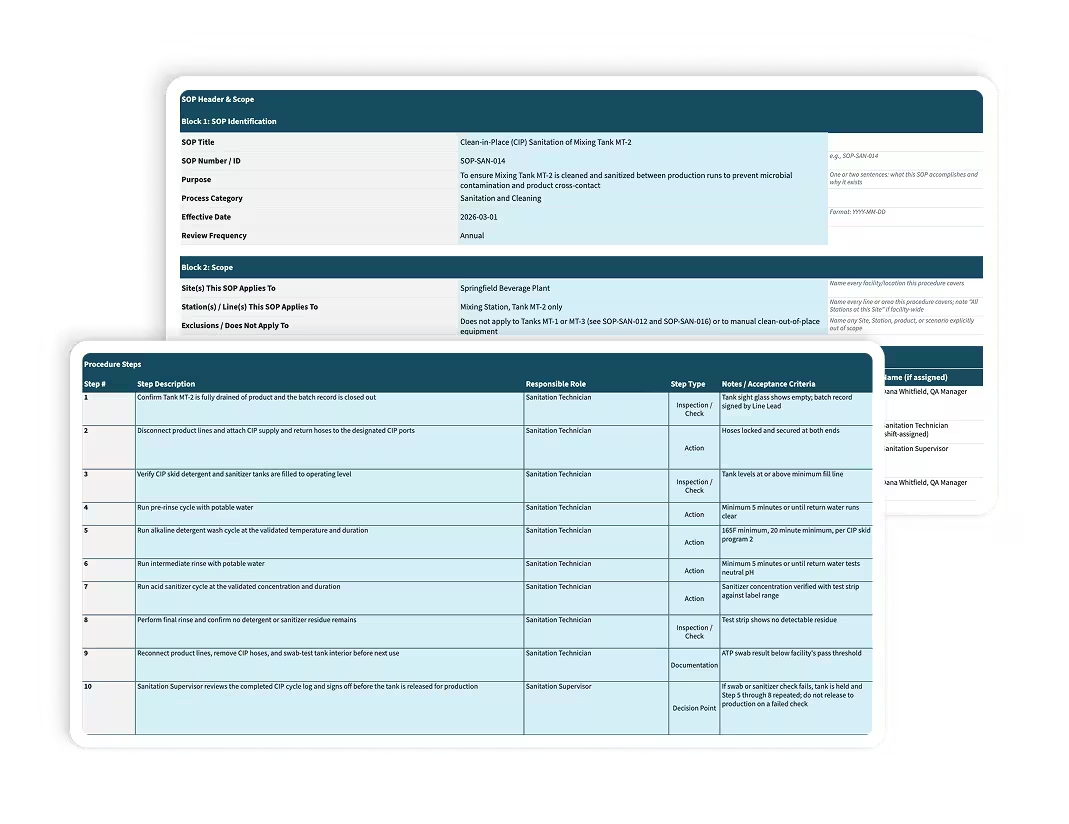
The documentation burden of a complete allergen control program is substantial. A single facility managing allergen controls under FSMA and one or more GFSI standards needs to maintain: a documented allergen hazard analysis, written SOPs for each of the seven program components, supplier allergen declarations for every active ingredient, cleaning validation studies, ongoing verification swab records, allergen training records for every employee, label review records for every product, rework authorization records, and annual program review documentation.
In a paper-based system, managing all of this across multiple shifts, changing ingredient suppliers, and evolving product lines creates compounding risk. A supplier changes a formula and sends an updated spec sheet by email. The email goes to procurement. Quality never sees it. The label is not reviewed. Three months later, the facility receives an FDA warning letter.
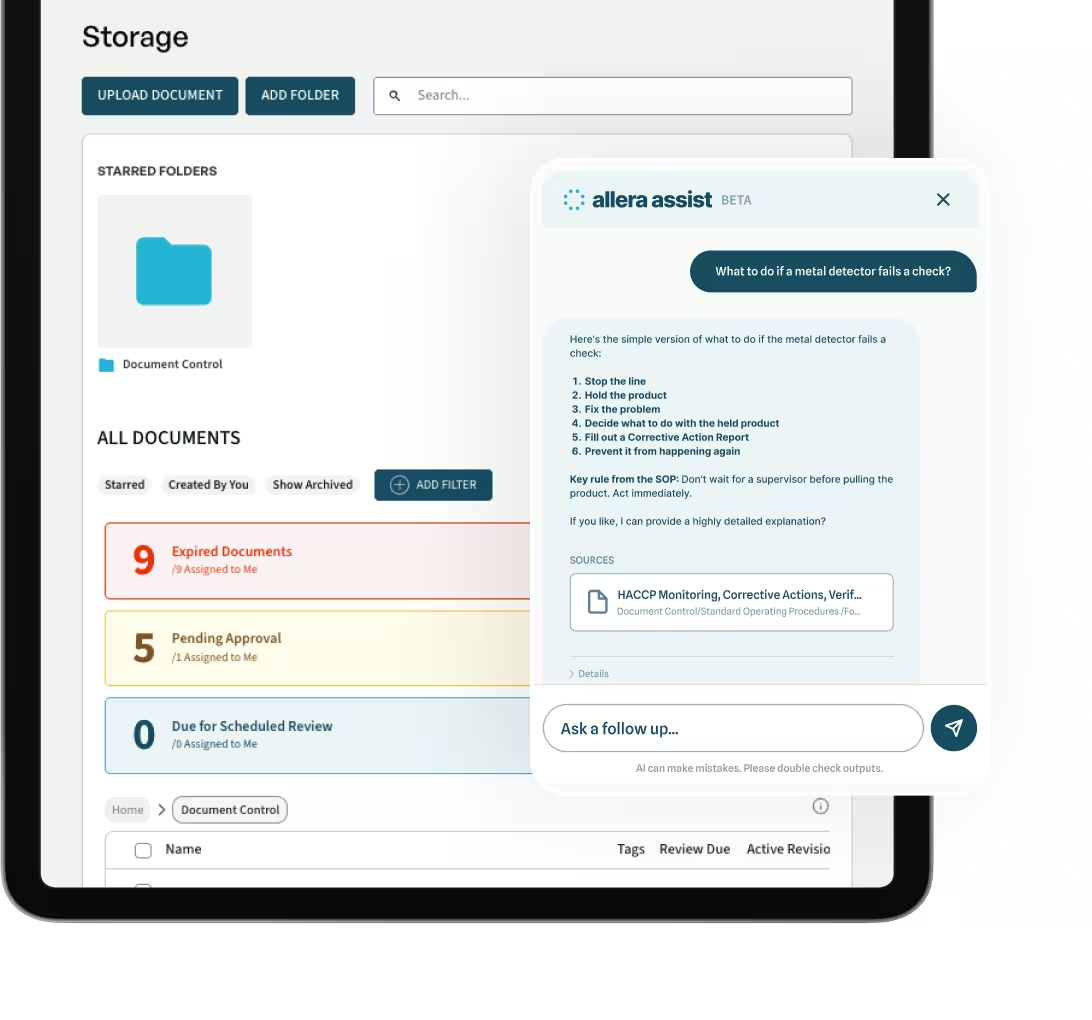
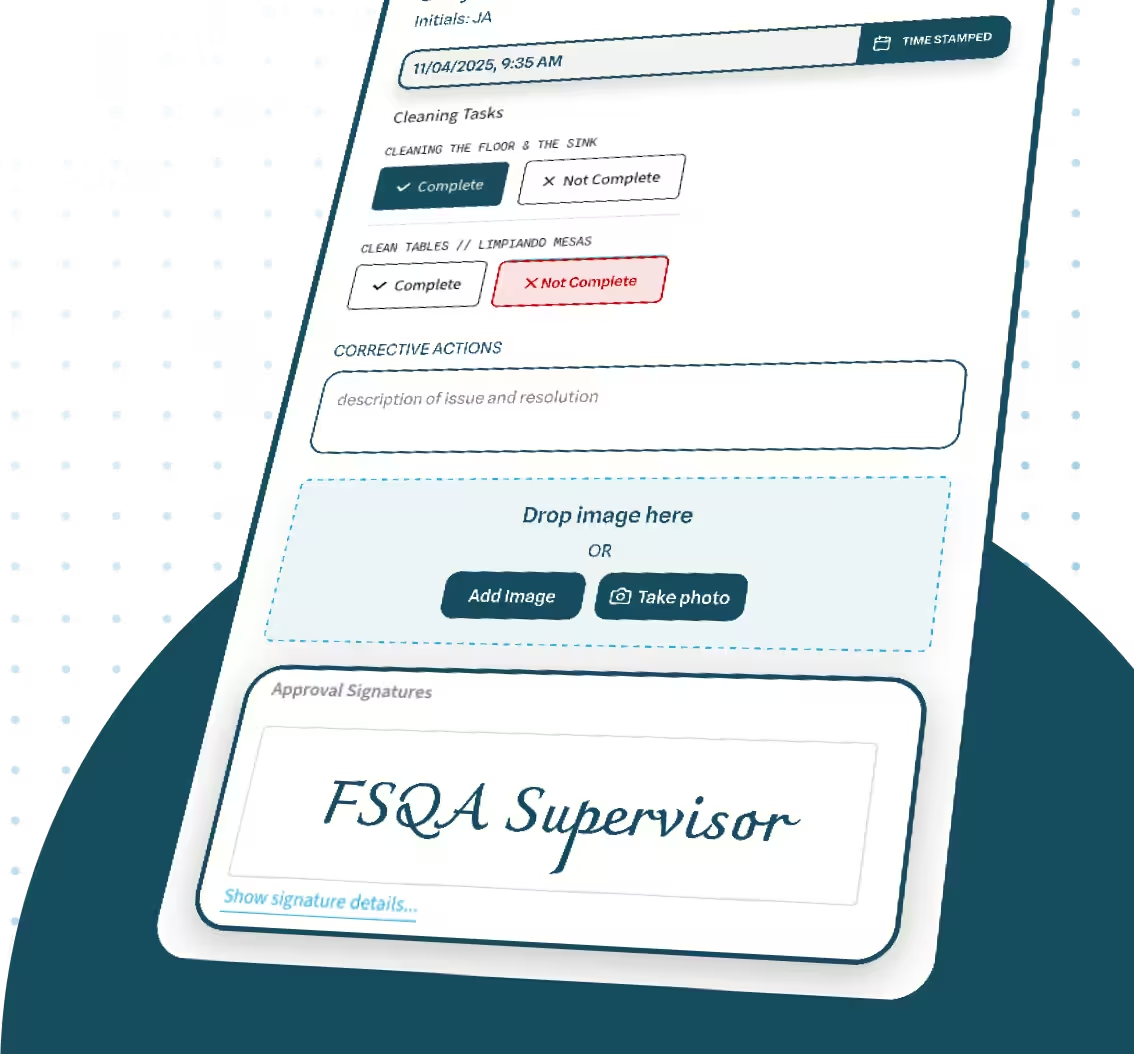
Document control software ensures that your allergen SOPs, validation studies, and label review records are version-controlled, reviewed on schedule, and accessible to the people who need them. When a procedure is updated, previous versions are retired and the current version is what appears in the system. Change control workflows can require sign-off before a new version is active, creating an audit trail for every update.
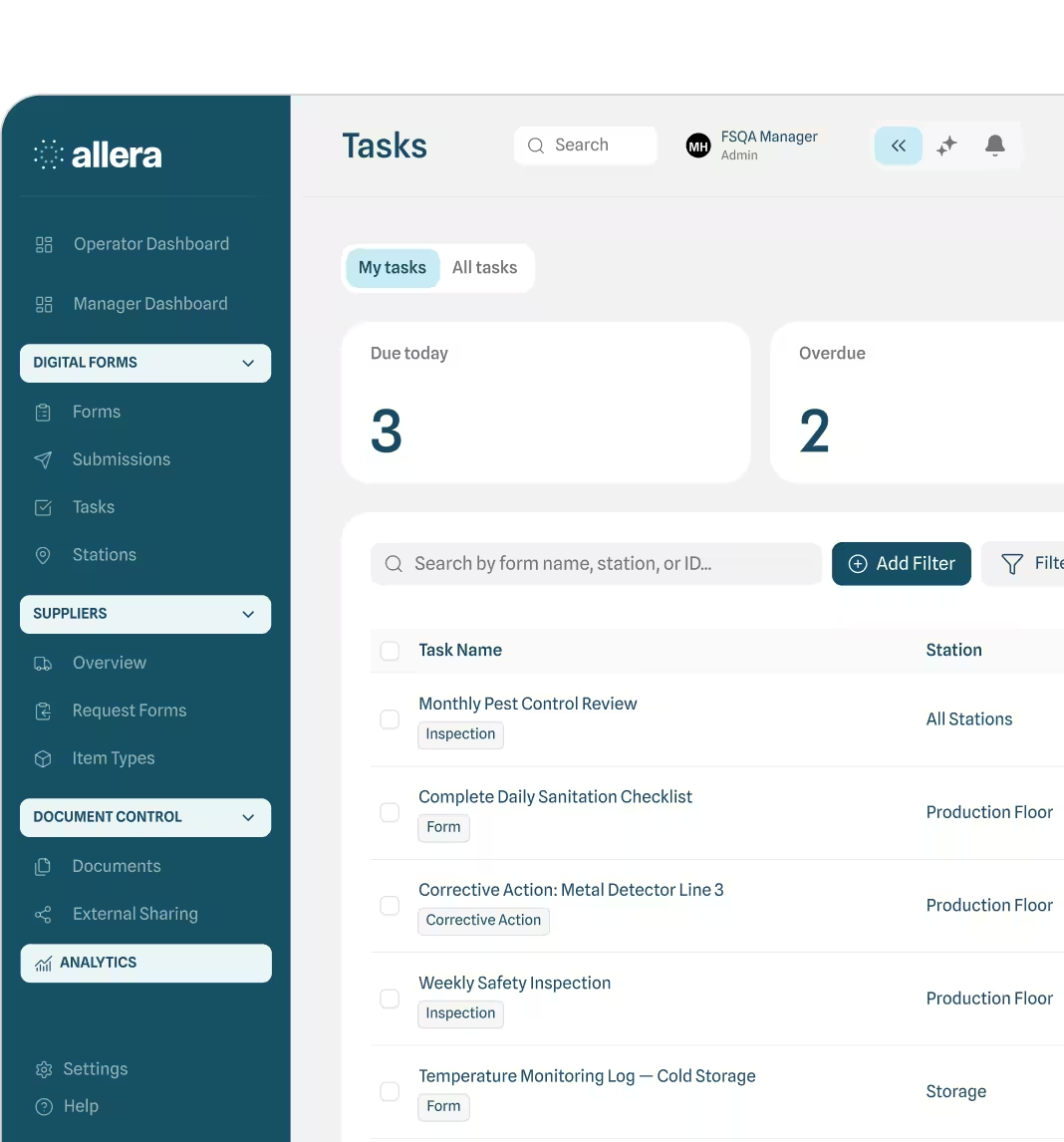
Supplier management software centralizes allergen declarations and certificates of analysis from every supplier in one place. When a supplier submits an updated specification, it is captured in the system against that supplier and ingredient record. Alerts can notify QA when a new declaration changes the allergen status of an ingredient. The annual supplier review process has a documented record of what was reviewed and when.
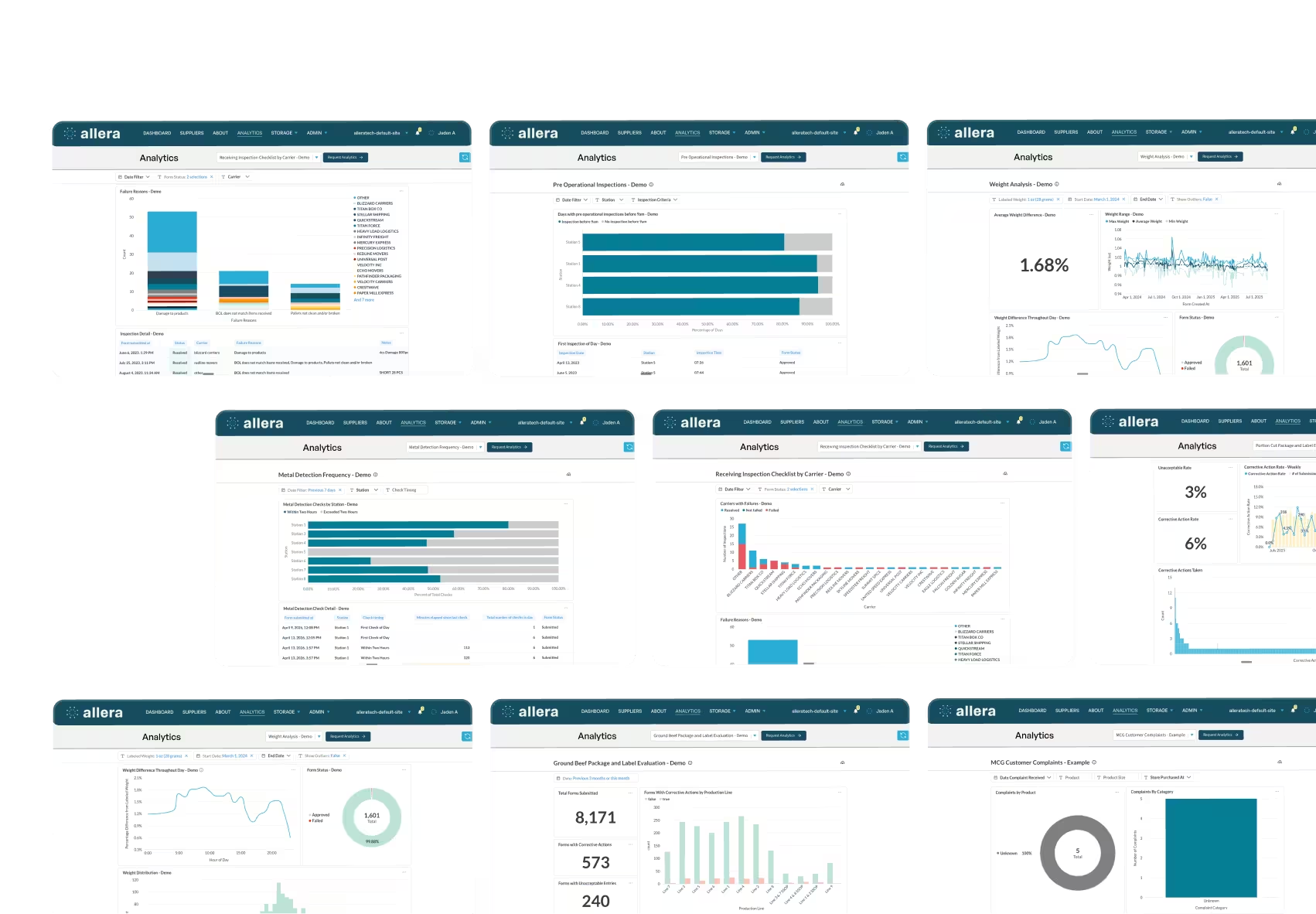
Food safety software that connects your allergen program to your broader food safety plan, HACCP system, and audit preparation workflow means that when an auditor arrives, every allergen control record is accessible in seconds, not buried in a filing cabinet or scattered across email inboxes.
Allergen documentation is one of the highest-stakes administrative tasks in food manufacturing. Allera keeps it organized, version-controlled, and ready for any audit. See Allera in Action
FAQs
.avif)
.avif)
.avif)
.avif)
%20(1).avif)
.avif)
.avif)

%20(1).png)

.avif)


.avif)