.avif)



What Are TCS Foods? The Complete Guide for Food Manufacturers

If you work in food manufacturing, understanding TCS foods is foundational to everything in your food safety program. TCS stands for Time/Temperature Control for Safety, and the FDA Food Code 2022 defines a TCS food as "a food that requires time/temperature control for safety (TCS) to limit pathogenic microorganism growth or toxin formation." For food service workers, that definition usually stops at temperature charts and cooling logs. For food manufacturers, it goes much further.
TCS food status determines which hazards you identify in your hazard analysis, which steps in your process become critical control points, and which preventive controls you document under FSMA. It affects your GFSI audit readiness whether you are SQF, BRCGS, or FSSC 22000 certified. This guide covers all of that with the depth that FSQA professionals actually need.
In this guide we'll cover
- What Does TCS Mean?
- What Makes a Food a TCS Food?
- Complete TCS Food List
- Temperature Danger Zone
- Cold, Hot, and Cooking Temperatures
- Cooling TCS Foods
- Reheating TCS Foods
- Thawing TCS Foods Safely
- Date Marking RTE/TCS Foods
- TCS and HACCP
- TCS Across GFSI Schemes
- FSMA Implications
What Does TCS Mean in Food? (Regulatory Definition)
TCS stands for Time/Temperature Control for Safety. The FDA Food Code 2022 defines a TCS food as "a food that requires time/temperature control for safety (TCS) to limit pathogenic microorganism growth or toxin formation." That definition replaced the older term "potentially hazardous food" (PHF) starting with the FDA Food Code 2005. Many states and some older regulatory documents still use PHF, but both terms describe the same category.
The reason TCS status matters goes beyond temperature charts. TCS designation is a regulatory trigger. Once a food or ingredient is classified as TCS, specific HACCP critical control points, FSMA preventive controls, and food code requirements attach to it at every step in your process. Knowing which of your ingredients and finished products are TCS is the starting point for your entire HACCP plan.
What Makes a Food a TCS Food? The pH and Water Activity Criteria
Not every food requires time and temperature control. The FDA Food Code establishes specific intrinsic criteria used to determine whether a food is TCS.
The Five Factors That Determine TCS Status
The five main factors are:
- Water activity (Aw): Foods with Aw above 0.85 generally provide enough moisture for pathogenic growth.
- pH: Foods with pH above 4.6 generally support the growth of pathogens like Salmonella, Listeria monocytogenes, and E. coli. These are exactly the conditions pathogens need. See the full list in our guide to the Big 6 foodborne pathogens.
- Protein content: Foods of animal origin (meat, poultry, dairy, eggs, fish) are inherently high-risk due to available protein and moisture.
- Heat treatment history: A food that has been heat-treated but not commercially hermetically sealed may support growth if the kill step is not followed by adequate temperature controls.
- Specific high-risk ingredients: Raw sprouts, cut produce, and garlic-in-oil mixtures are designated TCS regardless of measured Aw or pH because of the way their physical structure changes during processing.
The FDA Food Code 2022 Product Assessment Approach
The 2022 update to the FDA Food Code added a product assessment method for manufacturers who formulate products to control pH and Aw. If your facility produces a product specifically designed to inhibit pathogen growth through intrinsic factors (acidification, moisture reduction, or a combination), you may be able to demonstrate through laboratory analysis or a challenge study that the product does not require time/temperature controls.
The FDA Job Aid for TCS Foods provides the pH × Aw decision matrix used in this assessment. If your product assessment demonstrates non-TCS status, specific time/temperature controls may not be required, but the documentation is mandatory and must be maintained as part of your food safety system. For an overview of the laboratory methods used in pH and Aw analysis, see Allera's guide to essential food safety testing methods.
The pH × Water Activity Matrix
| Aw Range | pH Range | TCS Status | Action Required |
|---|---|---|---|
| Aw > 0.85 AND pH > 4.6 | Both conditions | TCS food | Full time/temperature controls required |
| Aw ≤ 0.85 OR pH ≤ 4.6 | One condition met | Potential non-TCS | Product assessment required to confirm |
| Aw ≤ 0.85 AND pH ≤ 4.6 | Both conditions | Non-TCS food | No time/temperature controls required |
| Heat-treated to 135°F and commercially hermetically sealed | N/A | Non-TCS | Controls required only if opened |
The Minnesota Department of Health TCS Food Factsheet provides a practical reference for applying these criteria in a food service context, though manufacturers will typically work from the FDA Job Aid matrix during hazard analysis.
Complete TCS Food List (By Category)
Animal-Origin TCS Foods
| Product | Raw TCS? | Cooked TCS? | Key Temperature Requirement |
|---|---|---|---|
| Beef, pork, lamb (whole cuts) | Yes | Yes | Cook to 145°F; hold cold at ≤41°F or hot at ≥135°F |
| Ground meat (beef, pork, lamb) | Yes | Yes | Cook to 155°F; hold cold at ≤41°F or hot at ≥135°F |
| Poultry (all types) | Yes | Yes | Cook to 165°F; hold cold at ≤41°F or hot at ≥135°F |
| Fish and shellfish | Yes | Yes | Cook to 145°F; hold cold at ≤41°F or hot at ≥135°F |
| Shell eggs | Yes | Yes | Hold at 45°F air temp during receiving; cooked dishes at ≤41°F |
| Milk and fluid dairy | Yes | Yes | Hold cold at ≤41°F |
| Soft cheeses (Brie, ricotta, queso fresco, yogurt) | Yes | N/A | Hold cold at ≤41°F |
Plant-Origin TCS Foods (Heat-Treated)
Cooked plant foods are TCS because heat treatment raises available moisture and alters pH, creating conditions that support pathogenic growth. This includes cooked rice, pasta, beans, grains, potatoes, and cooked vegetables generally. An ingredient that was non-TCS in its raw, dry state becomes TCS once it is cooked.
Cut and Processed Produce TCS Foods
Cutting or processing produce disrupts the natural protective barrier and exposes interior surfaces with higher moisture content. The following cut produce items are TCS:
- Cut melons (watermelon, cantaloupe, honeydew)
- Cut tomatoes
- Cut leafy greens
- Raw seed sprouts (alfalfa, bean, radish)
- Garlic-in-oil mixtures
Other TCS Foods
Tofu and soy-protein foods, heat-treated plant foods that support growth (hummus, refried beans), and any product that combines TCS ingredients with non-TCS ingredients (a sandwich, a salad kit, a deli wrap) takes on the TCS classification of its highest-risk component.
What Are Non-TCS Foods?
| Non-TCS Food | Why It Does Not Qualify |
|---|---|
| Uncut whole fruits and vegetables | Natural surface barrier intact; pH/Aw combination does not support growth |
| Dry goods (crackers, dry pasta, dry beans, chips) | Aw ≤ 0.85; insufficient moisture for pathogen growth |
| Commercially canned products (unopened) | Hermetically sealed and heat-treated to commercial sterility |
| High-acid foods (pickles, vinegar-based condiments) | pH ≤ 4.6 inhibits pathogenic growth |
| Hard cheeses (Parmesan, aged Cheddar) | Low Aw due to aging and moisture loss |
| Jerky, dried fruits, nuts | Low Aw; insufficient moisture for pathogen growth |
| Uncut, unfilled bread and baked goods | pH/Aw combination does not support significant pathogen growth |
Note on bread: uncut, unfilled bread is not a TCS food. Bread containing TCS fillings (cream cheese, deli meat, egg salad) becomes TCS because the filling's characteristics control the classification of the whole product.
The Temperature Danger Zone for TCS Foods
The FDA Food Code defines the temperature danger zone as 41°F to 135°F (5°C to 57°C). The USDA FSIS uses 40°F to 140°F in consumer-facing guidance. In a manufacturing context, you follow the FDA Food Code range (41°F to 135°F), but your HACCP critical limits should reflect the specific requirements of your regulatory authority and any applicable GFSI scheme.
Within the danger zone, pathogens can double approximately every 20 minutes under optimal conditions. The CDC identifies temperature abuse as one of the leading contributing factors in foodborne illness outbreaks, with multiple pathogen categories implicated in TCS food-related incidents.
The 4-hour rule is the operational limit you manage to: TCS food that has been in the temperature danger zone for a cumulative total of 4 or more hours must be discarded. Time is cumulative, not per-incident.
| Temperature | What Happens | Action Required |
|---|---|---|
| ≤41°F (≤5°C) | Pathogen growth suppressed | Maintain for cold holding |
| 41°F–135°F (5°C–57°C) | Danger zone: rapid growth possible | Minimize time; monitor and document |
| ≥135°F (≥57°C) | Pathogen growth suppressed | Maintain for hot holding |
| ≥165°F (≥74°C) | Most pathogens killed | Required for reheating and poultry cooking |
TCS Food Temperature Requirements: Cold, Hot, and Cooking
Cold Holding Requirements
Cold TCS foods must be maintained at 41°F (5°C) or below throughout storage and display. At receiving, most cold TCS ingredients must arrive at 41°F or below. Exceptions include live shellfish (up to 45°F) and shell eggs (stored at 45°F air temperature). If an incoming TCS shipment arrives out of temperature, your receiving procedure should include a documented corrective action step rather than accepting product without assessment.
Hot Holding Requirements
Hot TCS foods must be maintained at 135°F (57°C) or above once cooked. Hot holding equipment (steam tables, warming units) is designed to maintain temperature, not to raise it. Food must already be at 135°F or above before it enters a hot holding unit. If you are cooking TCS food that will be immediately held hot, your cook step CCP critical limit should account for the transition.
Cooking Temperatures for TCS Foods
| Product | Minimum Internal Temperature | Hold Time |
|---|---|---|
| Poultry (whole, ground, stuffed) | 165°F (74°C) | 15 seconds |
| Ground meat (beef, pork, lamb) | 155°F (68°C) | 15 seconds |
| Pork, beef, fish (whole cuts) | 145°F (63°C) | 15 seconds |
| Shell eggs (cooked for immediate service) | 145°F (63°C) | 15 seconds |
| Roasts (pork, beef, lamb, veal) | 145°F (63°C) | Time-dependent per FDA Food Code Table |
| Commercially sterile products | Per manufacturer instructions | Per specifications |
The USDA FSIS Safe Minimum Internal Temperature Chart provides the full reference for minimum cooking temperatures by product type.
Cooling TCS Foods: The Two-Stage Method
Improper cooling is one of the most common contributing factors in foodborne illness outbreaks. When cooked TCS food spends too much time passing through the danger zone during cooling, surviving or recontaminating pathogens can multiply to dangerous levels before the food is served or packaged.
The FDA Food Code Two-Stage Cooling Requirement
The FDA Food Code requires two-stage cooling for all cooked TCS foods:
- Stage 1: Cool from 135°F to 70°F within 2 hours
- Stage 2: Cool from 70°F to 41°F within the next 4 hours (6 hours total maximum)
The two stages are not interchangeable. If Stage 1 is not completed within 2 hours, the food must be discarded. Reaching 70°F at hour 1.5 does not give you 5 additional hours for Stage 2. The 4-hour clock for Stage 2 starts when Stage 1 ends, and the total cannot exceed 6 hours. See the FDA guidance on cooling cooked TCS foods for the full regulatory text.
Approved Cooling Methods
- Blast chilling or blast freezing
- Ice water bath with active stirring
- Shallow pan storage at 2 inches depth or less
- Ice as an ingredient in liquid products
- Dividing large batches into smaller volumes before cooling
Monitoring and Recording Cooling
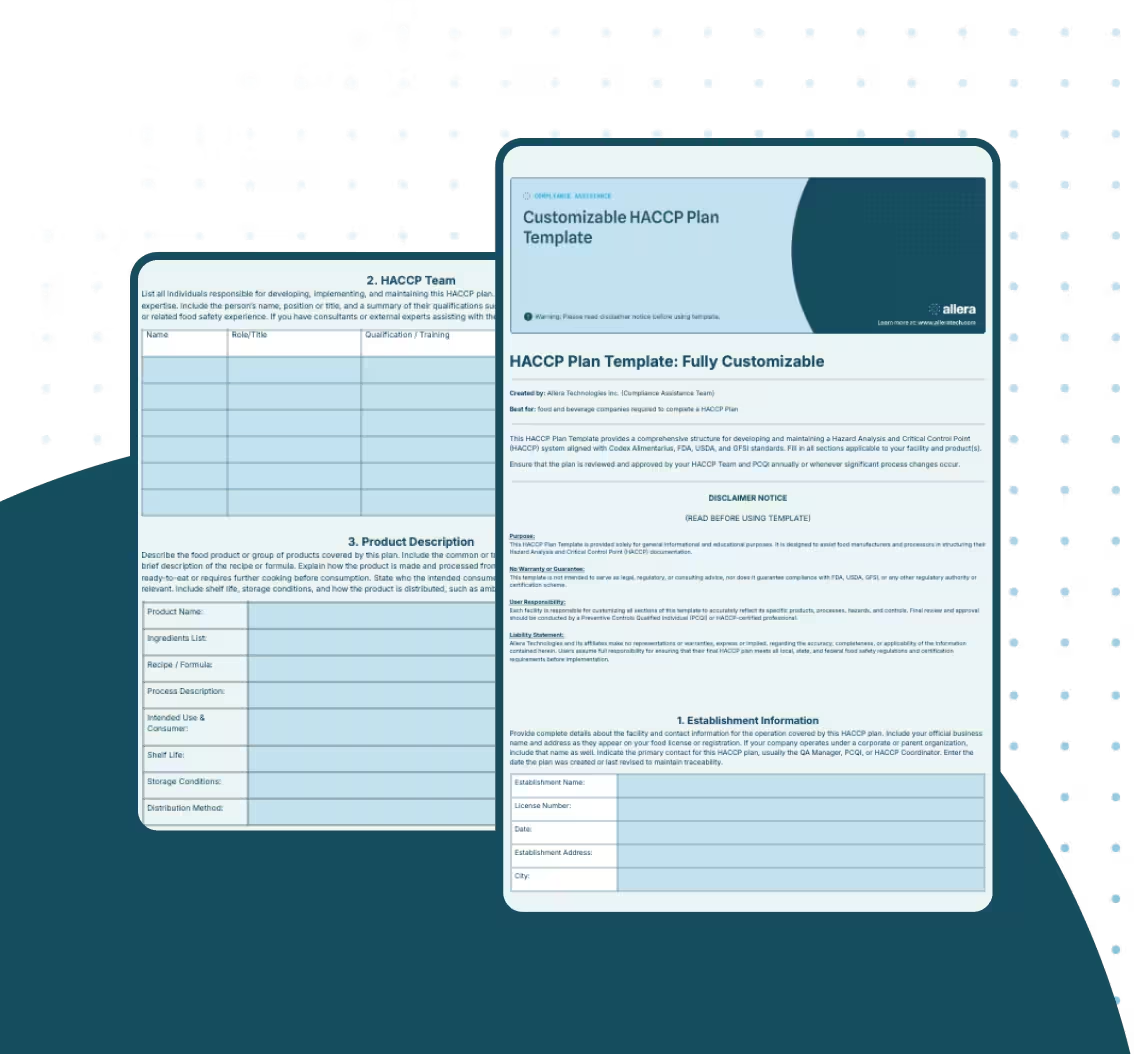
Temperature must be verified at the 2-hour mark (to confirm Stage 1) and again at the 6-hour mark (to confirm Stage 2). Records demonstrating compliance are required under FSMA and are reviewed in every major GFSI audit. Your free HACCP plan template includes a temperature log format you can adapt for cooling monitoring.
Reheating TCS Foods
TCS foods that have been cooked, cooled, and stored must be reheated to 165°F (74°C) for 15 seconds before being placed in hot holding. This applies regardless of the original cooking temperature. A product originally cooked to 145°F must still reach 165°F upon reheating. Reheating must be completed within 2 hours.
Commercially processed RTE foods that will be hot-held only need to reach 135°F before being placed in a hot holding unit, because they were commercially processed to a specific pathogen reduction standard. Hot holding equipment cannot be used to reheat food. Steam tables and warming ovens maintain temperature, not elevate it. Reheating must occur in an oven, steam kettle, or other cooking equipment capable of raising temperature rapidly. See critical control point examples for how a reheating step is designed as a CCP with a verified critical limit.
Thawing TCS Foods Safely
Improper thawing is one of the most frequent causes of time-temperature abuse in manufacturing and food service alike. When TCS food thaws at ambient temperature, the outer surface enters the danger zone while the interior is still frozen. By the time the center reaches a safe thawing temperature, the exterior may have accumulated significant time in the pathogen growth range.
The FDA Food Code allows four thawing methods:
- Refrigerator thawing at 41°F or below. Most reliable for large cuts. Allow approximately 24 hours per 5 pounds of product.
- Running cold water (70°F or below) with food fully immersed and under flowing water, followed by immediate cooking.
- Microwave, if the food will be cooked immediately after thawing.
- Cooking from frozen, where the product goes directly into the cooking process and reaches the required minimum internal temperature.
Ambient room-temperature thawing is not an approved method under any of these categories. Your thawing SOP should specify which method applies to each TCS ingredient and include temperature verification steps. Your food safety management system should document thawing procedures as part of your prerequisite programs.
Date Marking Ready-to-Eat TCS Foods
Ready-to-eat (RTE) TCS foods held in refrigeration for more than 24 hours must be date-marked with a use-by date not exceeding 7 calendar days from the date of preparation, counting the day of preparation as day 1.
This requirement applies to deli meats and salads, cooked proteins, soft cheeses, opened commercially processed products, and any RTE product held refrigerated beyond the 24-hour threshold. A CDC-published study (PMC8805684) found that while 91% of food service managers reported consistently date-marking TCS foods, only 77% of establishments actually did so reliably. That gap illustrates how a procedure that appears compliant in training and policy can break down at the operational level.
For food manufacturers, date marking is part of FSMA's preventive controls framework and is audited under all major GFSI certification schemes. Undated or misdated product is a common corrective action finding in food safety audits and, if identified during an FDA inspection, can escalate to a Form 483 observation.
TCS Foods and HACCP: How TCS Status Drives Your Critical Control Points
This is where TCS analysis becomes operationally critical for food manufacturers. Most food service content treats TCS as a temperature chart exercise. For your FSQA team, TCS status is the input that drives your hazard analysis and your CCP design.
TCS Identification as Step 1 of Hazard Analysis
Under FSMA Preventive Controls for Human Food (21 CFR Part 117) and traditional HACCP, identifying which ingredients and finished products are TCS is the foundational step in hazard analysis. Every TCS raw material that enters your process carries a biological hazard that must be assessed at each subsequent step. The seven HACCP principles require you to determine at each process step whether the hazard is eliminated, reduced, or passed forward.
Common TCS-Related CCPs in Food Manufacturing
| CCP Type | What It Controls | Critical Limit Example |
|---|---|---|
| Cook step CCP | Eliminates biological hazards in TCS products | Internal temp ≥165°F for 15 seconds (poultry) |
| Cooling CCP | Prevents pathogen regrowth after kill step | 135°F → 70°F within 2 hrs; 70°F → 41°F within 4 hrs |
| Cold storage CCP | Maintains TCS ingredients at safe temperatures | Storage temp ≤41°F at all times |
| Hot holding CCP | Maintains cooked TCS products above danger zone | Holding temp ≥135°F continuously |
Your critical control point examples guide covers these in more detail with CCP decision tree examples.
TCS Prerequisite Programs
CCPs control hazards at specific points. Prerequisite programs manage the surrounding conditions that make CCPs effective. For TCS foods, key prerequisite programs include:
- Receiving inspection: Verify incoming TCS materials arrive at the correct temperature; document and reject out-of-spec shipments.
- Cold storage management: Temperature logging, alarm systems, physical segregation of raw TCS from RTE TCS products.
- Cross-contamination prevention: Prevent transfer of pathogens from raw TCS ingredients to RTE products through equipment, people, and environmental pathways.
- Calibration: All temperature monitoring equipment used at CCPs and in prerequisite programs must be calibrated at defined intervals.
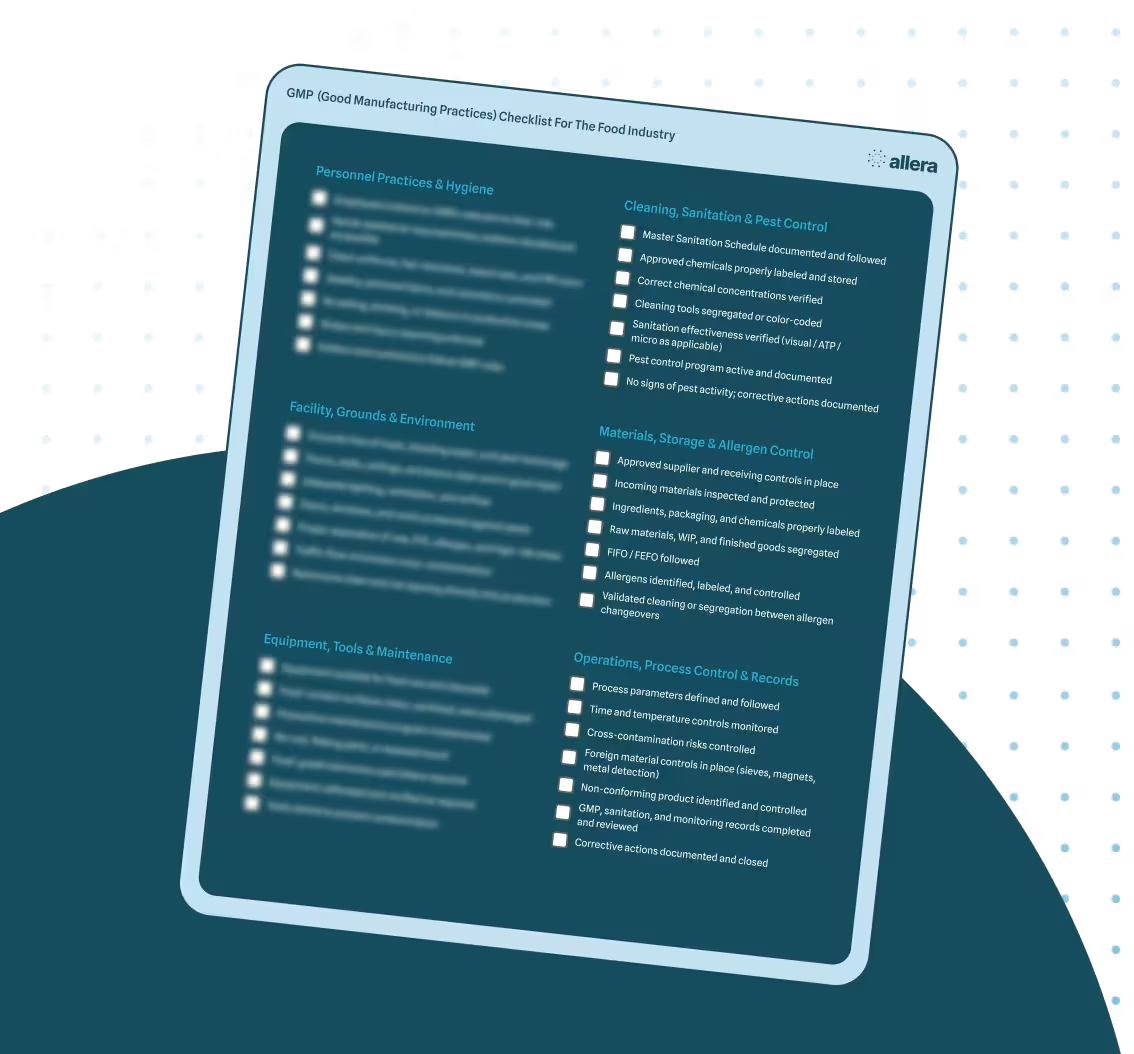
Your Good Manufacturing Practices (GMP) documentation is the baseline foundation for these prerequisite programs. The GMP audit checklist provides a verification-ready review of each prerequisite program area, including temperature control and receiving inspection.
TCS Food Requirements Across GFSI Certification Schemes
If your facility is GFSI-certified, TCS temperature controls appear as explicit requirements in your certification scheme standard. Here is how each major scheme addresses TCS controls. For a broader view of how TCS management fits within your overall quality and safety program, see the FSQA guide for food manufacturers.
TCS Under SQF (Safe Quality Food)
The SQF Code requires that prerequisite programs address temperature control for all TCS ingredients and finished products. Documented receiving, storage, and processing temperature controls with associated monitoring records are required elements. Temperature monitoring logs are reviewed during SQF audits as part of verification of food safety fundamentals.
TCS Under BRCGS Global Standard for Food Safety
BRCGS Clause 5.2 (Hazard and Risk Analysis) requires identification of products with TCS characteristics. Temperature controls must be validated and verified, and monitoring equipment must be calibrated. BRCGS also introduces high-care and high-risk zone requirements for TCS products that receive no further pathogen reduction step after cooling.
TCS Under FSSC 22000 (Version 6)
ISO 22000 operational prerequisite programs (oPRPs) cover temperature control processes for TCS products. FSSC 22000 Additional Requirements (Category C for complex products) may require enhanced temperature controls and more frequent monitoring for high-risk TCS products.
TCS Temperature Control Requirements by Scheme
| Requirement | SQF | BRCGS | FSSC 22000 | FDA Food Code |
|---|---|---|---|---|
| Cold holding | ≤41°F | ≤41°F | ≤41°F | 41°F |
| Hot holding | ≥135°F | ≥135°F | ≥135°F | 135°F |
| Cooling (Stage 1) | 135°F → 70°F in 2 hrs | 135°F → 70°F in 2 hrs | Per hazard analysis | 2 hours |
| Cooling (Stage 2) | 70°F → 41°F in 4 hrs | 70°F → 41°F in 4 hrs | Per hazard analysis | 4 hours |
| Monitoring records | Required | Required | Required | Required |
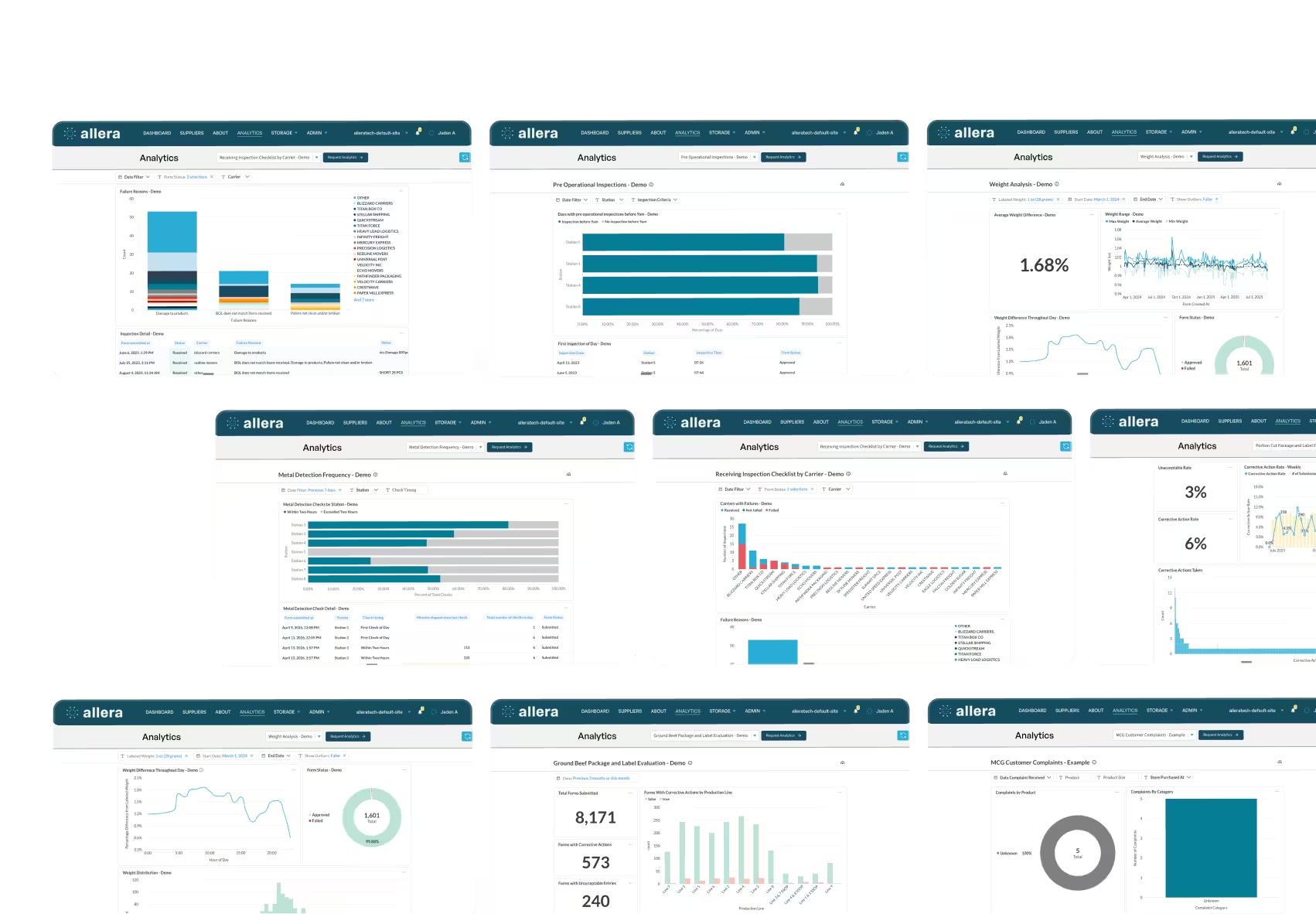
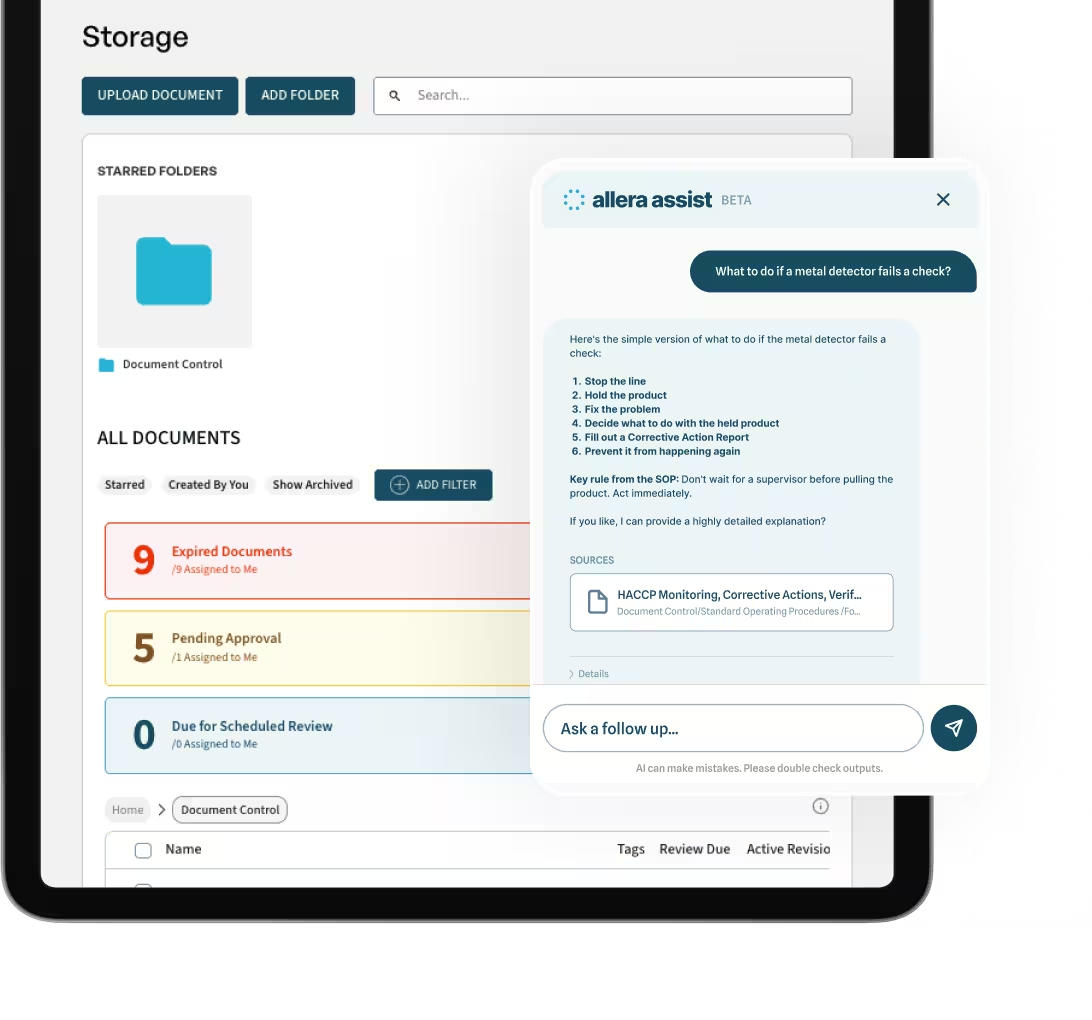
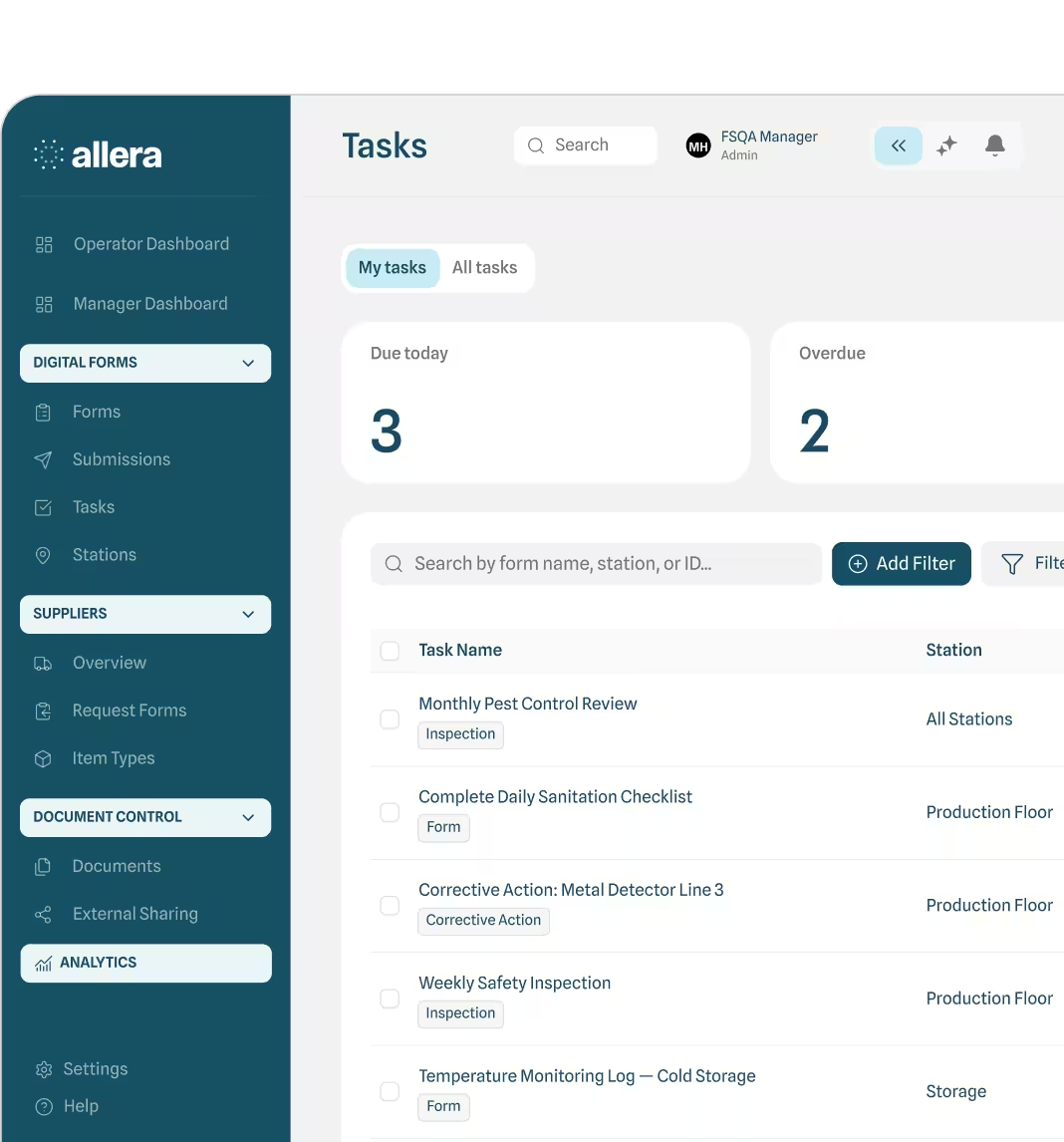
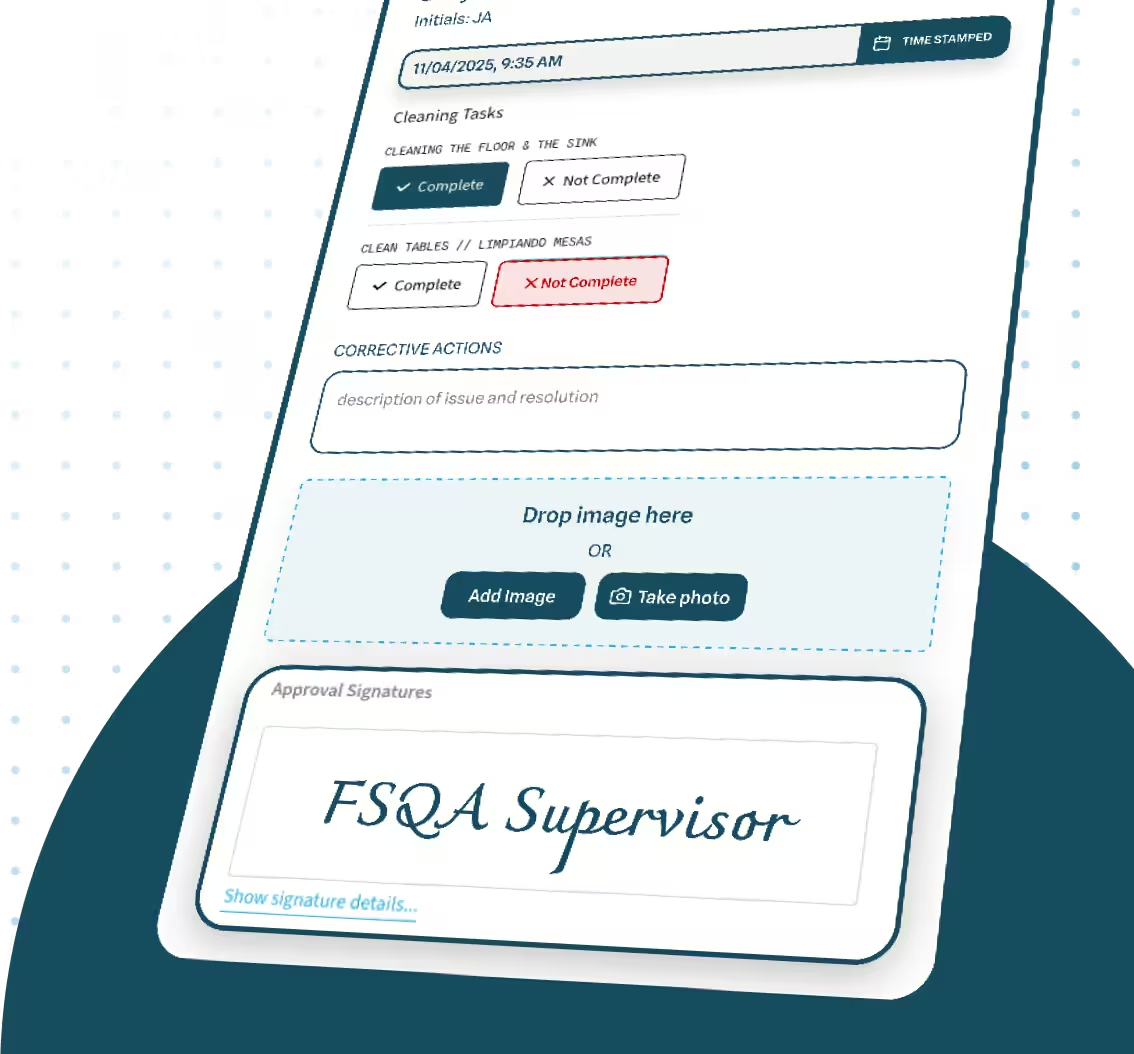
Allera helps food manufacturers track temperature logs, manage HACCP records, and stay audit-ready for SQF, BRCGS, FSSC 22000, and FDA inspections, all in one platform. See How It Works.
FSMA Implications for TCS Food Manufacturers
FSMA Preventive Controls Rule and TCS
Under 21 CFR Part 117, identifying biological hazards in TCS ingredients and products is a required element of the hazard analysis in your food safety plan. Any manufacturing step that controls a biological hazard in a TCS product requires a process preventive control with defined monitoring, corrective action, verification, and recordkeeping procedures. Refrigerated storage of a TCS ingredient, a pasteurization step, and a cooling procedure after cooking are all process preventive controls under this rule if they are the step that manages the hazard.
FSMA 204 and TCS Foods on the Food Traceability List
Several TCS food categories appear directly on the FDA Food Traceability List (FTL) under the FSMA 204 traceability rule: soft cheeses, RTE deli salads, smoked fish, cut leafy greens, and cut melons. If your products include any of these, you are subject to enhanced traceability requirements including Key Data Elements (KDEs) and Key Critical Events (KCEs) throughout your supply chain. The temperature records you maintain for TCS controls are directly relevant to food traceability documentation under FSMA 204, and having both sets of records in one system significantly reduces the burden of FDA traceability requests. Purpose-built HACCP compliance software connects temperature monitoring records, corrective actions, and traceability data so your TCS controls are always audit-ready.
FAQs
How does TCS food status affect HACCP plans?
TCS food status directly determines your HACCP critical control point design. Any TCS ingredient or product in your process must be assessed in the hazard analysis for biological hazards. Each step where a TCS food could allow pathogen growth must be evaluated: if the step controls the hazard, it becomes a CCP with a critical limit. If it does not control the hazard, it must be covered by a prerequisite program. For FSMA-regulated manufacturers, this translates to documented process preventive controls under 21 CFR Part 117.
What is the difference between TCS and PHF (potentially hazardous food)?
PHF (potentially hazardous food) is the older term that TCS replaced in the FDA Food Code 2005. Both terms describe the same category of foods: those that require time and temperature controls to prevent pathogenic growth or toxin formation. Some states and older regulatory documents still use PHF. The underlying food categories and temperature requirements are identical under both designations.
What temperature should TCS foods be reheated to?
TCS foods that have been cooked and cooled must be reheated to a minimum internal temperature of 165°F (74°C) for 15 seconds before being placed in hot holding. Reheating must be completed within 2 hours. Commercially processed RTE products being hot-held only need to reach 135°F before hot holding, provided they were produced under commercial processing standards.
What is the correct cooling process for TCS foods?
TCS foods must be cooled using the FDA Food Code two-stage method. Stage 1 requires cooling from 135°F to 70°F within 2 hours. Stage 2 requires cooling from 70°F to 41°F within the next 4 hours, for a maximum total cooling time of 6 hours. If Stage 1 is not completed within 2 hours, the food must be discarded immediately.
How long can TCS foods be left out?
Under the FDA Food Code, TCS food may not remain in the temperature danger zone (41°F to 135°F) for a cumulative period of more than 4 hours. After 4 cumulative hours in the danger zone, the food must be discarded. Some jurisdictions allow Time as a Public Health Control (TPHC), which permits holding at ambient temperature for up to 4 hours if specific labeling and disposal procedures are followed and documented.
What is the temperature danger zone for TCS foods?
The FDA Food Code temperature danger zone is 41°F to 135°F (5°C to 57°C). Pathogenic bacteria grow most rapidly in this range, potentially doubling every 20 minutes at optimal temperatures. TCS foods should spend as little time as possible in this range. Food that has been in the danger zone cumulatively for 4 or more hours must be discarded.
Is bread a TCS food?
Uncut, unfilled bread is not a TCS food. Its combination of pH and water activity does not support significant pathogen growth. Bread containing TCS fillings (cream cheese, deli meat, egg salad) becomes a TCS food because the classification follows the highest-risk ingredient in the finished product.
What foods are not TCS foods?
Non-TCS foods include uncut whole fruits and vegetables, dry goods (crackers, dry pasta, dry beans), commercially canned products that are unopened, high-acid foods with pH at or below 4.6 (pickles, vinegar-based condiments), low-moisture foods with Aw at or below 0.85 (hard cheeses, jerky, nuts, dried fruits), and uncut, unfilled bread and baked goods.
What are examples of TCS foods?
Common TCS foods include raw and cooked meat (beef, pork, chicken, turkey), raw and cooked fish and shellfish, eggs, dairy products (milk, soft cheeses, yogurt), cooked rice, pasta, beans, and potatoes, cut melons, cut tomatoes, cut leafy greens, raw seed sprouts, tofu, and garlic-in-oil mixtures.
What does TCS stand for in food?
TCS stands for Time/Temperature Control for Safety. TCS foods are foods that require specific time and temperature controls to limit the growth of pathogenic microorganisms or the formation of toxins. The term replaced the older designation Potentially Hazardous Food (PHF) in the FDA Food Code in 2005. Many states still use PHF in their regulations, but both terms describe the same food categories and requirements.

.avif)
.avif)
.avif)
.avif)
%20(1).avif)
.avif)
.avif)

%20(1).png)

.avif)



.avif)