.avif)



2026 Guide: Food and Beverage Supply Chain

.avif)
Are you a food safety manager, supply chain professional, or compliance officer? Mastering your food supply chain is critical to ensuring compliance, preventing recalls, and protecting public health. This guide provides a clear framework for understanding each stage, identifying risks, and implementing actionable strategies to keep your operations audit-ready.
What Is the Food and Beverage Supply Chain?
Your food and beverage supply chain is the intricate network connecting raw ingredients to finished products on store shelves and dining tables. It encompasses every touchpoint from farm to fork—including sourcing, processing, packaging, distribution, and retail—coordinating dozens or even hundreds of partners to deliver safe, quality products to consumers.
Unlike a simple linear process, your supply chain operates as a complex ecosystem where multiple suppliers, manufacturers, logistics providers, and retailers must synchronize perfectly. A single bottle of juice might involve citrus growers, processing facilities, packaging suppliers, quality labs, warehouses, trucking companies, and retail partners—each playing a critical role in the product's safety and quality journey.
Here's a high level of the Food & Bev supply chain:

Why Food and Beverage Supply Chains Are Unique
Unlike other industries, your supply chain faces distinctive pressures:
- Time sensitivity - Perishable products lose value and safety rapidly, requiring strict cold chain management and specialized logistics
- Temperature control - Cold chain integrity is non-negotiable; failures have serious consequences
- Regulatory complexity - You're navigating FDA, USDA, state regulations, and customer requirements simultaneously
- Public health responsibility - Failures don't just cost money; they can harm people
Key Stakeholders
From start to finish, you coordinate with farmers and growers, ingredient suppliers, co-manufacturers, packaging suppliers, transportation providers, warehouse partners, retailers, grocery stores, and ultimately the end consumer. Each represents both an essential partner and a potential risk point requiring verification.
What are the 7 Stages of the Food and Beverage Supply Chain?
Production and Sourcing
Your product's journey begins at farms, fisheries, and ingredient manufacturing facilities. Food and beverage producers are responsible for sourcing and transforming raw materials with strict requirements for safety, food traceability, and quality.
Your compliance responsibilities:
- Formally approve and qualify suppliers before using their materials
- Conduct risk assessments evaluating food safety risks based on ingredient type and supplier controls
- Monitor ongoing compliance through annual questionnaires, audits, or certificate reviews
Early-stage risks:
- Biological contamination from soil, water, or handling
- Chemical hazards from pesticides or processing aids
- Physical hazards like field debris or equipment breakdown
- Allergen cross-contact at shared facilities
You can't inspect quality into a product later—it starts here. The investment in supplier qualification prevents contaminated materials from entering your facility.
Managing supplier quality is central to supply chain resilience. Our guide to the 7 best supplier quality management tools for FSQA covers the top platforms.
Handling, Storage, and Transportation
This stage is where many invisible supply chain failures occur. Efficient transportation routes and timely distribution are essential for maintaining product quality and meeting customer expectations.
Critical controls:
- Cold chain management with continuous temperature monitoring
- Sanitary transportation with clean vehicles and proper segregation
- Pest prevention and regular inspections
- Product segregation to prevent allergen cross-contact
Under FSMA's Sanitary Transportation Rule, you share responsibility for transportation conditions even with third-party carriers. Document requirements in writing, communicate them clearly, and verify compliance regularly through audits, temperature data review, and pest control documentation.
Processing and Manufacturing
This is typically your facility, where raw materials become finished products. Effective production schedules and demand forecasting help maintain consistent output and manage inventory efficiently.
Key controls:
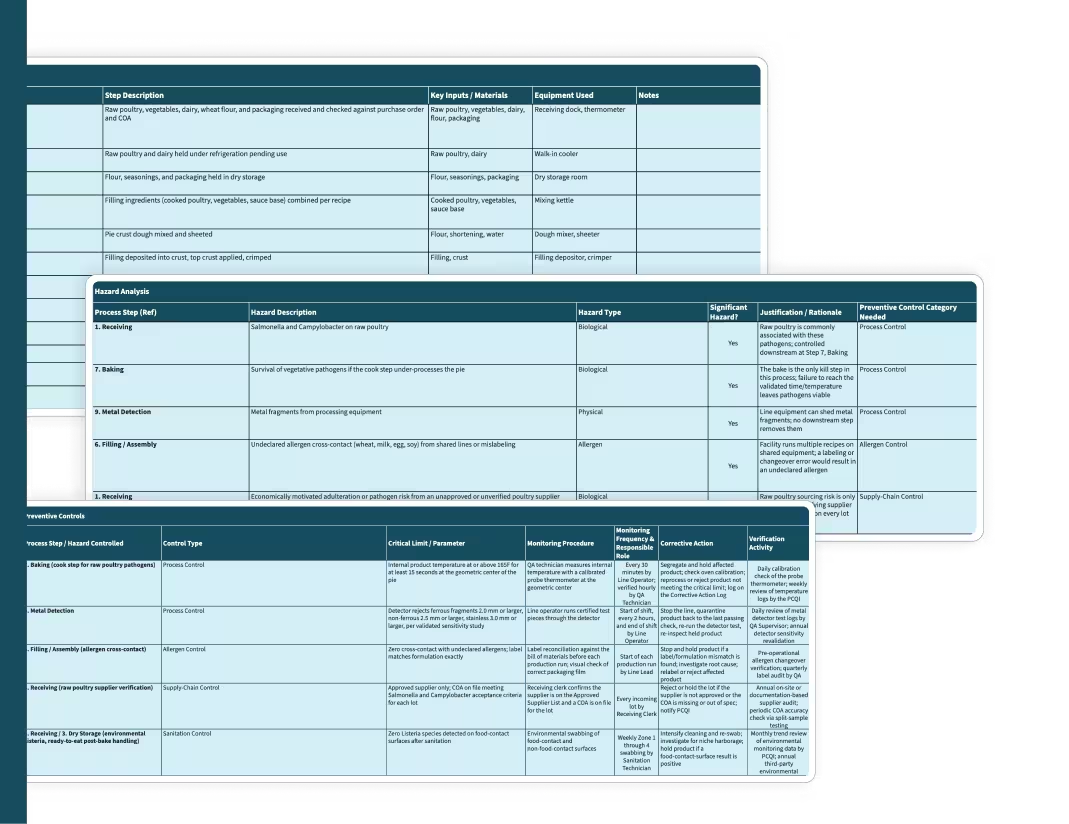
- Critical Control Points (CCPs) identified through HACCP, monitored continuously
- Allergen management preventing cross-contact
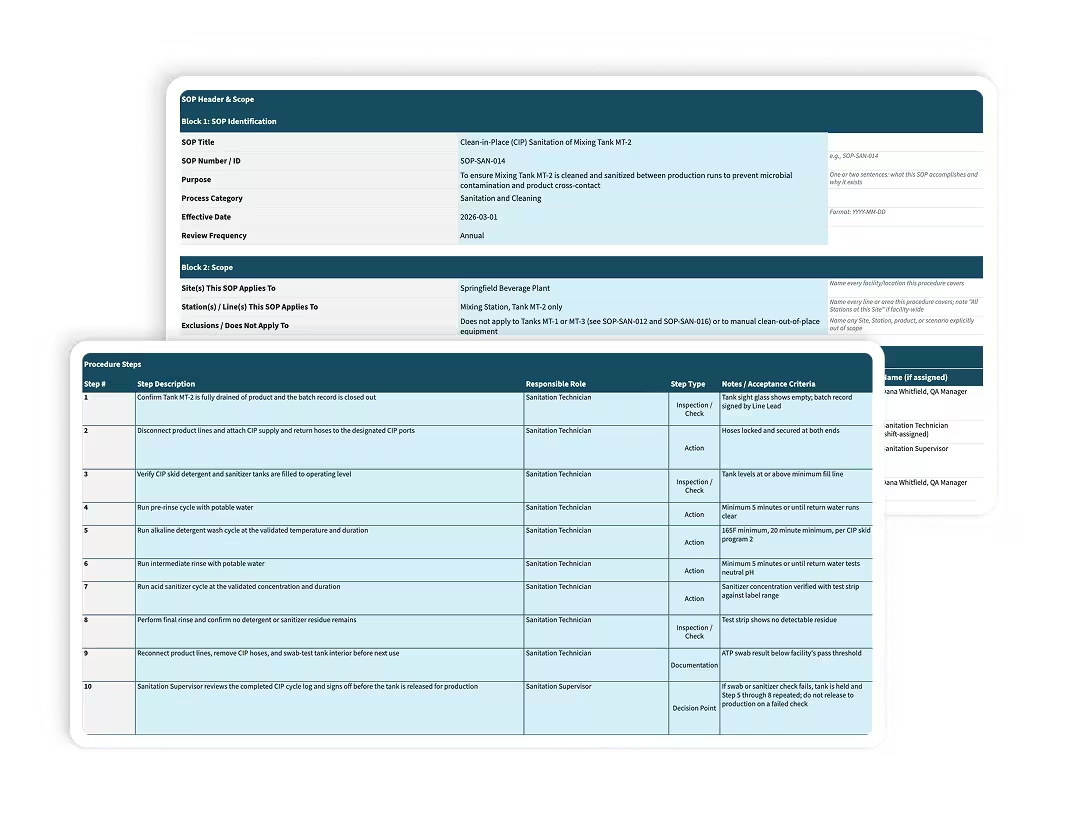
- Sanitation programs with verification of cleaning effectiveness
- Process validation proving cooking, cooling, or preservation steps achieve safety outcomes
Essential documentation:
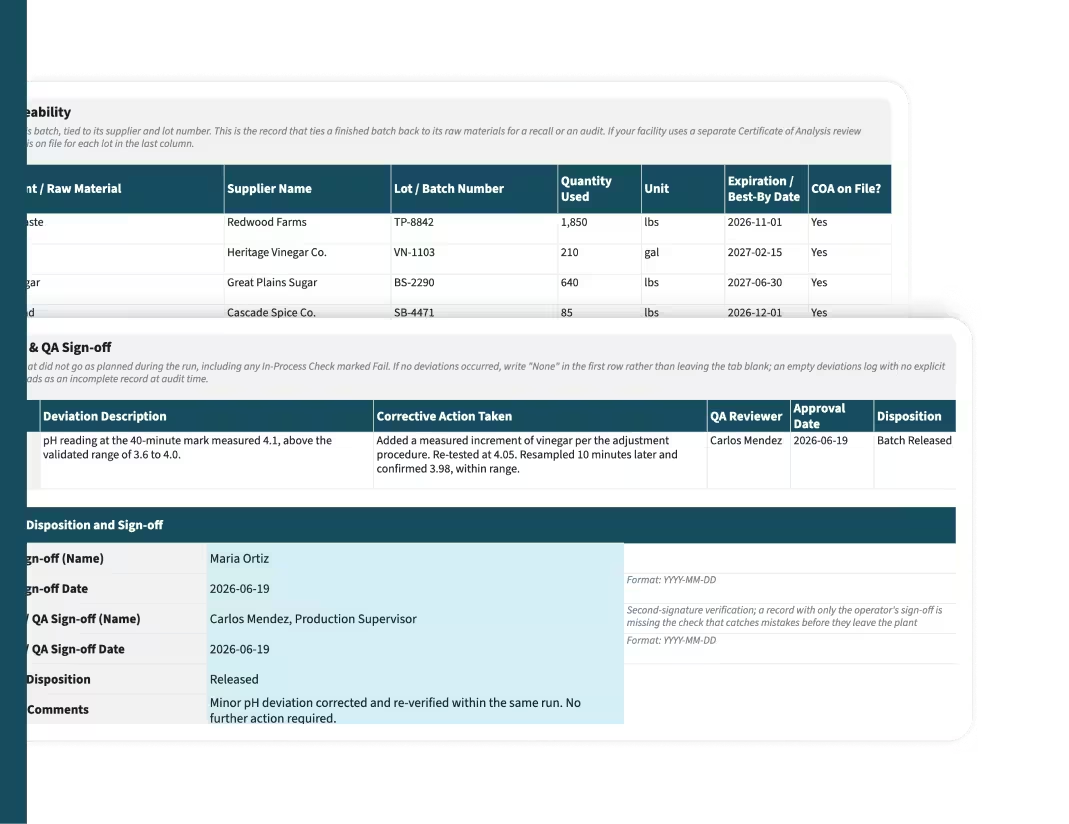
- Receiving records linking materials to supplier approval programs
- Production batch records connecting ingredients to finished products for traceability
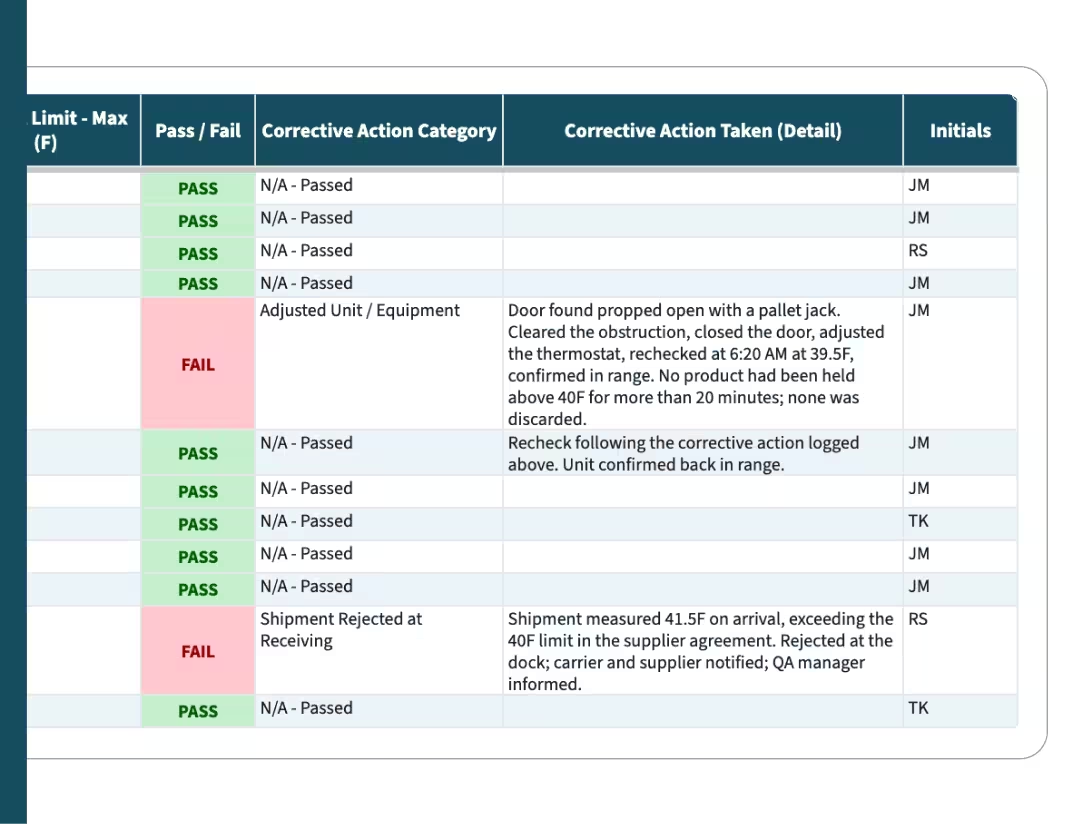
- CCP monitoring records with corrective actions
- Sanitation verification results
- Deviation and corrective action documentation
Auditors focus heavily on this stage. Your manufacturing documentation must be complete, accurate, and readily available.
Packaging and Labeling
Packaging protects products from contamination, maintains integrity during distribution, and provides tamper evidence. Choosing eco-friendly packaging supports sustainability goals while meeting consumer demand.
Label accuracy requirements:
- Correct ingredient statements
- Accurate allergen declarations
- Proper net weight and nutritional information
- Clear storage and handling instructions
- Traceable lot codes enabling one-up, one-back traceability
Label errors are common recall triggers, often from formula changes not reflected on labels, undeclared allergens, or printing mistakes, as reflected in FDA food recall guidance. Strong label approval and verification processes catch errors before shipping.
Distribution and Logistics
Your products move through warehouses, distribution centers, and transportation networks. For perishable goods, meeting strict delivery schedules maintains freshness and customer trust.
Management priorities:
- FIFO or FEFO rotation systems
- Storage conditions maintaining proper temperature and humidity
- Ongoing pest control monitoring
- Traceability tracking lots through all movements
Third-party logistics risks:
- Loss of direct control over storage conditions
- Potential cross-contamination in shared spaces
- Documentation gaps breaking traceability chains
Verify through audits, written agreements specifying requirements, temperature monitoring, and mock recalls testing partner traceability capability. Remember: outsourcing does not transfer liability.
Retail and Food Service
These are the final commercial control points. Challenges include improper storage temperatures, inadequate product rotation, and cross-contamination during handling. Proper handling in grocery stores ensures product quality and customer satisfaction.
Support retail partners by providing clear storage instructions, designing packaging to maintain integrity, offering training materials, and establishing efficient recall communication channels.
Consumption
While outside your direct control, consumer handling matters. Design packaging and labeling to communicate clear storage and preparation guidelines, include understandable allergen warnings, highlight shelf life, and feature clear lot codes for recall identification.
Common Supply Chain Models
Conventional Supply Chain
Multiple independent parties handle products sequentially. This offers flexibility and scalability but introduces more risk points, inconsistent documentation, and greater traceability challenges.
Integrated Supply Chain
Multiple stages are under single-organization control. This enables tighter oversight, consistent standards, and unified traceability but requires significant capital and concentrates risk.
Local or Regional Supply Chain
Sourcing and distribution within limited geography with fewer intermediaries. Benefits include faster communication, easier auditing, and fresher products. Constraints include limited supplier options, seasonality, and scaling challenges.
Critical note: Regardless of model, formal supplier approval and verification programs remain essential. Long-standing relationships do not replace documented controls and systematic verification.
Real-World Examples of Efficient Food and Beverage Supply Chains
Understanding how industry leaders manage their supply chains provides practical insights you can apply to your own operations.
Coca-Cola: Global Scale with Local Execution
Coca-Cola operates one of the world's most efficient beverage supply chains, distributing products to over 200 countries. Their success comes from a hybrid model combining centralized concentrate production with localized bottling and distribution through independent bottling partners.
Key efficiency drivers:
- Standardized quality specifications across all bottling partners worldwide
- Real-time inventory visibility through integrated management systems
- Regional distribution centers minimizing transportation distances
- Rigorous supplier approval programs ensuring consistent ingredient quality
- Digital traceability systems tracking products from concentrate to consumer
The result: Coca-Cola can trace any product back to its source within hours and maintains consistent quality standards globally while adapting to local market needs.
Sysco: Mastering Food Service Distribution
As North America's largest food service distributor, Sysco manages an incredibly complex supply chain serving restaurants, healthcare facilities, schools, and hotels. They handle over 400,000 products from thousands of suppliers, with strict temperature and timing requirements.
Efficiency strategies:
- Temperature-controlled fleet with real-time monitoring preventing cold chain breaks
- Automated warehouse systems optimizing picking and routing
- Supplier scorecards tracking quality, delivery performance, and compliance
- Predictive analytics forecasting demand and preventing stockouts
- Dedicated quality assurance teams conducting supplier audits
Sysco's supply chain excellence enables them to deliver fresh products on tight schedules while maintaining food safety across their entire network.
Blue Apron: Direct-to-Consumer Innovation
Blue Apron revolutionized meal kit delivery by building a supply chain optimized for freshness and minimal waste. They source ingredients directly from farmers and suppliers, bypassing traditional grocery distribution.
Innovative approaches:
- Precise demand forecasting based on customer meal selections
- Just-in-time ingredient procurement reducing waste
- Custom packaging maintaining product integrity during shipping
- Direct supplier relationships enabling rapid issue resolution
- Digital platforms providing suppliers with real-time order information
This model demonstrates how technology and direct relationships can create efficiency even with highly perishable products and complex last-mile delivery challenges.
Nestlé: Vertically Integrated Excellence
Nestlé maintains significant vertical integration in its supply chain, directly managing coffee farms, dairy facilities, and manufacturing plants. This control enables unprecedented quality oversight and traceability.
Integration benefits:
- Direct control over agricultural practices ensuring food safety from the source
- Proprietary quality standards implemented at every production stage
- Rapid response to quality issues without waiting for supplier corrective actions
- Complete traceability from farm to finished product
- Consistent application of sustainability practices across operations
While vertical integration requires substantial investment, it provides the control needed for premium products and complex supply chains.
Common Threads in Successful Supply Chains
These examples share critical success factors:
- Technology integration enabling real-time visibility and rapid decision-making
- Standardized processes ensuring consistency across all partners
- Strong supplier relationships built on clear expectations and regular communication
- Robust documentation systems supporting traceability and compliance
- Continuous monitoring catching issues before they become crises
Notice that each company, regardless of size or model, invests heavily in supplier management and verification. This isn't coincidental—it's fundamental to supply chain success.
Key Risks in the Food and Beverage Supply Chain
Food Safety and Contamination Risks
Biological hazards include Salmonella, Listeria, or E. coli from contaminated soil or water, poor agricultural practices, temperature abuse, or cross-contamination at shared facilities.
Chemical hazards arise from pesticide residues, cleaning chemical residues, undeclared allergens, or migration from non-food-grade packaging.
Physical hazards include glass, metal, plastic, wood fragments, or personal items from poor employee practices.
Supplier Compliance Gaps
Suppliers may lack HACCP plans, adequate sanitation programs, current certifications, complete record keeping, or sufficient employee training. Without robust verification, you may not detect gaps until audit findings or contamination events occur.
Traceability and Recall Challenges
Traceability breaks when lot codes aren't recorded at receiving, rework loses original lot identity, distribution records don't capture customer lot information, or suppliers can't provide one-back traceability. FSMA's Food Traceability Rule will increase recordkeeping requirements for high-risk foods—start building strong systems now.
Supply Disruptions and Shortages
Natural disasters, transportation breakdowns, supplier failures, regulatory actions, or geopolitical issues can disrupt availability. The food supply chain is particularly vulnerable to external shocks. Maintain relationships with backup suppliers already approved and qualified.
Risk Management Strategies
Supplier Qualification and Management
Your supplier program is your first defense against contaminated or non-compliant materials.
Essential steps:
- Initial risk assessment - Categorize suppliers based on ingredient risk and supplier controls
- Documentation review - Collect certificates, questionnaires, or audit reports demonstrating food safety programs
- Onsite audits - For high-risk suppliers, verify actual conditions and practices
- Approval decision - Document formal approval before first use
- Annual re-evaluation - Review updated information and verify continued compliance
Maintain a central repository for all supplier records, track certificate expiration dates, document supplier issues and corrective actions, and update risk assessments when changes occur.
This isn't optional—it's a core requirement of FSMA supply-chain program requirements and GFSI-benchmarked standards, as well as most customer requirements.
Food Safety Management Systems
GFSI-benchmarked standards such as SQF, BRCGS, FSSC 22000, and IFS are built on robust food safety management systems that provide comprehensive frameworks covering all supply chain elements.
Customers increasingly require certification as a condition of doing business, as it demonstrates third-party-verified compliance and effective food safety system implementation. Requiring critical suppliers to maintain GFSI certification or equivalent food safety management systems reduces your verification burden while preserving oversight responsibility.
Traceability and Record Control
Build systems enabling one-step-forward, one-step-back tracing immediately. From any finished product lot, trace back to all ingredient lots. From any ingredient lot, trace forward to all finished product lots. Complete this in hours, not days.
Requirements:
- Unique lot codes that never repeat
- Recording lot numbers at receiving
- Production records linking ingredient lots to finished product lots
- Distribution records showing which customers received which lots
- Ability to generate reports showing product movement
Technology solutions:
- ERP systems with integrated traceability modules
- Barcode or RFID scanning eliminating manual errors
- Cloud-based platforms connecting supply chain partners
- Blockchain solutions for enhanced transparency
Test traceability regularly through mock recalls. Practice exercises reveal problems when stakes are low.
Audits, Monitoring, and Verification
Types of audits:
- Internal audits covering supplier management, traceability, and documentation
- Third-party certification audits for GFSI standards
- Customer audits and regulatory inspections
- Supplier verification through questionnaires, certificate reviews, and second-party audits
Ongoing monitoring:
- Temperature monitoring with continuous data collection and alerts
- Sanitation verification through ATP testing or environmental monitoring
- Product testing at receiving or throughout processing
- Customer complaint trending identifying emerging issues
Verification isn't one-time—it's continuous. Build verification into routine operations.
For a deep dive into dark side of supply chain compliance and internal audits, watch our 30 Food Safety interview with Ex-Nestle employee, John Raede, Phd.
Best Practices for Strengthening Your Supply Chain
Establish Clear Ownership and Accountability
Assign specific individuals responsibility for supplier management, traceability, documentation, and verification programs. Clarify roles between quality, operations, and procurement teams.
Document expectations in written procedures for supplier approval, monitoring, and corrective action. Create clear specifications for all ingredients and packaging materials. Define timelines for responding to supplier issues.
Standardize Documentation Across Partners
Use standard supplier questionnaires, consistent receiving and production record formats, unified lot coding systems, and standardized corrective action forms.
Share expectations early by including documentation requirements in supplier agreements. Provide templates to suppliers and logistics partners. Train your team on consistent practices.
Foster Cross-Functional Collaboration
Include operations in supplier selection decisions. Involve procurement in food safety discussions. Bring logistics partners into quality meetings. Share information between facilities.
Regular communication through supplier performance reviews, supply chain risk meetings, and mock recall exercises ensures alignment.
Adopt Continuous Improvement
Review audit findings and customer complaints for root causes. Analyze near-misses and identify preventive actions. Benchmark against industry best practices. Stay current on regulatory changes. Invest in training.
Track metrics:
- Supplier performance scores
- Time to complete traceability exercises
- Audit finding trends
- Temperature excursion rates
- Documentation completeness rates
What gets measured gets managed.
Audit Readiness
What Auditors Look For
- Documented supplier approval program with current approvals
- Systematic risk assessments for each ingredient and supplier
- Evidence of ongoing supplier monitoring
- Ability to complete one-up, one-back trace within specific timeframe
- Complete, legible, readily available records
- Current specifications demonstrating suppliers manufacture to spec
- Receiving verification evidence
- Documented corrective action response to supplier issues
Common Audit Findings
- Missing or expired supplier certificates
- Incomplete supplier approval documentation
- No documented risk assessment for suppliers
- Traceability exercises that can't be completed or take too long
- Receiving records missing critical information
- No verification of supplier corrective actions
- Specifications not matching actual incoming materials
- No documented rationale for supplier approval decisions
Preparation Steps
Conduct internal audits quarterly using external auditor standards. Organize documentation logically. Train multiple team members on record retrieval. Two weeks before audits, review supplier files for completeness, run mock traceability exercises, update outdated procedures, and brief your team.
During audits, assign a coordinator to work with auditors. Answer questions directly and completely. Take notes on findings.
The goal is demonstrating you have systems in place and are continuously improving.
For more on audit preparation read, our ultimate guide to food safety audits.
The Critical Role of Supplier Management Software
After examining the complexity of food and beverage supply chains, one pattern becomes clear: successful companies invest in robust supplier management systems. Whether you're managing 50 suppliers or 5,000, manual processes simply cannot keep pace with regulatory requirements, audit expectations, and operational demands.
If you're currently looking for supply chain software for food and beverage companies, check out our list of the 7 best supply chain software for food and beverage.
Why Manual Supplier Management Fails
Traditional approaches using spreadsheets, shared drives, and paper files create predictable problems:
Documentation chaos - Certificates scattered across email inboxes and file folders make it impossible to verify current compliance status quickly. When an auditor asks for a supplier's latest certificate, can you retrieve it in under 60 seconds?
Missed renewals - Without automated alerts, certificates expire unnoticed. You discover the gap during an audit or, worse, after receiving materials from a non-compliant supplier.
Inconsistent processes - Different team members follow different procedures for supplier approval, creating gaps that auditors flag. One person conducts thorough risk assessments while another skips critical steps.
Broken traceability - When receiving documents live in one system, production records in another, and distribution data in a third, connecting the dots during recalls becomes a multi-day crisis instead of a multi-hour exercise.
Audit nightmares - Searching through folders and spreadsheets while auditors wait wastes time and creates stress. Every minute spent hunting for documents is a minute not spent demonstrating your program's strengths.
Limited visibility - Without centralized data, you can't identify trends, track supplier performance over time, or make data-driven decisions about your supply chain.
The companies we profiled earlier—Coca-Cola, Sysco, Blue Apron, Nestlé—don't manage suppliers manually. They use sophisticated software platforms that automate, standardize, and streamline supplier management.
What Effective Supplier Management Software Delivers
Modern supplier management platforms transform how food and beverage companies control their supply chains:
Centralized documentation - All supplier certificates, audit reports, questionnaires, and specifications live in one accessible location. Your entire team works from the same current information, and auditors can access any record within seconds.
Automated alerts - The system tracks certificate expiration dates and sends renewal reminders automatically, ensuring you never work with suppliers holding expired certifications.
Standardized workflows - Software enforces consistent processes for supplier approval, risk assessment, and annual re-evaluation. Every supplier receives the same thorough evaluation regardless of which team member handles the review.
Integrated traceability - When supplier data connects seamlessly with receiving, production, and distribution records, traceability becomes automatic rather than manual. Generate complete trace reports in minutes, not hours.
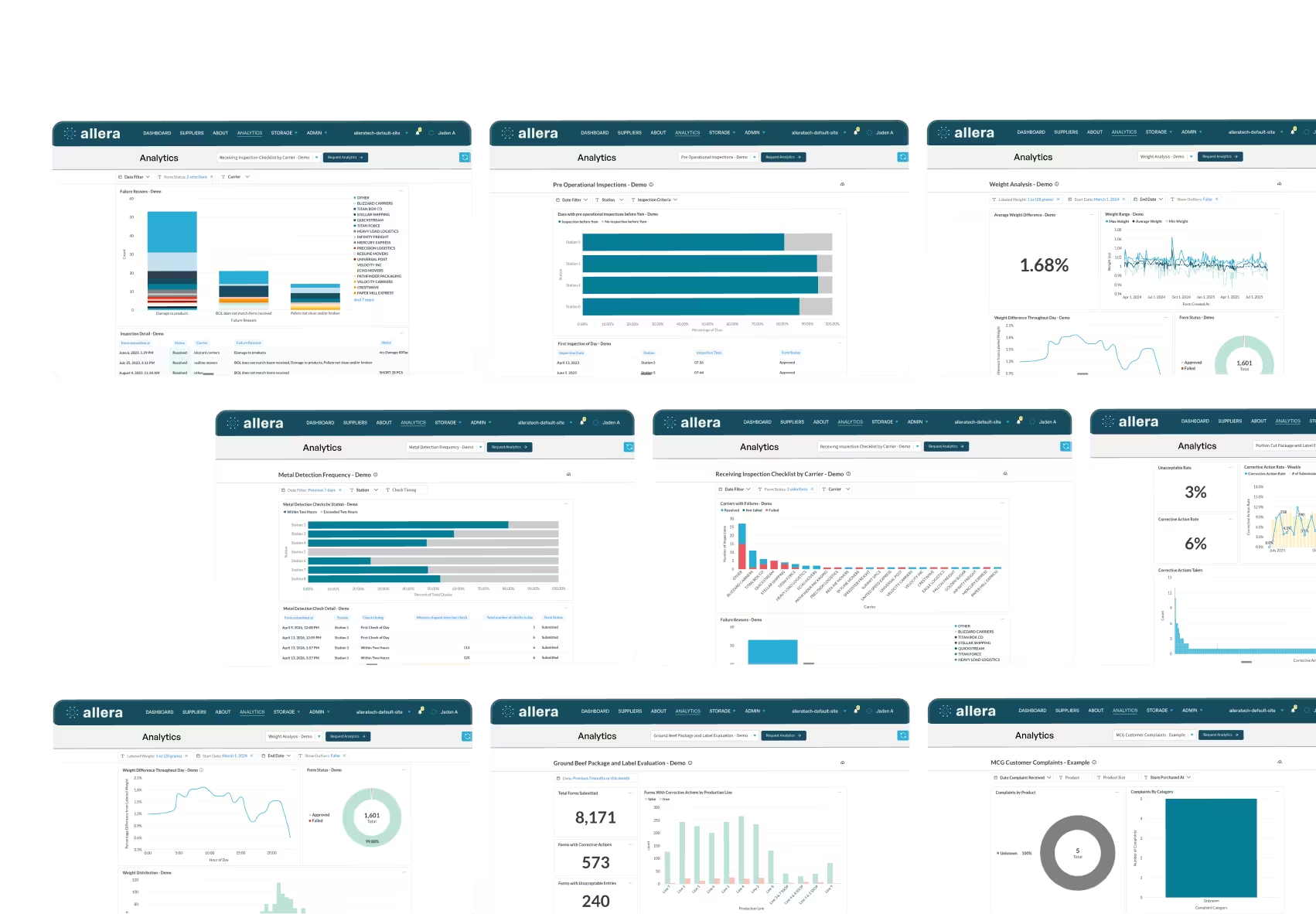
Real-time compliance monitoring - Dashboard views show supplier compliance status at a glance. Identify which suppliers need attention before problems escalate to audit findings or customer complaints.
Data analytics - Track supplier performance trends, analyze root causes of issues, and make informed decisions about supplier relationships based on objective data rather than anecdotal experiences.
Audit readiness - Organized, complete, current documentation means you're always audit-ready. No more scrambling to prepare when audit dates approach.
Scalability - As your supplier network grows, the software scales effortlessly. Managing 500 suppliers becomes no more complex than managing 50.
The ROI of Supplier Management Software
Investing in supplier management software delivers measurable returns:
Reduced audit preparation time - Companies report reducing audit prep from weeks to days, freeing quality teams for proactive improvement rather than reactive documentation gathering.
Faster recalls - When recalls occur, hours matter. Software-enabled traceability completes exercises in 2-4 hours instead of 2-4 days, minimizing product scope and associated costs.
Prevented audit findings - Automated compliance monitoring catches issues before auditors do, protecting certifications and customer relationships.
Lower administrative burden - Automation eliminates repetitive manual tasks, allowing your team to focus on strategic supplier relationship management rather than paperwork management.
Better supplier performance - Data visibility enables meaningful supplier performance discussions based on objective metrics, driving continuous improvement across your supply chain.
Reduced risk exposure - Consistent processes and documentation protect your company from regulatory penalties, recalls, and customer complaints that arise from supplier-related issues.
Take Control of Your Supply Chain with Allera
Managing a food and beverage supply chain doesn't have to be overwhelming. The right tools transform complex supplier management from a constant source of stress into a strategic advantage.
Allera's supplier management software is purpose-built for food and beverage companies facing the exact challenges outlined in this guide. Whether you're preparing for your first GFSI certification, managing hundreds of suppliers, or strengthening traceability to meet new FSMA requirements, Allera provides the comprehensive platform you need.
Discover how Allera can transform your supplier management: Watch our 60 second supplier management software demo to see how we help food and beverage companies build audit-ready, recall-ready, regulation-ready supply chains.
Stop managing suppliers with spreadsheets. Start building the resilient, transparent, efficient supply chain your business deserves.
FAQs
What are the six types of supply chain management?
The six commonly recognized types are Continuous flow, Fast chain, Efficient chain, Agile chain, Flexible chain, and Custom-configured chain. Each type is designed to support different product characteristics and market needs, ranging from high-volume stable demand to highly customized or rapidly changing demand environments.
What are the 5 P's of supply chain management?
The 5 P’s are Plan, Procure, Produce, Package, and Perform. This framework highlights strategic planning, supplier management, production execution, packaging for protection and compliance, and performance measurement using KPIs such as cost, service level, and compliance.
What are the 4 pillars of supply chain?
The four pillars of supply chain management are Planning, Sourcing, Making, and Delivering. These pillars represent the foundational activities required to align demand, secure materials, manufacture products, and distribute them reliably to customers.
What are the 7 major elements of supply chain management?
The seven major elements are Demand planning, Procurement, Production, Inventory management, Transportation, Warehousing, and Information systems. Together, these elements ensure products are produced efficiently, stored safely, moved on time, and tracked accurately across the supply chain.
What are the 4 C's of supply chain management?
The 4 C’s are Customer, Cost, Collaboration, and Control. This model focuses on meeting customer requirements, managing total supply chain costs, coordinating effectively with suppliers and partners, and maintaining control through visibility, data, and governance.
What are the 7 C's of supply chain management?
The 7 C’s typically refer to Customer, Cost, Convenience, Communication, Collaboration, Compliance, and Continuity. This framework emphasizes delivering customer value while controlling costs, ensuring smooth coordination across partners, meeting regulatory requirements, and maintaining operational resilience during disruptions.
What are the 5 parts of the supply chain?
The five core parts of the supply chain are Planning, Sourcing, Manufacturing, Distribution, and Returns. Planning aligns supply with demand, sourcing manages suppliers and raw materials, manufacturing converts inputs into finished goods, distribution handles storage and transportation, and returns manage recalls, waste, and reverse logistics.
What is the supply chain in the food and beverage industry?
The food and beverage supply chain is the end-to-end system that moves food from raw ingredient sourcing to final consumption. It includes farming and ingredient production, processing and manufacturing, packaging, storage, transportation, distribution, retail or foodservice, and ultimately the consumer. Because food is perishable and regulated, this supply chain also relies heavily on food safety controls, quality assurance, traceability, and compliance with regulations such as FDA, USDA, FSMA, and GFSI standards.
What are the 5 C's of supply chain management?
The 5 C’s of supply chain management are Company, Customers, Competitors, Collaborators, and Context. They are used as a strategic framework to assess internal capabilities, understand customer demand, evaluate competitive pressures, manage suppliers and partners, and account for external factors such as regulations, economic conditions, and geopolitical risks.
.avif)
.avif)
.avif)
.avif)
%20(1).avif)
.avif)
.avif)

%20(1).png)

.avif)

.avif)