.avif)



10 Food Safety Quotes Every FSQA Leader Should Know



.avif)
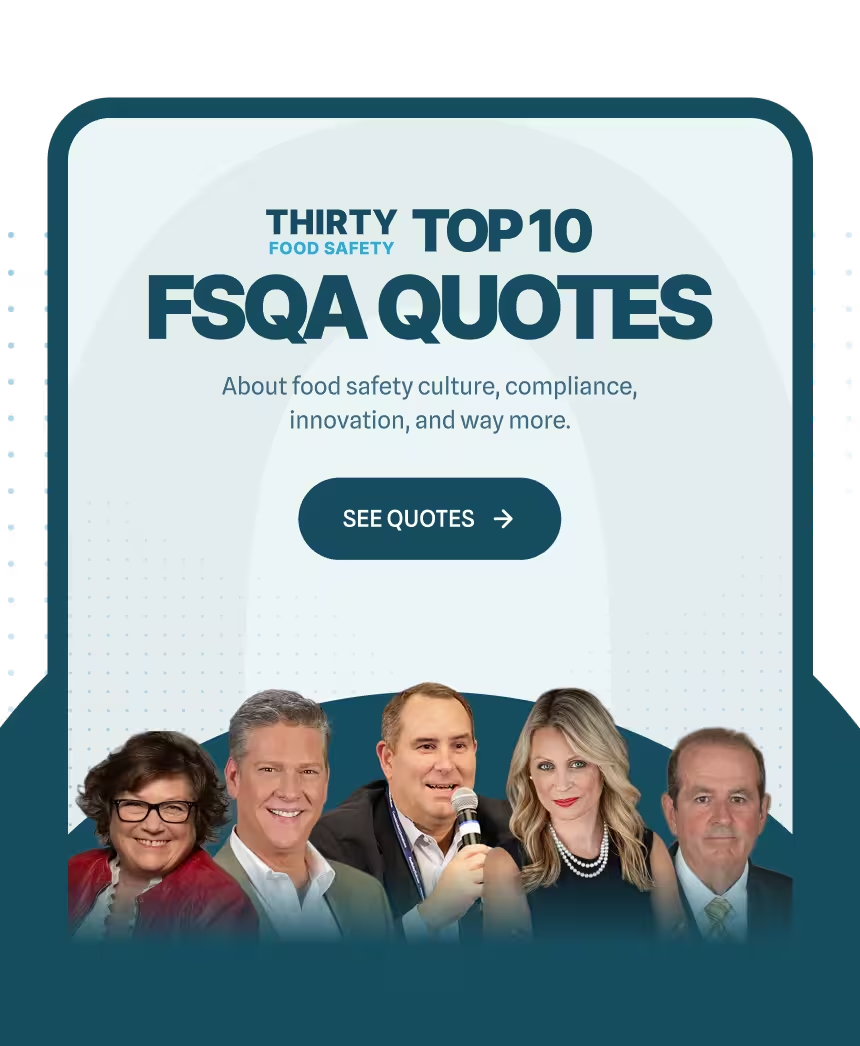
10 Insightful FSQA Quotes From FSQA Professionals
Food safety professionals face mounting challenges in today's complex manufacturing environment. From evolving regulations to technological disruption, FSQA leaders must navigate unprecedented territory while maintaining the fundamental mission: protecting consumers. These ten insights from industry veterans offer a roadmap for excellence in food safety and quality assurance.
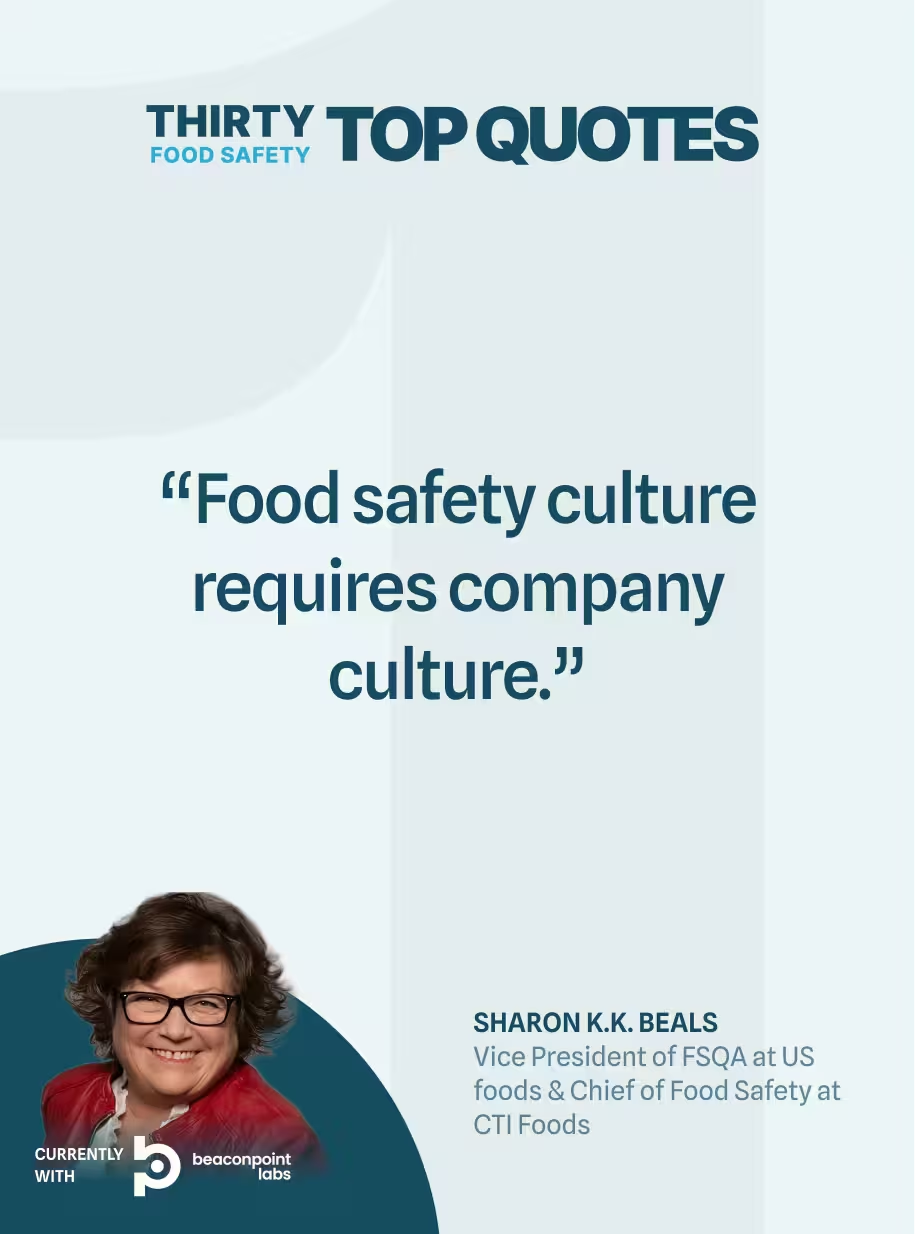
1. "Food safety culture requires company culture."
Sharon K.K. Beals, Vice President of FSQA at US Foods & Chief of Food Safety at CTI Foods
Sharon Beals cuts to the heart of a critical truth: food safety cannot exist in isolation. It's not a department, a checklist, or a compliance requirement—it's a reflection of organizational values.
The Broader Picture:
Company culture determines whether food safety thrives or merely survives. In organizations with strong food safety cultures, employees at every level understand their role in protecting consumers. Line workers feel empowered to stop production when they spot concerns. Executives allocate resources proactively rather than reactively. Cross-functional teams collaborate rather than operate in silos.
Want to dive deeper into these topics? Join us for 30 Food Safety with Damarys Del Castillo on January 27 at 3:00 PM ET to continue the conversation about building stronger food safety systems.
Building this culture requires intentional effort. Leadership must demonstrate commitment through actions, not just words. This means investing in training, celebrating food safety wins, and responding constructively when issues arise. When food safety becomes embedded in company DNA, compliance becomes second nature rather than a burden.
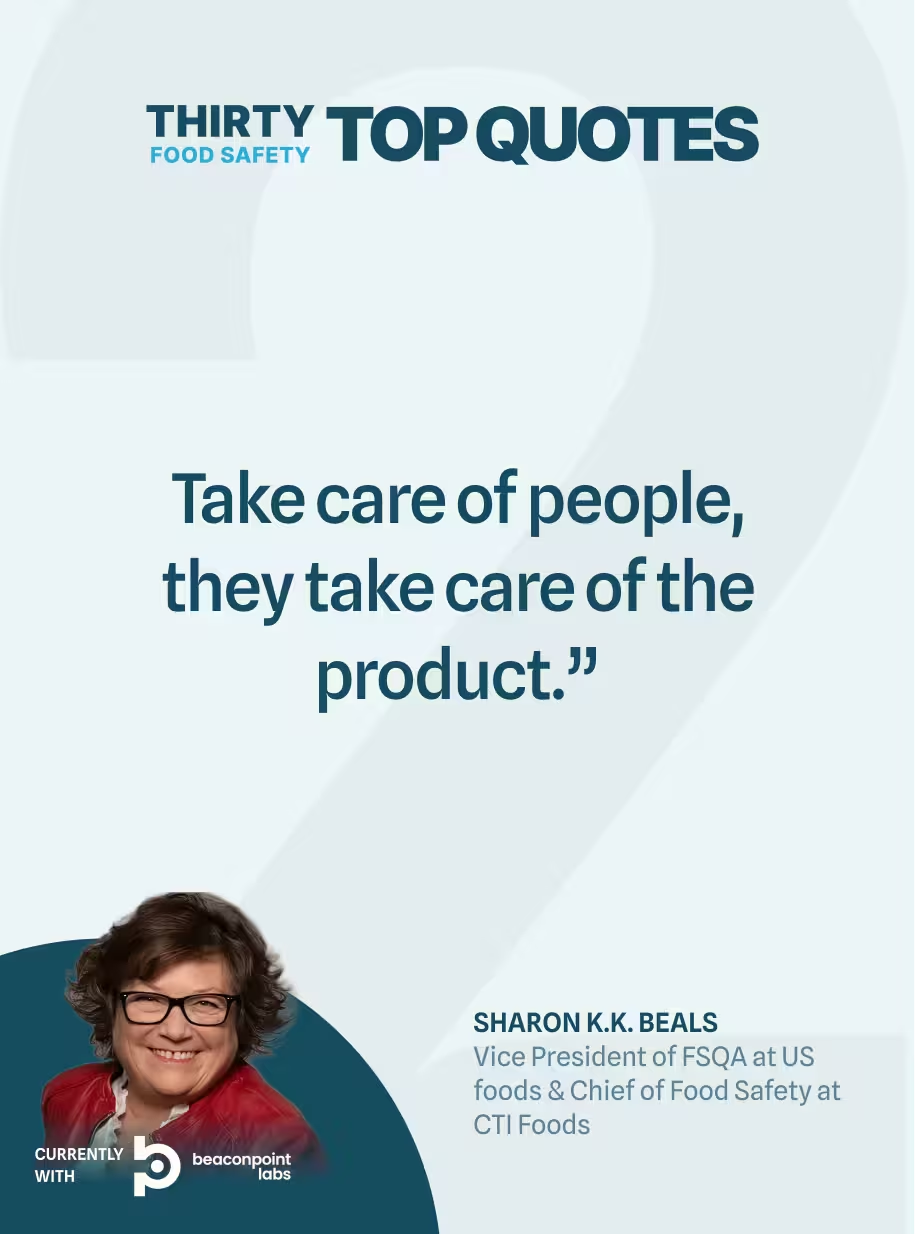
2. "Take care of people, they take care of the product."
Sharon K.K. Beals
Beals' second insight highlights the human dimension of food safety. The most sophisticated equipment and rigorous procedures mean nothing without engaged, capable people executing them.
The Broader Picture:
Employee wellbeing directly impacts food safety outcomes. Workers who feel valued, respected, and supported are more vigilant, more likely to report concerns, and more invested in quality outcomes. Conversely, high turnover, inadequate training, or poor working conditions create gaps where food safety failures can occur.
Progressive food manufacturers recognize this connection. They invest in competitive wages, comprehensive benefits, ongoing education, and career development. They create environments where workers have the tools, time, and authority to do their jobs correctly. This people-first approach doesn't just improve morale—it strengthens every aspect of food safety performance.
We just completed our 11 page food safety culture questionnaire template. It's perfect for food companies looking to better understand their actual food safety culture atmosphere.
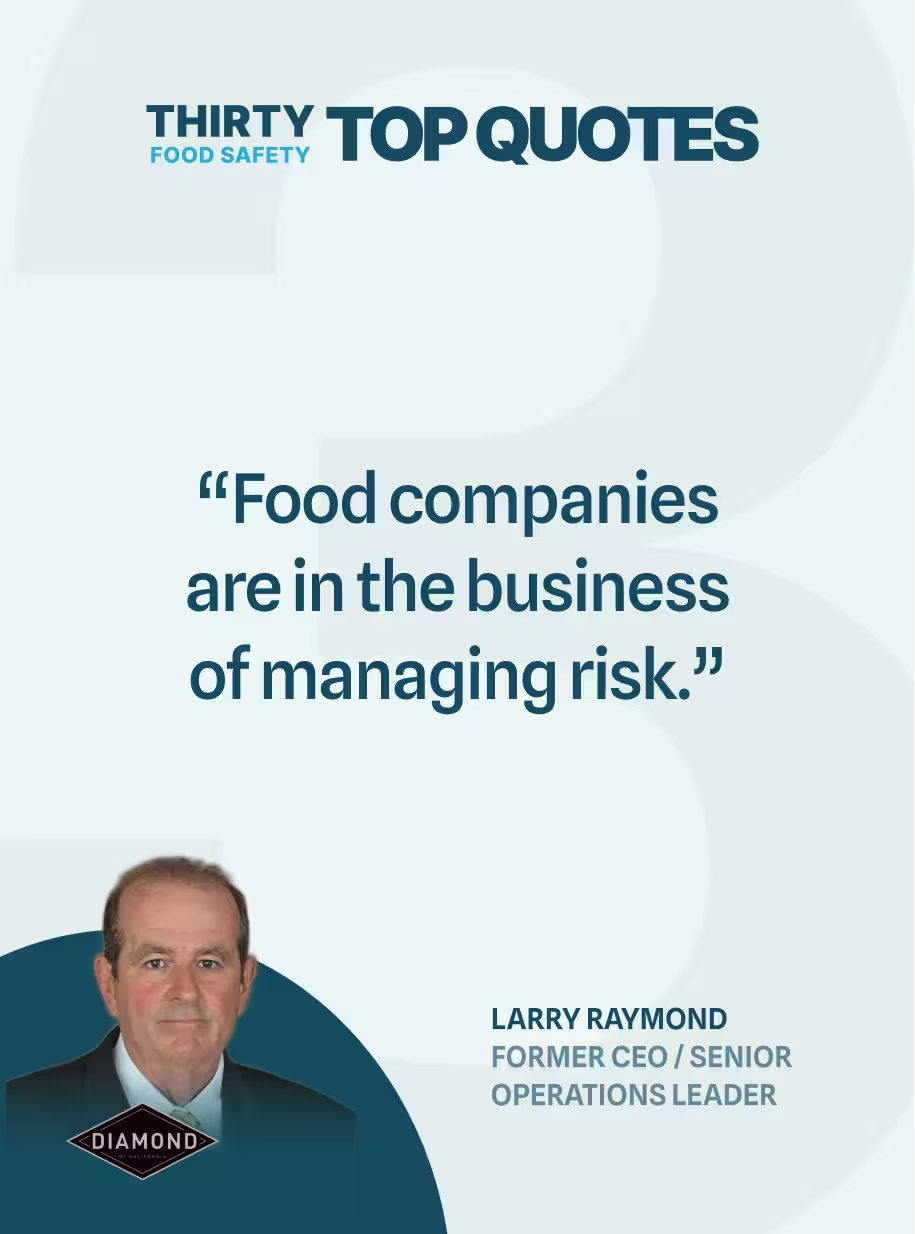
3. "Food companies are in the business of managing risk."
Larry Raymond, Former CEO / Senior Operations Leader
Larry Raymond reframes the fundamental nature of food manufacturing. While companies produce products, their real business is identifying, evaluating, and controlling risk.
Join us for 30 Food Safety with Damarys Del Castillo on January 27 at 3:00 PM ET to for insights into how Sigma Foods manages risk.
The Broader Picture:
Every decision in food manufacturing involves risk tradeoffs. New ingredients introduce allergen concerns. Equipment modifications affect sanitation protocols. Supply chain changes bring new vendor risks. Market expansion means navigating different regulatory environments.
Successful companies develop sophisticated risk management frameworks. They use data analytics to identify patterns. They conduct scenario planning for potential crises. They build redundancy into critical systems. Rather than avoiding all risk—an impossibility—they make informed decisions about which risks to accept, mitigate, or eliminate. This strategic approach to risk management separates industry leaders from those who merely react to problems as they arise.
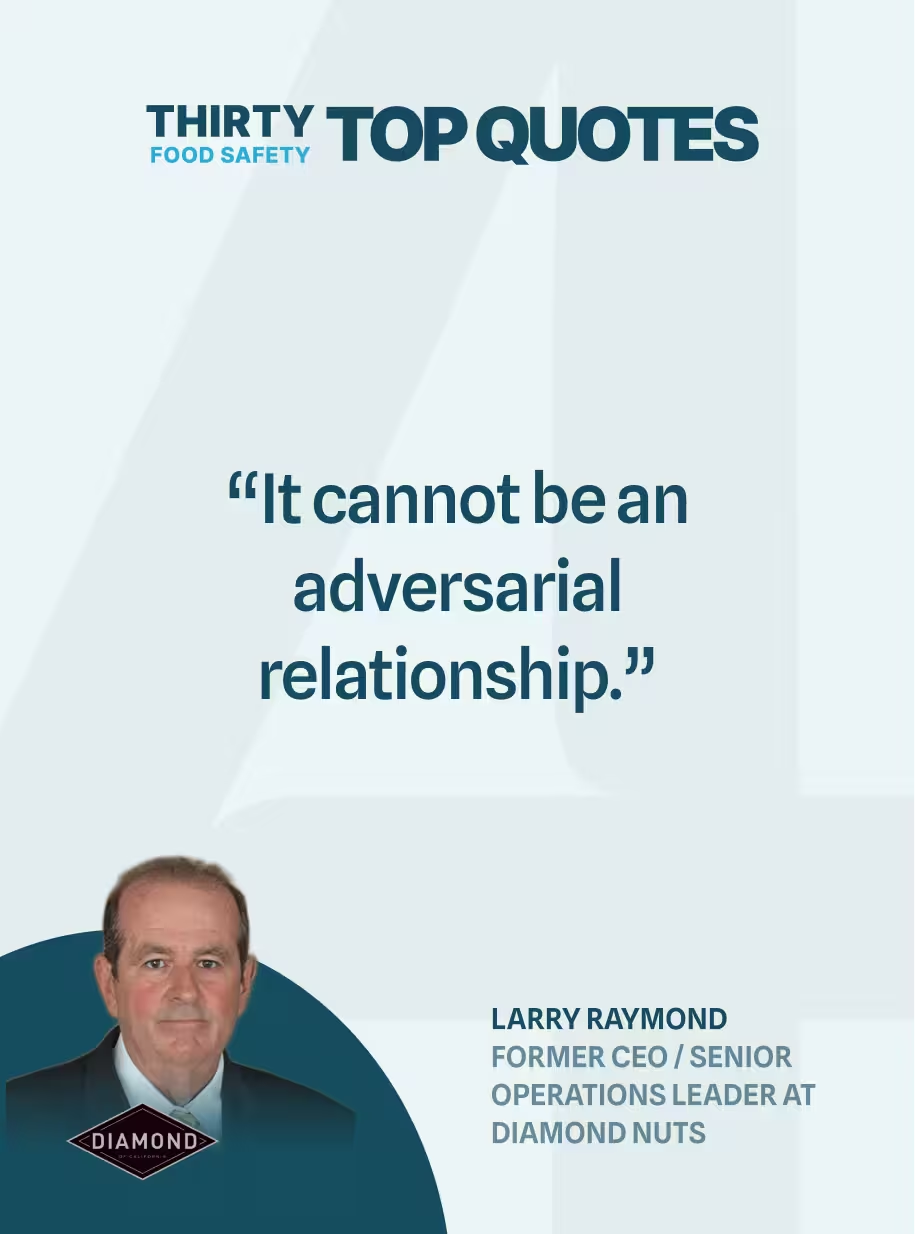
4. "It cannot be an adversarial relationship."
Larry Raymond, Former CEO / Senior Operations Leader at Diamond Nuts
Raymond addresses a common dysfunction: when FSQA teams and operations view each other as opponents rather than partners working toward shared goals.
The Broader Picture:
Adversarial relationships between quality and operations create dangerous blind spots. When operations sees FSQA as the "food police," they may hide problems rather than solving them. When FSQA views production as reckless, they may impose impractical requirements that get circumvented.
Breaking this pattern requires intentional bridge-building. Joint training sessions help each group understand the other's constraints and priorities. Collaborative problem-solving transforms conflicts into learning opportunities. Shared metrics ensure both teams win or lose together. When FSQA and operations function as true partners, they create a formidable defense against food safety threats.
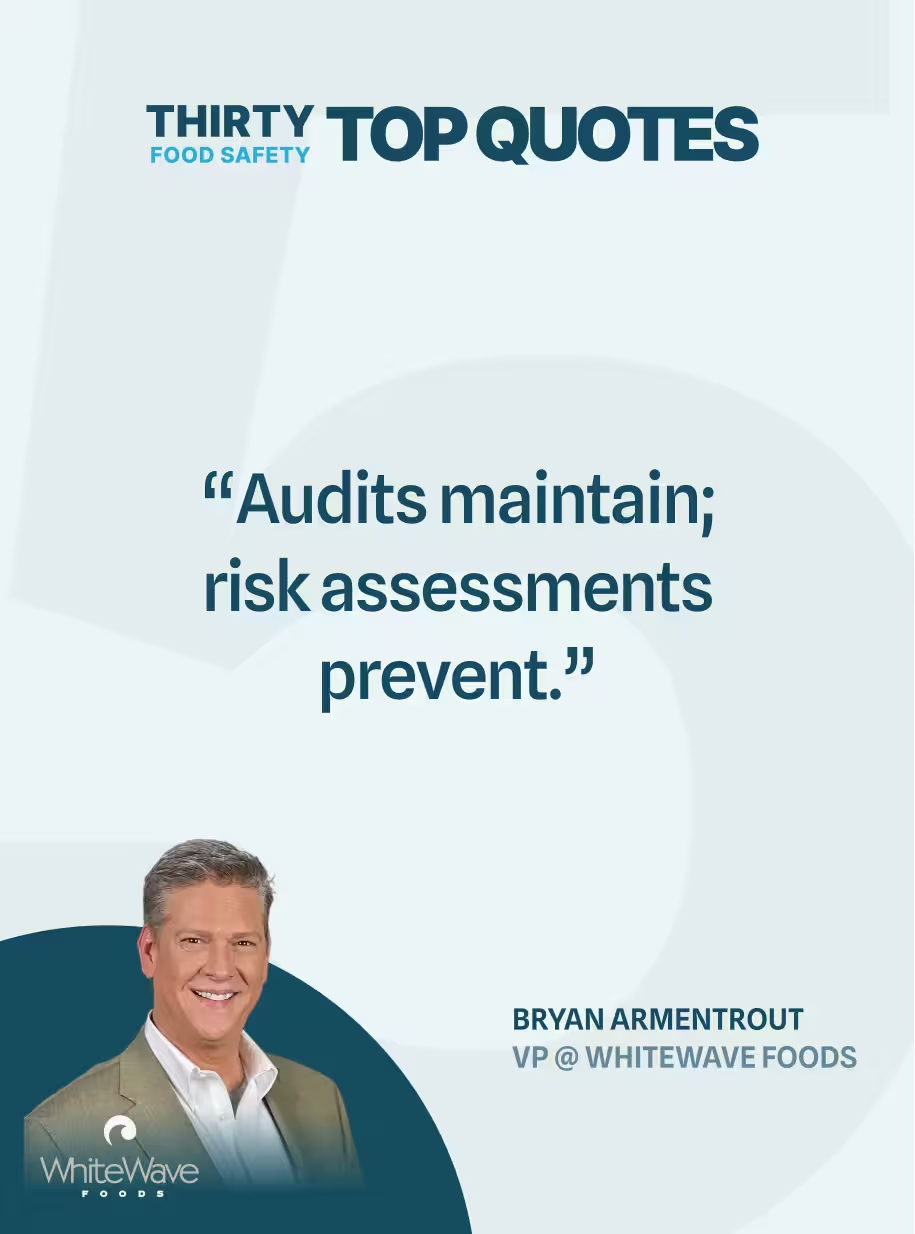
5. "Audits maintain; risk assessments prevent."
Bryan Armentrout, VP at Whitewave Foods
Bryan Armentrout distinguishes between two essential but different food safety tools, each serving a distinct purpose in the FSQA arsenal.
The Broader Picture:
Audits verify that established systems are functioning as designed. They're retrospective, checking compliance with standards and procedures. While critical for maintaining baseline performance, audits primarily confirm what you already know.
Risk assessments, by contrast, are forward-looking. They identify potential hazards before they materialize into problems. Hazard Analysis and Critical Control Points (HACCP), Hazard Analysis and Risk-Based Preventive Controls (HARPC), and vulnerability assessments help manufacturers anticipate and prevent issues rather than simply detecting them after the fact.
Leading food companies balance both approaches. They maintain robust audit programs while investing heavily in predictive risk assessment. This dual strategy provides both the discipline of verification and the insight of prevention.
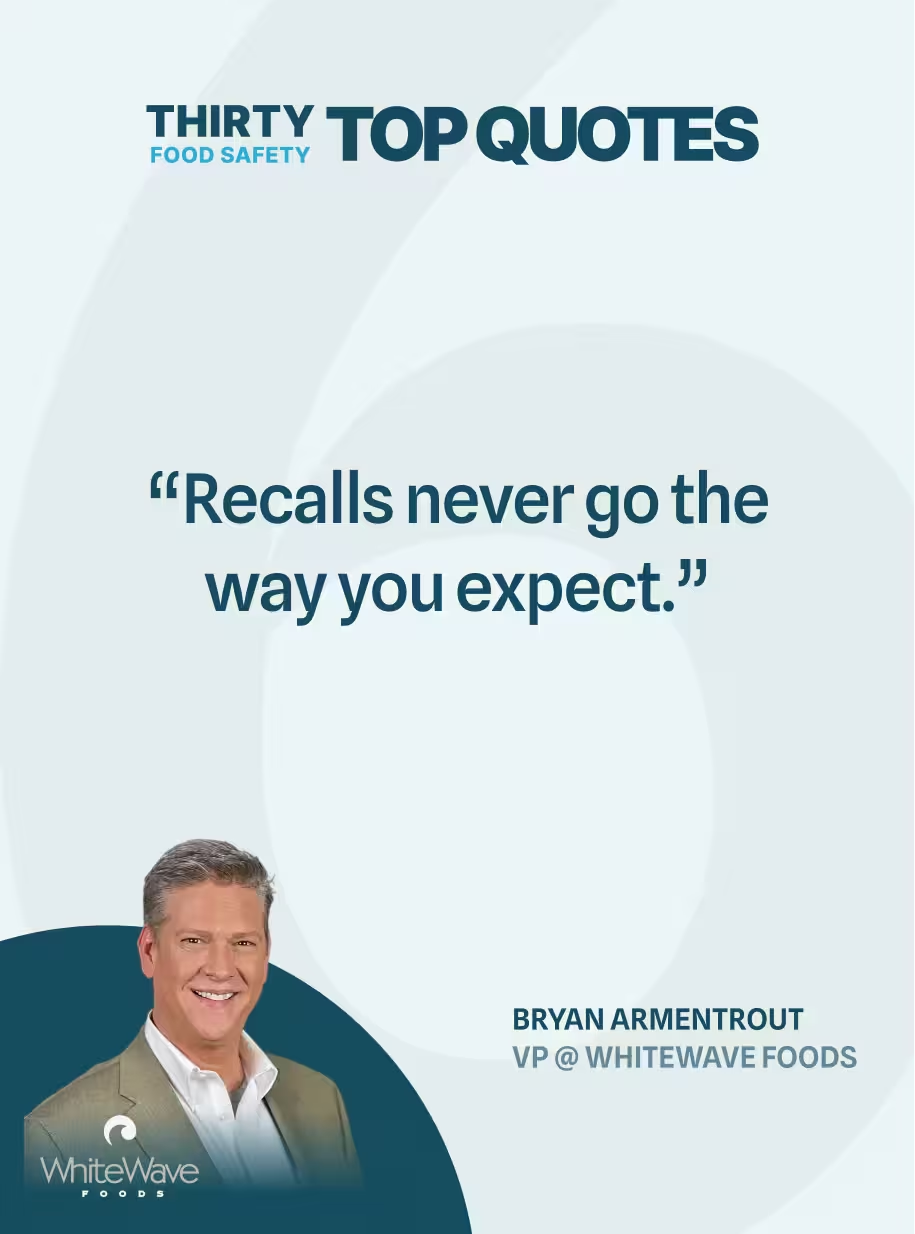
6. "Recalls never go the way you expect."
Bryan Armentrout
Armentrout's hard-won wisdom reflects a universal truth about crisis management: despite the best planning, real incidents introduce chaos, complexity, and surprises.
The Broader Picture:
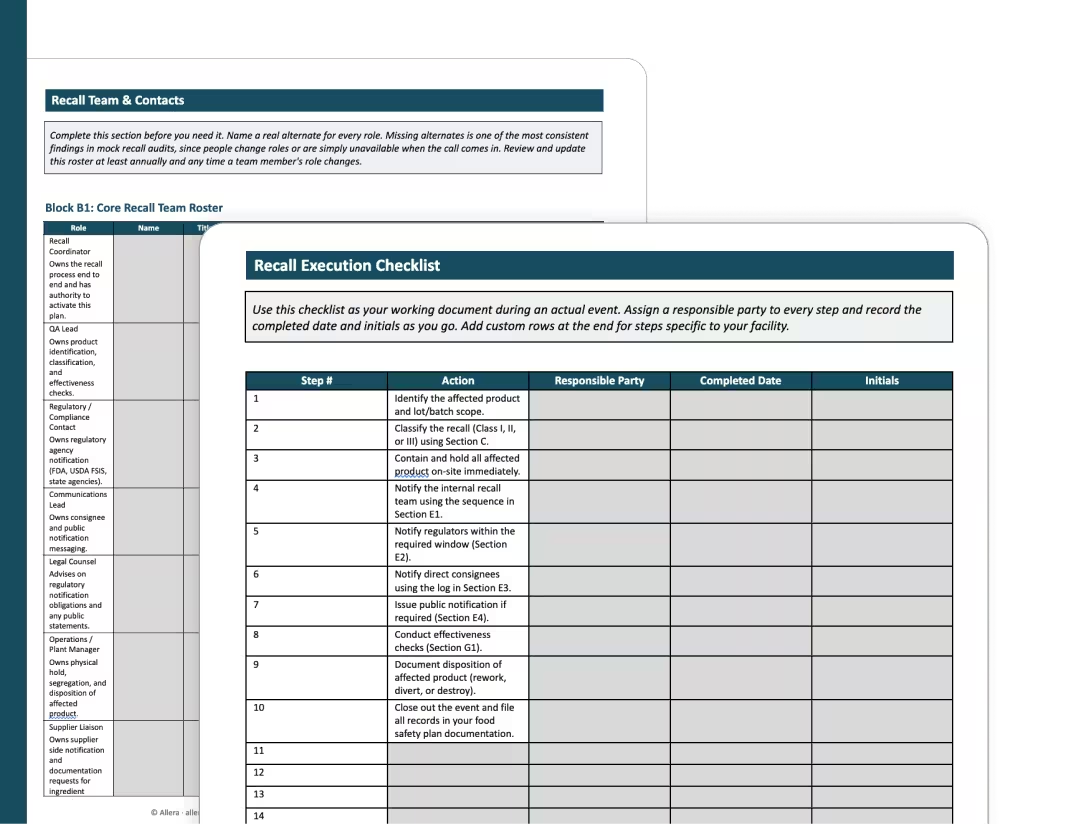
Every food manufacturer should have a recall plan, but no plan survives first contact with a real crisis unchanged. Supply chain complexities create unexpected distribution patterns. Consumer behavior defies predictions. Media attention escalates in unforeseen ways. Regulatory interactions reveal gaps in documentation.
The solution isn't to abandon planning—it's to plan for adaptability. Effective recall preparation includes tabletop exercises that stress-test procedures. Cross-functional teams practice decision-making under pressure. Communication protocols build in flexibility for evolving situations. Companies maintain relationships with regulatory agencies, legal counsel, and crisis communications experts before they're needed.
When recalls do occur, organizations that have prepared for uncertainty navigate them far more effectively than those relying on rigid checklists.
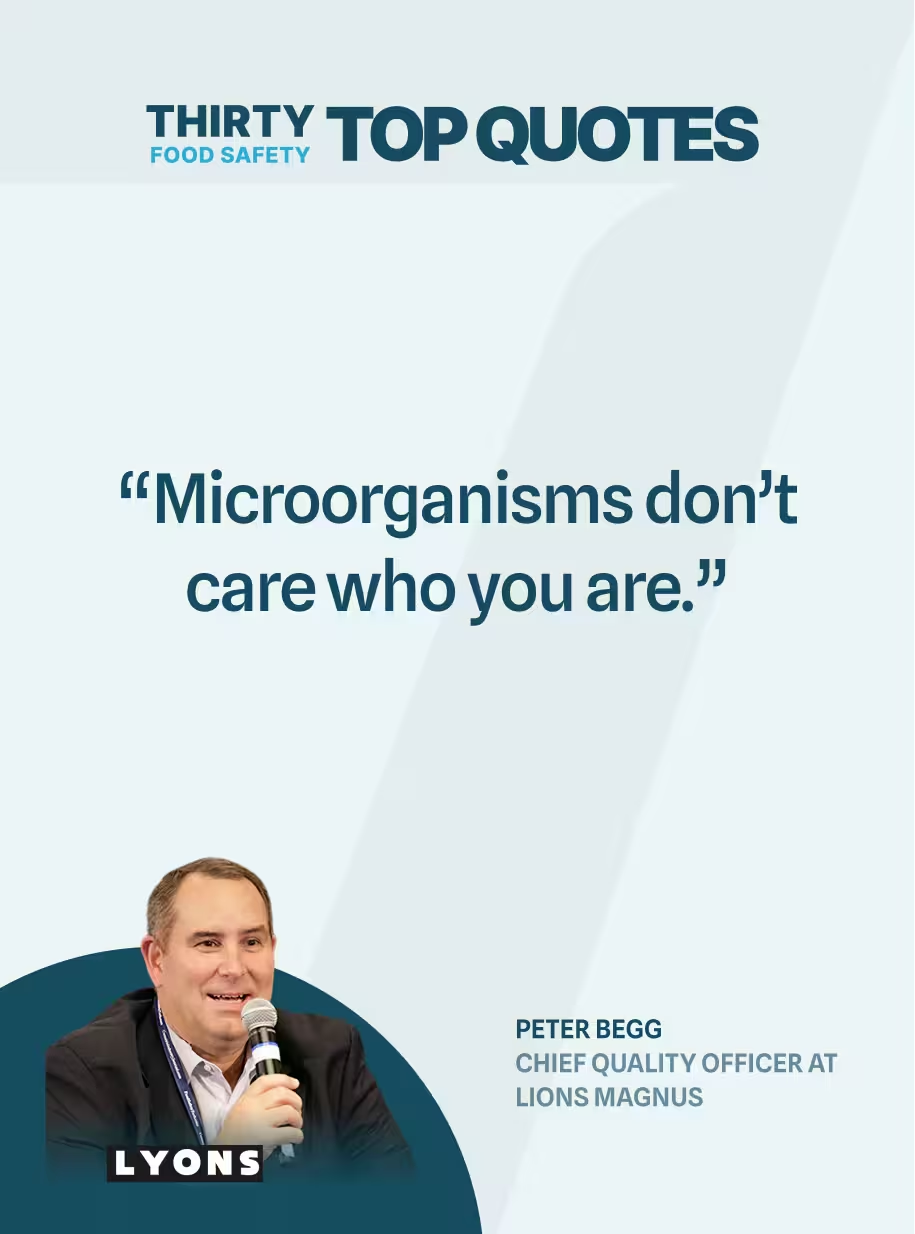
7. "Microorganisms don't care who you are."
Peter Begg, Chief Quality Officer at Lions Magnus
Peter Begg's straightforward observation contains profound implications: pathogens don't discriminate based on company size, reputation, or past performance.
The Broader Picture:
The microbial world operates according to scientific principles, not corporate achievements. A prestigious brand offers no protection against Listeria if temperature controls fail. Years without incidents provide no immunity to Salmonella if sanitation protocols lapse. Market leadership doesn't prevent pathogen growth if water activity isn't controlled.
This reality demands consistent vigilance. Small companies and large corporations alike must master the fundamentals: time and temperature control, sanitation, personnel hygiene, environmental monitoring, and supplier verification. No one earns the right to shortcuts. Every batch, every shift, every day requires the same disciplined attention to food safety fundamentals.
The companies that internalize this truth avoid the complacency that often precedes major food safety failures.
Join us for 30 Food Safety with Damarys Del Castillo on January 27 at 3:00 PM ET to for insights into how Sigma Foods avoids food safety failures.
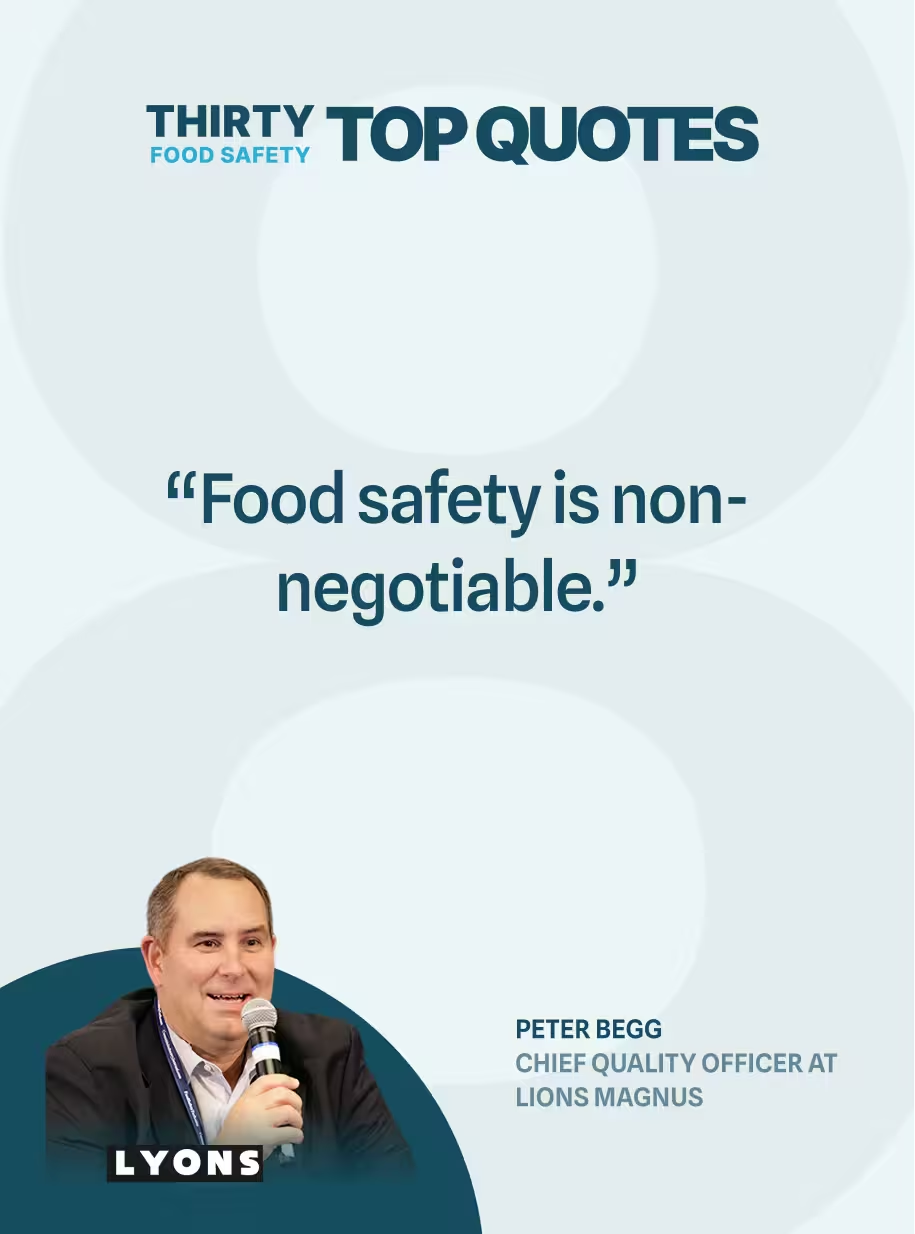
8. "Food safety is non-negotiable."
Peter Begg
Peter Begg establishes an unambiguous boundary: food safety cannot be compromised, regardless of other pressures or priorities.
The Broader Picture:
Food manufacturers constantly balance competing demands. Production schedules pressure timelines. Cost constraints challenge budgets. Customer requirements introduce complexity. Market opportunities create urgency.
Despite these pressures, food safety must remain inviolate. When deadlines threaten proper sanitation, the deadline moves. When cost-cutting targets food safety resources, those targets get revised. When customer demands conflict with safety protocols, the conversation starts with safety as the baseline.
This absolutist stance requires courage, particularly when saying "no" affects revenue or relationships. However, the alternative—compromising food safety for short-term gains—risks catastrophic consequences: recalls, illness outbreaks, legal liability, and brand destruction.
Organizations that embrace food safety as non-negotiable create clarity. Decisions become simpler when one variable is constant. This clarity cascades through the organization, empowering every employee to prioritize safety without second-guessing.

9. "Coupling innovation with food safety is just a logical thing..."
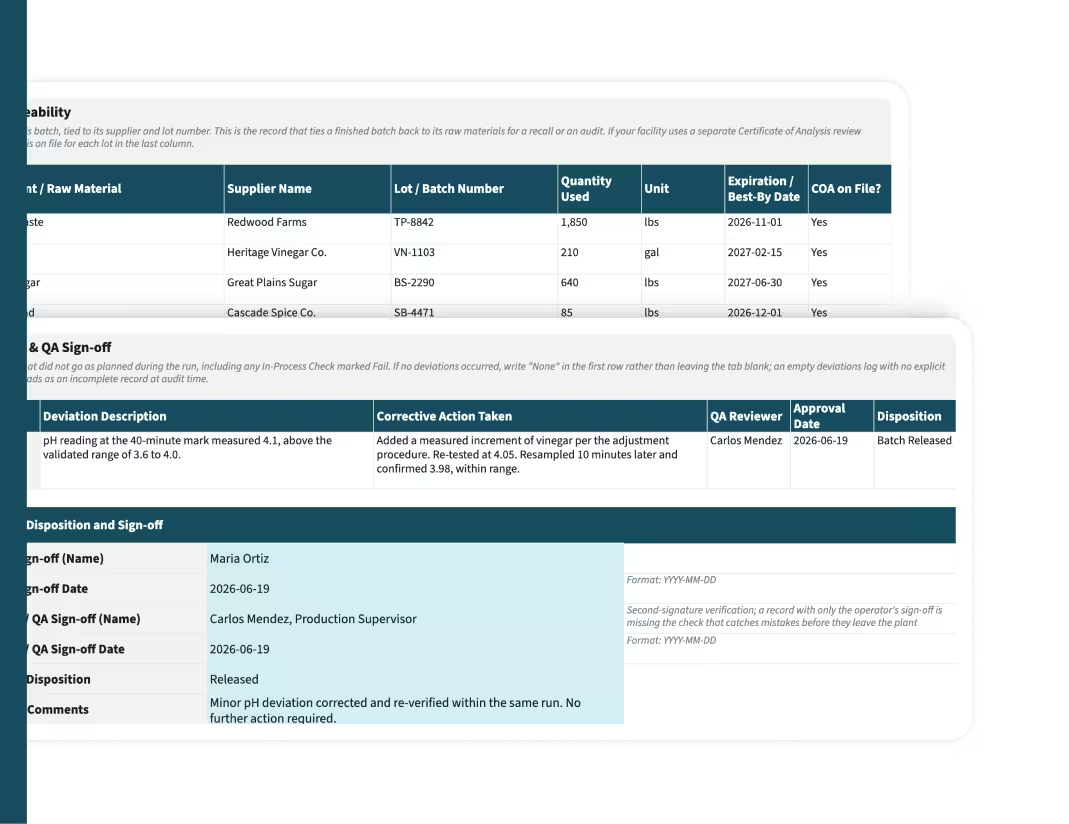
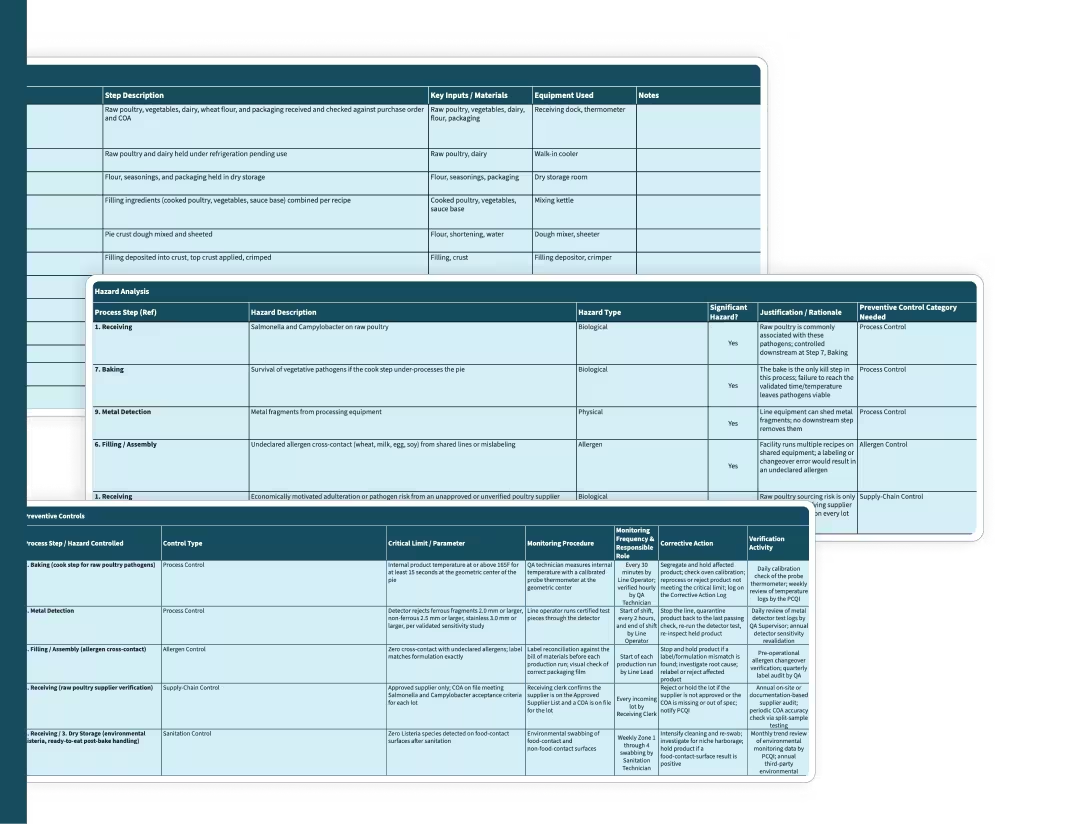
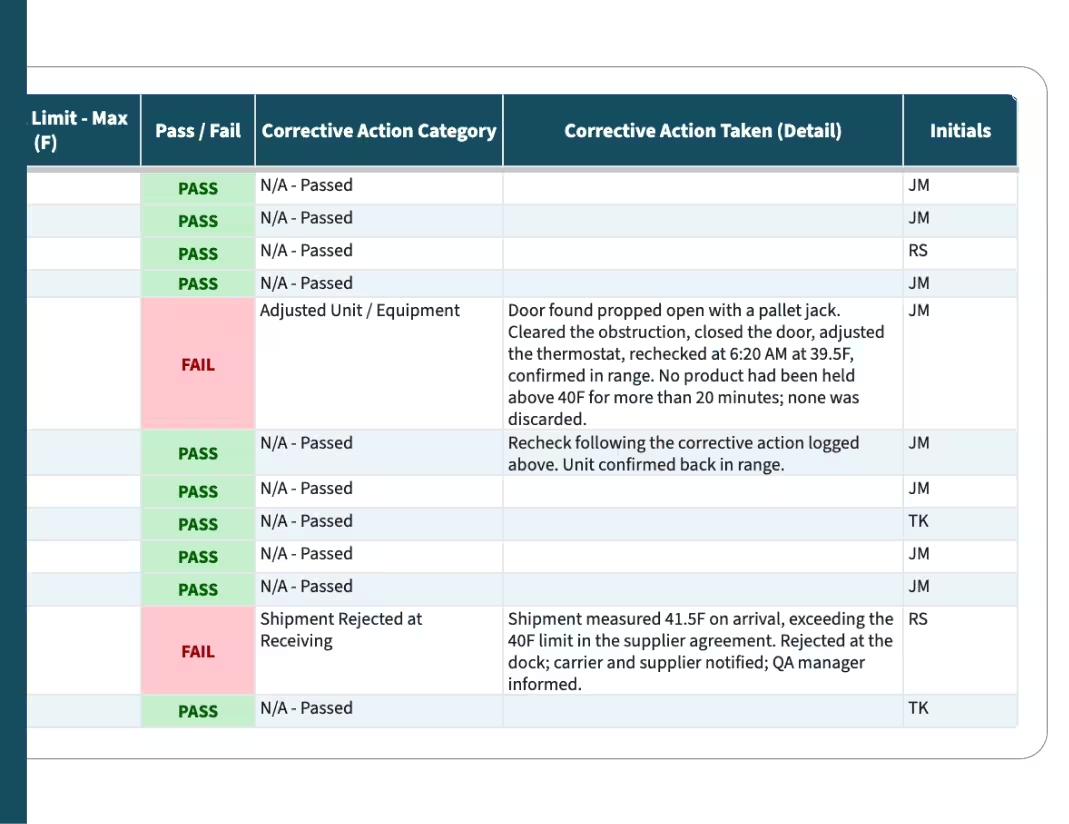
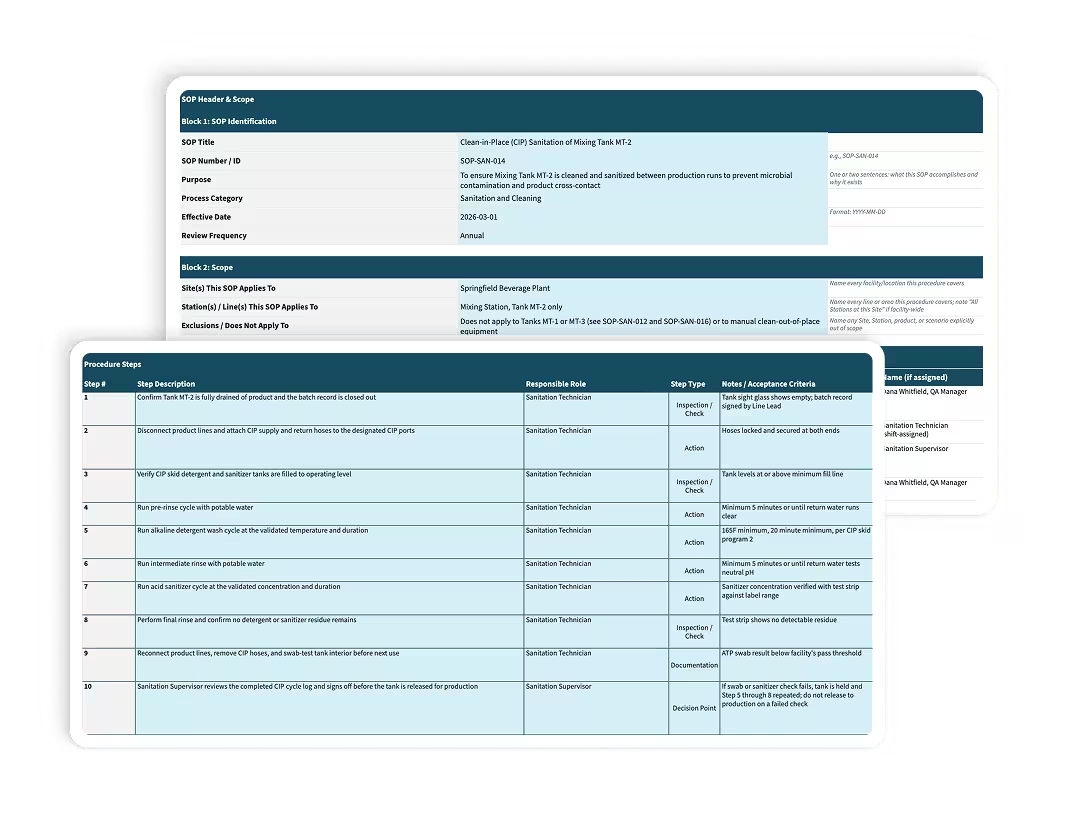
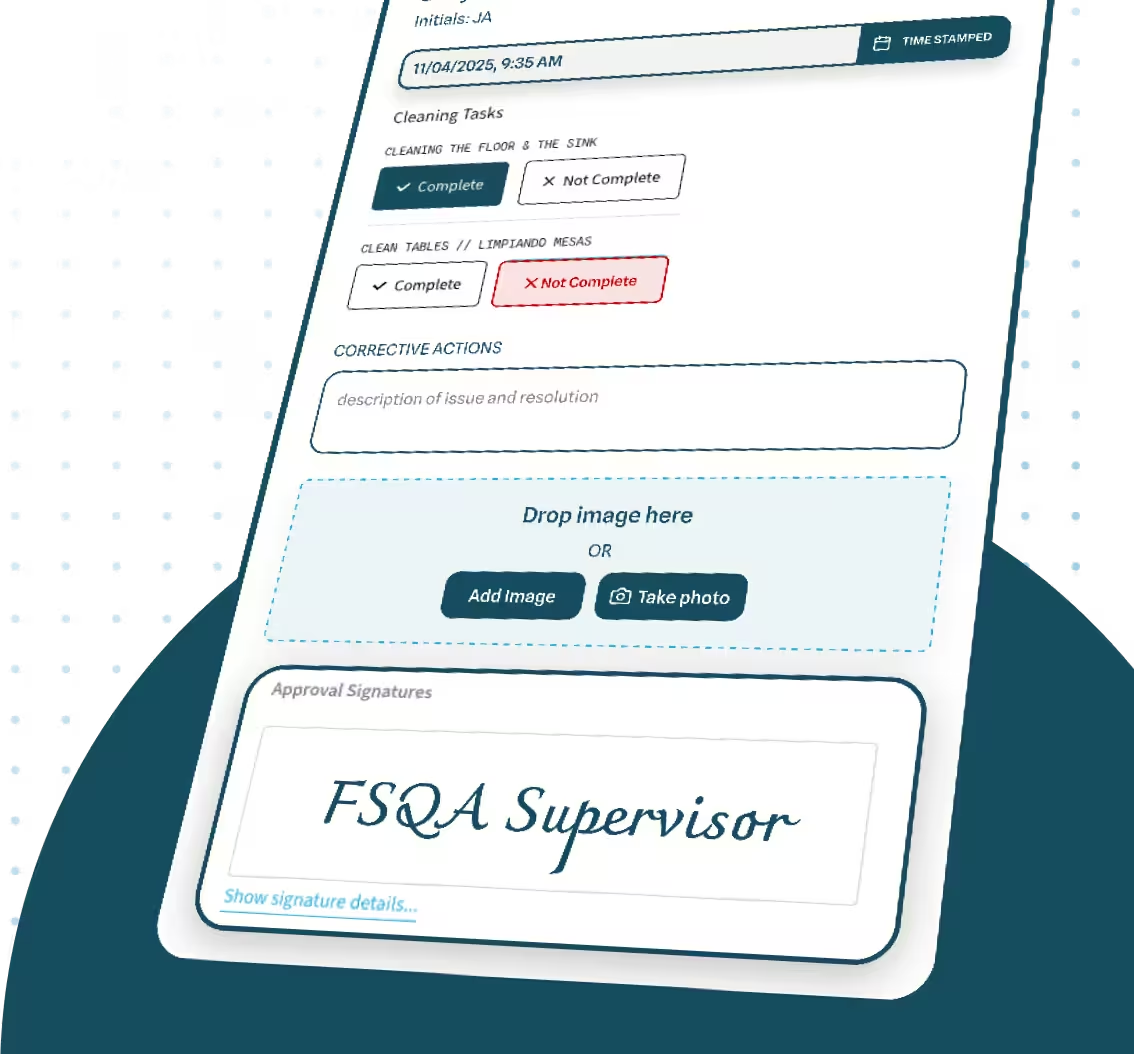
Innovate your FSQA department by digitizing slow manual FSQA paperwork. Watch this 45 second digital forms demo to see how it's possible in 30 days (hint: we leverage AI).
Vera Dickinson, Founder, InnovaQ & Former FSQA at Mars & Mondelēz
Vera Dickinson challenges the false dichotomy between innovation and food safety, positioning them as complementary rather than competing priorities.
The Broader Picture:
Too often, innovation and food safety are framed as opposing forces. New products mean new risks. Process changes threaten validated systems. Novel ingredients require additional controls. This framing creates organizational tension and slows progress.
Progressive companies flip this script. They integrate food safety considerations into innovation from inception. Product developers work alongside FSQA teams during formulation. New technologies are evaluated for both performance and safety benefits. Process innovations are designed to enhance control, not just efficiency.
This integrated approach accelerates innovation rather than hindering it. By addressing food safety early, companies avoid costly redesigns. They identify control strategies that enable rather than constrain innovation. They leverage new technologies—advanced sensors, rapid testing methods, automation—to strengthen food safety while pursuing market opportunities.
When food safety and innovation advance together, companies achieve both competitive advantage and consumer protection.

10. "AI is a co-pilot, not a job replacement."
Vera Dickinson
Dickinson offers crucial perspective on artificial intelligence's role in food safety, emphasizing augmentation rather than automation of human expertise.
The Broader Picture:
Artificial intelligence and machine learning are transforming food manufacturing. AI analyzes environmental monitoring data to predict contamination risks. Machine learning identifies patterns in production data that humans might miss. Computer vision systems inspect products with unprecedented consistency.
However, these technologies amplify rather than replace human judgment. AI excels at processing vast datasets and identifying correlations, but it lacks the contextual understanding, ethical reasoning, and creative problem-solving that experienced FSQA professionals bring. A system might flag a statistical anomaly, but humans determine whether it represents a true threat or a false positive. AI might predict risk, but people decide how to respond.
The most effective approach combines AI's analytical power with human expertise. Technology handles routine monitoring and data analysis, freeing professionals to focus on strategic decisions, complex investigations, and continuous improvement. This partnership leverages the strengths of both, creating food safety systems more robust than either could achieve alone.
As AI capabilities expand, FSQA professionals who embrace these tools while maintaining their irreplaceable human judgment will lead the industry forward.
Wisdom for the Road Ahead
These ten insights from food safety leaders illuminate the path forward for FSQA professionals. They remind us that food safety is fundamentally about people—their culture, their wellbeing, and their relationships. They emphasize the importance of prevention over reaction, partnership over confrontation, and consistency over complacency.
Most importantly, they challenge us to embrace evolution while honoring fundamentals. New technologies offer powerful capabilities, but timeless principles of risk management, vigilance, and unwavering commitment to safety remain paramount.
As the food industry continues to evolve, these voices provide both grounding and inspiration for the critical work of protecting public health through excellence in food safety and quality assurance.
Want to dive deeper into these topics? Join us for 30 Food Safety with Damarys Del Castillo on January 27 at 3:00 PM ET to continue the conversation about building stronger food safety systems.
FAQs


.avif)
.avif)

.avif)
.avif)

%20(1).avif)
.avif)
.avif)

%20(1).png)

.avif)



.avif)