.avif)



Food Contact Surfaces: What Counts, What the Rules Require, and How to Verify Them

Food contact surfaces are the surfaces food touches during normal operations, plus any surface that liquid or debris can drain, drip or splash from onto food or onto another food contact surface. Common examples are knives, cutting boards, slicer blades, conveyor belts, mixer bowls, gloves, totes and the insides of tanks and pipes. In restaurants and retail, food contact surfaces used with TCS food must be cleaned and sanitized at least every four hours.
That 4-hour rule comes from the FDA Food Code, which governs restaurants and retail. In a food plant, 21 CFR 117.35 applies, and it doesn't give you a number. It makes you justify one. Everything below is current as of the 2026 FDA Food Code.
What is a food contact surface?
A food contact surface is any surface of equipment, a utensil or a tool that food touches during normal operations, or that anything can transfer from onto food or onto another surface that touches food. Most lists skip that second half, and it's where classification arguments start.
The FDA definition for food plants (21 CFR 117.3)
For FDA-regulated food plants, the definition sits in the current good manufacturing practices (CGMPs) at 21 CFR 117.3. Food contact surfaces are "those surfaces that contact human food and those surfaces from which drainage, or other transfer, onto the food or onto surfaces that contact the food ordinarily occurs during the normal course of operations."
Two phrases do the work. "Or other transfer" reaches beyond dripping to air blown across a surface or product sliding off a guard. "Onto surfaces that contact the food" covers two-step transfer: a surface that drips onto a belt qualifies even if it never touches product.
The Food Code definition for retail and foodservice (§ 1-201.10)
The 2026 FDA Food Code defines a food contact surface as a surface of equipment or a utensil that food normally contacts, or from which food may drain, drip or splash into a food or onto a surface normally in contact with food. It names only drain, drip and splash, so it's narrower than 117.3, and it counts gloves used in contact with food as utensils.
Not the same as a "food contact substance"
FDA's food contact substances program covers something else. Under 21 CFR 170.3, a food contact substance is a component of materials used to make, pack, package, transport or hold food, with no technical effect in the food. That program governs what packaging, coatings and equipment materials may be made of. This article covers keeping surfaces clean, intact and verified.
Is it a food contact surface? A three-question test
To apply the definition on a real line, ask three questions about each surface:
- Does food normally touch it during operations?
- Can anything drain, drip, splash, blow or otherwise transfer from it onto exposed food, or onto a surface that touches food?
- Does it touch a food contact surface in a way that can carry contamination onto it, such as a hook that holds knives by the blade?
Any "yes" makes it a food contact surface, and it belongs in zone 1 of your environmental monitoring program. Three "no" answers make it a non-food contact surface, zoned 2, 3 or 4 by proximity.
The gray areas auditors argue about
- Overhead structures above exposed product. If condensate falling from them is normal for the line, 117.3 pulls them in. Stop the drip, and sample hard until you do.
- Compressed air. Air blown into food or used to clean food contact surfaces must be treated so it doesn't carry unlawful indirect food additives (21 CFR 117.40(g)).
- Gloves. Yes. The Food Code names them as utensils.
- Hands. Neither definition mentions them; they fall under personnel hygiene rules such as 21 CFR 117.10.
- Hollow rollers, pump and pipe interiors, heat exchanger plates. Yes, including parts you only see on teardown.
- Totes and ingredient bins. Yes, when they hold unwrapped product.
- Cleaning tools. They touch surfaces before sanitizing, so dedicate, color-code and store them off the floor.
Examples of food contact surfaces in a food plant
Here's a plant-floor list, including surfaces pre-op checklists often miss.
| Area | Food contact surfaces | Commonly missed |
|---|---|---|
| Processing equipment | Slicer blades, grinder plates, mixer bowls, hoppers, kettles | Hopper lid undersides, shaft seals |
| Conveying | Belts, rollers, chutes, flumes, augers | Hinge pins, belt return side, hollow rollers |
| Filling and packaging | Filler nozzles, depositors, forming dies | Product side of guides and rails |
| Closed systems | Pipe and pump interiors, valves, gaskets, heat exchanger plates | Dead legs, gasket grooves |
| Utensils and tools | Knives, scoops, paddles, thermometer probes | Sampling tools, knife hooks |
| Worn by people | Gloves | Sleeves and aprons that touch exposed product |
| Storage and holding | Totes, bins, lugs, racks for unwrapped product | Tote lids, bottoms of stacked totes |
Closed systems are usually cleaned by clean-in-place (CIP) systems, so you verify them through rinse testing and periodic teardown.
What about packaging?
Packaging is a food contact article, and FDA regulates what it's made of as a food contact substance. Your job is protection: the CGMPs require food-packaging materials to be kept from contamination alongside food and food contact surfaces (21 CFR 117.35(d)(3) and (e)). Keep film and trays covered and away from overspray.
Non-food contact surfaces: what they are and what they need
Non-food contact surfaces are everything that fails all three questions: frames and legs, motor housings, control panels, guards that aren't over exposed product, floors, walls and drains. How much they need depends on who inspects you.
| Rule | What non-food contact surfaces need |
|---|---|
| FDA CGMP, 21 CFR 117.35(e) | Cleaned as frequently as necessary to prevent contamination |
| FDA Food Code § 4-602.13 | Cleaned often enough to preclude accumulation of soil residues |
| USDA FSIS, 9 CFR 416.4(b) | Cleaned and sanitized as frequently as necessary |
So the quiz statement "non-food contact surfaces require only cleaning" is true under FDA rules and false in a USDA-inspected meat or poultry plant. Either way, Listeria that settles in a drain or frame leg can travel toward zone 1 on carts, boots and hose spray.
What food contact surfaces must be: material and design requirements
Across the CGMPs and the Food Code, food contact surfaces must be:
- Safe and made of nontoxic materials
- Corrosion-resistant, durable and nonabsorbent
- Smooth and easily cleanable
- Resistant to pitting, chipping, crazing, scratching, scoring and distortion
- Built with seams that are smoothly bonded or maintained to minimize buildup
- Accessible for cleaning and inspection
The sources are 21 CFR 117.40(a)(4) through (a)(6) and (b), plus Food Code §§ 4-101.11 and 4-202.11. Section 117.40(a)(6) also requires surfaces to be maintained against allergen cross-contact, so worn surfaces are an allergen issue too.
Stainless steel, plastics and other materials
Type 304 stainless steel is the default. Type 316 or 316L is the upgrade for chloride, brine and acid service, where 304 is more prone to pitting. 3-A documents call for product contact surfaces of AISI 300-series stainless steel or a metal at least as corrosion-resistant, and some exclude types 301 and 302 (3-A Accepted Practices 603-07 and 609-03, for example), and a surface finish of 32 µin (0.8 µm) Ra is widely accepted across 3-A, USDA guidelines and EHEDG.
Plastics such as UHMW polyethylene, acetal and polypropylene are common on cutting surfaces, guides and wear strips. They score, and scores hide bacteria, so set replacement criteria. A 2026 study on plastic food contact materials and Listeria biofilms from the University of Florida and USDA-ARS found that plastic type and background microbes predicted persistence better than roughness, and in some cases smoother plastics held more biofilm. Verify with swabs instead of assuming.
Sanitary design standards: 3-A, NSF/ANSI and EHEDG
Dairy and fluid processing work to 3-A. Commercial food equipment is commonly certified to NSF food equipment standards, including NSF/ANSI 2 for equipment and NSF/ANSI 51 for materials. EHEDG guidelines lead in the EU and with many global manufacturers.
NSF classifies surfaces into food zones, splash zones and nonfood zones, and a material certified only for the splash zone doesn't belong on a food contact surface. The Food Code deems ANSI-certified equipment compliant with its materials and design rules (§ 4-205.10), and the 2026 edition extends that to multiuse utensils and tableware.
Where surfaces and substances meet: the material itself must be lawful
Section 117.40(a)(6) requires food contact surfaces to be maintained to protect food from contamination by any source, "including unlawful indirect food additives." In June 2026 the Brewers Association reminded brewers that non-food-grade PVC piping in grain conveyance breaks FDA rules: "a brewer must be able to show that material used is suitable for food contact."
The same logic covers lubricants that may touch product, which are regulated under 21 CFR 178.3570 (commonly called H1), and replacement parts. Ask vendors for a food contact compliance statement, including for the emergency part bought at 2 a.m. For residues, see our guide to chemical hazards in food.
Damaged surfaces, temporary repairs and harborage
A damaged food contact surface no longer meets the design rules above: pits, cracks, open seams, scored cutting boards, delaminated coatings, frayed belts and flattened gaskets. Damage shelters soil and biofilm where sanitizer can't reach. That's how Listeria and Salmonella establish harborage sites that survive shift after shift.
Temporary repairs are a classic audit finding. Treat tape, wire, zip ties or unapproved sealant on a food contact surface as a failed surface until it's permanently repaired. Broken surfaces also shed fragments, which turns a sanitation problem into a physical contamination problem.
Daily pre-op won't catch slow wear, so run a separate, periodic surface condition inspection and photograph what you find.
Cleaning, sanitizing and sterilizing a food contact surface
Cleaning removes soil. Sanitizing, under 21 CFR 117.3, treats cleaned surfaces by a process "effective in destroying vegetative cells of pathogens, and in substantially reducing numbers of other undesirable microorganisms," without harming the product. The Food Code sets a numeric bar: a 5-log (99.999%) reduction of representative disease organisms.
Sterilizing destroys all viable microorganisms, spores included. You'll mostly meet it on surfaces in aseptic systems; commercial sterility of the food itself is covered in our guide to retort processing.
Low-moisture plants have an extra rule. Food contact surfaces must be "in a clean, dry, sanitary condition before use," and wet-cleaned surfaces must, when necessary, be sanitized and thoroughly dried (117.35(d)(1)). For steps, chemistry and wet versus dry methods, see our guide to building a cleaning and sanitation program.
Sanitizers: what's allowed on a food contact surface
Use an EPA-registered sanitizer whose label lists food contact surface use, at the label concentration and contact time. EPA regulates equipment and utensil sanitizers as pesticides, while FDA covers antimicrobials used on packaging, per FDA's guidance on antimicrobial food additives. The residue exemptions in 40 CFR 180.940 assume "adequate draining before contact with food," so sanitizer pooled in a pocket is a residue problem.
Under 117.35(b)(1), a supplier's letter of guarantee or certification is one way to verify your chemicals are safe and adequate. Check concentration with a test kit whenever you mix, following the kit's label instructions, which the 2026 Food Code now makes explicit (§ 4-501.116(B)). Overdosed chlorine also pits stainless steel.
As for the "best disinfectant for food contact surfaces": use a sanitizer registered for food contact use. A disinfectant needs a label permitting food contact use, which often requires a potable water rinse.
How often must food contact surfaces be cleaned and sanitized?
The quiz answer, at least every four hours, is right for retail and foodservice surfaces used with TCS food. In a food plant, the answer is as often as necessary, and you justify the number.
Retail and foodservice: the Food Code 4-hour rule
The FDA Food Code § 4-602.11(A) requires cleaning between types of raw animal food, from raw to ready-to-eat food, between raw produce and TCS food, before using or storing a thermometer, and whenever contamination may have occurred. Paragraph (C) adds the time rule: surfaces used with TCS foods must be cleaned throughout the day at least every four hours. Section 4-702.11 then requires sanitizing before use after cleaning.
Paragraph (D) lets refrigerated prep rooms stretch the interval: 24 hours at 41°F or less, 20 hours above 41°F up to 45°F, 16 hours above 45°F up to 50°F and 10 hours above 50°F up to 55°F, with the frequency documented. All of this is unchanged in the 2026 Food Code.
Food manufacturing: "as frequently as necessary"
For FDA-regulated plants, 21 CFR 117.35(d) requires cleaning "as frequently as necessary to protect against allergen cross-contact and against contamination of food." In wet processing, that means cleaning and sanitizing before use and after any interruption during which surfaces may have become contaminated, and continuous runs are cleaned and sanitized as necessary. USDA-inspected plants follow the same logic under 9 CFR 416.4(a).
In practice, your frequency should cover pre-op, restarts after interruptions, product and allergen changeovers, a validated interval during long runs and any contamination event. You own the number, so write it into your master sanitation schedule with the reasoning an auditor will ask for.
Comparison table: Food Code vs. FDA CGMP vs. USDA FSIS
| FDA Food Code | FDA CGMP (21 CFR 117) | USDA FSIS (9 CFR 416) | |
|---|---|---|---|
| Applies to | Retail and foodservice, once a state or locality adopts it | FDA-regulated food plants | FSIS-inspected meat and poultry establishments |
| Food contact surfaces | At least every 4 hours with TCS food, plus event triggers | As often as necessary; before use and after interruptions (wet) | Cleaned and sanitized as often as necessary |
| Non-food contact surfaces | Cleaned to prevent soil buildup | Cleaned as often as necessary | Cleaned and sanitized as often as necessary |
| Before production | Sanitized before use after cleaning | Clean and sanitized (wet); clean, dry and sanitary (low-moisture) | Pre-op SSOP procedures must cover food contact surfaces |
| Records | Limited; check your jurisdiction | Where sanitation is a preventive control: monitoring, corrective action and verification, kept at least 2 years | Daily SSOP records, kept at least 6 months |
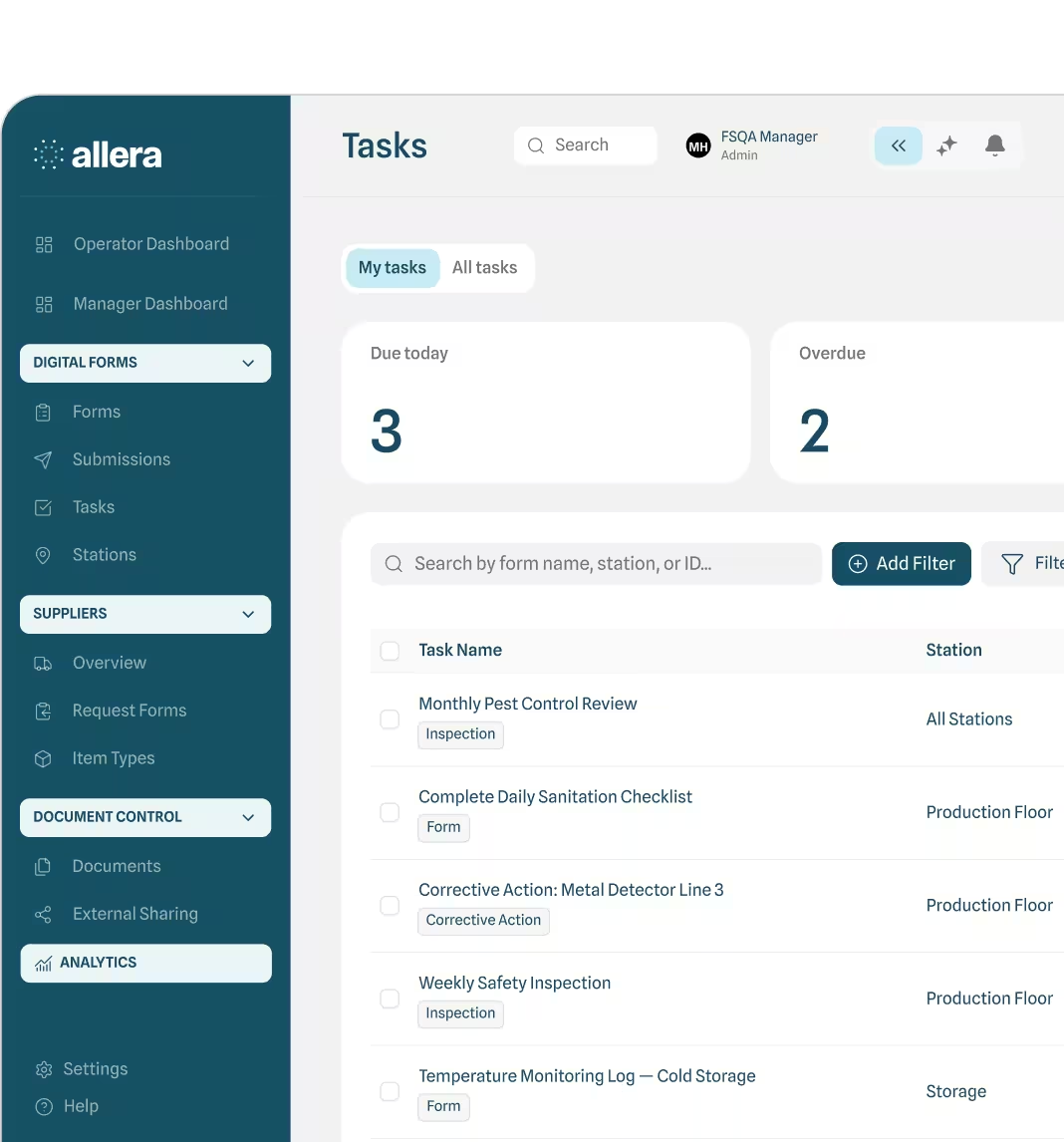
A validated frequency only holds if it happens. Allera schedules pre-op and surface checks as recurring Tasks, so a Manager sees an Overdue or Completed Late check before an auditor does, and skipping one requires a documented reason. See how Allera handles recurring sanitation checks.
Verifying food contact surfaces are actually clean
Pre-operational inspection
In USDA plants, the pre-op procedures in your sanitation standard operating procedures (SSOPs) "shall address, at a minimum, the cleaning of food contact surfaces" (9 CFR 416.12(c)). FDA plants aren't bound by that wording, but pre-op is still your most direct evidence of clean surfaces. The inspector checks by sight and touch, with a flashlight on disassembly points and seals, then releases the line.
ATP, allergen and microbiological swabs
ATP testing shows organic residue within seconds, which makes it a good release check, though it doesn't identify microorganisms. Allergen-specific swabs verify allergen changeover cleaning. Indicator organism swabs, such as aerobic plate count or Enterobacteriaceae, reveal trends that a single ATP reading can't.
Zone 1 in your environmental monitoring program
Food contact surfaces are zone 1. In facilities that make ready-to-eat (RTE) foods, zone 1 sampling for Listeria species is how you find a harborage site before it reaches product.
From January 2027, FSIS will add two food contact and two non-food contact surface swabs to every RTE post-lethality exposed product sample it collects, phased in by district on a tentative timeline through March 2027. The swabs are tested for Listeria monocytogenes and other Listeria species.
When a surface fails
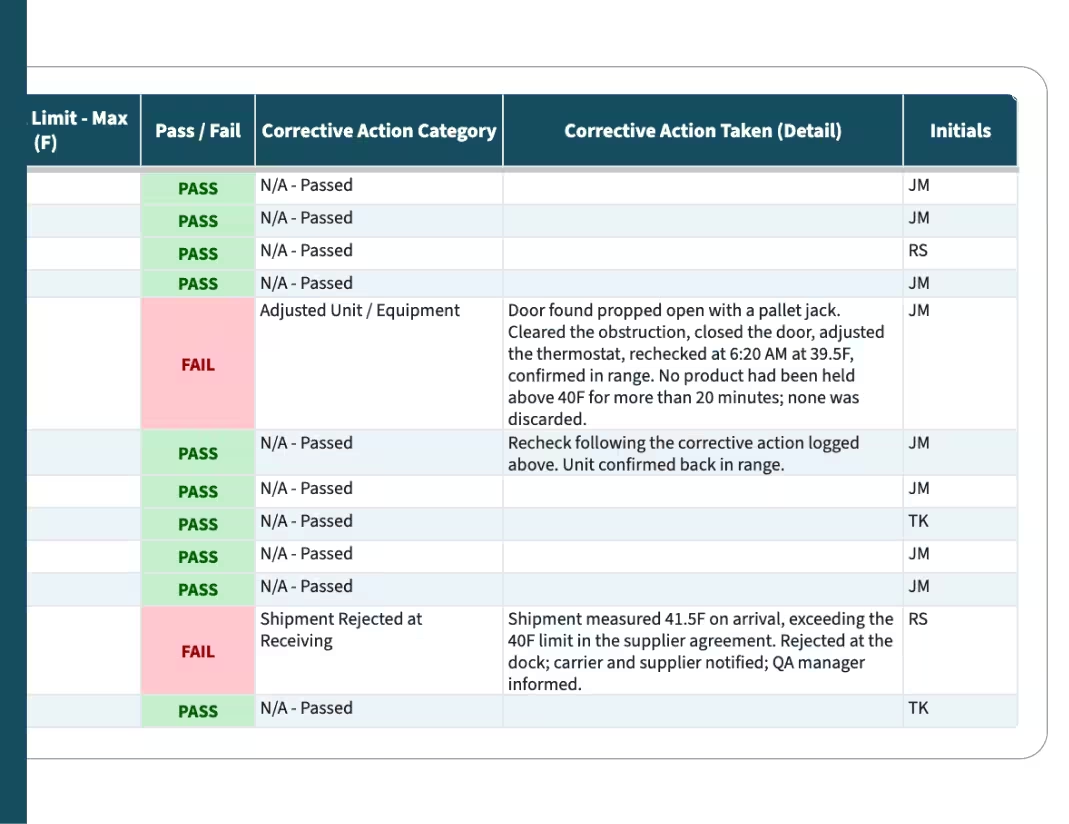
A failed surface gets re-cleaned, then re-inspected or re-swabbed before release. If production has already started, hold and evaluate the product made since the last good result. Then find the cause: the procedure, the chemistry or concentration, or a damaged surface. Document it as a corrective action, including what happened to the product.
The records that prove it
An auditor or inspector will usually ask for:
- Pre-op inspection records, signed and dated
- Sanitizer concentration checks
- ATP, allergen and microbiological swab results
- Surface condition inspections
- Corrective actions and product dispositions
- Supplier letters of guarantee for sanitizers and chemicals
USDA plants must keep daily SSOP records, initialed and dated by the responsible employee, for at least six months (9 CFR 416.16). In FDA facilities where sanitation is a preventive control, its scope includes "cleanliness of food-contact surfaces" (21 CFR 117.135(c)(3)(i)). You document monitoring as appropriate to the control (117.145(c)), keep monitoring, corrective action and verification records (117.190) and retain them for at least two years (117.315).
Most plants manage food contact surface sanitation as a prerequisite program or a sanitation preventive control rather than a CCP, because there's no measurable critical limit to monitor. A classic finding is records signed but never reviewed. Review is part of verification, as in HACCP verification.
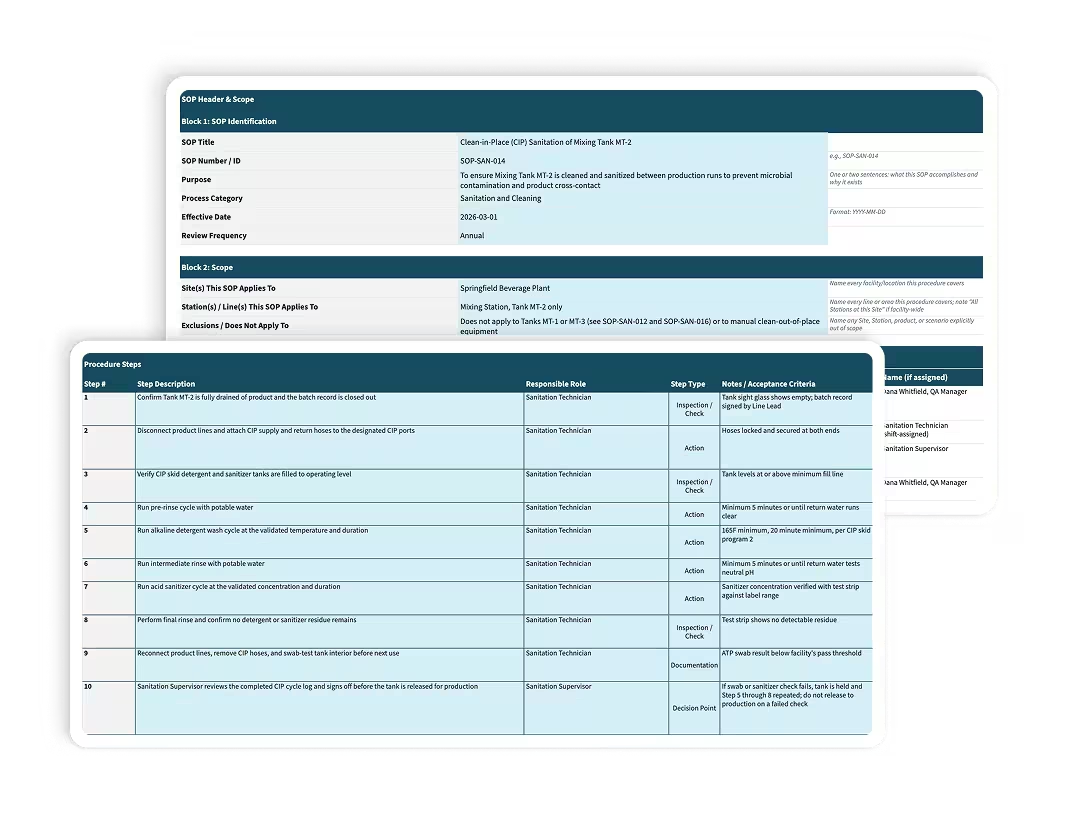
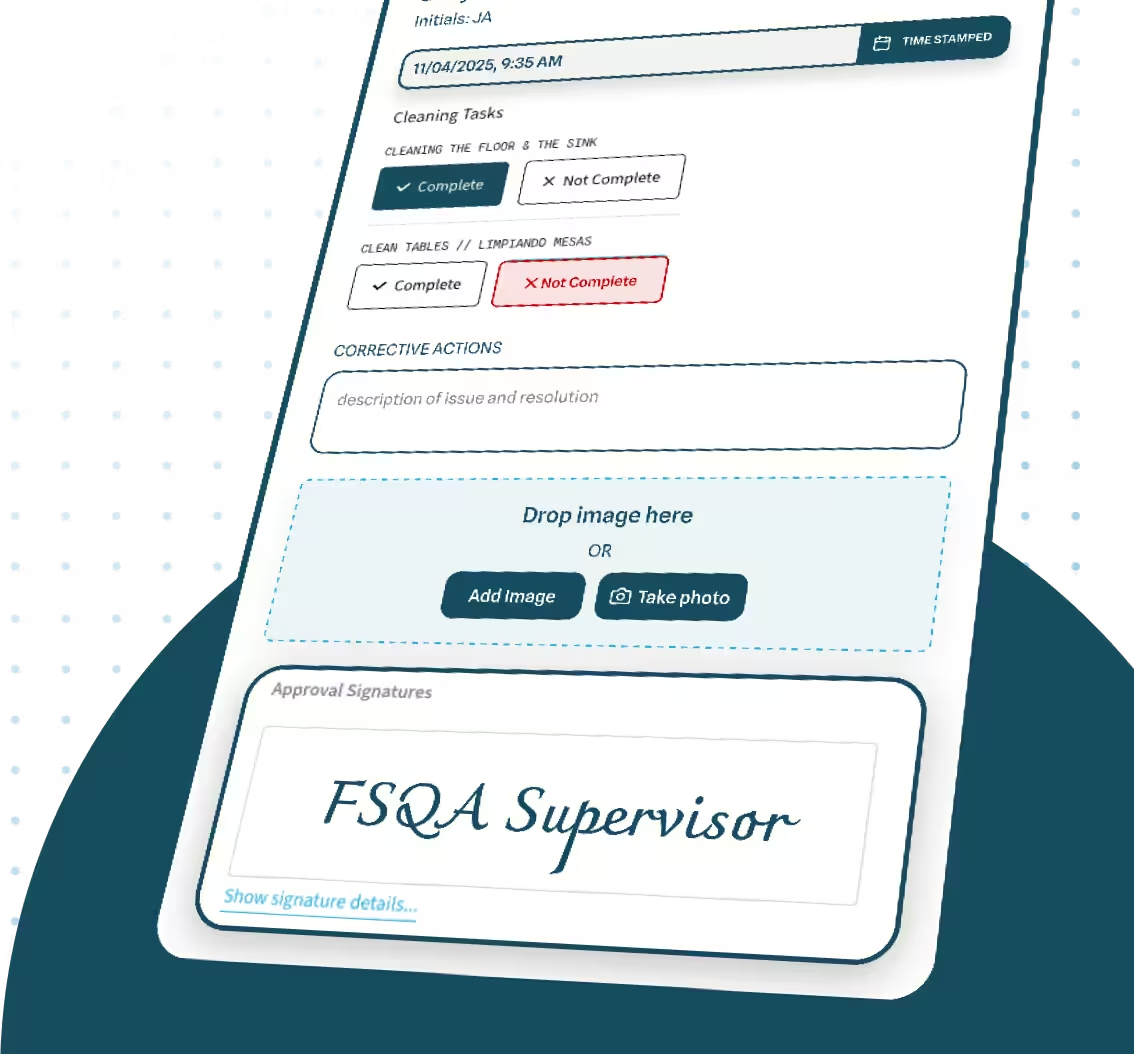
Run your pre-op inspection as a Digital Form for each Station, with a pass/fail field per surface and an Image field for photographing damage. A failed check automatically creates a Corrective Action task with an owner, and submissions export as PDFs, one at a time or bundled as a ZIP, when the auditor asks. See how Allera handles pre-op records.
What GFSI schemes expect (SQF, BRCGS, FSSC 22000)
Each GFSI-benchmarked scheme covers food contact surfaces, but clause numbers shift between editions, so check the edition you're audited to.
| Scheme | Where requirements live | What auditors typically ask for |
|---|---|---|
| SQF Food Safety Code | Equipment; cleaning and sanitation | Cleaning procedures, pre-op records, verification of cleaning effectiveness |
| BRCGS Food Safety | Equipment; housekeeping and hygiene | Proof equipment is suitable for food contact, cleaning limits, verification results |
| FSSC 22000 | ISO 22000 plus sector prerequisite programmes | Cleaning programs, equipment suitability, evidence of effectiveness |
The food contact surface definition shapes your zone 1 map, your pre-op list, your SSOP scope and what FSIS will swab from 2027. If your pre-op checks still live on clipboards and nobody sees a failed surface until the binder gets reviewed, start there. See how Allera turns sanitation checks into records you can defend.
FAQs
What does the FDA require for food contact surfaces?
For food plants, FDA defines food contact surfaces in 21 CFR 117.3 and requires you to clean them as frequently as necessary to protect against allergen cross-contact and contamination (21 CFR 117.35(d)). Its equipment rules in 21 CFR 117.40 require food contact surfaces to be corrosion-resistant, nontoxic, adequately cleanable and properly maintained. For restaurants and retail, FDA's model Food Code sets the separate 4-hour cleaning rule for surfaces used with TCS food.
Do non-food contact surfaces require only cleaning?
It depends on who inspects you. Under FDA rules, 21 CFR 117.35(e) for food plants and Food Code § 4-602.13 for retail and foodservice, non-food contact surfaces need cleaning only, as often as necessary. In a USDA FSIS-inspected meat or poultry plant, 9 CFR 416.4(b) requires them to be cleaned and sanitized.
When must food contact surfaces be cleaned and sanitized?
In retail and foodservice, the Food Code requires cleaning, followed by sanitizing, before each use with a different type of raw animal food, when you switch from raw to ready-to-eat food, between raw produce and TCS food, before using or storing a thermometer, and any time contamination may have occurred. In an FDA-regulated wet processing plant, you clean and sanitize before use and after any interruption during which surfaces may have become contaminated. Most plants also clean at product and allergen changeovers and at a validated interval during long runs.
How often must food contact surfaces be cleaned and sanitized?
In retail and foodservice, the answer is at least every four hours: FDA Food Code § 4-602.11(C) requires surfaces used with TCS food to be cleaned at least every four hours, and § 4-702.11 requires sanitizing before use after cleaning. Refrigerated prep areas can stretch that to between 10 and 24 hours depending on room temperature. In a food manufacturing plant, no fixed hour count applies. 21 CFR 117.35 and 9 CFR 416.4 require cleaning as frequently as necessary, so you set and justify your own frequency.
What is the best disinfectant for food contact surfaces?
For routine use, you want a sanitizer: an EPA-registered product whose label lists food contact surface use, applied at the label concentration and contact time. Common choices include chlorine, quaternary ammonium compounds, iodine and peracetic acid. If you do use a disinfectant on a food contact surface, its label must permit that use, and it often requires a potable water rinse afterward.
What are surfaces that touch food called?
They're called food contact surfaces. Under 21 CFR 117.3, the term also covers surfaces from which drainage or other transfer onto food, or onto surfaces that touch food, ordinarily occurs during normal operations. Everything else in your facility, such as equipment frames, floors and walls, is a non-food contact surface.
What should food contact surfaces be?
Your food contact surfaces must be safe and nontoxic, corrosion-resistant, durable, nonabsorbent, smooth, easily cleanable and resistant to pitting, chipping, crazing, scratching, scoring and distortion. Seams must be smoothly bonded or maintained to minimize buildup, and surfaces must be accessible for cleaning and inspection. In food plants these requirements come from 21 CFR 117.40, and in retail and foodservice from FDA Food Code §§ 4-101.11 and 4-202.11.
What are examples of food contact surfaces?
In a food plant, food contact surfaces include slicer blades, grinder plates, mixer bowls, hoppers, conveyor belts, chutes, filler nozzles, pipe and pump interiors, heat exchanger plates, knives, scoops, gloves and totes holding unwrapped product. In a restaurant or retail kitchen, they include cutting boards, prep tables, utensils and slicers. A surface that can drip or drain onto product, such as a guard above an open conveyor, can count too.
.avif)
.avif)
.avif)
.avif)
%20(1).avif)
.avif)
.avif)

%20(1).png)

.avif)


.avif)