.avif)



Retort Processing: How It Works and What the Records Must Prove


Retort processing is how shelf-stable low-acid foods, from canned soup to pouched rice, are made safe to store at room temperature. Your process authority designs the process and your equipment vendor supplies the retort. Your plant has to prove that every lot actually received that process.
This guide covers both halves: how retorts work, then the US rules section by section, from 21 CFR 108, 113 and 114 (FDA) to 9 CFR Part 431 (USDA).
This is general information, not legal or regulatory advice. Your process authority sets your scheduled process, and the FDA or FSIS regulations that apply to your plant control.
What is retort processing?
Retort processing heats food that is already sealed in its container, under pressure, to roughly 240 to 265°F (115 to 130°C) for a time set by a scheduled process. The goal is commercial sterility, so the food stays safe at room temperature for months or years.
21 CFR 113.3 defines a retort as "any closed vessel or other equipment used for the thermal processing of foods." The scheduled process is "the process selected by the processor as adequate under the conditions of manufacture for a given product to achieve commercial sterility." Commercial sterility means free of microorganisms that could grow in the food at normal nonrefrigerated storage, and of viable microorganisms, spores included, of public health significance.
Retort vs. hot fill vs. aseptic
| Retort | Hot fill | Aseptic | |
|---|---|---|---|
| What is heated, and when | Product and container together, after sealing | Hot product treats the container, which is then sealed | Product and container sterilized separately, then filled in a sterile zone |
| Typical acidity | Low-acid or acidified | Acid or acidified | Low-acid or acid |
| FDA filing form | 2541d (low-acid) or 2541e (acidified) | 2541e, if acidified | 2541g |
Retort compliance at a glance
Every recurring obligation, each explained further down.
| Obligation | FDA (21 CFR) | USDA FSIS (9 CFR) | Usual owner | When |
|---|---|---|---|---|
| Register the plant on Form 2541 (FCE number) | 108.35(c)(1); 108.25 for acidified | FDA only | Regulatory or QA | Within 10 days of first processing |
| File each scheduled process (SID) | 108.35(c)(2) | 431.3(c) | QA and process authority | FDA: within 60 days of registration, and before any new product |
| Qualified process authority sets the process | 113.83 | 431.1, 431.3 | Process authority | Before production, and after changes |
| BPCS-trained supervision of operators and closure inspectors | 113.10 | 431.11 | Plant management | Ongoing |
| TID accuracy test | 113.40 | 431.6 | Maintenance or QA | FDA: installation, then at least yearly |
| Visual closure examinations | 113.60(a) | 431.2(b), (c) | Closure inspector | Should not exceed 30 minutes apart, plus after jams and adjustments |
| Double-seam teardowns | 113.60(a)(1) | 431.2(b)(2) | Closure inspector | Should not exceed 4 hours apart |
| Permanent code on every container | 113.60(c) | 431.2(e) | Production | Every container |
| Entries made at the time, signed or initialed | 113.100(b) | 431.8(a) | Retort operator | Every entry |
| Records reviewed, signed and dated | 113.100(b) | 431.8(a) | QA | Within 1 working day (FDA: and before shipment) |
| Deviations handled and logged in a separate file | 113.89 | 431.9 | QA and process authority | Every deviation |
| Report health-significant spoilage or deviations in distributed lots | 108.35(d) | FDA only | Plant management | Promptly |
| Retention | 113.100(g); 114.100(e) | 431.8(e) | QA | 1 year at the plant plus 2 more; 3 years for Part 114 |
| Electronic records | 113.100(h): Part 11 applies | 431.8(b) | QA and IT | Ongoing |
How a retort cycle works, step by step
The Jimenez et al. review describes three core stages: come-up, holding and cooling. In practice:
- Fill and seal the container hermetically, recording fill weight or headspace if the scheduled process names them.
- Load and mark each basket or crate with a heat-sensitive indicator or other effective means, and record the initial temperature, which can't fall below the scheduled minimum (21 CFR 113.87).
- Vent and come up. In steam retorts, venting drives out air, which would otherwise create cold spots.
- Hold. Timing starts only once the retort is properly vented and at process temperature.
- Cool with water that is "chlorinated or otherwise sanitized as necessary," with a measurable residual at the discharge point.
- Unload on handling equipment designed to protect closure integrity.
Retort processing temperature and time
Most processes run at roughly 240 to 265°F, with 250°F (121°C) the common reference point. Hold time depends on container size, product consistency, particulates, initial temperature, headspace and retort type, so two products at the same temperature can need very different times.
Your numbers come from your scheduled process, never a generic chart. Part 113 is exacting about timing too: "Pocket or wrist watches are not considered satisfactory for timing purposes."
Overpressure: why pouches, trays and glass need it
Pressure rises inside a heating container. A can withstands it; a pouch, tray or glass jar can burst, distort or lose its closure. Overpressure retorts add air pressure to balance it, as FSIS explains in Retorts: Processing With Overpressure.
Types of retorts (and what each adds to your records)
21 CFR 113.40 organizes its equipment rules by retort type. Water spray and steam-air designs aren't named, so they fall under "other systems" in 113.40(j), where you record the critical factors your scheduled process specifies.
| Type | Overpressure | Typical containers | What it adds to your records |
|---|---|---|---|
| Still steam | No | Cans | Steam on and off, come-up, venting time and temperature |
| Water immersion | Yes | Glass, pouches, trays | Water level checked and recorded; circulation |
| Water spray or cascade | Yes | Pouches, trays, bottles | Scheduled-process critical factors |
| Steam-air | Yes | Pouches, trays | Scheduled-process critical factors |
| Agitating (batch) | Depends on design | Cans, pouches | Retort speed, bleeder function, headspace when specified |
| Continuous rotary | No | Cans | Reel speed; emergency stops and temperature drops |
| Hydrostatic | Water legs | Cans, glass | Steam-chamber temperature, chain speed, water-leg temperatures |
Every type shares one line item: each temperature-indicating device (TID) is tested against a NIST-traceable reference at installation and at least yearly, and the recorder must never read higher than it. Log those results as you would any thermometer calibration log.
Containers: cans, jars, pouches, trays and cartons
Double-seamed cans get visual examinations and teardowns. Glass jars get a cold-water vacuum check before filling, and breakage brings a physical contamination risk. Pouches, trays and retortable cartons get detailed seal inspections.
Commercial sterility, F0 and Clostridium botulinum
Retort sterilization targets one organism above all. The CDC lists low-oxygen, low-acid conditions and a certain amount of water among those that let C. botulinum spores grow and make toxin, which a sealed can of low-acid food provides. Part 113 draws its line at pH above 4.6 and water activity above 0.85.
F0 expresses lethality as equivalent minutes at 250°F (121.1°C). The classic 12D botulinum cook targets a 12-log spore reduction, which at a D-value of 0.21 minutes works out to about 2.52 minutes. The review above notes a minimum "botulinum cook" of F0 3 minutes has been used since 1965, and scheduled processes often deliver more.
Two studies sit behind every process. Temperature distribution shows whether the retort heats evenly; heat penetration measures how fast the product's cold spot heats. IFTPS publishes guidelines widely used for both. Sterility doesn't stop texture and flavor changing, which is what food shelf life testing measures.
Which rules apply: low-acid, acidified or USDA-inspected?
| Your product | Rules that apply |
|---|---|
| pH above 4.6, water activity above 0.85, not refrigerated (low-acid) | 21 CFR 113 and 108 |
| Low-acid food acidified to pH 4.6 or below, water activity above 0.85 | 21 CFR 114 and 108 |
| Naturally acid food, pH 4.6 or below | Neither Part 113 nor 114 |
| Water activity 0.85 or below | Outside the low-acid definition |
| Meat or poultry under FSIS inspection | 9 CFR Part 431, with HACCP under Part 417 |
21 CFR 114.3 excludes carbonated beverages, jams, jellies, preserves, certain dressings and sauces, and refrigerated foods. If your documents still cite 9 CFR 318.300 or 381.300, update them: FSIS consolidated both into 9 CFR Part 431 in a final rule published May 31, 2018. Penn State Extension has a plain-language overview.
Registering the plant (FCE) and filing the process (SID)
Form FDA 2541 registers your plant and gives you a Food Canning Establishment (FCE) number, within 10 days of first processing under 21 CFR 108.35. You then file each scheduled process, per product and container size, on Form 2541d, 2541e, 2541f or 2541g, and FDA tracks each filing by a Submission Identifier (SID).
Filing doesn't mean approval, and 108.35 says so. FDA recommends filing electronically.
The process authority and the scheduled process
21 CFR 113.83 requires scheduled processes to be "established by qualified persons having expert knowledge of thermal processing requirements." Nothing in that wording requires an outside firm. Many plants use one, but a qualified in-house specialist can fill the role, and 9 CFR 431.1 describes the processing authority as a person or organization "designated by the establishment."
FDA's compliance program for acidified and low-acid canned foods tells investigators to check the process authority's credentials (knowledge, training and experience) and involvement in studies and deviation evaluations.
Post the scheduled process near the equipment or keep it readily available to operators, and treat process authority letters as controlled documents under your document control procedure. Call the process authority back after any retort, boiler, container, formulation or fill-method change. The compliance program lists "failure to contact Process Authority when a change warrants notification" as a recurring problem.
Critical factors
Part 113 defines a critical factor as any parameter, "variation of which may affect the scheduled process and the attainment of commercial sterility." Examples include initial temperature, headspace, fill weight, consistency and rotation speed, each recorded at the frequency your scheduled process sets.
If your HACCP plan treats the thermal step as a CCP, its critical limit values come from here: the scheduled process sets them and the plan adopts them.
Container closure inspection
21 CFR 113.60 sets the closure checks:
| Check | Container | Frequency under Part 113 |
|---|---|---|
| Visual examination | All | Should not exceed 30 minutes apart, plus after a jam, adjustment or startup after a prolonged shutdown |
| Teardown | Double-seam cans | Should not exceed 4 hours apart |
| Cold-water vacuum | Glass with vacuum closures | Before filling |
| Detailed inspections and tests | Pouches, trays, other closures | Often enough to ensure reliable hermetic seals |
Closure records show the product code, date and time, measurements and all corrective actions, signed by the inspector and reviewed by management. Every container carries a permanent code for establishment, product, year, day and packing period, and your lot code structure should map to it.
Process deviations: what 21 CFR 113.89 requires
A deviation exists whenever a process is less than the scheduled process or critical factors are out of control, "as disclosed from records by processor check or otherwise." So a deviation found at record review the next morning still counts. 21 CFR 113.89 sets out this decision path:
- Fully reprocess that portion of production, keeping full records of the reprocessing, or
- Set it aside for evaluation by a competent processing authority, recording the procedures and results.
- Unless that evaluation shows the product was rendered free of microorganisms of potential public health significance, reprocess it to commercial sterility or destroy it.
- Release it only after reprocessing, or a finding of no significant potential public health hazard.
Every deviation, including a jam or breakdown in a continuous agitating retort, goes in a separate file or log with the actions taken, and your corrective action plan should route retort deviations there. The process authority and your written procedures govern the decision on any specific lot.
USDA-inspected plants: what's different
9 CFR 431.9 lets you handle deviations through a HACCP plan that addresses microbial hazards, or alternative documented procedures. Otherwise the default applies: reprocess on the full schedule, use an alternate schedule already filed with the inspector, or hold the product for processing authority evaluation. Held product can't ship until FSIS approves the disposition, and a deviation found at record review means a hold.
When FDA must be told
Under 108.35(d), you must promptly report any spoilage or process deviation "the nature of which indicates potential health significance" once any part of a lot has entered distribution.
Retort records and the one-working-day review
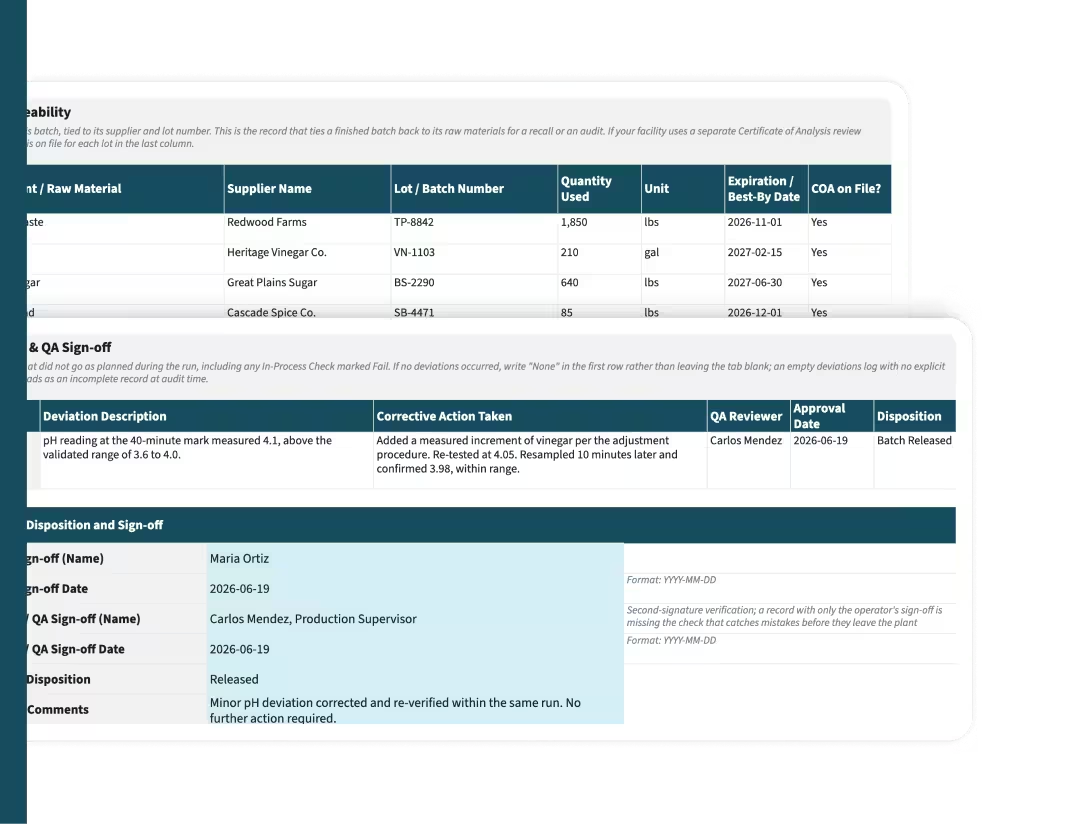
21 CFR 113.100 requires records of the product, code number, date, retort number, container size, initial temperature, actual processing time, indicating and recording device readings, and other critical factors.
The operator makes each entry at the time it occurs and signs or initials each record form. Then comes the clock: "Not later than 1 working day after the actual process, and before shipment or release for distribution," a plant-management representative "qualified by suitable training or experience" reviews all records, then signs or initials and dates them. FSIS sets the same 1-working-day clock in 431.8(a), without the shipment wording.
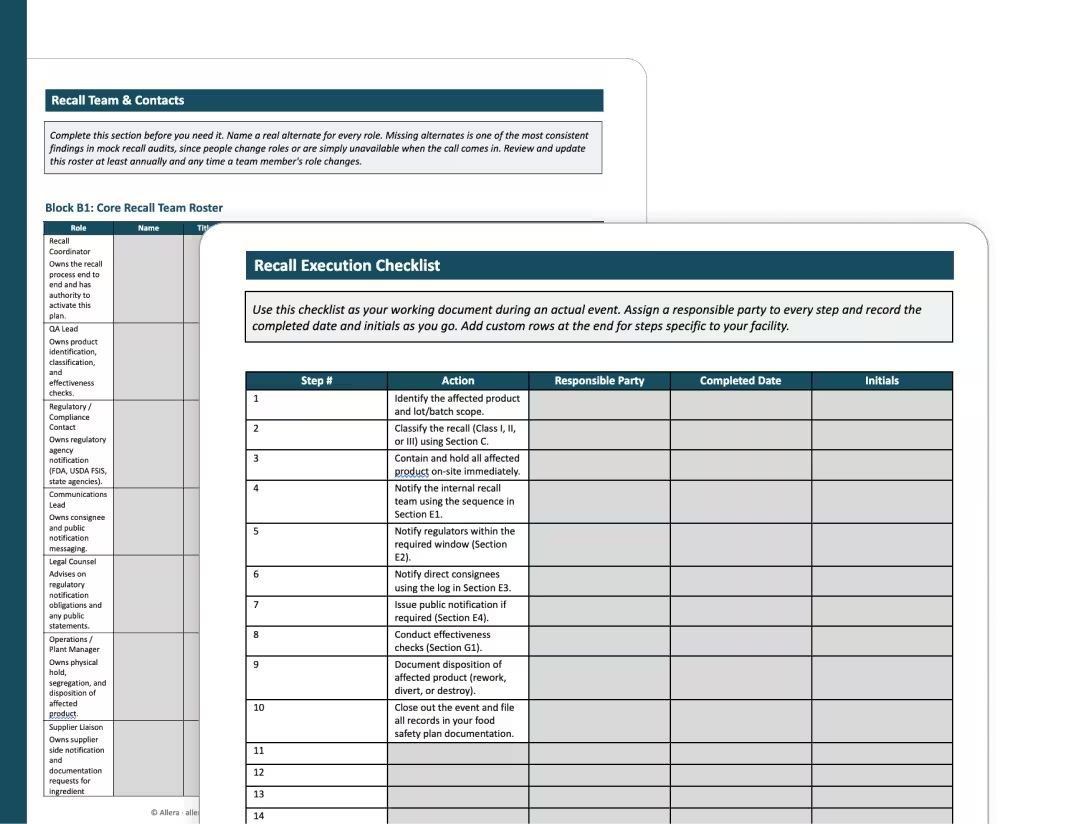
Distribution records let you segregate specific lots, which is what a mock recall tests. Part 113 records stay at the plant for at least 1 year, then 2 more years at an accessible location.
What a record reviewer checks, line by line
This review is HACCP verification, and the scheduled process sets every limit. A typical review confirms that:
- every entry is signed and was made at the time
- chart and log times agree, and the recorder never reads above the TID
- process temperature, time and venting met the scheduled minimums
- initial temperature and critical factors were recorded at the required frequency
- heat-sensitive indicator checks are logged
- closure records include measurements and corrective actions
- anything short of the scheduled process goes to a hold and a deviation entry
On paper, a well-built temperature log template speeds this up.
What an FDA investigator looks at first
FDA's compliance program is candid: records "may not reveal problems that exist." Investigators review process deviation files and QC hold logs early, check whether changes were assessed, and look for loose can seams, low initial temperatures and processing delays.
Going paperless with retort records
Part 113 says it directly: "Records of this part may be maintained electronically, provided they are in compliance with part 11 of this chapter." FSMA's Part 117 exempts its own records from Part 11, but records also required under other regulations stay subject to it. Before moving retort records into any electronic system, ask the vendor how it supports Part 11, and let your regulatory and legal team judge whether that meets your obligations.
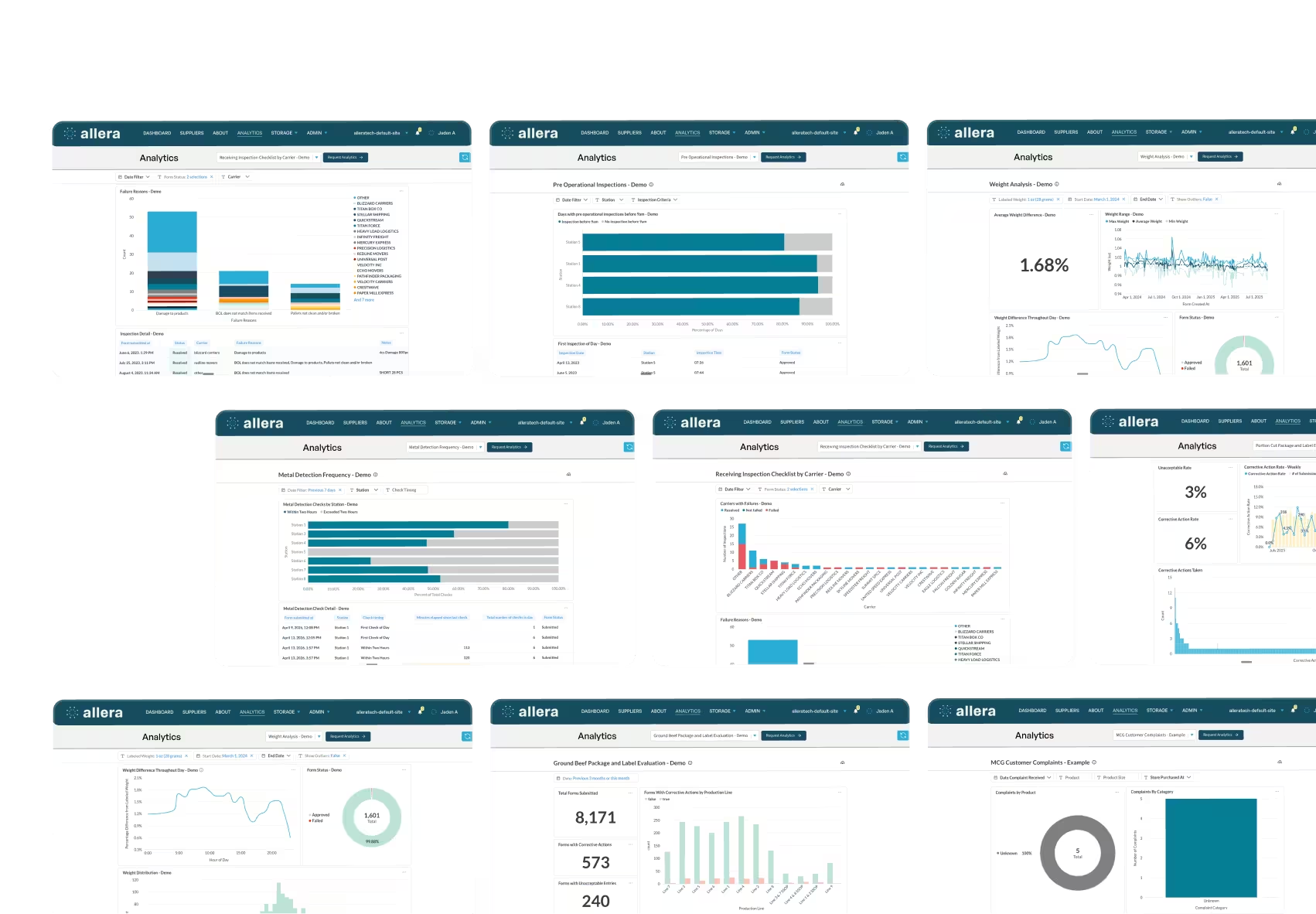
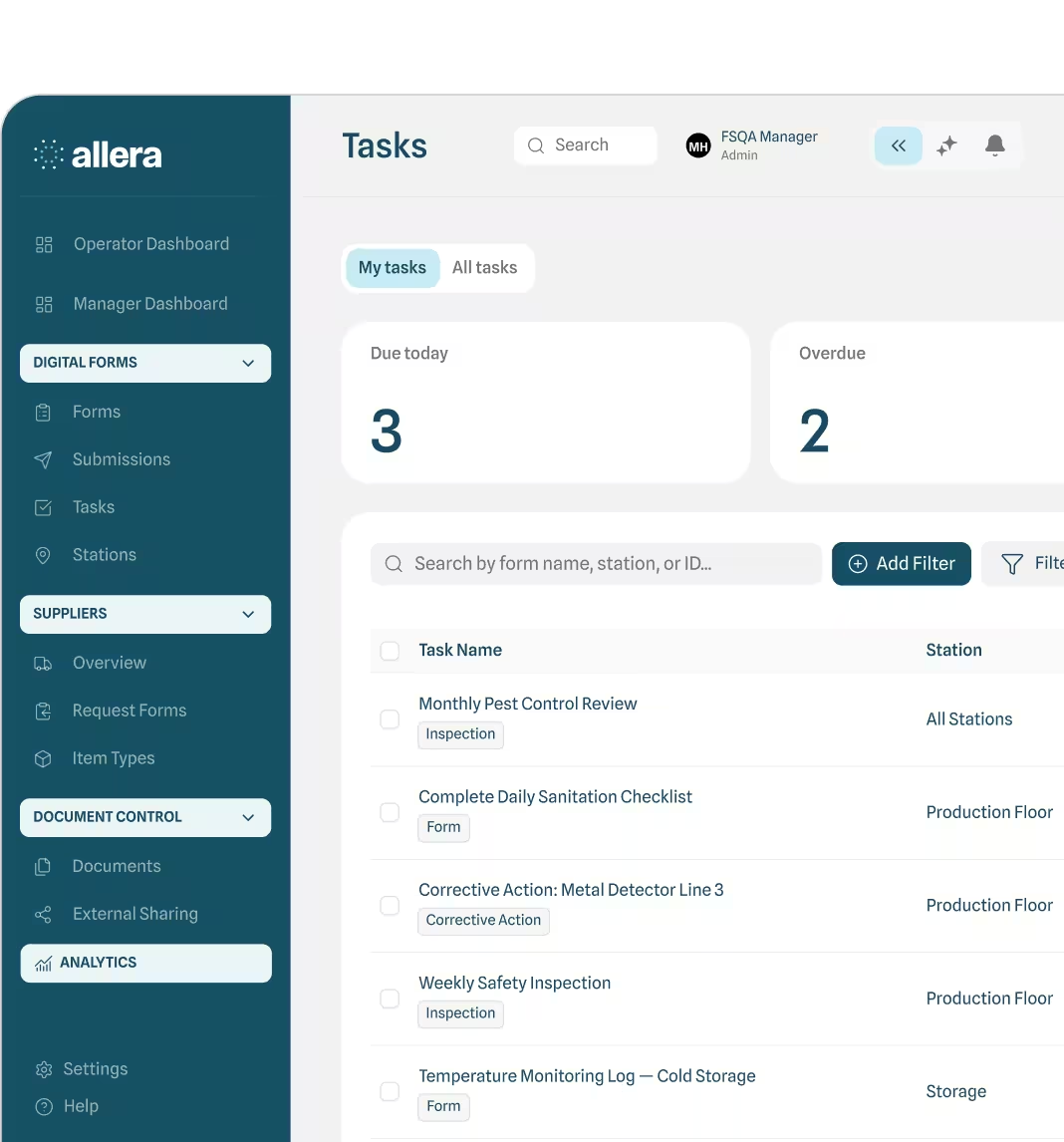
If your retort logs live on clipboards, Allera's Digital Forms let operators enter each reading when it happens and sign it, with offline capture where Wi-Fi drops. The log routes to the named reviewer through assigned approvals, and a recurring daily review Task shows whether each review was Completed On Time, Completed Late or is Overdue. Allera doesn't connect to retort controllers, chart recorders or PLCs, read cycle data or hold product; it's the human record, review and follow-up layer around them. See how Allera handles operational records.
Where retort fits in HACCP and FSMA Preventive Controls
For FDA plants, 21 CFR 117.5(d) exempts activities subject to Part 113 from Part 117's hazard analysis, preventive controls and supply-chain subparts, provided you comply with Part 113. The exemption covers only the microbiological hazards Part 113 regulates. Chemical hazards in food, physical hazards and other microbiological hazards still belong in your hazard analysis and food safety plan. FDA's LACF and FSMA guidance covers how the two rules interact.
USDA plants run HACCP under 9 CFR Part 417, and 417.2(b)(3) says the plan doesn't have to address microbiological hazards if the product is made in accordance with Part 431. FSIS's HACCP model for thermally processed, commercially sterile product illustrates a plan with no CCPs on that basis. You can still choose to list the thermal step as a CCP, and it's one of the clearest critical control point examples. If your HACCP plan does, the scheduled process supplies the critical limits, the retort log is monitoring, the one-working-day review and TID test are verification, and 113.89 is the corrective action.
If you hold SQF, BRCGS or FSSC 22000 certification, expect your auditor to ask for the same Part 113 records FDA does, since certification audits check regulatory compliance.
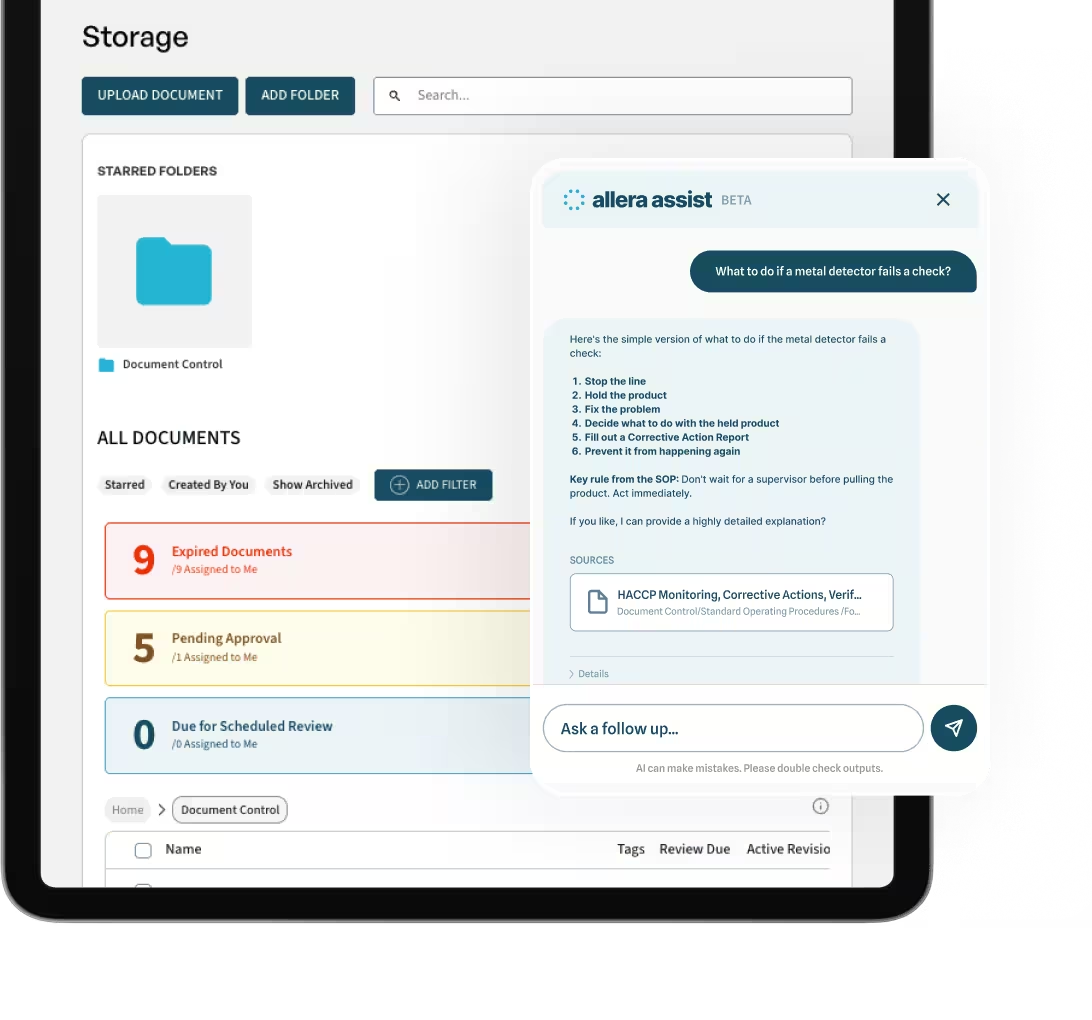
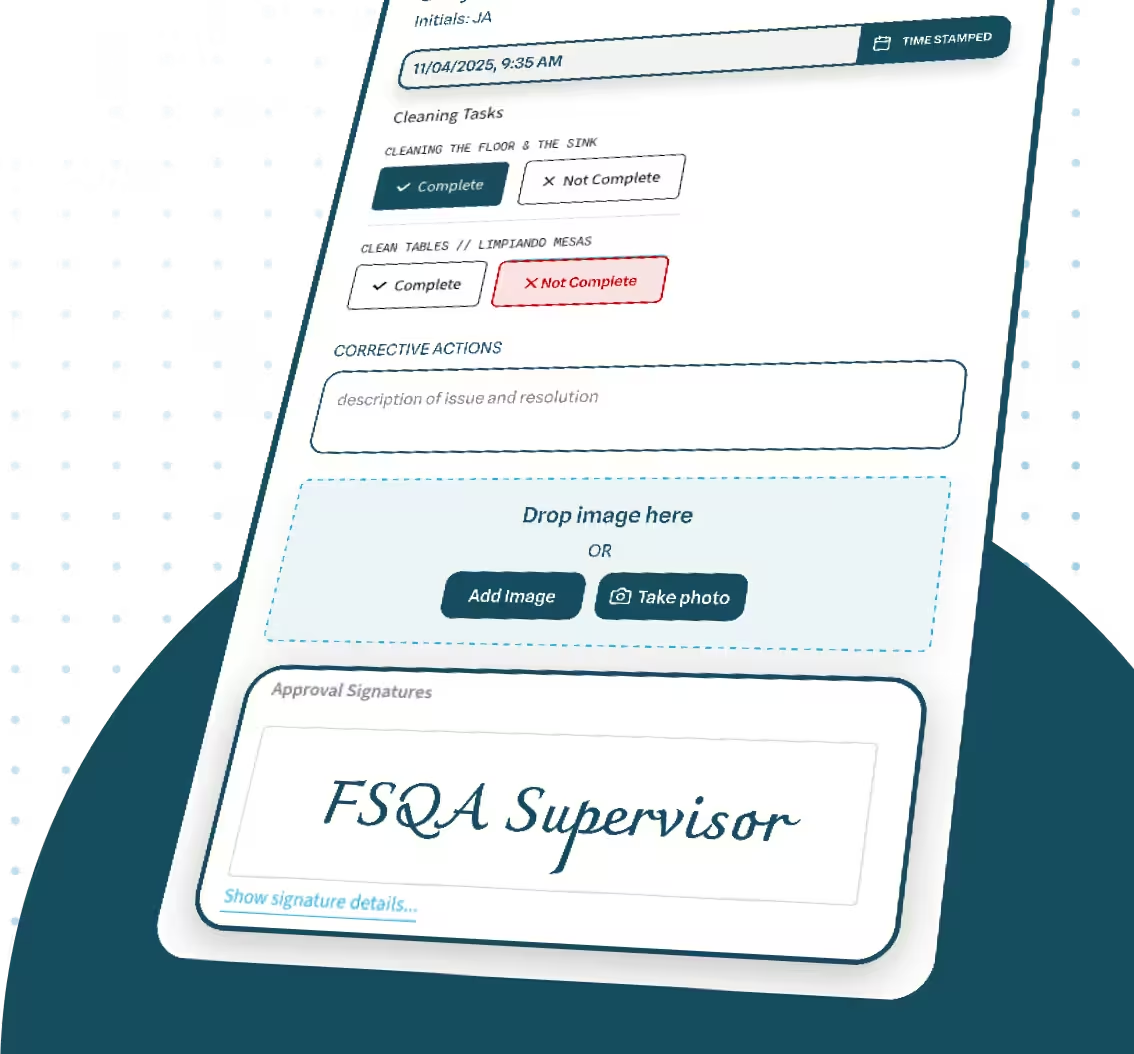
When an operator enters a value outside the form's limit, such as an initial temperature below the scheduled minimum, a failure rule flags the submission and creates a Corrective Action task with an owner, which you can escalate to QA. Your deviation record is a Form you build to match your procedure. Process authority letters and evaluations can sit in Allera's Document Control with approval workflows and a Scheduled Review reminder. See how it fits your records.
Retort pouches
A retort pouch is a flexible laminate, typically polyester, nylon, aluminum foil and a polypropylene sealing layer. Otsuka Foods launched the first commercial retort food, Bon Curry, in Japan in 1968, and the US Army Natick center, Reynolds Metals and Continental Flexible Packaging won the Food Technology Industrial Achievement Award for the modern pouch in 1978.
Pouches need overpressure because they can't resist internal pressure the way a can does. Part 113 covers their seals under its rules for closures other than double seams and glass, and post-process handling damage is the main risk.
Better Process Control School
21 CFR 113.10 requires retort operators and container closure inspectors to work "under the operating supervision of" a person who completed an FDA-approved school, and that person "shall supervise only in those areas" the school trained them in. FSIS's rule, 9 CFR 431.11, requires "direct supervision" by someone who completed a school generally recognized as adequate. Write your procedures to match the wording that applies to you.
The Better Process Control School is a cooperative program between FDA, the Consumer Brands Association and approved universities, covering low-acid and acidified foods. It's a different credential from PCQI training, which covers FSMA preventive controls. Keep each supervisor's certificate on file.
A retort line depends on a scheduled process set by someone qualified, and on records proving every lot received it. If reviews run late or deviations surface only when someone flips through a binder, close that gap first. See how Allera turns retort logs and reviews into records you can defend.
FAQs
How soon must retort records be reviewed, and how long must they be kept?
Under 21 CFR 113.100, a representative of your plant management who is qualified by training or experience must review all processing and production records within 1 working day of the process, and before shipment or release for distribution. USDA-inspected plants follow the same 1-working-day clock under 9 CFR 431.8. You keep Part 113 records at the plant for at least 1 year from manufacture, then 2 more years at the plant or another reasonably accessible location, and acidified food records under Part 114 for 3 years.
What happens when a retort process deviation occurs?
Under 21 CFR 113.89, you either fully reprocess the affected product, keeping full records, or set it aside for evaluation by a competent processing authority. Unless that evaluation shows the product was rendered free of microorganisms of potential public health significance, you reprocess it to commercial sterility or destroy it. Every deviation goes in a separate file or log with the actions taken, and under 21 CFR 108.35(d) you must promptly report deviations of potential health significance to FDA if any of the lot has entered distribution.
Does a process authority have to be an outside firm?
No. 21 CFR 113.83 requires your scheduled processes to be established by "qualified persons having expert knowledge of thermal processing requirements," and it does not say they must be external. You can use an outside firm or a qualified in-house specialist. FDA investigators check the process authority's knowledge, training and experience, and whether they are actively involved in studies and deviation evaluations.
What is F0 in retort processing?
F0 expresses a process's lethality as the equivalent number of minutes at 250°F (121.1°C). The classic 12D botulinum cook, a 12-log reduction of Clostridium botulinum spores, works out to about 2.52 minutes, and a minimum botulinum cook of F0 3 minutes has been used since 1965. Your process authority sets the F0 target for each product and container, and many scheduled processes deliver more than the minimum.
What is the difference between retort and hot fill?
In retort processing, you seal the container first and then heat the product and container together under pressure, which is how low-acid foods reach commercial sterility. In hot fill, hot product is filled into the container and treats it with its own heat before the container is sealed and cooled. Hot fill is generally used for acid and acidified foods at pH 4.6 or below rather than low-acid foods.
Is retort processing the same as canning?
The terms overlap. Canning describes the whole operation of filling, sealing and heat treating containers, and the retort is the pressure vessel that delivers the scheduled process for low-acid foods. Retort processing also covers containers beyond cans, such as glass jars, pouches, semi-rigid trays and retortable cartons.
What temperature and time are used in retort processing?
Most retort processes run at roughly 240 to 265°F (115 to 130°C), with 250°F (121°C) as the common reference point. Hold time varies with container size, product consistency, particulates, initial temperature, headspace and retort type, so there is no single standard. Your numbers must come from the scheduled process your process authority established for that product and container size.
What is retort processing?
Retort processing heats food after it is sealed in its container, under pressure, to roughly 240 to 265°F (115 to 130°C) for a time set by a scheduled process. The goal is commercial sterility, so you can store the product at room temperature for months or years. Under 21 CFR 113.3, a retort is "any closed vessel or other equipment used for the thermal processing of foods."

.avif)
.avif)
.avif)

.avif)
%20(1).avif)
.avif)
.avif)

%20(1).png)

.avif)



.avif)