.avif)



FSSC 22000 vs ISO 22000: 2026 Comparison


If your retail or foodservice customers require GFSI recognition, choose FSSC 22000. If you're a packaging supplier, logistics provider, or a facility that simply needs a certified food safety management system without specific retailer mandates, ISO 22000 may be all you need.
FSSC 22000 is built on top of ISO 22000. It incorporates ISO 22000:2018 as its foundation, adds sector-specific prerequisite programs (the ISO 22002-x series), and layers on additional requirements covering food defense, food fraud, allergen management, food safety culture, and environmental monitoring. ISO 22000 is the international standard. FSSC 22000 is a certification scheme that extends and benchmarks that standard to the Global Food Safety Initiative (GFSI) level.
FSSC 22000 vs ISO 22000
The table below captures the key differences at a glance.
| Attribute | ISO 22000:2018 | FSSC 22000 Version 7 (May 2026) |
|---|---|---|
| Foundation | ISO management system standard | ISO 22000:2018 + ISO 22002-x PRPs + Additional Requirements |
| GFSI Recognition | No | Yes |
| Accepted by major retailers | Limited | Widely accepted (Walmart, Costco, Tesco, Aldi, and others) |
| Sector-specific PRPs | Referenced but not mandated | Required (ISO 22002-1 through -6 by product category) |
| Food Defense | Not addressed | Additional requirement |
| Food Fraud Mitigation | Not addressed | Additional requirement |
| Allergen Management | Covered through hazard analysis | Explicit additional requirement |
| Food Safety Culture | Introduced in 2018 version | Explicit, audited requirement since V6 |
| Environmental Monitoring | Not addressed | Required for high-risk product categories |
| Certification Body required | Any IAF-accredited CB | Foundation FSSC-approved CB only |
| Audit cycle | 3-year cycle, annual surveillance | 3-year cycle, annual surveillance + unannounced |
| Indicative initial audit cost | $3,000–$8,000 (facility size-dependent) | $5,000–$15,000+ (facility size-dependent) |
| Latest version | ISO 22000:2018 (Ed. 2) | Version 7 (published May 1, 2026) |
| Best fit | Service providers, packaging, feed, logistics | Food manufacturers and processors selling to major retailers |
What ISO 22000 Is (And What It Isn't)
The ISO 22000:2018 Foundation
ISO 22000:2018 is the international standard for food safety management systems. Published by the International Organization for Standardization, it provides a framework any organization in the food chain can use to identify, prevent, and control food safety hazards. The ISO 22000 Food Safety Management hub describes the standard's scope and application across the entire food chain.
ISO 22000:2018 follows the High-Level Structure (HLS) shared by all modern ISO management system standards, which means it integrates cleanly with ISO 9001 (quality) and ISO 14001 (environmental management). The Plan-Do-Check-Act cycle runs throughout the standard, from hazard analysis through operational planning, verification, and continual improvement.
The 2018 revision was a significant update from the 2005 version. It sharpened the separation between Operational Prerequisite Programs (OPRPs) and Critical Control Points (CCPs), introduced stronger leadership requirements, and added explicit food safety culture language. You can read more about the significance of that revision in this Food Safety Magazine overview of ISO 22000 updates.
Scope: The Entire Food Chain From Feed to Fork
One of ISO 22000's genuine strengths is its broad applicability. The standard covers the complete food chain: primary producers, ingredient manufacturers, food processors, co-packers, retailers, transport operators, equipment manufacturers, packaging suppliers, and pest control providers. If your operation touches food in some way, ISO 22000 can apply.
This breadth is also why the standard stays somewhat general in its technical requirements. A standard written for both a raw beef slaughterhouse and a cardboard packaging plant cannot go deep on the specific hygiene requirements of high-care dairy manufacturing. That's by design, and it's exactly the gap FSSC 22000 was built to close.
What ISO 22000 Doesn't Give You
ISO 22000 is rigorous and internationally recognized, but it has two limitations that matter in practice.
First, it is not GFSI-benchmarked. GFSI independently reviews and recognizes certification schemes that meet its Benchmarking Requirements. ISO 22000 has never been submitted for GFSI recognition, which means an ISO 22000 certificate alone will not satisfy major retailers who require GFSI certification in their supplier codes of conduct.
Second, ISO 22000 does not specify sector-specific PRP requirements. Two facilities in completely different sectors can both hold ISO 22000 certificates against widely different interpretations of what "adequate prerequisite programs" look like. FSSC addresses this by mandating the relevant ISO 22002-x standard for each product category.
What FSSC 22000 Is (And Why It Exists)
ISO 22000 + Sector-Specific PRPs + Additional Requirements
The official FSSC 22000 scheme is a certification scheme, not a standalone standard. Foundation FSSC developed it to create a GFSI-benchmarked path for food manufacturers who needed something more specific and commercially recognized than ISO 22000 alone. Foundation FSSC's What is FSSC 22000 overview explains this layered structure in detail.
An FSSC 22000 certificate demonstrates that your organization meets three simultaneous requirements: the full ISO 22000:2018 standard, the applicable ISO 22002-x sector-specific PRPs for your product category, and Foundation FSSC's Additional Requirements covering food defense, food fraud, allergen management, food safety culture, and environmental monitoring (where applicable).
GFSI Recognition — The Real Reason Manufacturers Pick FSSC
For most food manufacturers, the decision to pursue FSSC 22000 rather than ISO 22000 comes down to one thing: their customers require it. Walmart, Costco, Tesco, Lidl, Aldi, and most major foodservice operators mandate GFSI-recognized certification across their supply chains. GFSI's list of recognized certification programme owners shows which schemes qualify. ISO 22000 is not on that list. FSSC 22000 is.
FSSC 22000 Version 6 received GFSI recognition in August 2024, confirmed by the GFSI press release on V6 recognition. That recognition carries forward to Version 7, which publishes within the same benchmarked scope. For a manufacturer selling to any major retailer, FSSC 22000 is the practical requirement, not merely a preference.
FSSC 22000 Version 7 — What Changed in the May 2026 Release
Foundation FSSC published Version 7 on May 1, 2026. Most comparison articles online still reference Version 5 or Version 6, so this section covers what is actually current.
The version history: V5 established the current scheme architecture. V5.1 made targeted refinements. V6 introduced strengthened food safety culture requirements, brought in the unannounced audit component, updated allergen management provisions, and earned GFSI recognition in August 2024. V7, released May 2026, extends those foundations, aligning with the ISO 22002-1:2025 PRP revision and incorporating updated Additional Requirements language. Foundation FSSC's Version 7 documents include the full scheme and published transition timelines from V6.
If you hold a current V6 certificate, your certification body will work with you on the transition audit scope and deadline. Facilities that have not yet started certification should pursue V7 directly. The FSSC 22000 Version 6 changes article on the Allera blog covers the V6 transition details that most manufacturers worked through in 2024–2025. V7 builds on those same pillars rather than restructuring them.
The 8 Differences That Actually Matter to a Food Manufacturer
Many comparison articles list FSSC's additional requirements as bullets without explaining what they actually mean in practice. This section goes deeper on each.
1. GFSI Recognition (FSSC Has It; ISO 22000 Doesn't)
This is the single most commercially important difference. GFSI recognition means the scheme has been independently benchmarked against GFSI's requirements for risk-based food safety management. When a retailer says "we require GFSI certification," they mean a scheme on GFSI's recognized list. ISO 22000, as a standard rather than a scheme, has never been put forward for GFSI benchmarking.
In practical terms, an ISO 22000 certificate will not open the doors to Walmart, Costco, or similar major retailers' supply chains. FSSC 22000 will. If your sales team is targeting these customers, the certification decision is effectively already made for you.
2. Sector-Specific Prerequisite Programs (FSSC Mandates ISO 22002-x; ISO 22000 Doesn't)
ISO 22000 requires prerequisite programs but doesn't define what they must contain for your specific product category. FSSC 22000 plugs that gap by requiring the applicable ISO 22002-x standard. ISO 22002-1 covers food manufacturing, ISO 22002-2 covers catering, ISO 22002-3 covers farming, ISO 22002-4 covers food packaging manufacturing, and ISO 22002-6 covers feed and animal food production. The recently revised ISO 22002-1:2025 updates the manufacturing PRP requirements that most food facilities will work against.
An FSSC auditor will assess your PRPs against the specific technical requirements in the relevant ISO 22002-x standard, not against a general interpretation of "adequate." That means your cleaning and disinfection, pest control, personal hygiene, and allergen control programs need to meet defined technical benchmarks, and auditors will verify them in detail.
3. Food Defense (FSSC Additional Requirement; ISO 22000 Silent)
Food defense addresses intentional adulteration of food products, as opposed to accidental contamination. ISO 22000 is silent on this topic. FSSC 22000's Additional Requirements mandate a documented food defense plan covering threat assessment, site access controls, and monitoring procedures.
Your food defense plan needs to identify and assess credible threats at your facility, document preventive controls for each threat, and specify how you monitor those controls and respond to incidents. FSSC auditors will review the plan and assess evidence of implementation during site visits.
4. Food Fraud Mitigation (FSSC Additional Requirement; ISO 22000 Silent)
Food fraud covers economically motivated adulteration, counterfeiting, and mislabeling. FSSC 22000 requires a documented vulnerability assessment and mitigation plan covering raw material suppliers and the points in your supply chain where fraud risk is highest.
You need to identify the ingredients and commodities most vulnerable to fraud (olive oil, spices, seafood, and honey are frequently cited examples), assess your exposure, and implement controls such as supplier verification, certificate of analysis review, and periodic testing. Supplier management documentation is typically where fraud mitigation evidence lives in practice.
5. Allergen Management (FSSC Explicit; ISO 22000 Covered Loosely)
ISO 22000 addresses allergens through its hazard analysis process, but FSSC 22000 includes an explicit allergen management Additional Requirement. Under FSSC, you need a documented allergen management program covering incoming material control, production scheduling and changeover cleaning, labeling verification, and staff training.
The practical difference in an audit is significant. An ISO 22000 auditor may accept allergen controls embedded in your HACCP-based hazard analysis. An FSSC auditor will look for a standalone allergen management procedure and evidence of its systematic implementation, including cleaning validation records, cross-contact risk assessments, and allergen testing where appropriate.
6. Food Safety Culture (FSSC V6+ Explicit; ISO 22000:2018 Introduces But Doesn't Audit Deeply)
ISO 22000:2018 introduced food safety culture language in its leadership clause, but the requirements remained relatively high-level. FSSC 22000 Version 6 made food safety culture an explicit, audited Additional Requirement with defined elements: awareness, communication, commitment from leadership, and demonstrated engagement at all levels of the organization.
Under FSSC V7, auditors will look for evidence that food safety culture is actively managed, not just stated in a policy document. That means documented culture assessments, action plans based on findings, visible leadership engagement, and training records that go beyond procedural compliance. Allera's deep dive on food safety culture covers practical implementation approaches.
7. Environmental Monitoring (FSSC Additional Requirement for High-Risk Products)
FSSC 22000 includes an environmental monitoring Additional Requirement for facilities producing high-risk and high-care products, particularly those with Listeria or Salmonella exposure risk. If your scope includes ready-to-eat products, fresh produce, or cooked meat products, this requirement will apply to you.
The requirement mandates a documented environmental monitoring program with defined sampling sites, frequencies, testing methods, and corrective action triggers. ISO 22000 doesn't address environmental monitoring as a standalone requirement.
8. Logo and Marketing Use Rights (Only FSSC-Certified Sites Can Use the FSSC Mark)
A smaller but practically relevant difference: organizations certified to FSSC 22000 can display the FSSC 22000 certification mark in their marketing, tender submissions, and customer communications. ISO 22000 certification does not grant use of any GFSI-recognized mark. For procurement teams evaluating suppliers, the visible FSSC mark signals a higher threshold of third-party assurance.
Clause-by-Clause: How FSSC 22000 Extends ISO 22000
The table below maps ISO 22000's 10-clause High-Level Structure against the FSSC 22000 additions and PRP overlays that extend each clause. Full clause text is available via the ISO 22000:2018 online preview and Foundation FSSC's V7 scheme documents.
| ISO 22000:2018 Clause | Clause Title | FSSC 22000 Additional Layers |
|---|---|---|
| 4 | Context of the organization | Food fraud vulnerability assessment (Additional Req.) added to organizational context analysis |
| 5 | Leadership | Food safety culture commitment (Additional Req.) significantly extends leadership requirements under V6/V7; documented culture objectives required |
| 6 | Planning | Food defense threat assessment (Additional Req.) added to planning; food fraud mitigation plan required as a planning output |
| 7 | Support | Allergen management training (Additional Req.); sector-specific PRP competence requirements per ISO 22002-x standard |
| 8 | Operation | Sector-specific PRP technical requirements (ISO 22002-1/2/3/4/6 as applicable); environmental monitoring program (high-risk facilities); allergen management program (Additional Req.); food defense monitoring records |
| 9 | Performance evaluation | Unannounced audit component (Scheme Requirement, V6+); food safety culture measurement included in internal audit scope |
| 10 | Improvement | Culture action plan updates; corrective actions for food defense and food fraud monitoring deviations |
Which One Is Right for Your Business? — A Decision Framework
"Which standard should we pursue?" tends to generate vague answers. Here's a structured approach based on the factors that actually drive the right choice.
If Your Customers or Retailers Demand GFSI Recognition
Choose FSSC 22000. There is no workaround here. Major grocery retailers, club stores, and foodservice distributors that mandate GFSI certification will not accept ISO 22000 in its place. Review your current and target customer contracts and supplier codes of conduct before you commit to either path. If GFSI recognition is required now or within 12 months, start with FSSC.
If You're a Service Provider, Packaging Supplier, or Feed Producer
ISO 22000 may be entirely sufficient. If your customer base doesn't require GFSI recognition and your product scope doesn't include direct food manufacturing (for example, you produce food-grade packaging, operate a cold storage facility, or supply animal feed), ISO 22000 covers your FSMS obligations without the additional cost and scope burden of FSSC's Additional Requirements.
That said, if growth plans include food manufacturing customers who do require GFSI, an early move to FSSC is often smarter than certifying to ISO 22000 now and upgrading later. ISO 22002-4 (packaging) and ISO 22002-6 (animal feed) are both within the FSSC scheme's sector categories.
If You're Upgrading From HACCP-Only
If you're currently operating under a HACCP plan without a certified management system, your gap to ISO 22000 is smaller than your gap to FSSC 22000. Many FSQA teams start with ISO 22000 to build the management system foundation, then layer in FSSC's additional requirements 12–18 months later. This staged approach reduces implementation overwhelm and allows your team to build competence before taking on food defense, food fraud, and culture requirements simultaneously.
If your customer requirements already point to GFSI, it's often better to go directly to FSSC 22000 and accept the longer implementation timeline upfront.
If You're Integrating With ISO 9001 or ISO 14001
ISO 22000's HLS structure integrates cleanly with other ISO standards. If your facility already holds ISO 9001 or ISO 14001 and wants an integrated management system, ISO 22000 adds the food safety pillar with minimal structural disruption. FSSC 22000 introduces additional documentation requirements, particularly around food defense and food fraud, that can add complexity to a tightly integrated management system, though many multi-standard facilities manage this without difficulty.
If You Operate Across the US, EU, and Asia
FSSC 22000 is the stronger choice for global footprint. Its GFSI recognition is accepted by major retailers across North America, Europe, and increasingly in Asia-Pacific markets. A single FSSC 22000 certification often satisfies multiple customer requirements simultaneously, whereas ISO 22000 alone may satisfy none. For multi-site operations selling into diverse global markets, FSSC reduces audit proliferation compared to managing multiple scheme certifications.
How FSSC 22000 and ISO 22000 Interact With US Regulation (FSMA & FDA Preventive Controls)
This topic is entirely absent from every competitor comparison article, and it's the section US-based food manufacturers most need.
Neither Replaces FSMA Compliance
Neither FSSC 22000 nor ISO 22000 certification satisfies your obligations under the Food Safety Modernization Act (FSMA). FSMA is federal law. FDA inspection authority, enforcement powers, and mandatory recall authority under FSMA exist regardless of what third-party certifications your facility holds. A GFSI-recognized certificate does not exempt you from 21 CFR Part 117 (Preventive Controls for Human Food) or any other FSMA rule.
That said, there is substantial practical overlap between FSSC and ISO documentation requirements and FSMA's documentation expectations.
Where FSSC/ISO Documentation Overlaps With 21 CFR 117 Preventive Controls
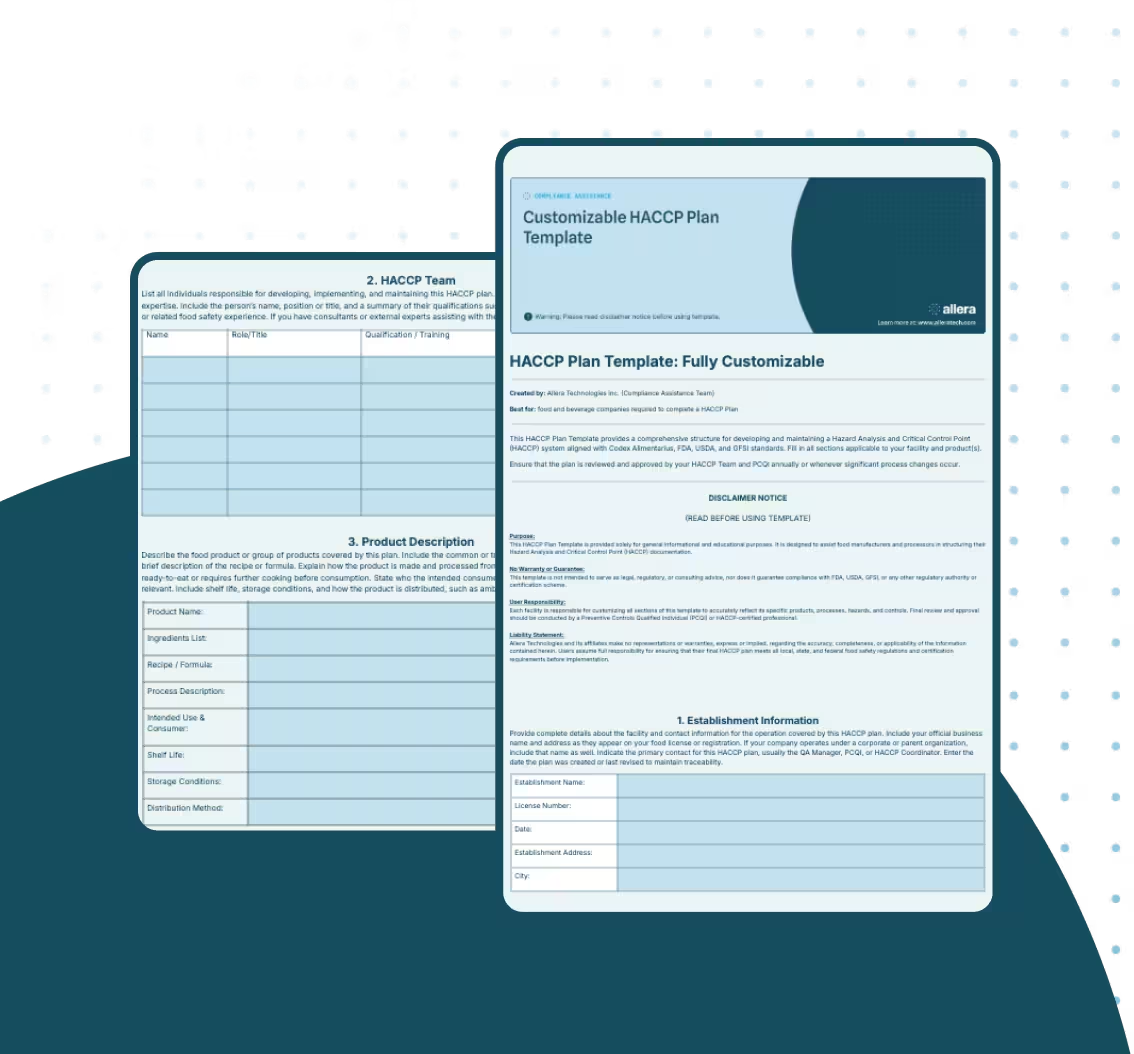
The FDA's FSMA rules and guidance for industry require facilities covered by 21 CFR 117 to maintain a written food safety plan that includes a hazard analysis, preventive controls, a supply chain program, and a recall plan. If you're implementing FSSC 22000 or ISO 22000, you're building most of these documents anyway.
Specifically:
- The HACCP-based hazard analysis required by both ISO 22000 and FSSC 22000 directly supports the 21 CFR 117 hazard analysis requirement
- ISO 22000's Operational Prerequisite Programs (OPRPs) and CCPs map to FSMA's preventive controls framework
- FSSC 22000's supplier verification Additional Requirement aligns with FSMA's supply chain program requirements
- Document and record control requirements under both standards support FDA inspection readiness
You still need to ensure your food safety plan specifically addresses the language and structure FDA expects during a 21 CFR 117 inspection. FSSC or ISO certification doesn't mean an FDA investigator will wave through your facility, but a well-implemented FSSC 22000 system makes the documentation scaffolding of FSMA compliance considerably easier to build and maintain.
For facilities also subject to FSMA 204 traceability requirements, the additional traceability lot coding and supply chain records requirements are distinct from both ISO 22000 and FSSC and require specific attention. If you're evaluating FSMA compliance software to manage those obligations alongside your FSSC documentation, Allera covers both.
USDA-Regulated Facilities — HACCP Plus FSSC, Not Instead
If your facility processes meat, poultry, or egg products under USDA FSIS jurisdiction, your baseline regulatory requirement is the FSIS HACCP regulation (9 CFR Part 417). FSSC 22000 or ISO 22000 certification layers on top of this regulatory foundation; it doesn't replace it. FSQA directors at USDA-inspected facilities often pursue FSSC 22000 to satisfy retail customer requirements while maintaining their FSIS-mandated HACCP system as the regulatory baseline.
Certification Cost, Timeline, and Audit Cycle
Most certification bodies won't publish honest cost ranges. They price by quote, and the range is wide. Here's what you can realistically expect.
Implementation Effort and Internal Time Cost
Before your first external audit, you need a gap assessment, document development or update, internal training, internal audits, and a management review. For a facility implementing FSSC 22000 from scratch, this typically takes 9–18 months. ISO 22000 from scratch runs 6–12 months, with fewer Additional Requirements documents to develop.
Internal resource cost is significant and often underestimated. The food safety manager or quality director driving implementation will spend a substantial share of their work hours on this project during the implementation phase. For a 200-person manufacturing facility, plan for 400–800 hours of FSQA management time across the implementation period before you reach readiness for the Stage 1 audit.
Indicative Certification Body Fees (Initial + Surveillance + Recertification)
These figures are indicative ranges based on publicly available information and industry benchmarking. Actual fees depend on facility size, scope complexity, number of employees, and your certification body.
| Stage | ISO 22000 (Indicative) | FSSC 22000 (Indicative) |
|---|---|---|
| Stage 1 audit (document review) | $1,000–$3,000 | $2,000–$5,000 |
| Stage 2 audit (site certification) | $2,000–$6,000 | $4,000–$12,000 |
| Annual surveillance audit | $1,500–$4,000 | $3,000–$8,000 |
| 3-year recertification audit | $2,500–$7,000 | $4,500–$14,000 |
| Unannounced audit (FSSC only) | Not applicable | Included in annual surveillance rotation |
These ranges apply to a single mid-sized food manufacturing site. Multi-site programs and large facilities will sit at the high end or above. Review Allera's guide to choosing the best FSSC 22000 certification bodies when you're comparing quotes.
The 3-Year Audit Cycle Explained
Both ISO 22000 and FSSC 22000 operate on a 3-year certification cycle. You receive your certificate after passing the Stage 2 initial audit. Annual surveillance audits assess ongoing conformity in Years 1 and 2. Year 3 brings a full recertification audit, after which the cycle resets. Allera's guide to food safety audits covers how to prepare your team and documentation for each stage.
Under FSSC 22000, the scheme also includes an unannounced audit component. Within your certification cycle, you will receive at least one unannounced visit from your certification body. The timing is not disclosed in advance. This requirement was strengthened in Version 6 and carries forward in V7. It's a meaningful operational difference from ISO 22000, which has no unannounced audit requirement.
Why ISO 22000-Only Tends to Be Faster and Cheaper
The lower cost and shorter timeline for ISO 22000 comes from three factors: no Additional Requirements documentation to develop, no sector-specific ISO 22002-x PRP requirements to meet, and a typically lighter certification body audit scope. If GFSI recognition is not required by your customers and your product risk profile doesn't demand the higher scrutiny of FSSC, ISO 22000 delivers a certified FSMS at meaningfully lower total cost.
When FSSC's Higher Cost Pays Back
The additional investment in FSSC 22000 pays back in two primary ways. First, it opens retailer supply chains that require GFSI recognition. A single major retailer contract secured on the strength of FSSC certification will typically exceed the total certification investment within the first year of supply. Second, it reduces the number of separate customer audits your facility faces. Many buyers who require GFSI certification will accept a current FSSC certificate in place of their own on-site supplier audit, reducing both audit burden and the internal resource cost of hosting multiple site visits per year.
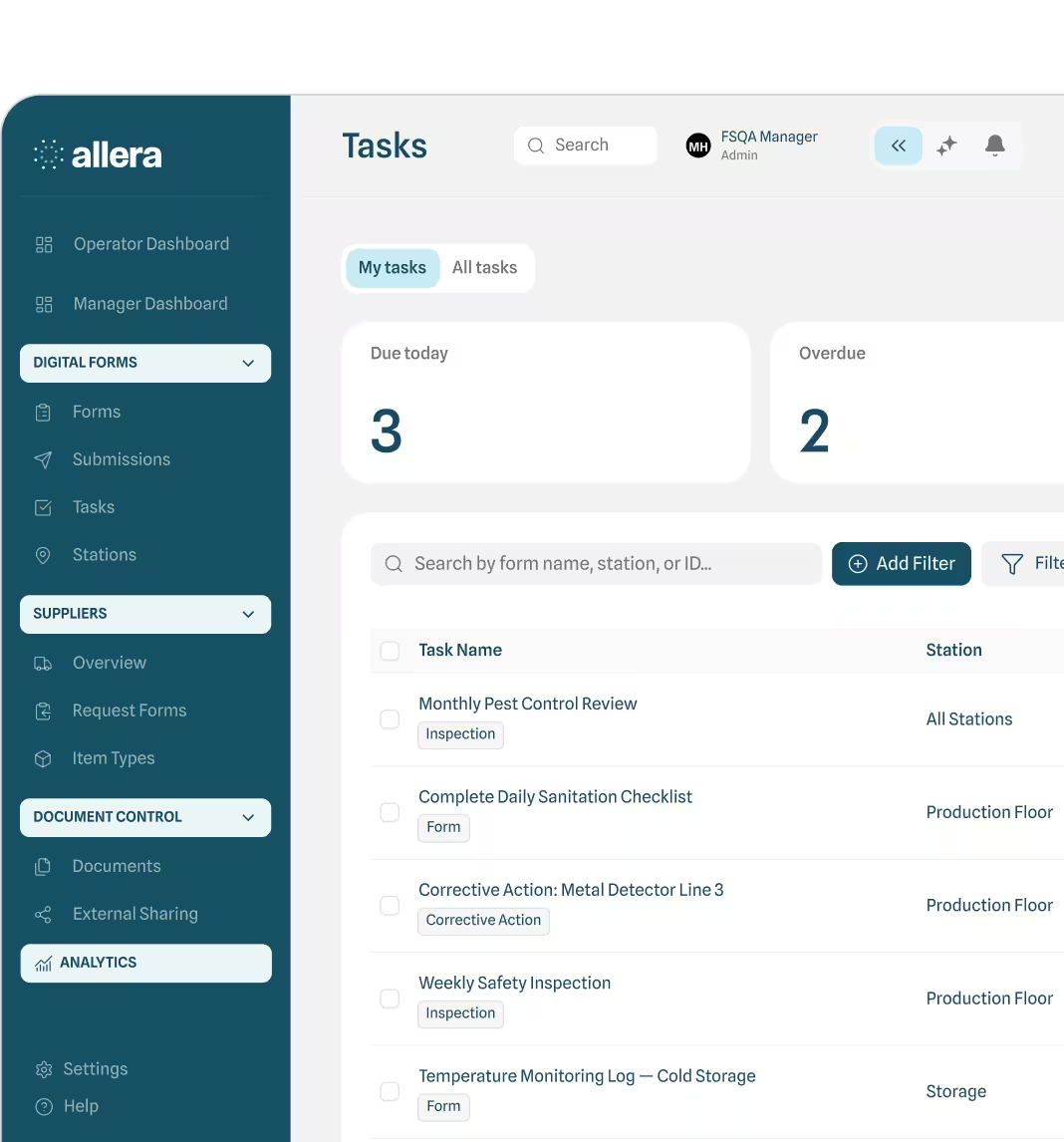
Documentation overhead is where most FSSC and ISO programs get expensive. See how Allera centralizes records, supplier files, and audit evidence in one system. Explore Allera's food quality management software
Upgrading From ISO 22000 to FSSC 22000 — What's Actually Involved
If you hold an active ISO 22000 certificate and you're considering the move to FSSC 22000, you're not starting over. You're building on a foundation that already satisfies the core requirements.
What You Already Have (ISO 22000 Foundation)
An ISO 22000-certified facility has a conforming FSMS covering context of the organization, leadership commitment, planning, support (including competence and communication), operational planning and control (HACCP-based hazard analysis, PRPs, OPRPs, CCPs), performance evaluation, and improvement processes. Your management system architecture, documented procedures, and audit trail all transfer to FSSC.
Your auditors have already reviewed your hazard analysis, CCP monitoring records, and internal audit program. All of that work carries forward. The FSSC Stage 1 and Stage 2 audits will extend their scope to cover the Additional Requirements, but they won't re-audit your ISO 22000 conformity from scratch.
What You Need to Add (Additional Requirements + Sector PRPs)
The gap between ISO 22000 and FSSC 22000 certification typically falls in four areas:
Sector-specific PRPs: Review the applicable ISO 22002-x standard for your product category and assess where your current PRP documentation falls short of the specific technical requirements. ISO 22002-1 is the most commonly applicable standard for food manufacturers.
Food defense plan: Develop a documented threat assessment and mitigation program. Many facilities in regulated markets have elements of this under a site security program, but FSSC requires specific documented coverage of insider threat, cyber vulnerabilities affecting food safety systems, and physical access controls.
Food fraud vulnerability assessment and mitigation plan: Document your ingredient vulnerability assessment, prioritize high-risk raw materials, and implement monitoring controls with records.
Food safety culture program: Build a documented culture assessment process, establish measurable culture objectives, and demonstrate leadership-driven action on culture findings. This is often the gap that takes the most time to close because it requires observable behavioral change, not just a new document.
Typical Gap-Assessment Findings
The most frequent gaps found during ISO 22000-to-FSSC upgrade assessments are:
- Missing or incomplete food defense documented program
- Food fraud vulnerability assessment exists but lacks documented mitigation controls and monitoring records
- Allergen management embedded in HACCP but not documented as a standalone program
- Food safety culture referenced in policy but not operationalized into measurable activities
- PRP documentation doesn't meet ISO 22002-1 specificity, particularly around cleaning validation and allergen changeover procedures
Running a structured gap assessment against Foundation FSSC's published V7 scheme documents before you engage a certification body will save significant time and cost during the certification audit process. Tracking gap-assessment findings and remediation tasks in a structured system will also give you audit-ready evidence of your remediation progress.
Realistic Timeline From ISO 22000 to FSSC 22000 Certificate
For a well-managed ISO 22000 facility with limited gaps: 6–12 months from gap assessment to certificate. For a facility with significant documentation gaps or where the food safety culture program needs to be substantially built: 12–18 months.
You can use your existing ISO 22000 certification body for the FSSC upgrade if they are on Foundation FSSC's approved CB list, or switch to a specialist FSSC CB. Either way, the upgrade process involves a new Stage 1 and Stage 2 audit against the full FSSC 22000 V7 scheme.
Mid-upgrade and tracking gap-assessment findings in spreadsheets? Talk to a food safety specialist about a structured rollout. Book a 30-minute call with the Allera team
FSSC 22000 vs ISO 22000 vs HACCP
These three terms get conflated regularly. Here's a concise breakdown.
| HACCP | ISO 22000:2018 | FSSC 22000 V7 | |
|---|---|---|---|
| What it is | Systematic hazard analysis methodology | Management system standard | Certification scheme (ISO 22000 + PRPs + Additional Req.) |
| Origin | NASA/Pillsbury (1960s); codified by Codex Alimentarius | International Organization for Standardization | Foundation FSSC |
| GFSI recognized | No | No | Yes |
| Covers food defense/fraud | No | No | Yes |
| Regulatory requirement | Yes, in many jurisdictions (FSIS, FDA, EU) | No | No |
| Certification available | Yes (limited retailer acceptance) | Yes, by IAF-accredited CBs | Yes, by Foundation FSSC-approved CBs |
| Includes HACCP | Is HACCP | Yes (as the hazard analysis methodology) | Yes (via ISO 22000) |
Both ISO 22000 and FSSC 22000 incorporate HACCP as their core hazard analysis methodology. Understanding HACCP principles is prerequisite knowledge for implementing either standard. For a broader orientation to food safety management systems before diving into standard selection, Allera's FSMS guide is a useful starting point. You can also explore the full food safety guide for a complete overview of the regulatory and standards landscape.
How FSSC 22000 and ISO 22000 Compare to SQF, BRCGS, and IFS
If you're evaluating FSSC 22000 not just against ISO 22000 but against the other major GFSI-recognized schemes, here's a quick orientation.
| Scheme | GFSI Recognized | Primary Market | Notable Strength |
|---|---|---|---|
| FSSC 22000 V7 | Yes | Global (strong in Europe, growing in North America) | ISO-based structure; broad supply chain scope; strong in food and packaging manufacturing |
| SQF (Safe Quality Food) | Yes | North America-dominant | Strong retail and foodservice acceptance in the US; combined food safety and quality levels |
| BRCGS (formerly BRC) | Yes | UK/Europe-dominant; global acceptance | Strong in ambient and chilled food; widely required by UK and European retailers |
| IFS Food | Yes | Europe (Germany, France) | Strong in private-label food manufacturing for European retailers |
| ISO 22000 | No | Global | Broadest applicability across food chain sectors; no GFSI recognition |
If your primary retail customers are North American grocery chains, SQF certification is worth evaluating alongside FSSC. If your customers are predominantly UK or European retailers, BRCGS certification may be more directly required. FSSC 22000 travels well across all three markets and is increasingly the default choice for manufacturers with global or diversified retailer bases.
Your choice of scheme should follow your customers' requirements, not just your preferences. Review your current and prospective customer supplier codes of conduct before committing.
Manage FSSC 22000 and ISO 22000 Documentation in One Place
Both standards demand substantial documentation: hazard analyses, PRP procedures, food defense plans, food fraud assessments, allergen management programs, supplier records, calibration logs, internal audit reports, corrective actions, and management review records. That documentation burden grows every time you add a new scheme requirement, update a supplier, or expand your product scope.
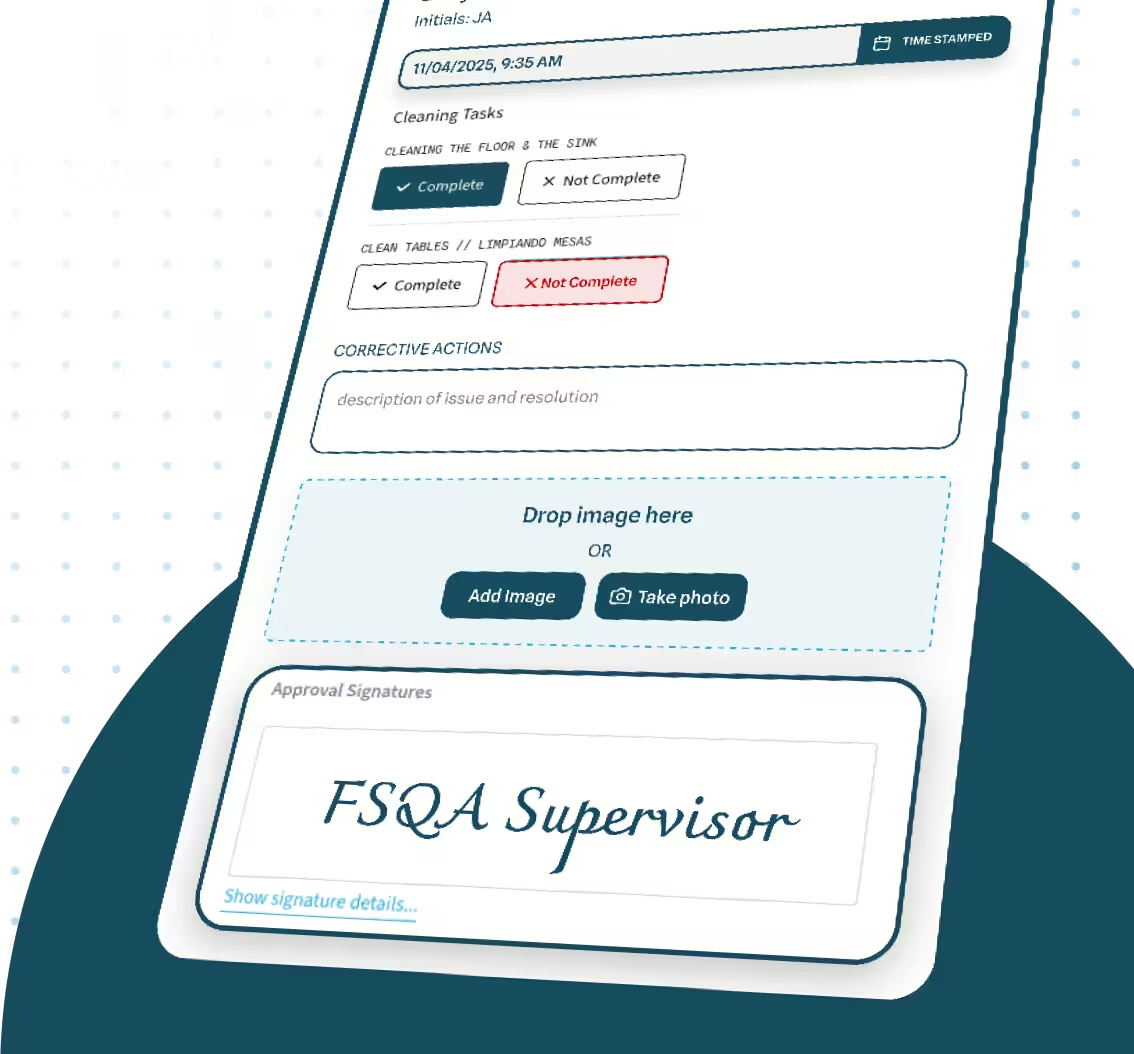
Allera centralizes all of it. From document control and supplier management through audit scheduling and corrective action tracking, Allera gives your FSQA team a single system of record for everything both standards require. You spend less time chasing paperwork and more time managing actual food safety.
See Allera in a 30-minute walkthrough and find out how food manufacturers reduce certification overhead without adding headcount.
FAQs
How is FSSC 22000 audited differently from ISO 22000?
The scope difference is the main factor: FSSC auditors assess all ISO 22000 requirements plus the sector-specific PRPs and Additional Requirements.
The other significant difference is the unannounced audit component under FSSC.
ISO 22000 surveillance audits are scheduled in advance; under FSSC 22000, you will receive at least one unannounced audit visit within your certification cycle.
Your food safety system needs to be operational and evidenced every day, not just in advance of a known audit date. That's the real operational implication of choosing FSSC.
Is ISO 22000 enough for global retailers?
For most major global retailers, ISO 22000 alone is not sufficient.
Walmart, Costco, Tesco, Lidl, Aldi, and other large chains require GFSI-recognized certification in their supplier codes of conduct, and ISO 22000 is not on GFSI's recognized list.
If you're selling to international grocery retail, assume that FSSC 22000 or another GFSI-recognized scheme will be required at some point.
Will my FSSC V6 certificate still be valid after V7 is published?
Yes, for a transitional period.
Foundation FSSC publishes transition timelines that allow certificate holders to upgrade from V6 to V7 at their next scheduled audit rather than requiring an unplanned re-certification.
Check your certification body's V6-to-V7 transition guidance and Foundation FSSC's published transition deadline for the exact dates.
New certifications should target V7 directly.
Can I be certified to ISO 22000 and FSSC 22000 at the same time?
Technically yes, but there's no practical benefit.
An FSSC 22000 certificate already demonstrates conformity with ISO 22000, since ISO 22000 is embedded in the FSSC scheme.
Maintaining a separate ISO 22000 certificate alongside FSSC would simply double your audit costs.
If you're currently ISO 22000 certified and pursuing FSSC, your ISO 22000 certificate can lapse once FSSC is obtained.
How long does FSSC 22000 certification take?
From gap assessment to certificate, most food manufacturers take 9–18 months for an initial FSSC 22000 certification.
Well-prepared facilities with a strong HACCP and PRP foundation can reach certification in 9–12 months.
Facilities building their management system from scratch, or those with significant gaps in food defense, food fraud, and culture documentation, should plan for 15–18 months.
Is FSSC 22000 legally required in the US?
No.
FSSC 22000 is a voluntary third-party certification scheme. It is not required by any US federal regulation.
Compliance with FDA FSMA rules (21 CFR Part 117 for human food) and USDA FSIS regulations for meat, poultry, and eggs remains legally mandatory regardless of certification status.
What is the latest version of FSSC 22000?
As of May 2026, the latest version is FSSC 22000 Version 7, published by Foundation FSSC on May 1, 2026.
Most certification audits are currently transitioning from V6 to V7.
If you're starting a new certification, audit to V7 from the outset.
Does FSSC 22000 include HACCP?
Yes.
Both ISO 22000 and FSSC 22000 require a HACCP-based hazard analysis as the core of the food safety management system.
FSSC 22000 builds on HACCP by adding sector-specific PRP requirements and the Additional Requirements covering food defense and food fraud, but the HACCP-based hazard analysis is the technical heart of the system.
What does FSSC stand for?
FSSC stands for Food Safety System Certification.
The scheme is owned and managed by Foundation FSSC, a non-profit foundation based in the Netherlands.
Is FSSC 22000 the same as ISO 22000?
No.
ISO 22000 is a standalone international standard for food safety management systems.
FSSC 22000 is a certification scheme that uses ISO 22000 as its foundation and adds sector-specific prerequisite programs and additional requirements covering food defense, food fraud, allergen management, food safety culture, and environmental monitoring.
FSSC 22000 is GFSI-recognized; ISO 22000 is not.


.avif)
.avif)
.avif)

.avif)
%20(1).avif)
.avif)
.avif)

%20(1).png)

.avif)



.avif)