.avif)



Artificial intelligence is splitting food manufacturing into two groups. One group is building technology-enabled food safety systems that catch problems before they reach a customer. The other is still running monitoring logs on paper and corrective actions in spreadsheets. The gap between those two groups is widening every quarter, and the news cycle in 2026 has made it impossible to ignore.
Here is the part that gets lost in the headlines. AI in food safety is not about enterprise giants like Nestlé or PepsiCo deploying lab robots. It is increasingly about what a 100-employee specialty manufacturer can afford, validate, and actually use on the plant floor. The practical question for most quality teams is not whether AI works. It is where to start and what your certification scheme will say about it.
So let's define what AI in food safety actually means in practice. It is not science fiction. It is predictive analytics on your environmental monitoring data, computer vision on your production line, generative tools that draft corrective action reports, and real-time systems that flag a deviation before it becomes a violation. Food safety remains a serious global problem, with the WHO estimating that unsafe food causes roughly 600 million illnesses every year, which is exactly why the tools that help you catch problems earlier matter. This guide covers the real applications, the compliance implications across FSMA and the major GFSI schemes, the limitations every manufacturer should understand, and a staged framework for where to begin. If you want to see how a digital food safety platform brings these pieces together, see how Allera works.
What Does AI Actually Do in Food Safety? (5 Real Manufacturing Examples)
The clearest way to understand AI in food safety is to look at what it does on the manufacturing floor today. These are not research concepts. Each of the five examples below is deployed commercially in food plants right now.
1. Computer Vision for Contamination and Foreign Object Detection
AI-powered cameras inspect product on the line at speeds and consistency rates that manual inspection cannot match. The system learns what a good unit looks like, then flags anomalies such as foreign material, fill-level defects, or seal failures in real time.
In practice, these systems integrate with the checkweighers and X-ray units you already run, adding a layer that catches the defects those tools miss. The benefit over purely manual inspection is consistency. A camera does not get tired at the end of a shift or miss a subtle defect on unit 4,000.
There is a real limitation worth naming. Computer vision needs clean, consistent camera angles and good lighting to perform. If your line conditions vary, detection accuracy drops. The quality of your data and your setup determines the quality of the result.
2. Predictive Environmental Monitoring
Machine learning models analyze your historical environmental monitoring program (EMP) swab results alongside temperature, humidity, and production schedule data to predict when and where contamination risk is highest. Instead of treating every zone and every week as equal risk, the model finds the patterns that precede a positive.
A practical example: the system flags a specific zone for an unscheduled swab because the combination of a long production run, elevated humidity, and a prior positive pattern points to elevated risk this week. That is a meaningful upgrade over calendar-based EMP schedules that treat a quiet Tuesday the same as a high-risk changeover.
This kind of predictive scheduling does not replace your program. It sharpens where you spend your verification effort, which is exactly the kind of evidence that strengthens your next food safety audit.
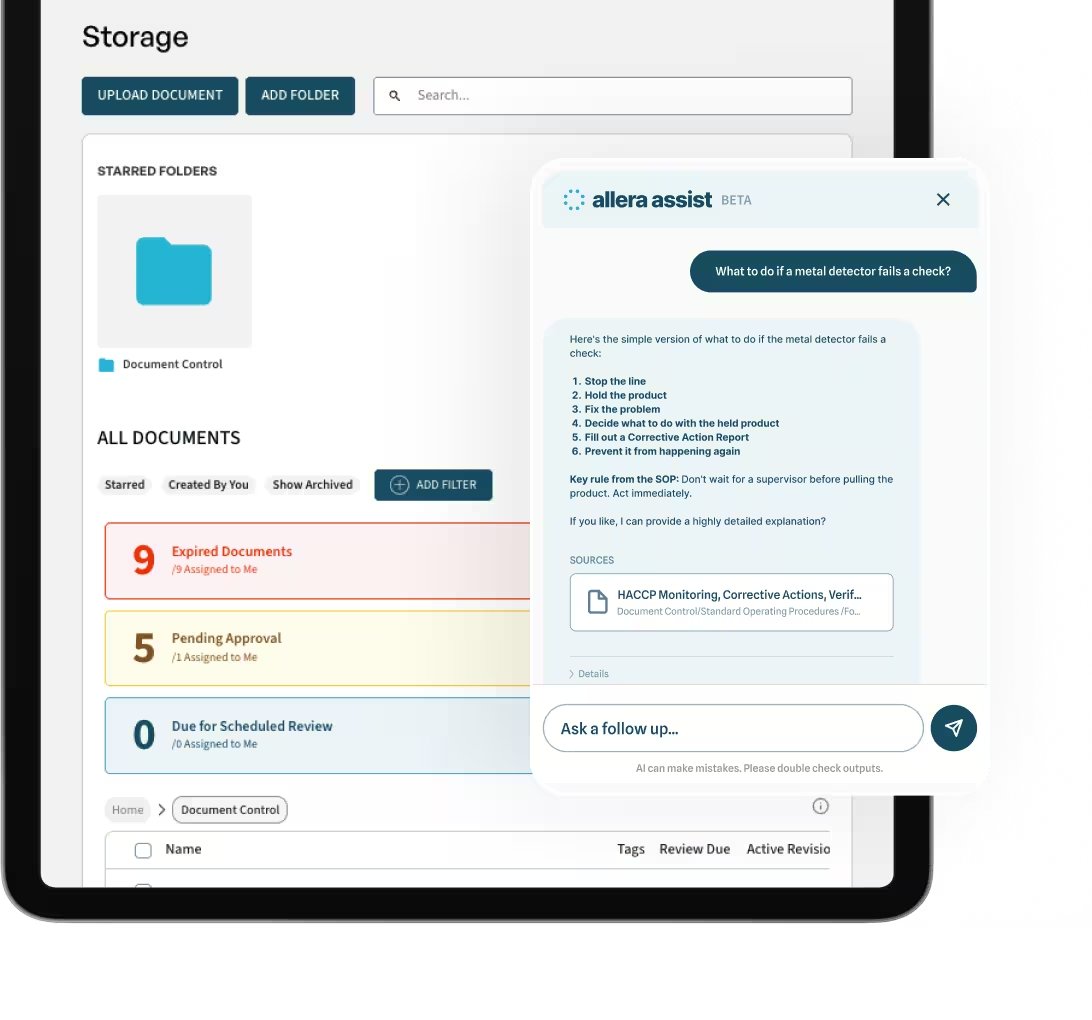
3. AI-Assisted Document Generation and Corrective Action Drafting
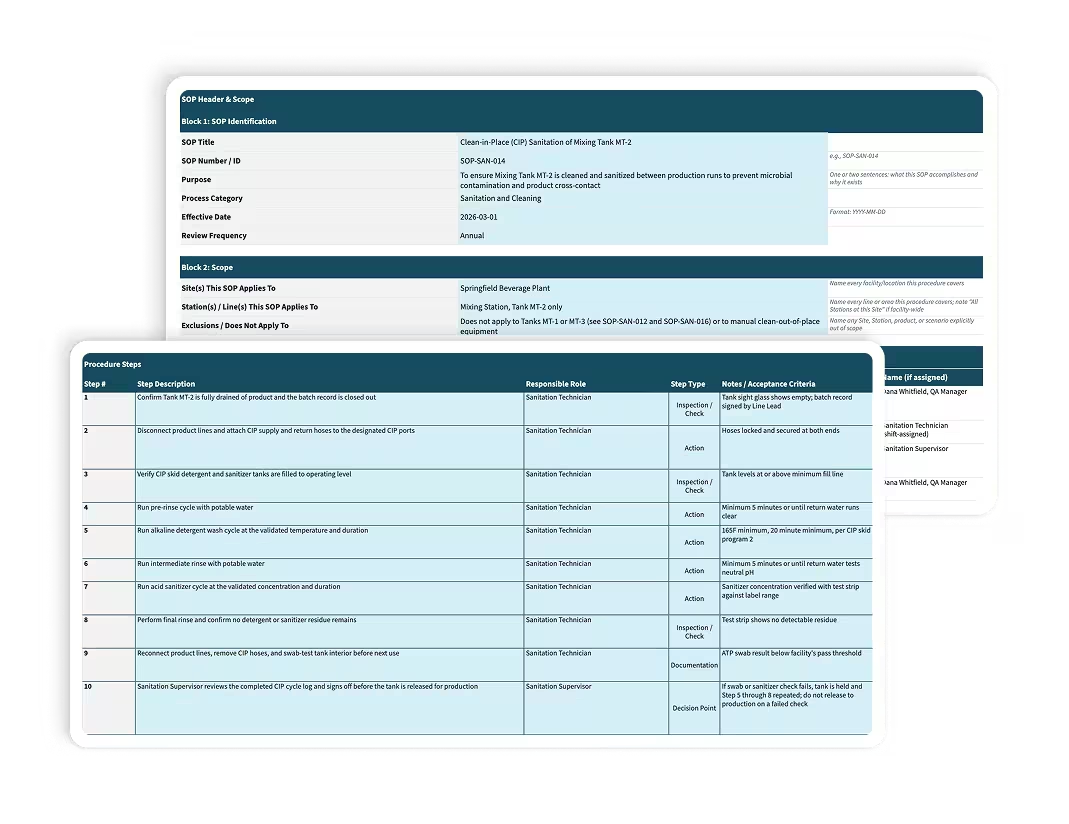
Generative AI drafts SOPs, corrective action reports, supplier non-conformance records, and sections of HACCP plans from structured inputs. The model handles the repetitive drafting so your team spends time on judgment instead of formatting.
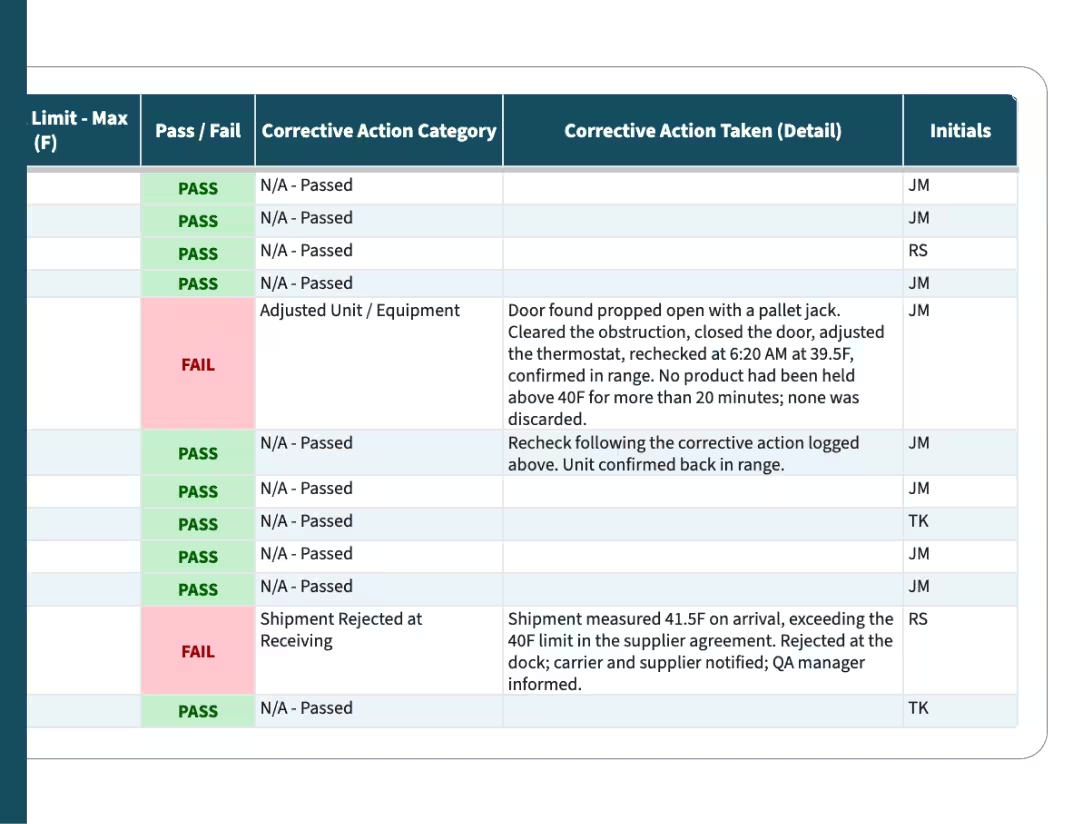
Picture a deviation logged on the line. The system generates a corrective action draft pre-populated with the affected critical control point (CCP), the corrective action procedure, and the verification step. Your QA manager reviews and approves it in minutes instead of starting from a blank document and spending an hour.
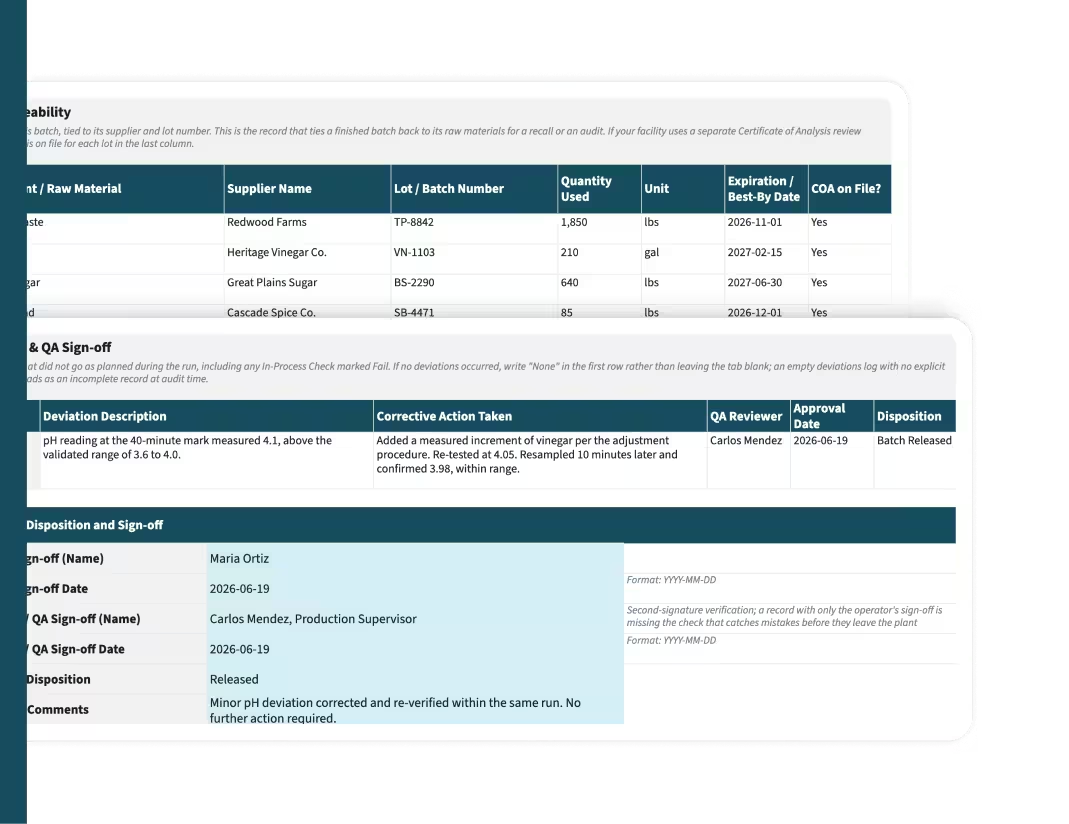
One governance point matters more than any efficiency gain here. AI-generated documents that serve as FSMA compliance records must be reviewed and verified by a qualified human, typically a Preventive Controls Qualified Individual (PCQI) or QA manager. The model drafts. The human decides. This is also why robust document control for food manufacturers sits underneath any AI documentation workflow.
4. Supplier Risk Scoring and Non-Conformance Prediction
AI models score your suppliers by combining audit history, certificate of analysis (COA) patterns, complaint frequency, and public recall data into a single risk signal. The goal is to see a problem supplier before they cause a problem.
Consider a supplier that has submitted three short-dated COAs and logged one major non-conformance in the past 12 months. A scoring model flags that supplier as higher risk before your next purchase order, not after a contaminated lot arrives at your dock. That shift from reactive to proactive is the entire point.
This is one of the highest-value, lowest-risk places to apply AI, and it connects directly to your incoming inspection strategy. A digital approach to supplier quality management gives the model the structured history it needs to score accurately.
5. Traceability and Recall Readiness Automation
AI systems maintain real-time lot traceability links across raw materials, in-process batches, and finished goods. When something goes wrong, the difference between a contained event and a brand crisis is how fast you can map the affected product.
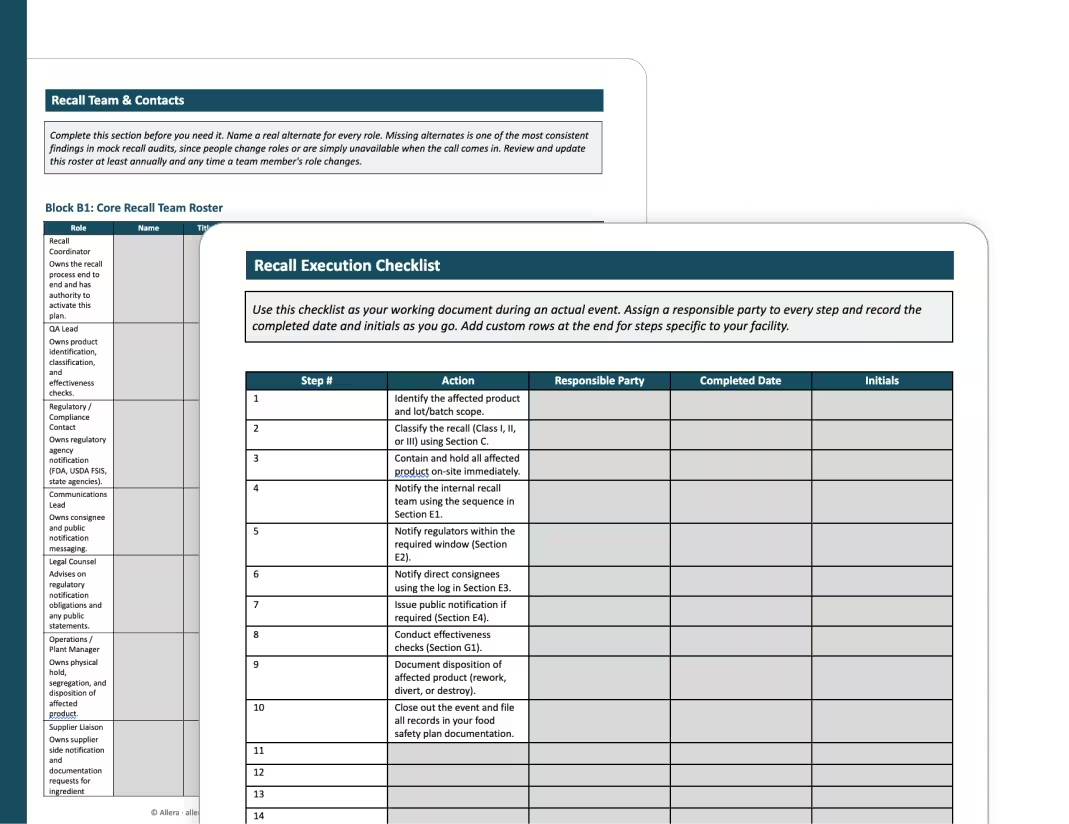
If a supplier issues a callback, the system cross-references every affected lot and generates the recall list automatically. Mock recall exercises that used to consume hours of manual tracing compress into minutes. That speed is both a compliance asset and a financial one when minutes of exposure translate into product on shelves.
This capability depends on complete, accurate food traceability data flowing through your system in the first place.
For a broader industry view of how these applications are developing, the Institute of Food Technologists published a useful overview in How AI Is Reshaping Food Safety (IFT, June 2026).
The Core Functions of AI in Food Safety
Once you have seen the examples, it helps to have a simple model for categorizing what type of AI problem you actually have. Most food safety applications fall into five functions. Use this taxonomy to figure out where a given tool fits and what it needs from you to work.
| Function | What It Does | Example in Food Safety |
|---|---|---|
| Sense | Collect data from physical sources such as sensors, cameras, and lab instruments | IoT temperature sensors and computer vision on the production line |
| Detect | Identify patterns, anomalies, or deviations in data | Flagging a gradual temperature drift across cold storage zones before it becomes a violation |
| Predict | Forecast risk before it materializes | Predicting contamination risk windows in EMP zones from historical data |
| Decide | Surface recommended actions or auto-trigger workflows | Auto-generating a CAPA when a CCP goes out of range |
| Prove | Create audit-ready records and documentation trails | Timestamped, attributable logs of monitoring events for regulatory audit |
Most food manufacturers begin with Detect and Prove. Anomaly identification and automated recordkeeping deliver value immediately and carry low risk. As your data quality improves and your team builds confidence, you advance to Predict and Decide, which depend on a clean, longitudinal data history.
The reason this sequence matters is that prediction and automated decisions are only as good as the data underneath them. A peer-reviewed tertiary study, Artificial Intelligence in Food Safety: A Tertiary Study (PMC, 2026), reinforces that point across dozens of reviewed applications. Building the data foundation first is why a strong food safety management system is the prerequisite for everything else.
AI and the Food Safety Compliance Landscape
Here is the question that no competitor in this space is answering well. For a food manufacturer, the issue is not only "what can AI do?" It is "what does my certification scheme say about AI-assisted monitoring, AI-generated records, and digital systems?" The answer is increasingly favorable, but there are validations you must understand before you treat any AI output as compliance evidence.
The table below maps the major standards to where AI fits and what each one requires you to validate.
| Standard | Relevant Requirement | How AI Fits | Critical Validation Needed |
|---|---|---|---|
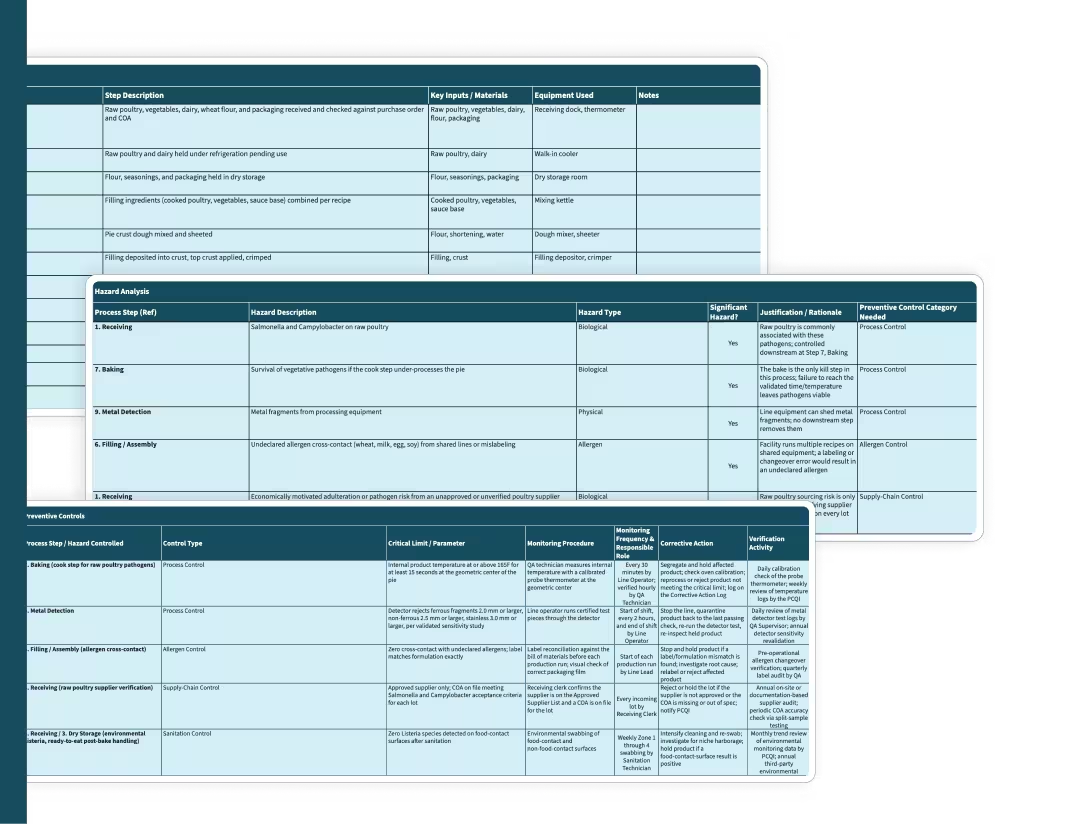
| FSMA Preventive Controls | Hazard analysis, CCPs, monitoring, verification, corrective actions, and records | AI can automate monitoring, auto-trigger CAPAs, and generate records, but hazard analysis still requires qualified individual (PCQI) review | PCQI must review and approve AI-assisted HACCP elements |
| HACCP (CAC/RCP 1) | CCP monitoring, verification procedures, record-keeping | AI real-time CCP monitoring can meet continuous monitoring expectations better than periodic manual checks; records must be retrievable | AI monitoring records must be tamper-evident and attributable to a specific responsible person |
| BRCGS Issue 9 | Food safety plan (HACCP), electronic monitoring, and data integrity requirements | Digital monitoring systems are explicitly supported; testing systems to verify correct operation is the key expectation | Validation of monitoring system accuracy at implementation, with documented calibration |
| FSSC 22000 Version 6 | Additional requirements covering food safety management tools and digitalization within the management system | Digital and automated monitoring align with FSSC principles; AI-generated corrective actions must be verified by a competent person | Evidence of system validation and human oversight of AI-triggered actions |
| SQF Edition 10 | Food safety plan (HACCP) and records and documentation requirements | Electronic records are explicitly accepted; AI-generated SOPs and plans are permitted when signed by an authorized person | Authorized signature or approval on AI-generated documents; records must be readily retrievable |
The common thread across all five is human accountability. Every scheme accepts electronic and automated records, and every scheme still requires a competent, authorized person to own the food safety decision. AI changes how the work gets done, not who is responsible for it.
What GFSI Is Saying About AI in 2025–2026
The Global Food Safety Initiative has been direct about where this is heading. At the GFSI 2025 conference, industry leaders framed digital HACCP as an imperative rather than an option, and survey data shared at the event indicated that more than 70% of food businesses were implementing or actively planning AI technologies.
GFSI's broader message is worth holding onto. Technology alone does not solve food safety challenges. Organizations have to build the governance and internal alignment that digital systems require, or the tools sit unused. You can read the full perspective in Beyond Compliance: The Digital Transformation of Food Safety at GFSI 2025.
If your facility is certified to a GFSI-recognized scheme, this is the moment to align your digital roadmap with your audit strategy. That means understanding how AI-assisted records will be evaluated during your next BRCGS certification audit and how the latest FSSC 22000 Version 6 changes treat automated monitoring.
Allera is built to generate FSMA-aligned records, auto-trigger CAPAs, and support BRCGS, SQF, and FSSC audit documentation in one platform. See how it works.
Where AI Is Being Deployed Across the Food Manufacturing Plant
Industry coverage tends to map AI across the entire farm-to-fork supply chain. That is useful context, but if you run a manufacturing facility, you want to know where AI applies inside your four walls. Here is the walk through the plant, station by station.
Raw Material Receiving and Supplier Qualification
AI parses incoming COAs and automatically cross-references them against your spec sheets, flagging out-of-spec values before a receiver manually keys anything. Supplier risk scoring and predictive non-conformance flagging guide which incoming lots get extra scrutiny. Automated hold-and-release workflows trigger based on the incoming material data instead of waiting on a manual decision.
Environmental Monitoring (EMP) and Sanitation Verification
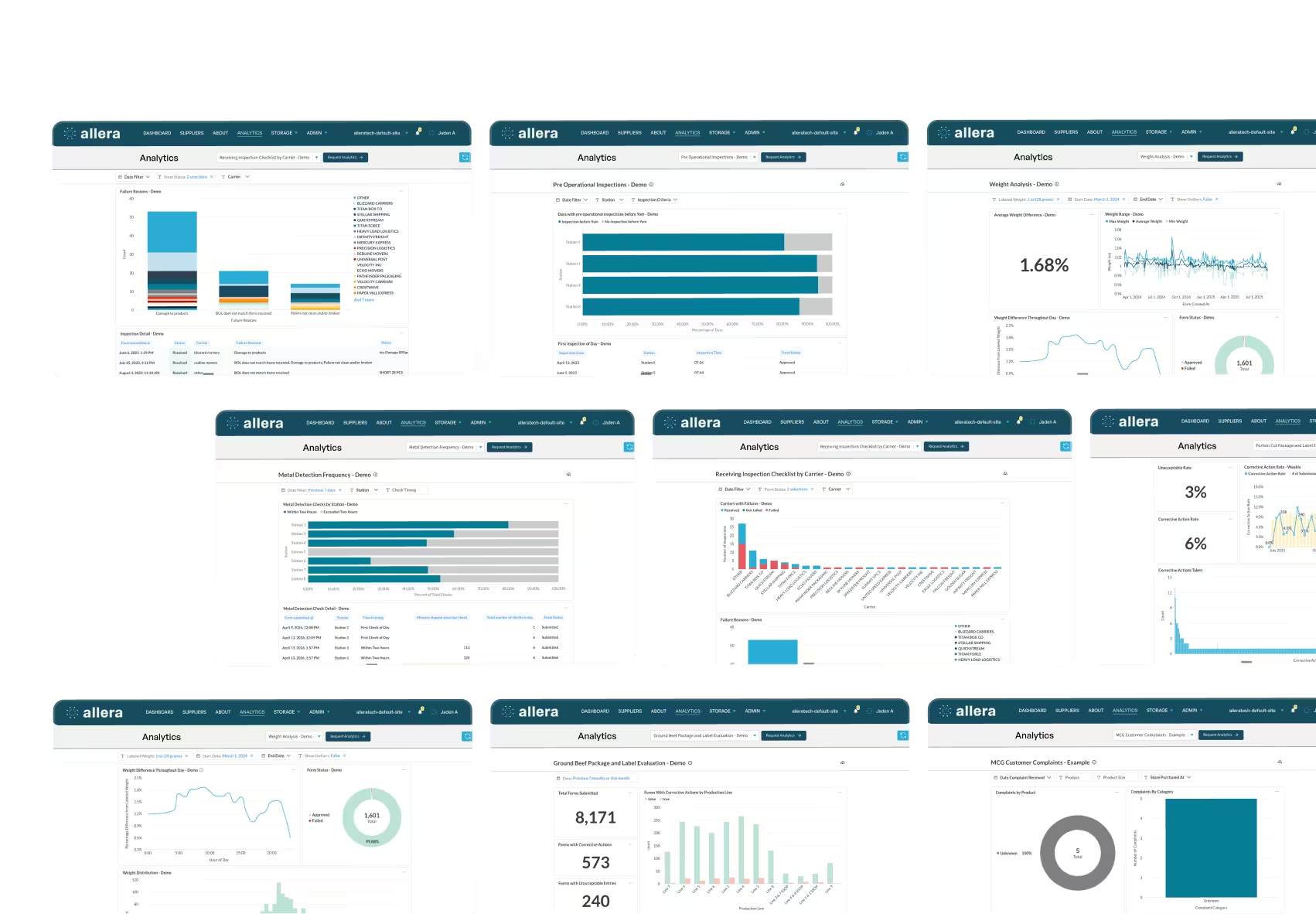
Predictive analytics applied to swab data, environmental conditions, and production patterns shift your EMP from a fixed calendar to a risk-based schedule. AI scheduling adjusts swabbing frequency based on a zone's current risk score. Sanitation verification analytics surface zones with rising positive trends before they become a critical finding.
In-Process Quality Monitoring and CCP Control
Real-time sensor monitoring with AI anomaly detection watches temperatures, pressures, weights, and times continuously, catching the gradual drift a periodic check would miss. Automated CCP exception reporting pre-drafts a CAPA the moment a limit is breached. Computer vision handles in-line quality inspection for fill levels, seal integrity, and foreign objects.
Laboratory Testing and Pathogen Detection
AI-assisted image analysis speeds up reading of microbiological cultures. Researchers at UC Davis demonstrated machine learning algorithms that distinguish E. coli from other bacteria with roughly 94% accuracy, a signal of where lab automation is heading. Predictive models support shelf-life testing based on product parameters and storage conditions, and lab data integrates automatically with your food safety management system.
Packaging and Label Verification
AI vision systems check label accuracy, allergen declarations, date codes, and seal integrity at line speed. When a label discrepancy appears, the system rejects the unit and documents the event automatically. Given that undeclared allergens remain a leading cause of recalls, this is a high-value place to apply machine vision.
Traceability and Mock Recall Readiness
AI maintains real-time lot-level links across the entire manufacturing process, so a mock recall that once took hours collapses into minutes of automated lot-mapping. This capability underpins your food traceability program and your readiness for FSMA 204 compliance, where rapid, accurate traceability is the entire requirement.
For more on connecting these operational layers, GFSI's piece on Operational Visibility with AI-Driven Processes is worth reading, as is the foundational research in The role of artificial intelligence in advancing food safety (ScienceDirect).
What AI Cannot (Yet) Do: Limitations Every Food Manufacturer Should Know
Most content on this topic is either academic and neutral or promotional and breathless. Neither helps you make a sound decision. So here is an honest accounting of what AI cannot do in food safety, because understanding the limits is how you deploy it responsibly.
- AI cannot replace human hazard analysis. FSMA's Preventive Controls rule requires a qualified individual (PCQI) to conduct and sign off on the hazard analysis. AI can assist with drafting and flagging, but the judgment and the accountability stay with the human expert.
- AI is only as good as the data it learns from. A model trained on poor historical monitoring data produces unreliable predictions. Before deploying predictive analytics, you need clean, consistent, longitudinal data, typically at least 12 to 18 months of digital records.
- AI does not eliminate physical verification. AI can detect an anomaly in a sensor reading. It cannot physically inspect a zone, verify that sanitation was effective, or confirm a CCP is operating correctly. Human verification of CCP effectiveness remains a regulatory requirement.
- AI-generated documents require authorized human approval. Under SQF, BRCGS, and FSMA, documents that serve as compliance records, including HACCP plans, SOPs, and corrective action reports, must be reviewed and approved by a competent, authorized person. An AI draft is not a compliance record until a human signs it.
- Complacency is a real risk. Over-reliance on automated alerts can dull vigilance. A program built around "the system will catch it" is more fragile than one where personnel understand why each CCP exists. AI is a force multiplier for a strong food safety culture, not a substitute for one.
- AI systems require validation at implementation. You have to verify that a system accurately measures what it claims to measure and produces reliable outputs before you treat those outputs as compliance evidence.
This view is shared at the highest levels of the field. As Dr. Vera Petrova Dickinson, former food safety leader at Mars, Mondelez, and WhiteWave/Danone, puts it: "Don't think of AI as your ultimate answer. You are the final decision maker as the leader."
The same caution runs through the FAO's guidance, summarized in FAO Report Highlights Needs for Responsible AI Adoption in Food Safety Fields. Treating AI as a layer on top of strong food safety culture and well-understood HACCP principles is what separates responsible adoption from vendor hype.
Where to Start: A Practical AI Adoption Framework for Food Manufacturers
If you run quality at a mid-size facility, the honest answer to "where do I begin?" is not "buy an AI platform." It is a staged path ordered by return on investment and risk. Work through these stages in order, and do not skip ahead.
Stage 1: Digitize Before You Automate
You cannot improve a paper-based or spreadsheet-based program with AI, because there is no clean data for a model to learn from. Digitize first. Start with your monitoring logs, corrective actions, audit checklists, and supplier records.
For a 100-employee facility with the right platform, this stage typically takes three to six months. The payoff is a structured data history that everything downstream depends on. If you are evaluating where to begin, the food safety software guide walks through what to look for, and a unified food safety management system is the foundation you are building toward.
Stage 2: Automate Documentation and Corrective Actions (Highest ROI, Lowest Risk)
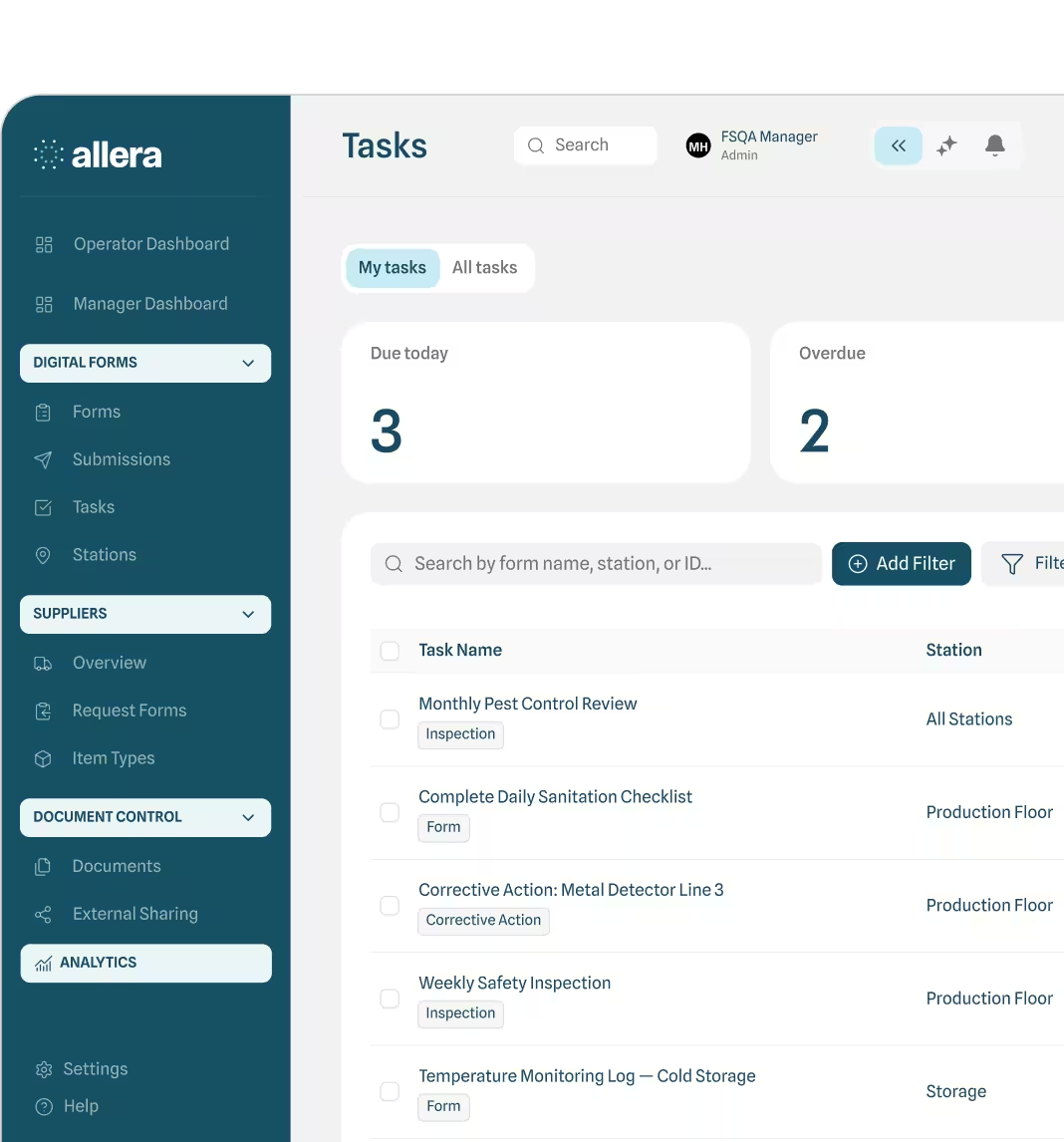
This is where most manufacturers should spend their first real AI effort. AI-assisted document generation drafts SOPs, CAPA reports, and non-conformances, and auto-triggered CAPA workflows fire the moment a CCP deviation is logged.
Start here because the labor savings are immediate, no sensor hardware is required, and the compliance benefit shows up right away. The numbers back this up. A 2024 study found the average US manufacturer loses 20 to 40% of revenue to wasted activities, and documentation automation attacks that waste directly without any capital investment in equipment.
Stage 3: Add Real-Time Monitoring for Your Highest-Risk Process
Once your records are digital, pick your single highest-risk CCP or EMP zone and pilot real-time AI-assisted monitoring there. Do not roll it out everywhere at once.
Validate the system before you treat its outputs as compliance records, which means documented calibration and accuracy verification. Expand to the next process only after the pilot demonstrates reliable performance.
Stage 4: Integrate Supplier Risk Intelligence
Connect your incoming COA data, audit results, and non-conformance history into a scoring model. Use the scores to prioritize supplier follow-up and to adjust incoming inspection frequencies, tightening scrutiny on higher-risk suppliers and easing it on proven ones. This builds on the digital records you established in Stage 1 and the practices in supplier quality management.
Stage 5: Build Traceability Infrastructure Before Adding Analytics
Analytics are only as valuable as the traceability data they sit on. Make sure lot-level tracking is complete and accurate before you deploy recall automation or predictive models on top of it. Getting food traceability right is also the core of FSMA 204 compliance, so this stage pulls double duty.
Allera handles Stages 1 through 4 out of the box with digital forms, automated CAPAs, document control, and supplier management, all built for food manufacturers. See how it works.
The Business Case: What AI ROI Looks Like for Food Manufacturers
The strategic argument for AI is easy to make. The financial argument is what gets a project approved. Here is how the return shows up for a food manufacturer.
- Manufacturing waste. A 2024 study found the average US manufacturer loses 20 to 40% of revenue to wasted activities and physical waste. AI-assisted monitoring and process analytics reduce that figure by catching deviations and inefficiencies earlier.
- Documentation labor. FSQA teams at mid-size facilities spend an estimated 30 to 50% of their time on recordkeeping, audit prep, and CAPA documentation. Automation targets that time directly and gives it back to higher-value work.
- Recall cost avoidance. The average food recall costs around $10M in direct costs, before any brand damage. AI-assisted traceability and earlier detection reduce both the frequency and the scope of recalls.
- Cross-industry precedent. The banking industry reduced fraudulent activity using AI by roughly 90%, a benchmark for what risk prediction can accomplish when it is deployed well, per Dr. Vera Petrova Dickinson's work across Mars, Mondelez, and Danone.
- Audit efficiency. GFSI 2025 data indicates that digital food safety systems cut audit preparation time substantially and improve first-time pass rates.
When you connect those figures to your own facility, the case usually centers on labor recovery and risk reduction. A faster, cleaner food safety audit and a more resilient food and beverage supply chain are the outcomes that justify the investment.
Your Food Safety Program Is the Foundation. AI Makes It Faster.
The food manufacturers who will be ahead in five years are digitizing their programs today. Whether you are starting with automated forms and CAPA workflows or you are ready to add predictive monitoring, the sequence is the same: build the digital foundation, then layer intelligence on top of it.
Allera gives FSQA teams what that foundation requires: digital monitoring logs, automated corrective actions, document control, supplier management, and audit-ready reporting, all in one platform built specifically for food manufacturers. If you want to see where AI fits into your program, explore the platform or read more about HACCP compliance software built for the way your team actually works.
FAQs

.avif)
.avif)
.avif)
.avif)
%20(1).avif)
.avif)
.avif)

%20(1).png)

.avif)


.avif)