.avif)



HACCP: (Hazard Analysis Critical Control Points) Guide for Food Manufacturing


Food safety isn't just a regulatory checkbox — it's the foundation of consumer trust and business sustainability. For food manufacturers across America, HACCP represents the gold standard in preventing foodborne illness and ensuring product safety. In this guide, you'll learn how to implement HACCP, navigate certification, and leverage modern technology to stay compliant and competitive in 2025.
What is HACCP? Understanding the Basics
Definition and History
HACCP stands for Hazard Analysis and Critical Control Points—a preventative approach to food safety that addresses biological, chemical, and physical hazards throughout the food production process. Originally developed in the 1960s by NASA and Pillsbury to ensure safe food for space missions, HACCP has evolved into the internationally recognized foundation for food safety management systems worldwide.
Unlike traditional inspection methods that focus on testing end products, HACCP emphasizes prevention by identifying potential hazards and establishing controls at critical points throughout the production process. This proactive approach has made HACCP a legal requirement in many jurisdictions and a prerequisite for major food certifications like SQF, BRCGS, and FSSC 22000.
%20(convert.io).webp)
Why HACCP Matters in Food Manufacturing
In today's interconnected food supply chain, a single contamination event can devastate brands, trigger costly recalls, and endanger public health. HACCP provides manufacturers with a systematic framework to:
- Prevent foodborne illness through science-based hazard identification and control
- Ensure regulatory compliance with FDA, USDA-FSIS, and state requirements
- Build customer confidence through documented food safety practices
- Reduce liability exposure by demonstrating due diligence in food safety
- Enable market access for export and major retail partnerships
- Improve operational efficiency by focusing resources on critical control points
HACCP vs. Other Food Safety Systems
While HACCP forms the foundation of food safety management, it's important to understand how it relates to other systems:
- FSMA Preventive Controls: Builds on HACCP principles while expanding requirements to include supply chain verification, environmental monitoring, and enhanced traceability
- SQF/BRCGS/FSSC 22000: Comprehensive standards that incorporate HACCP as a core component while adding quality management, supplier programs, and specific industry requirements
- ISO 22000: International standard that integrates HACCP with management system requirements and communication protocols
The Seven Principles of HACCP Explained
Understanding the 7 HACCP principles is essential for any food business serious about safety and compliance. These principles form the backbone of effective food safety management:
Principle 1: Conduct a Hazard Analysis
Identify biological, chemical, and physical hazards at each step of your process—from raw materials to distribution. Use science-based resources and regulatory guidelines to focus only on significant food safety hazards.
Biological hazards include pathogenic bacteria like Salmonella and E. coli, viruses, parasites, and allergens. Chemical hazards encompass cleaning agents, pesticide residues, food additives, and naturally occurring toxins. Physical hazards include foreign objects such as metal fragments, glass, stones, or plastic pieces.
The key is conducting a thorough, evidence-based analysis that considers ingredient characteristics, processing methods, facility design, intended use, and consumer handling. Focus on hazards that are reasonably likely to occur and could cause illness or injury if not properly controlled.
Principle 2: Identify Critical Control Points (CCPs)
Critical Control Points are specific steps in the food production process where hazards can be prevented, eliminated, or reduced to acceptable levels. Not every step in production is a CCP—only those where control is essential for food safety.
Use a CCP decision tree to systematically evaluate each process step:
- Is this step specifically designed to eliminate or reduce the likely occurrence of a hazard?
- Could contamination occur at this step or could existing contamination increase to unacceptable levels?
- Will a subsequent step eliminate the hazard or reduce its likely occurrence to acceptable levels?
For example, in ground beef production, the cooking step is typically a CCP because adequate heat treatment eliminates harmful bacteria. Metal detection before packaging might be a CCP to prevent physical contamination.
Principle 3: Establish Critical Limits
For each Critical Control Point, establish critical limits—measurable criteria that separate safe from unsafe conditions. These limits must be scientifically validated and based on regulatory guidelines.
Common critical limits include:
- Temperature: 165°F (74°C) internal temperature for poultry products
- Time: Minimum holding times for pasteurization processes
- pH: Below 4.6 for acidified foods to prevent botulism
- Water activity: Below 0.95 to control pathogenic bacteria growth
- Chemical concentrations: Sanitizer levels in wash water
Critical limits must provide clear, objective standards that operators can follow and monitors can verify.
Principle 4: Establish Monitoring Procedures
Monitoring procedures ensure that your CCPs remain under control by providing planned observations or measurements. Effective monitoring must be continuous enough to detect deviations quickly, allowing for timely corrective action.
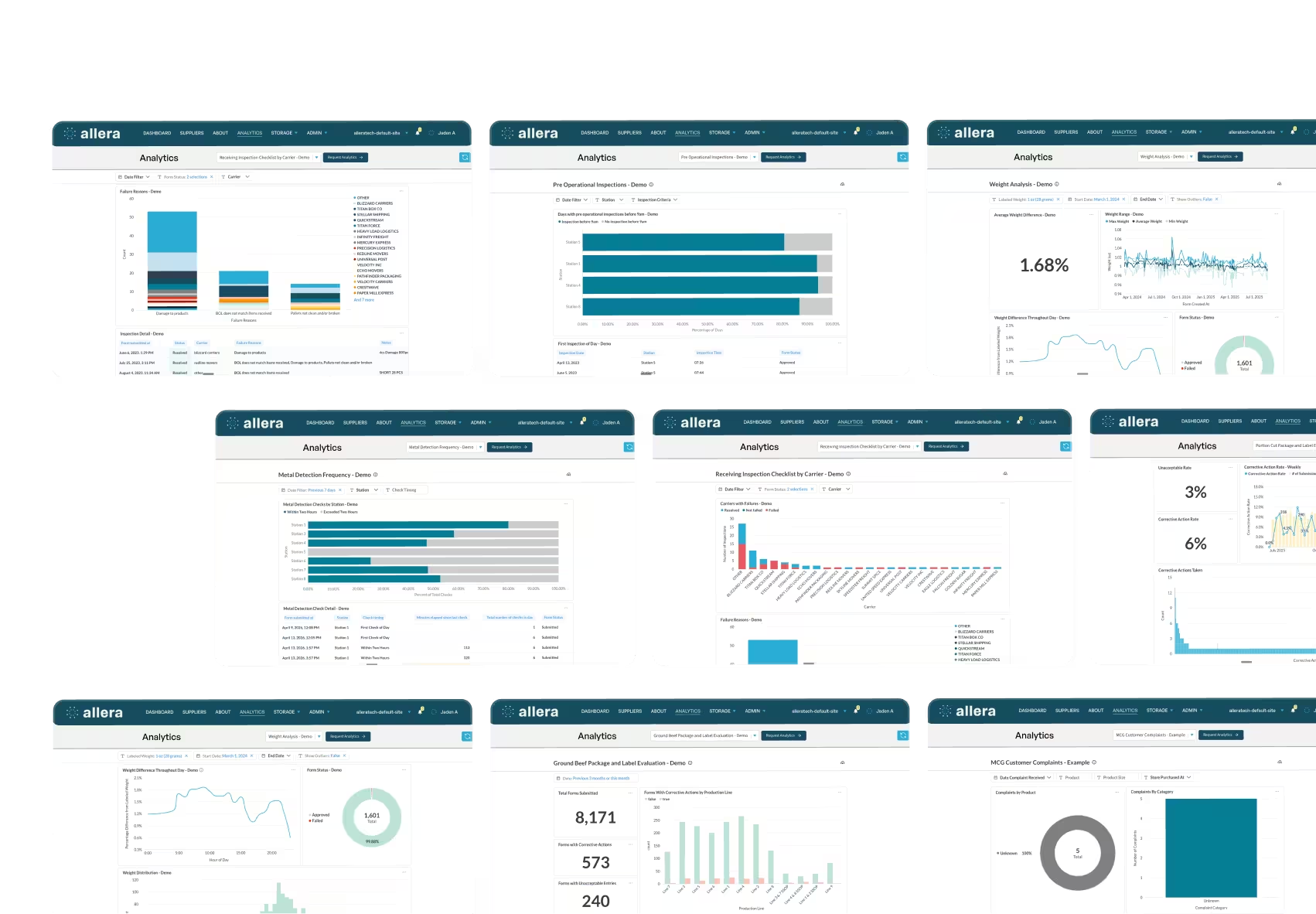
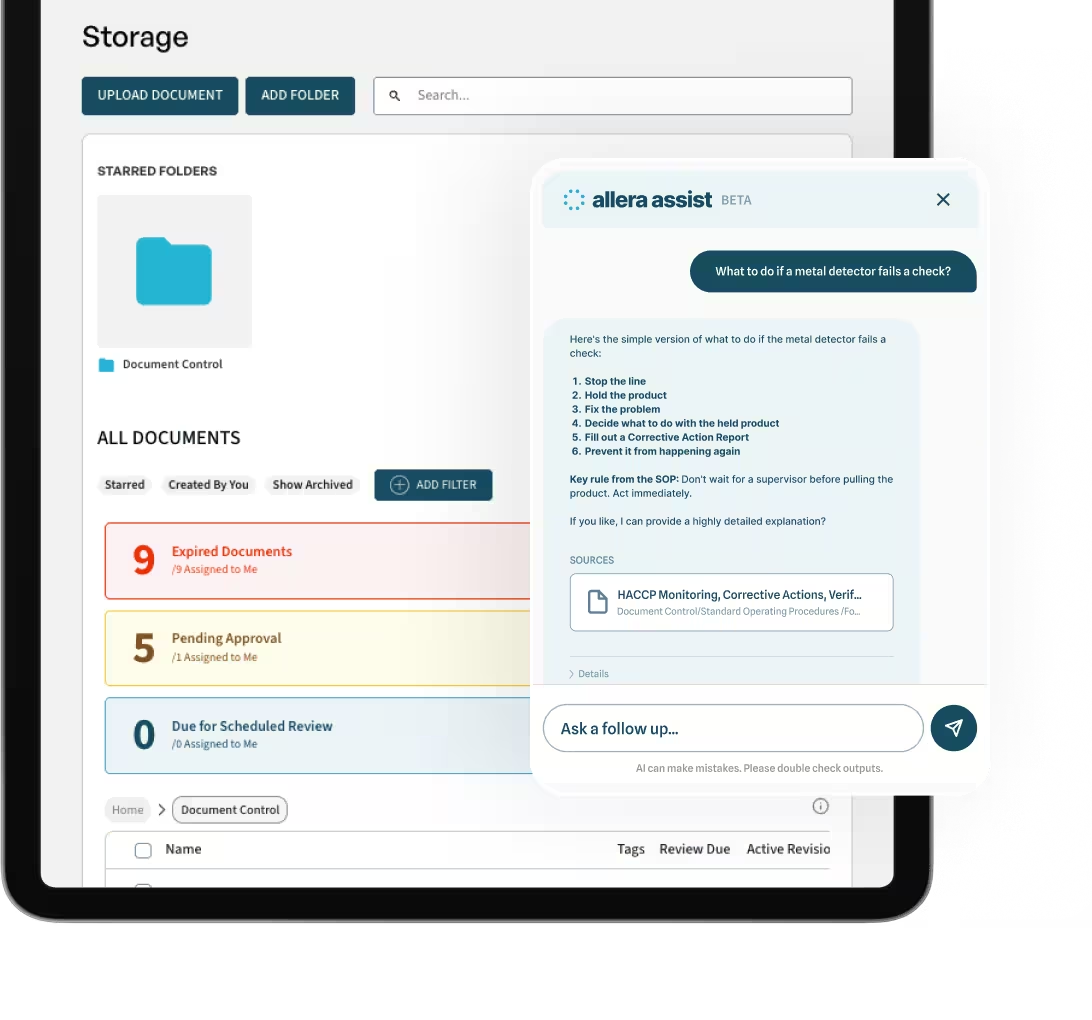
Modern food manufacturers increasingly rely on digital monitoring systems that automatically capture data from temperature sensors, pH meters, metal detectors, and other equipment. This approach reduces human error and provides real-time visibility into critical control points across production facilities.
Principle 5: Establish Corrective Actions
When monitoring indicates deviation from a critical limit, predetermined corrective actions must be taken immediately. These actions should address both the immediate problem and prevent recurrence.
Corrective actions typically include:
- Identifying and eliminating the cause of deviation
- Determining the disposition of affected product
- Recording the corrective action taken
- Verifying that the corrective action was effective
Having clear, written procedures ensures consistent response and maintains food safety even when problems occur.
Principle 6: Establish Verification Procedures
Verification confirms that your HACCP program is working as intended. This includes activities like calibrating monitoring equipment, reviewing records, conducting product testing, and validating that your critical limits are adequate.
Verification should be performed by someone other than the person responsible for monitoring, providing an independent assessment of effectiveness. Regular verification helps identify areas for improvement and ensures continued compliance with food safety requirements.
Principle 7: Establish Record Keeping and Documentation
Comprehensive documentation demonstrates that your HACCP program is consistently followed and effective. Records must include hazard analysis, CCP determination, critical limits, monitoring activities, corrective actions, verification procedures, and validation records.
With increasing regulatory scrutiny and audit requirements, many food companies are transitioning from paper-based systems to digital platforms that automatically timestamp entries, prevent data loss, and streamline audit preparation.
%20(convert.io).webp)
HACCP Plan Development and Industry Applications
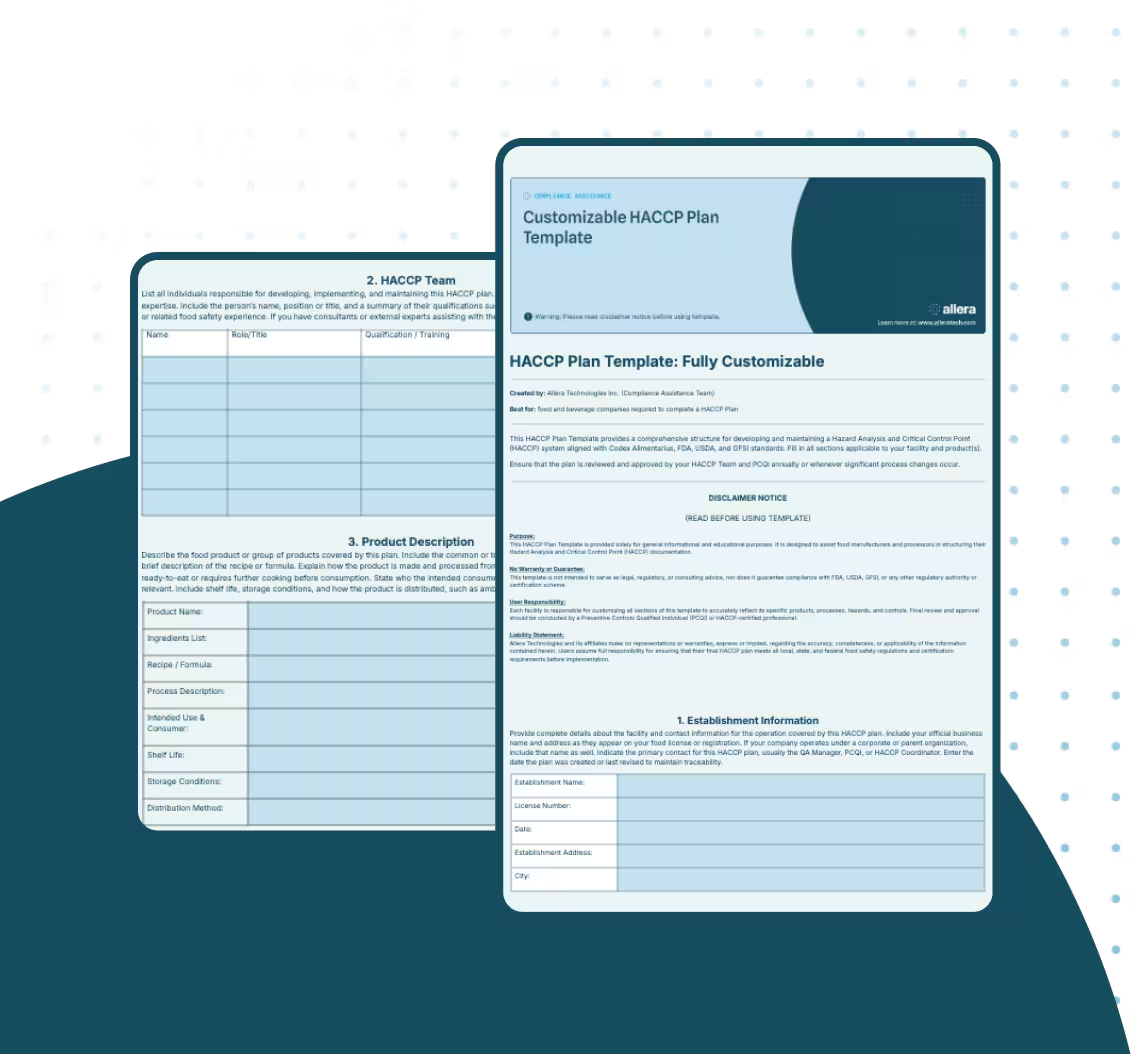
A HACCP plan documents how your facility applies the seven HACCP principles. Unlike generic food safety checklists, each plan must be tailored to your unique products, processes, and risks. The plan must clearly show how hazards are controlled and compliance is maintained—both for internal consistency and external audits.
Creating a robust HACCP plan requires:
- Team Formation: Assemble a multidisciplinary team with expertise in production, quality, engineering, and food safety
- Product Description: Develop detailed descriptions including ingredients, processing methods, packaging, storage conditions, and intended use
- Process Flow Diagrams: Create accurate flowcharts showing each step from receiving to distribution
- Hazard Analysis: Systematically identify and evaluate potential hazards at each process step
- CCP Determination: Use decision trees to identify critical control points
- Critical Limits: Establish scientifically validated criteria for each CCP
- Monitoring Procedures: Define how CCPs will be monitored and by whom
- Corrective Actions: Specify predetermined responses to deviations
- Verification: Outline activities to confirm system effectiveness
- Record Keeping: Design documentation systems to capture all required records
Industry-Specific HACCP Requirements
Different food sectors have unique hazards and regulatory requirements:
Meat and Poultry: Focus on pathogen control through HACCP plans mandated by USDA-FSIS. Critical control points typically include metal detection, cooking/heat treatment, and chilling processes.
Seafood: Emphasize species-specific hazards like scombrotoxin formation in tuna, paralytic shellfish poisoning, and temperature abuse during processing.
Dairy: Concentrate on pasteurization validation, post-pasteurization contamination prevention, and temperature control throughout processing and storage.
Juice Processing: Validate treatments achieving 5-log pathogen reduction, maintain cold chain integrity, and prevent post-treatment contamination.
Low-Acid Canned Foods: Focus on commercial sterility through validated thermal processes, container integrity, and cooling water chlorination.
FDA Resources and Implementation Tools
The FDA provides extensive guidance for HACCP implementation:
- Food Safety Plan Builder: Free online tool for developing FSMA-compliant food safety plans incorporating HACCP principles
- Industry-Specific Guidance: Detailed documents for juice, seafood, and other sectors
- Hazard Analysis Worksheets: Templates for conducting systematic hazard evaluations
- Validation Guidance: Scientific protocols for establishing critical limits and process parameters
HACCP Implementation Strategy and Best Practices
Pre-Implementation Requirements
Before beginning HACCP implementation, ensure your facility has established prerequisite programs:
Sanitation Standard Operating Procedures (SSOPs): Document procedures for cleaning and sanitizing equipment, utensils, and food contact surfaces.
Good Manufacturing Practices (GMPs): Establish controls for personnel hygiene, building and equipment maintenance, pest control, and chemical storage.
Supplier Verification: Implement programs to verify that incoming ingredients and packaging materials meet food safety specifications.
Recall Procedures: Develop systems for rapid product retrieval when food safety issues are identified.
14-Step HACCP Implementation Process
Implementing a Hazard Analysis and Critical Control Points (HACCP) system is essential for ensuring food safety and regulatory compliance. This comprehensive guide breaks down the implementation process into manageable steps that food manufacturers can follow to establish an effective HACCP program.
Management Commitment
Success begins at the top. Leadership must demonstrate unwavering support for the HACCP initiative through clear policy statements and adequate resource allocation. This includes dedicating sufficient personnel, time, and financial resources to the program.
Management should communicate the importance of food safety throughout the organization and establish HACCP implementation as a company priority. Without this foundation, teams may struggle to gain the authority and resources needed to make necessary changes to existing processes and procedures. The commitment must be visible, sustained, and backed by concrete actions rather than just words.
Team Assembly
Creating the right team is crucial for successful implementation. Form a multidisciplinary HACCP team that brings together expertise from various departments including production, quality assurance, maintenance, sanitation, and management. Designate a qualified team leader who understands both HACCP principles and your specific operations.
The ideal team characteristics include:
- Size of 3-8 members for efficient decision-making
- Representation from all critical operational areas
- Members with specific responsibilities and implementation authority
- Mix of technical expertise and practical operational knowledge
Each member should have the authority to implement changes within their area of expertise and access to the resources needed to fulfill their responsibilities.
Training
Comprehensive HACCP education is non-negotiable for all team members before beginning implementation. Training should cover the seven HACCP principles, hazard identification techniques, critical control point determination, and documentation requirements. Consider both formal training programs and hands-on workshops tailored to your specific products and processes.
Well-trained team members are better equipped to identify potential hazards and develop effective control measures. This investment in education pays dividends throughout the entire implementation process and ongoing system operation.
Product and Process Analysis
This foundational step requires meticulous documentation of your entire operation. Create detailed product descriptions including composition, processing methods, packaging, storage conditions, and distribution requirements. Map out complete process flows from raw material receipt through finished product distribution.
Key documentation elements include:
- Complete ingredient specifications and supplier information
- Step-by-step processing procedures with equipment details
- Environmental conditions and facility layout considerations
- Intended use and target consumer populations
This comprehensive understanding of your operations provides the necessary foundation for effective hazard identification and control point determination in subsequent steps.
Hazard Analysis
The heart of HACCP lies in systematic hazard evaluation at each process step. Examine potential biological, chemical, and physical hazards with scientific rigor. Biological hazards include pathogenic bacteria, viruses, and parasites. Chemical hazards encompass allergens, cleaning compounds, pesticides, and naturally occurring toxins. Physical hazards involve foreign objects like metal fragments, glass, or plastic pieces.
For each identified hazard, assess both the likelihood of occurrence and potential severity to prioritize control efforts effectively. This risk-based approach ensures resources are focused where they can have the greatest food safety impact.
Critical Control Point Identification
Not every process step requires the same level of control. Use decision trees and scientific principles to determine which steps are critical control points where hazards can be prevented, eliminated, or reduced to acceptable levels. Focus on locations where loss of control would result in an unacceptable food safety risk.
Common critical control points include thermal processing for pathogen elimination, metal detection for physical hazard removal, and pH adjustment for chemical preservation. The key is identifying points where you can actually control hazards rather than simply monitor them.
Critical Limit Establishment
Scientific validation is essential when setting criteria that separate acceptable from unacceptable conditions at each critical control point. Critical limits must be measurable parameters such as temperature, time, pH, moisture level, or visual appearance.
Base these limits on:
- Regulatory standards and requirements
- Published scientific literature and research
- Validation studies specific to your products and processes
- Industry best practices and guidelines
Ensure limits provide adequate safety margins while remaining practically achievable during normal operations. Remember that critical limits represent the boundary between safe and unsafe conditions.
Monitoring System Design
Effective monitoring provides real-time visibility into critical control point status. Develop detailed procedures specifying what will be monitored, how monitoring will be conducted, monitoring frequency, and who bears responsibility for each activity.
Design systems that production personnel can perform consistently without disrupting normal operations. Include specific instructions for equipment calibration, data recording, and communication of results. The monitoring system serves as your early warning system for potential food safety issues.
Corrective Action Procedures
Predetermined responses to deviations save valuable time when problems occur. Define these procedures before deviations happen, addressing both the immediate deviation and affected product disposition. Establish clear procedures for identifying and eliminating deviation causes while preventing recurrence.
Essential corrective action elements include:
- Specific responsibilities and decision-making authorities
- Steps for securing and evaluating affected products
- Root cause analysis and prevention procedures
- Documentation requirements for regulatory compliance
Quick, effective corrective action can mean the difference between a minor deviation and a major food safety incident.
Verification Program
Independent assessment activities confirm your HACCP system effectiveness over time. Verification includes equipment calibration, record reviews, microbiological testing, and periodic system audits. Schedule these activities based on your operations' nature and regulatory requirements.
Use verification results to identify system improvements and demonstrate regulatory compliance. This ongoing evaluation ensures your HACCP system continues working as intended and adapts to changing conditions.
Documentation System
Comprehensive record-keeping provides the evidence trail that regulators expect and your business needs. Maintain records of hazard analyses, critical control point determinations, critical limit validation, monitoring activities, corrective actions, and verification results.
Establish document control procedures ensuring current versions are in use while properly managing obsolete documents. Design record-keeping systems that are practical for daily use while meeting all regulatory requirements. Good documentation protects your business and demonstrates your commitment to food safety.
Validation
Before full implementation, confirm your HACCP plan will work under actual operating conditions. Validation may involve challenge studies, scientific literature reviews, or pilot testing depending on your specific situation.
This step provides scientific evidence that your critical limits and control measures will achieve intended food safety outcomes. Validation should occur before implementation and be repeated whenever significant changes are made to products or processes. Think of validation as your proof that the system will deliver the promised results.
Implementation
Full system operation begins with careful orchestration of all HACCP elements. Start with a soft launch in a limited area if possible, allowing you to identify and resolve practical issues before company-wide rollout. Ensure all personnel understand their roles and responsibilities through clear communication and hands-on support.
Monitor system performance closely during initial implementation to identify areas needing adjustment or additional training. This phase transforms your carefully planned system into daily operational reality.
Maintenance
HACCP is not a "set it and forget it" system. Establish procedures for regular review and updates to ensure continued effectiveness over time. Schedule periodic reviews at least annually or whenever significant changes occur in products, processes, equipment, or regulatory requirements.
Use trend analysis of monitoring data, corrective action frequencies, and verification results to identify improvement opportunities. Maintain current training for all personnel involved in HACCP implementation and operation. This ongoing commitment to system maintenance ensures your HACCP program remains effective and continues protecting your customers and business for years to come.
Team Formation and Organizational Structure
Effective HACCP teams include representatives from:
- Production Management: Understands processing operations, equipment capabilities, and production constraints
- Quality Assurance: Provides food safety expertise, regulatory knowledge, and analytical capabilities
- Engineering/Maintenance: Contributes equipment design knowledge and modification capabilities
- Sanitation: Offers cleaning and sanitizing expertise critical for prerequisite programs
- Purchasing/Receiving: Understands supplier relationships and incoming material specifications
- HACCP Team Leader: Coordinates team activities, ensures plan development progress, and interfaces with management
Common HACCP Implementation Challenges and Solutions
Incomplete or Overcomplicated Hazard Analysis
Problem: Facilities either overlook critical hazards or identify every conceivable issue, even those that don't pose significant risk.
Solution: Focus on hazards that are reasonably likely to occur and could cause illness or injury if not controlled. Use science-based resources like FDA guidance documents, peer-reviewed literature, and industry best practices. Engage cross-functional teams to ensure comprehensive evaluation without unnecessary complexity.
Incorrect CCP Identification
Problem: Companies confuse quality control points with food safety CCPs, leading to overly complex or ineffective plans.
Solution: Use CCP decision trees systematically. Only designate CCPs where loss of control would result in an unacceptable food safety risk—not quality issues. Remember that not every process step needs to be a CCP if adequate controls exist elsewhere.
Weak Monitoring Systems
Problem: Monitoring procedures are infrequent, subjective, or performed by untrained personnel, leading to undetected deviations.
Solution: Design monitoring systems that provide timely detection of deviations. Use objective, measurable criteria whenever possible. Implement digital monitoring systems where feasible to reduce human error and provide continuous oversight.
Inadequate Record Keeping
Problem: Paper records are lost, incomplete, or filled out incorrectly, especially in busy production environments.
Solution: Transition to digital documentation systems that automate data capture, provide real-time validation, and ensure completeness. Train staff on the importance of accurate records and implement review procedures to catch errors quickly.
Limited Management Support
Problem: Without leadership commitment, HACCP programs are underfunded, undervalued, or inconsistently implemented.
Solution: Demonstrate the business value of HACCP through cost-benefit analysis, including avoided recall costs, improved efficiency, and enhanced customer relationships. Provide regular updates to management on program performance and regulatory compliance status.
HACCP Training and Development
Role-Based Training Requirements
HACCP Team Members
Comprehensive training covering all seven principles, hazard analysis techniques, CCP determination, and plan development. Minimum 16 hours of formal HACCP training recommended.
Production Supervisors
Understanding of CCPs in their areas, monitoring procedures, corrective actions, and record keeping requirements. Focus on practical application and troubleshooting.
Line Operators
Basic HACCP awareness, specific monitoring tasks, recognition of deviations, and proper record completion. Emphasize the critical nature of their role in food safety.
Quality Assurance Staff
Advanced HACCP knowledge, verification procedures, validation techniques, and regulatory requirements. Include sampling plans and analytical methods.
Management
HACCP overview, business benefits, resource requirements, and legal responsibilities. Focus on supporting effective implementation.
Online vs. In-Person Training Options
Online Training Advantages:
- Consistent content delivery across multiple locations
- Self-paced learning accommodating different schedules
- Cost-effective for large numbers of employees
- Easy tracking of completion and competency assessments
- Regular updates to incorporate regulatory changes
In-Person Training Advantages:
- Interactive discussions and real-time Q&A
- Hands-on exercises with facility-specific examples
- Team building and collaborative problem-solving
- Immediate clarification of complex concepts
- Better engagement for visual and kinesthetic learners
Hybrid Approach: Many facilities combine online foundational training with in-person workshops for practical application and facility-specific scenarios.
Building Long-Term Competency
- Regular Refresher Training: Annual updates on HACCP principles and regulatory changes
- Cross-Training: Ensure multiple people can handle critical food safety functions
- Practical Exercises: Use facility-specific scenarios and case studies
- Performance Monitoring: Track effectiveness through audit results and system performance
- Continuous Improvement: Encourage employee feedback and suggestions for system enhancement
HACCP Certification and Regulatory Compliance
Who Needs Certification
While HACCP implementation is legally required for many food manufacturers, third party HACCP certification provides additional credibility and competitive advantages:
Mandatory Requirements:
- Meat and poultry processors (USDA-FSIS)
- Juice processors (FDA)
- Seafood processors (FDA)
Business-Driven Certification:
- Suppliers to major retailers and foodservice companies
- Export operations requiring international recognition
- Contract manufacturers serving multiple customers
- Companies seeking to differentiate on food safety excellence
Certification Process
- Pre-Assessment: Internal review to identify gaps and improvement opportunities
- Documentation Review: Certification body evaluates HACCP plan and supporting documents
- On-Site Audit: Comprehensive facility inspection covering implementation and effectiveness
- Corrective Actions: Address any non-conformances identified during audit
- Certificate Issuance: Formal recognition of compliance with HACCP requirements
- Surveillance Audits: Regular assessments to maintain certification status
- Re-certification: Comprehensive review typically every three years
Maintaining Certification
- Continuous Compliance: Maintain effective HACCP system operation
- Record Keeping: Document all monitoring, corrective actions, and verification activities
- Management Review: Regular assessment of system effectiveness and improvement opportunities
- Training Updates: Keep personnel competencies current with regulatory changes
- Change Management: Update HACCP plans when processes, products, or equipment change
FDA and FSMA Compliance Requirements
The Food Safety Modernization Act (FSMA) significantly expanded food safety requirements while building on HACCP principles:
Preventive Controls Rule: Requires food facilities to develop food safety plans based on hazard analysis and risk-based preventive controls. Key elements include:
- Hazard analysis covering biological, chemical, and physical hazards
- Preventive controls at critical control points
- Monitoring procedures for preventive controls
- Corrective actions and corrections
- Verification and validation activities
- Record keeping requirements
Additional FSMA Requirements:
- Supply Chain Program: Verification of supplier food safety practices for identified hazards
- Recall Plan: Procedures for rapid product retrieval when necessary
- Environmental Monitoring: Programs to detect and prevent environmental pathogens in ready-to-eat food facilities
State and Local Requirements
Many states have specific HACCP requirements that may exceed federal standards:
- Facility Registration: Required in most states for food manufacturing operations
- Process Filing: Some states require submission of thermal process information for low-acid canned foods
- Inspection Protocols: State inspectors may conduct HACCP compliance assessments
- Licensing Requirements: Specialized permits for certain food categories
International Standards
Companies engaged in global trade must understand destination country requirements:
European Union: Requires HACCP compliance for all food businesses under EU Regulation 852/2004
Canada: HACCP mandatory for federally registered food facilities under the Safe Food for Canadians Regulations
Global Food Safety Initiative (GFSI): Benchmarked schemes like SQF, BRCGS (Brand Reputation through Compliance Global Standard), and FSSC 22000 build on HACCP while adding comprehensive management system requirements
7. HACCP Performance Management and KPIs
KPIs and Metrics
Critical Control Point Performance:
- CCP compliance rates (target: >99%)
- Deviation frequency and duration
- Corrective action effectiveness
- Time to deviation detection and response
Training Effectiveness:
- Training completion rates by role and deadline
- Competency assessment scores
- Correlation between training and performance
Audit Performance:
- Internal audit scores and trends
- External audit results and non-conformances
- Corrective action closure rates and timeliness
Operational Efficiency:
- Impact on production throughput and waste
- Labor efficiency in monitoring and documentation
- Equipment utilization and maintenance needs
Continuous Improvement
Regular System Reviews: Monthly assessment of HACCP system performance and improvement opportunities
Employee Feedback: Structured collection of suggestions from frontline workers and supervisors
Benchmarking: Comparison with industry best practices and peer facilities
Technology Updates: Regular evaluation of new technologies and their potential benefits
Regulatory Monitoring: Staying current with changing requirements and guidance
Building Food Safety Culture
Leadership Commitment: Visible management support through resources, policies, and personal involvement
Employee Empowerment: Encouraging reporting of potential issues and rewarding proactive behavior
Communication: Regular updates on food safety performance, incidents, and improvements
Recognition Programs: Acknowledging employees and teams for food safety excellence
Integration: Making food safety a consideration in all business decisions, not just compliance activities
Conclusion
HACCP represents more than regulatory compliance—it's a comprehensive approach to food safety that protects consumers, builds brand trust, and creates competitive advantages. Whether implementing HACCP for the first time or modernizing existing programs, success requires commitment to the seven principles, investment in proper training, and leveraging appropriate technology solutions.
The digital transformation of food safety management offers unprecedented opportunities to improve effectiveness while reducing costs and complexity. Modern FSQA platforms automate routine tasks, provide real-time visibility, and support data-driven decision making that strengthens food safety performance.
Remember that implementation is not a one-time project but an ongoing journey of continuous improvement. Regular assessment, training updates, and system enhancements ensure your program remains effective as your business evolves and regulations change.
By embracing HACCP principles and supporting them with appropriate technology and training, food manufacturing companies can achieve excellence in food safety while building sustainable competitive advantages in today's demanding marketplace.
FAQs
What is a HACCP meaning?
HACCP stands for Hazard Analysis and Critical Control Points. It is a systematic, science-based approach to food safety that identifies, evaluates, and controls hazards throughout the food production process. HACCP focuses on preventing food safety problems rather than relying on end-product testing to catch issues after they occur.
How to obtain HACCP certification?
HACCP certification involves several key steps:
- Develop a HACCP plan following the seven principles
- Train your team on HACCP principles and your specific plan
- Implement the system with proper monitoring and documentation
- Choose a certification body accredited to audit HACCP systems
- Undergo an audit where assessors evaluate your HACCP implementation
- Address any non-conformities identified during the audit
- Receive certification upon successful completion of the audit process
- Maintain certification through regular surveillance audits and system updates
What foods require HACCP?
HACCP is mandatory for several food categories in the United States:
- Seafood and fish products (FDA regulated)
- Juice products (FDA regulated)
- Meat and poultry products (USDA-FSIS regulated)
Many other food manufacturers voluntarily implement HACCP systems as a best practice for food safety management, even when not legally required.
Where is HACCP mandatory?
HACCP requirements vary by jurisdiction and food type:
United States:
- Seafood processing facilities (FDA)
- Juice processors (FDA)
- Meat and poultry plants (USDA-FSIS)
European Union:
- All food business operators must implement HACCP-based procedures
Other countries:
- Many nations have adopted HACCP requirements based on Codex Alimentarius guidelines
- Requirements vary by country and food sector
What are the three main types of HACCP?
The three main types of hazards addressed in HACCP are:
1. Biological hazards - Bacteria, viruses, parasites, and other microorganisms that can cause foodborne illness
2. Chemical hazards - Pesticides, cleaning chemicals, allergens, and naturally occurring toxins
3. Physical hazards - Foreign objects like metal fragments, glass, stones, or plastic that could cause injury or choking
Each type requires specific control measures and monitoring procedures within the HACCP system.
FAQs

.avif)
.avif)
.avif)

.avif)
%20(1).avif)

.avif)
.avif)

%20(1).png)




.avif)