.avif)



Ready-to-Eat (RTE) Foods: Guide for Food Manufacturers

Ready-to-eat (RTE) foods are defined by the FDA as "food for which it is reasonably foreseeable that the food will be eaten without further processing that would significantly minimize biological hazards" (21 CFR 117.3, FSMA Preventive Controls for Human Food Rule). That definition carries significant weight. If your product leaves your facility and goes directly into someone's mouth, you are the last line of defense.
There is no thermal intervention after your process. No consumer-applied kill step. Whatever contamination enters your product stays there. That makes RTE manufacturing categorically different from other food production, and it is why RTE facilities face the most rigorous food safety program requirements in the industry.
In March 2026, a fatal listeriosis outbreak in France linked to RTE pâté en croûte killed two people and sickened twelve. The EU's revised Listeria regulation deadline is approaching, placing expanded obligations on manufacturers, distributors, and retailers across the European market. RTE food safety is not a static compliance checkbox. It is an active, evolving discipline.
This guide covers the regulatory definitions, pathogen risks, FSMA and USDA-FSIS requirements, global certification obligations, and practical program components you need to build or strengthen your RTE food safety program.
Table of Contents
- What Is a Ready-to-Eat Food?
- Ready-to-Eat Food Examples
- Why Are RTE Foods the Highest-Risk Category?
- Pathogen Risks: Listeria, Salmonella, and E. coli
- FSMA Requirements for RTE Manufacturers
- USDA FSIS Requirements for RTE Meat and Poultry
- RTE Food Safety Across Global Certification Schemes
- 2026 EU Listeria Regulation Update
- Building an RTE Food Safety Program
- RTE Food Safe Handling and Storage
- Frequently Asked Questions
What Is a Ready-to-Eat Food? (FDA and USDA Definitions)
FDA Definition (21 CFR 117.3, FSMA PCHF Rule)
The FDA's statutory definition of RTE food comes from the Preventive Controls for Human Food Rule: "food for which it is reasonably foreseeable that the food will be eaten without further processing that would significantly minimize biological hazards."
Two words in that definition do a lot of work: "reasonably foreseeable." This language intentionally covers products a consumer might eat without cooking, even if the label technically allows for cooking. Raw flour is a clear example. It can be baked, but it can also be eaten raw in cookie dough. FDA has enforced RTE classification on flour manufacturers following multiple E. coli outbreaks, establishing that your food safety plan must account for the most foreseeable use, not just the intended use.
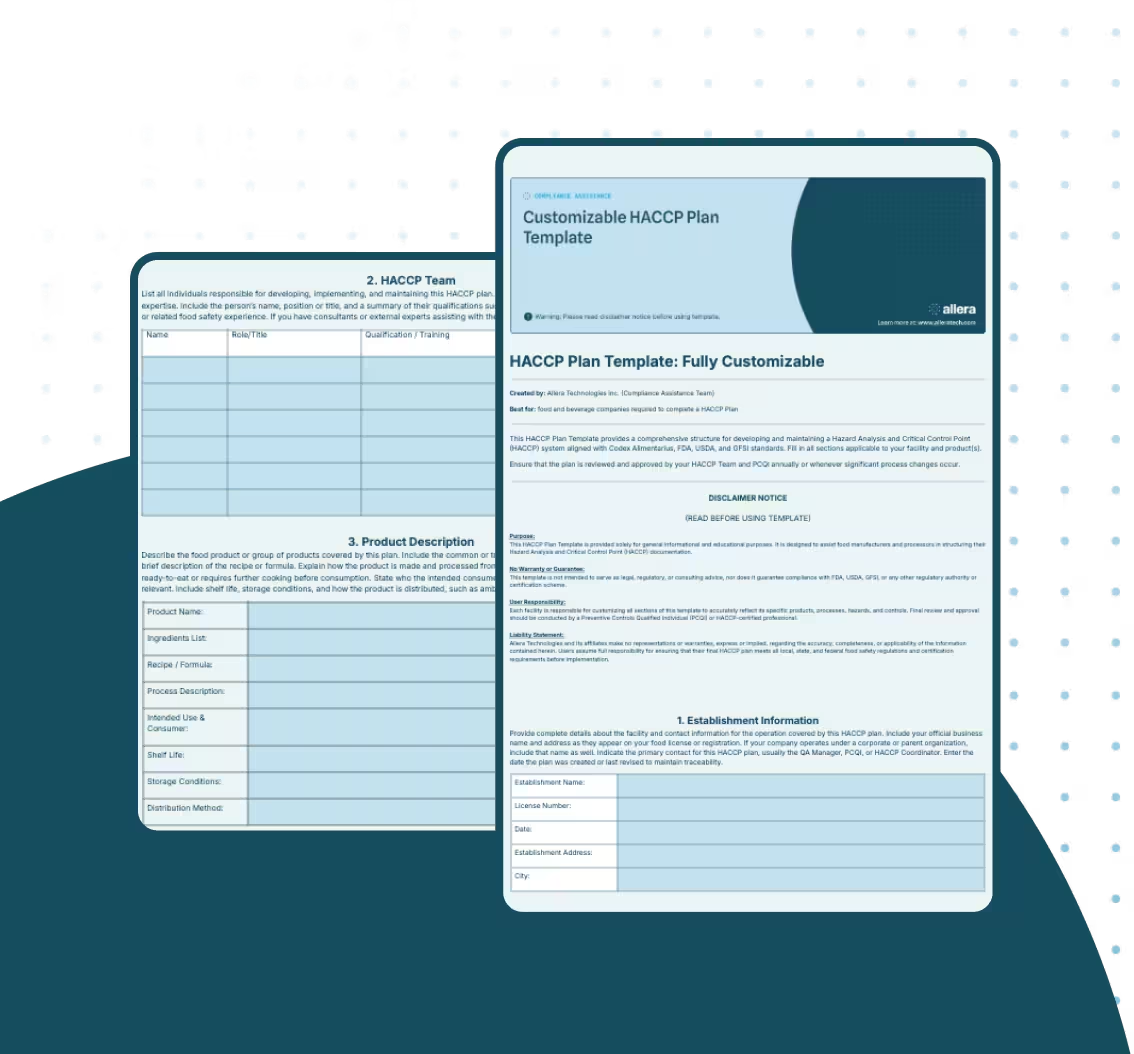
If your product can reasonably be consumed without a kill step applied by the end user, it is an RTE food under FDA jurisdiction. See our food safety plan for RTE manufacturers for how this shapes your FSMA documentation. The FDA revised draft guidance on Listeria control in RTE foods outlines specific expectations.
USDA FSIS Definition (RTE Meat and Poultry)
USDA-FSIS defines RTE meat and poultry as products that have been fully cooked, cured, fermented, dried, or otherwise processed to eliminate pathogens to safe levels, and that are intended to be consumed without further heat treatment.
The key distinction is jurisdictional. FDA regulates most food categories. FSIS regulates meat, poultry, and egg products. If you manufacture RTE deli meats, hot dogs, or cooked sausages, your regulatory framework is FSIS, including mandatory HACCP plans, lethality performance standards, and Listeria Alternative compliance. FSIS manages verification through its RTE sampling programs (Directive 10240.3).
International Definitions: Codex Alimentarius
For manufacturers exporting RTE products, the Codex Alimentarius General Principles of Food Hygiene provide the internationally recognized baseline. Codex defines RTE food as food intended for direct consumption without the need for cooking or other processing. The Codex Alimentarius food safety standards are incorporated by reference in many country-specific import requirements and underpin all GFSI benchmarked certification schemes.
Ready-to-Eat Food Examples
High-Risk RTE Foods
High-risk RTE foods are those most likely to support pathogen growth and most closely associated with recalls and outbreaks.
| Product Category | Primary Hazard | Regulatory Jurisdiction |
|---|---|---|
| Deli meats (ham, turkey, roast beef) | Listeria monocytogenes | USDA-FSIS |
| Hot dogs / frankfurters | Listeria monocytogenes | USDA-FSIS |
| Soft cheeses (Brie, Camembert, queso fresco) | Listeria monocytogenes | FDA |
| Smoked seafood (lox, smoked salmon) | Listeria monocytogenes | FDA |
| Pre-cut salads and raw sprouts | Salmonella, E. coli O157:H7 | FDA |
| Fresh-squeezed (unpasteurized) juices | E. coli, Salmonella | FDA |
| Pâté and meat spreads | Listeria monocytogenes | USDA-FSIS |
| Raw oysters and shellfish | Vibrio, norovirus, hepatitis A | FDA |
Moderate-Risk RTE Foods
Moderate-risk products have some inherent pathogen reduction built into their process. Hard cheeses (aged parmesan, cheddar) have lower water activity than soft cheeses, reducing Listeria growth potential. Fermented meats (salami, pepperoni) rely on acidification and drying. Pasteurized dairy and commercially pasteurized juices have had a validated kill step applied, but post-process contamination remains a concern.
These products still require prerequisite programs, allergen controls, and environmental monitoring. They simply have different hazard profiles than their high-risk counterparts.
RTE Foods That Are Also Acidic or Low-Moisture
Crackers, chips, dried fruits, and confectionery have lower water activity and, in many cases, acidic pH conditions that limit pathogen growth. The inherent risk is lower, but they are still classified as RTE. Allergen preventive controls, environmental monitoring (particularly for Salmonella in dry facilities), and sanitation controls all still apply.
RTE vs. RTC: What's the Difference?
RTC (ready-to-cook) foods require the consumer to apply heat before eating. Raw chicken, frozen burritos marked "cook thoroughly before eating," and marinated raw steaks are RTC products. The consumer's cooking step acts as the final kill step in the food safety chain. In an RTE product, that safety net does not exist.
| Attribute | RTE | RTC |
|---|---|---|
| Consumer kill step required? | No | Yes |
| HACCP design focus | Post-lethality contamination control | Lethality (process validation) |
| Listeria zero-tolerance? | Yes (FDA/FSIS) | No (Listeria in raw meat is expected) |
| Environmental monitoring required? | Yes, where Listeria RLTO | Typically not for Listeria |
| Labeling requirement | None specific to RTE | "Cook thoroughly" advisory required |
If you manufacture both product types in the same facility, strict physical or temporal segregation between RTE and RTC zones is essential.
Why Are RTE Foods the Highest-Risk Category in Food Manufacturing?
The core issue is straightforward: your facility's last validated kill step is the consumer's last line of defense. In an RTC product, even if Listeria or Salmonella contaminates the product after your process, home cooking eliminates it. In an RTE product, there is no safety net.
Every preventive control, every environmental monitoring swab, every corrective action protocol exists to compensate for the absence of a final thermal intervention. When those controls fail, contaminated product reaches consumers without any further pathogen reduction.
RTE foods account for a disproportionate share of listeriosis hospitalizations and deaths in the United States annually. The CDC estimates Listeria causes approximately 1,600 illnesses and 260 deaths each year in the US, and the vast majority of severe cases are linked to RTE deli meats, soft cheeses, and smoked seafood. For a full picture of how testing requirements work in practice, see our guide to essential food safety testing methods.
Pathogen Risks in RTE Foods: Listeria, Salmonella, and E. coli
Listeria monocytogenes: The Primary Threat
Listeria monocytogenes is the organism that defines RTE food safety. Each major organism behaves differently. See our rundown of the Big 6 foodborne pathogens and how to control each one. Three characteristics make it uniquely dangerous in RTE environments.
It is psychrotrophic: it multiplies at refrigeration temperatures (34°F to 40°F / 1°C to 4°C). Chilling your product does not stop Listeria growth the way it stops most other pathogens. It forms persistent biofilms on food-contact surfaces, equipment harborages, floor drains, and wall-floor junctions. Once established in a processing environment, Listeria can persist for months or years without effective environmental control. Both FDA and USDA-FSIS apply a zero-tolerance standard: any Listeria monocytogenes in a finished RTE product is cause for mandatory recall.
In March 2026, a fatal listeriosis outbreak in France was linked to RTE pâté en croûte. Twelve people became ill; two died. The event reinforced what food safety professionals have long understood: Listeria control in RTE facilities requires continuous environmental monitoring, not periodic testing campaigns.
Key resources: FDA guidance on Listeria in RTE foods | FSIS Listeria questions and answers | EFSA scientific insights on Listeria in RTE foods
Salmonella in RTE Foods
Salmonella is the dominant pathogen concern for low-moisture RTE products: nut butters, dried snacks, spices, and cereal products. Water activity below 0.85 aw prevents Salmonella growth, but it does not kill existing contamination. Salmonella can survive for months in dry environments.
Under FSMA, facilities manufacturing low-moisture RTE products where Salmonella is a hazard reasonably likely to occur must implement environmental monitoring programs for Salmonella on non-food-contact surfaces. The CDC foods linked to foodborne illness database provides current outbreak surveillance useful for hazard analysis documentation.
Other Pathogens
Norovirus is a concern in fresh produce, deli, and prepared foods settings. The contamination vector is almost always human: infected food handlers working while symptomatic. Hepatitis A follows similar patterns, with raw shellfish and fresh produce as the most frequently implicated categories. For both viruses, the control strategy shifts from environmental monitoring to personnel hygiene and supplier controls.
FSMA Requirements for RTE Food Manufacturers
FSMA PCHF Rule (21 CFR Part 117) and RTE
The Preventive Controls for Human Food Rule applies to all registered food facilities with applicable exemptions. For RTE manufacturers, the hazard analysis must specifically identify biological hazards associated with the RTE designation, and those hazards require preventive controls.
The four categories of preventive controls most relevant to RTE manufacturing are process controls (validated kill steps with defined critical limits), sanitation controls (written sanitation procedures addressing environmental pathogens and allergens), allergen controls (segregation, changeover verification, label accuracy), and supply-chain controls (for raw material hazards where your process does not provide adequate control). A Preventive Controls Qualified Individual (PCQI) must oversee the food safety plan and sign off on hazard analysis decisions.
Environmental Monitoring Requirements Under FSMA
FSMA requires environmental monitoring programs for RTE manufacturers where Listeria monocytogenes is a hazard reasonably likely to occur. Your EMP must include testing of both food-contact and non-food-contact surfaces, with a written sampling plan defining locations, frequency, and corrective action triggers.
When positive environmental results are found, FSMA requires corrective action, including hold-and-test decisions for product manufactured since the last negative sample. Keeping these records in a food safety management system makes corrective action documentation defensible during FDA inspections.
FSMA 204 Traceability Implications for RTE Products
Several high-risk RTE food categories appear on the FDA's Food Traceability List (FTL) under FSMA Section 204. Soft cheeses, deli meats, RTE salads, and smoked fish are all FTL-listed. Manufacturers, distributors, and retailers must capture and maintain Key Data Elements (KDEs) at each Critical Tracking Event (CTE).
If your RTE product is recalled, FDA expects you to identify all affected lots and their destinations within 24 hours. See our guide to the FSMA 204 traceability rule for the full requirement breakdown.
USDA FSIS Requirements for RTE Meat and Poultry
FSIS has jurisdiction over RTE meat and poultry products. FSIS category definitions include: fully cooked (heat-treated to required log reductions), cured, salt-cured, fermented, and dried products. Lethality performance standards are product-specific: fully cooked RTE poultry must achieve a 7-log reduction of Salmonella.
Post-lethality contamination prevention is where FSIS places its heaviest emphasis. After the lethality step, the product is fully vulnerable to environmental pathogens. FSIS gives establishments three Listeria Alternative options, ranging from antimicrobial application plus environmental monitoring (Alternative 1, least regulatory scrutiny) to environmental monitoring only (Alternative 3, greatest verification testing frequency).
In 2025/2026, FSIS published an updated generic HACCP model for RTE fermented, salt-cured, and dried products. The FSIS RTE fermented, salt-cured, and dried products guidance (GD-2023-0002) provides the current framework for salami, pepperoni, prosciutto, and similar products. For building the underlying HACCP plan that supports FSIS compliance, Allera's HACCP guide covers the full seven-principle structure.
RTE Food Safety Across Global Certification Schemes
GFSI-benchmarked schemes all have RTE-specific requirements, yet they appear in none of the top search results for this topic. If your facility operates under any of these schemes, here is what you need to know.
SQF (Safe Quality Food) and RTE
SQF Code Edition 10 addresses RTE production through Element 11 (Food Safety Fundamentals), which establishes prerequisite program requirements for RTE production zones. SQF auditors focus on zone-based environmental monitoring sampling plans, trending analysis, and whether corrective actions are documented and closed. The SQF Code (Edition 10) is the authoritative reference. For a full breakdown, see SQF certification requirements.
BRCGS Global Standard for Food Safety and RTE
BRCGS amplifies several clauses for RTE facilities. Clause 4.3 (Internal Audits) and Clause 4.9 (Corrective Action) require documented, closed-loop systems for any non-conformance, including environmental positives. Clause 7.2 specifically requires a written Listeria risk assessment for RTE production areas.
In February 2026, BRCGS published updated Listeria guidance specifically for RTE facilities. If your facility holds BRCGS certification and produces RTE products, reviewing this guidance against your current program is a near-term priority. See the BRCGS Global Standard for Food Safety for current scheme documentation.
FSSC 22000 (Version 6) and RTE
FSSC 22000 Version 6 introduced additional requirements under Category C (Prerequisite Programs) for high-care and high-risk facilities. The scheme distinguishes between high-care zones (elevated hygiene for RTE products where Listeria growth is not expected) and high-risk zones (where Listeria growth is possible and physical segregation is required).
High-risk zone facilities require dedicated entrances with airlock procedures, segregated equipment and utensils, and a zone-based environmental monitoring program. The FSSC 22000 Version 6 scheme documents contain the full additional requirements.
ISO 22000 and RTE
ISO 22000 uses Operational Prerequisite Programs (oPRPs) and HACCP Critical Control Points to structure food safety controls. For RTE production, the oPRP vs. CCP designation matters significantly. Most RTE sanitation controls and environmental monitoring programs sit at the oPRP level; validated kill steps sit at the CCP level. The ISO 22000 food safety management standard provides the framework for making these designations defensible.
How Certification Schemes Compare on RTE Requirements
| Scheme | RTE-Specific Clause | Key Differentiator |
|---|---|---|
| SQF Edition 10 | Element 11 (Food Safety Fundamentals) | Zone-based environmental monitoring sampling plan |
| BRCGS Issue 9 | Clause 7.2 (Listeria Risk Assessment) | Written Listeria risk assessment required for RTE areas |
| FSSC 22000 v6 | Category C Additional Requirements | High-care vs. high-risk zone distinction; physical segregation |
| ISO 22000:2018 | Clause 8 (oPRP vs. CCP) | oPRPs govern sanitation; CCPs govern validated kill steps |
2026 EU Listeria Regulation Update: What RTE Manufacturers Must Know
EU Regulation 2073/2005 on microbiological criteria for foodstuffs has been revised to significantly expand Listeria obligations for food business operators across the supply chain. The July 2026 deadline applies to manufacturers, distributors, retailers, and food service operators handling RTE products in or exported to the EU.
What changed: the previous framework placed primary Listeria responsibility on the manufacturer. The revised regulation extends that responsibility to operators downstream, including retailers and distributors who extend shelf life or repackage products. For manufacturers, the key new obligation is shelf-life validation. You must now demonstrate, with documented evidence, that your product meets Listeria criteria throughout its entire declared shelf life.
In practice, this means challenge testing, predictive growth modelling, or validated shelf-life studies demonstrating that Listeria monocytogenes cannot exceed 100 CFU/g at end of shelf life under reasonably foreseeable conditions. Any EU or UK manufacturer of RTE products, plus non-EU manufacturers who export RTE products into the EU market, is affected.
EFSA's scientific risk assessment identified several RTE categories as higher concern, including chilled pre-packed meats, soft cheeses, and smoked fish. The EFSA scientific insights on Listeria in RTE foods provide the scientific basis for the regulatory changes.
Building an RTE Food Safety Program: Key Components
Prerequisite Programs (PRPs) for RTE Facilities
Prerequisite programs are the foundation of your RTE food safety system. The core PRPs for RTE facilities are sanitation (written cleaning and disinfection procedures with validated contact times and frequencies, verified through environmental swabbing and ATP testing), personnel hygiene (hand-washing procedures, glove use policies, health screening and illness exclusion, gowning requirements for RTE zones), environmental controls (positive air pressure in RTE processing areas, dedicated ventilation, drains designed to prevent backflow, physical barriers between raw and RTE zones), and pest control (exclusion programs, documented inspection records).
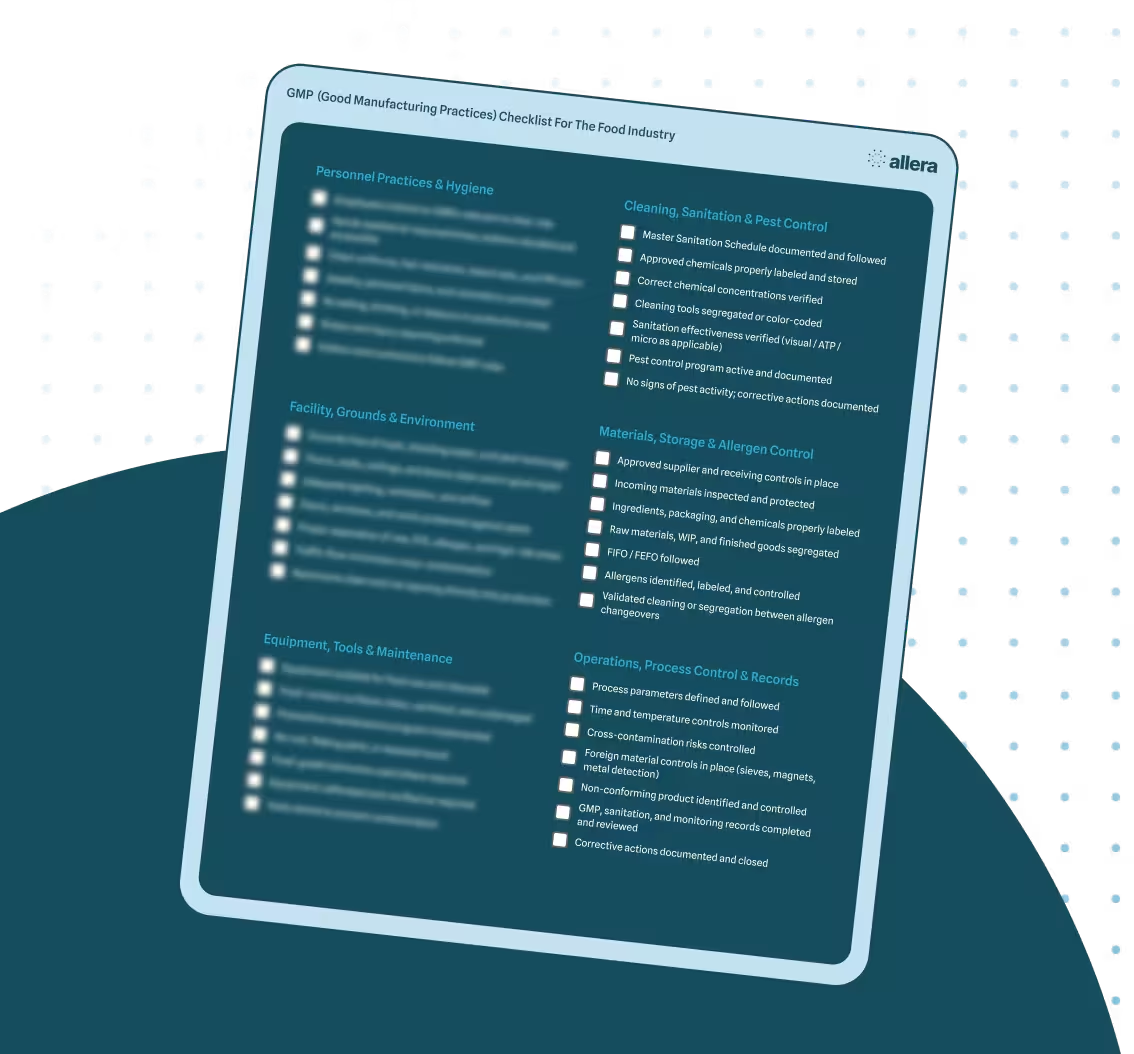
For the full framework of what Good Manufacturing Practices (GMP) require in an RTE setting, the GMP audit checklist is a useful starting point.
Hazard Analysis and Critical Control Points (HACCP) for RTE
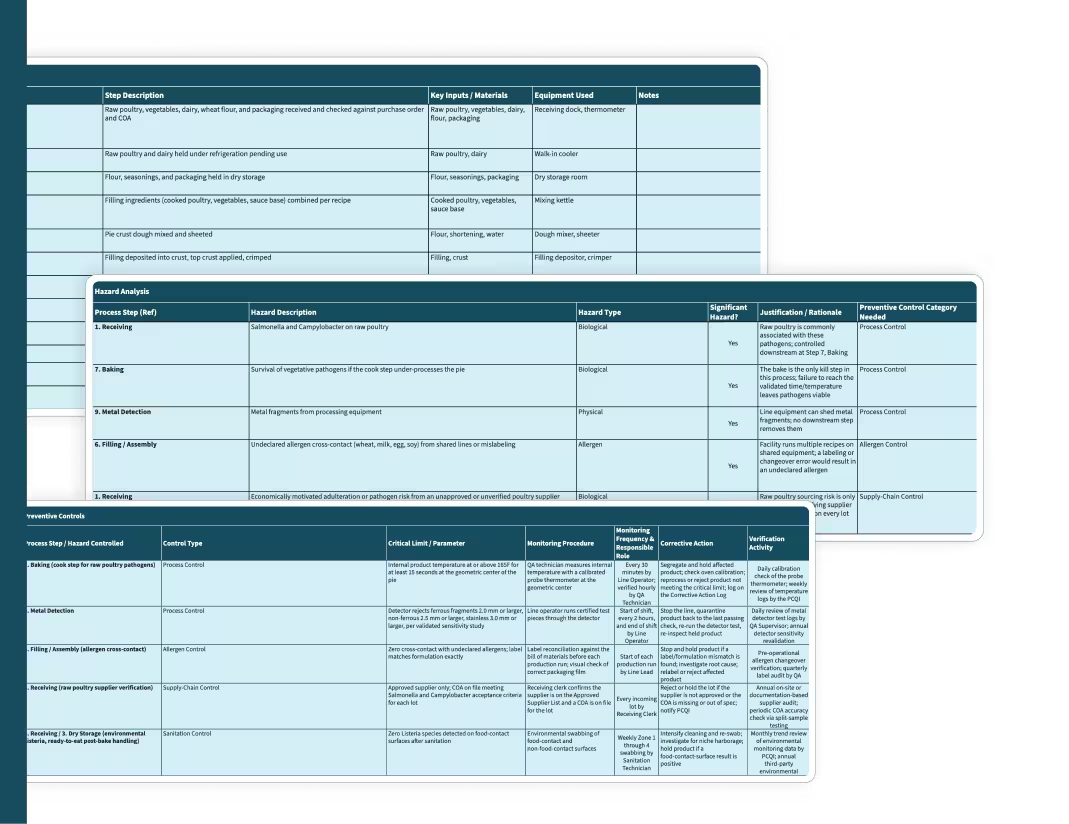
Your HACCP plan for RTE products must specifically address the biological hazards associated with the RTE designation. The hazard analysis should document why each identified hazard is or is not reasonably likely to occur, and where CCPs are needed to control hazards your PRPs cannot adequately manage.
For most RTE processes, CCPs cluster around lethality steps (cooking temperature and time), post-lethality cooling (to prevent Clostridium perfringens growth in cooked meats), and post-lethality antimicrobial interventions in FSIS-regulated facilities. Following the seven HACCP principles and documenting critical control point examples specific to your process creates the audit trail regulators expect.
Environmental Monitoring Program (EMP) for RTE Facilities
An effective EMP is designed around a zone-based sampling plan. Zone 1 covers food-contact surfaces. Zone 2 covers non-food-contact surfaces adjacent to Zone 1 (equipment frames, overhead structures). Zone 3 covers more distant non-food-contact surfaces (walls, floors, drains). Zone 4 covers areas outside the processing environment.
Testing typically uses two tiers: Listeria species as an indicator organism (tested more frequently across all zones) and Listeria monocytogenes as the target pathogen (tested at trigger points or in high-priority zones). Trend analysis turns your EMP from a compliance exercise into a pathogen control tool. Clusters and patterns in positive results reveal harborage points before you have a product contamination event.
Allergen Preventive Controls and Corrective Action
Allergen cross-contact is a significant risk in RTE facilities producing multiple products on shared equipment. Your preventive controls must include allergen changeover verification, label accuracy verification, and allergen risk assessment for scheduling. For auditing these controls, food safety audit preparation covers what to expect.
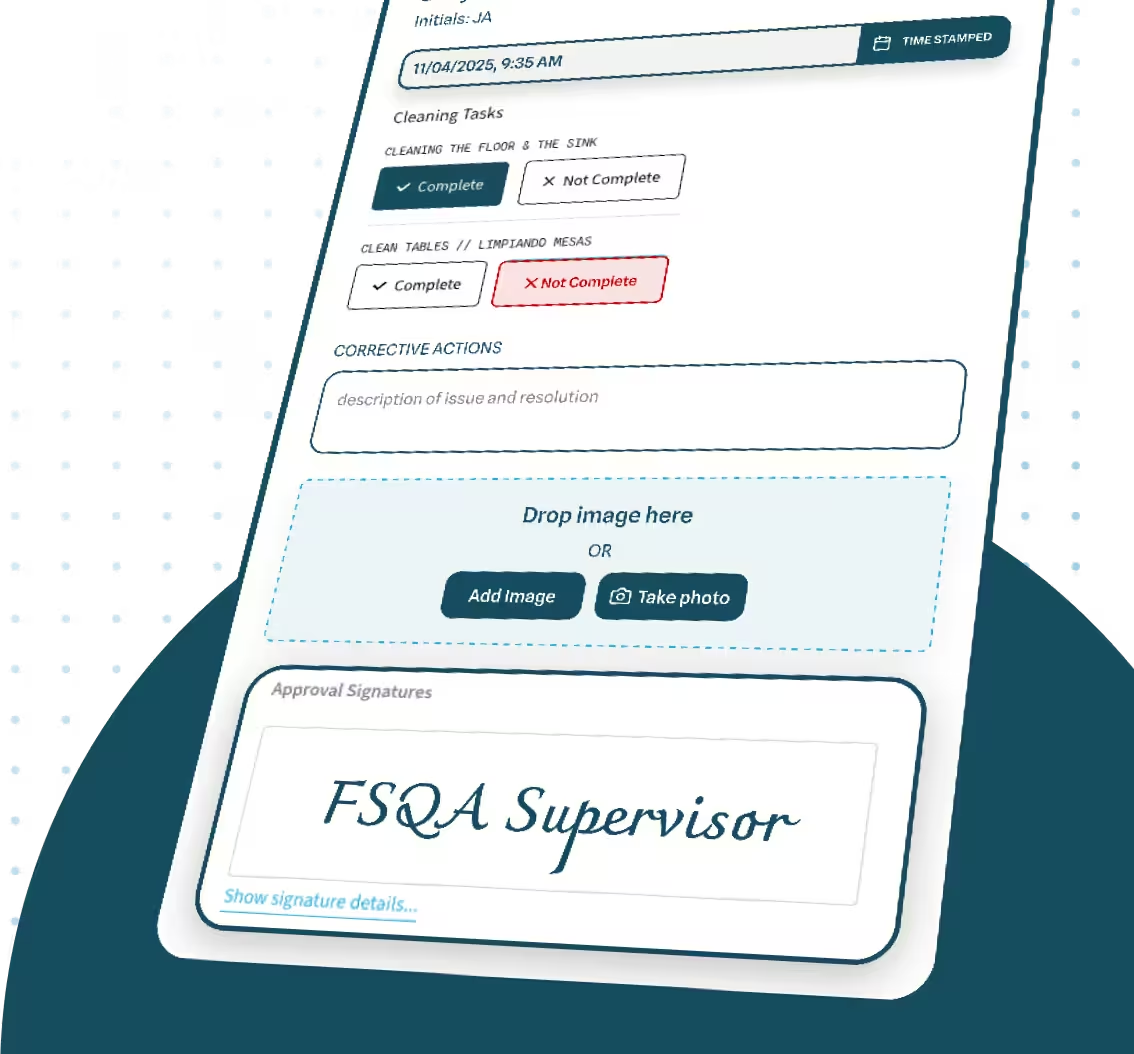
When you get a positive Listeria environmental result, your documented corrective action procedure should specify: immediate hold of product produced since the last negative environmental sample, intensified environmental sampling to identify the harborage source, root cause analysis with documented findings, sanitation corrective actions, and verification sampling before resuming production. Your food traceability requirements documentation makes hold-and-test decisions defensible. The FSQA guide covers the broader program management framework.
See How Allera Helps RTE Manufacturers Manage Their Food Safety Programs
From HACCP plan management to environmental monitoring records to corrective action workflows, Allera gives RTE food safety teams one place to run their entire program. See How It Works
RTE Food Safe Handling and Storage (For Food Service and Retail)
Temperature Control for RTE Foods
The FDA Food Code establishes temperature requirements across food service, retail, and institutional settings. Cold-held RTE foods must be maintained at 41°F (5°C) or below. Hot-held RTE foods must be kept at 135°F (57°C) or above. The danger zone (41°F to 135°F) is where bacterial growth accelerates.
| Product Category | Cold Hold | Hot Hold | Time Limit in Danger Zone |
|---|---|---|---|
| Deli meats, soft cheeses, smoked fish | 41°F (5°C) or below | N/A | 4 hours maximum |
| Cooked meats, hot prepared foods | N/A | 135°F (57°C) or above | 4 hours maximum |
| Cut melons, leafy greens, tomatoes | 41°F (5°C) or below | N/A | 4 hours maximum |
Time/temperature abuse (holding RTE foods in the danger zone too long) is the most common contributing factor in RTE food illness in retail and food service. Temperature monitoring logs and calibrated thermometers are the minimum controls.
Preventing Cross-Contamination of RTE Foods
Store RTE foods on the top shelves of refrigerators, above raw proteins. Use separate, color-coded cutting boards for RTE products and raw proteins. Handle RTE products with single-use gloves or deli paper, not bare hands. Clean and sanitize surfaces, slicers, and utensils between RTE and raw product use. Enforce strict illness exclusion policies: food handlers showing symptoms of gastrointestinal illness should not work with RTE products. A 20-second handwashing procedure after any bare-hand contact with raw proteins is the most important single control.
Ready to Modernize Your RTE Food Safety Program?
Allera is built for FSQA teams at food manufacturers, giving you HACCP plan management, corrective action tracking, document control, and supplier management in one platform. Book a Free Demo | Explore Allera
FAQs
Is lettuce a RTE food?
Yes, lettuce is considered a ready-to-eat (RTE) food.
Especially pre-washed, bagged lettuce → fully RTE
Whole lettuce → also RTE but should be washed before eating
Lettuce is classified as a high-risk RTE food because it is often eaten raw and can carry contaminants if not properly handled.
What is the 5 4 3 2 1 grocery rule?
The 5-4-3-2-1 grocery rule is a simple way to build a balanced grocery list:
5 vegetables
4 fruits
3 protein sources
2 grains
1 “fun” item (snack or treat)
It helps ensure variety and balanced nutrition while shopping.
What is an RTE meal?
An RTE meal is a fully prepared meal that can be eaten immediately or with minimal effort.
Microwaveable meals
Pre-packaged lunch bowls
Airline or hospital meals
Meal prep containers
Grab-and-go meals from grocery stores
What are some RTE foods?
Some common ready-to-eat (RTE) foods include:
Packaged salads and coleslaw
Sliced fruits or fruit cups
Cooked meats and poultry
Ready-made meals (microwavable or cold)
Nuts and snack mixes
Hummus and dips
Hard-boiled eggs
Sushi
What is RTE for food?
RTE stands for Ready-to-Eat.
Do not require cooking
Can be eaten as-is
May only need minimal preparation (like reheating or opening packaging)
RTE foods must be handled safely because there is no “kill step” (like cooking) before consumption.
Is pizza a RTE food?
Pizza can be considered a ready-to-eat (RTE) food after it has been fully cooked.
Fresh, hot pizza → RTE
Cold leftover pizza → still RTE
Frozen, uncooked pizza → not RTE (requires cooking)
What are examples of RTE foods?
Ready-to-eat (RTE) foods are foods that can be consumed without further cooking or processing.
Deli meats (ham, turkey, salami)
Pre-washed salads and leafy greens
Fresh fruits (apples, bananas, berries)
Cheese and dairy products (yogurt, soft cheeses)
Sandwiches and wraps
Cooked leftovers
Smoked fish (like salmon)
Bakery items (bread, pastries)
What are high risk RTE foods?
High-risk RTE foods are foods that support bacterial growth and are not cooked before eating.
Deli meats and cold cuts
Soft cheeses (like brie or feta)
Smoked seafood
Pre-cut fruits and vegetables
Leafy greens (spinach, lettuce)
Cooked rice and pasta
Prepared salads (chicken, tuna, egg salad)
These foods are high risk because they can carry pathogens like Listeria monocytogenes if not properly handled.
What are the disadvantages of RTE food?
Some disadvantages of ready-to-eat (RTE) foods include:
Higher risk of foodborne illness (no cooking step to kill bacteria)
Short shelf life for fresh items
More expensive than raw ingredients
Often higher in preservatives, sodium, or additives
Greater reliance on proper storage and handling


.avif)
.avif)
.avif)
.avif)
%20(1).avif)
.avif)
.avif)

%20(1).png)

.avif)



.avif)