.avif)



Receiving Inspection for Food Manufacturers


Receiving is the last point at which a supplier's problem is still their problem. Once a pallet is accepted, signed for, and staged, it belongs to you, along with whatever came with it.
A receiving inspection is the check that decides which side of that line a load falls on. Most published guidance on the subject is written for aerospace and discrete parts manufacturing, where the concerns are dimensional tolerance and certificates of conformance. Food receiving asks different questions: what temperature was it at, what does the certificate of analysis say, is the seal intact, and does the allergen profile match what you were expecting.
What is receiving inspection?
Receiving inspection is the documented verification of incoming materials against your specifications and purchase order before they are accepted into your facility, covering the condition of the load, the product itself, and the accompanying documentation.
In food manufacturing it is also called incoming inspection or goods receipt inspection. The terms are interchangeable. What is not interchangeable is the check itself and a signature on a delivery note, though the two are confused often enough to be worth stating plainly.
Treating receiving as a clerical step is the most common mistake. The receiver counts pallets, signs the paperwork, and the load goes to staging. Everything that check would have caught is now inside your facility.
Receiving is a supplier verification activity, not just a delivery
Under FSMA, if you have identified a hazard requiring a supply-chain-applied control, receiving checks are part of how you verify that your supplier is controlling it. That reframes the activity entirely.
21 CFR 117 Subpart G sets out the supply-chain program. You approve suppliers before receiving material from them, determine appropriate verification activities, and conduct those activities with records to prove it. FDA's guidance on supply-chain program requirements walks through how the pieces fit together.
The good manufacturing practice requirements in 21 CFR 117 Subpart B add a second layer, covering how raw materials and ingredients must be handled and protected on receipt.
One practical consequence worth deciding in advance: what happens when a truck arrives from a supplier who is not on your approved list. It happens more than people expect, usually because purchasing sourced under pressure. The receiving procedure should say who is called and what the default answer is. Our guide to building a supplier approval program covers the approval side, and imported ingredients bring FSVP requirements with them.
What to check on every inbound load
This is the core of the procedure. Work it in order, because rejecting a load is easier before it is unloaded than after.
| Check | Why it matters | Accept criteria | What to record |
|---|---|---|---|
| Seal intact and matching the BOL | Confirms the load has not been opened in transit | Seal number matches paperwork, seal undamaged | Seal number, condition, photo |
| Trailer condition | Contamination and pest risk from the carrier | Clean, dry, odour-free, no pest evidence, no damage | Pass or fail with observations |
| Previous load compatibility | Cross-contact risk from prior cargo | No incompatible prior cargo, particularly allergens or non-food chemicals | Prior load if declared |
| Refrigeration running on arrival | Temperature abuse in transit | Unit running, set point correct | Set point and unit status |
| Product temperature | The primary food safety check on chilled and frozen loads | Within specification for the product class | Actual readings, locations sampled, probe ID |
| Product and packaging condition | Damage creates contamination routes | No damage, leakage, infestation, or foreign odour | Condition, count of damaged units |
| Documentation match | Confirms you received what you ordered | PO, BOL, COA, allergen statement all present and consistent | Document numbers, discrepancies |
| Label and allergen verification | Wrong product or wrong allergen profile entering the plant | Product identity and declared allergens match the specification | Product name, lot, allergen check result |
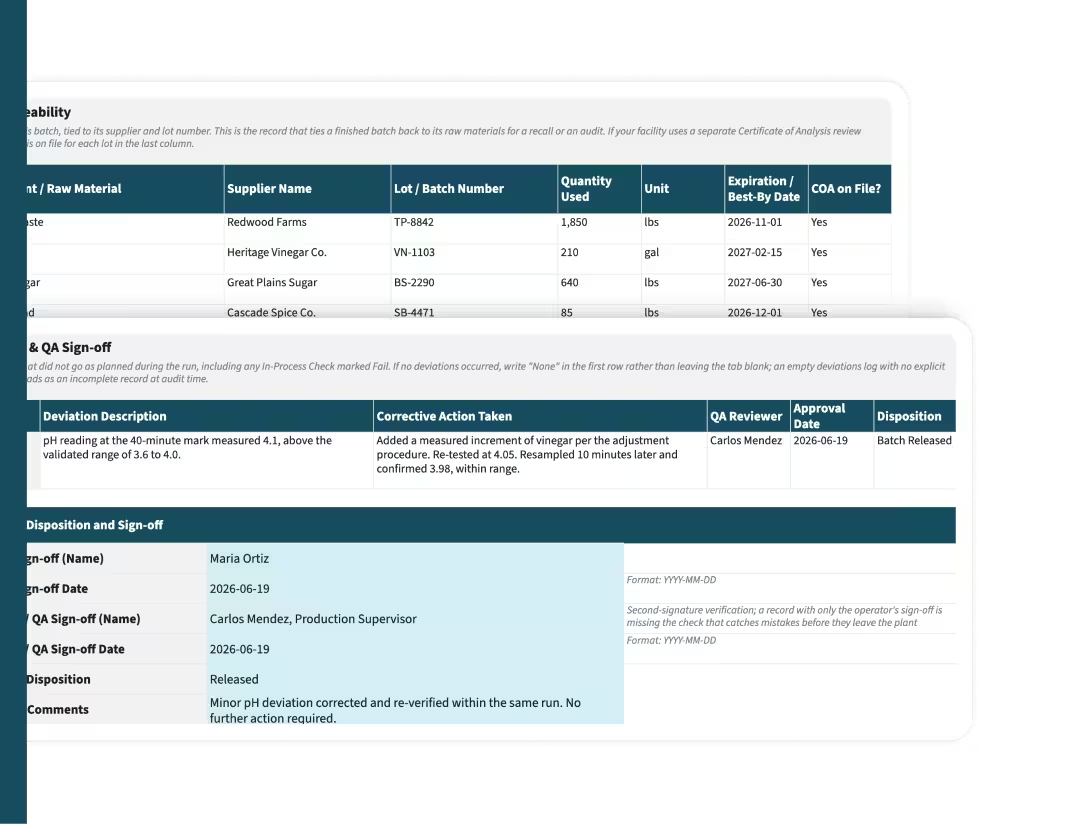
| Lot capture | Foundation of every future traceback | Supplier lot recorded accurately | Supplier lot code, quantity |
Temperature verification
This is the check that most generic receiving guidance omits entirely, and the one that matters most on a refrigerated or frozen load.
Take pulp temperature rather than air temperature wherever the product allows it. Air temperature in a trailer tells you what the unit is doing now. Pulp temperature tells you what the product has actually experienced. For palletised product, sample from more than one location, including at least one pallet near the door, since that is where abuse shows up first.
Use a calibrated probe and record which one. A temperature reading from an instrument you cannot demonstrate was accurate is not evidence. Our guide to thermometer calibration logs covers the calibration side.
Decide in advance what a single out-of-specification pallet means. Does it condemn the load, or is the affected pallet segregated while the rest is accepted? Both are defensible; making the decision in the moment under pressure from a waiting driver is not.
TCS foods require time and temperature control specifically because their composition supports pathogen growth, which is why the tolerance on these loads is tighter than on ambient goods.
Allergen and label verification
Receiving is where an undeclared allergen enters your facility, and once it is in staging it is very hard to catch.
Verify that the product delivered is the product ordered, at the specification you expect, with an allergen profile matching what your system has recorded. A supplier who reformulates without notifying you creates exactly this failure, and the delivery is where it becomes visible.
Your allergen control program should specify what the receiving check covers, including whether an allergen statement is required per delivery or held on file.
Receiving docks are one of the worst connectivity environments in a plant. Concrete, steel, and distance from the nearest access point combine to drop signal at exactly the point where someone is trying to complete a form. Allera's Digital Forms include offline autosave, so in-progress entries save locally and recover automatically rather than being lost when the connection drops mid-check.
Matching the COA to what's actually on the truck
A certificate of analysis is a supplier's statement about a specific lot. Its usefulness depends entirely on whether the lot it describes is the lot in front of you.
The step most commonly skipped is matching the COA lot number to the physical lot on the pallets. A COA that arrives with the load, references a different lot, and is filed anyway provides no assurance about anything. This happens routinely when a supplier ships from a different lot than planned and sends the paperwork they had ready.
Three situations to have answers for in advance:
The COA is missing. Does the load go on hold, or is it accepted pending the document arriving? Whatever you decide, the answer should be consistent rather than dependent on who is at the dock.
The COA references a different lot. Treat this as a discrepancy, not a clerical error. Request the correct certificate before release.
The COA shows a result outside specification. Someone has sent you a certificate proving the material does not meet spec. That is a rejection, and it is worth understanding how it got shipped.
COA review is itself a supplier verification activity under the supply-chain program, so recording that you reviewed it, and what you found, does double duty. Our guide to the certificate of analysis covers what a good one contains.
Accept, reject, or hold?
Every receiving check ends in a decision, and the decision needs an owner.
| Outcome | When | What happens |
|---|---|---|
| Accept | All checks pass | Material released to storage, records filed |
| Conditional accept | Minor issue not affecting safety, noted for supplier feedback | Material released, note routed to supplier performance record |
| Hold pending review | Ambiguous result, missing documentation, borderline temperature | Material physically segregated and labelled, QA decision required before release |
| Reject | Safety-affecting failure, seal breach, out-of-spec temperature, wrong product | Material refused, not unloaded where possible, documented and photographed |
Who can reject. The receiver should not be making this call alone. They are under time pressure from a driver and rarely have the authority to absorb the commercial consequence. Name the role that decides, name a deputy for when that person is unavailable, and make sure the receiver knows both.
Document the rejection properly. Photographs of the seal, the trailer, the temperature reading, and the affected product. The BOL number and carrier. The reason for rejection in specific terms. Rejections become supplier disputes often enough that the documentation is worth doing well the first time.
Partial rejections create a segregation problem. If half the load is acceptable and half is not, the rejected portion has to be physically separated and clearly marked before anything moves to storage. Product that gets mixed back into good stock during unloading is very difficult to recover.
What happens after a failed receiving check
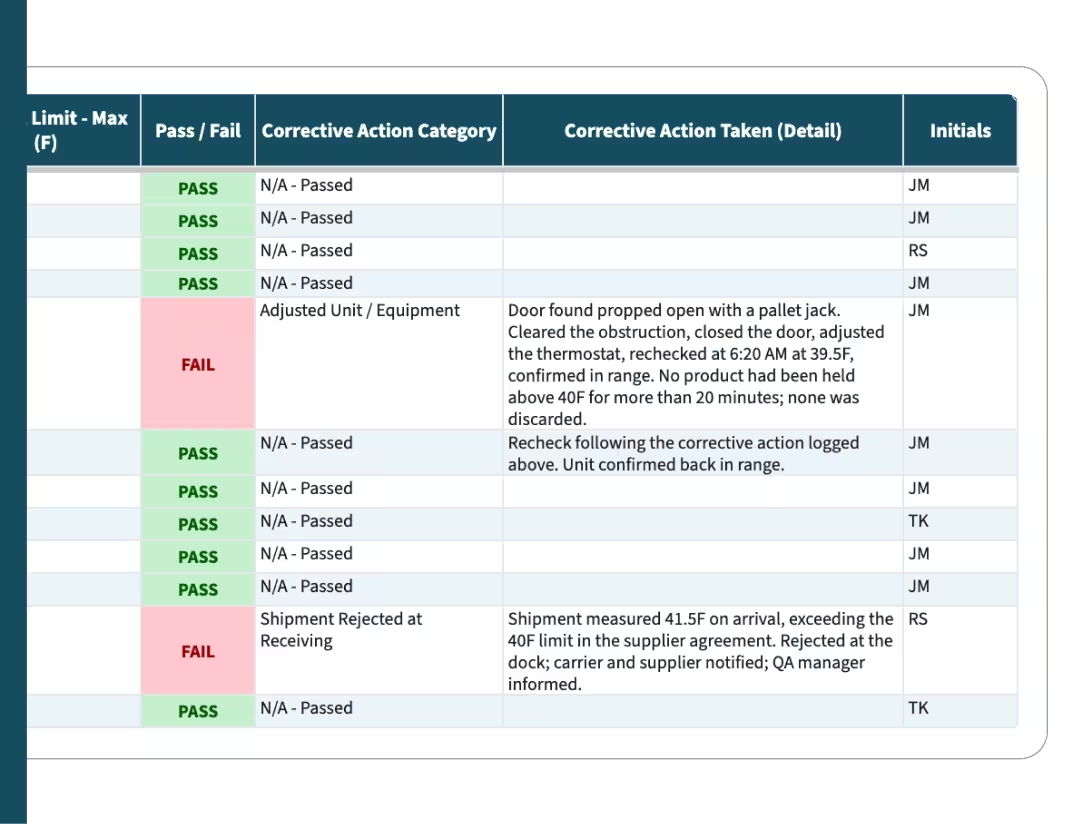
A failed check produces three outputs, and most facilities only generate the first one.
The immediate corrective action deals with the material in front of you. Your corrective action plan process should cover the containment and disposition.
The supplier record captures that this supplier failed a check, feeding into their performance history and eventually their supplier scorecard. A rejection that never reaches the supplier's record teaches nobody anything.
The trend is the output that gets missed. Three temperature failures from one carrier over six months is a carrier problem, not three unrelated incidents, and you will only see it if the individual events were recorded consistently enough to aggregate.
Where a supplier failure warrants formal action, a supplier corrective action request puts the obligation on them to investigate and respond, with a closure you can verify.
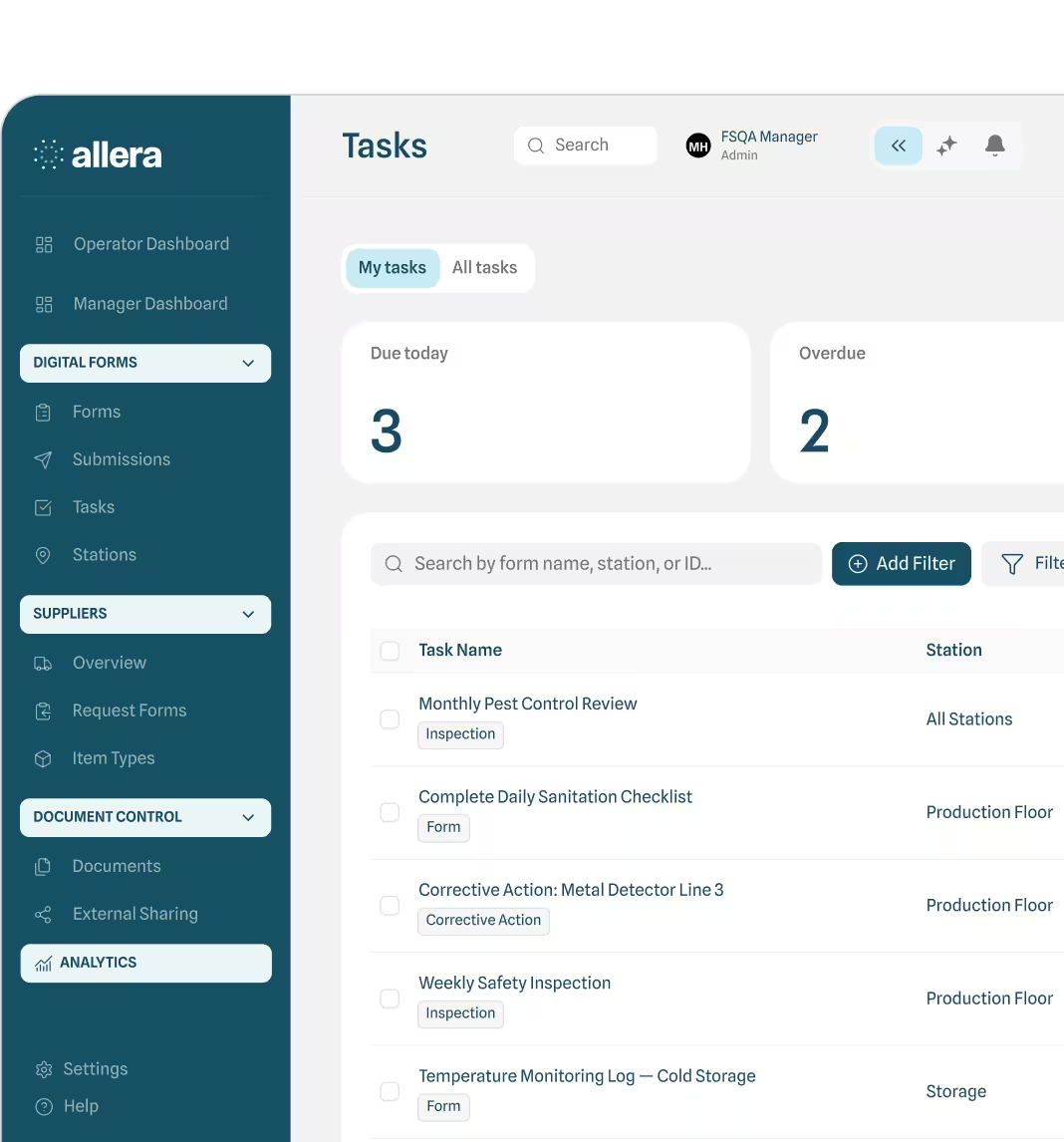
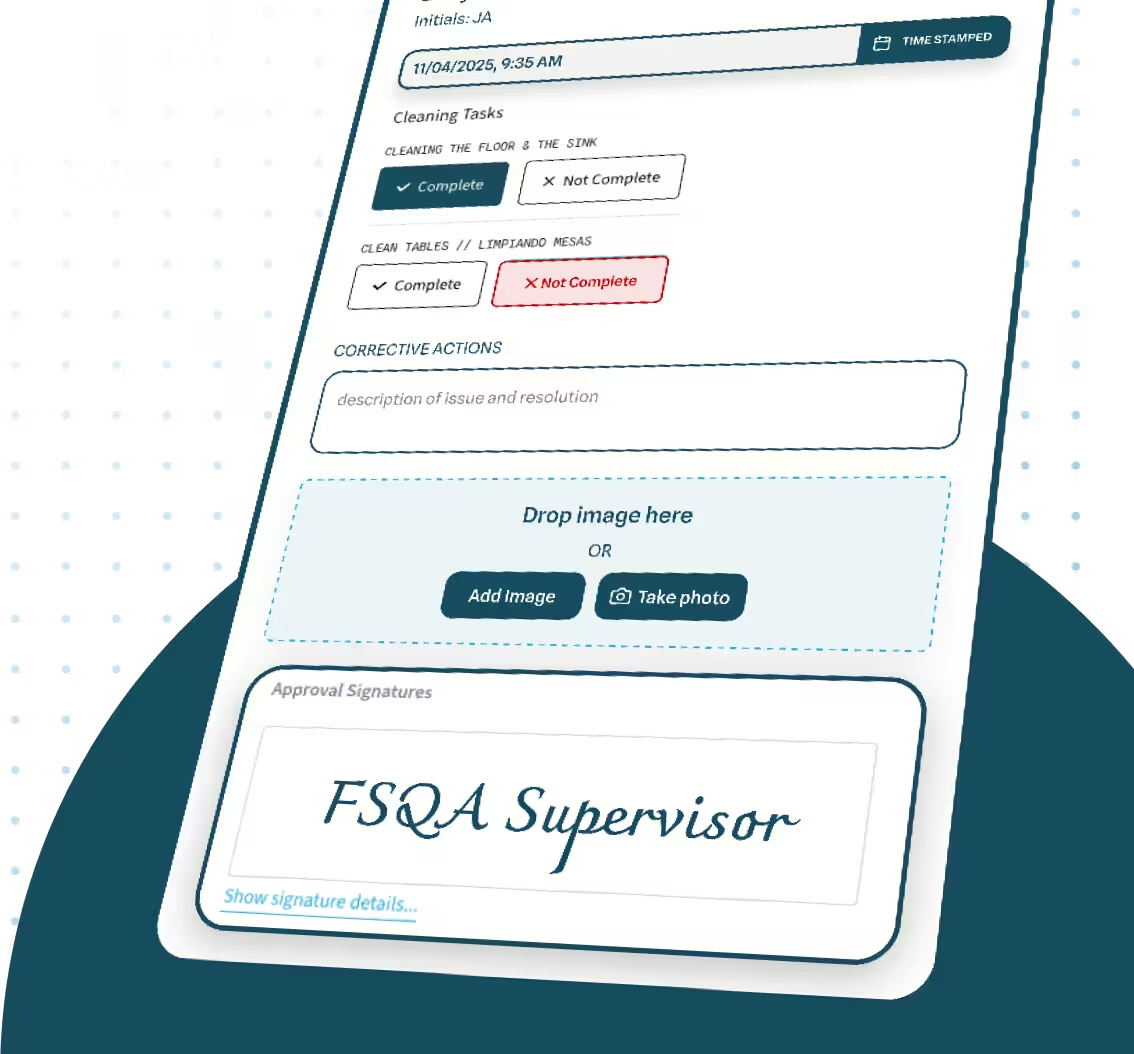
Digital Forms handle the routing part of this well. A failure rule on the receiving check flags the submission and automatically creates a Corrective Action with a named owner, so an out-of-spec temperature becomes a tracked item rather than a note on a clipboard that surfaces during an audit six weeks later.
Lot capture and why receiving decides your traceback
Everything your traceability system can do downstream depends on what was captured at the dock.
You need the supplier's lot code recorded accurately, tied to the quantity received, and linked to whatever internal lot or identifier you assign. That chain, supplier lot in and your lot out, is what makes a backward trace possible. Break it at receiving and no amount of downstream diligence recovers it.
For products on the Food Traceability List, FSMA 204 adds specific obligations at receiving, with key data elements that must be recorded and a traceability lot code that has to be preserved. FDA's final rule and the Food Traceability List set out which foods are covered and what must be captured.
The practical failure mode is transcription. Someone reads a lot code off a case in poor light and types it into a form, and one character is wrong. That lot is now unfindable. Selecting a lot from a list beats typing it, which is one reason lot data from a connected ERP populating a form dropdown removes a whole category of error.
Capturing the supplier date at receiving also drives rotation downstream. Without it, FEFO becomes guesswork. Our guide to lot codes covers how codes are structured and read.
What the schemes expect at receiving
| Scheme | Receiving expectation | What an auditor asks to see |
|---|---|---|
| SQF Edition 9 | Incoming goods inspection against specification, approved supplier verification, storage on receipt | Receiving records, approved supplier list, temperature records |
| BRCGS Issue 9 | Raw material acceptance procedures based on risk, supplier approval, vehicle inspection | Acceptance criteria, completed checks, rejection records |
| FSSC 22000 v6 | Control of externally provided materials, verification on receipt | Verification records, traceability from receipt |
| FSMA 21 CFR 117 | Supply-chain verification activities and GMP handling of raw materials | Verification records meeting the content requirements |
The primary references are the SQF Food Safety Code for Food Manufacturing (Edition 9), the BRCGS Global Standard Food Safety (Issue 9), and the FSSC 22000 Scheme Version 6.
Records themselves have to meet the content requirements in 21 CFR 117.305: actual values observed, plant identification, date and time, the signature or initials of whoever performed the check, and product identity and lot code where relevant. A receiving log with ticks and no values does not satisfy that.
More detail on scheme preparation is in our SQF audit checklist, and GMP in the food industry covers the surrounding practices.
Making receiving checks actually happen on every load
The gap between a receiving procedure and receiving reality is usually about friction. The check is not skipped because anyone decided to skip it. It is skipped because a driver is waiting, the clipboard is somewhere else, and the dock has no signal.
Paper receiving logs fail in a recognisable pattern. The log lives on the dock and gets rained on. Entries are completed at the end of the shift from memory. Handwriting is illegible six months later when it matters. Nobody reviews the log until an auditor asks for it, at which point the gaps are permanent.
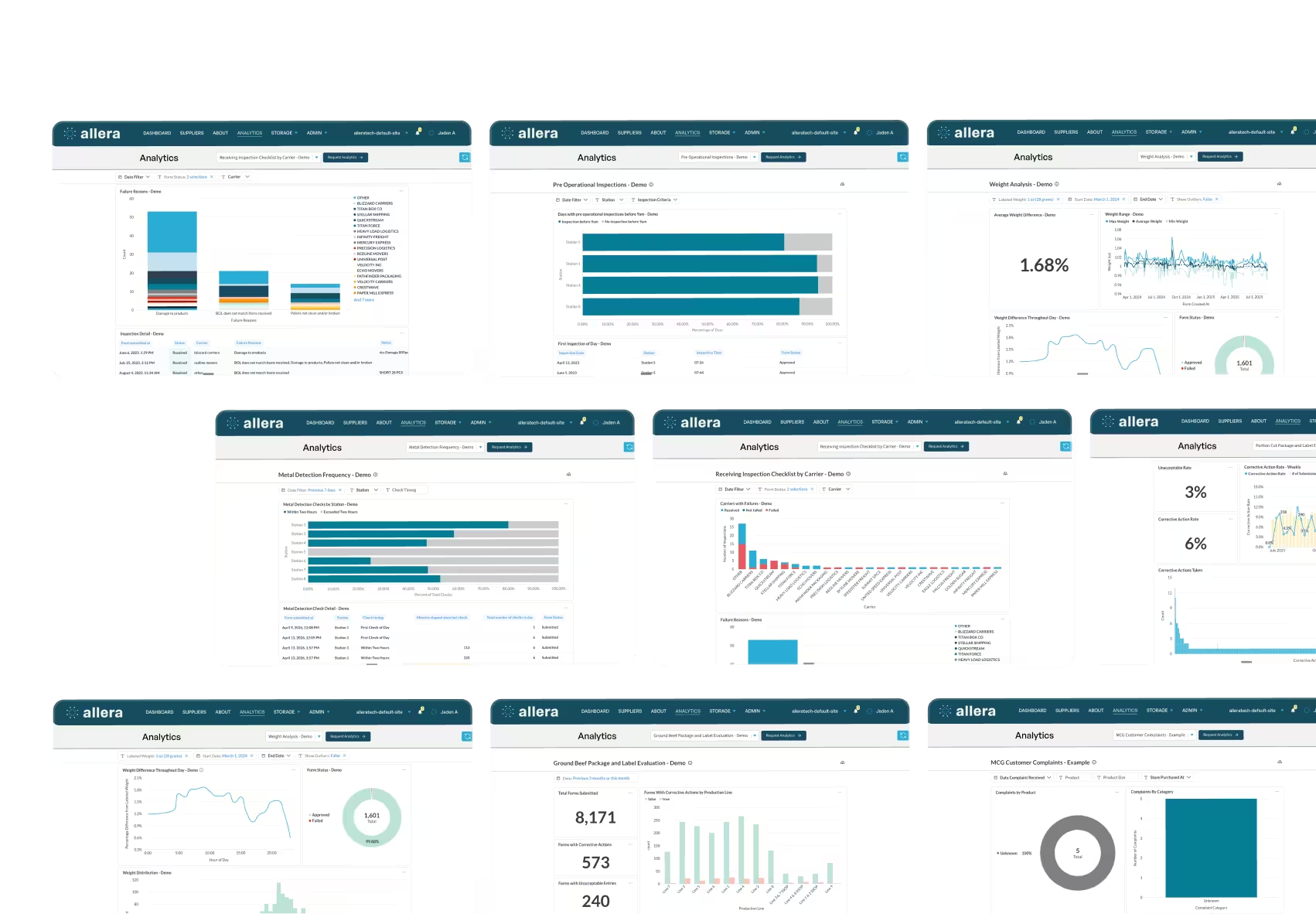
What actually helps is narrow. Offline capture, so the form works where the signal does not. Calculated fields that flag an out-of-tolerance temperature at the moment it is entered rather than at review. Image capture for seals, damage, and lot codes, because a photograph settles questions a description cannot. Records searchable by supplier and by lot, so the trend and the trace are both available without archaeology.
Allera's Digital Forms cover that pattern, and receiving records sit alongside the supplier documentation collected through Supplier Management, so the COA on file and the check at the dock live in the same system.
Fix the dock and everything downstream gets easier
Most traceability problems, most supplier disputes, and a surprising share of quality incidents trace back to something that was or was not captured at receiving. The dock is where the cheapest version of every one of those problems exists.
If your receiving process needs work, start with two things. Make the temperature check specific, with a defined limit, a defined sampling method, and a calibrated probe recorded by ID. And make lot capture accurate, because everything your traceability system can do later is bounded by what was written down when the truck arrived.
To see how offline capture, automatic flagging, and searchable records work together at the dock, take a look at Allera's food quality management software.
FAQs
How long do you keep receiving records?
Receiving records are subject to the records requirements in 21 CFR 117 Subpart F, with retention periods depending on record type and product category. As a practical rule, keep them at least as long as the shelf life of the finished product they contributed to, plus a margin.
Who can reject a delivery?
Whoever your procedure names, and it should not default to the receiver alone. Define the role with rejection authority, name a deputy for absences, and make sure dock staff know how to reach both. Rejection has commercial consequences, and the person making the call should be positioned to accept them.
What documents should you check when receiving food ingredients?
The purchase order, the bill of lading, the certificate of analysis matched to the physical lot on the pallets, an allergen statement where your specification requires one, and any certification documents relevant to a claim on the material such as organic or kosher status.
What temperature should refrigerated deliveries be on arrival?
That depends on the product and your specification rather than a single universal figure. Set the acceptance limit in your raw material specification, take pulp temperature rather than air temperature where the product allows, sample more than one location including near the trailer door, and use a calibrated probe with the probe identity recorded.
What is the purpose of receiving inspection in food manufacturing?
It prevents non-conforming material entering your process, provides evidence that supplier verification activities are being performed, and captures the lot information every future traceback depends on. It is the last point at which a supplier problem can be returned rather than absorbed.
How to do a material receiving inspection?
Work in order, because rejecting a load is easier before it is unloaded:
- Check the seal number against the bill of lading and confirm it is intact
- Inspect the trailer for cleanliness, odour, pest evidence, and previous-load compatibility
- Take product temperature with a calibrated probe, sampling more than one location
- Inspect product and packaging for damage, leakage, and infestation
- Match the PO, BOL, COA, and allergen statement to the physical lot
- Record the supplier lot code accurately
End with a documented accept, conditional accept, hold, or reject decision.
What is a receiving inspector?
The receiving inspector is the person who performs the check at the dock, verifying the load against the purchase order and specification and recording what they find.
They should not hold sole authority to reject a load. Rejection carries commercial consequences and the decision belongs to a named role with the standing to absorb them, with a deputy named for absences.
What is the difference between receiving inspection and incoming inspection?
They refer to the same activity. Receiving inspection, incoming inspection, and goods receipt inspection are used interchangeably across industries.
What differs is scope by sector. Discrete manufacturing focuses on dimensional tolerance and certificates of conformance. Food manufacturing focuses on temperature, seal integrity, allergen verification, COA-to-lot matching, and traceability capture.
What is a receiving inspection?
A receiving inspection is the documented verification of incoming material against your specification and purchase order before acceptance.
In food manufacturing it covers carrier and trailer condition, seal integrity, product temperature, packaging condition, documentation including the certificate of analysis, allergen and label verification, and capture of the supplier lot code.
.avif)
.avif)
.avif)
.avif)
%20(1).avif)
.avif)
.avif)

%20(1).png)

.avif)


.avif)