.avif)



Batch Record Template for Food Manufacturers (Free Template)


A production run just finished, and now someone has to prove, on paper or in a spreadsheet, exactly which ingredients and lots went into it, what got checked along the way, and what came out. That's what a batch record template is for. This guide and the free template below are built for food and beverage manufacturers, not pharmaceutical GMP batch records, which is most of what you'll find if you search this term.
Most results for "batch record template" are written for drug manufacturing, where the document is called a Batch Manufacturing Record or Batch Production Record under pharmaceutical GMP rules. Food production has its own version, with its own fields, risks, and compliance landscape. Keep reading for a template built for a food or beverage production run, plus the framework behind it.
Get the free batch record template
Every batch record template online falls into one of a few categories: gated behind an email form, a vague "sample" you can't download, or built for a different industry (tablets, capsules, soap, supplements). None are built for a food manufacturer documenting a production run.
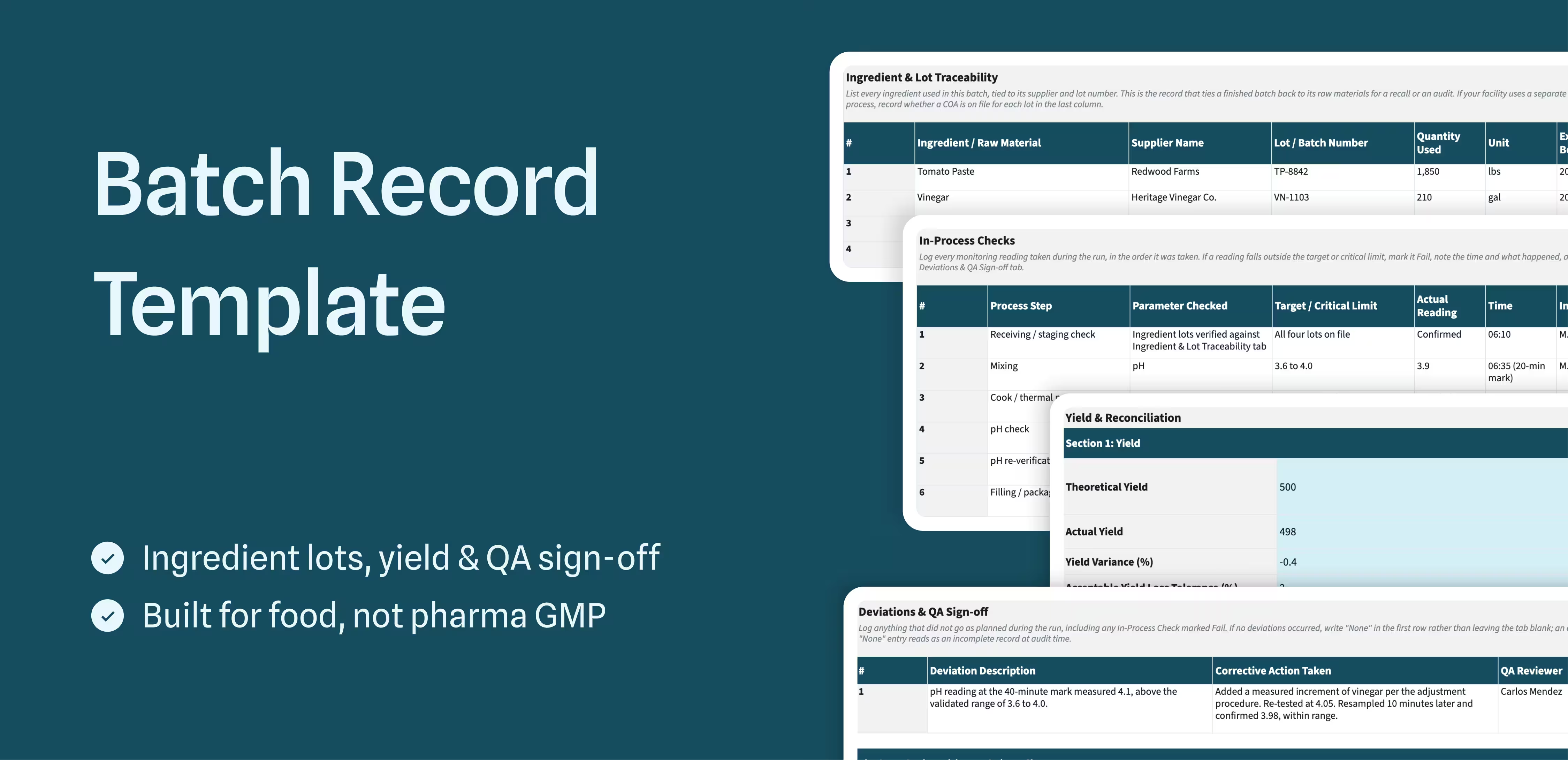
The Allera Batch Record Template is an Excel workbook built specifically for that use case. It includes fields for:
- Batch and production identification (batch number, product, date, line or Station)
- Ingredient and lot tracking (every ingredient, its lot number, and its supplier)
- In-process checks (readings taken during the run, like temperature, pH, or weight)
- Yield and reconciliation (what went in versus what came out)
- Deviations (anything that didn't go as planned, and what was done about it)
- Sign-off (who ran the batch and who verified the record)
Download the free Batch Record Template (Excel)
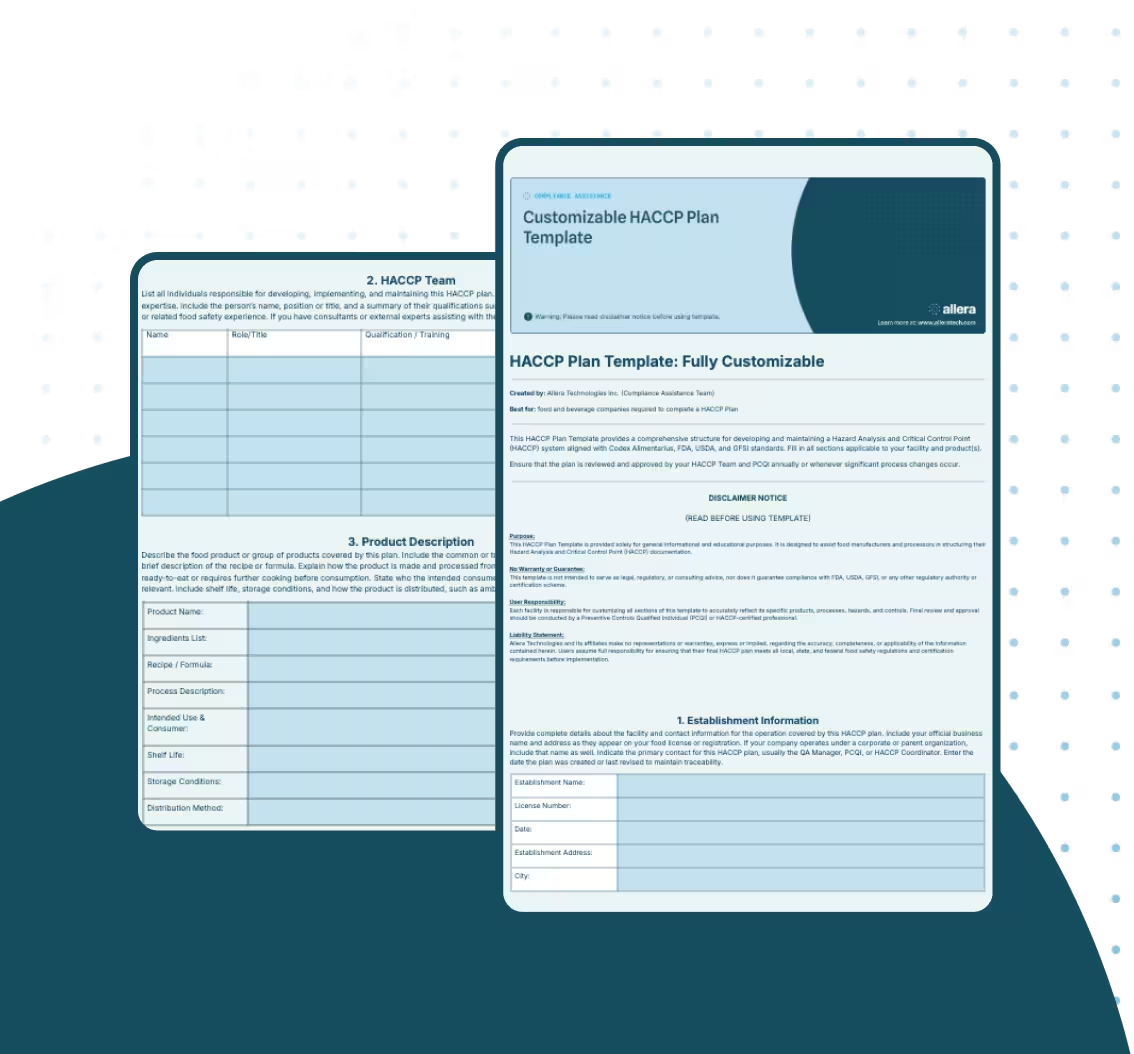
Also building your food safety plan? Pair this with Allera's free HACCP plan template.
Who this template is for
This template is built for food and beverage manufacturers documenting a single production run: what went into it, what was checked, and what came out. It is not a pharmaceutical GMP batch record, and it skips drug-manufacturing terms like cGMP release testing or formal batch disposition. If you make food or beverage products, this is built for you.
What is a batch record?
A batch record is a documented account of everything that happened during one production run. It captures the ingredients and lots used, the process steps and checks performed, and the resulting yield, so you can prove the batch was made safely and correctly.
Most of what ranks for this term describes a pharmaceutical Batch Manufacturing Record or Batch Production Record, governed by drug-manufacturing GMP rules. Food manufacturers use the same basic concept, a documented record of one production run, but under different regulations and terminology, usually without the same formal release testing a drug batch requires.
Record-keeping tied to a production run is a foundational part of the seven HACCP principles, specifically monitoring and record-keeping. Per Food Safety Magazine's coverage of HACCP monitoring and record-keeping, records exist to prove monitoring actually happened, not just to check a compliance box. Codex's General Principles of Food Hygiene name documentation and record-keeping as Principle 7 of HACCP for this reason.
Batch record vs. master batch record vs. the completed record
A master batch record is the reusable recipe or formula: the standard ingredients, quantities, process steps, and checks that define how a product should be made every time. A batch record (sometimes called "the record" or "the completed record") is what you get when someone runs that recipe and fills in the real numbers for that specific run.
Think of the master batch record as the template and the batch record as the filled-in instance. Your master batch record for a barbecue sauce might specify target quantities, mixing time, and a target pH range. The batch record for Tuesday's run documents the actual lot numbers used, the pH reading taken, and the yield produced.
What goes on a batch record? (the 5 things that must be recorded)
At minimum, a food manufacturing batch record needs to capture five things.
- Product and batch identification and date. What was made, which batch or lot number it was assigned, and when the run happened.
- Ingredients and lot or supplier codes used. Every ingredient that went into the batch, tied back to its specific lot and supplier.
- In-process checks. The monitoring readings taken during the run, like temperature, pH, weight, or time, especially at critical control point examples where a specific hazard is being controlled.
- Yield and reconciliation. How much product the run started with versus how much finished product came out, so you can account for any gap.
- Deviations, corrective actions, and sign-off. Anything that didn't go as planned, what was done about it, and who verified the record.
Recording a reading is only half the job. The difference between quality control vs. quality assurance is that catching a bad reading is QC, while making sure the system around it works every time, for every batch, is QA. A batch record supports both.
A filled-in batch record example (food manufacturing)
Here's what a completed batch record looks like for an actual production run: a 500-gallon batch of barbecue sauce at a mid-size sauce manufacturer.
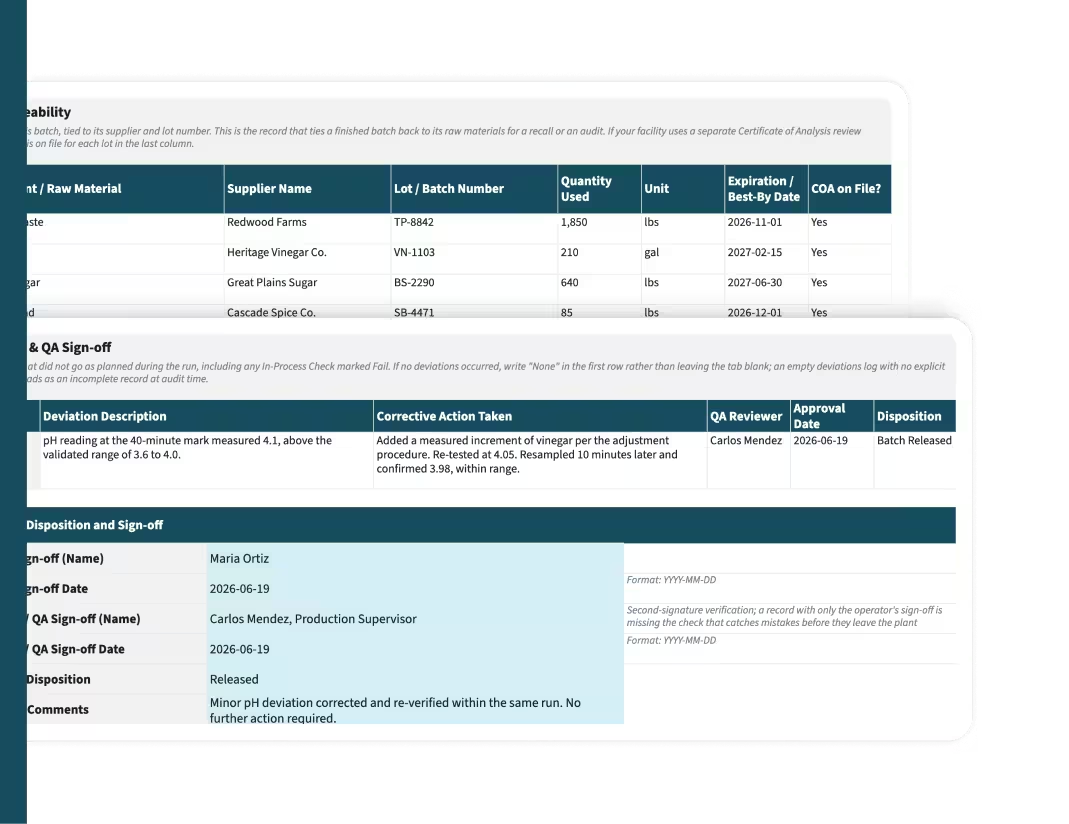
The record opens with batch identification: Batch #24-0619, produced June 19, on Line 2, Station 3. The ingredient section lists each input tied to its lot: tomato paste (Lot #TP-8842, Supplier: Redwood Farms), vinegar (Lot #VN-1103), brown sugar (Lot #BS-2290), and a spice blend (Lot #SB-4471). Each lot ties back to your HACCP plan, since a recall means tracing every lot back to this batch and every other batch that used it.
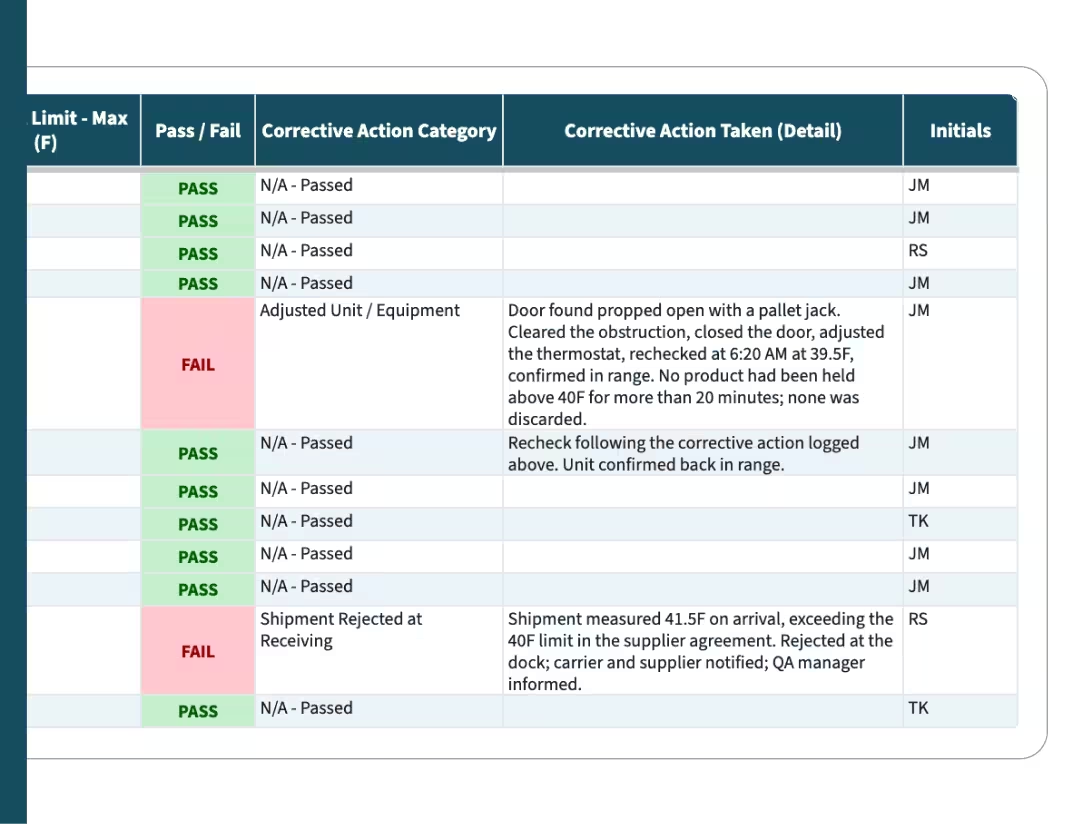
In-process checks follow: a pH reading of 3.9 at the 20-minute mark (within the validated 3.6 to 4.0 range), a cook temperature of 195°F held for 12 minutes, and a viscosity check before filling. A deviation gets logged when the 40-minute pH reading comes in at 4.1, slightly above range. The corrective action is documented immediately: vinegar is added, the batch is re-checked at 4.05, and resampled ten minutes later to confirm it settled within range.
Yield gets reconciled at the end: 498 gallons of finished product from a theoretical 500-gallon batch, within acceptable loss tolerance. The record closes with sign-off from the operator and a supervisor who reviewed the deviation.
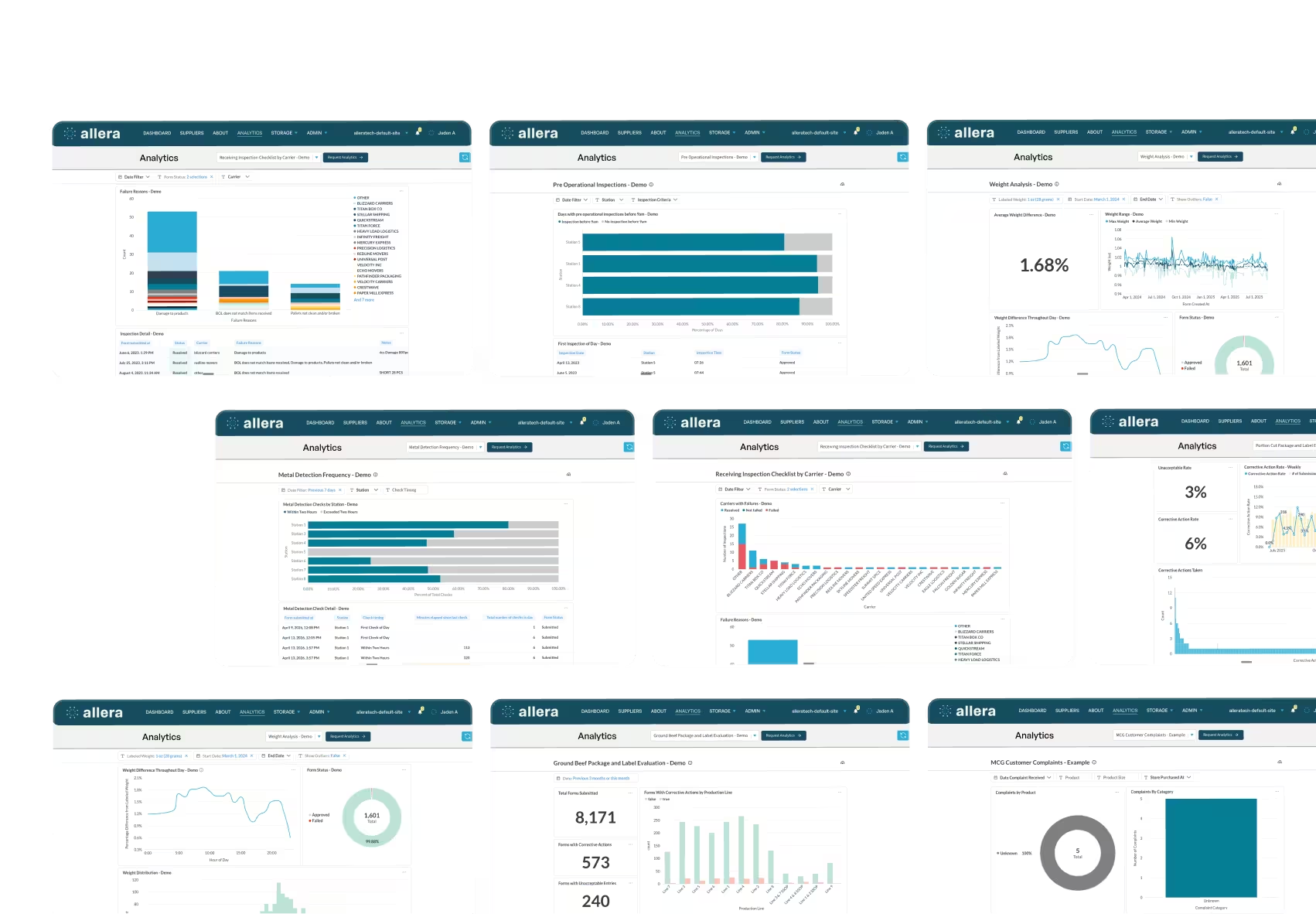
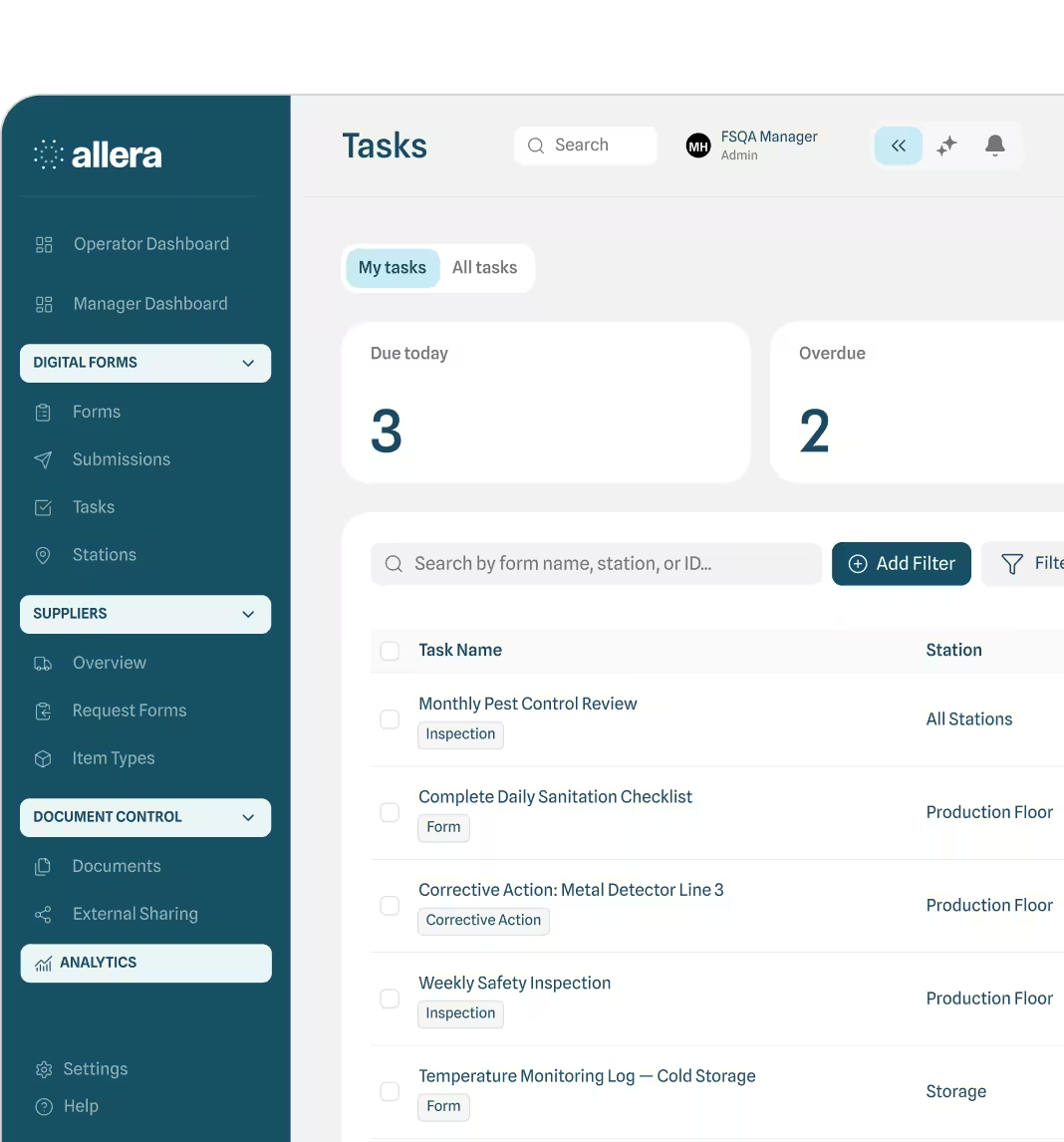
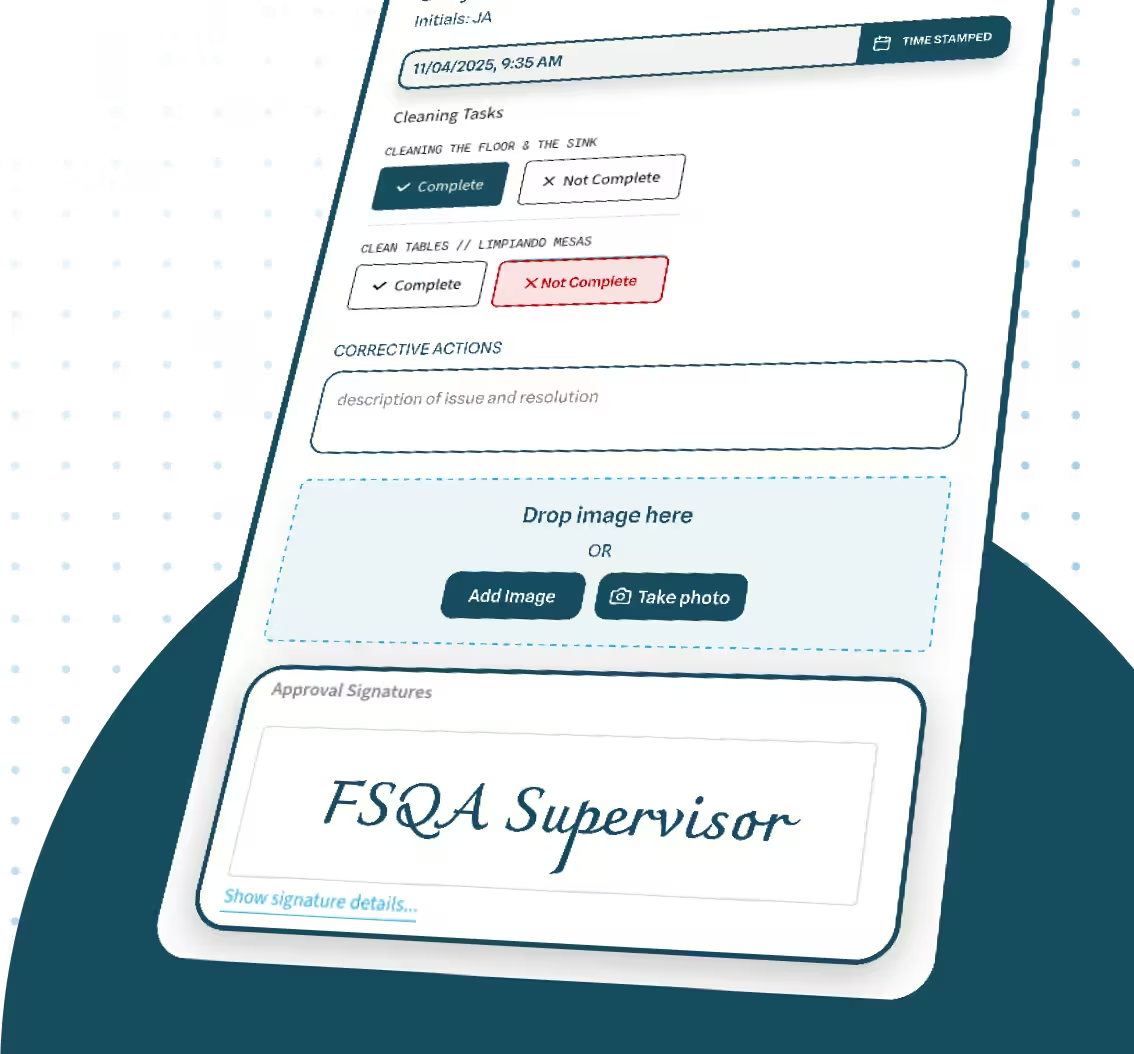
This is exactly the kind of deviation-and-correction workflow Allera's Digital Forms module handles automatically. When a rule on a digital form fails, like a pH reading outside a validated range, the platform creates a Corrective Action tied to that submission, so the deviation and its resolution live in one record. See how it works on Allera's food quality management software page.
Master batch record vs. batch record vs. SOP vs. production log
These four documents get confused constantly, and the confusion causes real problems at audit time. Here's how they differ in food terms.
| Document | Purpose | When it's created | Food example |
|---|---|---|---|
| Master batch record | The standard recipe/formula and process for a product | Once, then reused for every run | Standard formula for a barbecue sauce, including target quantities and process steps |
| Batch record | The filled-in account of one specific production run | Every time that product is made | Batch #24-0619's actual ingredients, checks, yield, and sign-off |
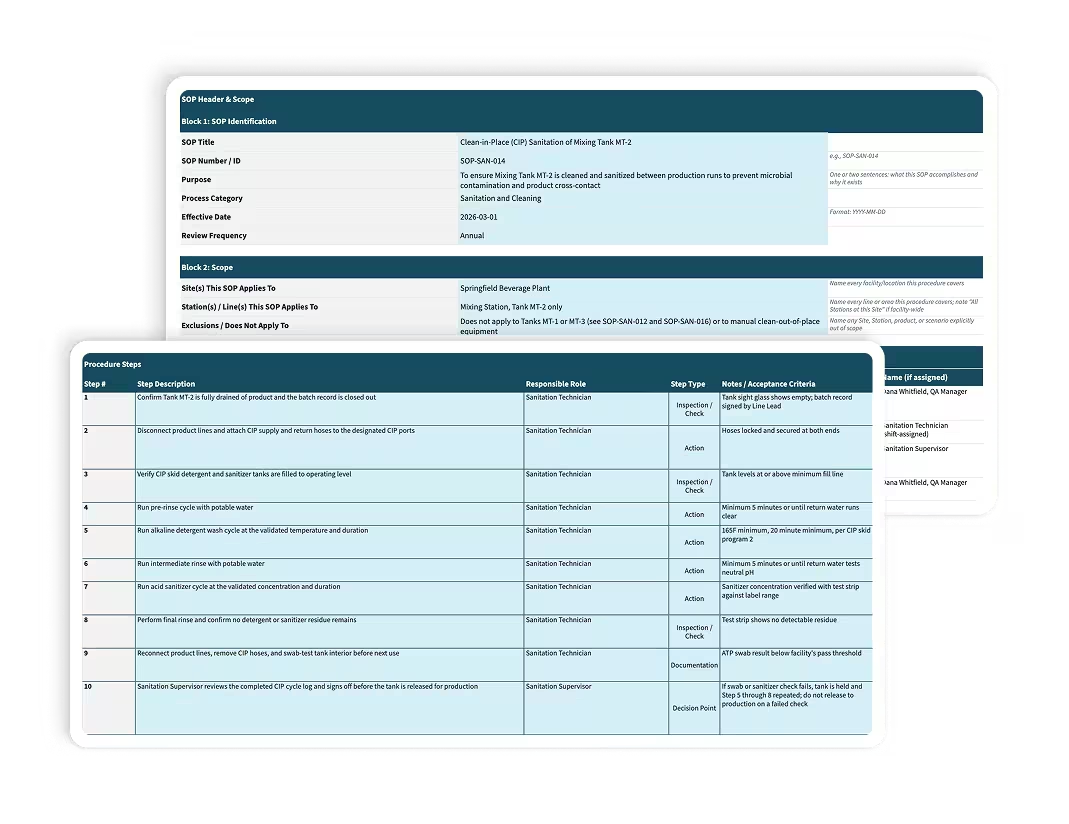
| SOP | The standard procedure for performing a task or process step | Once, then referenced repeatedly | "Standard Operating Procedure: Mixing Tank Sanitation" |
| Production log | A running record of ongoing activity, not tied to one specific batch | Continuously, across shifts | A daily line-cleaning log or a shift handoff log |
The master batch record and the batch record are two sides of the same document: one is the plan, the other is the proof. An SOP describes how to do something correctly in general, and a production log tracks ongoing activity that isn't tied to one batch. Getting this distinction right matters because a food safety management system depends on each document type doing its own job, and a food quality management system that blurs them together makes records harder to find at audit time.
Paper vs. digital batch records on the plant floor
Paper batch records aren't wrong in principle. They break down because of how they get used, especially once you're running more than one line or shift.
Common failure modes show up the same way at plant after plant: a sheet gets lost or damaged before an audit, handwriting is illegible months later, a reading gets filled in from memory after the shift instead of when it was taken, and nobody at the corporate level sees a problem until someone manually rolls up the numbers.
What "digital" needs to solve for a food plant isn't complicated, but it's specific. It needs to work when Wi-Fi drops near a mixing tank or cooler, often the weakest-connectivity spots in a facility. It needs to make a lot code searchable in seconds instead of an afternoon digging through binders, which matters directly for food traceability. And it needs to export cleanly for an auditor without anyone re-typing a spreadsheet the night before a visit.
Allera's Digital Forms module addresses the connectivity problem directly: form entries autosave locally when a connection drops on the floor and recover automatically once it's back, so a reading taken in a dead zone doesn't get lost. Task Management handles the recurring side, like scheduled in-process checks tied to a batch, and every submission exports as a PDF or ZIP for audit prep. None of that replaces good GMP in the food industry; it just makes the record harder to lose. See how Allera's food quality management software handles offline capture and audit exports in one place.
Batch records and food safety compliance
This is where food-specific batch records diverge from the pharmaceutical GMP framing that dominates most search results for this term. No single federal rule uses the phrase "batch record" the way drug-manufacturing regulations do, but several food safety frameworks require the same documentation.
| Standard/regulation | What it requires of batch/production records | Retention expectation |
|---|---|---|
| FSMA Preventive Controls (21 CFR 117.301, 21 CFR 117.305) | Monitoring, corrective action, and verification records for preventive controls | Generally 2+ years, depending on record type |
| USDA FSIS HACCP records (9 CFR 417.5) | HACCP monitoring, verification, and corrective action records for meat and poultry | At least 1 year for perishable product, longer for shelf-stable/frozen |
| Codex General Principles of Food Hygiene, Principle 7 | Documentation and record-keeping supporting the HACCP system | Per national/regulatory requirement adopting Codex |
| SQF Food Safety Code, Edition 9 | Records demonstrating control of food safety and quality processes, including production records | Per SQF Code and site-defined retention policy |
| BRCGS Global Standard Food Safety, Issue 9 | Records that verify process control and traceability, tied to internal audit and management review | Per BRCGS Code and site-defined retention policy |
| FSSC 22000, Version 6 (built on ISO 22000:2018 and GFSI Benchmarking Requirements) | Documented information supporting operational planning and control of production processes | Per FSSC 22000 scheme requirements |
FDA's FSMA 204 traceability recordkeeping rule adds another layer for foods on the Food Traceability List, requiring specific records at key data points in the supply chain, closely related to but distinct from the batch record itself. If your product falls under that rule, your batch record's lot and ingredient tracking needs to line up with the FSMA 204 traceability rule requirements.
Certification bodies expect to see this documentation during an audit. Your SQF audit checklist and prep for an SQF audit should reference your batch record process, and the same goes for BRCGS certification and FSSC 22000 Version 6 audits. None of these frameworks legally define "batch record," but each expects the same evidence.
How long do you need to keep batch records?
Retention requirements differ by framework and product type, so there's no single answer, but a few reference points help.
Under FSMA, general food facility records tied to preventive controls are typically retained for at least 2 years, with some record types held longer. USDA FSIS meat and poultry HACCP records typically need 1 to 2 years depending on whether the product is perishable, shelf-stable, or frozen, per FSIS's recordkeeping requirements training guide. GFSI-benchmarked schemes like SQF, BRCGS, and FSSC 22000 generally expect records available through at least one full audit cycle, often well beyond the minimum regulatory window.
Set your retention period at the longest requirement that applies to your product and certifications, then apply it consistently. When you're preparing for a food safety audit, an auditor asking for records from 18 months ago shouldn't be a scramble.
Common batch record mistakes that fail an audit
A handful of patterns show up again and again when batch records get reviewed, internally or by a third-party auditor.
Missing signatures or timestamps. No clear indication of who did the work or when raises an immediate question about whether it happened as described.
Fields filled in after the fact. Reconstructing numbers from memory once the shift is over undermines the entire point of the document.
Illegible handwriting. A reading nobody can read months later at audit time is functionally the same as a missing reading.
No linkage between lot codes and finished goods. If you can't trace an ingredient lot forward to the batches it went into, a recall becomes far harder to scope.
Uninitialed corrections. Crossing out a number and writing a new one without initialing it looks like tampering, even when it isn't.
No second-signature verification. A record with only the operator's sign-off, and no supervisor or QA review, is missing the check that catches mistakes before they leave the plant.
Most of these issues trace back to the same root cause: a record that only checks whether a number got written down, not whether the process behind it was actually followed. That gap is what a GMP audit checklist review or SQF audit prep should catch before an outside auditor finds it first.
Managing batch records at scale (software)
A single line running one shift can usually manage batch records on paper without much friction. That stops being true once you're running multiple lines, shifts, or facilities, and someone at the corporate level needs visibility across all of them without visiting each plant.
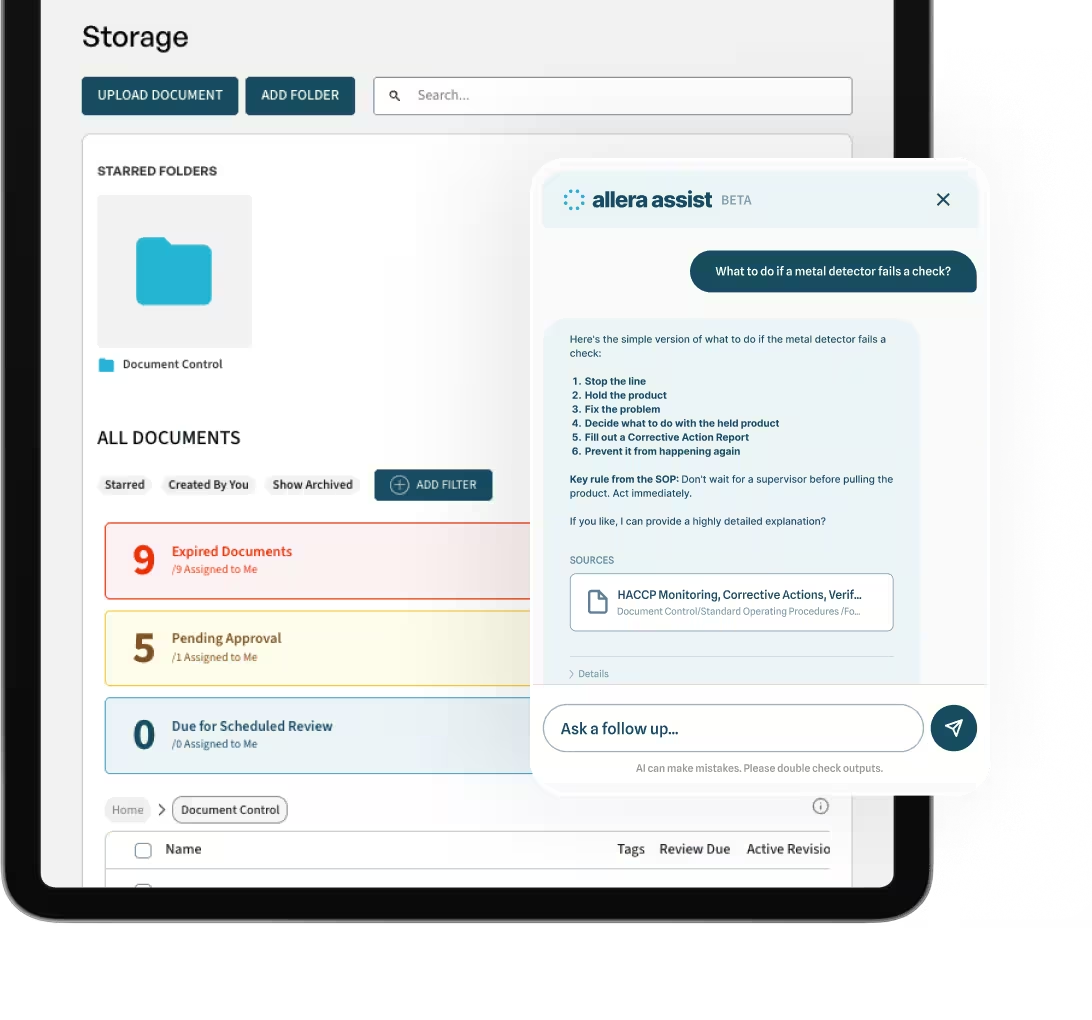
Allera's Digital Forms module replaces the paper batch record with a digital one built around the same structure: a Form Builder with a Table field type for line-item ingredient and lot entry, so every batch record captures data the same way every time. Task Management schedules the recurring in-process checks a batch requires. Offline autosave means a check near a mixing tank or cooler with weak Wi-Fi doesn't get lost, and every submission exports as a PDF or ZIP, feeding into the same document control software where your other food safety records live.
Because batch records depend on knowing exactly what came from which supplier, supplier management ties directly into this workflow, connecting a lot number on your batch record back to the certificate of analysis your supplier submitted. If you haven't grabbed it yet, the free Batch Record Template above is a good starting point, whether you're still on paper or getting ready to move to a digital workflow.
Frequently asked questions
What is a batch record?
A batch record is a documented account of everything that happened during one specific production run: the ingredients and lots used, the process steps and checks performed, and the resulting yield. It exists to prove, after the fact, that a batch was made safely and correctly. In food manufacturing, this serves the same purpose as a pharmaceutical Batch Manufacturing Record, but under food-specific regulations and terminology.
What 5 things must be recorded on a batch record?
At minimum: product and batch identification with the date, the ingredients and lot or supplier codes used, in-process checks like temperature or pH, the yield and reconciliation of what went in versus what came out, and any deviations along with corrective actions and sign-off. Missing any one weakens a batch record's ability to hold up during an audit or recall investigation.
What is a batch formula record?
In food manufacturing, this term maps most closely to a master formula or master batch record: the standard recipe and process defining how a product is made every time. It's distinct from the completed batch record, which documents what actually happened during one specific run using that formula.
How do I prepare a batch record for a food production run?
Start from a master batch record or standard formula so every run follows the same structure. Record ingredients and lots as they're added, log in-process checks in real time, document any deviations and what was done about them, and close with sign-off from the operator and a second reviewer. A consistent template, like the one above, keeps every batch record structured the same way.
How long do I need to keep batch records?
It depends on which regulations and certifications apply to your product. FSMA-related records are generally kept at least 2 years, USDA FSIS meat and poultry records typically 1 to 2 years depending on product type, and GFSI-benchmarked schemes like SQF, BRCGS, and FSSC 22000 generally expect records available through at least one full audit cycle. When more than one requirement applies, retain for the longest period.
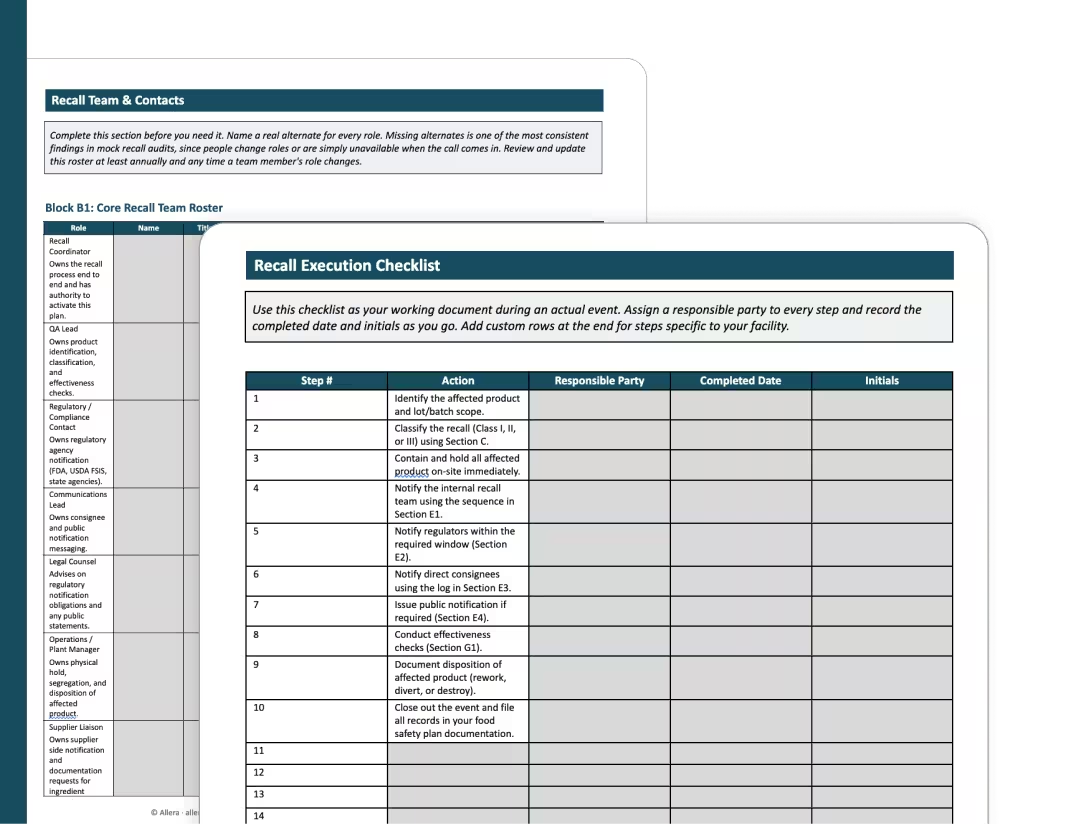
Managing batch records across more than one line or facility gets hard to do consistently by hand. See how Allera's food quality management software turns paper batch records into searchable, audit-ready digital ones, with automatic corrective actions across every plant you run.
FAQs
.avif)
.avif)
.avif)

.avif)
%20(1).avif)
.avif)
.avif)



%20(1).png)

.avif)



.avif)