.avif)



The California Food Safety Act (AB 418): What Food Manufacturers Must Do Before January 2027

The California Food Safety Act bans four food additives from 1 January 2027. If you manufacture, sell, distribute or even hold affected product in California, you have until the end of this year to be clear of brominated vegetable oil, potassium bromate, propylparaben and Red dye 3.
That deadline is now close. From late September 2026 you have roughly three months, which is shorter than a typical reformulation and shelf-life revalidation cycle. If you have not already confirmed your formulations are clear, that work needs to start now rather than in the new year.
This article covers what the law actually says, who it catches, how it interacts with the federal Red No. 3 revocation, the second California deadline most coverage ignores, and the practical steps to close it out. It is written for quality and regulatory teams in food manufacturing, and it is general information rather than legal advice. For a formal opinion on your specific products and exposure, talk to counsel.
What the California Food Safety Act does
Assembly Bill 418, signed by Governor Newsom on 7 October 2023, added Chapter 17 to Part 3 of Division 104 of California's Health and Safety Code. From 1 January 2027, it prohibits any person or entity from manufacturing, selling, delivering, distributing, holding or offering for sale, in commerce, a food product for human consumption containing any of four named substances.
It is a state law with national consequences, because very few manufacturers can practically maintain a separate California formulation. In effect it sets a floor for anyone shipping into the largest food market in the United States. The full text is published on California's legislative information site, and the Governor's signing statement sets out the intent.
The four banned substances, and where they show up
The law names each substance with its CAS number, which removes any ambiguity about what is covered and is the field you should be searching your own specifications against.
| Substance | CAS no. | Common function | Where you are most likely to find it |
|---|---|---|---|
| Brominated vegetable oil (BVO) | 8016-94-2 | Emulsifier, keeps citrus flavour oils suspended | Citrus-flavoured sodas and some sports drinks |
| Potassium bromate | 7758-01-2 | Flour treatment agent and dough strengthener | Breads, rolls, pizza dough, some flour blends |
| Propylparaben | 94-13-3 | Antimicrobial preservative | Baked goods, tortillas, some processed and filled products |
| Red dye 3 (FD&C Red No. 3) | 16423-68-0 | Colour additive, bright cherry red | Confectionery, icings, maraschino cherries, some baked goods and frostings |
Two practical notes. Red dye 3 is by far the most widely used of the four, so it drives most of the reformulation work. And potassium bromate and propylparaben often arrive through purchased ingredients rather than direct addition, which means a formulation review alone will not find them. You need supplier confirmation at the ingredient level.
Worth checking the less obvious categories too. Potassium bromate appears in some imported flour blends and frozen dough, and propylparaben turns up in tortillas, filled pastries and some glazes. Red 3 is used well beyond confectionery, including in some sausage casings, pet treats sold for human-adjacent channels, and cocktail cherries used as a component rather than a finished product.
Why titanium dioxide is not on the list
A fifth substance, titanium dioxide, was in the original bill and was removed by amendment before passage. You can see it struck through in the amended bill text on LegiScan.
This causes ongoing confusion, because the 2023 news coverage was written while titanium dioxide was still in scope. Titanium dioxide is not banned by AB 418. If your team has been working from a five-substance list, that is where it came from, and one of the five can come off.
Who the ban actually catches
The verb list in the statute is broader than most summaries suggest: manufacture, sell, deliver, distribute, hold, or offer for sale. Three consequences follow.
Out-of-state manufacturers are caught. You do not need a California facility. If your product is sold or distributed in California, the prohibition reaches it.
Distributors and warehouses are caught. "Holding" product containing a banned substance is itself prohibited, so third-party logistics providers and distributors carry exposure independent of whoever made the product.
Existing inventory is caught. The law prohibits holding and offering for sale from 1 January 2027, not just manufacturing after that date. Product made in December 2026 that is still in a California warehouse in January 2027 is a problem. That makes inventory depletion planning part of compliance, not an afterthought, and it is the single most commonly missed element.
Penalties and who enforces them
Violations carry a civil penalty of up to $5,000 for a first violation and up to $10,000 for each subsequent violation. Actions can be brought by the Attorney General, a city attorney, county counsel or a district attorney.
The statute is also explicit that these remedies are cumulative with any other remedies available under other law, and that it does not impair other causes of action. The realistic exposure is not only the civil penalty but the follow-on private litigation and retailer deduction risk that tends to accompany a documented violation.
California vs. the FDA: you are probably already on the clock
Here is the point most coverage misses, and the one that should change how you prioritise this work internally.
FDA revoked the colour additive authorisation for FD&C Red No. 3 on 15 January 2025, acting under the Delaney Clause of the Federal Food, Drug, and Cosmetic Act. The compliance deadline for food and beverage manufacturers is 15 January 2027, with ingested drugs given until 18 January 2028. The details are on FDA's FD&C Red No. 3 page.
Put the two dates side by side:
| Requirement | Deadline | Scope |
|---|---|---|
| California AB 418 | 1 January 2027 | Red 3, BVO, potassium bromate, propylparaben. California commerce. |
| FDA Red No. 3 revocation | 15 January 2027 | Red 3 only. Nationwide. |
For Red dye 3, California's deadline lands 14 days before the federal one. That reframes the whole question. Red 3 is not a California problem you could theoretically solve with a state-specific SKU. It is a national deadline you are already subject to, and California simply gets there a fortnight sooner. If you are treating AB 418 as optional because you ship mostly outside California, the federal date removes that option for the substance that matters most.
The other three substances remain California-specific for now, though potassium bromate is already banned across the EU, UK, Canada and China, and BVO lost its US authorisation for beverage use in 2024. The practical read is that all four are on a one-way trajectory, so treating any of them as a California-only problem is likely to mean doing the work twice.
The wider synthetic dye phase-out
The direction of travel goes well beyond four additives. On 22 April 2025, HHS and FDA announced a phase-out of petroleum-based synthetic dyes from the US food supply. Citrus Red No. 2 and Orange B entered a revocation process, and FD&C Green No. 3, Red No. 40, Yellow No. 5, Yellow No. 6, Blue No. 1 and Blue No. 2 were targeted for removal, with FDA also asking industry to pull Red No. 3 ahead of the statutory deadline. The announcement is on FDA's press page, and FDA maintains a tracker of industry commitments.
The planning implication is straightforward. If you are reformulating to remove Red 3, look at your whole synthetic colour portfolio while the project is open. Doing Red 3 now and Red 40 in eighteen months means running the same shelf-life and sensory work twice.
The copycat states
California moved first and other states followed. The Food Industry Association tracked the spread in its analysis of how the California bill spurred similar legislation elsewhere, and the National Environmental Health Association maintains a roundup of state-enacted food safety legislation.
Because the state picture changes frequently, verify the current position for every state you ship into rather than relying on any single roundup, including this one. A patchwork of state additive rules is now a standing item for regulatory affairs rather than a one-off project.
The second California deadline: AB 2316 and school food
If you sell into K-12 channels, there is a second California law with a separate deadline and a different substance list.
AB 2316, the California School Food Safety Act, was signed on 28 September 2024. From 31 December 2027, it prohibits six synthetic dyes in food and beverages served or sold at public schools: Blue 1, Blue 2, Green 3, Red 40, Yellow 5 and Yellow 6. It applies to school districts, county superintendents of schools and charter schools serving kindergarten through grade 12. The text is on California's legislative site.
Two exemptions matter commercially. The prohibition does not reach items sold during fundraising events, and it excludes foods provided through the USDA Foods in Schools program.
Note the substance lists barely overlap. AB 418 covers Red 3 and three non-colour additives; AB 2316 covers six different dyes and not Red 3. A manufacturer selling both retail and school channels in California is managing two deadlines against two lists, which is worth mapping once rather than rediscovering each time.
The compliance checklist: what to do before 1 January 2027
With roughly three months left, sequencing matters more than thoroughness. Steps one and two are the ones that cannot wait.
Step 1: Audit formulations and ingredient specifications
Search your formulation system for all four substances by name and by CAS number, since ingredient declarations vary. Then go a level deeper, because potassium bromate and propylparaben typically arrive inside purchased ingredients rather than as direct additions. A clean bill of materials does not mean a clean product.
Output a definitive list of affected SKUs, the substance in each, and the channel it ships into. Everything downstream depends on that list being right.
Step 2: Collect supplier attestations
For every ingredient you cannot rule out from your own records, get written confirmation from the supplier that it is free of all four substances. A certificate of analysis will not usually answer this, because these additives are not on a standard COA panel. What you need is a specification-level statement or a letter of guarantee naming the substances.
This is the step with the longest lead time, because it depends on other companies responding. Issue the requests now and track who has replied. Your supplier approval program should be the mechanism, and a non-responsive supplier on an affected ingredient is a supplier corrective action matter rather than something to chase informally.
Step 3: Update specifications and labels
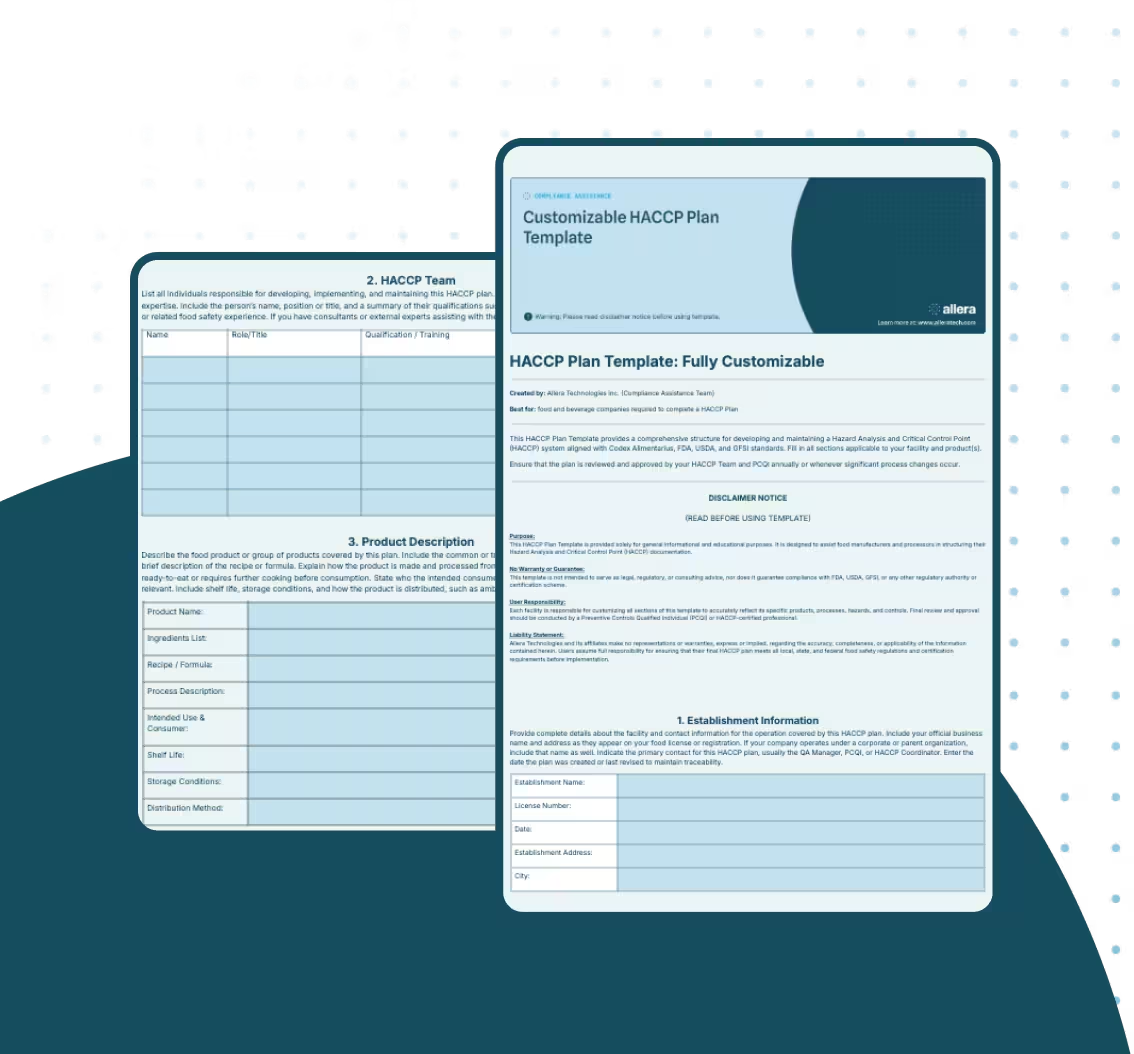
Reformulation changes the ingredient declaration, and potentially allergen statements, nutrition panels and claims. Route every change through document control so the approved specification, the artwork and the label in use are the same version. Label and specification drift during a reformulation programme is a recurring source of mislabelling incidents, as our piece on allergen mislabelling covers.
Step 4: Reformulate, then revalidate
Replacing a preservative or a colour changes more than the label. Propylparaben removal affects microbial shelf life. Potassium bromate removal affects dough rheology and finished texture. Red 3 replacement affects colour stability under light and heat, and natural alternatives often behave differently across pH and over time.
Each change needs shelf-life testing, sensory assessment and, where a preservative is involved, a challenge study or a documented reassessment of the microbial controls. This is the step that makes three months tight, and the reason a reformulation started in November will struggle to be fully validated by January.
Step 5: Manage the changeover
Because holding non-compliant product in California is prohibited from 1 January 2027, you need a plan for existing inventory, not just for new production. Work out the last compliant production date for each affected SKU, plan depletion against real forecast, and decide what happens to anything left.
Lot-level traceability is what makes this manageable. You need to know which lots contain the old formulation and where they are, which is exactly the capability your food traceability programme and your FSMA 204 work already require. Coordinate with customers and distributors early, since their warehouses carry exposure too.
Step 6: Document the evidence trail
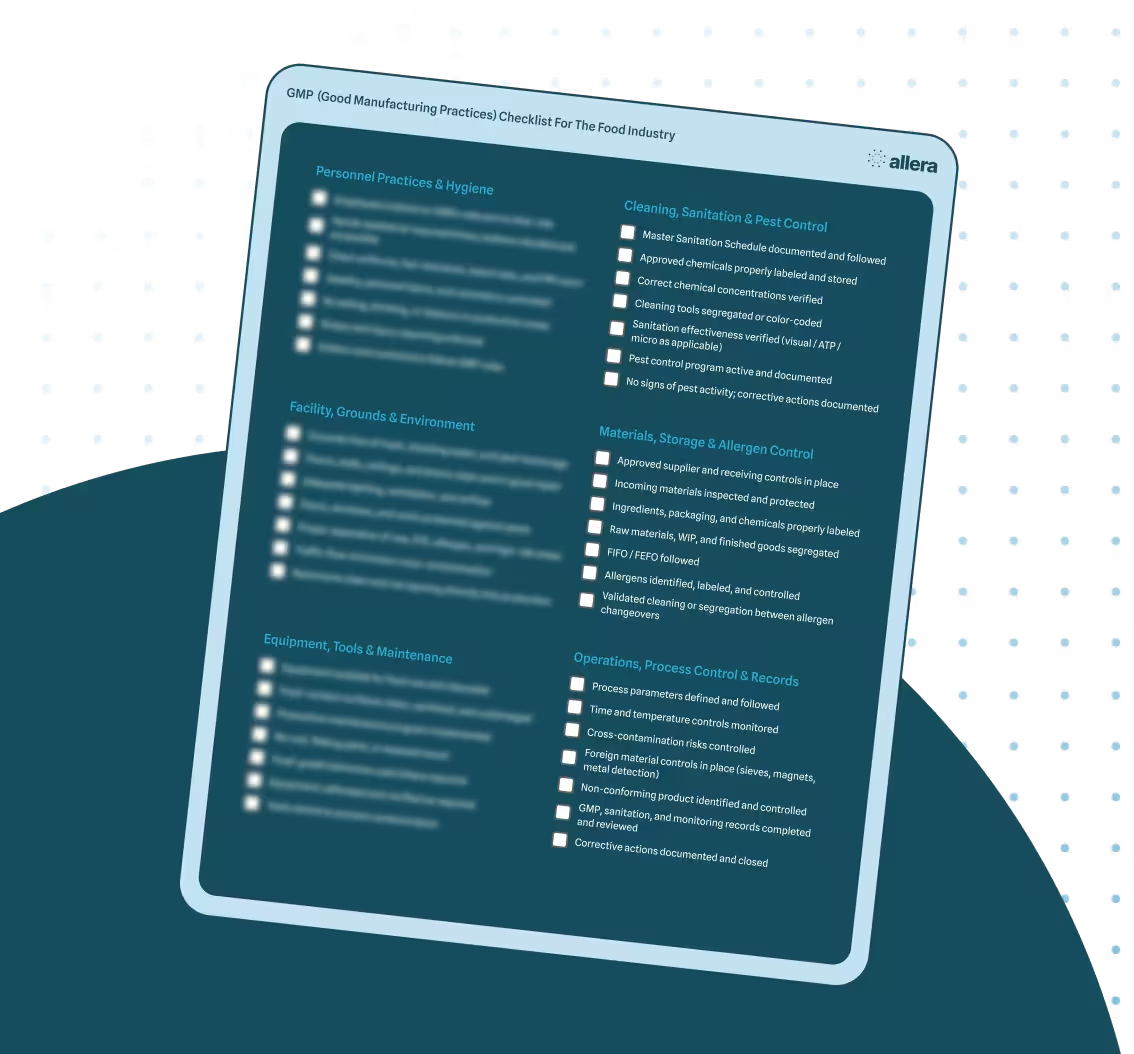
Keep the audit trail for the whole programme: the formulation review and its date, supplier attestations, specification and label change approvals, validation results, the changeover plan, and the disposition of any non-compliant inventory. If your compliance is ever questioned, that file is the answer. Handle it with the same discipline as the rest of your regulatory compliance documentation.
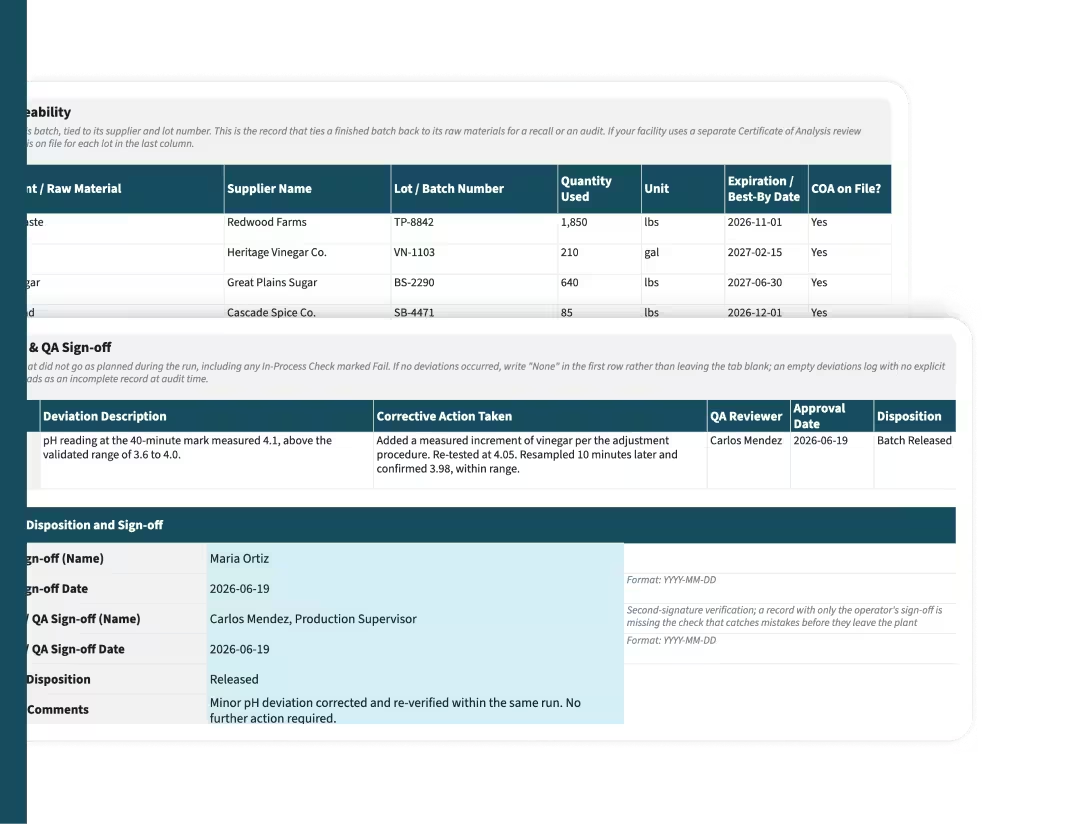
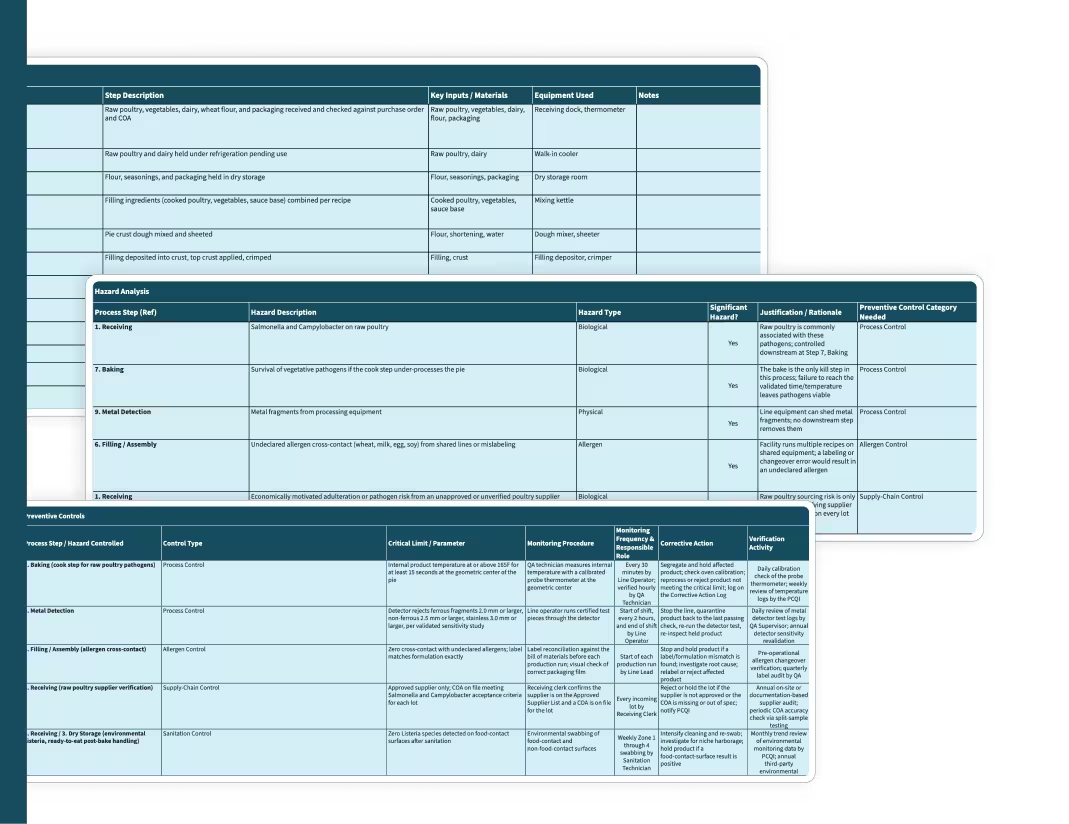
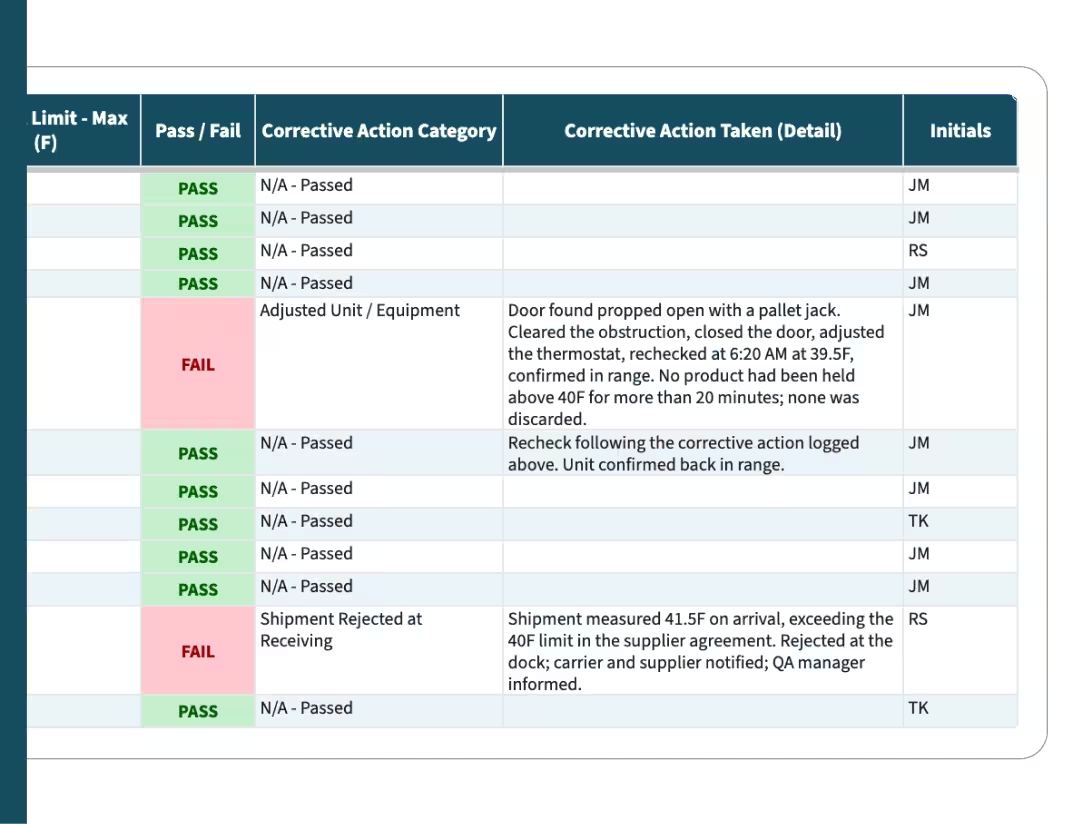
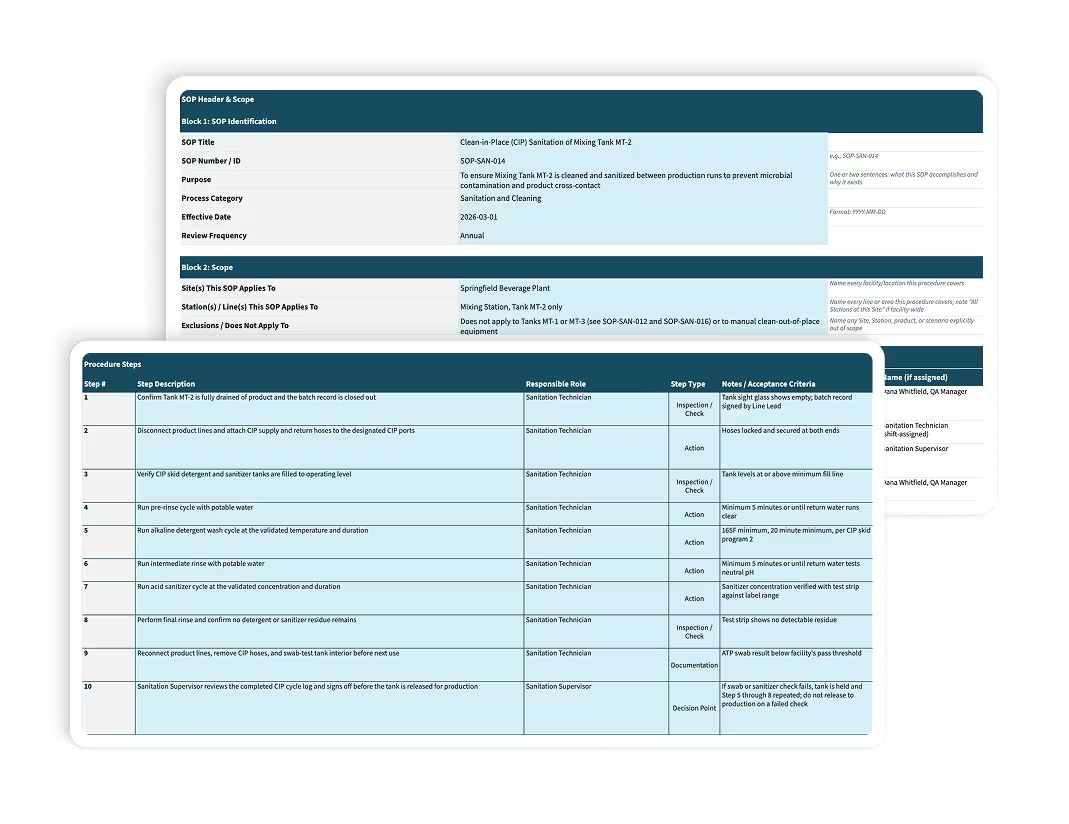
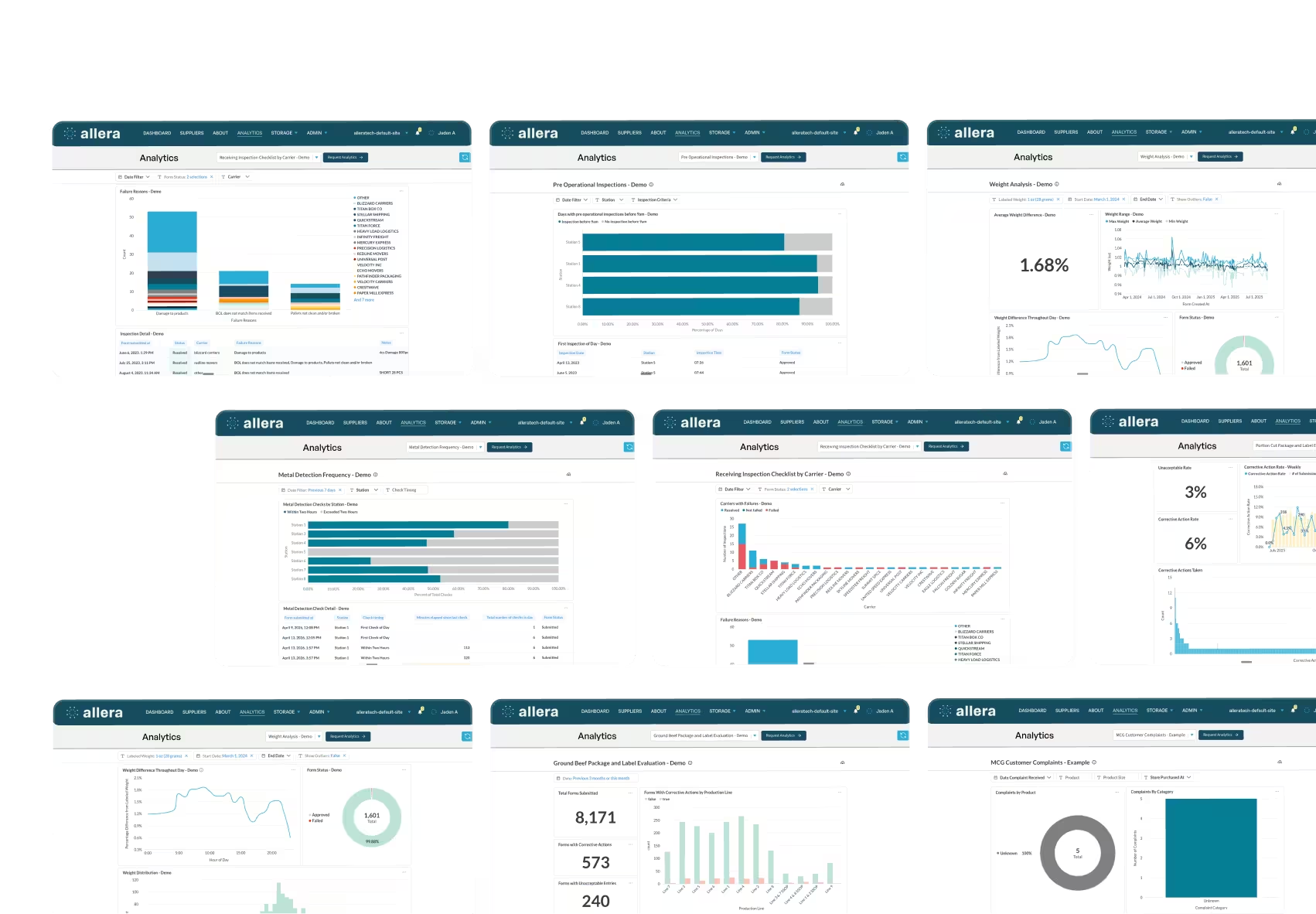
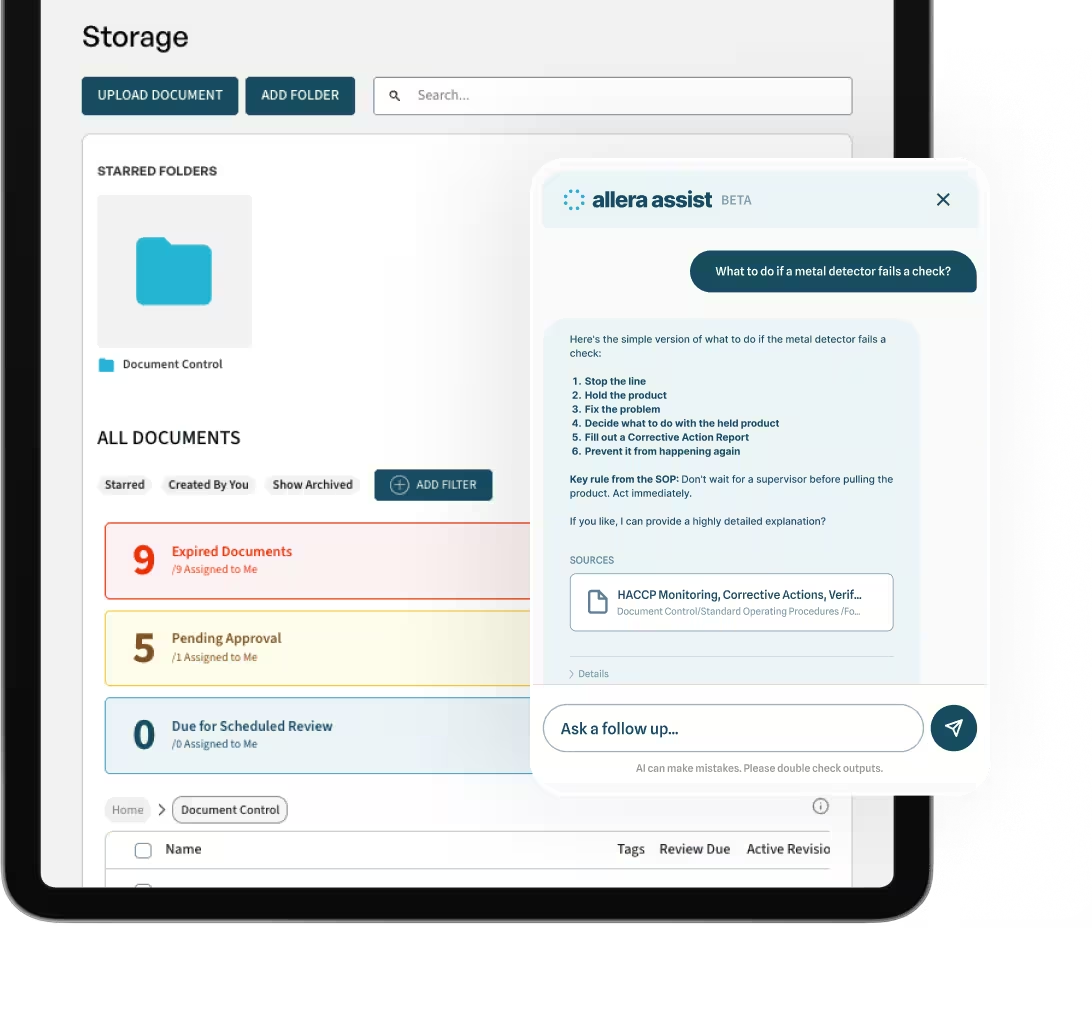
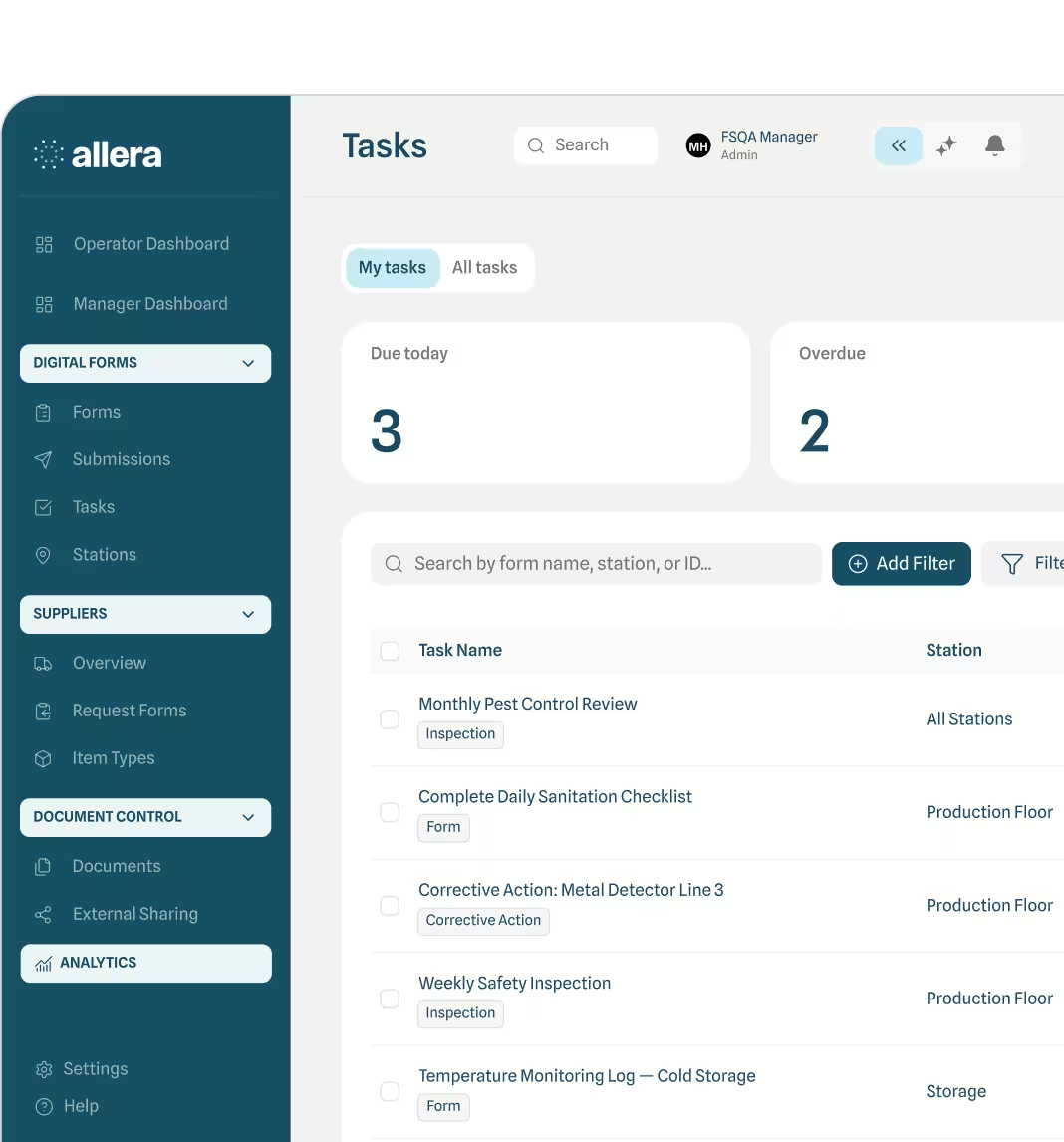
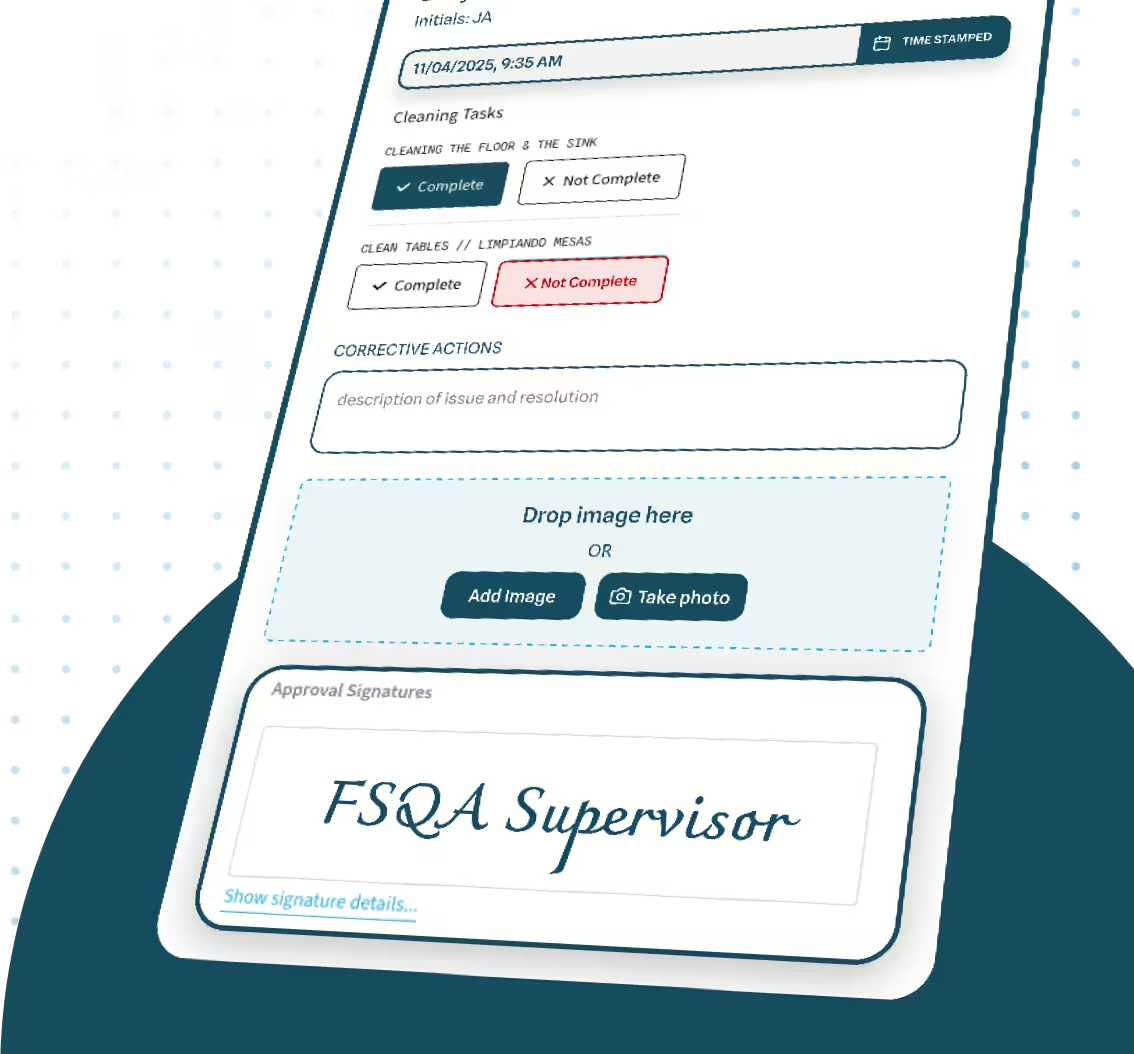
Most of this programme is document and supplier coordination under a deadline, which is where paper and spreadsheets tend to fail. Allera's Document Control keeps reformulated specifications and supplier attestations on a versioned workflow with scheduled review, Request Forms collect supplier confirmations against a named owner and due date, and Tasks track the reformulation plan so an unanswered attestation shows as overdue rather than disappearing. Worth being clear about the boundary: Allera does not monitor additive legislation for you and has no regulatory-tracking module. It is where the evidence lives, not the thing that tells you the law changed. See how Allera handles document and supplier records.
Where this leaves you
The substance that matters most, Red dye 3, is on a national clock that closes two weeks after California's. Treating AB 418 as a California-only issue is the mistake to avoid, and the wider synthetic dye phase-out means the colour portfolio question is coming regardless.
If you are starting now, the sequence is the one above: find the affected SKUs, get supplier attestations moving the same week, and be honest about which reformulations can realistically be validated before January and which need a channel or inventory decision instead. Where a reformulation will not make the date, the compliant answer is a plan for the product rather than an optimistic timeline.
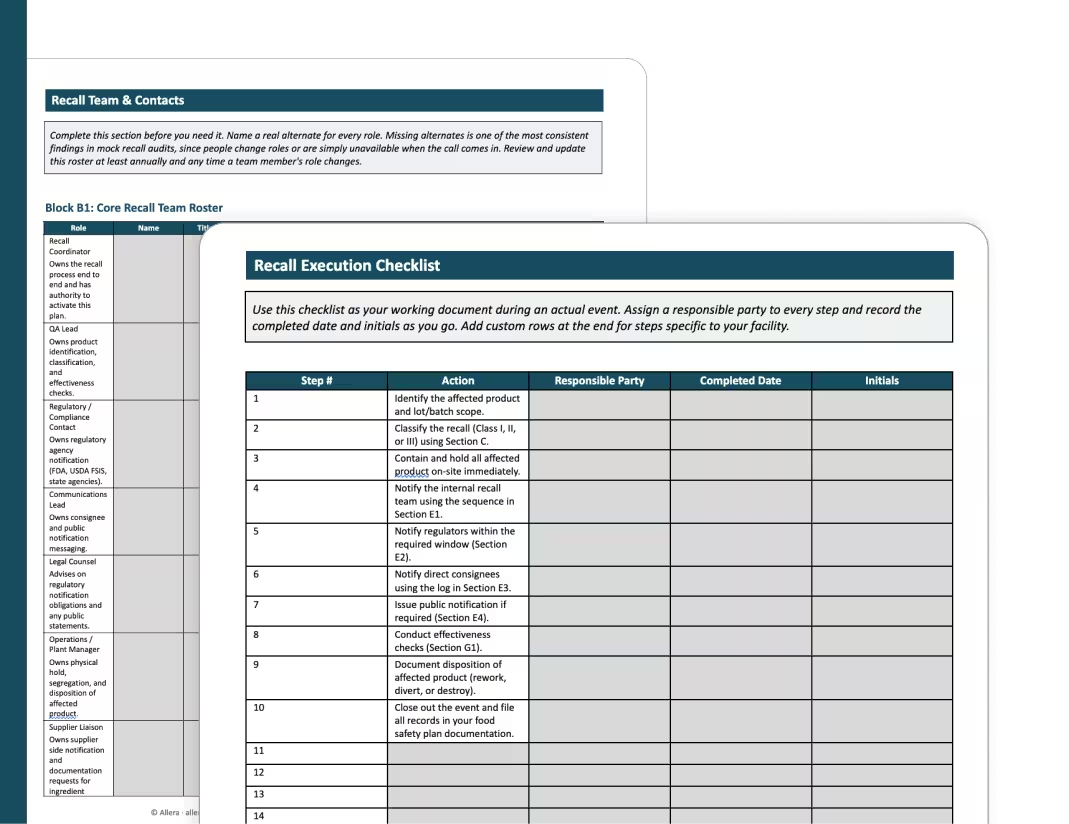
For background on the law itself, Food Safety Magazine's coverage of the act being signed is a useful reference point. For the surrounding systems, our food safety guide and the overview of quality assurance in the food industry cover the programmes this work touches, and the food and beverage supply chain piece covers the supplier side in more depth. If a non-compliant lot does reach the market, your recall plan and the mock recall you have hopefully already run are what you will be leaning on.
This page reflects the position as at 21 September 2026. The federal dye picture has shifted several times since AB 418 passed, so verify current federal and state requirements before acting on anything here. See how Allera keeps compliance records audit-ready.
FAQs

.avif)
.avif)
.avif)
.avif)
%20(1).avif)
.avif)
.avif)

%20(1).png)

.avif)



.avif)