

Class 1 Recall: What FDA and USDA Recall Classes Mean for Food Manufacturers

A Class 1 recall is the most serious of the three recall classes FDA and USDA use. It means there is a reasonable probability that eating the product will cause serious adverse health consequences or death. When a headline says "FDA upgrades recall to Class I," it sounds like the risk just got worse. For the food manufacturer running the recall, the class is usually a decision the agency makes weeks after the recall started, and it sets how far and how publicly the recall has to go.
This guide covers the definitions of Class I, II and III, where FDA and USDA differ, and what each class changes for your plant.
This is general information, not legal advice. FDA or FSIS sets the classification, and the regulations control.
What Is a Class 1 Recall?
A Class 1 (Class I) recall is the highest-risk recall classification. FDA defines it in 21 CFR 7.3(m)(1) as "a situation in which there is a reasonable probability that the use of, or exposure to, a violative product will cause serious adverse health consequences or death." USDA's Food Safety and Inspection Service (FSIS) uses near-identical wording for meat, poultry and egg products. FDA's recall definitions page summarizes all three classes.
Two points matter more than the definition. First, the agency assigns the class, not you: FDA for most foods, FSIS for meat, poultry and egg products. Second, the company almost always starts the recall itself. All 575 FDA food recall events in FDA's 2025 Enforcement Report data were listed as voluntary and firm-initiated.
Class I vs Class II vs Class III Recalls at a Glance
| Class | FDA wording (21 CFR 7.3(m)) | FSIS wording (Directive 8080.1) | Typical food examples | Public notice |
|---|---|---|---|---|
| Class I | Reasonable probability of serious adverse health consequences or death | Reasonable probability of serious, adverse health consequences or death | Listeria in a ready-to-eat food, Salmonella, STEC in raw ground beef, an undeclared allergen likely to cause a reaction | Press release usually issued; retail consignee lists |
| Class II | May cause temporary or medically reversible health effects, or the probability of serious harm is remote | A remote probability of adverse health consequences | Plastic, metal or glass pieces; undeclared hydrolyzed soy protein | FSIS issues a press release |
| Class III | Not likely to cause adverse health consequences | Will not cause adverse health consequences, or the risk is negligible | Short net weight, a wrong best-by date, excess water in meat or poultry | Generally no press release |
Class 1 and Class I mean the same thing. The class rates the health hazard, not the size of the recall: one pallet can be Class I, and a million cases can be Class III. Every class appears in FDA's weekly Enforcement Report.
What Is a Class 2 Recall?
A Class 2 (Class II) recall covers a product that may cause temporary or medically reversible health effects, or where the chance of serious harm is remote. That is FDA's wording in 21 CFR 7.3(m)(2). FSIS's version is shorter: "a remote probability of adverse health consequences from the use of the product."
Class II is the most common class for food. In FDA's 2025 Enforcement Report data, 299 of 575 food recall events were Class II, against 230 Class I and 46 Class III.
Typical Class II food examples include:
- Foreign material such as plastic, metal, glass or foil, where the agency judged serious injury unlikely
- An undeclared ingredient unlikely to cause a reaction. FSIS's own example is undeclared hydrolyzed soy protein, a highly refined allergen.
What Is a Class 3 Recall?
A Class 3 (Class III) recall covers a product that breaks the law but is "not likely to cause adverse health consequences" (21 CFR 7.3(m)(3)). FSIS rewrote its definition in Revision 8 of Directive 8080.1: the product "will not cause adverse health consequences or the risk is negligible."
Class III food recalls are mostly labeling and economic problems. FDA's 2025 Class III list includes product that weighed less than its label, a wrong use-by date, one fish species sold as another, and "extra virgin olive oil" that was likely canola. FSIS's example is excess water in meat or poultry, which gives the producer an unfair economic advantage.
A Class III recall is still a recall. The product violates the law and FDA could take legal action against it, which is what separates it from a market withdrawal.
FDA vs USDA FSIS: Same Three Classes, Different Wording and Process
FSIS regulates meat, poultry and egg products. FDA regulates almost every other food, including shell eggs, seafood, dairy, produce and packaged foods. Both use Class I, II and III, and many guides describe the two systems as identical. As the table above shows, the Class II and Class III wording differs, and so does the process.
| FDA | USDA FSIS | |
|---|---|---|
| Who classifies | An ad hoc committee of FDA scientists (21 CFR 7.41) | An Event Assessment Committee (FSIS Directive 8080.1, Rev. 8) |
| Public Health Alert | No formal equivalent in Part 7 | Used when no recall is possible or the firm declines |
| Retail consignee lists | Published primarily for Class I recalls | Developed for every Class I recall that reached retail |
| Mandatory recall authority | Yes, for food | No; detention and seizure instead |
FSIS's Class I examples include ready-to-eat foods that contain pathogens and raw ground beef with STEC. Its consumer page, Understanding FSIS Food Recalls, walks through its process.
Who Decides a Recall's Class, and When?
The firm decides to recall. The agency decides the class. Under 21 CFR 7.46, a firm that removes a product it believes is violative should notify its FDA district office immediately and provide a risk evaluation and a proposed recall strategy. FDA then assigns the class and recommends changes, and the rule says "pending this review, the firm need not delay initiation" of the recall.
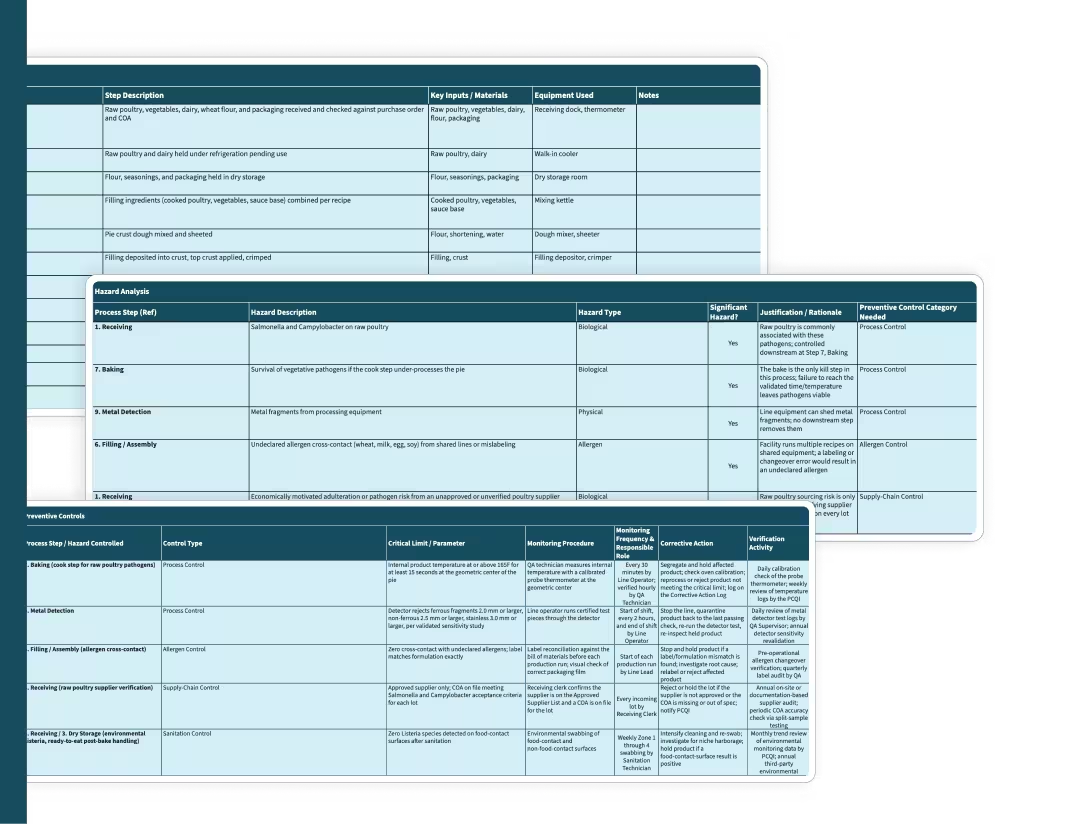
Your own evaluation still carries weight. The hazard analysis behind the product and the evaluation you send FDA are the evidence the committee works from.
The Six Health Hazard Evaluation Factors
21 CFR 7.41 lists the factors FDA's committee weighs. Treat them as the questions your own evaluation should answer before you call:
- Have any illnesses or injuries already occurred?
- Could existing conditions lead to a situation that exposes people or animals to the hazard?
- Which groups are exposed, especially those at greatest risk, such as children?
- How serious is the hazard for those groups?
- How likely is the hazard to occur?
- What are the immediate or long-range consequences?
Why Headlines Say "Upgraded to Class I"
In most food cases, the recall had no class until that day. According to FDA's 2025 Enforcement Report data, FDA classified Class I food recalls a median of 26 days after the company started them, with the middle half falling between 20 and 35 days. Until then, a recall can appear in FDA's data as "not yet classified."
Three 2026 recalls from the same data show the gap:
- A shell egg recall for Salmonella started July 22 and was classified Class I on August 12, 21 days later.
- A frozen mixed berry recall for E. coli O145 started June 25 and was classified Class I on August 18, 54 days later.
- A jalapeño avocado dressing recall for Salmonella started August 6 and was classified Class I on September 29, also 54 days later.
News coverage often reports classification day as an "upgrade," even though the company had been recalling the product for weeks. Genuine reclassifications do happen, for example when new illnesses are reported, so check the Enforcement Report entry, not the headline.
Recall, Market Withdrawal, Stock Recovery or Public Health Alert?
The market withdrawal vs recall question comes down to one test: would FDA take legal action against the product?
| Action | What it means | Source |
|---|---|---|
| Recall | Removing or correcting a marketed product FDA considers violative and would take legal action against | 7.3(g) |
| Correction | Fixing a product without removing it, such as relabeling. A recall can take this form. | 7.3(h) |
| Market withdrawal | Removing a distributed product with a minor violation FDA wouldn't act on, or no violation | 7.3(j) |
| Stock recovery | Removing product that hasn't left your direct control, with no part of the lot released for sale | 7.3(k) |
| Public Health Alert (FSIS only) | Public notice without a recall, such as when product may still be in homes or the firm declines | FSIS Directive 8080.1 |
A stock recovery is the cheapest outcome, and it depends on catching the problem before any of the lot ships. Tight lot code definitions and a hold-and-release step make that possible. If complaints suggest a product is deficient but you believe the removal is only a withdrawal, 7.46(d) says to consult your FDA district office.
What the Class Changes for the Recalling Firm
The class doesn't change whether you recall. It changes how far the recall reaches, how publicly it runs and how thoroughly it gets checked. Those levers live in your recall strategy under 21 CFR 7.42.
Depth of Recall
Your strategy sets how far down the distribution chain the recall reaches: wholesale, retail or consumer level. Depth depends on the hazard and how far the product has gone. A Class I recall of a retail product typically reaches consumers, while a Class III labeling issue may stop at wholesale.
Public Warning and Press Release
Under 7.42(b)(2), a public warning is "reserved for urgent situations where other means for preventing use of the recalled product appear inadequate." FDA's public warning guidance explains when it expects one and what it should say. FSIS generally issues a press release for Class I and Class II recalls but not for Class III. It can skip the release when the product never got past warehouses or distribution centers.
Effectiveness Checks, Levels A to E
Effectiveness checks confirm that every consignee at the recall depth got the notice and acted on it. Your strategy sets the level:
| Level | Share of consignees contacted |
|---|---|
| A | 100% |
| B | More than 10% and less than 100%, set case by case |
| C | 10% |
| D | 2% |
| E | No effectiveness checks |
The recalling firm normally runs these checks. For meat, poultry and egg products, FSIS staff also run their own, scaled to the class.
Retail Consignee Lists
FSIS develops a list of retail consignees for every Class I recall that reached retail. FDA's retail consignee list guidance says it will primarily focus on Class I recalls. Expect your distributors to be asked exactly where the product went.
Status Reports and Termination
FDA asks for recall status reports, generally every 2 to 4 weeks (21 CFR 7.53), covering consignees notified, responses, product returned and effectiveness check results. The recall ends when FDA decides all reasonable efforts have been made and notifies you in writing (21 CFR 7.55).
What Typically Triggers a Class I, II or III Food Recall
2025 FDA food recalls by class
| Class I | Class II | Class III | |
|---|---|---|---|
| Recall events | 230 | 299 | 46 |
| Product entries | 773 | 749 | 95 |
| Median days from recall start to classification | 26 | 26 | 33.5 |
| Events citing an undeclared ingredient | 77 | 100 | 14 |
Source: openFDA food enforcement data, report dates in 2025, pulled November 2, 2026. openFDA describes its data as unvalidated, and keyword counts are approximate.
Class I Triggers
Pathogens and undeclared allergens dominate. Among 2025 Class I events, 73 cited Salmonella, 51 cited Listeria and 8 cited Clostridium botulinum. Another 77 cited an undeclared ingredient, and 74 of those named an allergen.
Listeria in ready-to-eat products is the reason an environmental monitoring program earns its cost. Allergen recalls usually trace back to label errors or cross-contact, so review your allergen control program against the patterns behind undeclared allergen recalls.
Class II Triggers
Foreign material is the classic Class II trigger. In 2025, more than 50 Class II events cited plastic, metal, glass or other foreign material, and no Class I event did. Your controls for physical contamination and metal detection are the first line here.
Some of these recalls start upstream, such as metal fragments traced to a supplier's raw material. A supplier corrective action request documents what you expect that supplier to fix.
Class III Triggers
Class III covers labeling and economic problems with no real health hazard, like the examples above. One 2025 example was an allergen missing from the "Contains" statement but declared in the ingredient list.
An undeclared allergen isn't automatically Class I. In 2025, roughly 80 Class II events named an undeclared allergen, slightly more than the 74 Class I events that did. The agency weighs which allergen, how much and how likely a reaction is. Declare everything anyway, because the class is the agency's call.
Notification Clocks: The RFR, FSIS and Your Customers
Several deadlines start running before any class is assigned:
- Reportable Food Registry (FDA-registered facilities). If there is a reasonable probability that a food will cause serious adverse health consequences or death, the same threshold as Class I, report it no later than 24 hours after you determine it's reportable (21 U.S.C. 350f(d)).
- FSIS-inspected establishments. Notify the local FSIS District Office within 24 hours of learning that adulterated or misbranded product has entered commerce (9 CFR 418.2).
- FDA firm-initiated recalls. Notify the FDA district office "immediately" (7.46(a)).
- Your customers. Direct consignees need notice with instructions for returning or disposing of the product.
- Your certification body. SQF, BRCGS and FSSC 22000 each set their own requirement for reporting a recall, so check the current edition of your scheme.
The RFR has one exception: you don't report if the problem originated with you, you caught it before the food left your hands, and you corrected or destroyed it. The registry came from the FDA Amendments Act of 2007, not FSMA, and FDA's Reportable Food Registry for Industry page covers submission. Importers will recognize the threshold from FSVP, where the same standard shapes supplier verification.
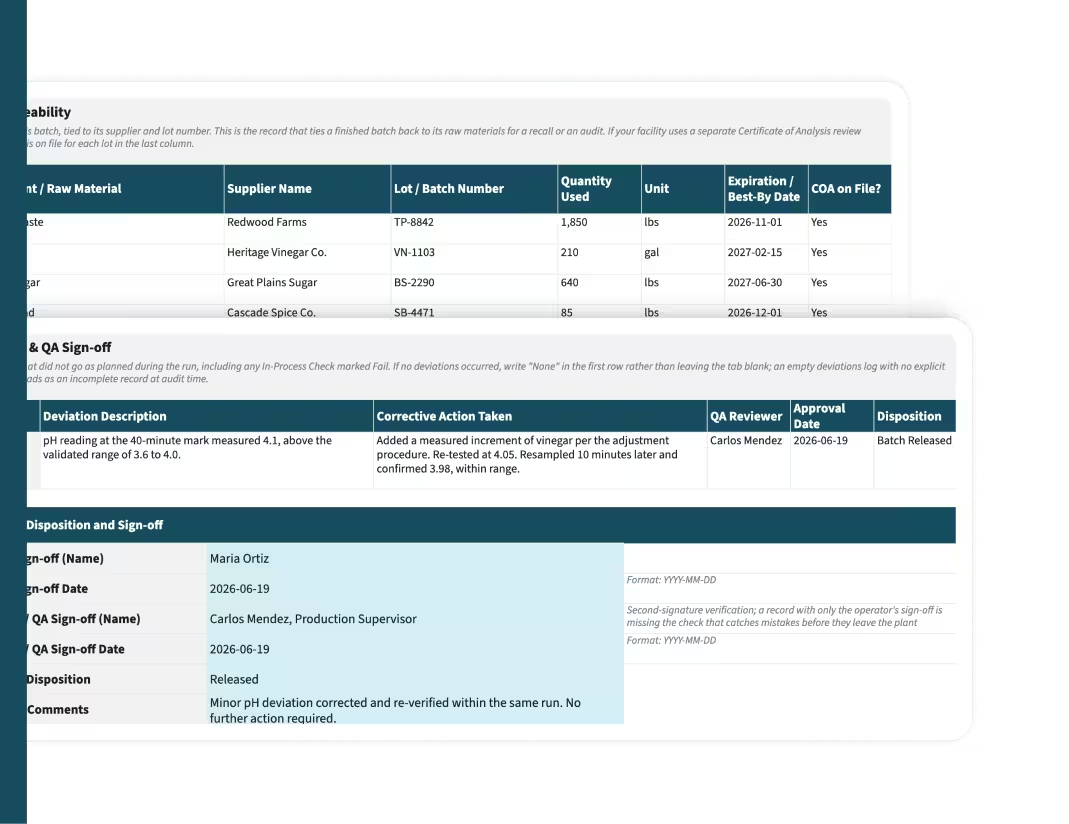
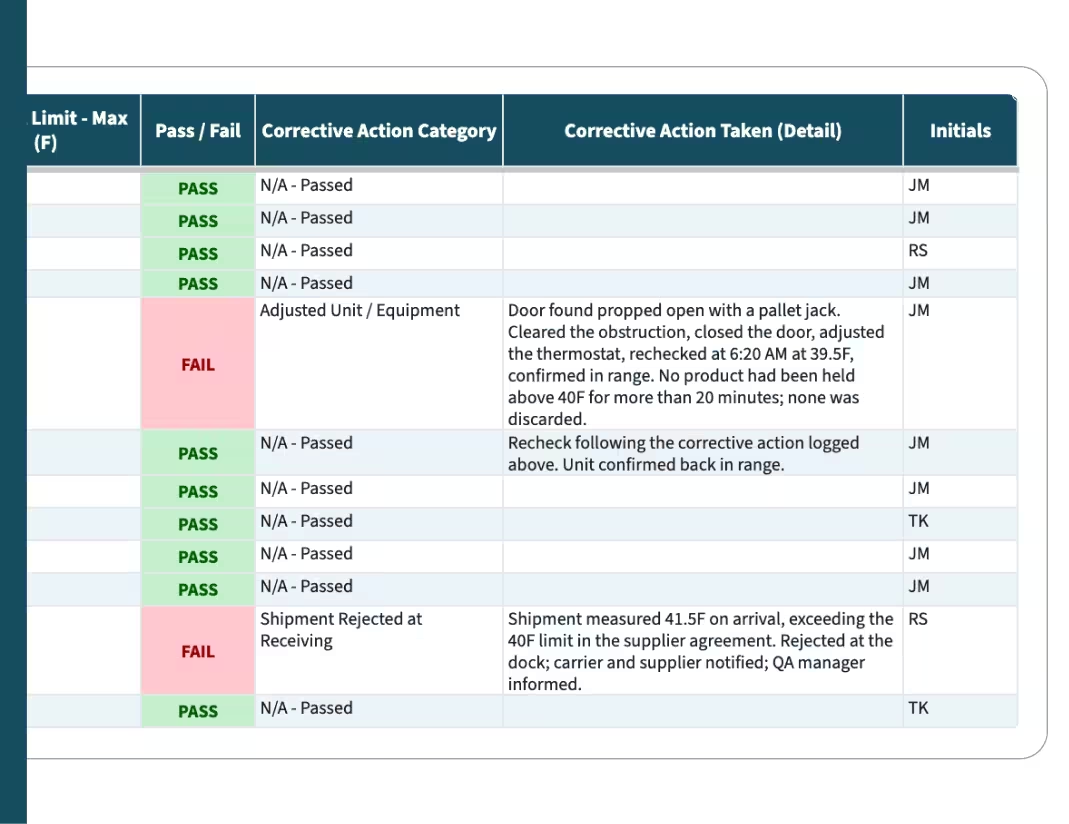
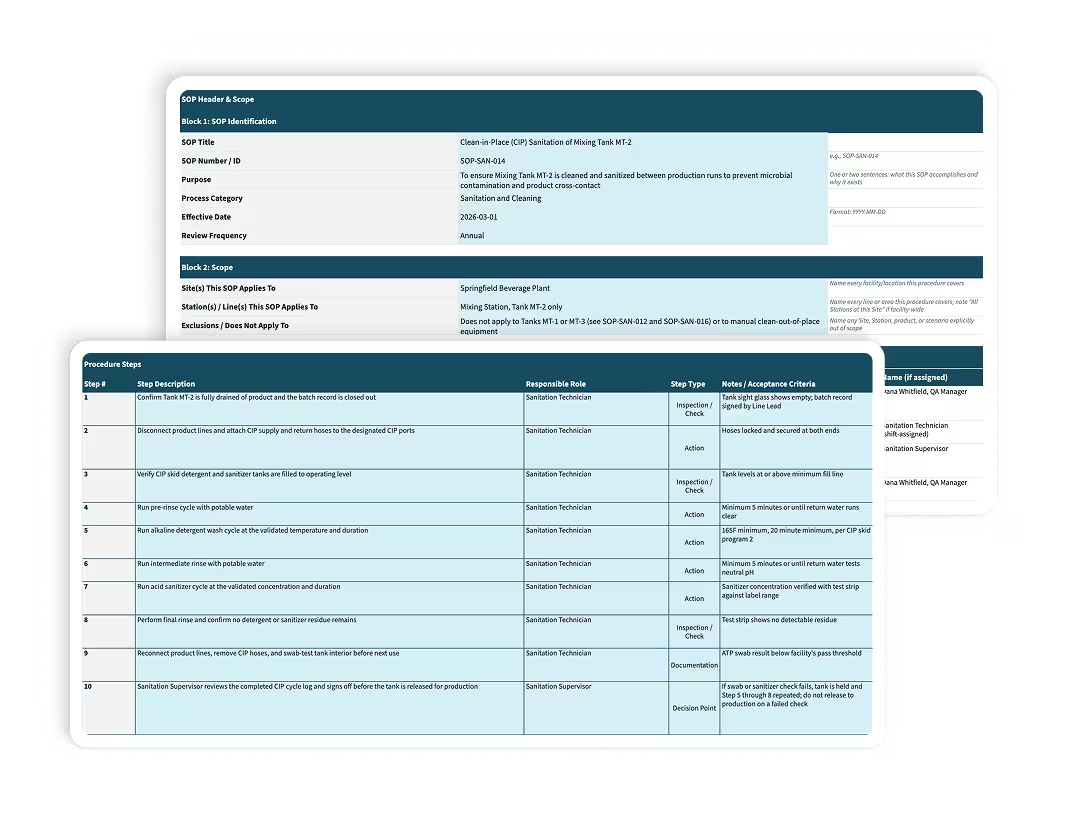
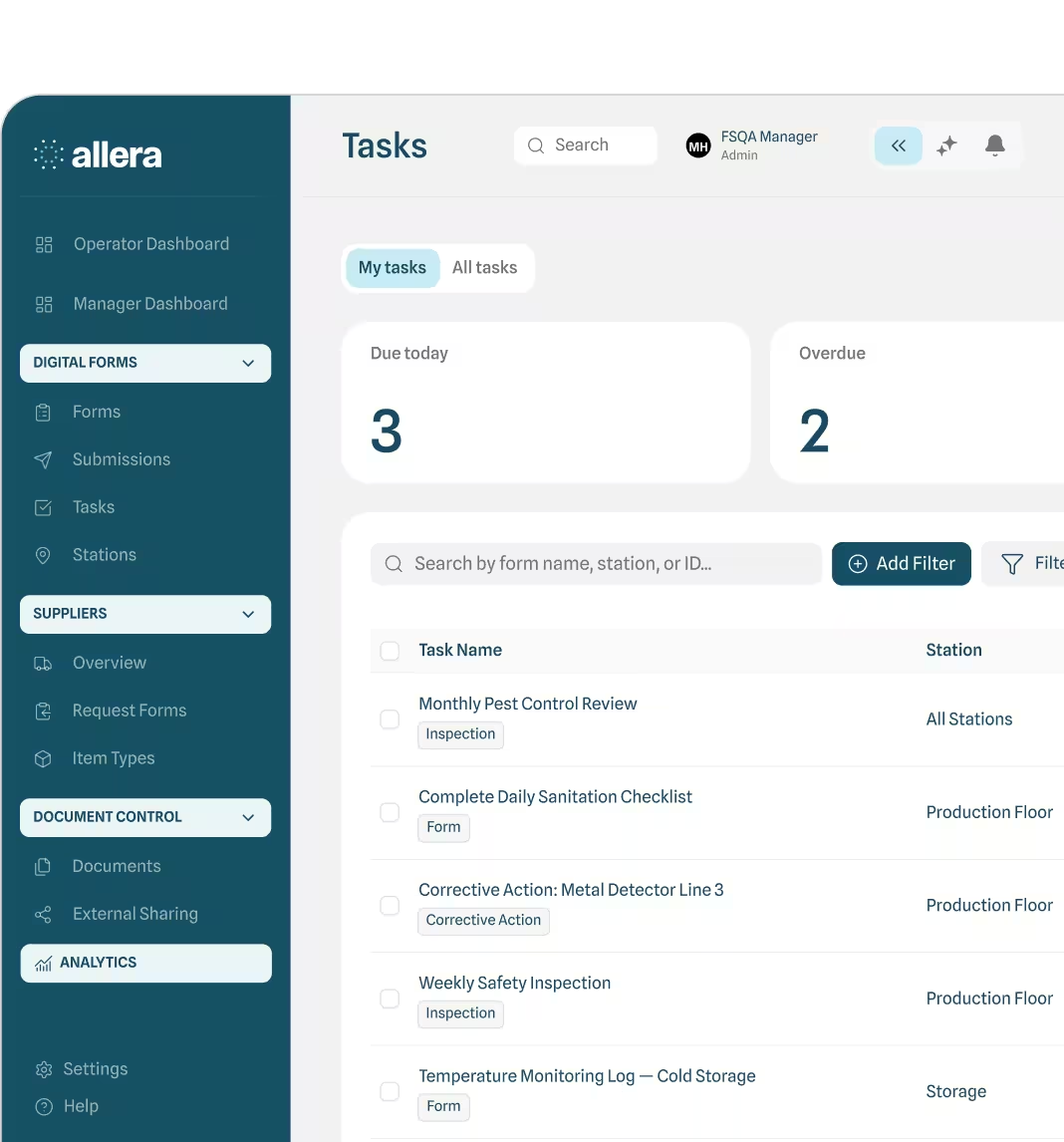
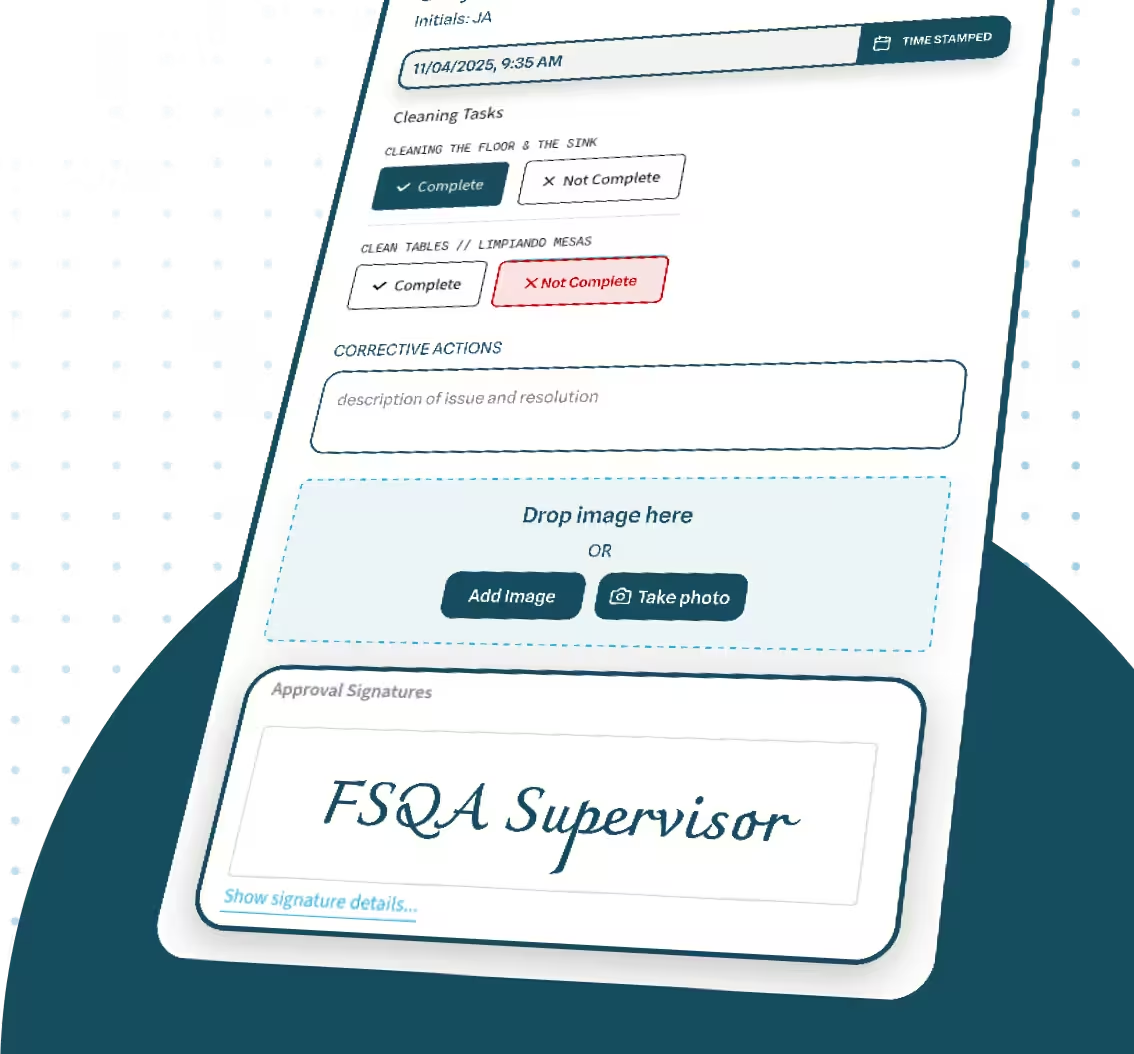
Every one of those clocks assumes you can find your records fast. Allera's Digital Forms keep your receiving, sanitation and CCP checks and their Corrective Actions in one searchable place, and saved filters pull up the checks for a date range, form or Site. Submissions export as PDFs or a ZIP when an investigator asks. See how Allera keeps FSQA records audit ready.
Can FDA Force a Recall? Mandatory Recall Authority
Yes, for food. FSMA section 206 added section 423 to the FD&C Act (21 U.S.C. 350l). FDA can use it when there's a reasonable probability that a food is adulterated, or misbranded for an undeclared major allergen under section 403(w), and that it will cause serious adverse health consequences or death.
FDA must first give the responsible party a chance to recall voluntarily. If the firm refuses, FDA can order it to stop distribution and notify its customers, and the firm gets an informal hearing no later than 2 days after the order. FDA's Q&A guidance on mandatory food recalls walks through the process.
In practice, a Class 1 recall isn't mandatory in the legal sense, and all 575 FDA food recall events in 2025 were listed as voluntary. FSIS has no mandatory recall authority at all. If a firm declines, FSIS can detain and seize product in commerce and issue a Public Health Alert.
What to Have Ready Before You Call FDA or FSIS
21 CFR 7.46(a) lists what FDA will ask for, and FDA's guidance on initiating voluntary recalls expands on it. Have this ready before the call:
- Product identity, including lot codes and production dates
- The reason for the recall, and when and how you found the problem
- Your health hazard evaluation
- How much you produced, and over what time span
- How much is estimated to still be in distribution
- Distribution information, including your direct accounts
- Your recall communication, issued or proposed
- Your proposed recall strategy
- The name and phone number of your recall contact
For foods on FDA's Food Traceability List, the traceability rule will require traceability records within 24 hours of a request once its compliance date arrives on July 20, 2028. Our FSMA 204 guide and our overview of food traceability cover what those records include.
The class decides how far the recall goes. How fast you can pull up these records decides how fast it moves.
Where Classification Fits in Your Recall Plan
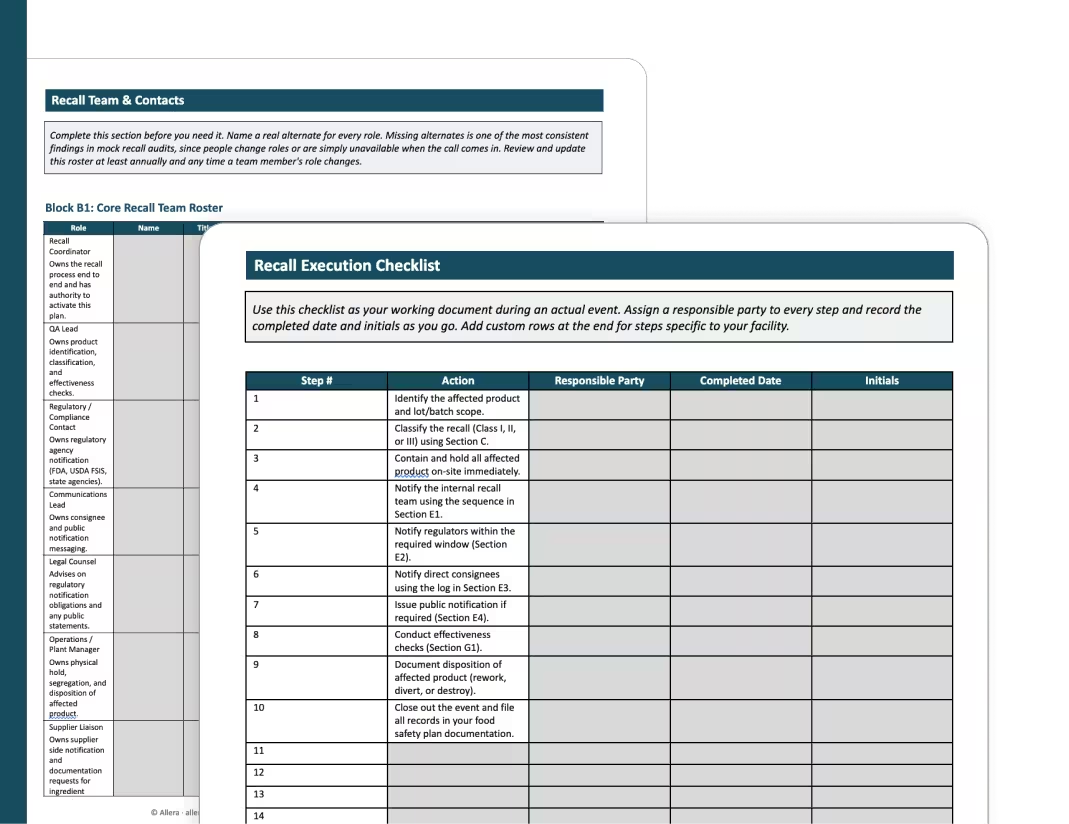
If your products need a preventive control, 21 CFR 117.139 requires a written recall plan covering four actions: notifying direct consignees, notifying the public when appropriate, conducting effectiveness checks and disposing of recalled food. FSIS establishments need written recall procedures under 9 CFR 418.3. FDA's draft guidance chapter on recall plans offers a model.
Those four actions are the levers the class turns up or down, so write class-dependent triggers into the plan:
- Who on the recall team is activated for a Class I scenario versus a Class III one
- Who approves a press release, and how fast
- The default effectiveness check level for each class
Then test them. A mock recall built around a Class I allergen scenario tests the plan differently than one built around a Class III labeling error. After any real recall, find the root cause and document a corrective action plan so the failure doesn't come back.
Your recall plan only works if the team is using the current version. Allera's Document Control keeps the plan versioned and approved, a Scheduled Review flags it when the annual review comes due, and Training Management tracks which recall team members have acknowledged it. See how Allera keeps your recall plan up to date.
When the call comes, the class is FDA's or FSIS's decision. How fast you can pull up the checks, approvals and Corrective Actions behind the affected product is yours. 500 companies use Allera for compliance. See how food manufacturers keep that evidence audit ready.
FAQs