

Sanitary Design in Food Manufacturing: Principles, Standards and Equipment Acceptance

Sanitary design, also called hygienic design, is the practice of designing, building and installing food equipment and facilities so that soil and microorganisms can't collect, and so that everything can be cleaned, inspected and maintained. It's the control that comes before cleaning starts: if a machine can't be cleaned, no SSOP will fix it. This guide covers the 10 equipment principles, which standards apply to your equipment, what FDA, USDA, SQF, BRCGS and FSSC 22000 require, and how QA should sign off new equipment before it runs product.
What Is Sanitary Design?
Sanitary design is a set of principles for building food equipment and facilities that can be cleaned to a microbiological level, inspected and maintained, and that don't hold product residue, water, allergens or microorganisms between cleans. It applies to the machine, how it's installed and the building around it.
Sanitary design vs. hygienic design
The two terms describe the same discipline. "Sanitary design" is the usual US term, used by the Meat Institute and 3-A Sanitary Standards. "Hygienic design" is the European and global term, used by EHEDG and in SQF and FSSC 22000 requirements. Both cover equipment and facilities.
Where it sits in your food safety system
Sanitary design is one of your prerequisite programs and a GMP requirement under 21 CFR 117 Subpart B. It isn't a critical control point, because there's no critical limit you can monitor as product runs. You manage it through specifications, equipment acceptance and periodic inspection.
No single department can own it. Purchasing, engineering, maintenance, sanitation, operations and QA all make decisions that change how cleanable a line is, so the programs that work run as a cross-functional team.
Why cleaning can't fix a design fault
Hollow frames, open seams, lap joints and dead ends give soil and moisture somewhere to sit where brushes, foam and sanitizer can't reach. In wet ready-to-eat (RTE) environments, those spots become harborage for Listeria monocytogenes, which survives routine sanitation and reseeds the line. Equipment that's hard to strip down lets residue survive a changeover and cause allergen cross-contact, and worn or badly built parts shed fragments that become physical contamination. The Meat Institute's 2021 revision of its equipment principles added a particular focus on foreign material.
Many plants are working with what they inherited. A Food Safety Magazine survey of more than 118 food processors in 23 countries found decades-old equipment that predates modern hygienic features, old or retrofitted buildings, poorly made seams and welds, and a shortage of skilled maintenance and sanitation staff.
What happened at Fresh & Ready Foods
In March 2025, as part of a multistate Listeria outbreak investigation, FDA swabbed Fresh & Ready Foods, a California maker of RTE sandwiches and wraps. FDA's September 2025 warning letter lists the positive food-contact surfaces, which included a conveyor belt and roller where in-process sandwiches were placed and the gauge plate and knife cover of a slicer. The outbreak counted 10 illnesses in two states, 10 hospitalizations and one death, and the firm recalled products on May 10, 2025.
In its response, the firm "assessed the cleanability of equipment and removed conveyor belts which were deemed difficult to clean." FDA acknowledged those steps but noted the firm had not shown it had "located and eradicated the harborage site(s)," or provided a revised sanitation preventive control program or environmental monitoring program. FDA also recorded missing metal lacing segments on conveyor belts, a repeat observation.
The cleanability assessment happened after the outbreak. Sanitary design and equipment acceptance exist to move that assessment to before the equipment is installed.
The 10 Principles of Sanitary Equipment Design
A widely used US framework is the Meat Institute's Food Safety Equipment Design Principles (2021). They were written for meat and poultry plants, and the Meat Institute notes they may apply to other wet-cleaned food operations. Use the table as an inspection lens.
| Principle | What it means on the floor | What to look for |
|---|---|---|
| 1. Made of compatible materials | Materials stand up to your product, environment, chemicals and sanitation methods | Corrosion, pitting, cracked or crazed plastics |
| 2. Accessible for inspection, maintenance and sanitation | Sanitation can reach and see every surface without tools | Guards and covers that need a wrench, surfaces nobody can see during pre-op |
| 3. No product, liquid or other material collection | Equipment is self-draining | Water standing on frames, ledges or trays after washdown |
| 4. Hollow areas hermetically sealed | Hollow frames and rollers are eliminated or permanently sealed | Open tube ends, drilled holes, brackets bolted rather than welded |
| 5. No niches | No pits, cracks, gaps, lap seams, inside threads or dead ends | Exposed threads, overlapping metal, gaps behind nameplates |
| 6. Operational performance | The equipment doesn't create unsanitary conditions or foreign material while it runs | Belt wear, fraying, metal-on-metal contact, shedding plastics |
| 7. Maintenance enclosures | Control boxes, buttons and touchscreens keep water and residue out | Flat enclosure tops used as shelves, broken seals on panels |
| 8. Compatibility with other plant systems | Exhaust, drainage and automated cleaning don't add risk | Drain lines that splash, condensate dripping onto product zones |
| 9. Cleanable to a microbiological level | Cleaning works over the life of the machine, on product and non-product surfaces | Repeat swab failures at the same point after cleaning |
| 10. Validated cleaning and sanitizing protocols | Written procedures are proven effective and compatible with the equipment | No validation record, chemicals that damage seals or surfaces |
The same booklet includes a free checklist that scores each criterion Satisfactory, Marginal, Unsatisfactory or Not Applicable, out of 1,000 points. For dry and low-moisture plants, the Consumer Brands Association's Equipment Design Checklist for Low Moisture Foods is a free Excel file linked from this Commercial Food Sanitation article. Closed systems have their own design issues, such as dead legs and spray coverage, which our guide to clean-in-place (CIP) systems covers.
Sanitary Facility Design: The Building Matters Too
A well-designed machine in a badly designed room still gets recontaminated. The Meat Institute's Facility Design Principles set out 11 principles:
- Distinct hygienic zones
- Personnel and material flows that reduce hazards
- Control of water accumulation
- Control of room temperature and humidity
- Control of air flow and air quality
- Site elements that support sanitary conditions
- Building envelope design
- Interior spatial design that supports sanitation
- Building components and construction
- Utility systems that prevent contamination
- Adequate sanitation systems
US regulations set the baseline. 21 CFR 117.20(b) requires an FDA-regulated plant to be "suitable in size, construction, and design to facilitate maintenance and sanitary operations," with space to place equipment for cleaning. For USDA establishments, 9 CFR 416.2 requires walls, floors and ceilings built of durable materials "impervious to moisture."
Floor drains are the classic facility niche in RTE areas, which is why hygienic drainage design gets attention in Listeria control. Periodic infrastructure cleaning of drains, overheads and walls belongs on your master sanitation schedule.
Which Sanitary Design Standards Apply to Your Equipment?
Sanitary standards are published design requirements that equipment makers build to and buyers specify against. Which one applies depends on your sector and the equipment.
| Standard | Typical equipment and sector | What it tells you |
|---|---|---|
| 3-A Sanitary Standards | Dairy, fluid and other processing equipment | The 3-A General Requirements Standard 00-02 reached its third edition in February 2026, with new rules on seals, CIP gasket joints and leak detection |
| NSF/ANSI/3-A 14159-1-2024 | Meat and poultry processing equipment | Replaces the 2019 edition. It excludes hand-held tools and mechanical belt conveyors, which are covered by other parts of the 14159 series |
| ANSI/ASB Z50.2 | Commercial and retail bakery equipment | Machines can be evaluated for conformance with the bakery equipment sanitation standard |
| NSF/ANSI 2 | Commercial food equipment | A common certification for commercial food equipment |
| EHEDG Guideline 8, Hygienic Design Principles | All food equipment, widely used in Europe | Fourth edition published December 2025. EHEDG also certifies equipment |
What a certificate does and doesn't prove
A 3-A symbol or an EHEDG certificate tells you the design met a standard when it was evaluated. It doesn't tell you the unit was installed correctly, that maintenance hasn't modified it since, or that it suits your product, your chemicals and your cleaning method. A certified machine bolted to a hollow frame over a floor drain is still a sanitation problem, which is why acceptance still matters.
For food-contact materials and surface finish, see our guide to food contact surfaces.
What US Regulations and GFSI Schemes Require
US regulations require cleanable equipment, while the GFSI schemes add the process: specifications, commissioning and sign-off.
| Rule or scheme | Where it sits | What it requires |
|---|---|---|
| FDA, 21 CFR 117.40 | Equipment and utensils | Equipment designed to be "adequately cleanable," installed to allow cleaning of the equipment "and of adjacent spaces," and food-contact seams "smoothly bonded or maintained" to limit buildup |
| USDA FSIS, 9 CFR 416.3 | Equipment and utensils | Material and construction that "facilitate thorough cleaning," and nothing that prevents FSIS inspection of the equipment |
| SQF Edition 9 | 11.1.7 | Equipment specifications and purchasing procedures documented (11.1.7.1); mechanical processing equipment "hygienically designed and located for appropriate cleaning" (11.1.7.5) |
| SQF Edition 10 | 11.1.6 | The same requirements at 11.1.6.1 and 11.1.6.5. SQFI anticipates Edition 10 audits from January 2, 2027, subject to GFSI benchmarking |
| BRCGS Food Safety Issue 9 | 4.6.2 and 4.6.3 | Design and construction based on risk (4.6.2). A documented commissioning procedure, a hygiene clearance after installation, inspection by an authorized person before acceptance into operation, and updates to affected procedures (4.6.3) |
| FSSC 22000 Version 6 | Additional requirement 2.5.15 | A purchase specification that addresses hygienic design, with supplier evidence before installation, and risk-based change management with evidence of successful commissioning. Version 7, released May 2026, keeps the same clause |
Auditors do test these clauses. In early Issue 9 audits, BRCGS reported 4.6.2 as the third most common minor non-conformance, so if you're working toward BRCGS certification, expect your equipment to be walked. For what auditors look for in practice, SQFI's webinar on hygienic design and what SQF auditors expect is worth an hour.
Equipment Acceptance: How QA Signs Off New or Modified Equipment
This is where sanitary design becomes something you can audit. Run every new or significantly changed piece of equipment through the same six steps.
- Write the purchase specification. State the intended use and product, the cleaning method (wet, dry, CIP or COP), the hygienic design requirements and any standard or certification you require, food-contact material statements, and the lubricant type (food-grade lubricants where incidental contact is possible). List what the manufacturer must deliver, such as cleaning and disassembly instructions, drawings and parts lists. Bring sanitation and maintenance into the spec, because they know where your current equipment fails. (SQF 11.1.7.1 / 11.1.6.1; FSSC 2.5.15(a))
- Review the design before it ships. Review drawings and, for major equipment, attend a factory acceptance test (FAT) at the manufacturer. Walk the machine against the 10 principles, take apart whatever sanitation will take apart, and photograph welds, seals and hollow sections.
- Control the installation and do a hygiene clearance. Contain construction work, account for every tool and loose part, then clean and sanitize the equipment and the area before anything touches product. (BRCGS 4.6.3)
- Run site acceptance and a trial clean. Sanitation cleans the equipment using the draft SSOP. QA verifies with a teardown inspection, ATP testing and, where relevant, allergen and microbiological swabs. An authorized person then accepts it into operation. (BRCGS 4.6.3; FSSC 2.5.15(b))
- Update everything the equipment touches. That means your hazard analysis, SSOPs, master sanitation schedule, environmental monitoring sites, preventive maintenance schedule, training and internal audit scope. BRCGS 4.6.3 lists most of these by name.
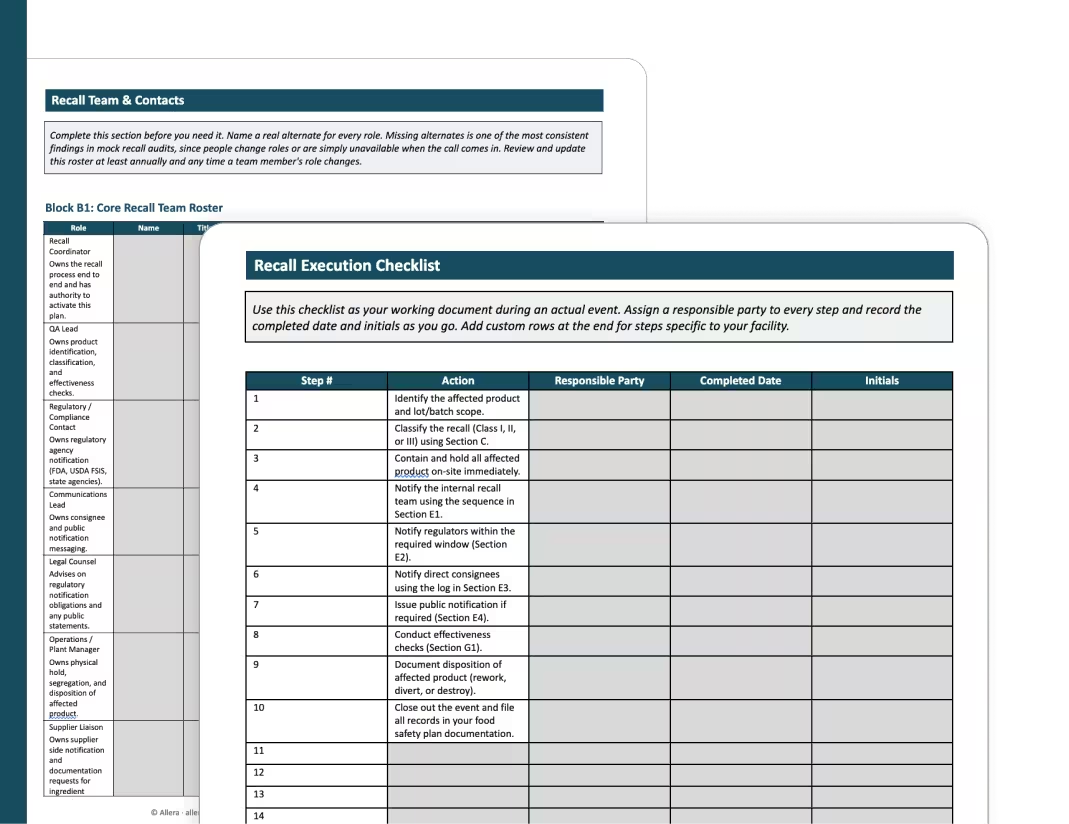
- Sign it off and keep the record. Record who accepted the equipment, against which specification, and any open items with an owner and a due date.
Modified, relocated and second-hand equipment
Treat a significant modification, a move from another site or a used machine the same way as new equipment. The FSSC 22000 FAQ says equipment transferred from another site must meet 2.5.15 like any other equipment new to the site. Maintenance repairs need the same scrutiny, because equipment repaired in a hurry to restart a line can lose its original design. A welded bracket, a drilled frame or silicone over a leaking joint creates a new niche, and temporary repairs that became permanent are a familiar audit finding.
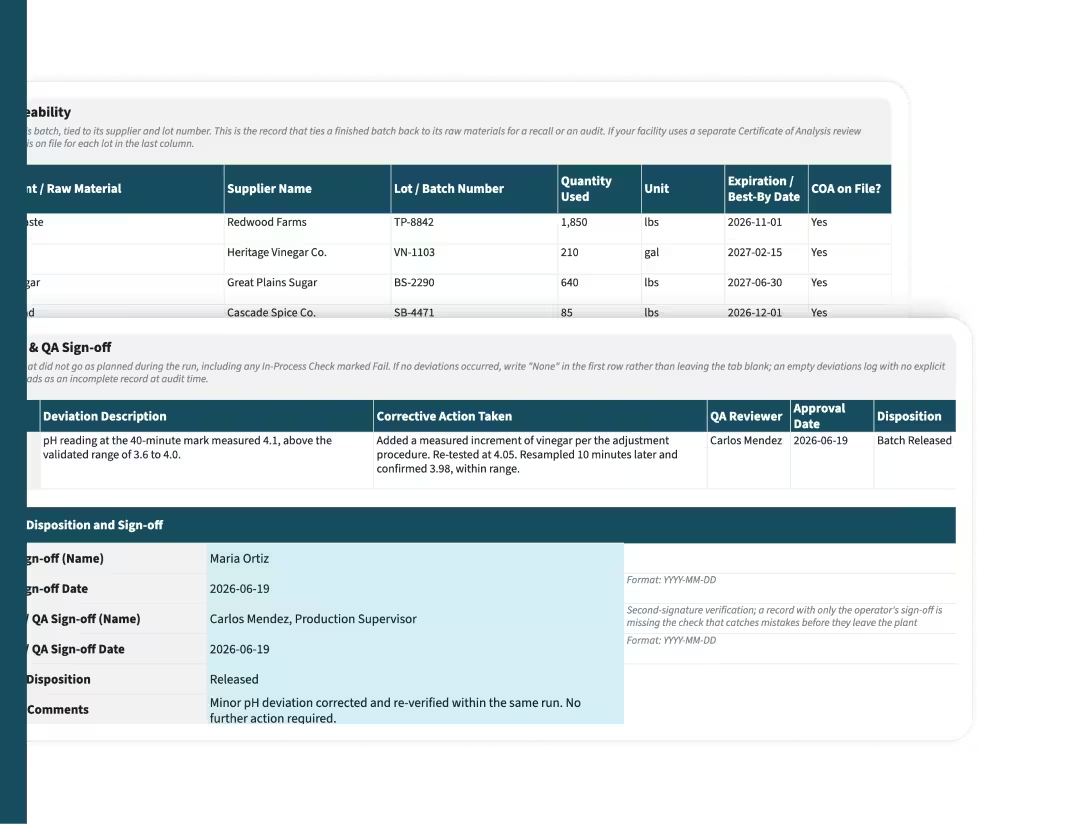
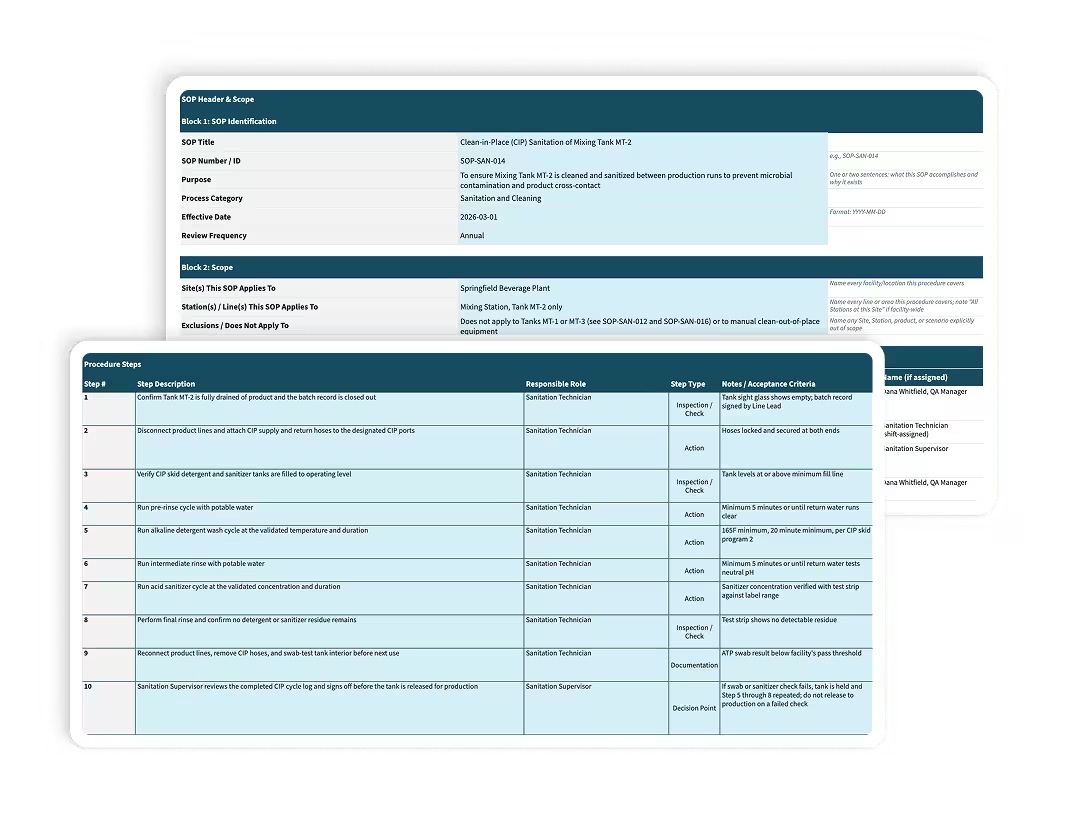
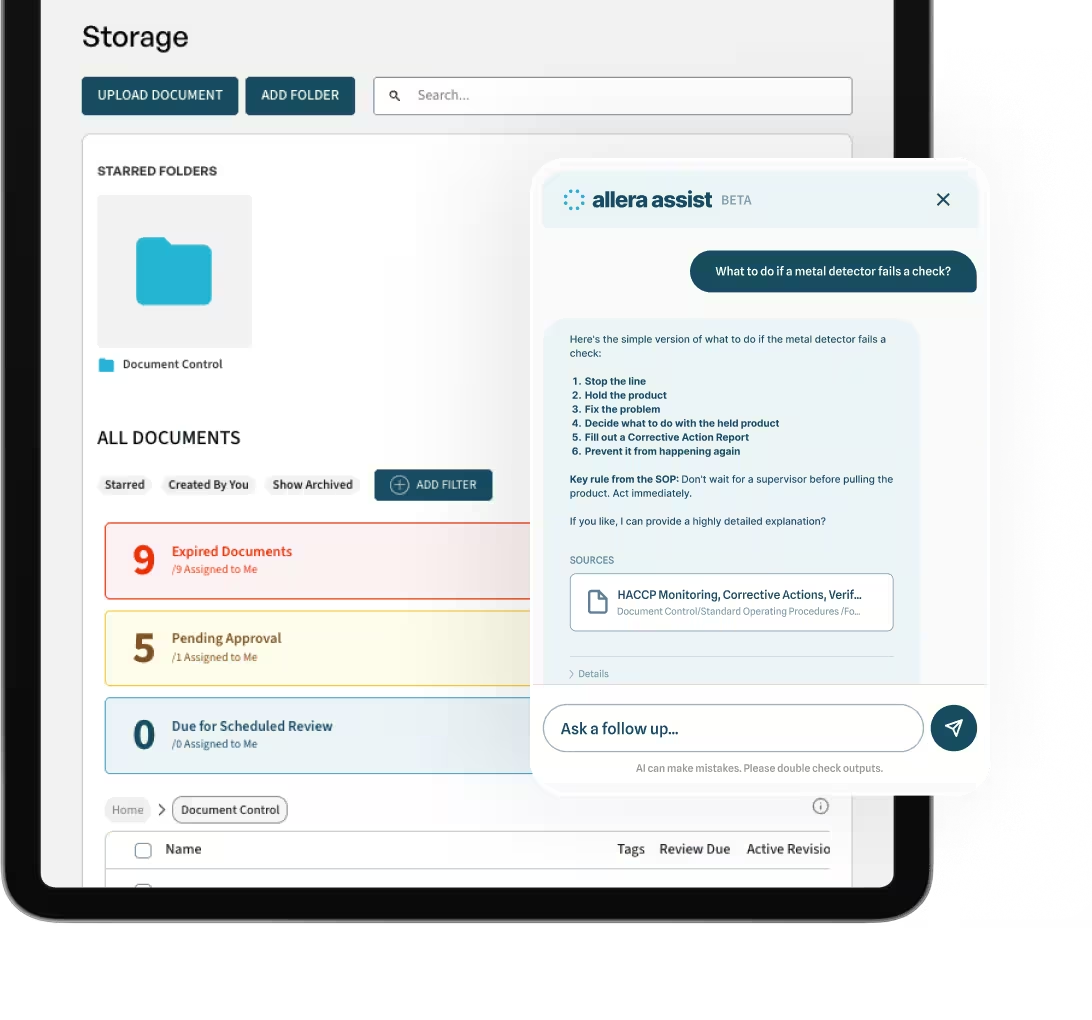
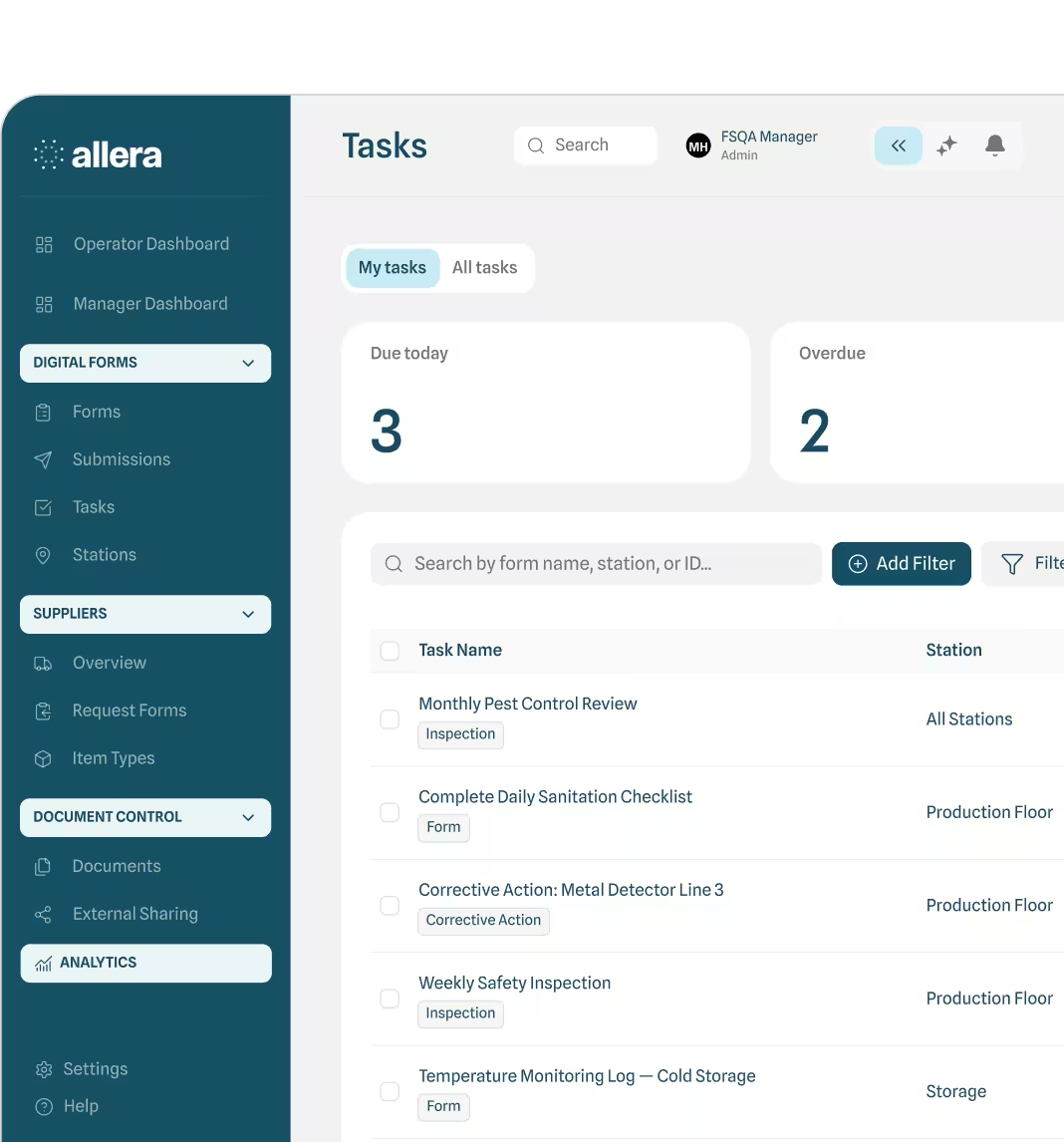
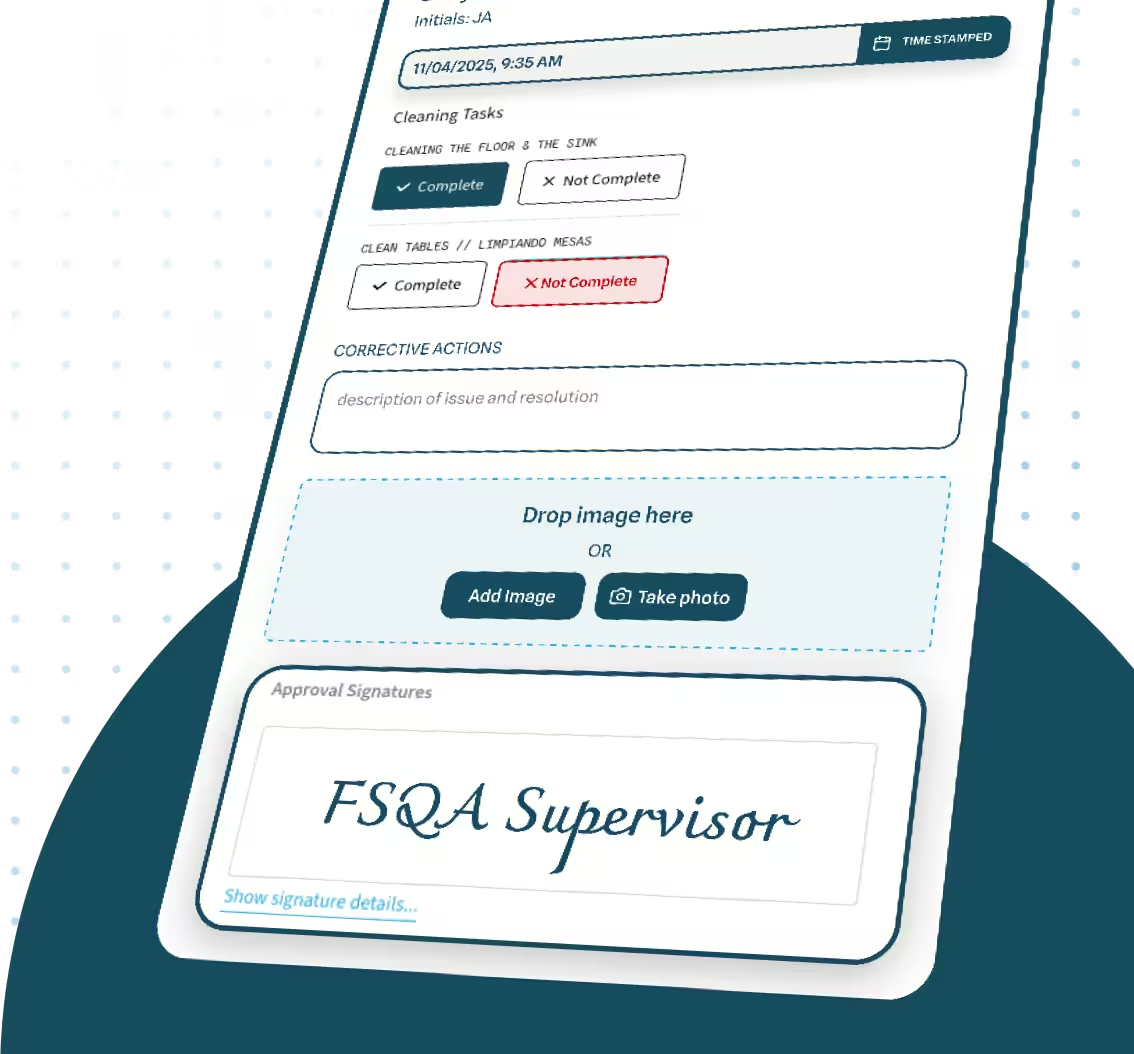
Equipment acceptance is a sign-off process, and it falls apart when it lives in a binder. In Allera's Digital Forms, you can build an acceptance Form with Image fields for photos of welds, seals and the hygiene clearance, File fields for the specification and the manufacturer's cleaning instructions, and assigned approvals so QA and sanitation both sign before the line is released. Any item marked as failed creates a Corrective Action with an owner, so open items don't get lost after start-up. See how Allera's Digital Forms work.
Existing Lines: Finding and Fixing the Design Faults You Already Own
Much of the equipment on your floor was probably installed before anyone ran it through a formal acceptance. You can still find its design faults, rank them and fix them on a schedule.
Walk the line
Inspect a clean line that's stopped and locked out, with sanitation and maintenance alongside QA. Look for:
- Open or capped hollow frames, legs and rollers
- Exposed threads and fasteners above product
- Gaskets that aren't flush, and seals that are cracked or missing
- Horizontal ledges still holding water after washdown
- Long branches or capped tees on CIP lines
- Sealant or tape used as a permanent repair
- Frayed belts, worn plastics and missing belt lacing
Photograph and log each fault by line and location, so you can track it to closure.
Let your EMP data point to design problems
Your environmental monitoring program is a design-fault detector if you read it that way. Repeat positives at the same site, positives that creep from frames and floors toward food-contact surfaces, and swabs that fail after every clean usually point to a niche rather than a crew problem. Use vector swabbing around the positive to find the source, then take the equipment apart. At Fresh & Ready, FDA's request was exactly this: find and eliminate the harborage site.
If the niche can be cleaned with extra teardown, your cleaning and sanitation program can control it for now. If it can't, it needs a design fix.
Prioritize and fix
Rank each fault by risk: its location relative to product, and the product itself, with exposed RTE, post-lethality and allergen lines first. Separate quick fixes (seal, replace, remove) from capital items that need a budget. Until the permanent fix lands, document interim controls such as extra teardown, more frequent swabbing or a change to the sanitation schedule.
Track each fault as a corrective action through to the fix, and re-verify with swabs afterward.
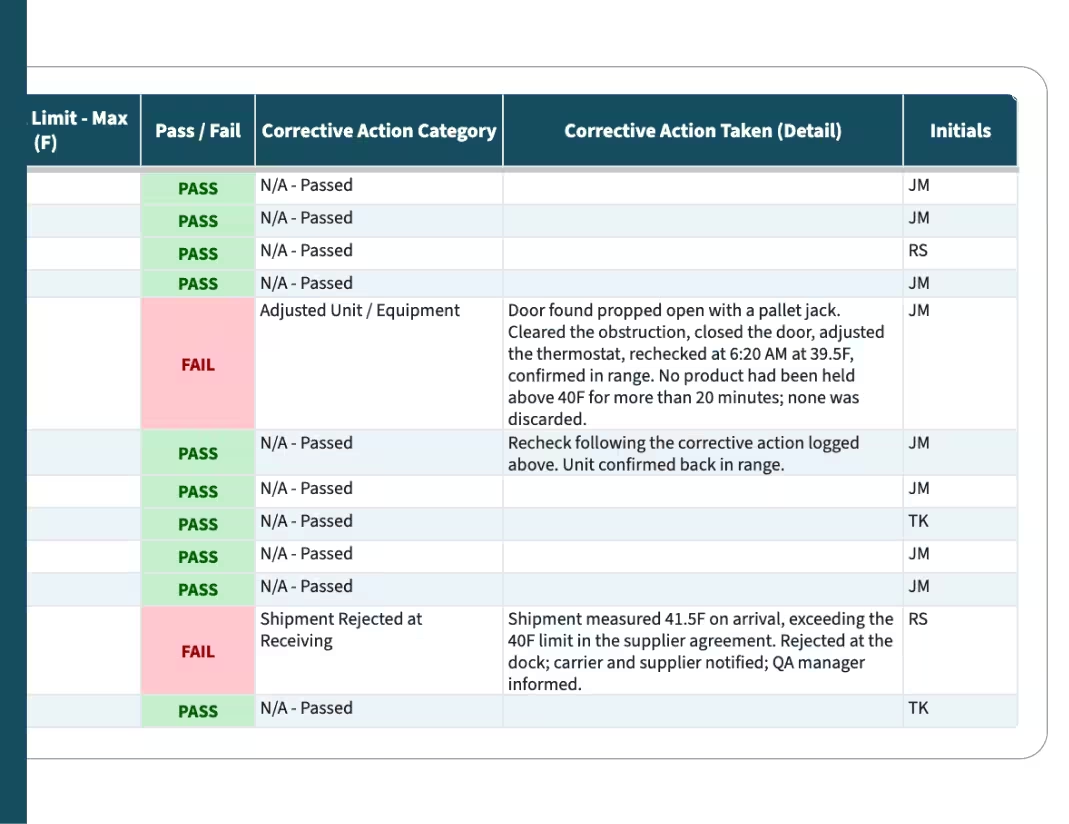
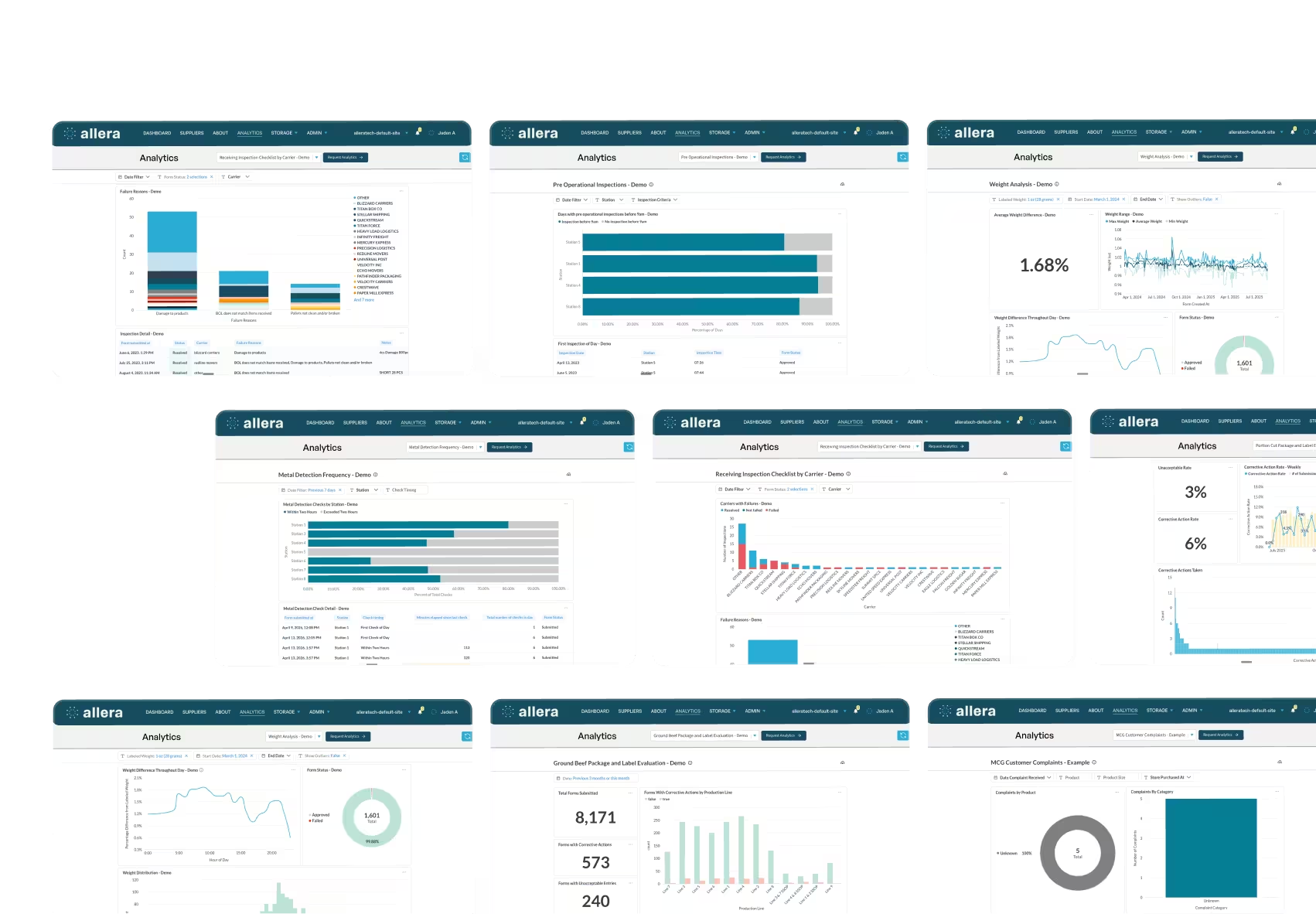
A design walk-through only helps if the findings are tracked to closure. In Allera, you can schedule the walk-through as a Recurring Task, log each fault on a Digital Form with a photo, and let failed items become Corrective Actions that someone owns. A saved filter on the submissions list shows every failed item at a site, so you can show an auditor what you found and when you closed it. See how Allera tracks findings to closure.
The Records That Show an Auditor Your Program Works
An auditor will judge your sanitary design program on its records. Keep these where you can pull them up quickly:
- Purchase specifications for new equipment
- Design review and FAT notes
- Hygiene clearance and acceptance sign-offs
- Periodic design walk-throughs and their findings
- Environmental monitoring trends tied to the fixes they triggered
- Corrective actions closed out and re-verified
- Change records for modified or relocated equipment
- The updated SSOPs and master sanitation schedule
A common finding is simple: equipment installed or modified with no record that anyone checked it. Your HACCP verification and internal audit schedule should test for it before an auditor does.
If your acceptance sign-offs, walk-through findings and SSOP updates are spread across binders, email and spreadsheets, keeping track of them is the hard part. Allera keeps forms, approvals, Corrective Actions and controlled documents in one place, so the record is complete when the auditor asks. See how Allera works for FSQA teams.
FAQs