.avif)



What Is Cross-Contact? A Food Manufacturer's Guide to Allergen Control

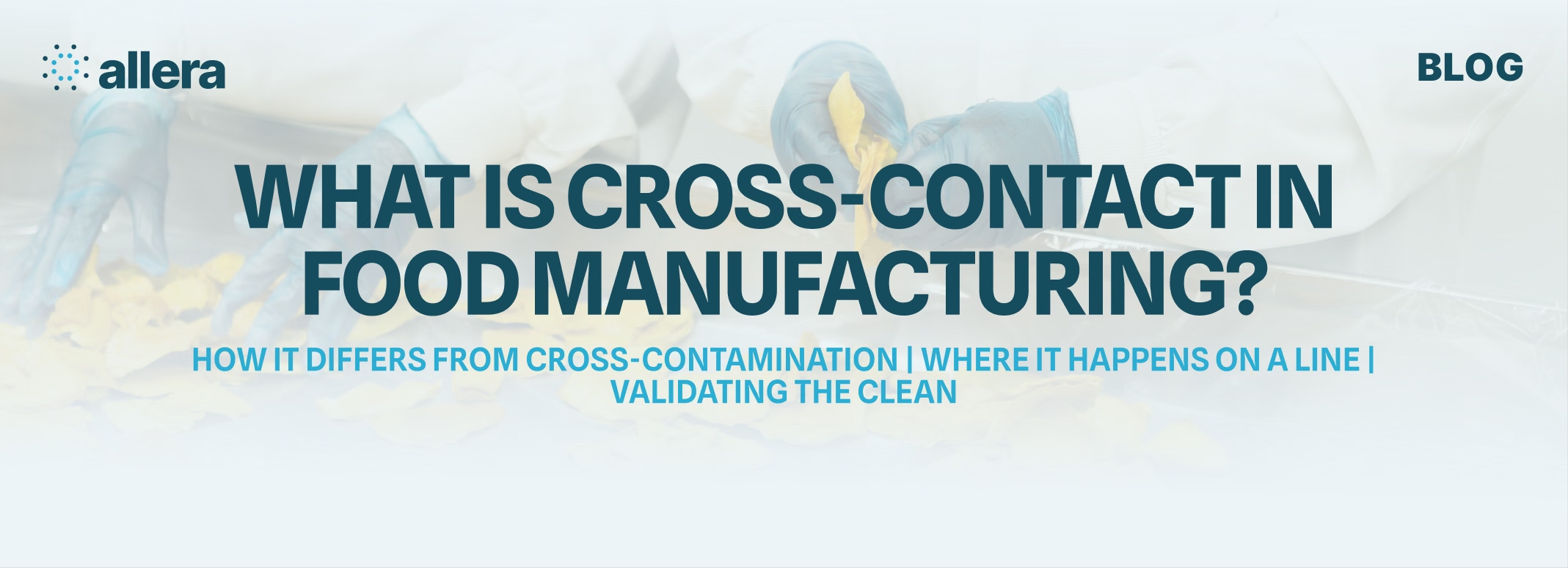
Cross-contact is the unintended transfer of an allergenic protein from one food to another. In a plant, that usually means a trace of milk, almond or sesame moving from the product you ran this morning into the product you are running this afternoon.
Search this term and almost everything you find is written for someone with a food allergy, or for a diner asking a chef about a menu. That guidance is useful, and it is not what you need when you are responsible for a shared line running eleven products across two allergen profiles.
This guide covers cross-contact from the manufacturing side: where it happens on a line, which controls actually work, how to verify cleaning properly, and what regulators and certification schemes expect you to evidence.
What Is Cross-Contact?
Cross-contact occurs when an allergenic protein from one food ends up in another food that is not supposed to contain it. The receiving product is not spoiled, contaminated in the microbiological sense, or unsafe for most people. For someone allergic to the transferred protein, it can be dangerous.
In a production environment, the transfer is almost always physical and mechanical. Residue left on a mixer blade, dust carried on air movement, a scoop moved between bins, film carrying the wrong pre-printed declaration. The amounts involved are small enough to be invisible and large enough to matter.
Why Cooking Does Not Solve It
Heat destroys most bacteria. It does not reliably destroy allergenic proteins.
Many food allergens are heat stable, meaning the protein keeps the structural features the immune system reacts to even after cooking, baking or retorting. A thermal process that gives you a validated kill step for Salmonella does nothing for the peanut protein already in the batch.
This is the core reason cross-contact needs preventing rather than correcting. There is no downstream step that removes it.
Cross-Contact vs Cross-Contamination
These two terms get used interchangeably, including by people who should know better, and the distinction changes how you control the risk.
| Cross-contact | Cross-contamination | |
|---|---|---|
| What transfers | An allergenic protein | A pathogen, chemical or foreign material |
| Who is affected | People allergic to that specific allergen | Potentially anyone who eats the product |
| Effect of heat | Generally unaffected; many allergens are heat stable | Thermal processing typically reduces or eliminates microbial hazards |
| Primary control | Segregation, sequencing, validated cleaning, label control | Sanitation, temperature control, hygiene, thermal processing |
| Verification method | Allergen-specific protein testing | Microbiological testing, ATP, environmental monitoring |
| Typical consequence | Undeclared allergen, recall, potential anaphylaxis | Foodborne illness outbreak, spoilage, injury |
The practical difference is that cleaning to a microbiological standard does not automatically clean to an allergen standard. A surface can pass an ATP check and still carry enough protein to cause a reaction, because ATP measures organic residue generally rather than the specific protein you care about.
That is why allergen control belongs in your allergen control program as a distinct programme, not as a footnote in your sanitation procedures.
The 9 Major Food Allergens
The United States recognises nine major food allergens. Many resources still say eight, which has been out of date since the start of 2023.
The original eight were established by the Food Allergen Labeling and Consumer Protection Act: milk, eggs, fish, crustacean shellfish, tree nuts, peanuts, wheat and soybeans. The FASTER Act added sesame as the ninth, with labeling requirements effective 1 January 2023.
Together these account for around 90 percent of food allergies in the US. FALCPA sets out the labeling obligations that follow from that classification.
Allergens Outside the US List That Still Matter
If you export, the list you work to gets longer. The European Union requires declaration of 14 allergens, adding celery, mustard, lupin, molluscs and sulphur dioxide above certain levels. Canada includes mustard and requires gluten sources to be declared.
Build your allergen matrix around every market you ship to, not just the domestic list. A product that is compliant in Ohio and non-compliant in Hamburg is still a problem.
Where Cross-Contact Happens on a Production Line
Most allergen incidents trace back to a small number of recurring vectors. Knowing them makes your hazard analysis considerably faster.
| Vector | How transfer happens | Primary control |
|---|---|---|
| Shared equipment | Residue in mixers, hoppers, augers, fillers, conveyors | Validated changeover cleaning, or dedicated equipment |
| Airborne dust | Powders carried on air movement between adjacent lines | Physical separation, extraction, scheduling, air handling |
| Rework | Allergen-containing rework added to a non-allergen batch | Like-into-like rule, labeled containment, records |
| Personnel movement | Residue on hands, gloves, sleeves, aprons moving between areas | Zoning, garment change, handwash points, traffic rules |
| Packaging and labels | Wrong film or label applied to correct product | Label reconciliation, changeover verification, staging rules |
| Storage and staging | Spillage from a pallet above onto material below | Storage hierarchy, sealed containers, allergen segregation |
| Utensils and tools | Scoops, brushes, maintenance tools moved between areas | Colour coding, dedicated tooling, controlled tool storage |
Shared Equipment and Changeover
Shared equipment is the largest single source of cross-contact in most plants, and the hardest to fully eliminate without capital spend.
Where dedication is not feasible, the control is a validated cleaning procedure at changeover, with verification before the next run starts. Dry processing is harder than wet because you cannot use water freely, and dry cleaning methods rarely achieve the same protein removal.
Pay particular attention to equipment that is difficult to disassemble. Augers, dead legs, chain conveyors and anything with a hollow section will hold residue long after the visible surfaces look clean.
Airborne Transfer in Dry Processing
Flour, milk powder and nut meal all generate airborne dust that travels further than most people assume. Dust from a line running almond meal can settle on an adjacent line several metres away.
Controls include physical barriers, local extraction at the dust source, positive pressure in sensitive areas, and separating incompatible products in time rather than trying to separate them in a space that is too small.
Personnel and Traffic Patterns
People move between areas more than product does. An operator who helps on the nut line for ten minutes and returns to the nut-free line carries protein on their sleeves, gloves and shoes.
Zoning with garment changes at the boundary is the standard control. It only works if the boundary is physically obvious and there is a practical route that does not require crossing through the wrong zone to reach the break room.
Rework: The Most Overlooked Allergen Vector
Rework is where good allergen programmes quietly fail, because rework is generated by production and often handled informally.
The governing principle is like into like. Allergen-containing rework goes back only into a product that already declares that allergen. A product that already contains milk can take milk-containing rework. A nut-free product cannot take rework from a line that ran almonds, no matter how small the quantity.
Making that principle work in practice needs three things. Rework has to be identified at the moment it is generated, with the product, the allergen profile, the date and the lot recorded. It has to be contained in a labeled, sealed container that cannot be confused with anything else. And its addition has to be recorded in the batch record of the receiving product, so the trail exists afterwards.
Unlabeled rework in an unmarked tote is one of the most common allergen findings raised at audit, and it should be treated as a significant hazard in your hazard analysis.
Production Scheduling as an Allergen Control
Your production schedule is an allergen control, whether or not you have written it down as one.
The standard approach is to run allergen-free products first after a full clean, then progress through increasingly allergen-containing products across the run. That way each changeover moves toward greater allergen content rather than away from it, and the demanding full clean happens once rather than repeatedly.
Campaign running extends the same logic. Grouping all production of a given allergen profile together reduces the number of changeovers, and every changeover you avoid is a control you do not have to validate and verify that day.
Where the schedule is a documented control, changes to it need the same oversight as changes to any other control. A last-minute reshuffle to accommodate a rush order can invalidate the sequencing logic entirely. Tie the schedule to your master sanitation schedule so that cleaning requirements move with it.
Validating and Verifying Allergen Cleaning
Cleaning verification is where the technical depth sits, and where most published guidance stops short.
Three distinct things are happening, and they are often confused. Validation proves your cleaning procedure is capable of removing allergen to an acceptable level, and is done once and repeated after changes. Verification confirms that a specific cleaning event achieved the required result. Monitoring is the routine observation that the procedure was followed.
Visual Inspection, and Why It Is Not Enough
Visual inspection is necessary and insufficient. Protein residue at levels capable of causing a reaction is not visible to the eye.
Use visual inspection as a gate. If a surface fails visually it definitely fails, and there is no point in swabbing. Passing the visual check earns you the right to test, not a pass.
ATP Testing and What It Actually Measures
ATP swabbing measures adenosine triphosphate, a marker of organic residue generally. It is fast, inexpensive and useful for sanitation verification.
It is not an allergen test. A surface can return a good ATP result while still carrying allergenic protein, because ATP degrades at a different rate than protein and the two do not correlate reliably. Our guide to ATP testing covers what it is genuinely good for, which is verifying that cleaning happened and was broadly effective.
Allergen-Specific Protein Swabs
For allergen verification you need a test that targets the protein itself. Lateral flow devices give a rapid qualitative or semi-quantitative result at the line and are the usual choice for changeover decisions. ELISA gives quantitative results with better sensitivity but takes longer and normally goes to a lab.
Choose sampling points deliberately and write them down. Product-contact surfaces, hardest-to-clean locations, and points identified during validation as worst case. Swabbing an easy flat surface and passing tells you very little.
Set your action criterion before you test, not after you see a result. Our guides to cleaning and sanitation in the food industry and SSOPs cover how to document the procedure itself.
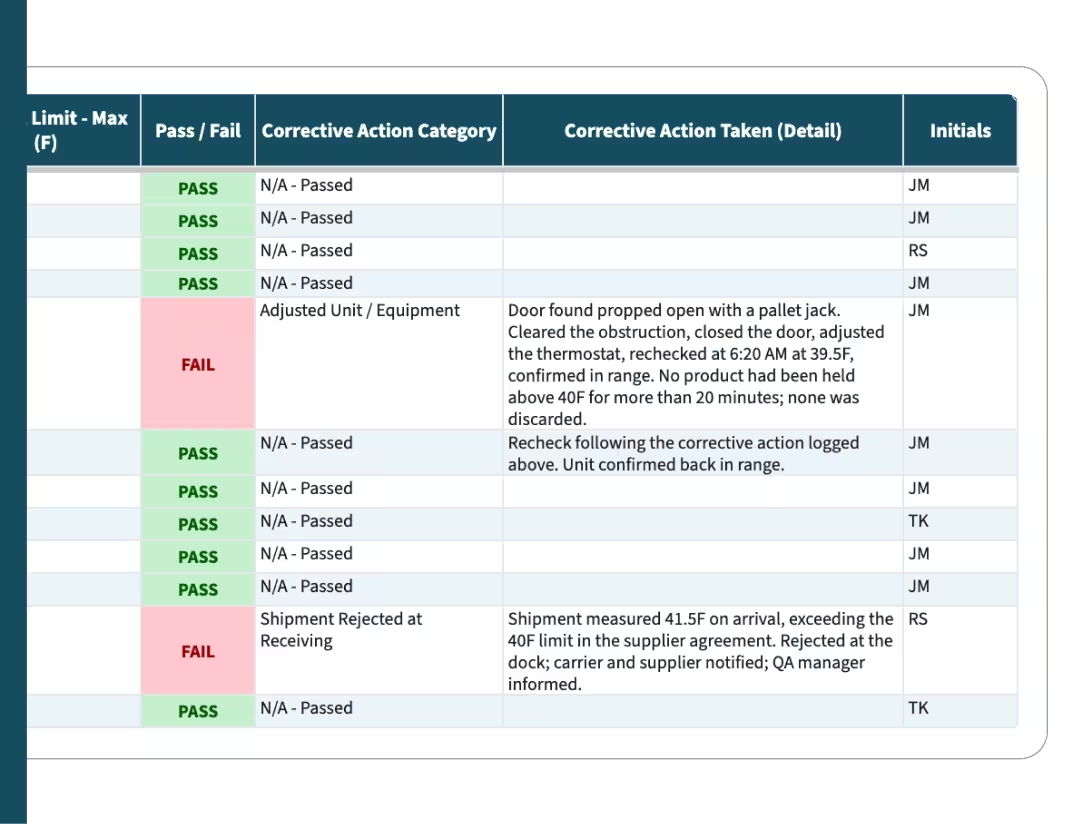
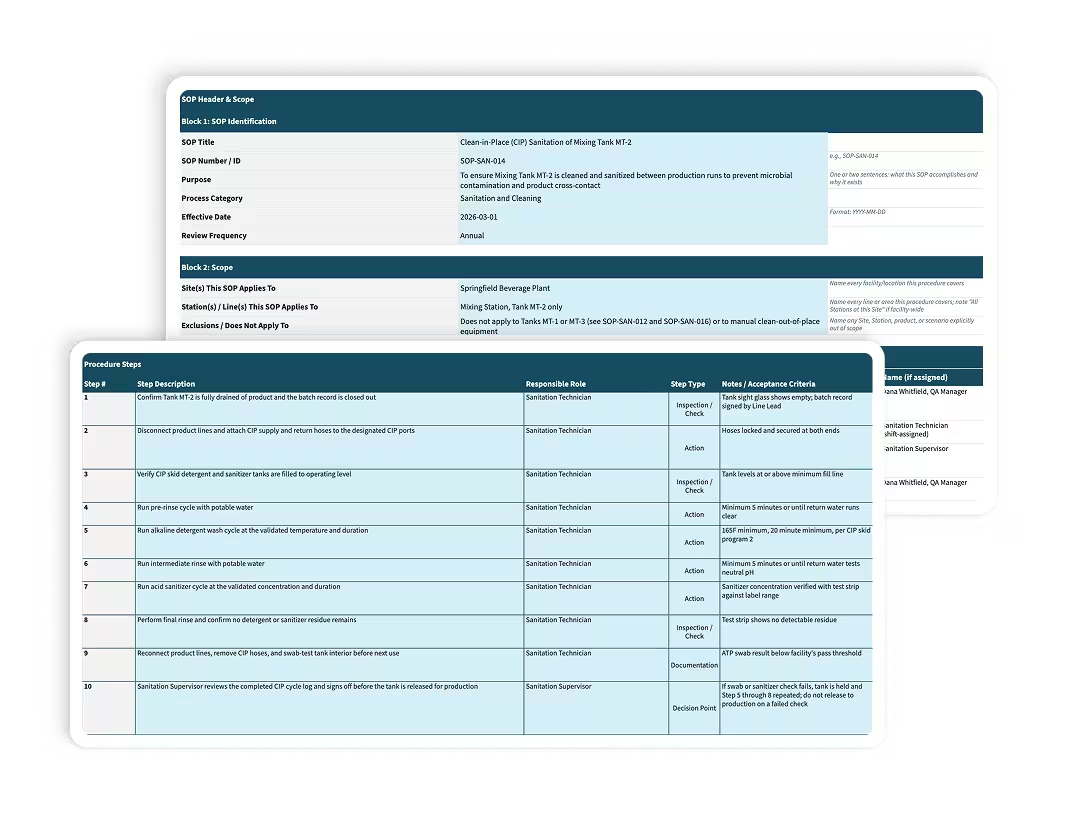
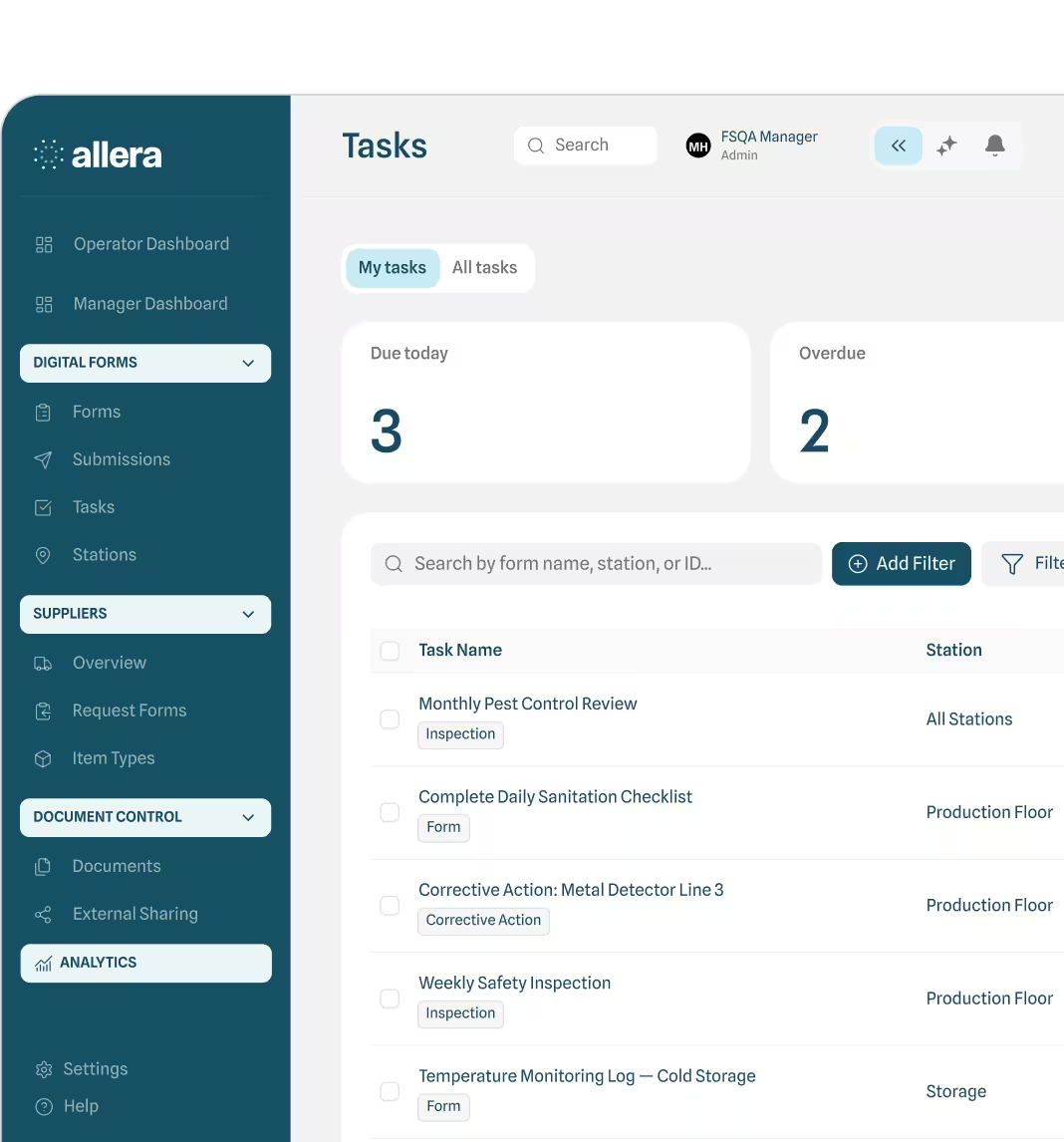
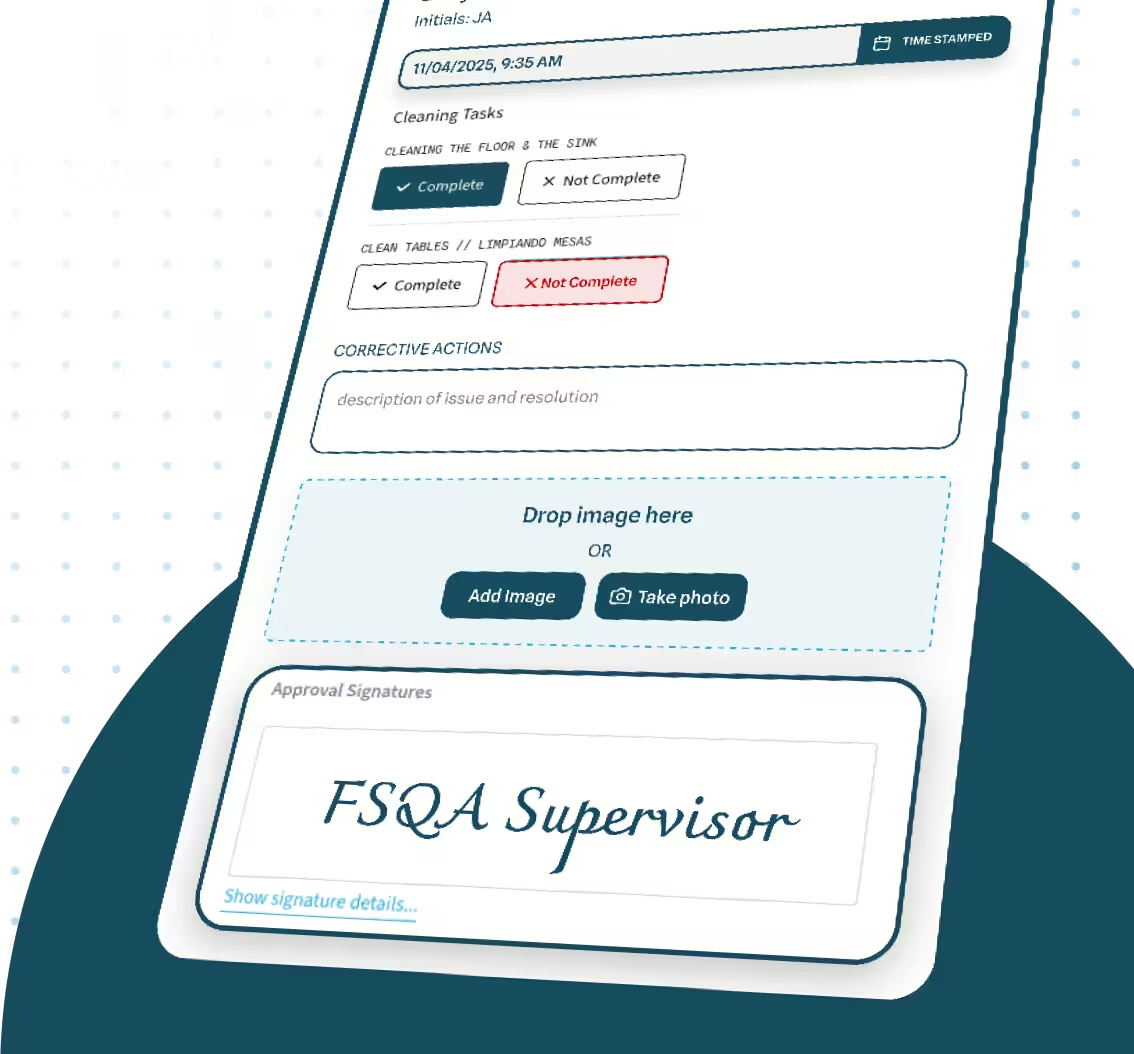
Changeover verification generates a lot of records, and they matter most at the moment the line is waiting to restart. When those records live on paper, the result often reaches the decision-maker after the line has already started. Allera replaces paper quality forms with digital forms that carry your pass and fail rules at the point of entry, and when a rule fails, a Corrective Action follow-up task is created automatically rather than depending on someone noticing. See how that works on the food quality management software page.
What Regulators and Schemes Expect
Allergen control is explicitly required, not merely good practice.
21 CFR Part 117 requires food facilities to identify hazards requiring a preventive control and, where allergen hazards are identified, to implement allergen preventive controls. These cover both ensuring protection from cross-contact during manufacturing and ensuring correct labeling of the finished product. Monitoring, corrective action and verification requirements apply as they do to any preventive control.
SQF, BRCGS and FSSC 22000 Allergen Clauses
SQF Food Safety Codes, currently Edition 10, require a documented allergen management programme covering risk assessment, segregation, validated cleaning, labeling controls and staff training.
BRCGS Issue 9 treats allergen management as a distinct requirement, with an emphasis on documented risk assessment, validated cleaning procedures and control of precautionary labeling. FSSC 22000, now at Version 7, requires an allergen management plan including a risk assessment and validated controls.
All three expect the same evidence chain: a risk assessment identifying where cross-contact can occur, controls at each of those points, validation that the controls work, verification records showing they were applied, and training records showing people understand them. Our comparison of GFSI, SQF and BRCGS covers how the schemes differ structurally.
When a Control Fails: Labeling, Hold, or Recall
At some point a changeover check will fail, or a label check will catch the wrong film, or someone will report that allergen-containing rework went into the wrong batch.
Hold the product first and work out the scope second. Scope means every lot potentially affected, including product made before and after the failure if you cannot establish exactly when control was lost. Then assess: which allergen, how much exposure is plausible, is the product ready to eat, and does the label already declare the allergen.
Precautionary allergen labeling is not a fix for a control failure. Statements such as "may contain" are voluntary in the US and are intended to communicate a genuine, assessed, unavoidable risk. Applying one to cover a cleaning failure you could have prevented is not a legitimate use, and it erodes the value of the statement for the people who rely on it.
If affected product has shipped and carries no declaration for the allergen present, you are in recall territory. Undeclared allergens remain among the most common reasons for food recalls, as covered in our piece on why allergen recalls keep happening and the consequences explored in allergen mislabeling deaths.
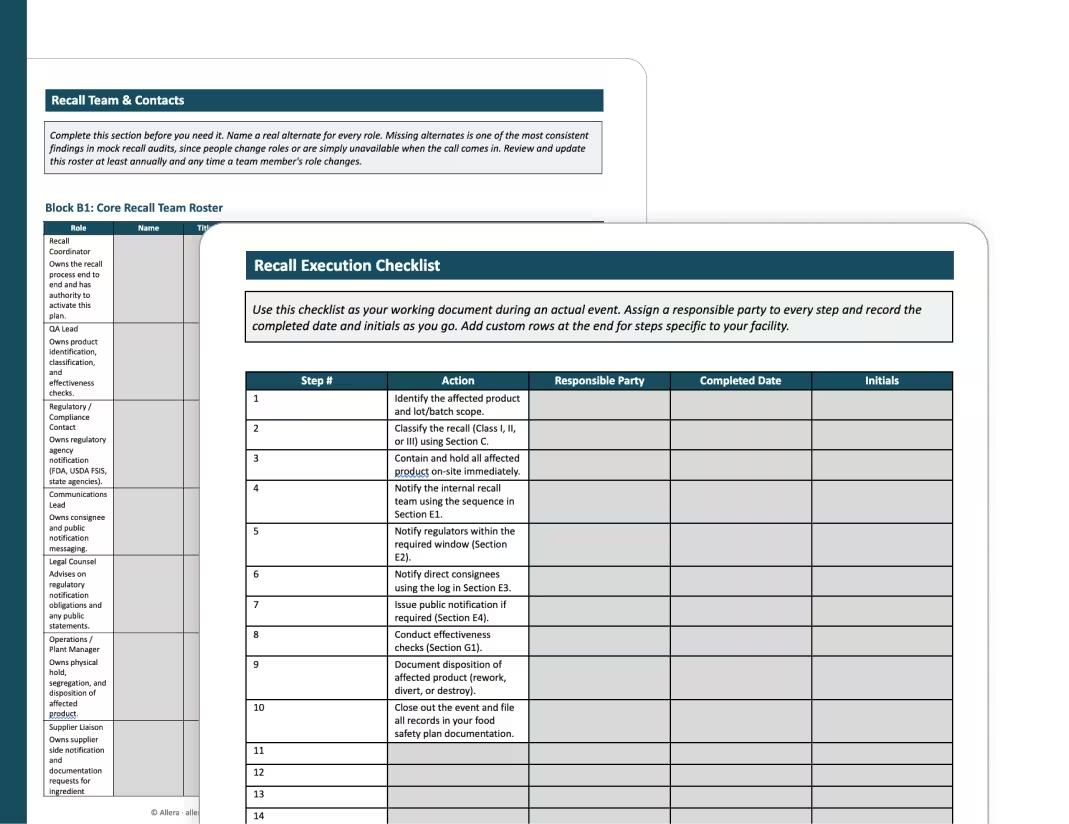
Document the deviation, the assessment, the disposition and the reasoning. Our guide to building a corrective action plan covers what closure should look like, and running a mock recall is the way to find out whether your traceability actually supports a fast decision.
Bringing It Together
Cross-contact is a control problem with no downstream safety net. Once allergenic protein is in the product, no process step removes it, and the consequence falls on the person least able to detect it.
The controls that work are unglamorous: segregation, deliberate sequencing, validated cleaning verified with a test that measures the right thing, disciplined rework handling, and label control at changeover. The evidence that they worked is what turns them from intentions into a defensible programme.
If your changeover checks, swab results and rework records currently live across three different clipboards and a spreadsheet, see how Allera's food quality management software keeps them in one place and flags a failed check before the line restarts.
FAQs
Is sesame a major allergen?
Yes. The FASTER Act made sesame the ninth major food allergen in the United States, with labeling requirements effective 1 January 2023.
Any resource still referring to the Big 8 predates that change. If you export, note that other markets have longer lists: the EU requires declaration of 14 allergens.
Does cooking destroy food allergens?
Generally no. Many allergenic proteins are heat stable and survive cooking, baking and retorting with the structures that trigger an allergic response intact.
Some proteins do change with heat, but you cannot rely on a thermal process as an allergen control. This is why cross-contact has to be prevented rather than corrected downstream.
What is considered indirect cross contact?
Indirect cross-contact happens when the allergen reaches the product through an intermediate rather than by direct contact between two foods.
Airborne powder settling on an adjacent line, residue on an operator's gloves or sleeves, a shared scoop moved between bins, and maintenance tools carried across zones are all indirect routes. They are easy to miss in a hazard analysis because nothing visibly touches the product.
How does cross contact differ from cross contamination?
Cross-contact is the transfer of an allergenic protein. Cross-contamination is the transfer of a pathogen, chemical or foreign material.
The distinction matters because it changes the control. Cooking generally reduces microbial hazards but does not reliably destroy allergenic proteins, and a surface can pass an ATP check while still carrying enough protein to cause a reaction.
What is a cross-contact allergy?
Cross-contact is not a type of allergy. It is the mechanism by which an allergenic protein gets into a food that is not supposed to contain it.
A person allergic to milk can react to a product that never listed milk as an ingredient, because milk protein transferred to it during production. The allergy is to the protein; cross-contact is how it arrived.
How do you avoid cross contact?
Segregate where you can, sequence where you cannot. Run allergen-free products first after a full clean, then work through increasingly allergen-containing products across the run.
- Use dedicated equipment for high-risk allergens where feasible
- Validate changeover cleaning and verify it with allergen-specific protein tests
- Apply a like-into-like rule for rework, with labeled containment
- Control personnel movement and garment changes between zones
- Reconcile labels and film at every changeover
Which is an example of cross contact?
Running a nut-free product on a line that previously ran almond product without a validated changeover clean is a typical manufacturing example. The almond protein left on the equipment transfers into the nut-free product.
Other common examples include allergen-containing rework added to a batch that does not declare that allergen, airborne powder carried between adjacent lines, and the wrong pre-printed film applied at a packaging changeover.
.avif)
.avif)
.avif)
.avif)
%20(1).avif)
.avif)
.avif)

%20(1).png)

.avif)


.avif)