.avif)



Recall Plan Template for Food Manufacturers (Free Template)


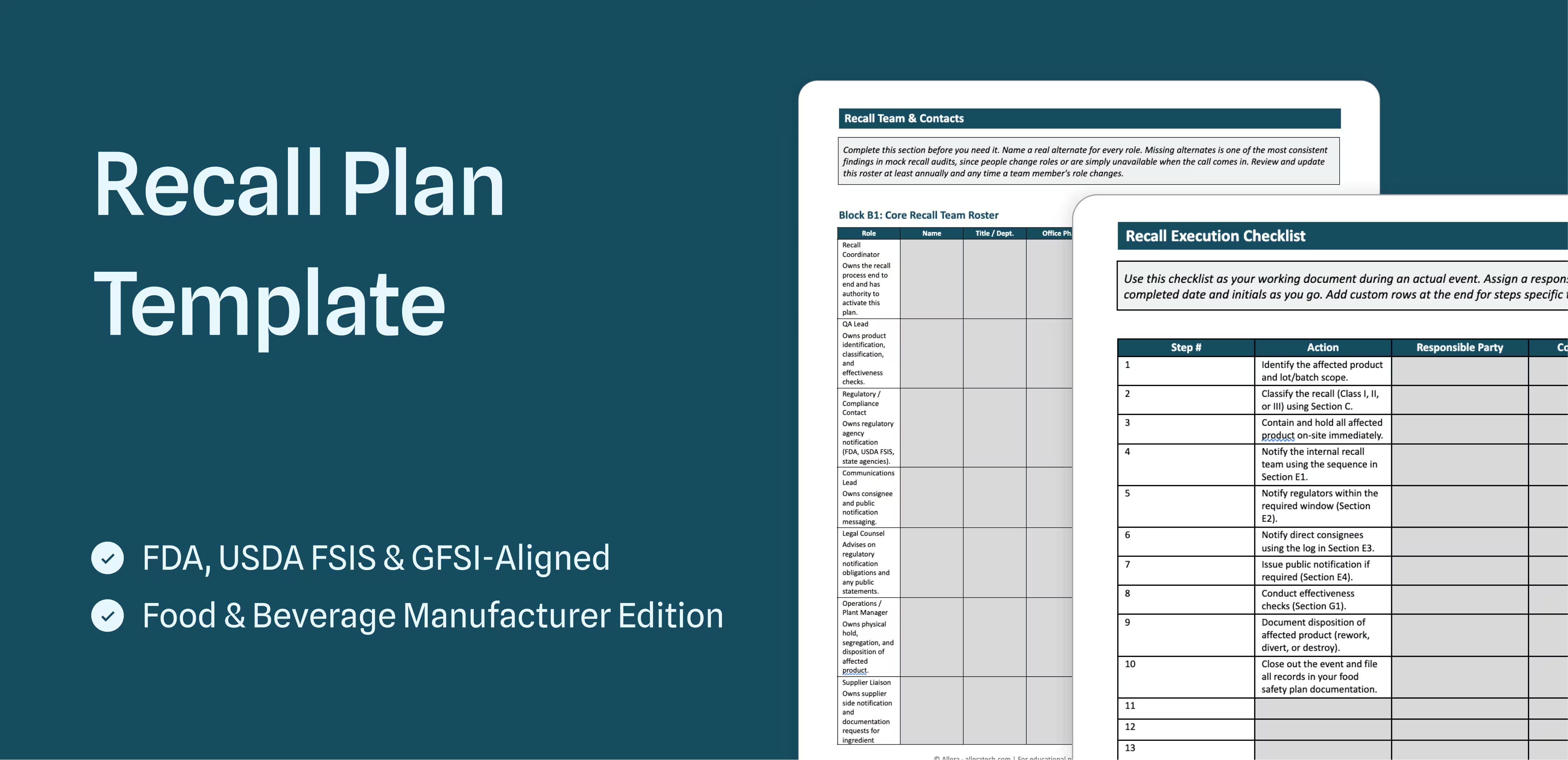
If you searched for a recall plan template, you probably don't need a lecture on why recall plans matter. You need the document. This page gives you a free, ungated Word template built around what FDA, USDA FSIS, and the major GFSI schemes actually require.
Below the download, you'll find what's inside the template, how it maps to 21 CFR 117.139, 9 CFR 418.3, SQF Edition 9, BRCGS Issue 9, and FSSC 22000 V6, and a step-by-step process for activating it. If you already have a recall plan on file, use this to check it against the requirements below and close any gaps before an auditor finds them.
Get the Free Recall Plan Template
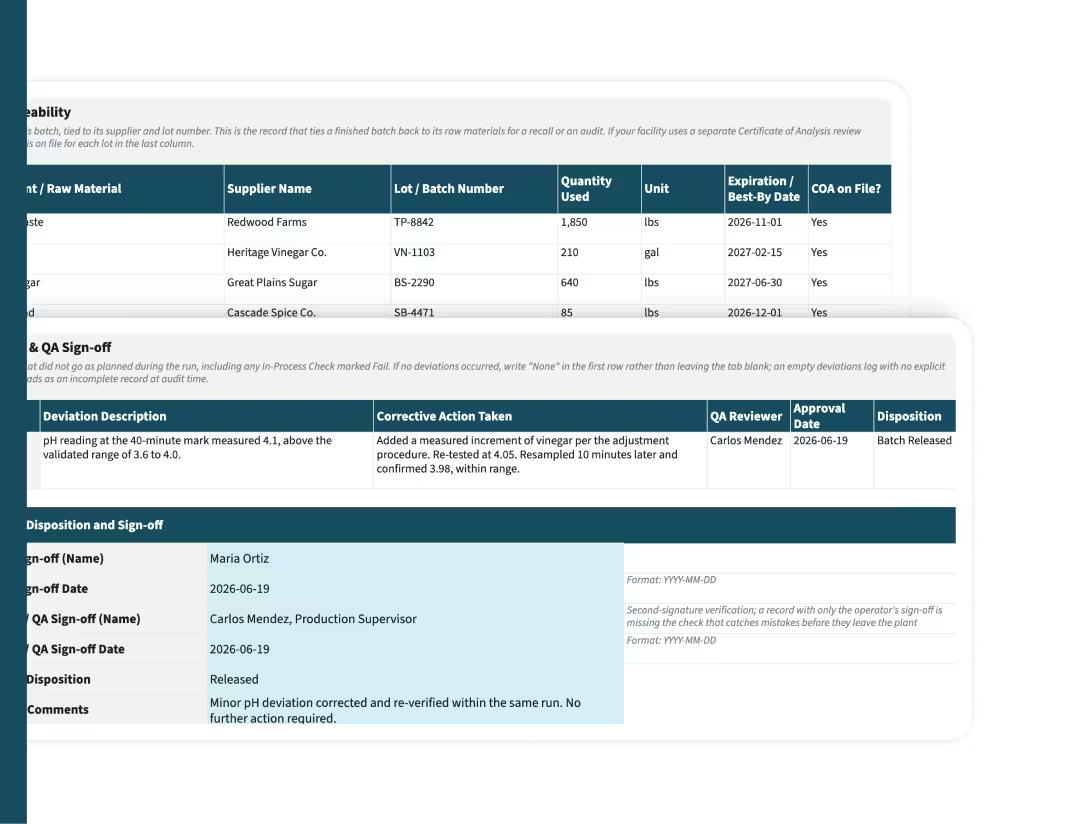
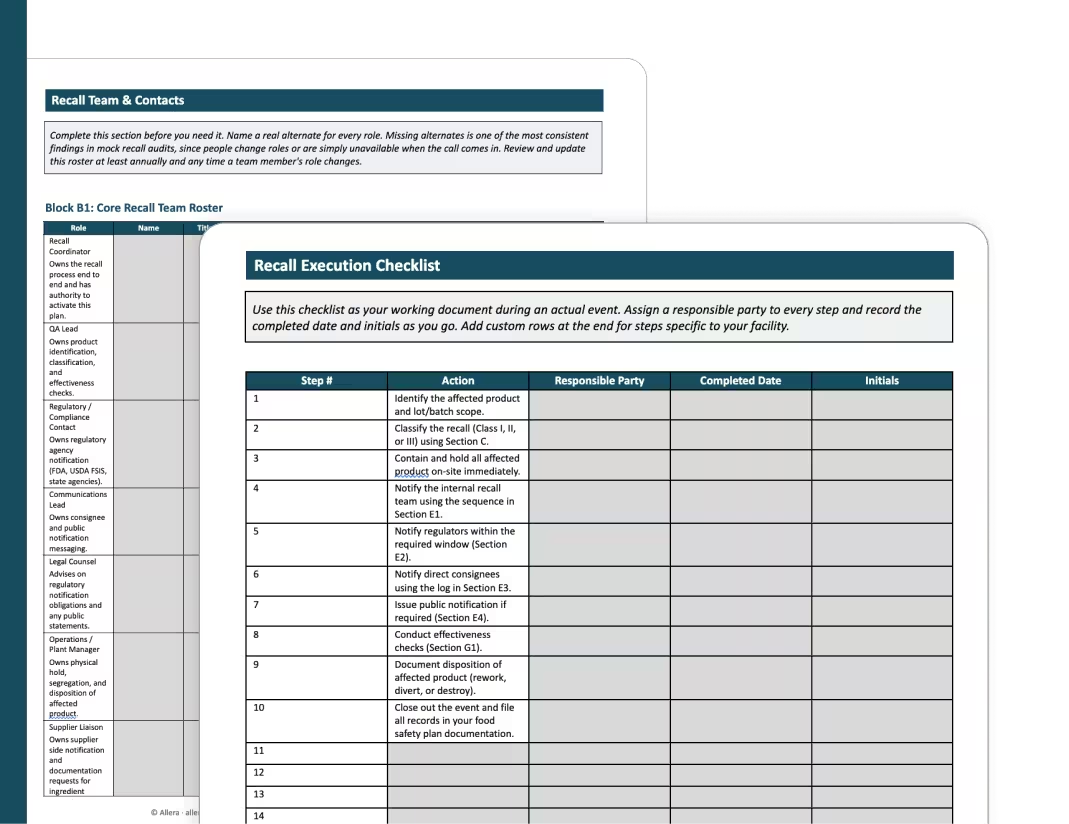
The Recall Plan Template is a fillable Word (.docx) document built around the fields regulators and certification bodies expect to see in a written recall plan: a recall team roster, product identification fields, notification procedures, a distribution and customer contact list, an effectiveness-check log, and disposition and termination criteria.
It's a single, ungated download. No email address and no gated landing page standing between you and the file. Add it to your document library, fill it out with your facility's specifics, and route it through your normal document approval process.
Download the Recall Plan Template (Word) →
Any food manufacturer subject to FDA's Preventive Controls for Human Food rule, USDA FSIS oversight, or a GFSI scheme (SQF, BRCGS, FSSC 22000) needs a written recall plan on file. If your facility runs both FDA-regulated and USDA-regulated lines, this template covers both sets of requirements in one document.
What's Inside the Template
Here's what's actually inside the file, section by section, before you download it:
- Recall team roster and contact tree, with a named alternate for every role
- Product identification fields: lot or batch code, UPC, production date, and affected quantity
- Notification procedures for regulators, direct consignees, and the public
- A distribution and customer contact list
- An effectiveness-check log to document that the recall is working as intended
- Disposition and termination criteria for closing the recall out
- A revision history block so every update to the plan is dated and attributable
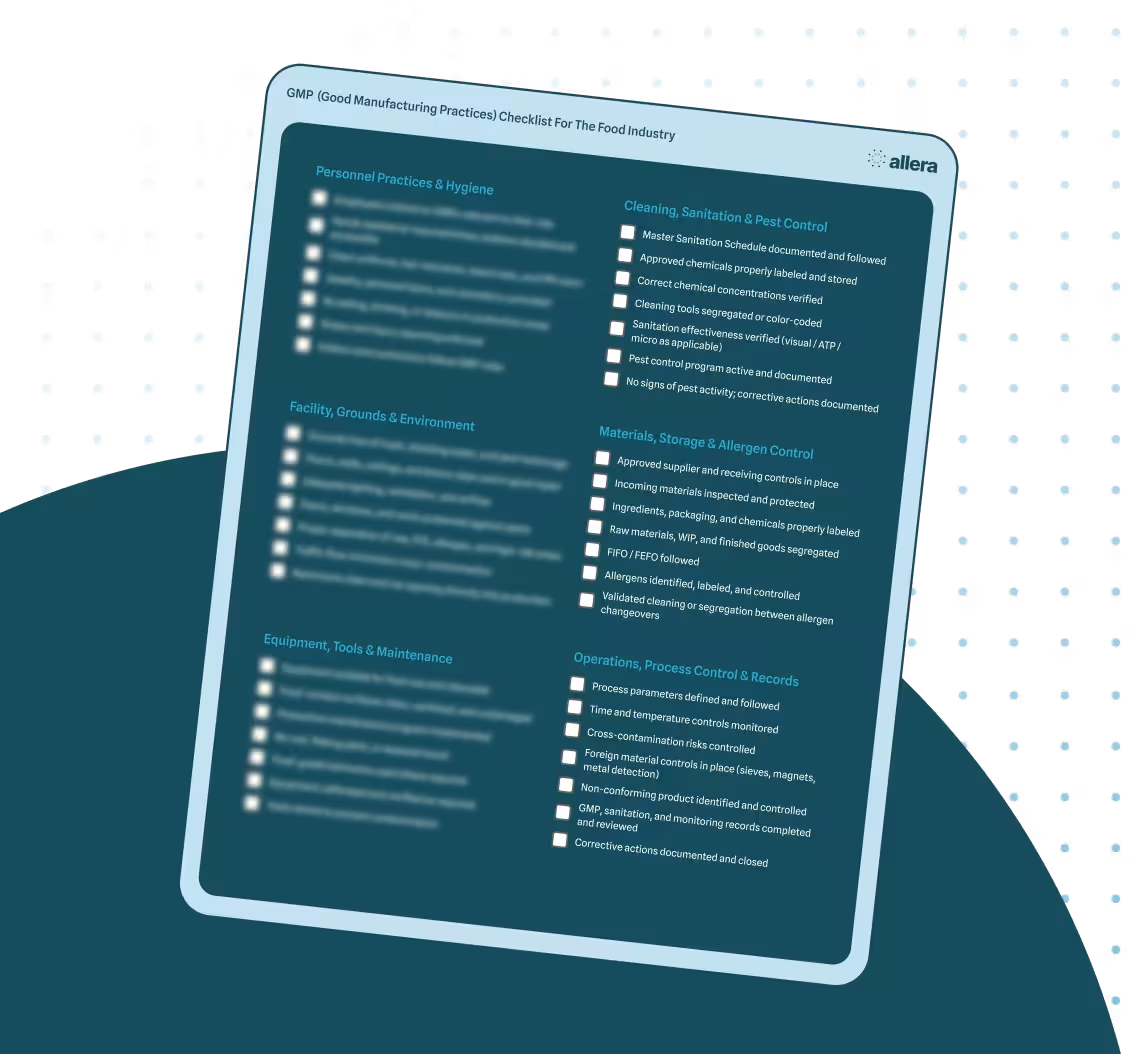
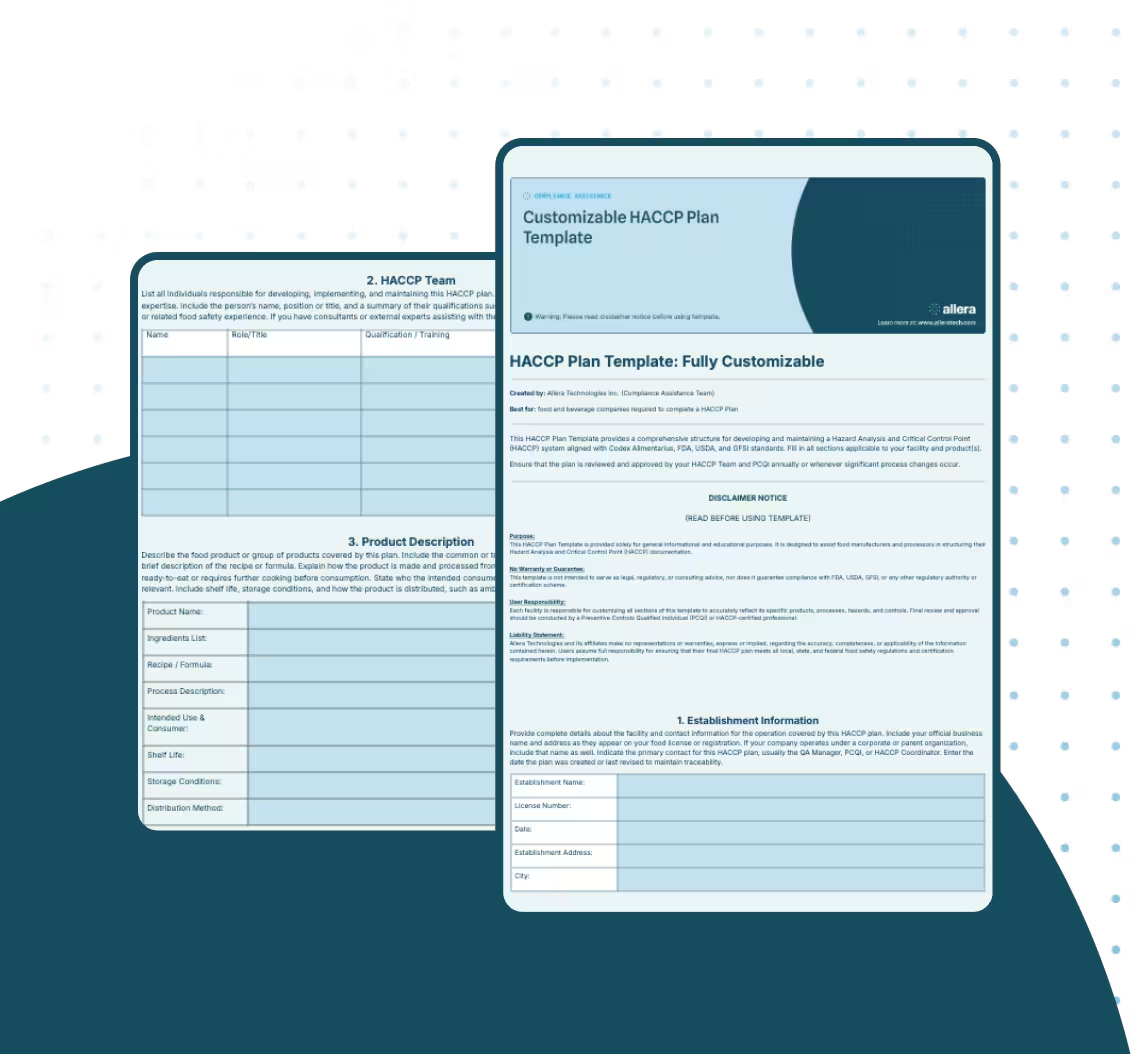
If you're building out your broader template library, the GMP audit checklist and free HACCP plan template follow the same audit-ready approach for other core food safety documents.
What Is a Recall Plan?
A recall plan is a written procedure, prepared in advance, that tells your team exactly how to identify, remove, and account for a specific product in commerce if a hazard is discovered. It names who does what, in what order, and how you'll know the recall worked.
It has to be written before you need it. Trying to draft notification procedures, assemble a contact tree, or figure out your effectiveness-check criteria while product is actually moving through your supply chain wastes the hours that matter most.
The recall plan is also a required, written component of your food safety plan under FSMA, not a stand-alone regulatory document on its own. For a broader look at why recall systems exist in the first place, see the FAO/WHO guide for developing national food recall systems.
Recall Plan vs. Food Safety Plan vs. Crisis Management Plan vs. Mock Recall
These four terms get used interchangeably on the plant floor, and that confusion is exactly the kind of thing an auditor will flag. Here's how they actually relate to each other.
| Document/exercise | What it is | Trigger |
|---|---|---|
| Food Safety Plan | The full FSMA hazard analysis and preventive controls document | Required for all covered facilities |
| Recall Plan | The written procedure for removing a specific product from commerce | A required component of the food safety plan (117.139) |
| Crisis Management Plan | Broader business continuity, media, legal, and executive response plan | A distinct program, commonly confused with the recall plan |
| Mock Recall | The drill that tests whether the recall plan actually works | Expected periodically by FDA, USDA, and every GFSI scheme |
SQF's own guidance flags the recall plan and crisis management plan mix-up specifically, because the two get bundled into one document more often than you'd expect. Keep them separate documents with separate owners. Once your recall plan is written, the next step is testing it with a mock recall.
What FDA Requires in a Recall Plan
21 CFR 117.139: the four required elements
Under 21 CFR 117.139, a written recall plan is required for any facility with a hazard requiring a preventive control under the Preventive Controls for Human Food rule. The regulation spells out four elements your plan needs to address:
- Directly notify consignees of the recall, including how to return or dispose of affected product
- Notify the public about the hazard when appropriate to protect health
- Conduct effectiveness checks to verify the recall is actually being carried out
- Appropriately dispose of recalled product, whether that means rework, diversion, or destruction
The FDA draft guidance on recall plans (Chapter 14) walks through each of these elements in more detail, including how FDA investigators evaluate whether a plan is adequate.
When a recall plan is required
If your facility identifies any hazard requiring a preventive control, biological, chemical, physical, or radiological, you need a written recall plan addressing that hazard on file before you ever need it.
What USDA FSIS Requires (Meat, Poultry, and Egg Products)
9 CFR 418.3: written recall procedures
If you operate a USDA FSIS-inspected meat, poultry, or egg products establishment, 9 CFR 418.3 requires a written recall procedure that specifies how you'll decide whether to initiate a recall and how you'll execute it once that decision is made.
9 CFR 418.2: 24-hour notification
Official establishments must notify their local FSIS District Office within 24 hours of learning that adulterated or misbranded product has entered commerce. Build that window directly into your plan's escalation timeline, not as a mid-event afterthought.
FSIS Directive 8080.1: terminology and classification
USDA FSIS Directive 8080.1 draws a distinction worth building into your plan: a "recall" applies once product has left your control, while "stock recovery" covers product still on-premises or in your own controlled storage. Your plan should use both terms correctly, since FSIS treats them as separate procedures with separate documentation. See the USDA FSIS recall process guidance for the full breakdown.
If you run mixed meat and non-meat lines, best meat traceability software covers how lot-level traceability supports both FDA and USDA FSIS recall requirements at once.
Recall Plan Requirements by Certification Scheme
No competing recall plan template maps the certification scheme layer at all. Here's where each major GFSI scheme lands.
SQF Edition 9: Element 2.6.3
SQF Edition 9 requires a written product withdrawal and recall procedure under Element 2.6.3. SQF's own guidance explicitly distinguishes this from a crisis management plan. The two are commonly bundled together, but auditors expect them as separate documents. See the SQF audit checklist for the full Section 2.6 breakdown.
BRCGS Food Safety Issue 9: Clause 3.11.1
BRCGS Food Safety Issue 9 requires a documented procedure for product withdrawal and recall under Clause 3.11.1. That's distinct from Clause 3.11.2 (a traceability test every 6 months) and Clause 3.11.3 (a full recall test annually). Running one exercise and calling it both won't satisfy either clause. The BRCGS certification guide covers Issue 9 in full.
FSSC 22000 V6 / ISO 22000:2018: Clause 8.9.5
FSSC 22000 V6, built on ISO 22000:2018 Clause 8.9.5, requires established, implemented, and maintained withdrawal and recall procedures, with periodic effectiveness testing. See FSSC 22000 Version 6 for how this clause fits into the broader V6 transition.
Cross-Scheme Requirements Table
| Requirement | FDA (21 CFR 117.139) | USDA FSIS (9 CFR 418.3) | SQF Ed. 9 §2.6.3 | BRCGS Issue 9 §3.11.1 | FSSC 22000 V6 / ISO 22000 §8.9.5 |
|---|---|---|---|---|---|
| Written recall plan required | Yes | Yes | Yes | Yes | Yes |
| Direct consignee notification | Required | Required | Required | Required | Required |
| Public notification | When appropriate | As applicable | Required | Required | Required |
| Effectiveness checks | Required | Implicit (FSIS oversight) | Required | Required | Required |
| Regulator notification window | Reportable Food Registry (as applicable) | 24 hours (FSIS District Office) | SQFI within 24 hrs | Certification body within 3 working days | Certification body per scheme |
| Periodic testing | Best practice | Best practice | Annual mock recall | Annual full recall test | Periodic, minimum annual |
Every one of these frameworks expects the plan itself to stay current between audits, not just accurate on the day it's written. That's less a recall problem and more a document control problem, which we'll come back to.
Recall Classification: Class I, II, and III
Classification determines how fast the rest of your plan has to move. FDA sorts recalls into three classes based on health risk. Class I means a reasonable probability that using the product will cause serious adverse health consequences or death. Class II means the product may cause temporary or reversible health consequences, or the probability of serious harm is remote. Class III means the product is unlikely to cause any adverse health consequence at all.
USDA FSIS uses a parallel Class I/II/III system for meat, poultry, and egg products, worded the same way.
Classification isn't a label you attach after the fact. It should drive concrete decisions written into your plan: how fast public notification goes out, how quickly effectiveness checks start, and how much of your recall team gets activated. A Class I event moves on a different clock than a Class III event, and your plan should say so explicitly. See FDA's recall classifications and definitions for the full criteria.
Building Your Recall Team
Your recall plan is only as strong as the team behind it, and the team on paper isn't always the team that actually shows up. Name these roles, and name a real alternate for each one:
- Recall coordinator (owns the process end to end)
- QA lead (owns product identification and effectiveness checks)
- Operations (owns physical hold, segregation, and disposition)
- Legal or regulatory contact
- Communications lead (owns consignee and public notification)
- Supplier liaison (owns supplier-side notification for ingredient-sourced issues)
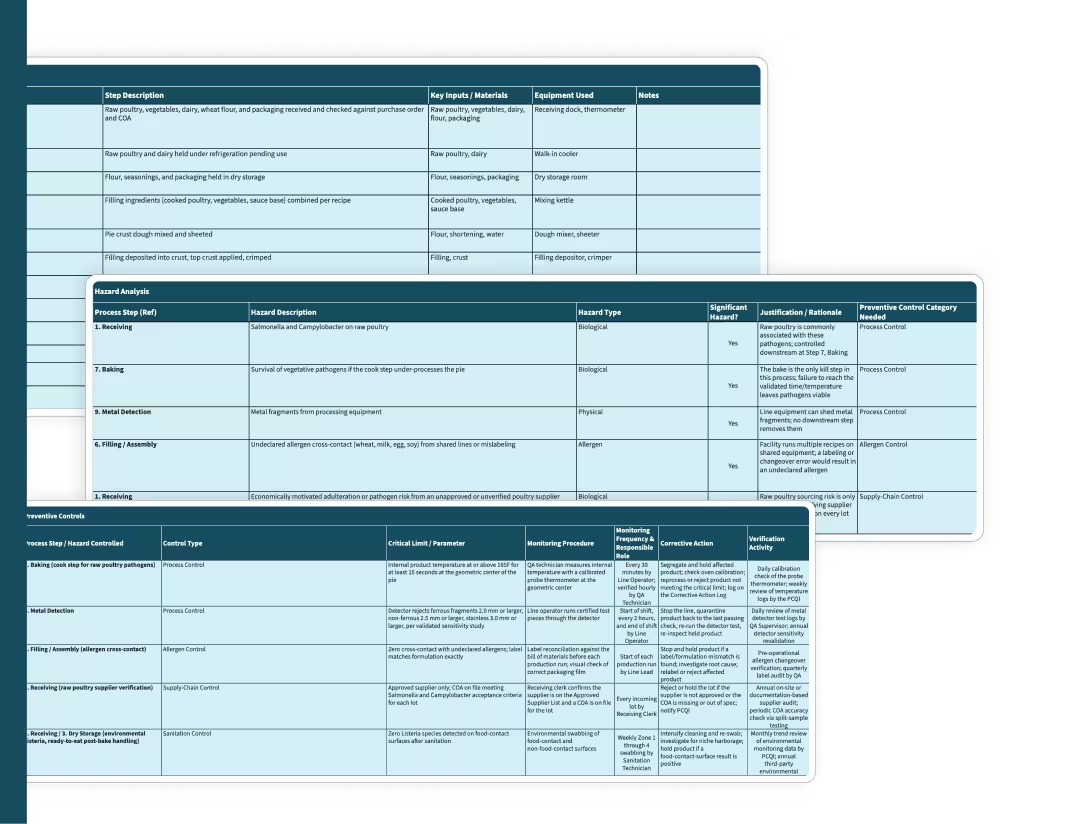
Missing alternates is one of the most consistent findings in mock recall audits, since people change roles or are simply unavailable when the call comes in. A HACCP deviation is also a common trigger that lands on this team's desk, so keeping your HACCP plan current makes it less likely you end up here. If an ingredient is part of the exposure, coordinate your supplier liaison with your supplier management process so COAs are ready to pull, not requested cold.
Step-by-Step: How to Fill Out and Activate Your Recall Plan
Once your template is filled out, here's the sequence for putting it to work.
Step 1: Identify the affected product and lot/batch scope. Pin down the exact lot or batch codes, production dates, and quantities involved before you do anything else.
Step 2: Classify the recall. Assign a Class I, II, or III designation so the rest of the plan knows how fast to move.
Step 3: Notify consignees, and the public if required. Work through your distribution and customer contact list, and issue a public notice if the hazard warrants one.
Step 4: Notify regulators within the required window. That's the FDA's Reportable Food Registry as applicable, USDA FSIS within 24 hours, or your certification body's own notification clock, depending on which frameworks apply to your facility.
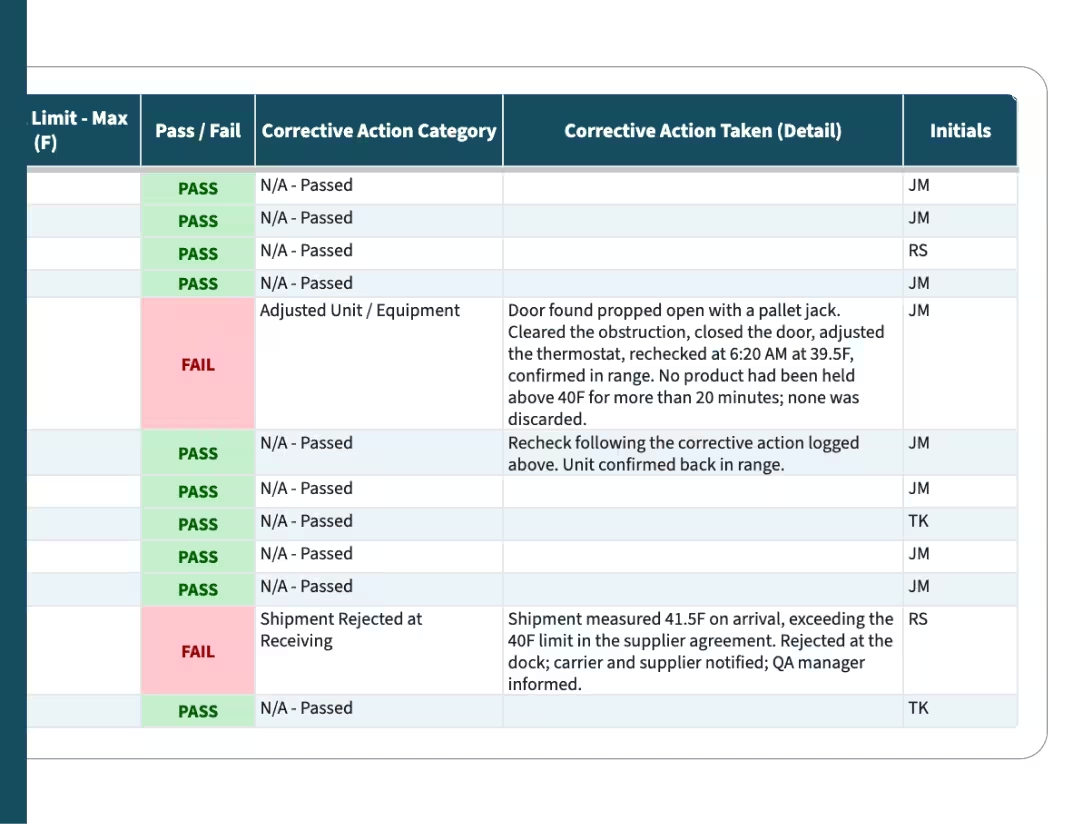
Step 5: Conduct effectiveness checks. Verify that consignees actually received the notification and took the required action. FDA and every GFSI scheme expect documented proof here, not just a good-faith email.
Step 6: Document disposition and close out. Record how affected product was handled, whether returned, reworked, or destroyed, and close the file with your effectiveness-check results attached.
For the notification and messaging step specifically, the GS1 product recall standard provides a structured format worth aligning your own notification templates to.
How FSMA 204 Changes What Your Recall Plan Needs to Prove
If any of your products sit on the FDA's Food Traceability List, FSMA 204 adds a specific proof requirement to your recall plan. Your plan should confirm that Key Data Elements for each Critical Tracking Event are retrievable within 24 hours of an FDA request, in an electronic, sortable format, not a filing cabinet or a PDF someone has to search by hand.
This is a real gap in the recall plan content currently available online. None of the ranking guides connect FSMA 204 recordkeeping to the recall plan itself, even though the two are directly linked for Food Traceability List foods.
Review FSMA 204 for the full Key Data Element and Critical Tracking Event requirements, and food traceability for how forward and backward trace records feed into your plan. If you're evaluating systems to support this, best food traceability software covers what to look for.
Testing Your Recall Plan: Mock Recalls and Traceability Tests
A written plan is only as good as the last time you tested it. A traceability test verifies that your lot records exist and can be retrieved forward and backward. A mock recall goes further and exercises the entire plan, including notification and effectiveness checks, without any product actually leaving your facility or any customer actually being contacted.
Both are worth running on a set schedule, not just before an audit. For the full walkthrough of how to plan, run, and score one, see a mock recall.
Common Recall Plan Mistakes That Fail Audits
A handful of gaps show up again and again in audit findings:
- The recall team roster lists people who no longer work at the company
- No alternate is named for key roles
- The effectiveness-check step is skipped or left undocumented
- The plan was never updated after a scheme or regulation changed
- The plan exists on paper but has never been exercised with a mock recall
Any one of these turns a paper plan into a finding. Recall findings also have a way of becoming corrective actions in their own right, so if you're building out your broader non-conformance process, see corrective action plan for how that documentation should work. Before your next audit, preparing for a food safety audit walks through how recall-plan review fits into the bigger audit picture.
Keeping Your Recall Plan Audit-Ready Year-Round
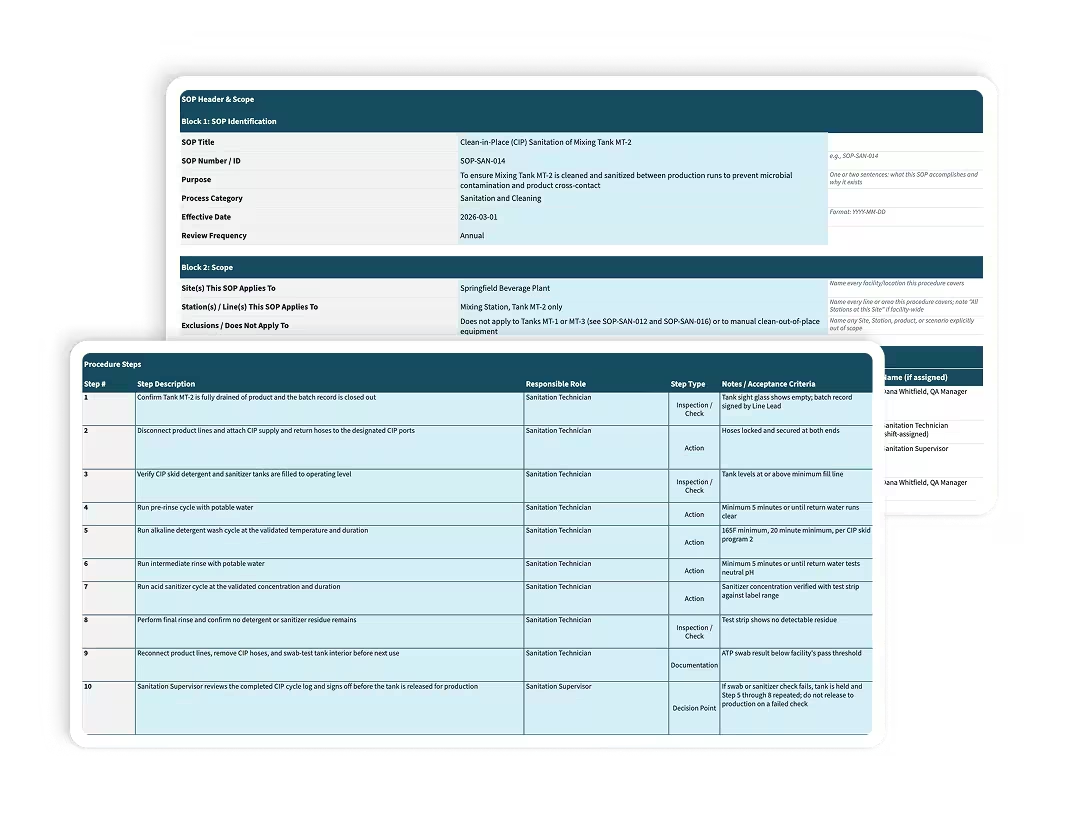
A recall plan needs the same version history, scheduled review, and audit trail as any other controlled SOP. If the plan sitting in your binder is six revisions behind the one your team actually uses, that gap is exactly what an auditor is trained to find.
Good document control for a recall plan looks like this: a visible revision history every time the plan changes, an approval workflow before a new version goes live, and a scheduled review reminder so the plan doesn't quietly go stale for years without anyone noticing.
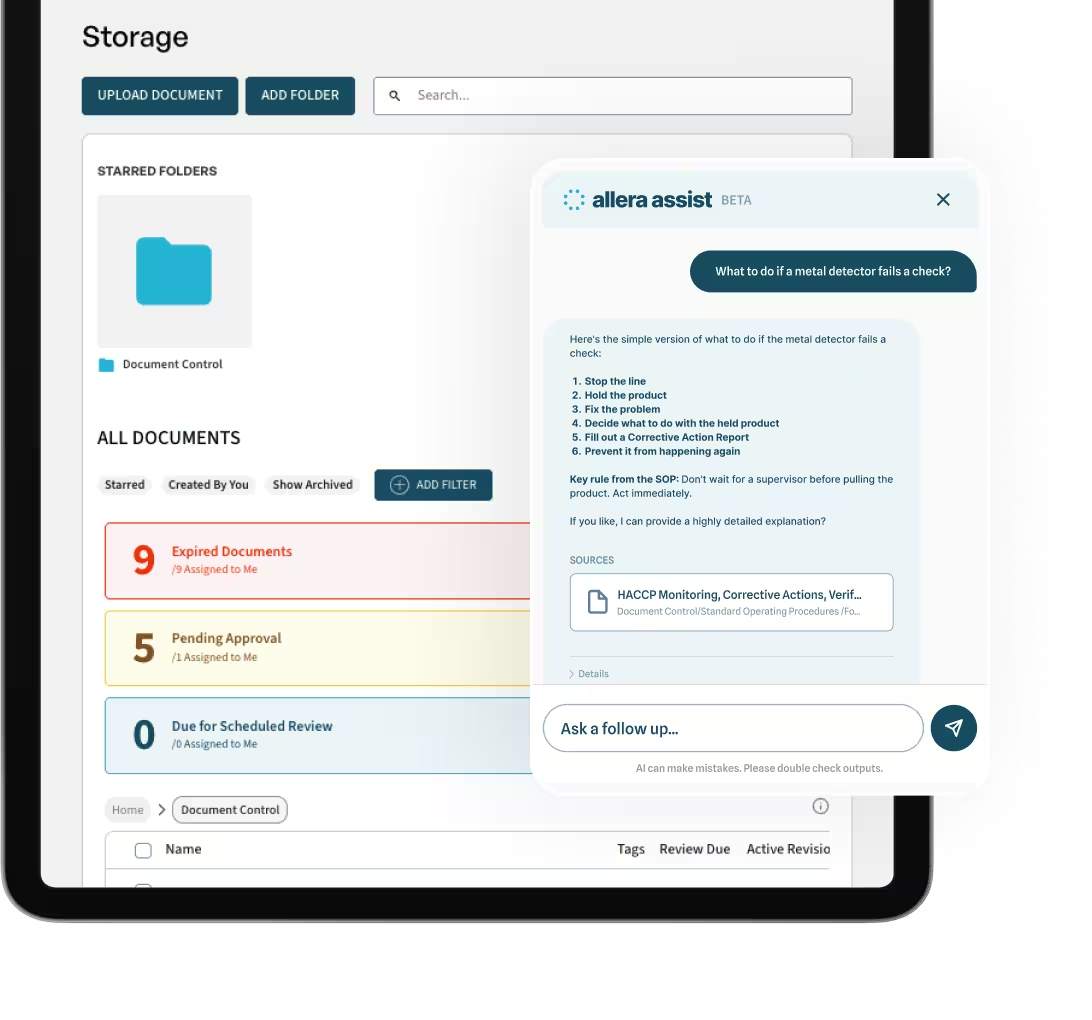
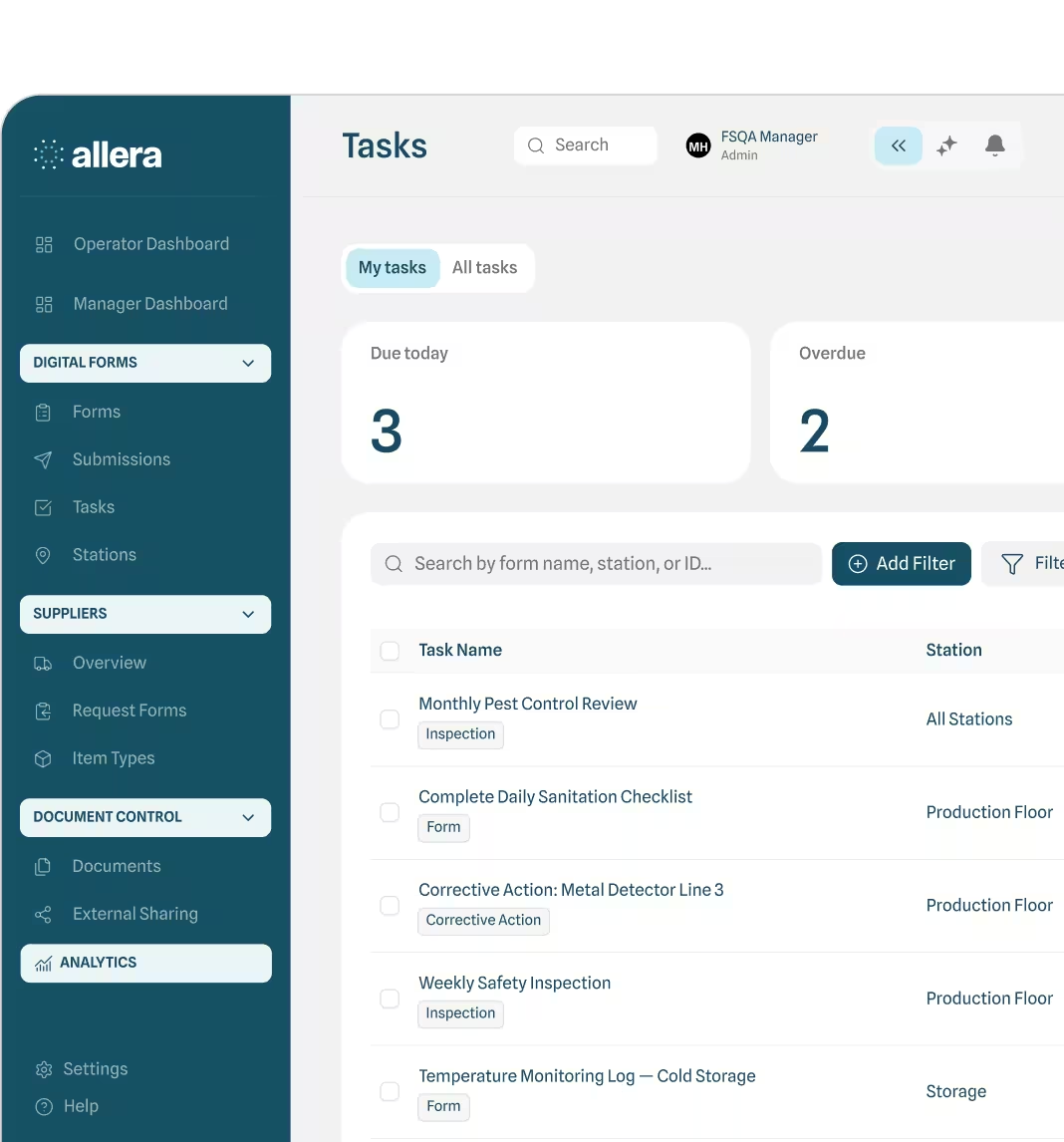
This is the one place Allera fits directly into this topic. Allera's Document Control keeps your recall plan version-controlled, tracks who approved each revision, and flags it for review on the schedule you set, so it's never the stale document an auditor catches first. See Document Control →
For how this fits into your broader documentation system, see food safety management system and food quality management system.
FAQs
.avif)
.avif)
.avif)
.avif)
%20(1).avif)
.avif)
.avif)



%20(1).png)

.avif)



.avif)