.avif)



FEFO (First Expired, First Out): A Food Manufacturer's Guide


An auditor stops in front of a pallet in your cooler and asks how you know it should still be there. FEFO is the answer, but only if you can prove it. First Expired, First Out is the stock rotation method most food manufacturers say they follow, and it is also one of the easiest claims for an auditor to test and find wanting.
Most of what has been written about FEFO treats it as a warehousing efficiency tactic. That framing misses what matters in a food plant. Rotation is a control, and like every other control in your system, it needs evidence behind it.
What does FEFO mean?
FEFO stands for First Expired, First Out. It is a stock rotation method where product is picked, shipped, or consumed in order of its expiry or best-by date rather than the order it arrived in your facility.
The distinction from FIFO matters. First In, First Out sequences product by receipt date. FEFO sequences by remaining shelf life. When those two orders match, the methods produce the same result. When they diverge, only one of them protects the customer.
FEFO vs. FIFO vs. LIFO at a glance
| Method | Ordering basis | Best fit | Main risk |
|---|---|---|---|
| FEFO (First Expired, First Out) | Earliest expiry or best-by date | Perishables, short-shelf-life products, anything with variable supplier dating | Depends entirely on date codes being present and readable |
| FIFO (First In, First Out) | Earliest receipt date | Stable products where receipt order and expiry order always match | Ships older-dated stock behind newer-dated stock when supplier dating varies |
| LIFO (Last In, First Out) | Most recent receipt date | An accounting convention, not a physical handling method for food | Leaves old stock sitting indefinitely |
LIFO appears in this comparison because people search for it alongside the other two. As a physical rotation method in a food plant, it has no legitimate use.
FEFO vs. FIFO: which one should you actually use?
Here is the decision rule. If receipt order and expiry order can ever diverge in your operation, you need FEFO. If they can never diverge, FIFO produces the same outcome with less overhead.
In practice they diverge more often than people expect. A supplier ships you two lots of the same ingredient with different production dates. A slow-moving SKU sits while newer stock cycles past it. Returned product comes back into inventory. A reformulation extends shelf life on new production while old-formula stock is still on the rack.
Running both methods in one facility is normal and defensible. Packaging and non-perishable dry goods can sit on FIFO while anything with a meaningful shelf life runs FEFO. What matters is that the choice is documented per material category, not left to whoever is picking that shift.
Product risk should drive how tightly you enforce it. RTE foods and TCS foods carry the least tolerance for rotation error because the consequence of shipping expired product is a pathogen risk rather than a quality complaint.
Which date are you rotating against?
This is where most FEFO content gets the food industry wrong. In the United States, date labels on food are overwhelmingly quality indicators, not safety cutoffs. Infant formula is the only product category where a date is federally regulated as a safety limit.
FSIS is direct about this in its guidance on food product dating: except for infant formula, dates are not an indicator of product safety and are not required by federal law. Food that shows no sign of spoilage can be sold, donated, and consumed past its labeled date.
That does not make FEFO less important. It changes what you are managing. You are managing quality commitments to your customers, shelf-life claims you have substantiated, and the risk of product reaching a consumer in a condition your brand does not want to defend.
| Label phrase | What it means | Rotation trigger? |
|---|---|---|
| Best if Used By | Peak quality date, the phrasing FSIS recommends | Yes, for quality management |
| Use By | Manufacturer's date for peak quality; a safety limit only on infant formula | Yes |
| Sell By | Retail inventory guidance, not a consumer instruction | Yes, and usually the tightest constraint |
| Freeze By | Date to freeze to maintain peak quality | Situational |
| Lot or Julian code | Identity, not quality | No, but it links the product to its records |
Inside a manufacturing plant, the date that should drive rotation is the one your own shelf life testing substantiated, not whatever a supplier happened to print. If your validated shelf life is shorter than the supplier's stated date, yours governs.
FEFO only works if the date code is readable
A pallet with a smudged code is a pallet nobody can rotate correctly. This is the precondition that warehousing content skips entirely, because printing equipment vendors sell the printer and stop there.
Common failure modes on the floor: low contrast on flexible film, ink starvation partway through a run, condensation on cold-storage cases making codes illegible, and coders drifting out of position after a changeover. Each one produces product that is physically in your building but functionally unrotatable.
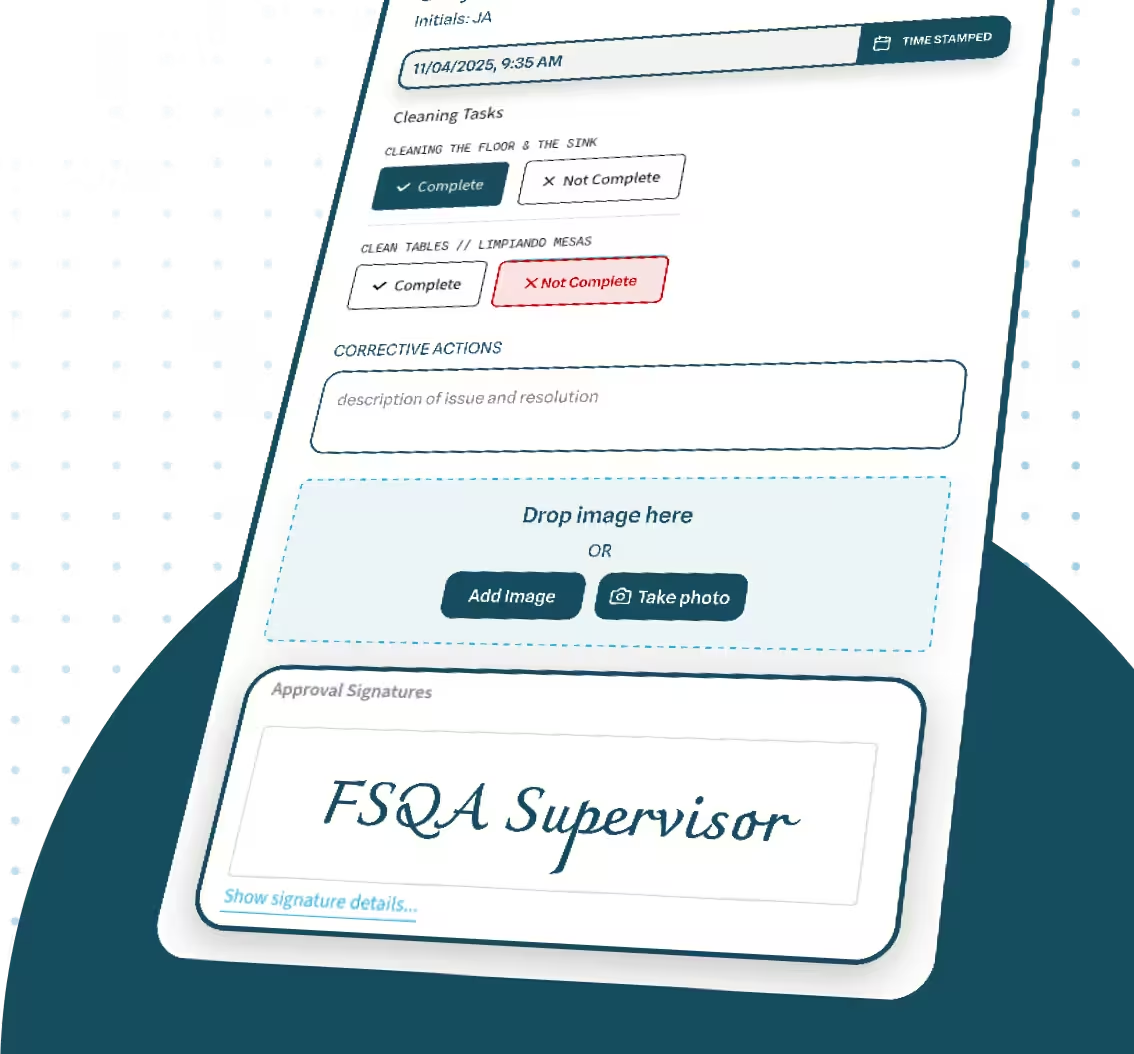
The fix is verification, not better intentions. Check that the code is present, correct, and legible at line start-up, after every changeover, and at defined intervals during the run. Record what was verified, not just that someone looked. A photograph of the actual printed code in the record beats a tick box every time.
Julian date codes deserve specific attention because operators misread them routinely. A three-digit day-of-year plus a year digit is compact and machine-friendly, and it is also the format most likely to be transposed by someone reading it at speed in a cold room.
Allera's Digital Forms handle this pattern well. You can build a start-up and changeover check that includes an image field for the printed code, and set a failure rule so an illegible or incorrect code flags the submission and automatically creates a Corrective Action with a named owner. That beats a note on a clipboard that surfaces three weeks later.
How to prove FEFO is actually happening
"We always rotate" is not an answer an auditor accepts. Rotation is a control, and controls need records. This is the section that separates a food safety program from a warehousing habit.
| Control | Record that proves it | Who signs | Typical frequency |
|---|---|---|---|
| Rotation verification walk of pick faces and storage locations | Dated check sheet listing locations reviewed and exceptions found | QA or warehouse supervisor | Daily to weekly by risk |
| Date code verification at start-up and changeover | Line check record with the code verified, ideally with a photo | Line operator, verified by supervisor | Every start-up and changeover |
| Near-expiry and aged stock review | Exception report with disposition decisions recorded | QA | Weekly |
| Disposition of product that reached its date in-house | Hold and disposition record with authorization | QA manager | Per event |
The rotation verification walk is the one most facilities skip. It takes very little time, it produces the single most useful piece of evidence you can hand an auditor, and it catches the pallet that got put back in the wrong slot before that pallet becomes a complaint.
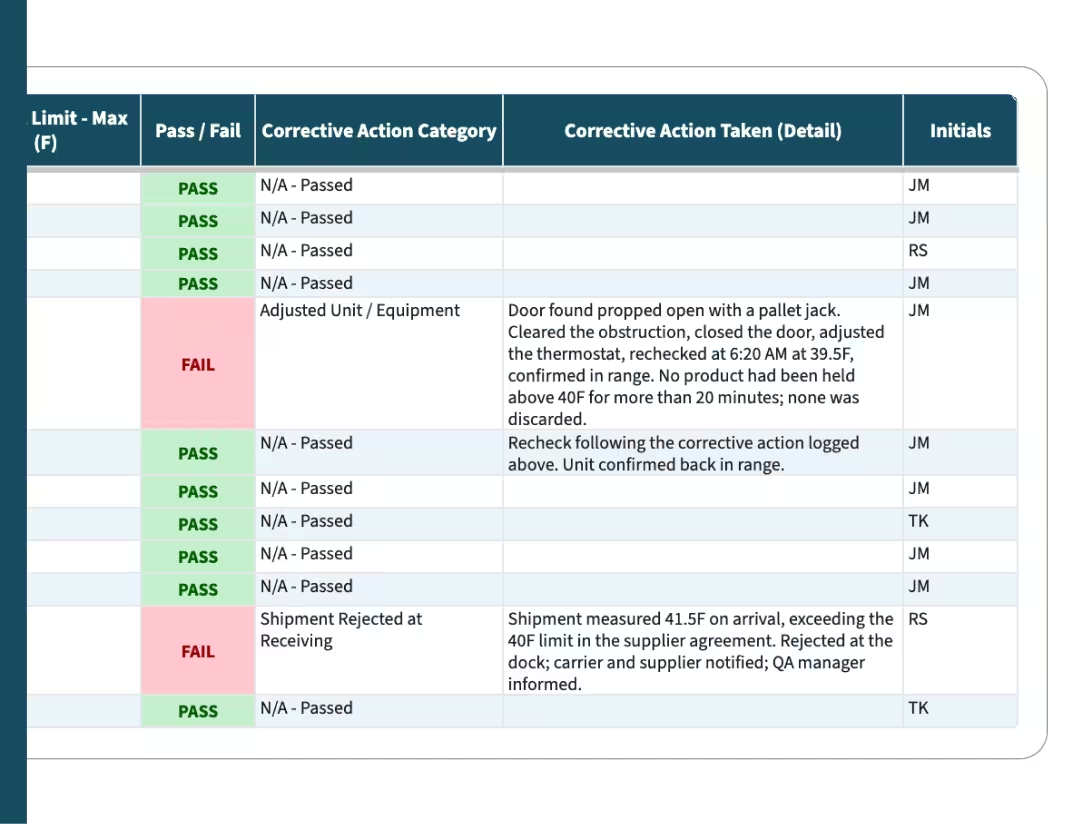
When a rotation check finds a problem, the finding should route into your corrective action plan process rather than being fixed quietly. A pattern of rotation failures usually points at a layout or labeling problem, and you will never see the pattern if the individual findings are never recorded.
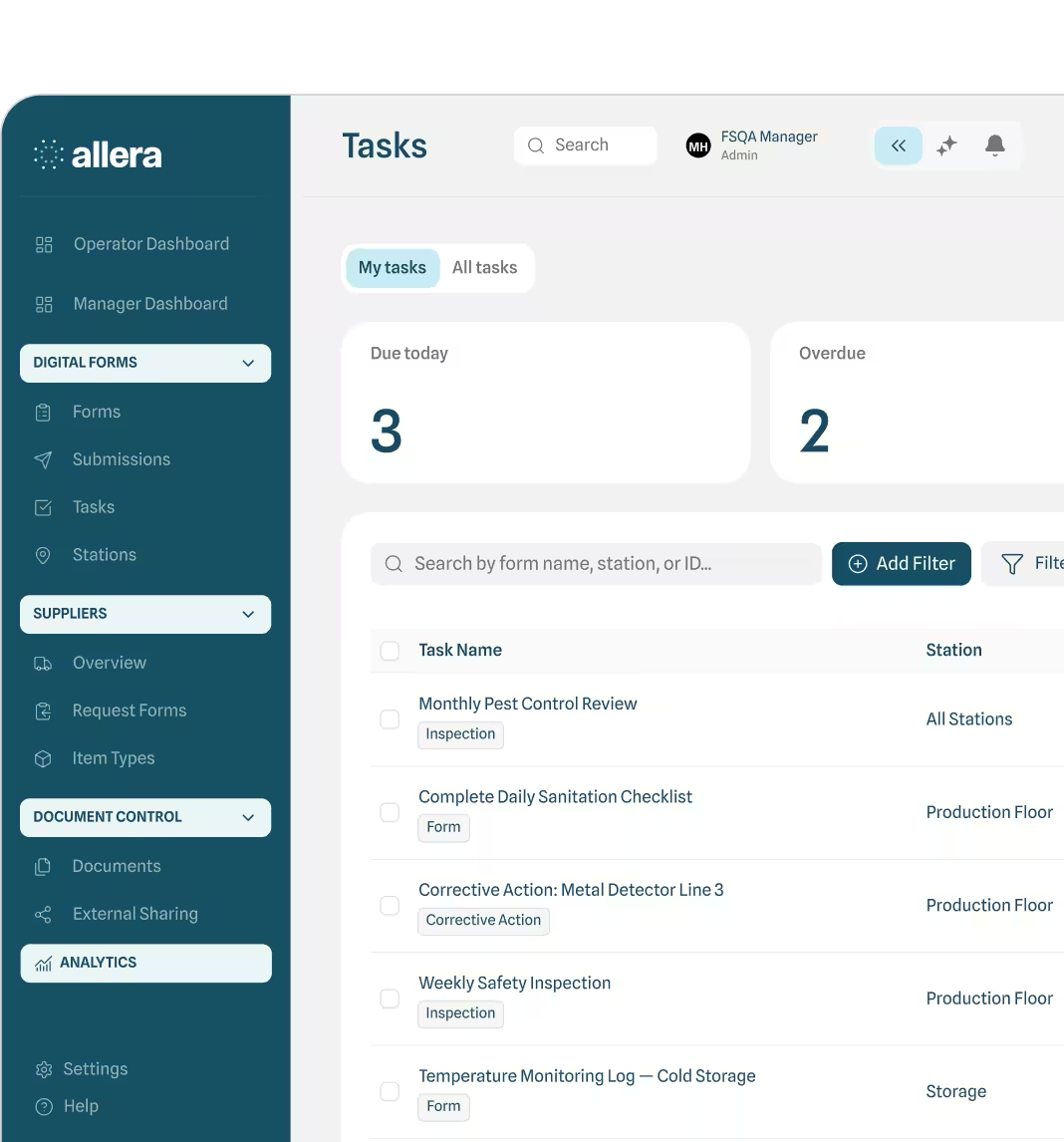
Task Management in Allera is a close fit for the verification walk specifically. You can schedule it as a recurring task by Site and Station, and each instance is tracked as Incomplete, Overdue, Completed On Time, Completed Late, or Skipped, with a documented reason required to skip. The audit question stops being "do you rotate" and becomes a report you can pull.
FEFO and food safety compliance
No regulation says the words "you must use FEFO." What the schemes and regulations do require is product identification, stock rotation control, and the ability to demonstrate that storage and handling protect product safety and quality. FEFO is how most facilities satisfy that.
| Standard or rule | What it expects around rotation and dating | Evidence it looks for |
|---|---|---|
| SQF Edition 9 | Product identification, storage and handling controls, stock rotation practices | Rotation records, date coding controls, storage inspections |
| BRCGS Issue 9 | Product control, date coding, stock rotation, storage conditions | Code verification records, rotation checks, aged stock review |
| FSSC 22000 v6 and ISO 22000 | Storage conditions, product release, control of nonconforming product | Storage monitoring, disposition records |
| GFSI Benchmarking Requirements v2024 | The umbrella that benchmarks the schemes above | Scheme-specific, benchmarked to a common baseline |
| FSMA 204 | Lot-level traceability for foods on the Food Traceability List | Traceability lot codes and key data elements |
The scheme documents themselves are the authoritative reference here. The SQF Food Safety Code for Food Manufacturing (Edition 9), the BRCGS Global Standard Food Safety (Issue 9), and the FSSC 22000 Scheme Version 6 all address storage, identification, and handling in ways that a rotation program has to satisfy. The GFSI Benchmarking Requirements sit above all of them.
If you are preparing for a specific audit, the SQF audit checklist, BRCGS certification, and FSSC 22000 Version 6 guides walk through what each scheme expects in more detail.
FEFO, lot discipline, and how wide your recall gets
This is the argument that should get FEFO taken seriously in a budget meeting. Loose rotation means loose lot boundaries, and loose lot boundaries mean a wider recall.
Picture a single commingled pallet where two production lots have been mixed during a put-away. When a problem surfaces in one of those lots, you can no longer say with confidence which cases came from where. Every case on that pallet, and every downstream customer who received part of it, moves into scope. One pallet turns a single-lot event into a multi-lot one.
Rotation records are also what a traceability exercise actually consumes. When you run a mock recall, the speed of your trace depends on whether you can reconstruct where a given lot physically sat and when it moved. Facilities that rotate carefully and record it finish the exercise inside the window. Facilities that do not spend the afternoon reconstructing history from memory.
For products on the Food Traceability List, this connects directly to FSMA 204 and the traceability recordkeeping rule, which requires specific key data elements tied to a traceability lot code. Rotation discipline and traceability discipline are the same discipline viewed from two angles. Our guide to food traceability covers the broader picture.
Where FEFO breaks down
Every facility has situations the simple rule does not cleanly handle. These are worth deciding in advance rather than in the moment.
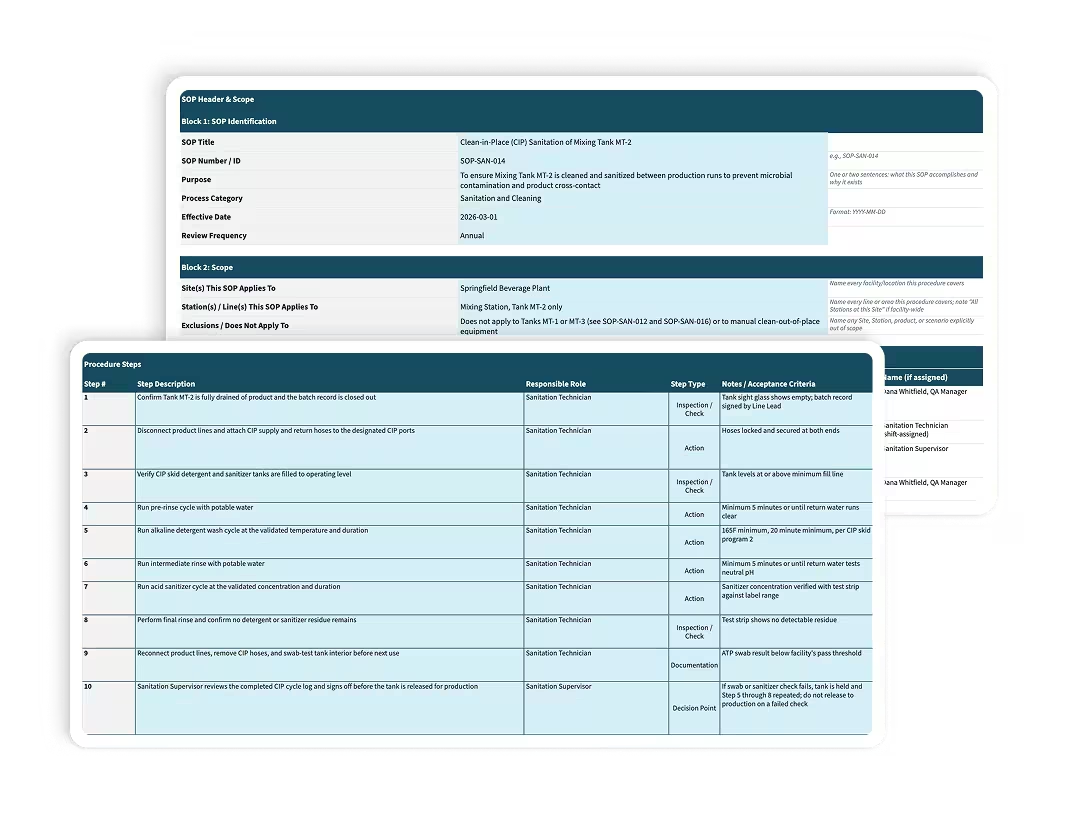
Partial and mixed-lot pallets. The most common source of rotation failure. Decide whether partials get consolidated, and if they do, who authorizes it and how the record captures which lots ended up together.
Rework. Product re-entering the process carries its original age, not the age of the batch it joins. Allergen-bearing rework needs tighter control still, which your allergen control program should already specify.
Product on hold. Hold status always overrides rotation sequence. A pallet on hold does not ship because it is next in date order. This sounds obvious and is one of the more common real-world errors when a picker is under pressure.
Retained and reference samples. These sit outside the rotation system by design. They should be physically segregated so nobody picks them.
Slow movers approaching their date. Decide the trigger point and the options in advance: divert to a secondary channel, discount, donate, or destroy. Waiting until the date passes removes most of your options.
Incoming material dating deserves a mention too. If you capture supplier dates accurately at the dock, rotation downstream becomes straightforward. If you do not, everything after that point is guesswork. Our guide to receiving inspection covers what to capture on arrival, and the supplier certificate of analysis should be matched to the physical lot at the same time.
Why FEFO reduces waste as well as risk
The waste argument is real, and it is the reason most operations teams support FEFO without needing to be persuaded. Product that expires in your own warehouse is product you paid for, stored, and then wrote off.
The FSSC Foundation has published guidance on food loss and waste that treats reduction as part of a certified management system rather than a separate sustainability initiative. USDA has also revised its date labeling guidance specifically to reduce waste caused by date confusion.
Tightening rotation typically shows up in three places: lower write-offs, fewer customer complaints about short-dated deliveries, and fewer emergency discount sales. None of those are food safety outcomes, and all of them make the food safety case easier to fund.
Making rotation checks stick across shifts and sites
Paper rotation logs fail in predictable ways. The clipboard lives in the warehouse, entries get completed at the end of the week rather than at the time of the check, handwriting is unreadable, and nobody notices a gap until an auditor finds it.
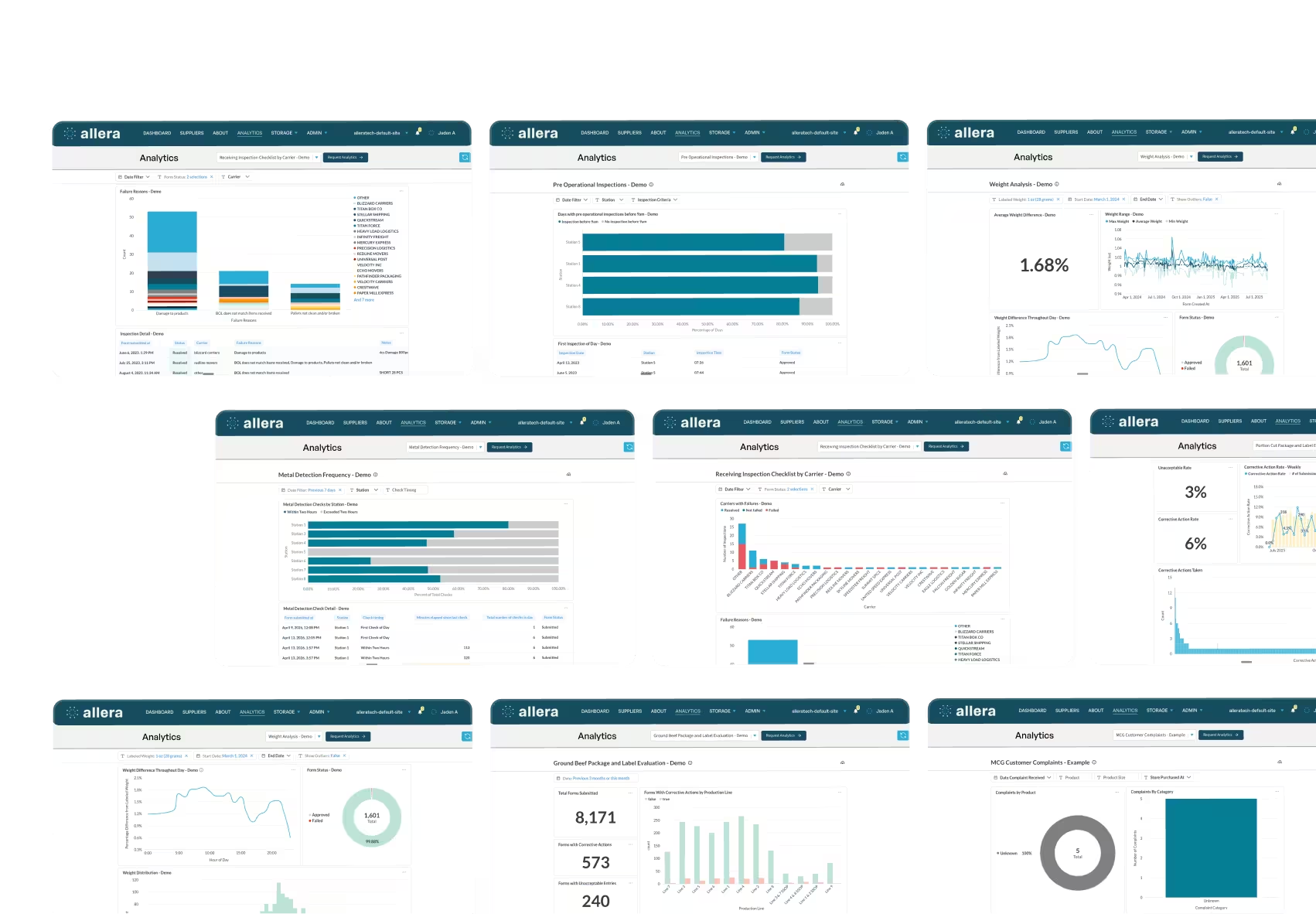
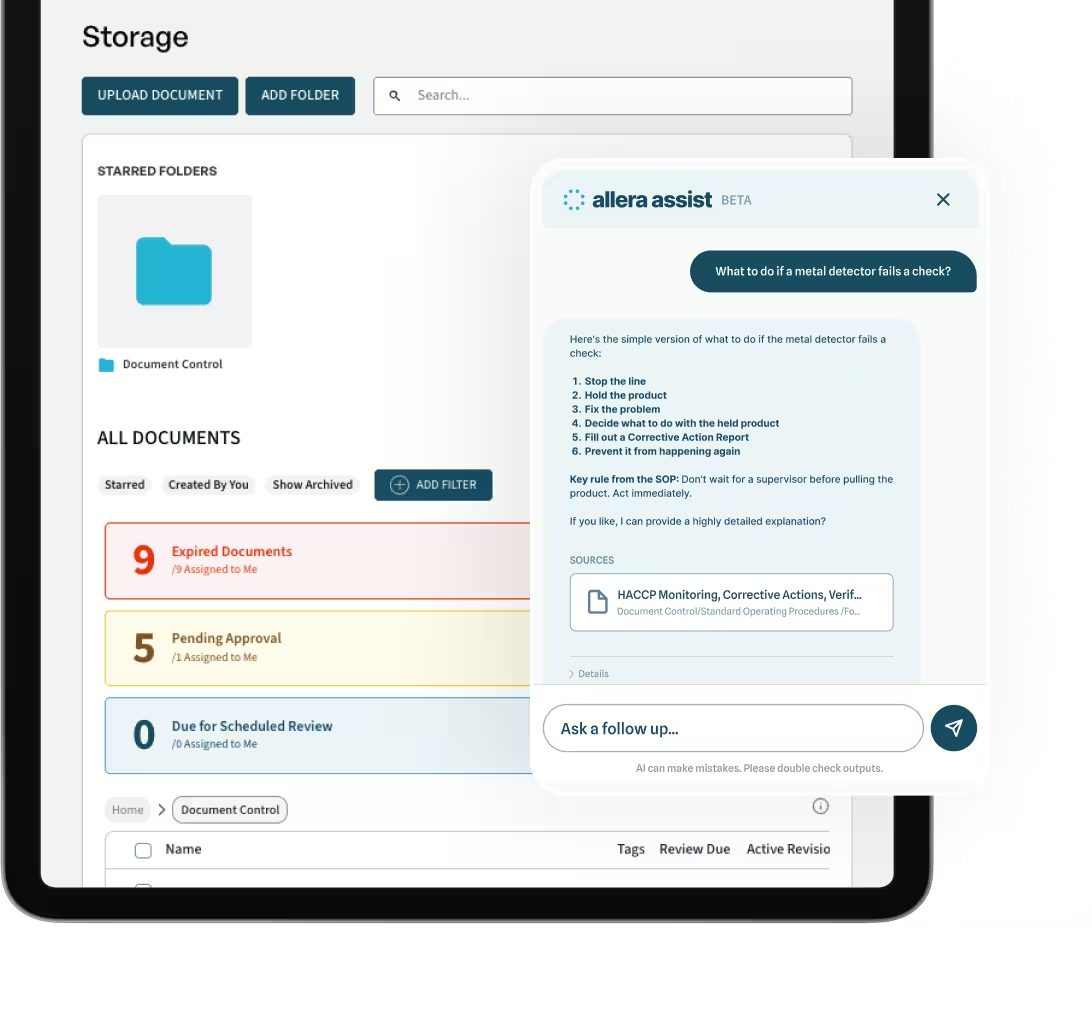
Digital rotation checks solve a specific set of problems rather than all of them. Recurring tasks scheduled by Site and Station mean the check happens on a defined cadence instead of when someone remembers. Rules that flag an out-of-sequence or past-date finding turn an observation into a tracked Corrective Action. Offline autosave matters more than it sounds in cold storage and back-of-warehouse dead zones, where connectivity drops and half-finished entries would otherwise vanish. And records that export cleanly mean audit preparation stops being an archaeology project.
Allera's Digital Forms and Task Management modules cover this workflow, and the records sit inside the same system as the rest of your food safety management system documentation. If you want to see how that works in practice, the food quality management software overview walks through it.
One clarification worth making: Allera is not an inventory or warehouse management system. It does not move stock or hold inventory positions. What it does is make the checks around rotation consistent, scheduled, and provable, which is the part auditors ask about. Lot data from a connected ERP can populate form dropdowns so operators select a lot rather than typing it, which removes a common source of transcription error.
Facilities running GMP programs across multiple sites tend to feel this problem hardest, because a rotation practice that works at one plant rarely transfers intact to another without a shared system behind it.
Rotation is a control, so treat it like one
The gap between facilities that pass a rotation question easily and facilities that struggle is rarely effort. It is evidence. Both are rotating stock. Only one can prove it on demand.
Start with the verification walk. It is the cheapest record to produce and the one auditors ask for most. Add date code verification at start-up if you do not already have it, since rotation without readable codes is not a control at all. From there, the compliance crosswalk and lot discipline take care of themselves.
If you want to see how scheduled checks, automatic flagging, and exportable records work together in one place, take a look at Allera's food quality management software.
FAQs
What is the proper rotation of inventory?
Use FEFO for anything with a meaningful shelf life and FIFO where receipt order and expiry order always match. Document which method applies to which material category, verify it on a schedule, and record the verification.
How do you prove FEFO to an auditor?
Show records rather than describing practice. A dated rotation verification walk, date code verification at start-up and changeover, a near-expiry exception report with dispositions recorded, and evidence that findings routed into corrective action will satisfy most auditors.
Is FEFO required by law for food manufacturers?
No regulation names FEFO specifically. Federal rules and GFSI-recognised schemes require product identification, controlled storage and handling, and demonstrable stock rotation, and FEFO is the method most facilities use to meet those requirements.
What does FEFO stand for?
First Expired, First Out. Some sources write it as First Expiry, First Out. Both refer to the same method.
Is FEFO an acronym or abbreviation?
FEFO is an acronym. It stands for First Expired, First Out. Some sources write it as First Expiry, First Out, which refers to the same method.
What is FEFO in medicine?
In pharmacy and medical supply, FEFO means the same thing it does in food: dispense or issue the stock with the earliest expiry date first. The difference is consequence. Pharmaceutical expiry dates are regulated potency and safety limits.
In US food manufacturing, most date labels are quality indicators rather than safety cutoffs. Infant formula is the only federally regulated exception.
What is FEFO used for?
FEFO makes sure product leaves your facility in order of remaining shelf life, so nothing sits past its date while newer stock ships ahead of it.
In food manufacturing it does a second job: it supports lot discipline. Tight rotation keeps lot boundaries clean, which narrows recall scope and speeds up traceability exercises.
What is FEFO vs FIFO?
FEFO (First Expired, First Out) sequences product by its expiry or best-by date. FIFO (First In, First Out) sequences by the date the product was received.
They produce the same result when receipt order and expiry order match, and different results whenever they do not. Perishable operations default to FEFO because supplier dating varies, slow-moving stock ages, and returned product re-enters inventory.


.avif)
.avif)
.avif)

.avif)
%20(1).avif)

.avif)
.avif)

%20(1).png)

.avif)



.avif)