.avif)



5 Best Food Manufacturing Quality Control Software in 2026


Key Takeaways:
- The right food manufacturing quality control software helps centralize compliance, reduce errors, and keep your facility audit-ready year-round.
- Automating reporting and monitoring improves accuracy, saves time, and protects brand reputation.
- Document control ensures fast retrieval during audits and supports regulatory compliance.
- Choosing the right partner ensures scalability, usability, and long-term support.
Best Food Manufacturing Quality Control Software in 2025
1. Allera Technologies (Best Overall)
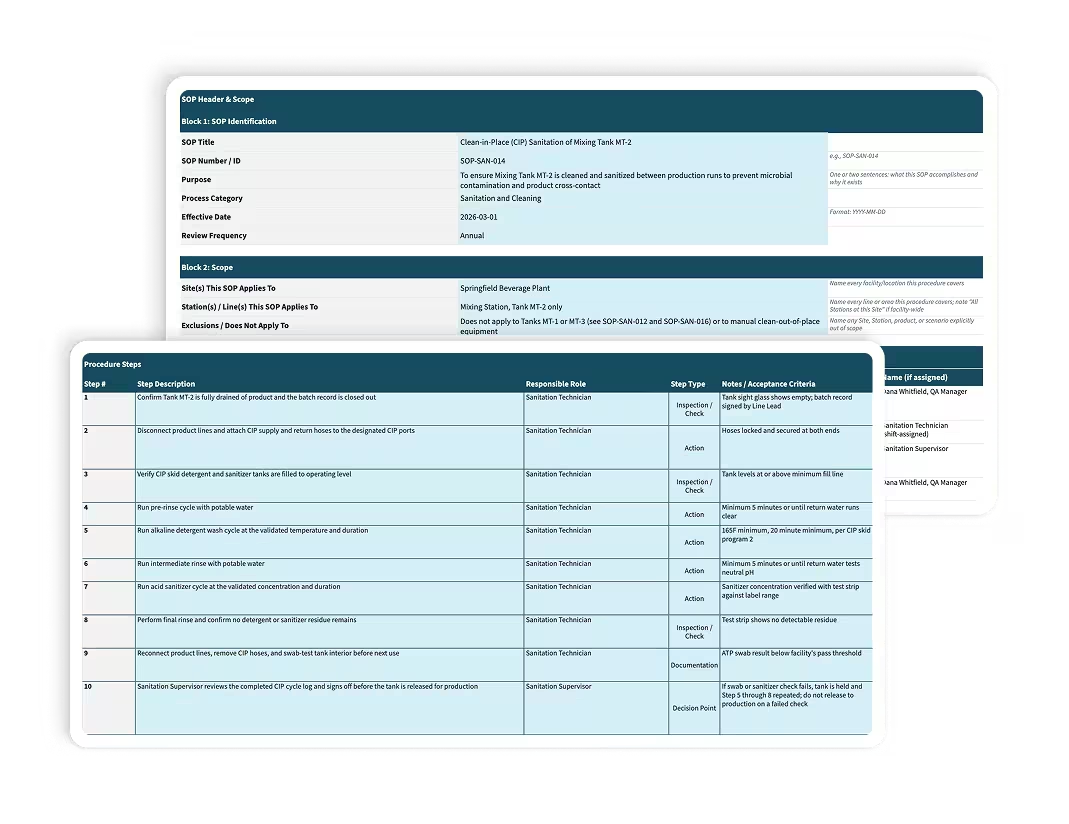
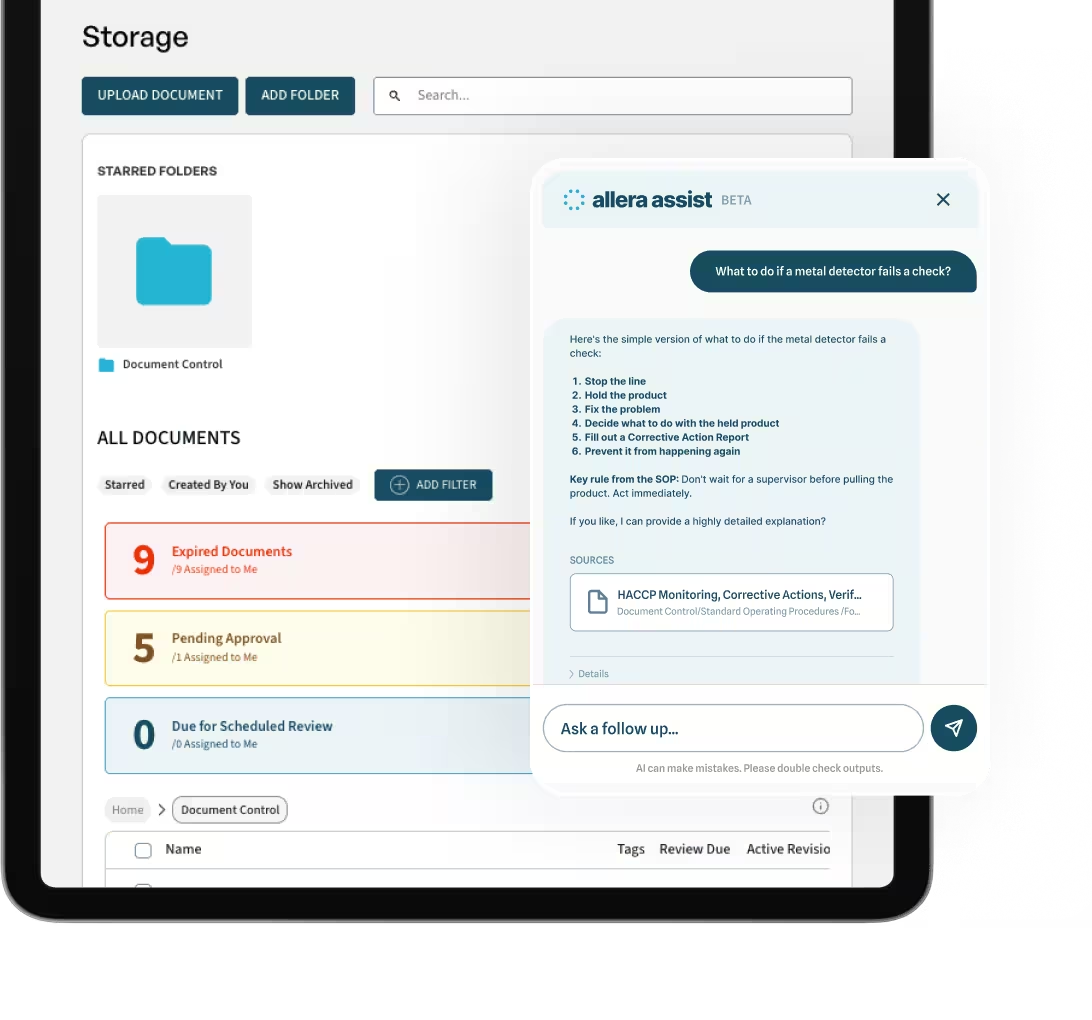
500 companies use Allera for compliance. When it comes to food manufacturing quality control software, Allera leads the pack — not just because it's food-specific, but because of where it puts the automation. Not in replacing QA judgment, but in removing the clerical work around it. A failed check writes its own Corrective Action task. An expiring supplier certificate raises its own Renewal, pre-filled from the last approved version. An SOP revision notifies the people trained on it. And the AI reviews SOPs against SQF clause by clause and suggests — always citing the clause it's referencing, because a compliance tool that can't show its source isn't usable in an audit.
Key Features:
- AI Compliance Review — reads each document clause-by-clause against SQF, rating findings Critical, Major, or Minor with a rationale, a suggested corrective action, and a citation back to the exact clause.
- Document Control — Draft → Pending Approval → Approved → Published, with version history, four access levels, and Scheduled Review forcing re-approval on your own cycle.
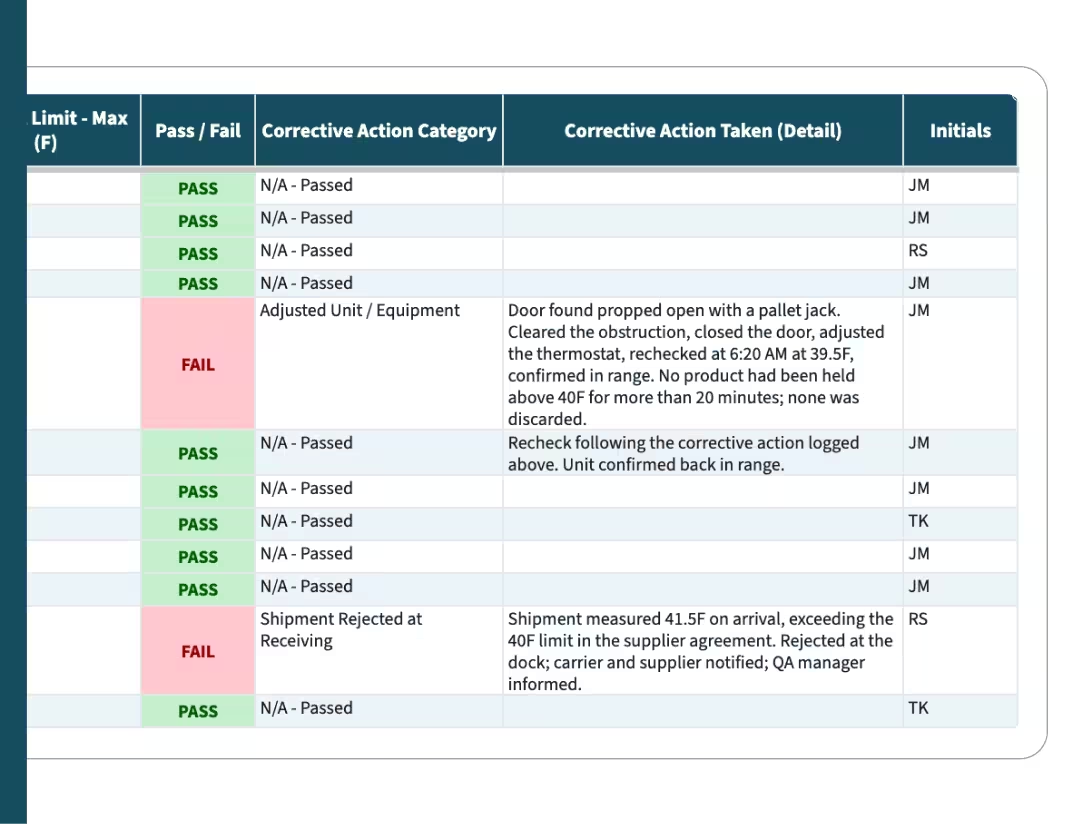
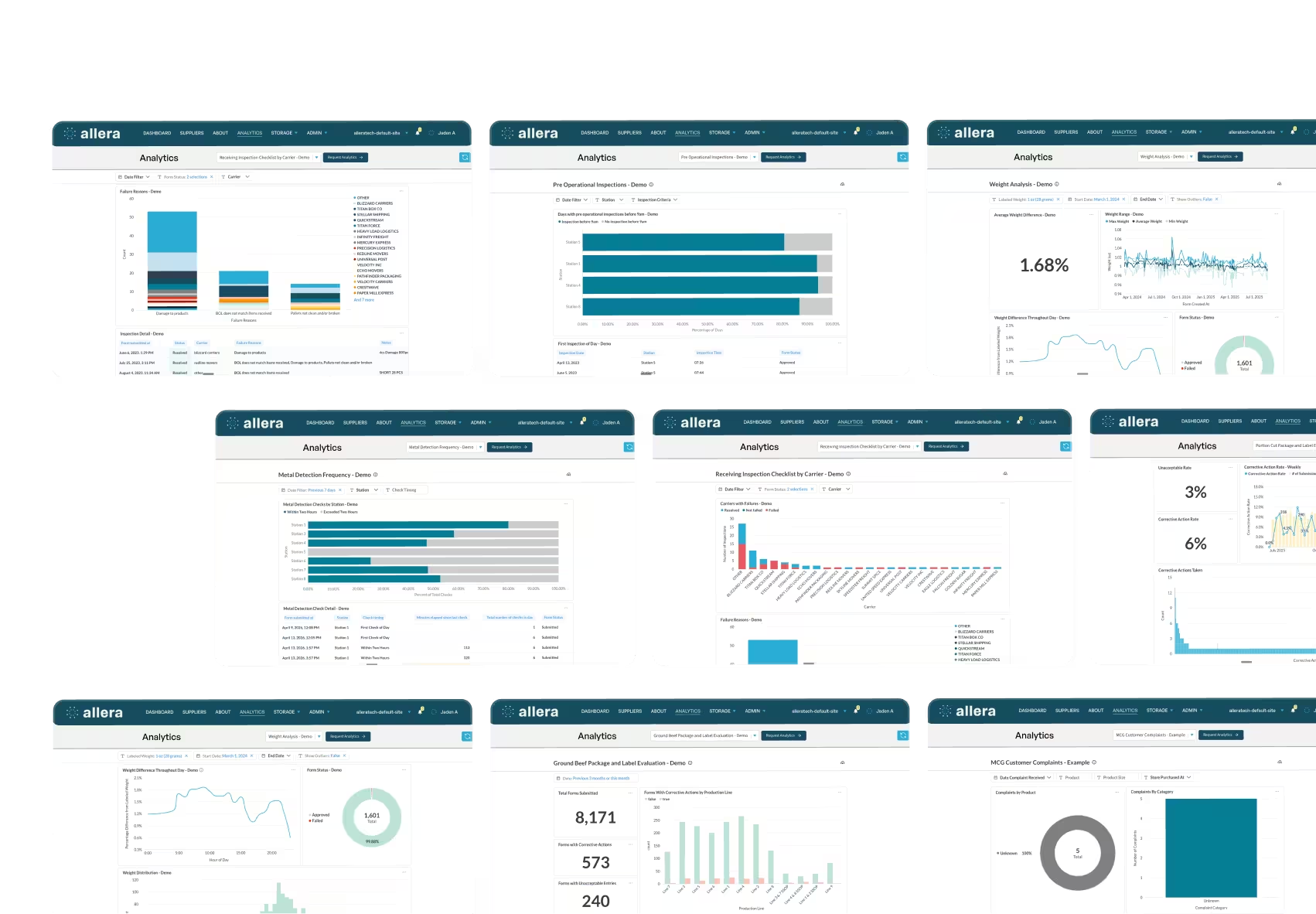
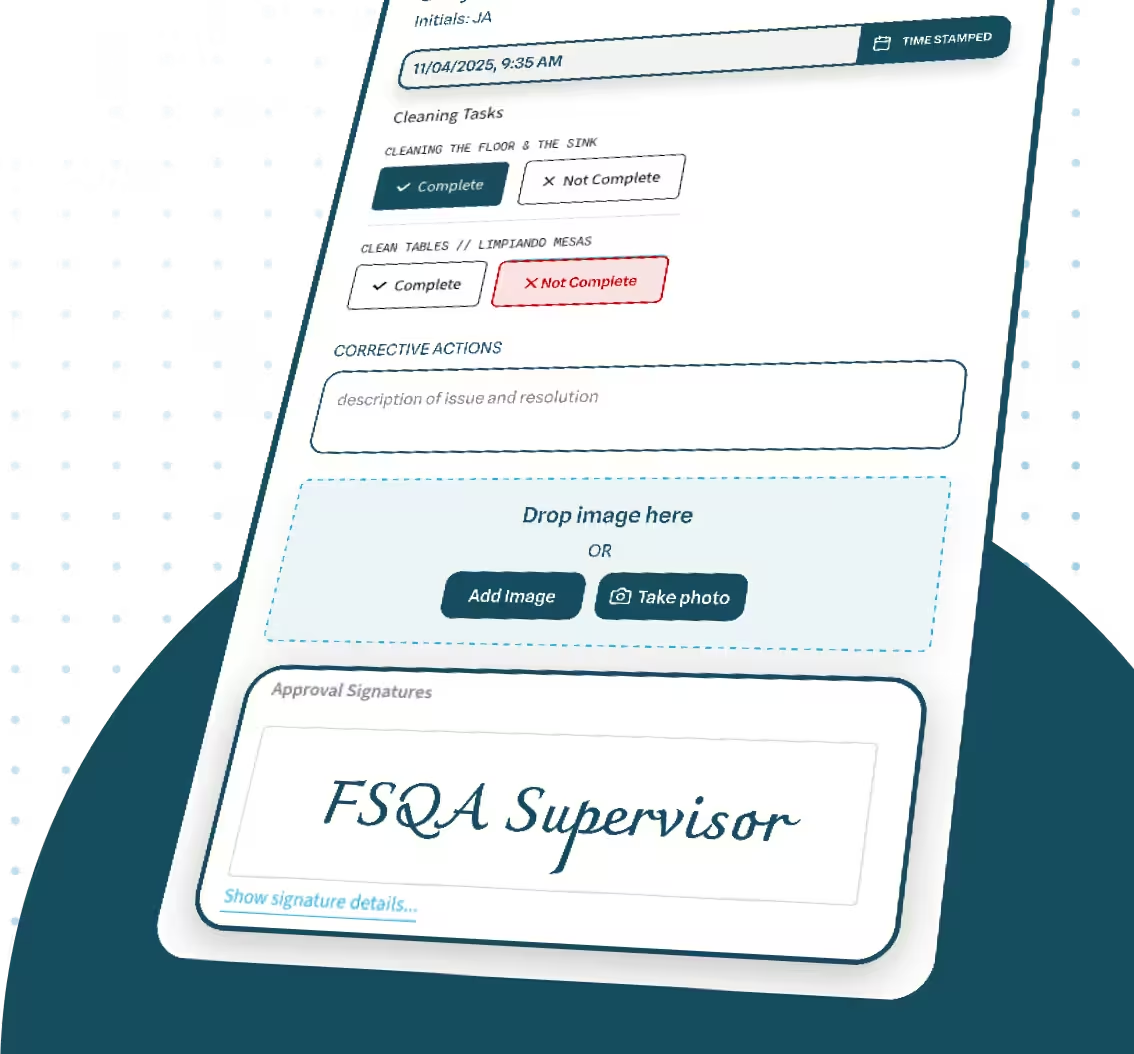
- Audit-ready evidence — timestamped, operator-attributed records with lot-code search and a full exportable Audit Trail.
- Smarter form functionality — full-screen forms across devices, numpad support, instant attribute editing, and template version history.
- One-click approvals — streamlined approval workflows with multi-signature support and send-back for revision.
- Assigned approvals — each Form names who signs off, and reminders go only to the approvers still outstanding.
- Shared dashboards — admins share analytics with Managers, Operators, and Auditors, who preview and pin what they need.
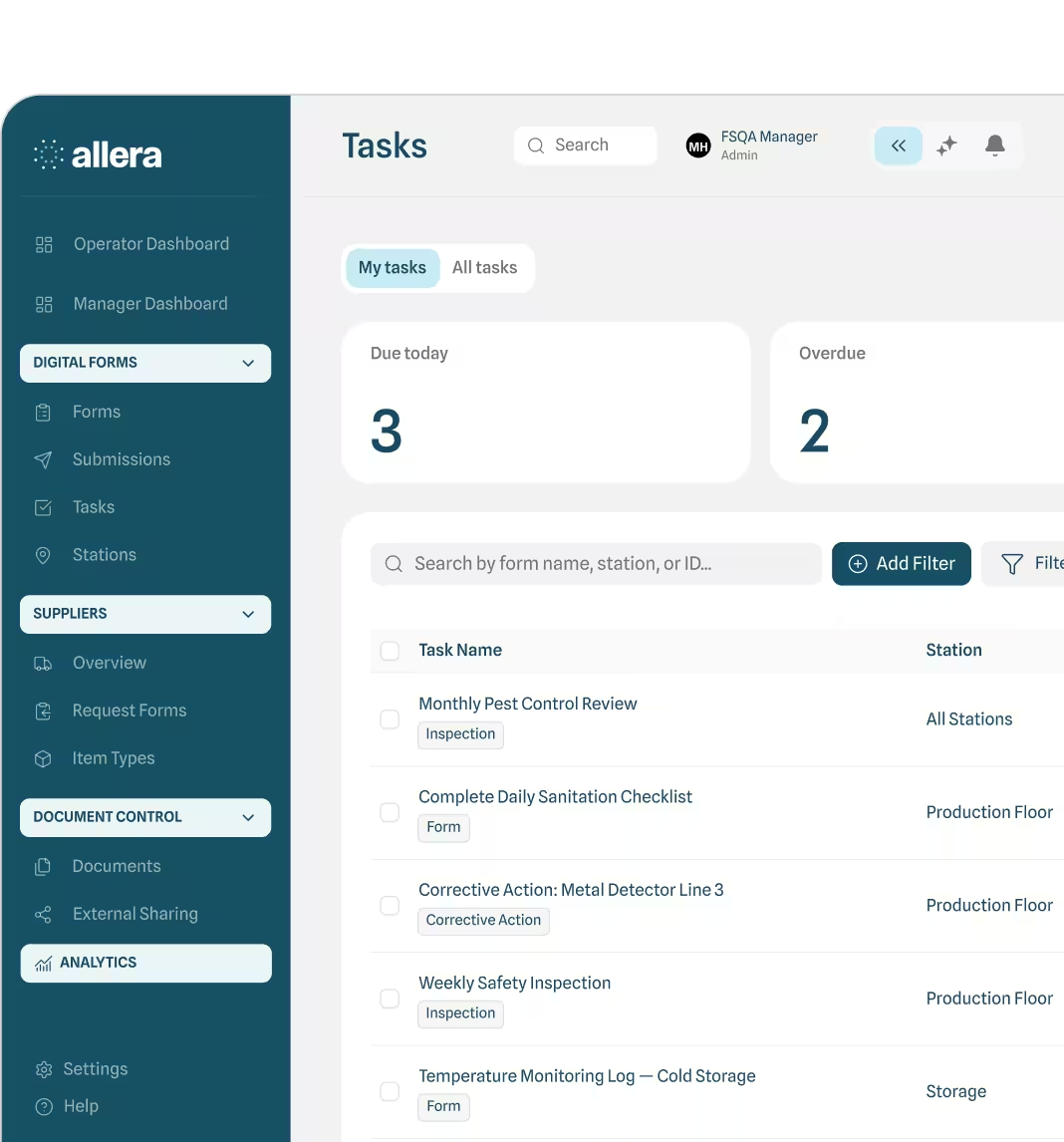
- Automatic Corrective Actions — a tripped failure rule creates an owned follow-up task with a due date.
- Offline autosave — in-progress entries recover automatically after a dropped connection.
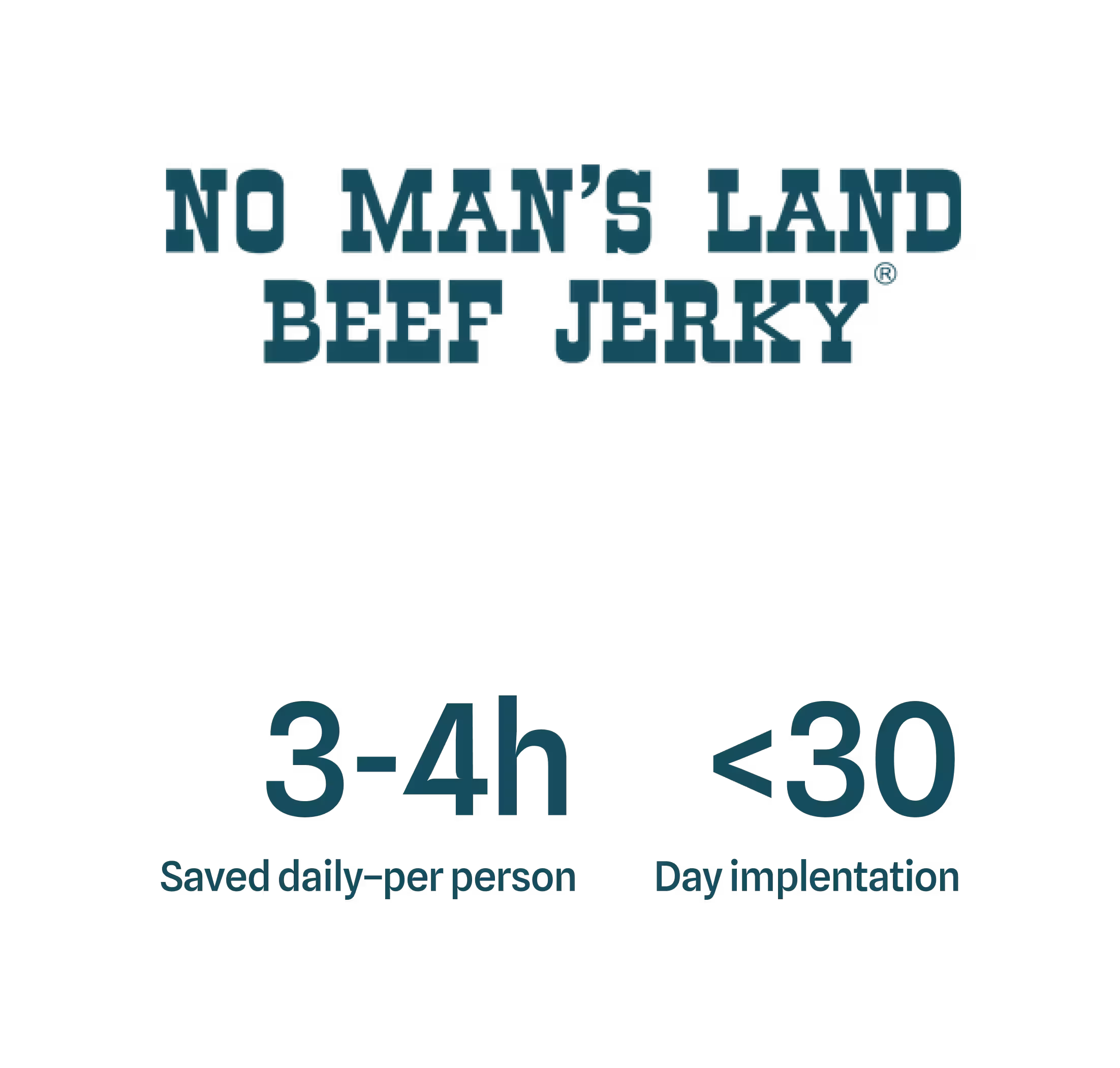
- ~30 day implementation — Allera's team gets your facility digital in about 30 days.
- All the essentials — mobile-ready checklists, supplier management, training acknowledgment tracking, and centralized record access.
Best for: Small to large food & beverage manufacturers and producers looking to eliminate paperwork and maintain SQF certification and FSMA preventive-control records.
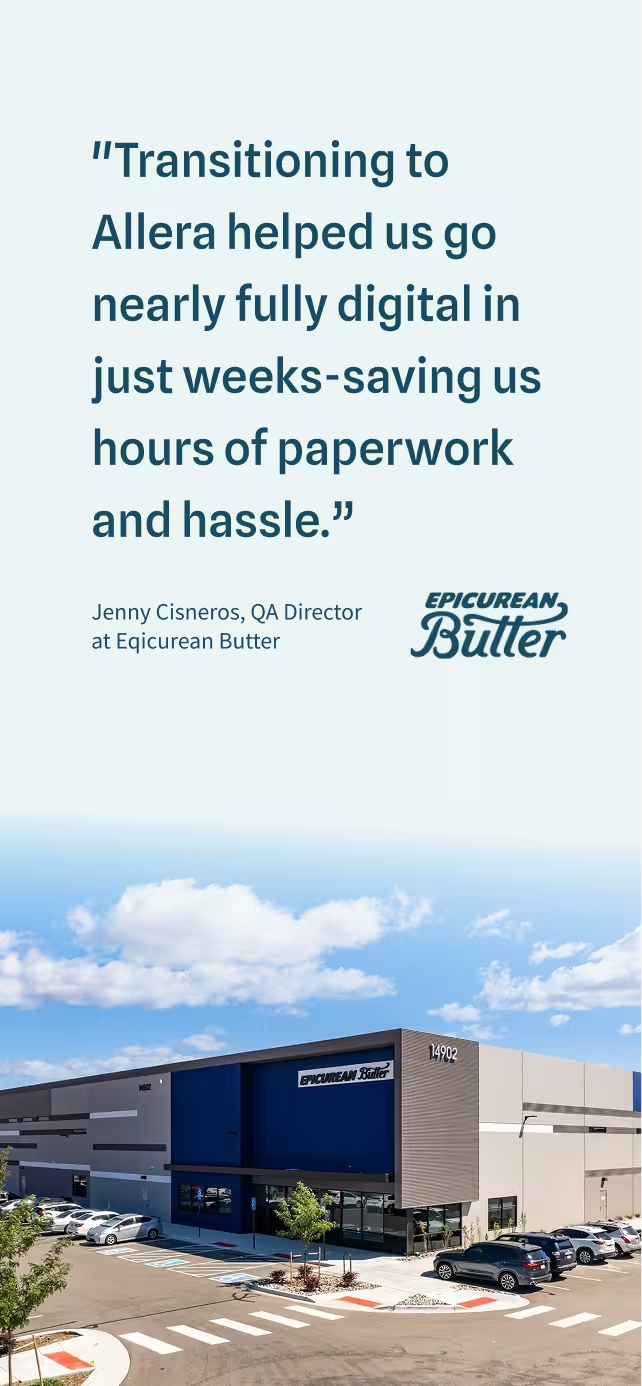
"The platform is user-friendly, customizable, and integrates seamlessly without extra tools. With Allera, we digitized every form, implemented rules to prevent missed actions, and saved time on record management. Its built-in timestamps improved transparency, and audits are now stress-free. The minimal training required made the transition easy…" — Customer Story: How Allera Cut Eden Green's SQF Audit Time by 75%.
Why Allera? Allera's use of AI doesn't just check compliance, it embeds it into the workflow — clause-level SOP review that shows its source, approvals that take one click, and records that assemble themselves as your team works. Staying audit-ready becomes part of the day rather than a scramble before it.
Best fit:
- Purpose-built for food and beverage manufacturing
- Designed for quality teams maintaining certification across one or many sites
2. SafetyChain Software
SafetyChain focuses on compliance and production efficiency. Its platform includes digital forms, production monitoring, and audit management.
Key Features:
- Digital checklists and customizable audit forms.
- Real-time production monitoring dashboards.
- Cloud-based reporting and document storage.
- Mobile access for frontline workers.
Best For: Medium to large manufacturers seeking to reduce paperwork and centralize compliance processes.
3. MasterControl Quality Excellence
MasterControl is a compliance management platform widely used in regulated industries, including food manufacturing. While it is broader than food-specific platforms, it provides strong tools for managing documentation and training.
Key Features:
- Comprehensive document management with version control.
- Training management and employee certifications tracking.
- Audit preparation and electronic audit support.
- Integrations with wider GxP compliance frameworks.
Best For: Companies that operate in multiple regulated sectors (pharma, biotech, food) and want one compliance system across all.
4. Plex Smart Manufacturing Platform (by Rockwell Automation)
Plex is a cloud-based manufacturing execution system (MES) with quality management built-in. It integrates production data and compliance workflows to ensure complete oversight across operations.
Key Features:
- Integrated MES with real-time quality tracking.
- Automated reporting and analytics.
- Centralized platform for ERP + quality.
- Strong multi-site support for enterprise-scale manufacturers.
Best For: Large-scale manufacturers who want a full ERP/MES platform with quality management included.
5. Aptean Food & Beverage ERP
Aptean provides ERP software tailored to food and beverage manufacturers. Quality management is integrated into broader supply chain and production systems.
Key Features:
- Batch and lot tracking with traceability.
- Built-in compliance and reporting tools.
- Integration with production and financial management.
- Configurable workflows for food and beverage operations.
Best For: Mid- to large-sized manufacturers who need ERP with integrated quality and traceability.
What Is Food Manufacturing Quality Control Software?
Food manufacturing quality control software is a digital platform designed to manage compliance, document safety processes, and track production quality. Instead of relying on manual logs or spreadsheets, software centralizes records, automates reporting, and provides real-time visibility into operations.
By 2025, adoption has accelerated as more food companies respond to increasing regulatory requirements from the FDA’s FSMA and internationally recognized standards such as BRCGS.
Why Quality Control Software Matters in 2025
Food recalls are costly — not just financially but also for consumer trust. According to the USDA, foodborne illnesses affect an estimated 48 million Americans each year (CDC). For manufacturers, one missed compliance step can mean shutdowns, recalls, or lost contracts.
Quality control software matters because it:
- Creates a single source of truth for safety documentation.
- Speeds up regulatory and customer audits.
- Reduces human error in logging and reporting.
- Supports supplier management and verification.
Challenges of Manual Quality Control in Food Manufacturing
Many facilities still rely on clipboards, binders, or scattered spreadsheets. While familiar, manual systems pose risks:
- Lost or incomplete records during audits.
- Inconsistent data entry leading to errors.
- Slow response times to hazards or deviations.
- Supplier documentation gaps that compromise compliance.
Without digital tools, staying audit-ready requires extensive overtime and constant firefighting.
Benefits of Digital Food Quality Control Platforms
Adopting quality control software helps food manufacturers:
- Improve compliance: Automated alerts ensure no step is missed.
- Enhance traceability: Quickly identify affected batches in recalls.
- Save time: Digital checklists and reporting eliminate redundant paperwork.
- Boost accountability: Audit trails capture who did what and when.
- Strengthen supplier oversight: Automated workflows simplify onboarding and certification tracking.
Choosing Allera’s Document Control ensures your team can retrieve audit documents in seconds, cutting down preparation time and avoiding costly delays.
Key Features to Look for in Food Quality Control Software
Before selecting a platform, consider whether it offers:
- Centralized document management (policies, SOPs, training).
- Supplier management workflows for onboarding and approvals.
- Audit readiness tools like checklists, reports, and version control.
- Mobile data entry to capture information directly from the floor.
- Scalability to support multi-site operations.
Trends Shaping Quality Control in Food Manufacturing
Several trends are driving the adoption of digital quality control platforms in 2025:
- Regulatory pressure: Stricter FDA FSMA rules and GFSI-recognized standards (BRCGS, SQF).
- Automation & AI: Predictive analytics for risk management and process optimization.
- Supplier transparency: Demand for real-time oversight of global supply chains.
- Sustainability tracking: Linking quality and environmental data to consumer trust.
(Deloitte’s 2024 study on food industry digitalization highlights that 70% of manufacturers increased investment in compliance technology to meet these evolving demands.)
How to Evaluate Vendors Before Purchase
When comparing vendors, ask:
- Does it support regulatory compliance specific to food manufacturing?
- Is it easy for frontline staff to use on mobile devices?
- Can it scale across multiple plants or facilities?
- Does the vendor offer long-term support and training?
- Are there proven customer success stories in the food sector?
Allera customers, like Hammond’s Candies, have demonstrated how modern document control and supplier management tools can reduce audit prep times and strengthen compliance confidence.
Case Study: Hammond’s Candies with Allera
Founded in 1920, Hammond’s Candies produces handcrafted sweets at scale. Managing supplier documentation and compliance became increasingly difficult as the company expanded. By implementing Allera’s quality control platform, Hammond’s:
- Reduced audit preparation time.
- Centralized supplier documentation.
- Improved compliance workflows.
Read the full Hammond’s Candies story here →.
Conclusion
The best quality control software for food manufacturing in 2025 is clear: Allera Technologies. With a focus on document control, supplier management, and audit readiness, and now AI-driven compliance intelligence, Allera gives food manufacturers the tools they need to stay efficient and compliant year-round.
With Allera, being audit-ready isn’t a scramble — it’s a standard part of operations.
FAQs
.avif)
.avif)
.avif)
.avif)
%20(1).avif)
.avif)
.avif)

%20(1).png)

.avif)


.avif)