.avif)



Food Safety Culture: How to build it in 2026?

.avif)


TL;DR
- Food safety culture is the shared values and behaviors that drive how your organization prioritizes food safety in daily decisions.
- GFSI schemes and FSMA compliance increasingly depend on demonstrating strong culture through leadership commitment, employee empowerment, open communication, and continuous improvement.
- Key requirements include qualified individual training, comprehensive employee training programs with competency verification, documented policies for communication and reporting, and measurable culture indicators.
- Implementation involves assessing your current state, developing formal policies, training all employees, establishing feedback systems, and tracking metrics like near-miss reports and survey scores.
- Proper documentation—including training records, meeting minutes, culture assessments, and corrective actions—is essential for audit readiness and continuous improvement.
In this guide, you’ll learn how FDA inspectors and GFSI auditors evaluate food safety culture today, what they expect to see during inspections and certification audits, and how you can build, document, and sustain a culture that holds up in real operations—not just on paper.
Keep reading to learn...
- How regulators and GFSI schemes assess your food safety culture
- What auditors look for during interviews, observations, and document reviews
- The leadership behaviors that influence daily food safety decisions
- How to structure training so employees demonstrate real understanding
- Ways to create open communication and early issue reporting
- The culture metrics and indicators auditors recognize
- How to document culture and stay audit-ready year-round
We just completed our 11 page food safety culture questionnaire template. It's perfect for food companies looking to better understand their actual food safety culture atmosphere.
What is Food Safety Culture?
Defining Food Safety Culture
A widely used industry definition from GFSI describes food safety culture as:
"the shared values, beliefs and norms that affect mind-set and behavior toward food safety in, across and throughout an organization."
This definition has been adopted across the food industry as the standard way to describe what food safety culture means.
Here's the key distinction: your food safety culture is not the same as your food safety programs or management systems. Your programs are the documented procedures and controls you've established. Your management system is the framework that organizes those programs. Your culture, however, is how your employees actually think about and prioritize food safety when making daily decisions—especially when no one is watching.
Quick definition for reference: Food safety culture encompasses the collective attitudes, values, and behaviors that influence how seriously an organization takes food safety. It's demonstrated through leadership commitment, employee empowerment, open communication, and continuous improvement practices that go beyond mere compliance.
If you're looking for a more entertaining lesson on food safety culture, watch our food safety culture conversation Sharon K.K Beals. She's a former FSQA professional at US Foods and many other well known brands. She simplifies food safety culture and how to implement it. We totally recommend you watch it!
What Does Food Safety Culture Mean in Practice?
Food safety culture translates into everyday actions and decisions. It means your production workers feel comfortable stopping the line if they notice something that doesn't look right. It means supervisors prioritize proper sanitation over meeting production quotas when there's a conflict. It means management allocates budget for equipment upgrades that improve food safety, even when those investments don't directly increase revenue.
On the production floor, a strong food safety culture looks like employees consistently following handwashing procedures even during rush periods, team members asking questions when they're uncertain about a process, and workers reporting near-misses without fear of punishment. It's the warehouse operator who notices a temperature deviation and immediately reports it rather than hoping it will resolve itself.
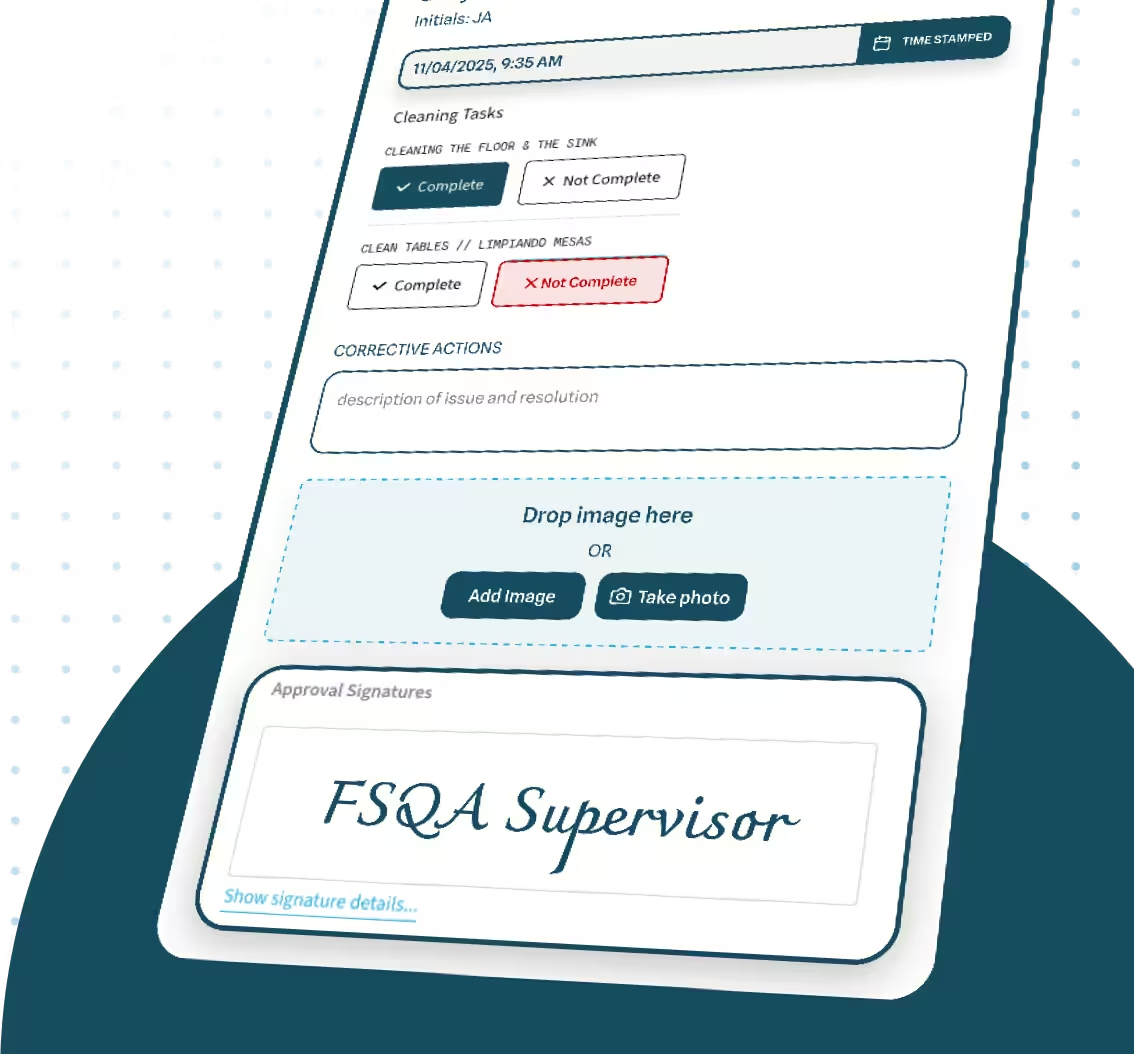
These behaviors are far easier to sustain when employees can capture deviations and observations using paperless forms at the moment issues occur.
Why Food Safety Culture is Important
The statistics tell a compelling story. Industry research and practitioner experience consistently show that stronger food safety culture is associated with fewer food safety incidents and better preventive control performance. When culture fails, the consequences are severe—product recalls, regulatory enforcement actions, and damaged consumer trust that can take years to rebuild.
From a compliance standpoint, FSMA expects effective implementation of preventive controls and GMPs, and GFSI-benchmarked schemes increasingly expect documented evidence of leadership commitment, communication, training, and continuous improvement that support food safety culture. During inspections and certification audits, regulators and auditors often evaluate indicators of food safety culture through employee interviews, behavioral observations, and evidence of management commitment and effective implementation. Failing to demonstrate adequate food safety culture can result in nonconformities that may jeopardize certification, depending on severity and corrective action effectiveness.
The business case is equally strong. Industry studies commonly estimate that food recalls can cost millions of dollars and may exceed $100 million in severe events, depending on scope, brand impact, and operational disruption. Investing in culture programs—including training, communication systems, and recognition programs—typically costs a fraction of that amount. Companies with mature food safety cultures also report lower employee turnover, higher productivity, and stronger relationships with retailers and customers who increasingly audit suppliers' cultural practices.
Regulatory Requirements for Food Safety Culture
FSMA Preventive Controls and Culture Requirements
The FDA Food Safety Modernization Act doesn't use the term "food safety culture" explicitly in the regulations, but the concept is embedded throughout the Preventive Controls for Human Food rule (21 CFR Part 117). Section 117.4 requires that preventive controls be prepared by or overseen by a "qualified individual" who has successfully completed training in developing and applying risk-based preventive controls.
This requirement directly supports culture by ensuring that someone with proper knowledge and authority is driving your food safety system. FDA inspectors look for evidence that qualified individuals are actively engaged in food safety decisions, not just named on paper. During inspections, they assess whether management provides the resources and support these individuals need to fulfill their responsibilities effectively.
The connection to preventive controls is critical. Your hazard analysis, preventive controls, monitoring procedures, and corrective actions must all function within a culture that values and supports them. FDA focuses on whether employees understand why controls exist, whether they're empowered to address deviations, and whether management responds appropriately when issues arise.
GFSI Scheme Requirements
Global Food Safety Initiative (GFSI) benchmark schemes have made food safety culture an explicit certification requirement. Each scheme approaches culture slightly differently, but all require demonstrable evidence of cultural commitment.
BRCGS standards require senior management to demonstrate commitment to food safety and quality culture through visible leadership, adequate resources, and effective communication of food safety objectives. BRCGS auditors assess whether management regularly reviews food safety performance, communicates priorities to staff, and ensures adequate staffing levels for food safety activities. You'll need documented evidence such as management meeting minutes that discuss food safety culture, resource allocation decisions that prioritize safety, and communication records showing leadership engagement.
SQF Edition 9 emphasizes leadership commitment, employee engagement, and communication practices that strengthen food safety culture, and auditors will look for documented evidence that these expectations are implemented and reviewed. Edition 9.1, released in 2024, continues to emphasize these cultural elements with clarified expectations around employee engagement and communication practices. You must demonstrate management commitment, employee engagement in food safety practices, and mechanisms for reporting food safety concerns without fear of reprisal. SQF auditors evaluate your culture program documentation, evidence of employee training on culture expectations, and records demonstrating that concerns are addressed promptly.
FSSC 22000 incorporates culture requirements through its additional FSSC requirements beyond ISO 22000. You must demonstrate a food safety culture that includes management commitment, employee awareness, communication systems, and continuous improvement mechanisms. FSSC audits assess both documented procedures and actual implementation through employee interviews and behavioral observations.
IFS Food Standard evaluates culture through its senior management responsibility section and throughout the standard. You need evidence of management's active involvement in food safety, effective communication systems, and a work environment that supports food safety practices.
Here's a comparison of common requirements across schemes:
All schemes require:
- Documented management commitment to food safety culture
- Employee training programs that address culture expectations
- Established communication channels for food safety information
- Mechanisms for employees to report concerns without retaliation
- Regular management review of culture effectiveness
Across GFSI-benchmarked schemes, auditors commonly expect documented leadership commitment, role-appropriate training, effective communication channels, a safe mechanism for reporting concerns, and management review of effectiveness. Keeping this evidence consistent and audit-ready is far more manageable when leadership commitments, training records, and corrective actions are centralized in document control.
International Standards
ISO 22000:2018 integrates food safety culture throughout the standard, particularly in leadership and worker participation clauses. The standard requires top management to demonstrate leadership and commitment by ensuring food safety policy and objectives align with organizational context, and by promoting awareness of the food safety management system throughout the organization. This version, now well-established since its 2018 release, has made culture integration a normalized expectation across certified facilities worldwide.
Codex Alimentarius provides guidance on food safety culture in its "General Principles of Food Hygiene" (CXC 1-1969, revised through 2020). While not legally binding, Codex guidance influences regulations worldwide and emphasizes the importance of management commitment, training, and communication in establishing effective food safety systems.
Regional differences exist in how culture is regulated and enforced. In the European Union, food safety culture expectations are embedded in Regulation (EC) No 852/2004, which requires food business operators to ensure food handlers receive appropriate supervision and training. Australia's Food Standards Code emphasizes the role of food safety supervisors in creating a culture of compliance. These regional variations mean you may need to adapt your culture program based on where you manufacture or export products.
The 7 Core Elements of Food Safety Culture

Building a strong food safety culture requires attention to seven interconnected elements. Each element needs both genuine implementation and proper documentation to satisfy regulatory and certification requirements.
1. Leadership Commitment and Vision
Leadership commitment is the foundation of food safety culture. Your senior management team must visibly prioritize food safety through words, actions, and resource allocation. This isn't just about signing a policy statement—it's about daily demonstration that food safety comes first.
Key documentation includes:
- Signed management commitment statement articulating your organization's food safety vision and management's personal accountability
- Resource allocation records showing budget approval for food safety initiatives, staffing decisions, and capital investments
- Management meeting minutes regularly reflecting food safety discussions and culture program reviews
- Documentation of decisions demonstrating safety taking precedence over production or financial pressures
During audits, inspectors look for evidence that leadership walks the talk, including whether management participates in food safety meetings, conducts regular facility walks, responds promptly to concerns, and holds themselves accountable when issues arise.
2. Open Communication and Transparency
Effective food safety culture requires communication flowing freely in all directions—from leadership to frontline workers, from employees to management, and among peer groups. You need established channels for sharing food safety information, raising concerns, and providing feedback.
Documentation requirements include:
- Written procedures describing communication channels and how they're used (safety meetings, shift briefings, bulletin boards, digital platforms, suggestion systems)
- Records proving communication actually happens: meeting attendance sheets, safety bulletin distribution logs, concern resolution tracking
- Documented policies ensuring employees can report food safety concerns without fear of retaliation
- Investigation records showing concerns are addressed promptly
Auditors often interview employees privately to verify that communication systems work in practice and that workers feel safe speaking up.
3. Employee Training and Competency
Training is where culture becomes tangible for most employees. Your training program must go beyond teaching procedures to instilling the values and mindset that drive food safety culture.
You need comprehensive training documentation covering initial orientation for new hires, role-specific training for different positions, refresher training at defined intervals, and specialized training when procedures change. Each training session requires documentation of who attended, what was covered, how competency was verified, and when refresher training is due.
Competency verification is critical. You can't just have employees sign that they attended training—you need evidence they understand and can apply what they learned. This includes practical demonstrations, written assessments, observed behaviors, or supervisor verification of competency. We'll explore training requirements in detail in the next section.
4. Risk Awareness and Assessment
Employees at all levels must understand food safety risks relevant to their roles. Your culture program should ensure workers know what hazards exist, how their actions control those hazards, and what to do when things go wrong.
Documentation includes:
- Risk assessment records integrated with your hazard analysis and preventive controls
- Evidence that employees receive risk-specific training
- Documentation showing workers understand consequences of control failures
- Near-miss reporting systems demonstrating active risk identification
Audit evidence includes completed hazard analyses, risk assessment worksheets, near-miss reports with investigation records, and training materials that explain risks in accessible language. Auditors may ask employees to explain the food safety risks in their work areas to verify that risk awareness extends beyond documentation.
5. Employee Empowerment and Accountability
Strong food safety culture empowers every employee to take ownership of food safety within their sphere of influence. Workers need authority to stop processes when they observe problems, responsibility to follow procedures correctly, and accountability for their food safety duties.
Essential documentation includes:
- Stop-work authority policies clearly stating that any employee who observes a food safety risk has the authority and responsibility to halt the process
- Records showing this authority is exercised without retaliation—instances where workers stopped production, investigations that followed, and corrective actions taken
- Employee involvement records: participation in food safety teams, contributions to continuous improvement initiatives, recognition for identifying food safety issues
- Recognition program documentation showing how you celebrate food safety successes (employee awards, safety milestone celebrations, formal recognition systems)
This documentation demonstrates that empowerment is real, not just written policy.
6. Adherence to Standards and Continuous Improvement
Food safety culture requires both following current requirements and constantly seeking improvement. You need systems that ensure compliance with all applicable standards while also identifying opportunities to enhance food safety performance.
Documentation includes:
- Internal food safety audit schedules and completed audit reports
- External inspection and certification audit records with corrective actions
- Trend analysis showing how performance improves over time
- Management review meeting minutes discussing audit findings and improvement initiatives
Your corrective action system is particularly important evidence of culture. Effective culture means corrective actions address not just the immediate problem but underlying cultural factors. For example, if an employee skips a critical control point, a strong culture investigates why—was training inadequate, were they pressured to prioritize speed over safety, or do they lack understanding of the hazard?
7. Resources and Environmental Support
Food safety culture requires adequate resources and a physical environment that supports safe practices. Management must provide the tools, equipment, facilities, and staffing that employees need to execute food safety responsibilities.
Documentation includes:
- Equipment maintenance schedules and records proving food safety equipment receives priority maintenance
- Facility design assessments showing adequate space for safe operations
- Budget records demonstrating investment in food safety infrastructure
- Staffing level analyses ensuring adequate coverage during all production periods
Auditors assess whether you have functional equipment (calibrated thermometers, working handwashing stations, adequate sanitation supplies), whether facility design prevents contamination risks, and whether you have enough staff to execute all food safety tasks without cutting corners. A common culture failure occurs when facilities are chronically understaffed, forcing employees to choose between food safety procedures and meeting production targets.
Food Safety Culture Training Requirements
Training is one of the most visible and auditable components of food safety culture. Your training program must satisfy regulatory requirements while genuinely building the knowledge and behaviors that sustain strong culture.
FSMA Qualified Individual Training
Under 21 CFR 117.4, at least one qualified individual must oversee your preventive controls for human food. This person must have successfully completed training in developing and applying risk-based preventive controls at least equivalent to that received under a standardized curriculum recognized as adequate by FDA.
The Food Safety Preventive Controls Alliance (FSPCA) Preventive Controls for Human Food course is the recognized standard. This 2.5-day course covers:
- Food safety plans and good manufacturing practices
- Biological, chemical, and physical hazards
- Preliminary steps in developing a food safety plan
- Process, allergen, sanitation, and supply chain preventive controls
- Verification, validation, and record-keeping procedures
- Environmental monitoring
You must maintain training certificates proving your qualified individual completed appropriate training. If your qualified individual changes or if multiple people share this responsibility, each must have documented training. Refresher training isn't explicitly required by FSMA, but many facilities require it every three to five years to ensure qualified individuals stay current with emerging hazards, new technologies, and evolving regulatory expectations.
Employee Food Safety Culture Training Programs
Every employee needs training appropriate to their role. Your training program should address both technical food safety requirements and the cultural expectations that support them.
New hire orientation should introduce food safety culture from day one, covering:
- Your organization's food safety vision and values
- Each employee's role in protecting consumers
- Basic GMPs specific to their position
- How to report concerns without fear of retaliation
- The importance of following procedures even under pressure
Ongoing training topics should include:
- Annual refresher training on GMPs and culture expectations
- Hazard-specific training when new risks are identified
- Procedure training whenever processes change
- Culture reinforcement training addressing observed gaps or near-misses
- Cross-training to build understanding of how different roles interconnect
Role-specific training needs vary significantly. Production operators need detailed training on critical control points, monitoring procedures, and deviation responses. Sanitation staff require specialized training on cleaning and sanitizing procedures, allergen controls, and verification methods. Supervisors need training on culture leadership, coaching employees, addressing non-compliance, and balancing production with food safety priorities. Quality assurance staff need technical training on testing methods, data analysis, and audit techniques.
Training delivery methods should match your workforce:
- Classroom instruction for complex topics requiring discussion
- Hands-on demonstrations for practical skills like sanitation or allergen cleaning
- Job shadowing and mentoring to help new employees learn from experienced workers
- Visual aids and translated materials to support multilingual workforces
- Digital training platforms for consistent delivery and automated tracking
Training Documentation and Records
Proper documentation transforms training from an activity into auditable evidence of your food safety culture. Regulations and certification schemes specify what training records you must maintain.
Required records include:
- Training attendance rosters with employee names, dates, and signatures confirming participation
- Training materials or curriculum outlines showing what was covered
- Competency assessment records proving employees understood and can apply the training
- Training certificates for specialized courses like PCQI training
- Training matrix showing which employees require which training and when refresher training is due
Training sign-off sheets should capture more than just attendance. Effective sign-off sheets include:
- Training topic and date
- Trainer name and qualifications
- Employee names and signatures
- Competency verification method and results
- Employee acknowledgment that they understand the material
- Next training due date
Competency assessment methods vary by training type:
- Written tests for knowledge-based training
- Practical demonstrations for hands-on skills
- Supervisor observations confirming proper execution during actual work
- Employee explanations of why procedures matter to show cultural understanding
The choice between digital and paper tracking systems depends on your facility size and complexity. Paper systems are simple and don't require technology, but they're harder to search, can be lost or damaged, and make it difficult to identify employees with upcoming training due dates. Digital systems enable quick searches and automated reminders, generate reports for audits instantly, and maintain secure backups, but require upfront investment and user training.
Record retention requirements vary by regulation and certification scheme, but best practice includes:
- Current employee training records for the duration of employment plus 2-3 years after termination
- Qualified individual training certificates retained indefinitely
- Training materials and curricula for at least 2 years or through the next certification audit cycle
Food Safety Culture Training Template
A comprehensive training curriculum should include these core modules:
Introduction to Food Safety Culture
- What food safety culture means
- Why it matters to your organization
- Real-world consequences of culture failures
- Everyone's role in maintaining strong culture
Leadership and Management Responsibilities
- Management's commitment to food safety
- Resources available to support food safety
- How decisions prioritize consumer safety
- Management's expectations of all employees
Communication and Reporting
- Available communication channels
- How to report food safety concerns
- Whistleblower protections and non-retaliation policies
- How concerns are investigated and resolved
Risk Awareness
- Food safety hazards relevant to your facility
- Consequences of control failures
- How your job controls specific risks
- Recognizing and reporting new or changing risks
Empowerment and Accountability
- Stop-work authority and when to use it
- Personal responsibility for food safety
- How to make decisions when procedures and production conflict
- Accountability for following requirements
Continuous Improvement
- How to identify improvement opportunities
- Participating in corrective and preventive actions
- Learning from near-misses and deviations
- Recognition for food safety contributions
Assessment questions should verify both knowledge and cultural understanding:
- "What should you do if you notice a coworker skipping a handwashing step?" (assesses empowerment)
- "Why do we monitor cooking temperatures at our facility?" (assesses risk understanding)
- "Who can you talk to if you have a food safety concern?" (assesses communication knowledge)
- "What happens if you need to stop production due to a food safety issue?" (assesses both procedure knowledge and cultural expectations)
How to Develop and Implement a Food Safety Culture Program
Building food safety culture is a journey, not a destination. This step-by-step approach helps you develop a program tailored to your facility while satisfying regulatory and certification requirements.
Creating Your Food Safety Culture Plan
Start by assessing your current state honestly. What food safety culture elements already exist? What behaviors do you observe on the production floor?
Where are the gaps?
Conduct a gap analysis comparing your current practices against:
- Regulatory requirements (FSMA, applicable GFSI schemes)
- Industry best practices
- Customer expectations
- Your own food safety objectives
Set clear objectives with realistic timelines. Your goals might include:
- Achieving GFSI certification within 12 months
- Reducing food safety deviations by 50% in six months
- Implementing a near-miss reporting system within 90 days
- Conducting culture surveys annually with year-over-year improvement targets
Resource planning is critical. Determine what you need:
- Staff time for culture program management
- Budget for training development and delivery
- Technology for documentation and communication
- External expertise for assessment or training development
- Time for employees to participate in training and culture activities
Step-by-Step Implementation
Step 1: Secure Leadership Commitment
Everything begins with genuine leadership buy-in. This means senior management must:
- Understand why food safety culture matters
- Commit to visible participation in culture building
- Allocate resources even when ROI isn't immediately obvious
Leadership commitment looks like:
- The CEO or plant manager attending food safety meetings
- Executives conducting regular facility walks focused on food safety observations
- Management budget approvals that prioritize food safety investments
- Leaders personally communicating food safety priorities to all employees
Document this commitment through:
- A signed management commitment statement
- Meeting minutes reflecting leadership's culture discussions
- Resource allocation decisions in budgets or capital plans
- Communication records showing leadership engagement
Step 2: Assess Current Culture
Before you can improve culture, you need to understand where you're starting.
Deploy employee surveys asking about:
- Food safety perceptions and priorities
- Management commitment
- Communication effectiveness
- Training adequacy
- Empowerment to address concerns
Conduct behavioral observations:
- Watch how employees actually work when they think no one is watching
- Do they follow handwashing procedures consistently?
- Do they use calibrated thermometers?
- Do they report deviations promptly?
Review existing documentation to identify patterns:
- High corrective action volumes might indicate training gaps or poor communication
- Lack of employee-initiated reports could signal fear of retaliation
- Recurring deviations suggest deeper cultural issues beyond individual compliance
Step 3: Develop Policies and Procedures
Formalize your culture expectations through written policies:
- Develop or update your food safety policy to explicitly address culture
- Create a communication policy describing available channels and expectations
- Write a whistleblower protection policy ensuring non-retaliation for good-faith reports
- Establish a stop-work authority policy empowering employees to halt unsafe processes
- Create a training policy defining requirements for different roles
Integrate these policies with your existing food safety plan rather than creating a separate "culture program" that feels disconnected from daily operations. Culture should be woven throughout your preventive controls, GMPs, and allergen management programs.
Step 4: Launch Training Programs
Roll out training systematically rather than trying to train everyone at once:
- Start with management and supervisors who will model and reinforce culture expectations
- Cascade to frontline employees in waves
- Schedule regular refresher training to maintain awareness
Your communication plan should explain:
- Why you're implementing culture training
- What employees can expect
- How training will be scheduled to minimize production disruption
- What changes employees might see as culture strengthens
Step 5: Establish Measurement Systems
You need metrics to track whether culture is improving.
Identify leading indicators you'll measure:
- Training completion rates
- Near-miss reports submitted
- Employee survey scores
- Behavioral observation results
Also track lagging indicators:
- Internal audit scores
- Customer complaints
- Regulatory inspection findings
- Deviation trends
Data collection methods should be sustainable. Monthly metrics reviews work better than annual assessments because they allow course corrections. Automated systems reduce the burden of manual data compilation.
When metrics rely on spreadsheets or paper logs, improvement often stalls, which is why many teams shift culture tracking into paperless forms.
Step 6: Create Feedback Loops
Culture building requires listening and responding to employee input.
Establish feedback mechanisms:
- Regular safety meetings where employees can raise concerns and ask questions
- Suggestion system for food safety improvements (with recognition for adopted suggestions)
- Stay interviews asking employees about food safety support needs
- Management-employee forums for direct dialogue
Communication channels should enable two-way conversation, not just top-down messaging. Employees need to see that their input leads to action, even when you can't implement every suggestion.
Step 7: Monitor and Continuously Improve
Review your culture program quarterly at minimum:
- Analyze metrics trends
- Review corrective actions for cultural patterns
- Gather feedback from employees and supervisors
- Adjust programs based on what's working and what isn't
Your adjustment process should include:
- Identifying root causes when metrics decline
- Piloting improvements before full implementation
- Communicating changes to affected employees
- Documenting improvements to demonstrate continuous enhancement
How to Improve Food Safety Culture
Even facilities with established culture programs find room for improvement.
Common improvement areas include:
- Increasing leadership visibility through more frequent facility walks and employee engagement
- Enhancing communication by adding channels or improving response times to employee concerns
- Strengthening training by adding competency verification or role-specific content
- Building empowerment by better supporting employees who exercise stop-work authority
- Improving recognition by celebrating food safety successes more frequently and visibly
A continuous improvement framework for culture follows the classic Plan-Do-Check-Act cycle:
- Plan improvements based on assessment data and employee feedback
- Do improvements on a pilot basis or in phases
- Check results through metrics and observation
- Act to standardize successful improvements and adjust those that don't work as planned
Measure progress over time by:
- Comparing survey scores year-over-year
- Tracking deviation and near-miss trends
- Monitoring training completion and competency rates
- Reviewing audit scores and findings
- Gathering qualitative feedback from employees and customers
Measuring Food Safety Culture
You can't improve what you don't measure. Effective culture measurement combines multiple data sources to give you a complete picture of your culture's strengths and weaknesses.
Food Safety Culture Surveys and Assessments
Well-designed surveys are powerful tools for assessing employee perceptions of food safety culture. Your survey should be anonymous to encourage honest responses, cover all seven culture elements, use validated questions with consistent rating scales, and be administered regularly (annually at minimum) to track trends.
Sample survey questions might include:
"Management demonstrates that food safety is more important than production deadlines" (assesses leadership commitment), "I feel comfortable reporting food safety concerns without fear of negative consequences" (assesses communication and empowerment), "I have received adequate training to perform my food safety responsibilities" (assesses training), "I understand the food safety risks in my work area" (assesses risk awareness), "When I report a food safety concern, I receive feedback about how it was addressed" (assesses communication and accountability), and "We have the resources and equipment we need to maintain food safety" (assesses resources).
Anonymous responses generally yield more honest feedback, especially about sensitive topics like retaliation fears or management commitment. However, identified responses allow targeted follow-up with employees who indicate concerns. Some facilities use anonymous surveys for general assessment but provide optional contact information for employees who want follow-up.
Administer surveys at least annually, ideally at the same time each year to enable year-over-year comparisons. Some facilities survey more frequently (quarterly or semi-annually) to track improvement initiatives, though survey fatigue can become an issue if you over-survey.
Culture Metrics and KPIs
Balance leading indicators (predictive of future performance) with lagging indicators (measuring past results). Leading indicators include training completion rates by position and due date, near-miss and hazard reports submitted per month, behavioral observation scores during facility walks, employee survey scores by culture element, and time to close corrective actions related to food safety.
Lagging indicators include internal audit non-conformances and trends, third-party audit scores and findings, customer complaints related to food safety, regulatory inspection observations, and product holds or recalls.
Benchmark your metrics against industry standards where available. GFSI schemes often provide benchmarking data from certified facilities. Industry associations may publish aggregate performance data. Your customers may share expectations for specific metrics. Over time, your own historical data becomes your most relevant benchmark.
Culture Maturity Assessment
A maturity model helps you understand where you are in your culture journey and what progression looks like. This five-level model is adapted from frameworks used across the food industry:
Level 1 - Reactive: Food safety is addressed only when problems occur. No systematic culture program exists. Employees view food safety as QA's responsibility, not their own. Documentation is minimal and often created after the fact. Leadership involvement is limited to crisis response.
Level 2 - Compliance: You follow regulations and customer requirements but rarely exceed them. Culture initiatives exist primarily to satisfy audit requirements. Training focuses on what to do, not why it matters. Documentation is adequate but may lack depth. Leadership supports food safety with resources but isn't visibly engaged.
Level 3 - Proactive: You actively work to prevent food safety issues before they occur. Culture is discussed regularly beyond audit preparation. Employees understand risks and feel empowered to address concerns. Documentation is comprehensive and well-maintained. Leadership regularly participates in food safety activities and decision-making.
Level 4 - Robust: Food safety culture is deeply embedded in daily operations. Employees at all levels demonstrate ownership of food safety. Communication flows freely in all directions. Near-miss reporting is active and valued. Documentation supports continuous learning. Leadership models food safety as a core value.
Level 5 - Best-in-Class: Food safety culture is a competitive advantage and point of pride. Your facility serves as a model for others. Innovation drives continuous improvement. Employees mentor each other on food safety excellence. Documentation is leveraged for insights and optimization. Leadership champions food safety industry-wide.
Many organizations see culture maturity improve over time with sustained leadership focus, consistent training, active reporting, and documented continuous improvement. Sustaining that maturity long-term typically depends on embedding expectations into daily workflows through document control rather than relying on periodic manual reviews.
Food Safety Culture Examples and Case Studies
Real-world examples help illustrate what strong food safety culture looks like in practice and what happens when culture fails.
Success Stories: Strong Food Safety Culture in Action
Example 1: Leadership Commitment Through Daily Visibility
A mid-sized meat processing facility struggled with inconsistent food safety performance. The new plant manager implemented daily "safety walks" where he spent 30 minutes each morning on the production floor, not inspecting but engaging with employees. He asked questions: "What food safety challenges are you dealing with today?" "Do you have everything you need?" "What would make your job safer?"
Within several months, near-miss reporting increased significantly as employees realized management genuinely wanted to hear about problems. The plant manager responded to every concern within 24 hours, either implementing fixes or explaining why a suggested change wasn't feasible. Annual survey scores for leadership commitment jumped substantially. The documentation of these walks—brief summaries in a safety leadership logbook—became powerful evidence during their BRCGS audit.
Example 2: Employee Empowerment Prevents Major Incident
During a high-volume production run before a holiday weekend, a packaging line operator noticed condensation dripping from overhead pipes onto product containers. The operator knew stopping the line would mean missing production targets and potentially delaying customer shipments. In a weak culture, the operator might have stayed silent or reported it after the shift.
Instead, the operator immediately stopped the line and notified the supervisor. Investigation revealed that a cooling system malfunction was causing the condensation, which testing showed contained bacterial contamination. Had the operator not acted, thousands of contaminated units would have shipped.
The facility celebrated this operator in their monthly safety meeting, shared the story in their newsletter, and used it as a training case study. The documentation—the stop-work report, investigation findings, corrective actions, and recognition—demonstrated their culture of empowerment during their SQF audit.
Example 3: Training Excellence Through Competency-Based Verification
A bakery operation transformed their training program from sign-and-forget to genuine competency building. Instead of just having employees sign that they'd read procedures, they implemented practical demonstrations. New sanitation staff had to demonstrate proper cleaning and sanitizing under supervisor observation. Production workers had to explain why allergen controls mattered and demonstrate proper changeover procedures.
Failed demonstrations triggered additional coaching and re-testing, not punishment. This approach initially slowed onboarding but dramatically reduced food safety deviations. First-year employee error rates dropped 65%. Customer audit scores for training adequacy increased from "needs improvement" to "exceeds expectations." Their competency verification records became audit evidence of both effective training and strong culture.
Example 4: Continuous Improvement Through Near-Miss Program
A beverage manufacturer implemented a near-miss reporting program where employees earned recognition points for identifying potential food safety issues before they became actual problems. Points accumulated toward quarterly prizes, but more importantly, every report received management review and response within 48 hours.
Over the first year, employees submitted over 200 near-miss reports identifying temperature monitoring gaps, potential allergen cross-contact points, pest entry risks, and glass breakage hazards. The facility used near-miss reporting to identify and correct multiple potential risks before they became incidents, reinforcing proactive prevention and continuous improvement. The near-miss database became a living record of continuous improvement and risk awareness, directly contributing to their achievement of FSSC 22000 certification.
Lessons from Culture Failures
A large food manufacturing facility experienced a major allergen cross-contact incident resulting in a widespread recall. Investigation revealed that the immediate cause was improper cleaning during a changeover from a nut-containing product to a nut-free line. However, root cause analysis identified deeper cultural failures.
Warning signs that were missed included employees consistently rushing through changeovers to meet production schedules, multiple previous near-misses with allergen controls that were addressed with corrective actions but no cultural investigation, training records showing employees had been trained but no verification they understood allergen risks, and an absence of employee-initiated reports about time pressure affecting thoroughness.
Documentation gaps that became evident during the investigation included no records of management discussing why changeover timing standards existed, no evidence that employees understood consequences of allergen cross-contact, limited documentation of management response to previous time pressure concerns, and insufficient evidence that employees felt empowered to take needed time despite production targets.
The facility rebuilt their culture over 18 months, focusing on leadership visibility, realistic scheduling that didn't pressure shortcuts, enhanced allergen awareness training, and open discussion about balancing production with safety. The documented culture improvements were critical to regaining customer confidence and regulatory standing.
Documentation Examples
Sample Management Commitment Statement:
"The management team of [Facility Name] is personally committed to food safety culture as our highest operational priority. We commit to providing the resources, training, and support needed for every employee to fulfill their food safety responsibilities. We will listen to food safety concerns, respond promptly to employee reports, and hold ourselves accountable to the same standards we expect of our team. Food safety is not just our employees' responsibility—it is ours. No production goal, cost target, or schedule will take precedence over the safety of the products we manufacture."
Example Training Sign-off Sheet:
Culture Assessment Results Summary:
Annual Culture Survey Results
March 2026: 87% participation rate (75 of 86 employees).
Overall culture score: 4.1/5.0 (up from 3.6 in 2024).
Strengths: Leadership Commitment (4.5), Training (4.3), Resources (4.2).
Improvement areas: Communication (3.7), Empowerment (3.8).
Action plans developed to address communication gaps through quarterly employee forums and to strengthen empowerment through enhanced stop-work authority training.
Preparing for Food Safety Culture Audits
When auditors arrive at your facility, they're evaluating whether your food safety culture exists on paper and in practice. Proper preparation ensures you can demonstrate both effectively.
What Auditors Look For
Auditors assess food safety culture through multiple lenses. Common questions include how management demonstrates commitment, how employees report concerns, what authority workers have to stop production, and evidence of culture measurement and improvement.
They review documented policies, training records, meeting minutes, survey results, corrective actions, near-miss reports, and communication logs. Employee interviews are critical—auditors speak privately with workers to verify documented culture reflects reality. Inconsistencies between what your policies say and what employees experience raise red flags.
Documentation Auditors Will Request
Be prepared to provide:
- Management meeting minutes from the past 12 months showing culture discussions and decisions
- Complete training records with certificates, rosters, competency assessments, and materials
- Communication logs including safety meetings, feedback records, and concern investigations
- Corrective action records with root cause analysis addressing cultural factors
- Survey results with analysis, action plans, and follow-up documentation
Organize documents logically before the audit with clear indexing for quick retrieval.
Audit Preparation Checklist
30 days before: Review documentation completeness, update training records, conduct management review, address gaps
14 days before: Organize documentation, prepare program overview, brief management on questions, verify action plan follow-up
7 days before: Conduct mock employee interviews, review key policies with staff, prepare metrics presentation
Day of audit: Present culture program proactively, walk through documentation systematically, be honest about improvement areas
How FSQA Documentation Software Supports Food Safety Culture
While strong food safety culture doesn't require expensive technology, FSQA documentation software can significantly enhance your ability to implement, track, and demonstrate cultural practices.
Streamlining Culture Documentation
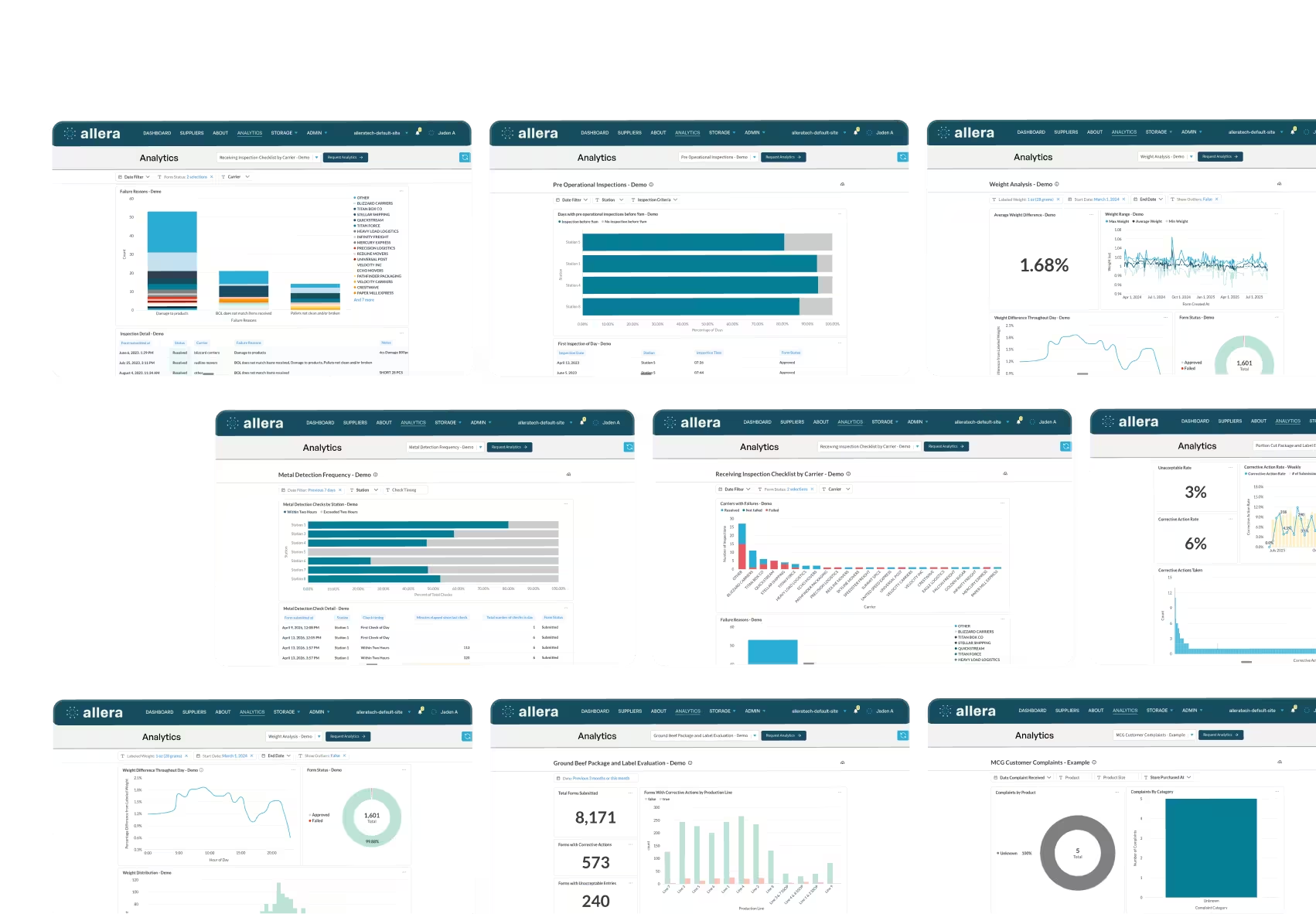
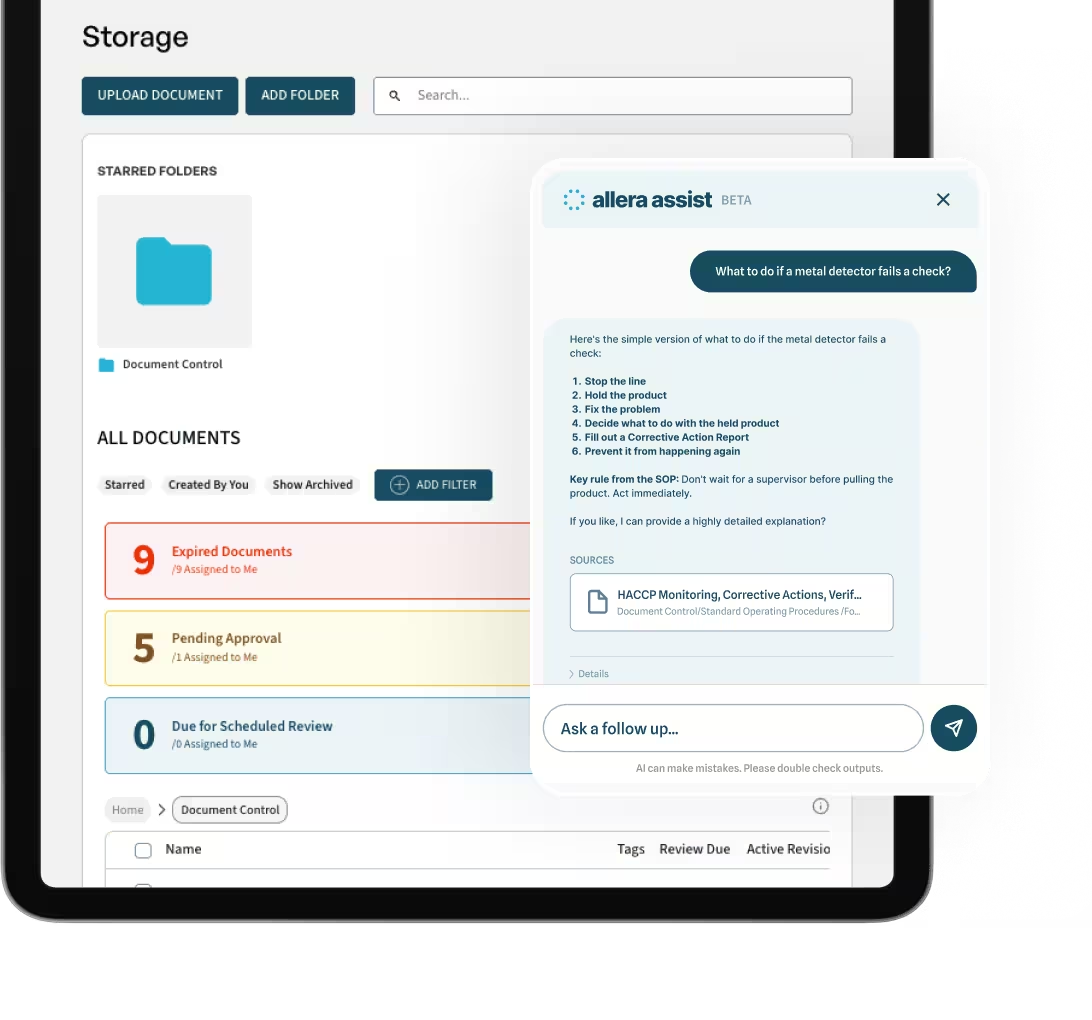
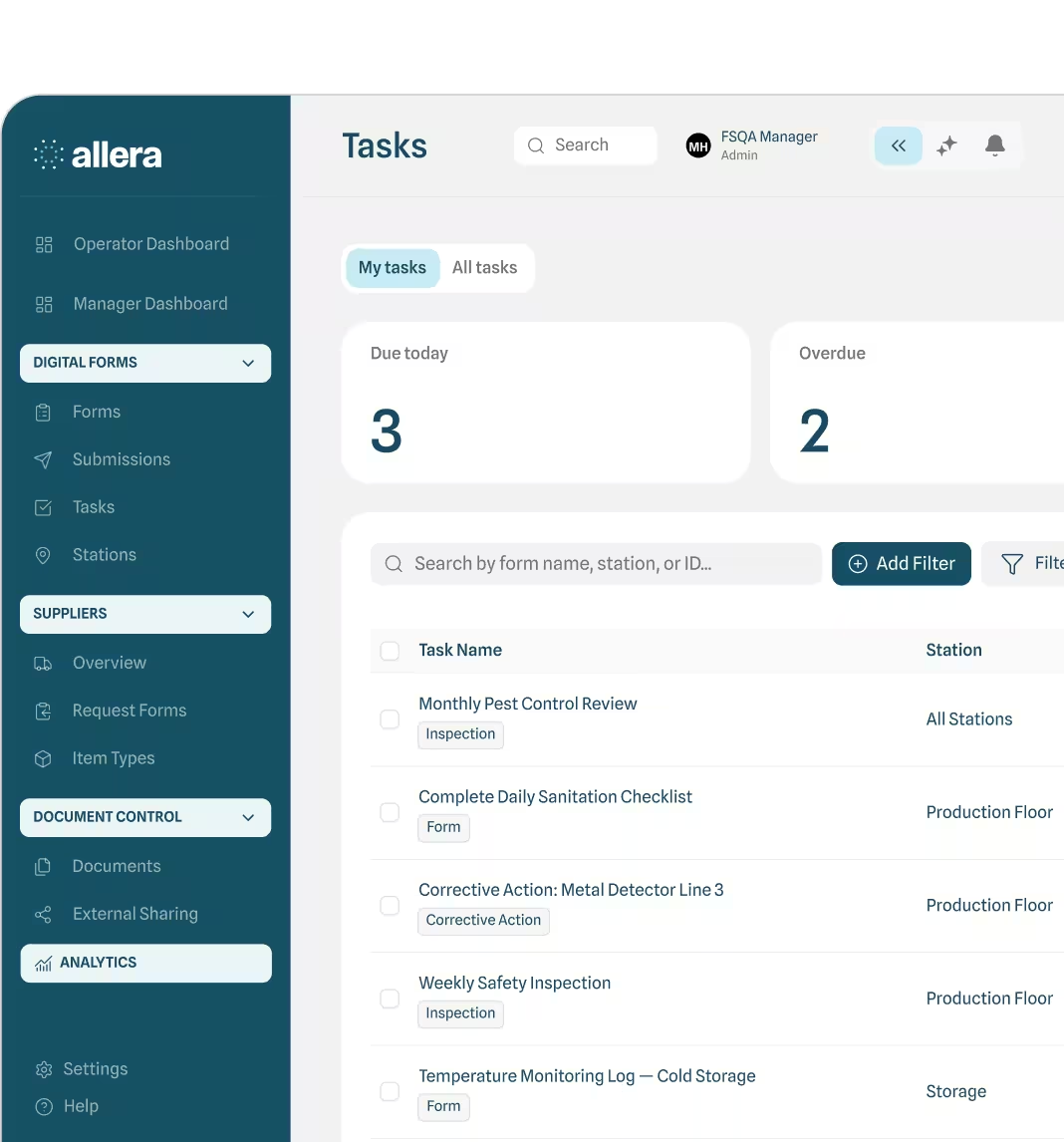
Centralized systems like Allera eliminate fragmentation by putting training records, corrective actions, and meeting minutes in one searchable system. You can instantly see training status, generate audit reports in minutes, and maintain complete audit trails showing who did what and when.
Automated competency tracking alerts supervisors when assessments are due and prevents gaps. Digital corrective action workflows prompt investigators to consider cultural factors like training adequacy and employee empowerment. Management review reporting aggregates metrics automatically into dashboards showing training rates, near-miss trends, and audit scores.
Real-Time Culture Monitoring
Dashboard KPIs give you real-time visibility into culture health. Instead of waiting for annual surveys, you see trends as they develop—drops in near-miss reporting, increases in training-related issues, or deviation spikes in specific departments.
Automated reminders keep culture top-of-mind. Feedback tools embedded in workflows collect employee input continuously. Trend analysis reveals patterns manual systems miss, correlating training completion with deviation rates and tracking whether management discussions lead to measurable actions.
The key: software enables culture, it doesn't create it. Technology provides infrastructure for consistent documentation and data-driven improvement, but leadership commitment and employee engagement still come from people.
FAQs
How to measure food safety culture?
Food safety culture is measured using employee surveys, behavioral observations, audit findings, near-miss reporting trends, training records, and corrective action effectiveness to demonstrate continuous improvement.
What is a food safety and quality culture?
Food safety and quality culture combines a focus on preventing food safety hazards with maintaining consistent product quality. It ensures products are safe to consume while also meeting customer expectations and regulatory quality standards.
How to develop a food safety culture program?
A food safety culture program is developed by assessing current behaviors, defining expectations, documenting policies, training employees, establishing communication and reporting systems, and measuring performance through audits and culture indicators.
How to implement food safety culture?
Food safety culture is implemented by embedding food safety expectations into daily routines, onboarding and refresher training, supervisory oversight, documented communication, and ongoing verification activities.
What is food safety culture?
Food safety culture is the shared values, behaviors, and attitudes within an organization that determine how food safety is prioritized in daily operations. It reflects how employees actually behave when following procedures, reporting issues, and making decisions that affect food safety.
How to improve food safety culture?
Food safety culture can be improved through visible leadership commitment, effective employee training, open communication, clear accountability, and continuous reinforcement of safe behaviors through monitoring and corrective actions.
Why is food safety culture important?
Food safety culture is important because written programs alone do not prevent contamination or recalls. Strong culture ensures employees consistently follow food safety practices, supports regulatory compliance, improves audit outcomes, and reduces food safety risks.


.avif)
.avif)

.avif)

%20(1).avif)
.avif)
.avif)


.avif)

%20(1).png)

.avif)



.avif)