.avif)



FSSC 22000 Version 6: Top 7 Changes for Food Manufacturers

Your next certification audit will be against FSSC 22000 Version 6. Are you ready?
What We'll Cover in This Guide
This comprehensive guide will walk you through everything you need to know about FSSC 22000 Version 6:
- The 7 most critical changes and what they mean for your operations
- Specific auditor expectations for each new requirement
- Practical action steps you can implement immediately
- A complete readiness checklist to assess your current compliance gaps
- Training and competency guidance aligned with Version 6 standards
- A month-by-month action plan to achieve full compliance
- How digital tools simplify the transition to Version 6
Whether you're just learning about Version 6 or actively preparing for your next food safety audit, this guide gives you the roadmap to update your food safety system with confidence.
Understanding FSSC 22000 and Version 6
What is FSSC 22000?
FSSC 22000 (Food Safety System Certification) is one of the most widely recognized food safety certification schemes in the world. It's built on ISO 22000 and includes additional sector-specific requirements that make it comprehensive enough to satisfy retailers, food service companies, and regulatory bodies globally.
Learn the differences between ISO 22000 and FSSC 22000 in our recent comparison article.
If you're manufacturing food products for major retailers or export markets, you're likely already familiar with FSSC 22000. It's recognized by the Global Food Safety Initiative (GFSI), which means achieving FSSC certification opens doors to supply chains worldwide.
Why Food Safety Standards Keep Evolving
Food safety standards don't stay static—they evolve in response to emerging risks, industry incidents, and advances in food science. Each version incorporates lessons learned from recalls, outbreaks, and audit findings across the global food industry.
The progression from FSSC 22000 Version 5 to Version 6 reflects several years of industry feedback, regulatory developments, and growing awareness around issues like food safety culture, environmental monitoring effectiveness, and food supply chain complexity.
When Version 6 Takes Effect
FSSC 22000 Version 6 was released in April 2024, with a transition period allowing manufacturers time to update their systems. You can find all the official Version 6 documents and requirements on the FSSC website, along with updated guidance documents to help you navigate the changes.
Your organization must be fully compliant with Version 6 requirements by your next recertification audit or by the end of the transition period—whichever comes first.
This means the clock is ticking. If your last audit was against Version 5, your next one will evaluate you against the higher standards of Version 6.
What FSSC 22000 Version 6 Means for Food Manufacturers
You've already built a solid food safety system. But Version 6 isn't just an update—it's a significant expansion of what auditors expect from you. New mandatory elements. Deeper scrutiny. Higher standards for environmental monitoring, supplier verification, and organizational culture.
If your team is stretched thin or you're still managing documentation on paper, these changes can quickly create dangerous audit gaps.
What's at Stake
Version 6 raises the bar across your entire operation:
- Food safety culture must be measured, not just stated
- Environmental monitoring requires deeper risk analysis and trend tracking
- Supplier management demands more documentation and ongoing verification
- Sustainability is now mandatory, not optional
- Training must prove competency, not just completion
- Audit rigor has increased—especially for unannounced visits
Let's break down each change and what you need to do.
1. Stronger Food Safety & Quality Culture Requirements
What's Changed
FSSC now requires evidence-based measurement of your food safety culture—not just mission statements or posters on the wall. Auditors will look for proof that culture is actively managed and improved.
What Auditors Will Expect
You need to show them:
- Defined culture objectives with clear targets
- Measurable KPIs that track behavior and engagement
- Communication plans that reach every level of your organization
- Training programs aligned with behavior expectations
- Documentation of follow-up actions when culture gaps are identified
What You Should Do
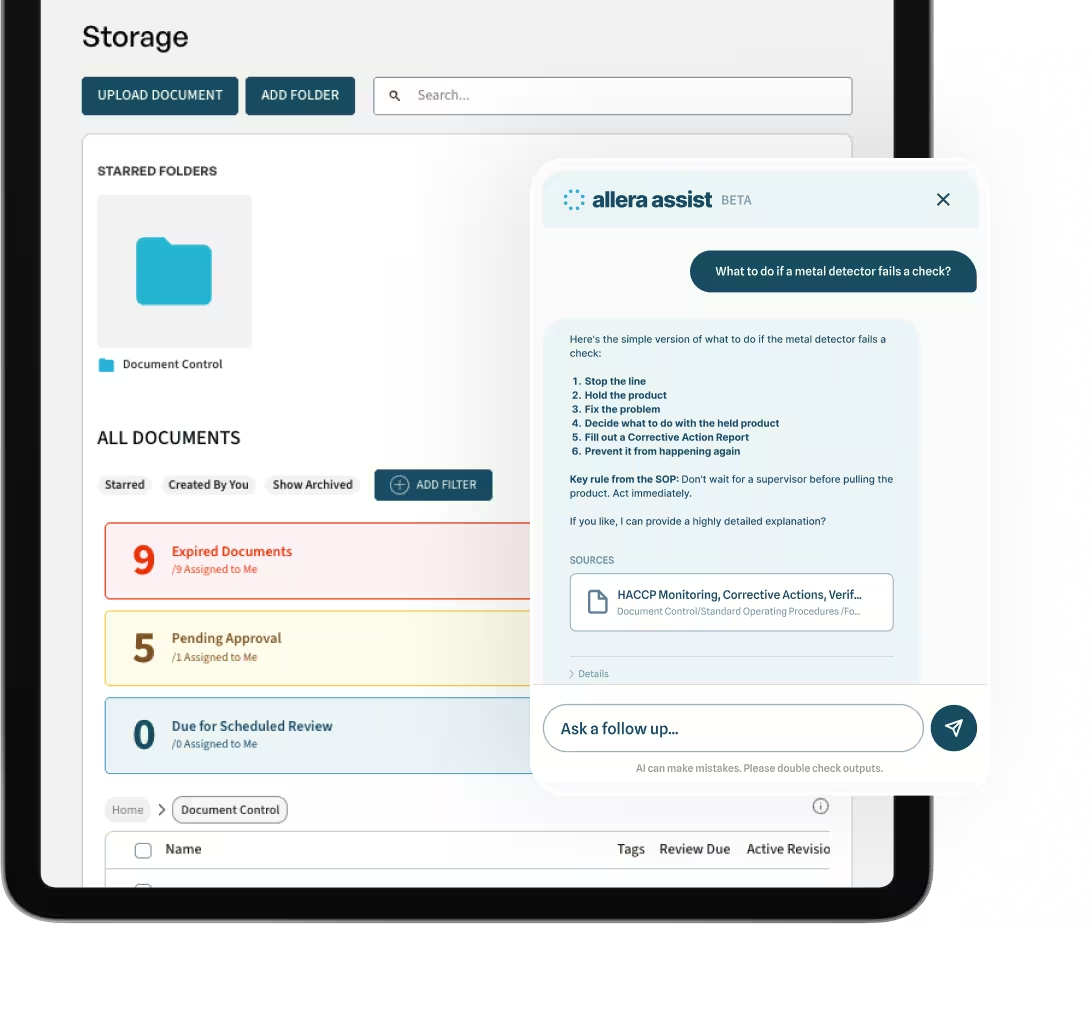
Start treating culture like any other critical control point. Document your culture activities, track them systematically, and assign clear ownership. Digital task management tools make this easier by centralizing assignments, tracking completion, and maintaining evidence for audits.
For more on building a food safety culture, watch our interview with Sharon K.K Beals, an expert in the FSQA space, discuss how to build a great food safety culture.
2. Expanded Environmental Monitoring (EM) Requirements
What's Changed
Version 6 strengthens environmental monitoring expectations, especially for high-risk areas. You need to demonstrate a comprehensive, risk-based approach to finding pathogens before they contaminate your product.
What Auditors Will Expect
Your EM program must include:
- Risk-based program design that targets the right locations
- Clear zone mapping with justified site selection
- Routine verification and trend analysis over time
- Corrective actions tied directly to EM deviations
- Evidence that you're actively using EM data to prevent problems
Why This Matters
Environmental pathogens like Listeria are a leading cause of FDA ready-to-eat(RTE) food recalls. Your EM program is your early warning system—Version 6 ensures you're using it effectively.
What You Should Do
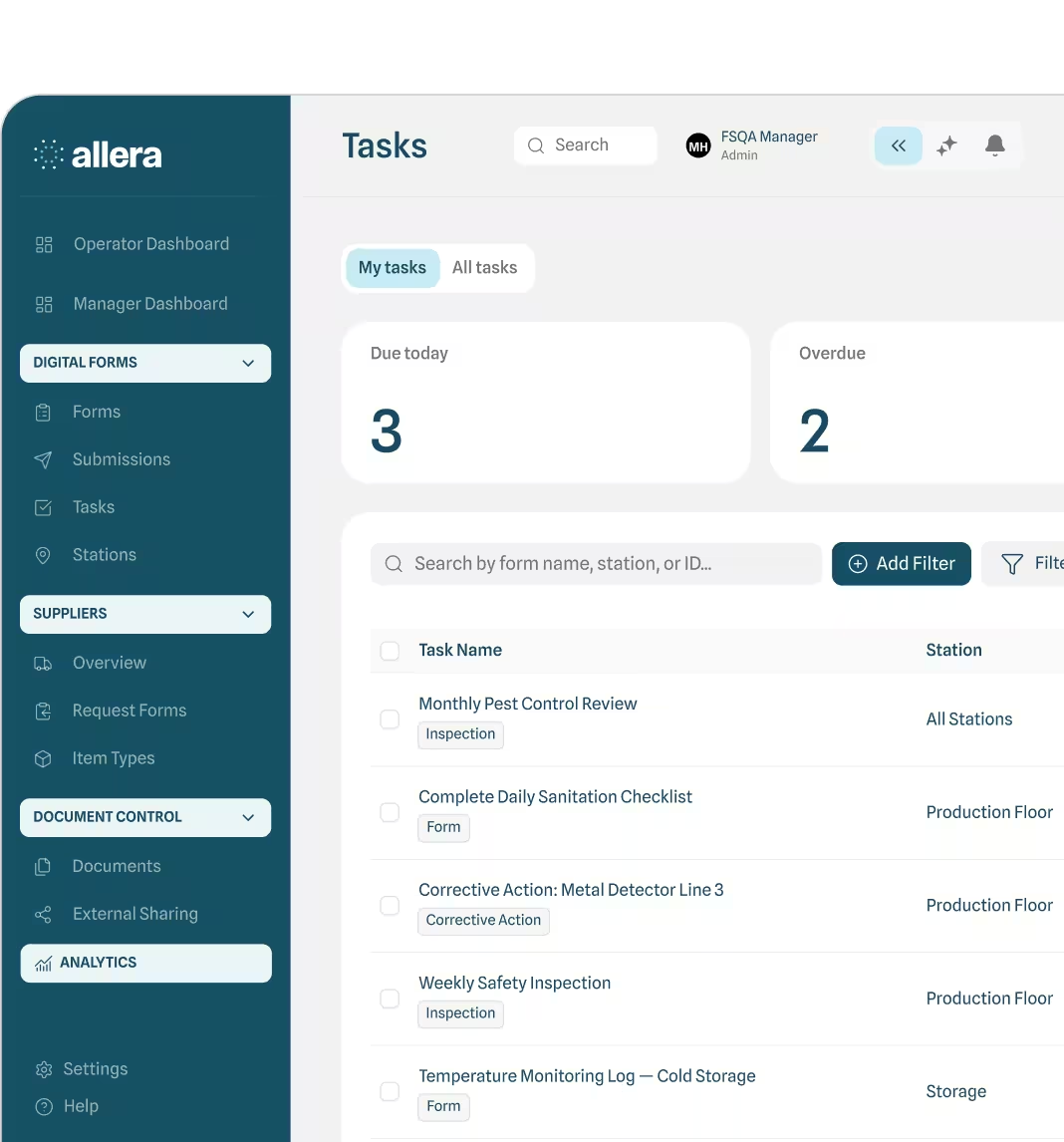
Implement digital forms and automated corrective action workflows to ensure no EM step is missed. Make sure your trend data is visible, accessible, and reviewed regularly. When auditors ask to see your EM trends, you should be able to pull them up in seconds, not hours.
3. More Robust Allergen Management Controls
What's Changed
Allergen expectations have expanded significantly. You need stronger controls across labeling, risk analysis, and supplier verification.
What Auditors Will Expect
You must demonstrate:
- Strengthened label verification processes with documented checks
- Increased risk analysis documentation showing how you identify and control allergen risks
- Manufacturer verification of supplier allergen declarations—you can't just trust what they tell you
Why This Matters
The FDA has identified allergen mislabeling as the leading cause of food recalls in recent years. Version 6 aligns with this industry risk by requiring tighter controls at every step.
What You Should Do
Update your allergen risk assessment now. Document your label verification process in detail. Create a system to verify supplier allergen declarations and keep that documentation current. When your ingredients change, your allergen documentation must change with them.
4. Stricter Supplier Management & Verification Expectations
What's Changed
FSSC 22000 Version 6 puts significantly greater emphasis on supplier approval and ongoing monitoring. You're responsible for your suppliers' performance, not just their initial approval.
What Auditors Will Expect
You need to maintain:
- Documented supplier risk assessments for every critical supplier
- Up-to-date certifications and Certificates of Analysis (COAs)
- Evidence of supplier performance review trends over time
- A system that alerts you before certifications expire
What You Should Do
Implement supplier onboarding workflows that capture all required documentation upfront. Use expiration tracking to prevent lapses in supplier qualifications. Maintain a centralized database where every COA, certificate, and performance review is accessible. Consider supplier scorecarding to demonstrate ongoing monitoring.
Digital supplier management platforms provide the structure you need for Version 6-ready supplier compliance without drowning your team in spreadsheets.
5. New Food Loss & Waste Reduction Requirements
What's Changed
Version 6 introduces mandatory sustainability considerations. Food loss and waste reduction is no longer optional—it's part of your food safety management system.
What Auditors Will Expect
You must:
- Monitor and evaluate food loss across your operations
- Implement reduction strategies with clear targets
- Document improvements over time
Why This Matters
The UN FAO estimates 14% of global food is lost from harvest to retail.
What You Should Do
Start tracking food loss now if you aren't already. Identify your top sources of waste. Set reduction targets and document the strategies you're implementing to hit them. Even small improvements count—what matters is that you're measuring, acting, and improving.
6. Enhanced Training & Competency Requirements
What's Changed
Training under Version 6 must prove competency. Signatures on a training roster aren't enough anymore.
What Auditors Will Expect
Your training program must be:
- Role-specific for each position (sanitation, production, QA, maintenance)
- Documented with complete records and version history
- Linked to SOP changes so employees are trained when procedures update
- Demonstrated through competency evidence showing employees can actually perform the tasks
What You Should Do
Implement training management tools that automate acknowledgment tracking and maintain version control across all SOPs. When an SOP changes, your system should automatically notify and assign training to affected employees.
Create competency assessments that prove understanding—not just completion. Your training records should clearly show who was trained, when, on what version of the document, and whether they demonstrated competency.
7. Increased Audit Rigor & Unannounced Audit Expectations
What's Changed
Auditors are applying sharper scrutiny across the board, and unannounced audits are becoming more common. You need to be audit-ready every single day.
What Auditors Will Focus On
Expect deeper review of:
- Corrective action timelines and closure verification
- Validation records for critical control points
- Traceability documentation—can you trace forward and backward within 4 hours?
- Risk-based decision-making throughout your FSMS
What You Should Do
Make your records searchable and accessible. Digital traceability systems with lot-code-based record retrieval can reduce audit prep time from days to hours. Ensure corrective actions are closed within documented timelines and that verification is complete.
The best audit preparation is maintaining audit-ready records every day—not scrambling the week before an audit is scheduled.
FSSC 22000 Version 6 Readiness Checklist
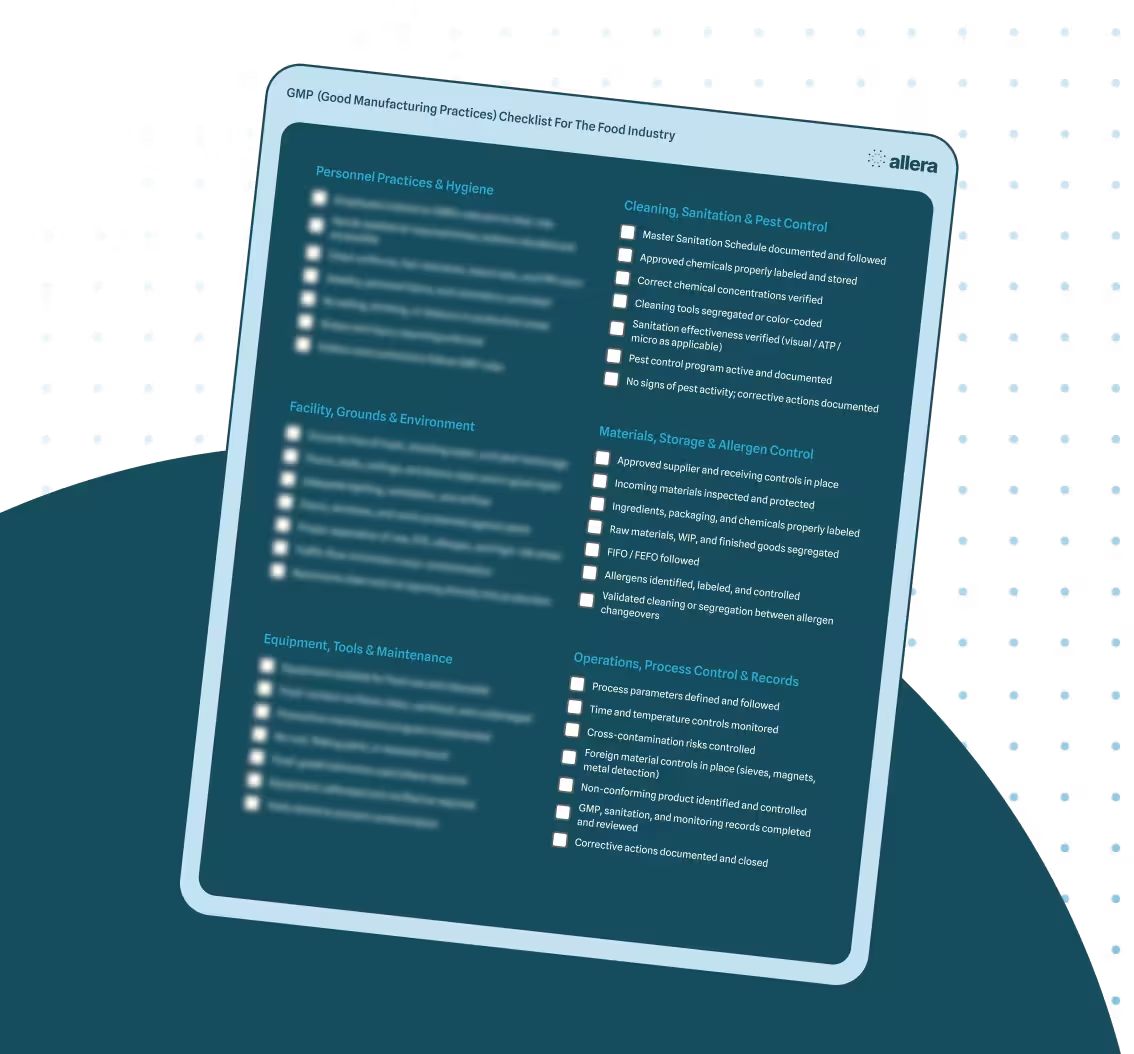
Use this checklist to assess your current readiness for Version 6 requirements:
Governance & Culture
- Culture KPIs defined and actively monitored
- Culture activities documented and communicated throughout the organization
- Leadership involvement evidenced in records and observations
Environmental Monitoring
- EM program is risk-based and fully documented
- Zone mapping is current, validated, and justified
- Trend analysis reviewed at least monthly
- Corrective actions documented and verified for all EM deviations
Allergen Management
- Allergen risk assessment updated within the last 12 months
- Label verification process documented with step-by-step procedures
- Allergen cleaning validation complete and current
- Supplier allergen declarations verified and documented
Supplier Compliance
- Supplier approval workflow documented with clear criteria
- Expiring certifications tracked automatically
- Supplier scorecards maintained with performance trends
- COA verification linked to receiving process
Training & Competency
- SOP-linked training assignments active for all employees
- Training acknowledgments tracked and accessible
- Competency assessments completed for critical roles
- Training matrix updated and current
Documentation & Audits
- All SOPs are version-controlled with approval history
- Document approval workflows prevent unauthorized changes
- Traceability records can be pulled within 4 hours
- Corrective and preventive action (CA/PA) records complete and verified
Your Action Plan: What to Do Now
Version 6 compliance doesn't happen overnight. Here's how to approach your update systematically:
Month 1: Assessment
Review the checklist above and identify your gaps. Document where you're strong and where you need work. Prioritize based on your audit timeline and risk exposure.
Month 2-3: Documentation Updates
Update your SOPs, forms, and procedures to reflect Version 6 requirements. Focus first on food safety culture, environmental monitoring, and allergen management—these are the areas where auditors will look most closely.
Month 4-5: Training Rollout
Train your team on updated procedures. Document competency, not just completion. Make sure employees understand why these changes matter, not just what changed.
Month 6: Verification
Conduct an internal audit focused specifically on Version 6 requirements. Identify any remaining gaps and close them before your certification audit.
Ongoing: Maintain Readiness
Version 6 compliance isn't a one-time project—it's a shift in how you manage your food safety system. Use digital tools to maintain documentation, track training, manage suppliers, and keep records audit-ready every day.
How Digital Tools Simplify Version 6 Compliance
Manufacturers who modernize their documentation, digitize supplier management, and streamline training will face fewer audit risks and operate with greater confidence.
Platforms built specifically for food safety—like Allera—help you manage Version 6 requirements without increasing your team's workload:
- SOP management with automatic version control and approval workflows
- Training management with SOP-linked assignments and acknowledgment tracking
- Supplier onboarding with expiration tracking and centralized documentation
- Corrective action workflows that ensure nothing falls through the cracks
- Lot-code-based traceability that retrieves records in seconds, not hours
These capabilities support an auditable system that proves compliance—not just claims it.
Final Thoughts
FSSC 22000 Version 6 introduces meaningful shifts that require updated documentation, stronger supplier oversight, measurable food safety culture, and more rigorous environmental monitoring.
The manufacturers who prepare now—who modernize their systems, digitize their documentation, and streamline their workflows—will not only pass their audits but also operate more efficiently and confidently.
Your next audit will be against Version 6. The question isn't whether you need to prepare—it's whether you'll start today or wait until you're weeks away from your audit date.
Ready to assess your Version 6 readiness? Download the checklist above and start your gap analysis today.
FAQs

.avif)
.avif)
.avif)
.avif)
%20(1).avif)
.avif)
.avif)

%20(1).png)

.avif)



.avif)