.avif)



SOP Template for Food Manufacturers (Free Template)


An SOP template is only useful if someone actually follows the version you handed them. Most SOP templates online are built for a generic office task: onboarding a new hire, filing an expense report, resetting a password. They work fine for that. They fall apart the moment your SOP needs to survive an SQF audit, get reviewed on a schedule, and prove that the person running the line actually read the current version instead of the one from eighteen months ago.
This guide gives you a free SOP template built for food and beverage manufacturers, plus the framework behind it: what a real SOP needs to include, how it connects to your HACCP plan and broader food safety management system, what auditors expect to see under FDA, SQF, BRCGS, FSSC 22000, and ISO 9001, and what actually happens after you write one.
Download the free SOP template for food manufacturers
Most SOP templates you'll find online are built for general office work, not a regulated production floor. The ones built specifically for food manufacturing are usually static PDFs or checklists, useful for getting words on a page but silent on what happens to that document six months later.
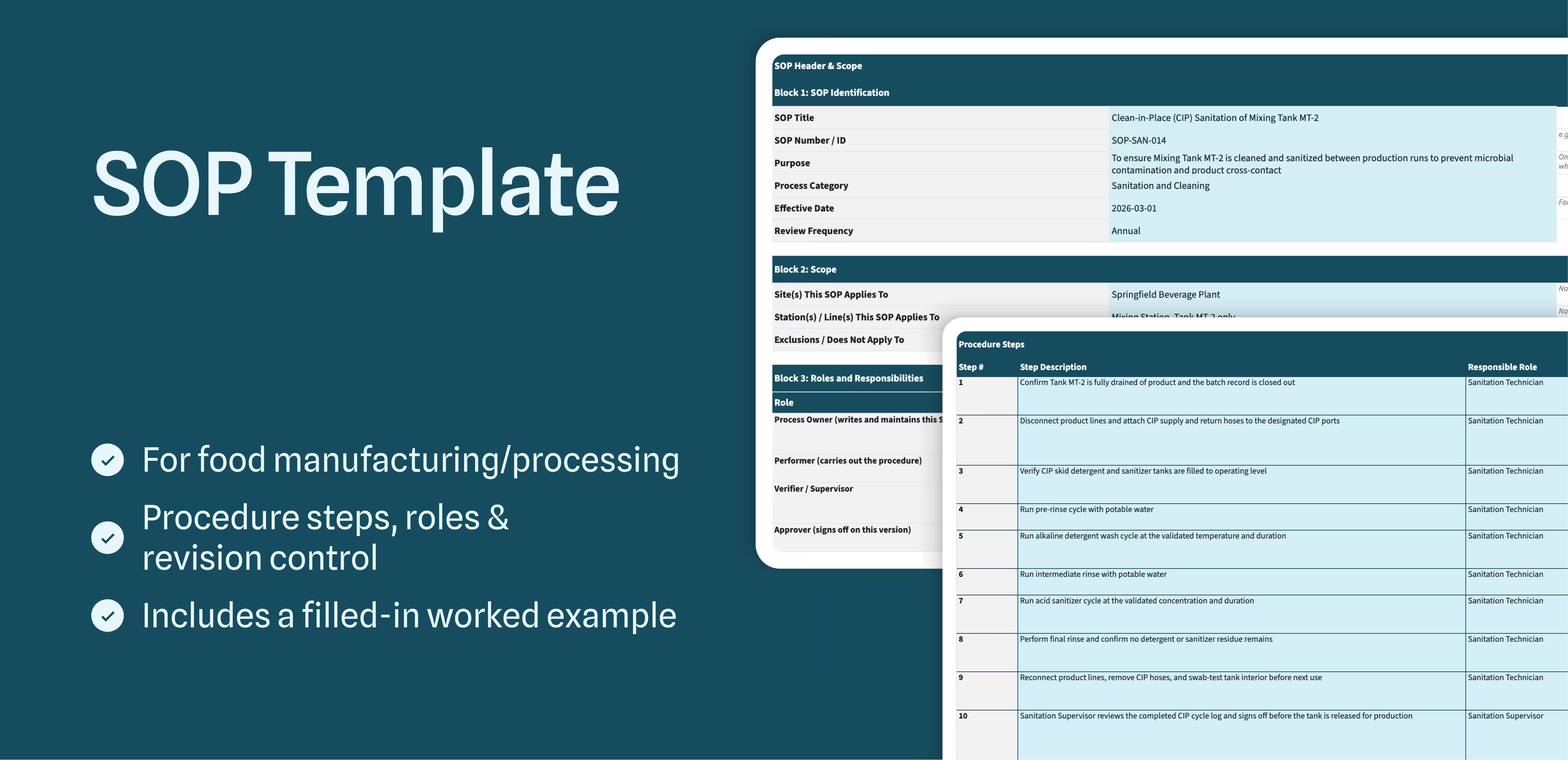
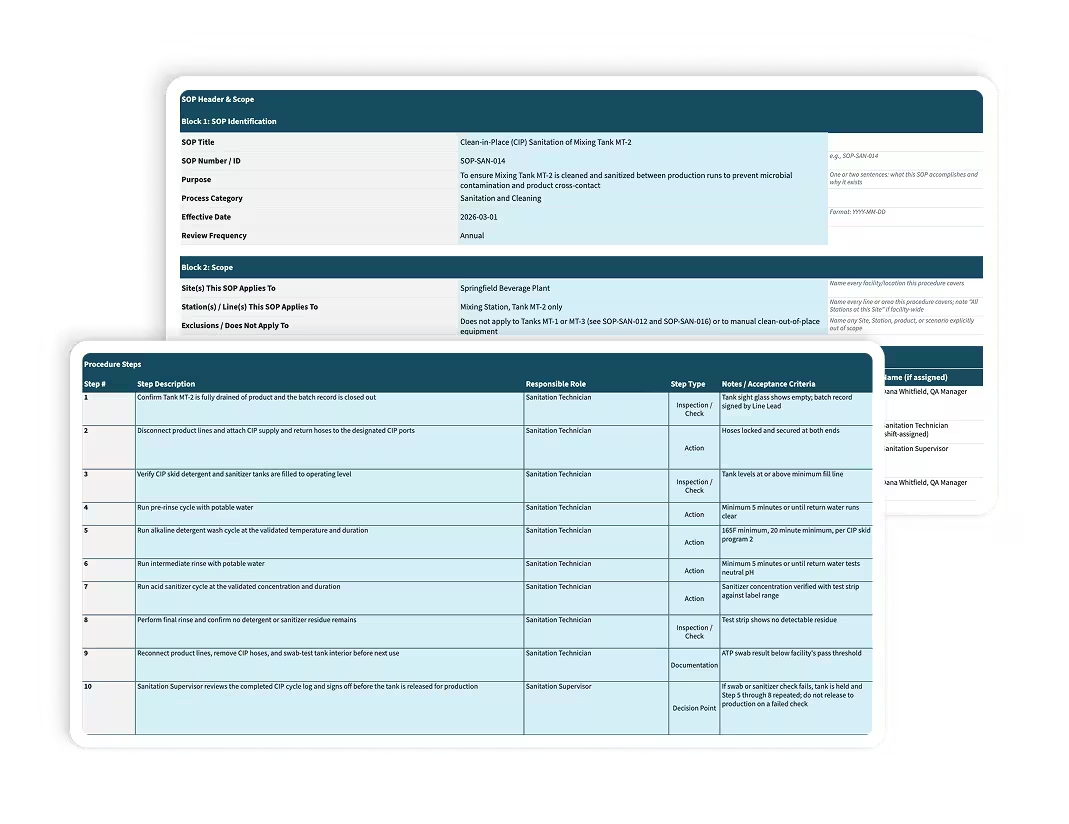
This template includes fields for:
- Title and purpose: what the procedure covers and why it exists
- Scope: where it applies (which Site, which Station, which product line)
- Roles and responsibilities: who performs the procedure and who verifies it
- Step-by-step procedure: numbered, sequential steps written for someone doing the task for the first time
- Related forms and records: what gets filled out while the procedure is performed
- Revision history and approval sign-off: who wrote it, who approved it, and when it's due for review
Download the free SOP Template (Excel)
Keep reading for the compliance context behind each field, including what happens once the SOP is written, reviewed, and put in front of an auditor.
What is an SOP, and what does a good one actually include?
A standard operating procedure is a written, step-by-step description of how to perform a specific, recurring task the same way every time. In a food manufacturing plant, that could be anything from cleaning a filler line to receiving an incoming ingredient shipment to calibrating a thermometer.
The point of an SOP isn't documentation for its own sake. It's consistency. If three different operators run the same task three different ways, you don't have a controlled process, you have three separate ways for something to go wrong.
The five core parts of a food manufacturing SOP
Most well-built SOPs break down into five parts, regardless of the task they cover:
- Title and purpose. What the procedure is called and why it exists, in one or two sentences.
- Scope. Where and to whom it applies. A sanitation SOP for one Station shouldn't silently apply to a different Station with different equipment.
- Roles and responsibilities. Who performs the task, and who's responsible for checking it was done correctly.
- Procedure steps. The actual sequence, written specifically enough that someone unfamiliar with the task could follow it without guessing.
- Revision history. Who wrote the current version, who approved it, and when it's next due for review.
Skip any of these and you end up with the same problems that show up in generic templates: procedures that are technically written but practically useless, because nobody can tell who's supposed to do what, or whether the copy on the wall is even current.
SOP vs. work instruction vs. policy
These three terms get used interchangeably, which causes real confusion during audits. A policy states an organization's general position or commitment (for example, "we will not release product that fails a critical limit"). An SOP describes how a broader process is carried out, generally at the level of a task or workflow. A work instruction goes one level more granular than an SOP, often covering a single piece of equipment or a single step in detail (how to operate a specific filler model, for instance).
In practice, most Good Manufacturing Practices programs treat SOPs as the working layer between high-level policy and line-level work instructions. Getting that hierarchy straight matters more at audit time than it might seem, because auditors will ask which document governs which level of detail, and "we have one big binder that covers everything" isn't an answer that holds up. It's also worth being clear on quality control vs. quality assurance roles here: an SOP is a QA document by nature (it sets the standard process), while the records it generates are what your QC checks actually verify against.
SOPs and your HACCP plan: how they fit together
SOPs and HACCP plans get confused constantly, partly because they're both foundational food safety documents and partly because they genuinely overlap.
Why prerequisite programs are built on SOPs
Your HACCP plan identifies hazards and the critical control points that manage them. But a HACCP plan doesn't function in isolation. It sits on top of prerequisite programs (sanitation, pest control, allergen control, personnel hygiene, supplier approval) and every one of those prerequisite programs is, in practice, a collection of SOPs.
Without documented SOPs behind them, prerequisite programs are just a list of good intentions. The SOP is what actually tells someone how to execute the program consistently, shift after shift, and ties back to the hazards and controls laid out in your broader food safety plan.
Where SOPs support specific critical control points
Some SOPs map directly to a critical control point in your HACCP plan: a cooking-temperature SOP that supports a cook-step CCP, or a metal-detection SOP that supports a physical-hazard CCP. Others support the prerequisite programs that make the whole system work, without being tied to a specific CCP.
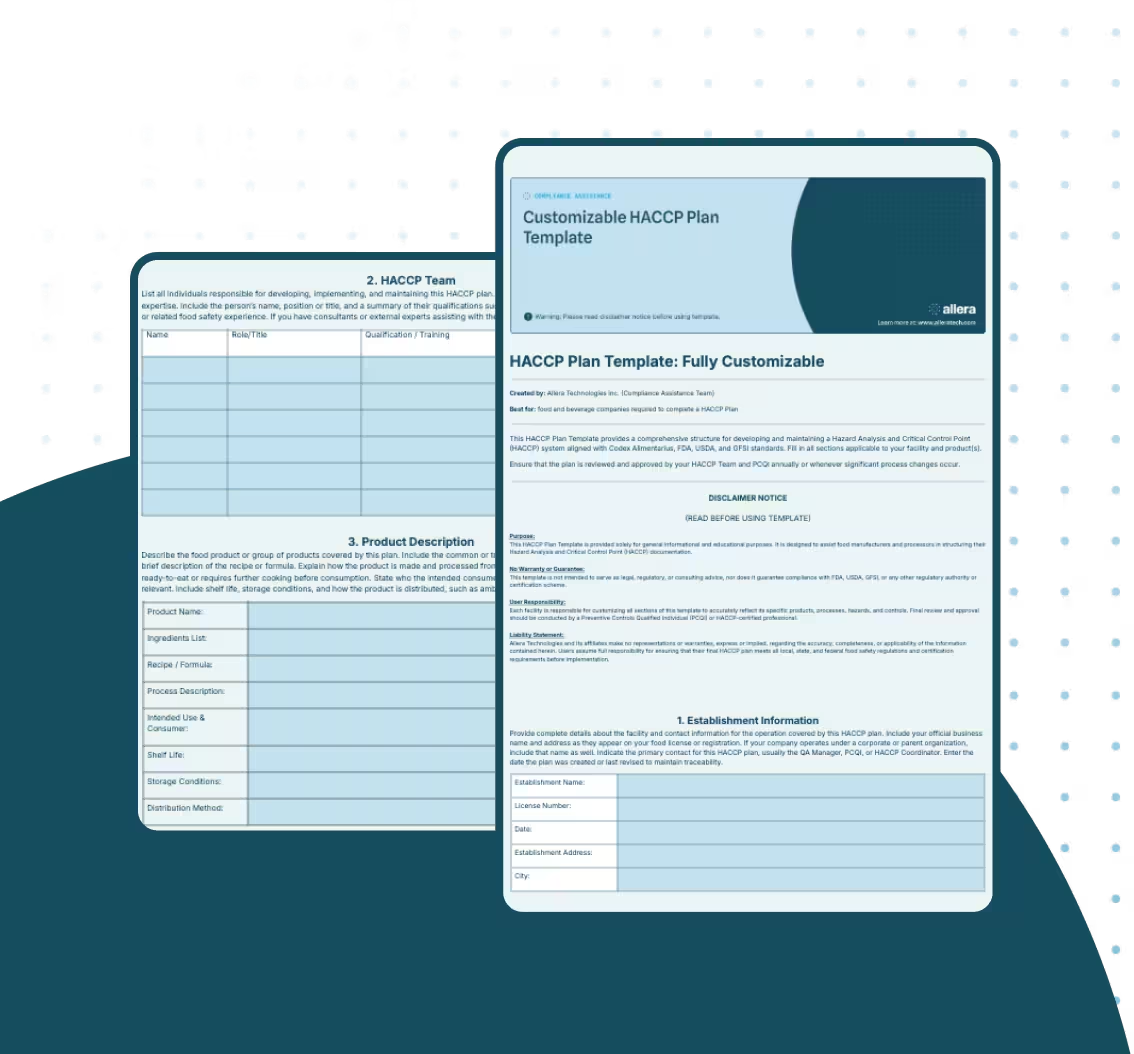
Either way, the SOP is where HACCP's core principles around monitoring and corrective action get translated into something a person on the floor can actually follow. If you're building HACCP documentation from scratch, Allera's free HACCP plan template is a useful companion to the SOP template on this page.
SOPs and food safety compliance
Every major food safety standard requires documented procedures in some form, but the specific language and expectations differ. Here's how SOPs map across the standards you're most likely being audited against.
| Standard | Where SOPs are required | Key reference | What auditors expect to see |
|---|---|---|---|
| FDA CGMP | Current Good Manufacturing Practice requirements for human food | 21 CFR Part 117, Subpart B | Written procedures covering personnel practices, plant and grounds, sanitation, and process controls, actually followed on the floor, not just filed away |
| SQF | Food Safety Code system elements and GMP modules | SQF Food Safety Code, Edition 9 | Documented policies, procedures, and work instructions covering every GMP module, validated as effectively implemented, not just written |
| BRCGS | Food Safety Management System documentation | BRCGS Food Safety guidance | Documented procedures with completed, controlled records proving the procedure is actually followed as written |
| FSSC 22000 | Version 6 scheme requirements across food safety and quality control | FSSC 22000 Version 6 documents | Current, version-controlled procedures, particularly for newer Version 6 focus areas like foreign material control and quality control |
| ISO 9001 | Clause 7.5, documented information | ISO 9001:2015 | Documented information that's controlled: created, reviewed, approved, and protected from unauthorized change |
A pattern shows up across every one of these standards: it's not enough to have written an SOP once. Auditors are looking for proof that the current version is the one in use, that it was reviewed and approved through a real process, and that people were actually trained on it. If you're preparing for a specific certification, our SQF audit checklist, SQF certification guide, BRCGS certification guide, and FSSC 22000 Version 6 breakdown go deeper on what each scheme expects beyond just SOPs.
That's a different bar than "does a document exist," and it's the bar most SOP templates online don't help you clear. Allera's food quality management software keeps every SOP mapped to the standard it supports, with a clear record of when it was last reviewed and by whom, so that bar is something you can clear on demand instead of scrambling for it before an audit.
What happens when an SOP isn't followed?
An SOP is only as good as what happens when someone deviates from it, whether by accident or because the procedure itself has stopped matching reality.
Correction vs. corrective action
A correction fixes the immediate problem: an operator skips a sanitation step, catches it, and goes back to redo it before starting production. A corrective action goes further and asks why the deviation happened in the first place, and what needs to change so it doesn't happen again.
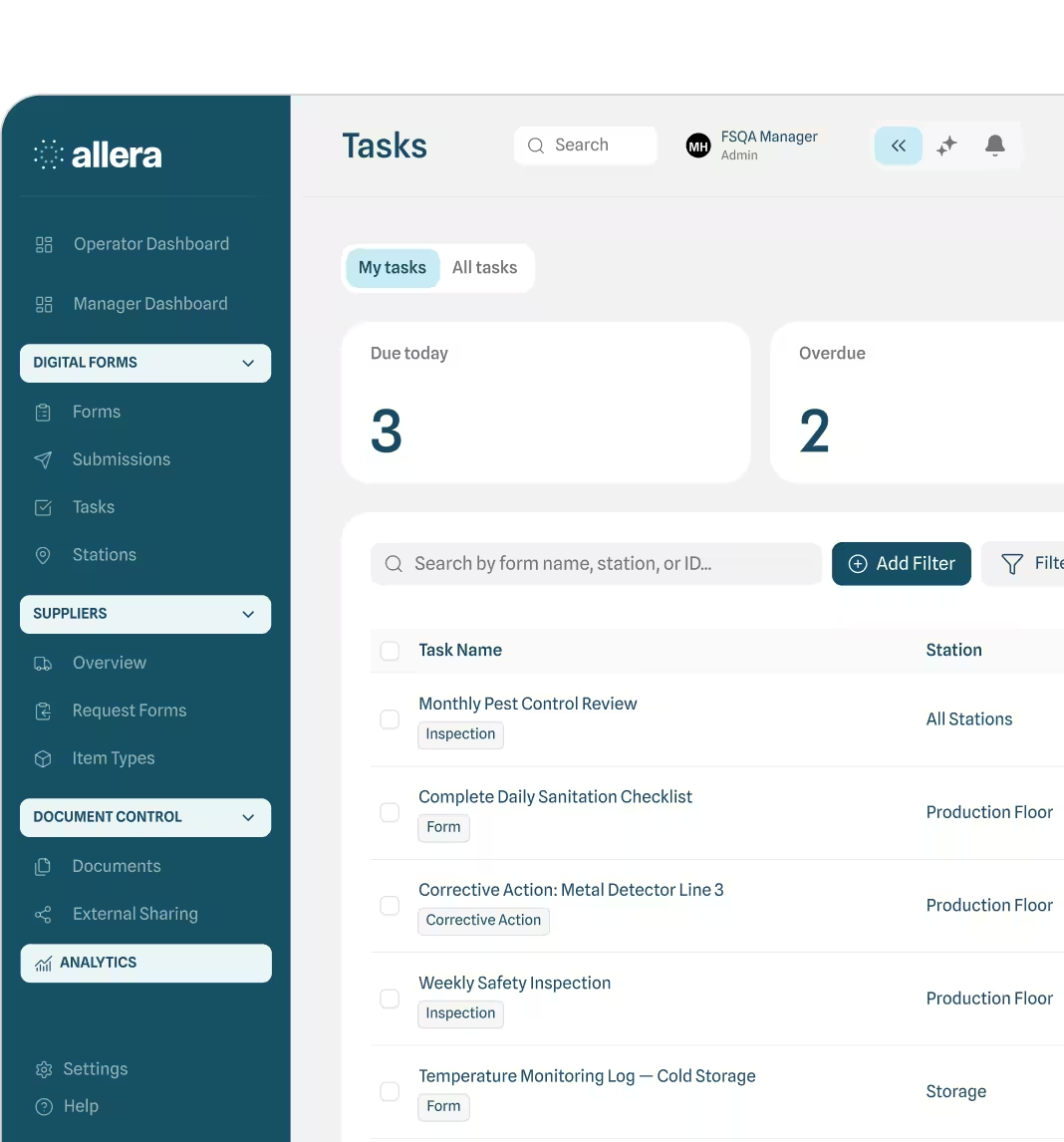
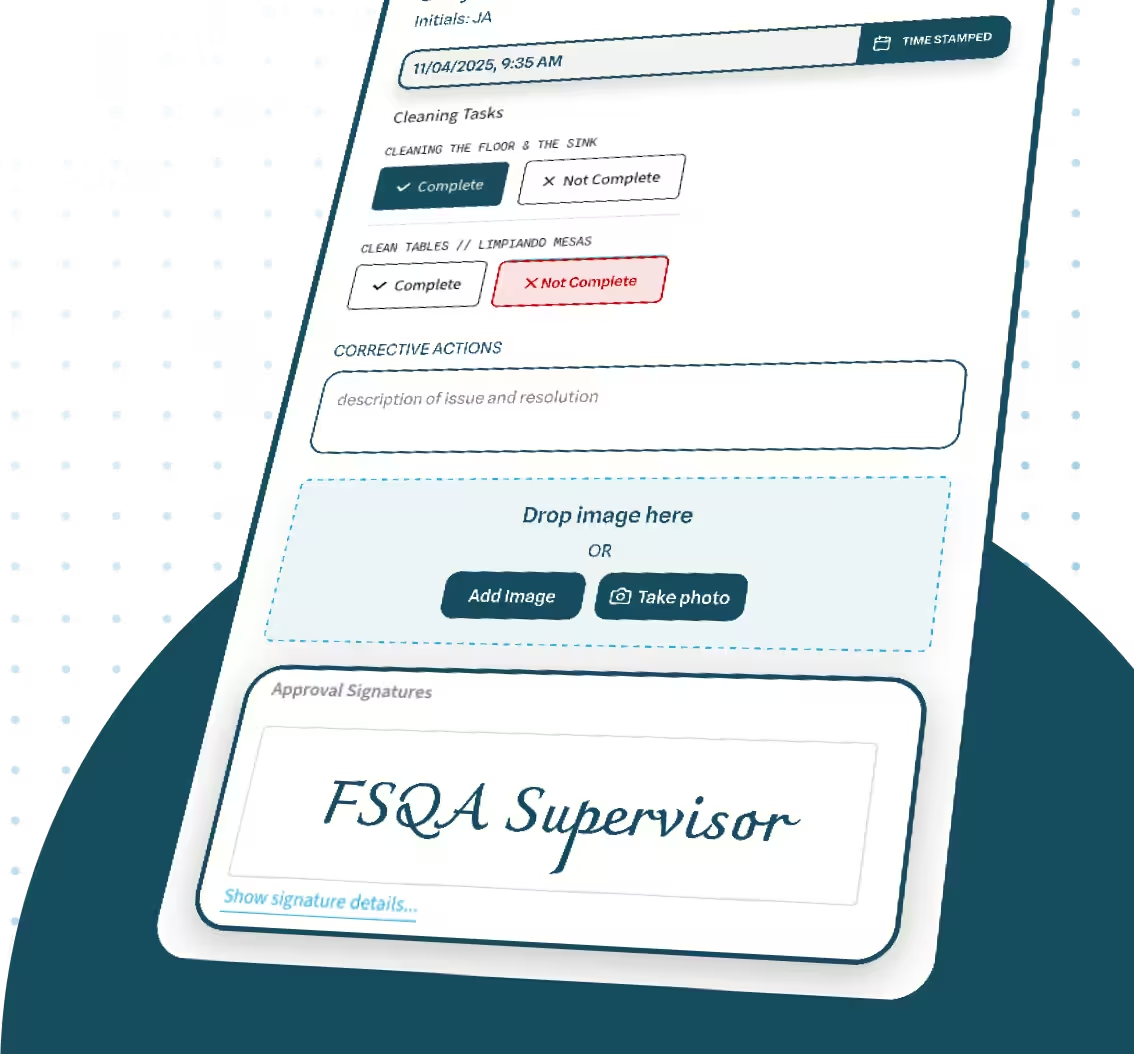
If the step in question is captured on a digital form (a sanitation checklist, a receiving inspection, a line-startup check), Allera's Digital Forms module can flag a failed rule automatically and create a follow-up Corrective Action task tied to that specific failure, so it doesn't just sit in someone's inbox. That's a narrower, more concrete workflow than a formal non-conformance tracking system. It's a task created from a specific rule failure, not a standalone deviation-reporting feature, and it's worth knowing the difference before you promise your team (or an auditor) more than the tool actually does.
When a missed step becomes a food safety event
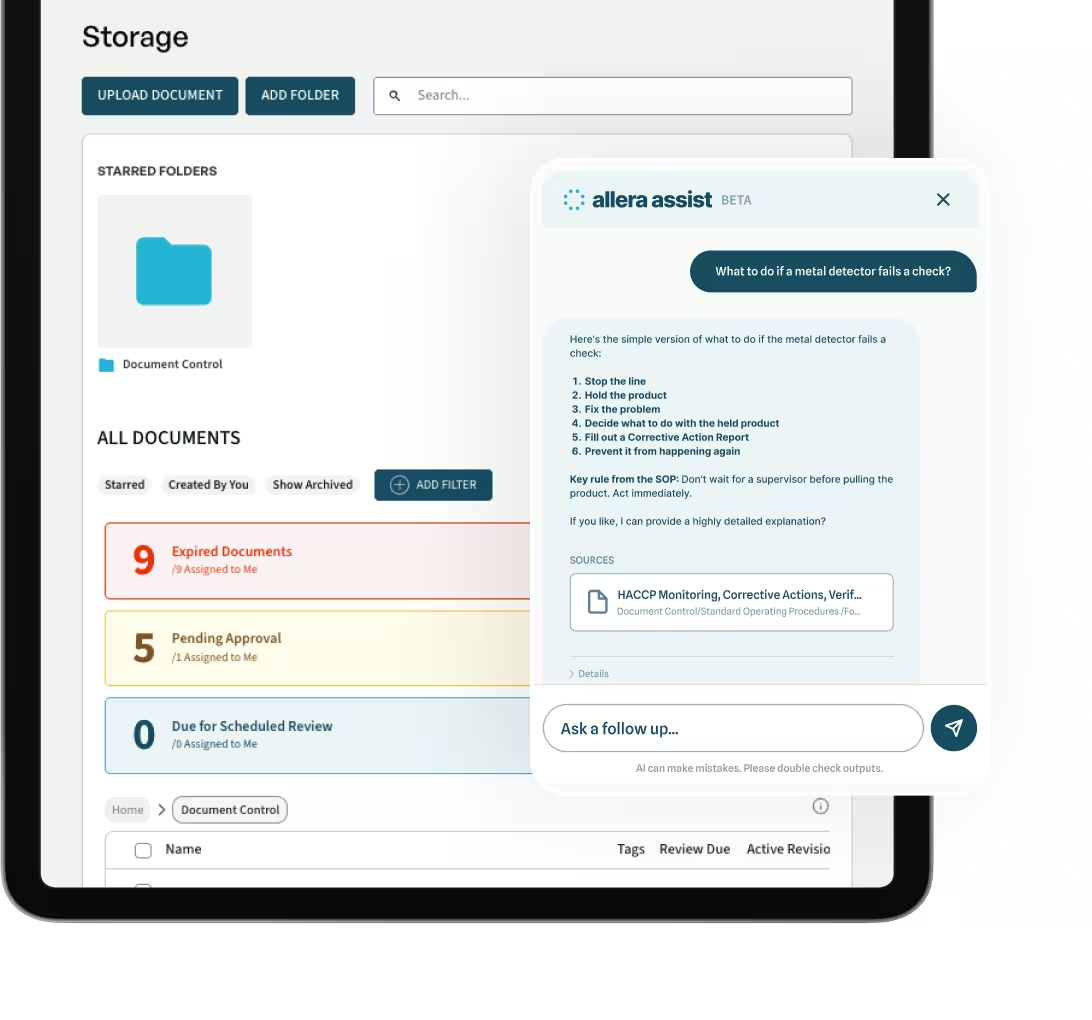
Not every deviation is equal. Missing a step in a low-risk administrative SOP is a training issue. Missing a step in an SOP tied to a critical control point (a cook time, a metal-detector calibration check, an allergen changeover) can be a food safety event, and it needs to be treated and documented differently, including a hold on affected product until the risk is assessed.
Your SOP itself should say, in plain language, what counts as a minor deviation versus what triggers an escalation. If that distinction isn't written down, it gets decided informally on the floor, usually under time pressure, which is exactly when it's most likely to get decided wrong.
Can ChatGPT (or other AI) write your SOPs for you?
This comes up constantly, and it's worth answering directly instead of dodging it.
What generic AI drafting gets you, and where it falls short
A general-purpose AI tool like ChatGPT can produce a reasonable first-draft structure for an SOP: a title, some numbered steps, a plausible-sounding procedure. What it can't do is know your actual equipment, your actual facility layout, or which specific SQF or BRCGS clause your auditor is going to hold that document against. It also has no idea whether the SOP it just generated matches the version currently posted at the Station, or who's supposed to approve it before it goes live.
Generic AI drafting can be a starting point for the words on the page. It isn't a substitute for the review, approval, and version-control process that makes an SOP audit-ready.
A narrower, more useful AI application
Where AI genuinely helps is reviewing a document you've already written against a specific regulatory standard, clause by clause, and flagging gaps. That's the concrete, shipped capability behind Allera's AI Compliance Review inside Document Control: it analyzes an uploaded document against a configurable standard (SQF is the standard currently configured) and returns per-clause findings, severity ratings, and a suggested corrective action, all tied back to the exact clause. A reviewer then works through the findings and accepts, rejects, or marks each one not applicable.
That's a meaningfully different claim than "AI writes your SOPs," and it's the one worth trusting: not a tool that invents your procedures from scratch, but one that checks the procedures you already have against the standard you're being audited on. If you're evaluating how Allera's food quality management software handles this, that clause-by-clause review is part of the same Document Control module covered below, and it's part of the same shift toward AI-assisted document management we've written about separately.
Static Word doc vs. a software-managed SOP
Most SOPs today live as a Word document or PDF on a shared drive, which works right up until you need to prove which version was in effect on a specific date, or that everyone on a shift actually read it.
| Static Word/PDF document | Software-managed SOP | |
|---|---|---|
| Version history | Manual, often just filenames like "SOP_final_v3_USE_THIS_ONE" | Automatic, with a clear record of every prior version |
| Approval workflow | Email chains and verbal sign-off | Structured Draft → Pending Approval → Approved → Published stages |
| Scheduled review | Relies on someone remembering | A scheduled review policy (e.g., annual or quarterly) that flags overdue reviews automatically |
| Access control | Whoever has the shared-drive link | Defined access levels (Read-Only, Limited Edit, Full Edit, Owner) tied to who actually needs to view or edit it |
| Training acknowledgment | A signature sheet, if it exists at all | Tracked acknowledgment tied to the specific document version, with a record of who read what and when |
| Audit trail | Reconstructed by hand before an audit | An exportable log of revisions, approvals, access changes, and acknowledgments |
This is where Allera's Document Control module changes the picture. SOPs move through a real change-management process (Draft, Pending Approval, Approved or Denied, Published), can carry a Scheduled Review policy that forces periodic re-approval, and generate a full, exportable Audit Trail covering revision history, approval history, access changes, and training acknowledgments. None of that exists in a folder of Word documents, no matter how well the individual SOP is written.
How often should you review and update an SOP?
Most food safety standards expect a defined review cadence rather than "whenever someone notices a problem." Annual review is a common baseline, with more frequent (often quarterly) review for high-risk procedures tied directly to critical control points.
Outside a fixed schedule, an SOP should also be reviewed any time something material changes: new equipment, a new ingredient or supplier, a regulatory update, or a near-miss that reveals a gap in the current procedure. BRCGS and SQF auditors will specifically ask when a document was last reviewed and who approved that review, so "we update it when we remember to" is not an answer that survives scrutiny.
A Scheduled Review policy, the kind built into Allera's Document Control, exists specifically to take that decision out of someone's memory and put it on a calendar the system actually enforces.
Common SOP mistakes in food manufacturing
A few patterns show up again and again during audits and internal reviews:
- Outdated versions still on the floor. The posted copy at the Station doesn't match the version that was last approved.
- No real acknowledgment trail. A signature sheet exists, but nobody can say for certain who's actually read the current version.
- Written for the author, not a new hire. Steps assume knowledge the person performing the task might not have, especially during onboarding or a temporary staffing gap.
- No link between the SOP and the records it generates. The procedure tells someone what to do, but there's no clear connection to the form or log that proves it was done.
- Vague ownership. Nobody is clearly responsible for keeping a specific SOP current, so it drifts until an audit forces a scramble.
Most of these aren't writing problems. They're process problems, and they're exactly what shows up when preparing for a food safety audit and pulling your SOPs out for the first time in a year.
Frequently asked questions
What is the format for an SOP? Most SOPs follow a consistent format: a title and purpose statement, a defined scope, roles and responsibilities, numbered step-by-step instructions, and a revision history showing who wrote and approved the current version. The exact layout can vary by organization, but skipping any of these five elements tends to create gaps that show up later, usually during an audit.
What are the five parts of an SOP? Title and purpose, scope, roles and responsibilities, procedure steps, and revision history. Some organizations add a sixth section for related forms or records, but these five cover the core of what makes an SOP usable and auditable.
Does Google Docs have an SOP template? Google Docs doesn't ship a dedicated SOP template out of the box, though you can find community-built templates and general document templates that work as a starting structure. The bigger limitation isn't the template itself, it's that a shared Google Doc has no built-in approval workflow, scheduled review, or training-acknowledgment tracking, which is exactly what auditors ask about once the document exists.
Can ChatGPT create SOPs? ChatGPT and similar tools can generate a reasonable first-draft structure and starting language for an SOP, but they don't know your specific equipment, facility, or which regulatory clause your auditor will check it against. AI is more useful reviewing an SOP you've already written against a named standard than generating one from nothing.
How often should a food manufacturing SOP be reviewed? Annual review is a common baseline, with more frequent review (often quarterly) for procedures tied directly to critical control points. Any material change (new equipment, a new supplier, a regulatory update, or a near-miss) should also trigger an off-cycle review regardless of where you are in the normal schedule.
Do SOPs need to be signed? Most food safety standards expect documented evidence that an SOP was written, reviewed, and approved by an authorized person, which typically means some form of sign-off. Beyond the approval itself, you also want a record that the people performing the procedure acknowledged reading the current version, since that's a separate thing auditors ask about.
What's the difference between an SOP and a HACCP plan? A HACCP plan identifies food safety hazards and the critical control points that manage them. An SOP describes, step by step, how a specific task gets performed, including many of the tasks that support your prerequisite programs and the critical control points inside your HACCP plan. You need both, and they should reference each other directly rather than existing as two disconnected documents.
Get the free SOP template
A generic SOP template gets words on a page. What actually holds up during an SQF, BRCGS, or FSSC 22000 audit is proof that the current version is the one in use, that it went through a real review and approval process, and that the people running the procedure actually read it.
Download the free SOP Template (Excel)
If you're ready to see what that looks like as an ongoing system instead of a one-time document, take a look at Allera's food quality management software and how it keeps every SOP current, approved, and audit-ready.
FAQs
.avif)
.avif)
.avif)
.avif)
%20(1).avif)
.avif)
.avif)



%20(1).png)

.avif)


.avif)