.avif)




A sanitation standard operating procedure (SSOP) is the first document an inspector reads when they walk into your facility. Before they look at your HACCP plan, before they pull production records, they want to know how you keep your equipment clean. If your SSOPs are missing, incomplete, or gathering dust in a binder no one touches, that is a finding, and it often leads to more findings.
"SSOP" is one of the most searched and most misunderstood acronyms in food safety. It gets conflated with a generic SOP, confused with the master sanitation schedule, or blended into HACCP as though they are the same thing. They are not, and the distinction matters in an inspection.
This guide covers sanitation standard operating procedures for both USDA-inspected meat and poultry plants (9 CFR Part 416) and FDA-regulated facilities operating under FSMA, seafood HACCP, and juice HACCP. It also maps SSOP requirements to the major GFSI standards. By the end, you will know what a complete SSOP contains, how to write one, and how to keep it working as a living system rather than a filed document. SSOPs sit inside the broader set of prerequisite programs that your entire food safety system depends on.
What Is an SSOP? (SSOP Definition)
A Sanitation Standard Operating Procedure (SSOP) is a written, step-by-step document describing exactly how a food facility cleans and sanitizes its equipment, utensils, and surfaces to prevent contamination. SSOPs specify what is cleaned, how, how often, who is responsible, and how the work is monitored and recorded. They are legally required for USDA-inspected meat and poultry plants and form the sanitation backbone of any FDA food safety plan.
The acronym breaks down as: Sanitation Standard Operating Procedure. You will also hear them called "Sanitation SOPs," which is the same thing in different shorthand. Some facilities call them "cleaning SOPs" or "sanitation procedures," but SSOP is the regulatory term.
Globally, SSOPs put the hygiene principles codified in the Codex Alimentarius: General Principles of Food Hygiene (CXC 1-1969) into daily operational practice. Whether you are regulated by USDA, FDA, or a GFSI certification body, the underlying logic is the same: define the procedure, monitor whether it was done correctly, act when it was not, verify it is working, and prove all of it with records.
SSOPs live inside your food safety management system as foundational documents. They are not a side project for the sanitation crew. They are a core component that every auditor, every inspector, and every GFSI certification body will review.
SSOP vs SOP vs Master Sanitation Schedule vs GMP vs HACCP
These five terms overlap enough to create genuine confusion, especially for teams building a food safety program from scratch. Here is how each one fits:
| Term | What it is | Scope |
|---|---|---|
| SOP | Any standard operating procedure | Any repeatable task: production, packaging, receiving, admin |
| SSOP | A sanitation-specific SOP | Exactly how surfaces and equipment are cleaned and sanitized |
| Master Sanitation Schedule (MSS) | The calendar of periodic cleaning tasks | When less-than-daily tasks happen; references SSOPs for how |
| GMP | Good Manufacturing Practices | The broad hygiene and facility conditions that SSOPs help satisfy |
| HACCP | Hazard analysis and critical control points | Manages process-specific hazards; SSOPs are a prerequisite to it |
Is an SSOP the Same as an SOP?
No, but they are related. Every SSOP is an SOP, but an SOP is only an SSOP when its subject is sanitation. A procedure for calibrating a metal detector is an SOP. A procedure for cleaning and sanitizing that same metal detector is an SSOP. The distinction matters because SSOPs carry specific regulatory requirements around monitoring, corrective action, and recordkeeping that generic SOPs do not.
Is an SSOP Part of HACCP?
Not exactly. SSOPs are a prerequisite program that HACCP principles depend on. The logic works like this: HACCP is designed to manage hazards at specific critical control points. It does not work if the facility environment is broadly unsanitary. SSOPs handle the "good housekeeping" hazards, keeping the environment clean so your HACCP plan can focus on the process hazards it is designed for.
Think of it as two different layers. SSOPs control whether the floor drain was cleaned this morning. HACCP controls whether the cooking step reached the correct internal temperature. Both matter. Neither replaces the other.
Your master sanitation schedule and your Good Manufacturing Practices (GMPs) operate in the same layer as SSOPs. The MSS tells you when a given cleaning task needs to happen; the SSOP tells you how. GMPs set the overall hygiene standards that SSOPs are written to meet.
Are SSOPs Required by Law? (USDA and FDA)
Yes, and the answer differs depending on which agency regulates your facility. The regulatory framework divides clearly between USDA jurisdiction (meat and poultry) and FDA jurisdiction (everything else). Most guides stop at USDA. Your facility may not.
USDA-Inspected Meat and Poultry Plants (9 CFR Part 416)
For federally inspected meat and poultry establishments, SSOPs are explicitly mandatory under 9 CFR Part 416: Sanitation. Under 9 CFR 416.12: Development of Sanitation SOPs, every establishment must develop, implement, maintain, and sign Sanitation SOPs. The regulations require that:
- Sanitation SOPs describe all procedures the establishment will use to meet the Sanitation Performance Standards in 9 CFR Part 416.
- Pre-operational procedures must address, at minimum, the cleaning of food-contact surfaces before the start of operations.
- The SSOPs must be signed and dated by the establishment's most responsible individual on-site.
- Establishments must monitor their SSOPs, take corrective action when procedures are not being implemented or are failing, and maintain records.
Non-compliance puts your FSIS grant of inspection at risk. This is not a documentation formality. It is a condition of operation.
FDA-Regulated Facilities (Seafood, Juice, and FSMA)
FDA-regulated processors face SSOP requirements from three different regulatory pathways, and most guides ignore all three.
Under seafood HACCP (21 CFR 123), sanitation monitoring is a specific requirement. 21 CFR 123.11 lays out sanitation control procedures covering eight key conditions, which are addressed in detail in the next section. Juice HACCP facilities operating under 21 CFR 120 face parallel sanitation monitoring requirements.
Under FSMA, facilities subject to the Preventive Controls for Human Food rule (21 CFR 117) must evaluate sanitation as a preventive control in their food safety plan. Sanitation preventive controls apply when sanitation is necessary to significantly minimize or prevent a hazard. The FDA: FSMA Preventive Controls for Human Food final rule describes monitoring, corrective action, and verification procedures for sanitation controls that closely mirror the SSOP structure USDA mandates.
In practice, if your facility is regulated by FDA and you already have written, monitored, corrective-action-backed sanitation procedures, you have the functional equivalent of an SSOP. The label matters less than the substance. Your food safety plan should reference and incorporate these procedures explicitly.
The Eight Key Sanitation Conditions and Practices
FDA defines eight key sanitation conditions that every sanitation program must address. These eight conditions appear in FDA: 21 CFR 123.11 Sanitation control procedures and are further explained in FDA: Seafood Guidance Documents (Fish and Fishery Products Hazards and Controls Guidance). They represent the minimum scope that a comprehensive SSOP program must cover, regardless of your facility type.
- Safety of water and ice. Water and ice that contact food or food-contact surfaces must be safe and adequate. Your SSOPs should address the source, treatment, and testing of process water.
- Condition and cleanliness of food-contact surfaces. All surfaces, utensils, gloves, and outer garments that touch food must be maintained and sanitized correctly. This is typically the largest cluster of individual SSOPs in any facility.
- Prevention of cross-contamination. Raw materials, allergens, chemicals, and other potential contaminants must be physically or procedurally separated from product and food-contact surfaces. Cross-contamination controls often require their own SSOP, particularly for allergen changeovers.
- Hand-washing, sanitizing, and toilet facilities. Employee hygiene is a sanitation condition, not just a GMP topic. Your program should cover hand-wash station accessibility, frequency, and monitoring.
- Protection from adulterants. Condensate, lubricants, cleaning chemicals, and pest control materials must not contaminate food or food-contact surfaces. SSOPs for overhead line cleaning and equipment lubrication procedures address this condition.
- Labeling, storage, and use of toxic compounds. Cleaning chemicals, sanitizers, and pesticides must be properly labeled, stored away from food and packaging materials, and used according to label directions and concentrations.
- Employee health control. Employees with communicable diseases or open wounds that could contaminate food must be excluded or restricted. Your SSOP program should connect to your employee illness reporting policy.
- Pest exclusion. Pests must be excluded from the facility. Your SSOP program should address pest control procedures, inspection findings, and corrective actions.
Mapping your existing SSOPs against these eight conditions is a practical first step in any gap assessment. A complete SSOP program has documented procedures, monitoring methods, corrective action protocols, and records for each condition that is relevant to your operation.
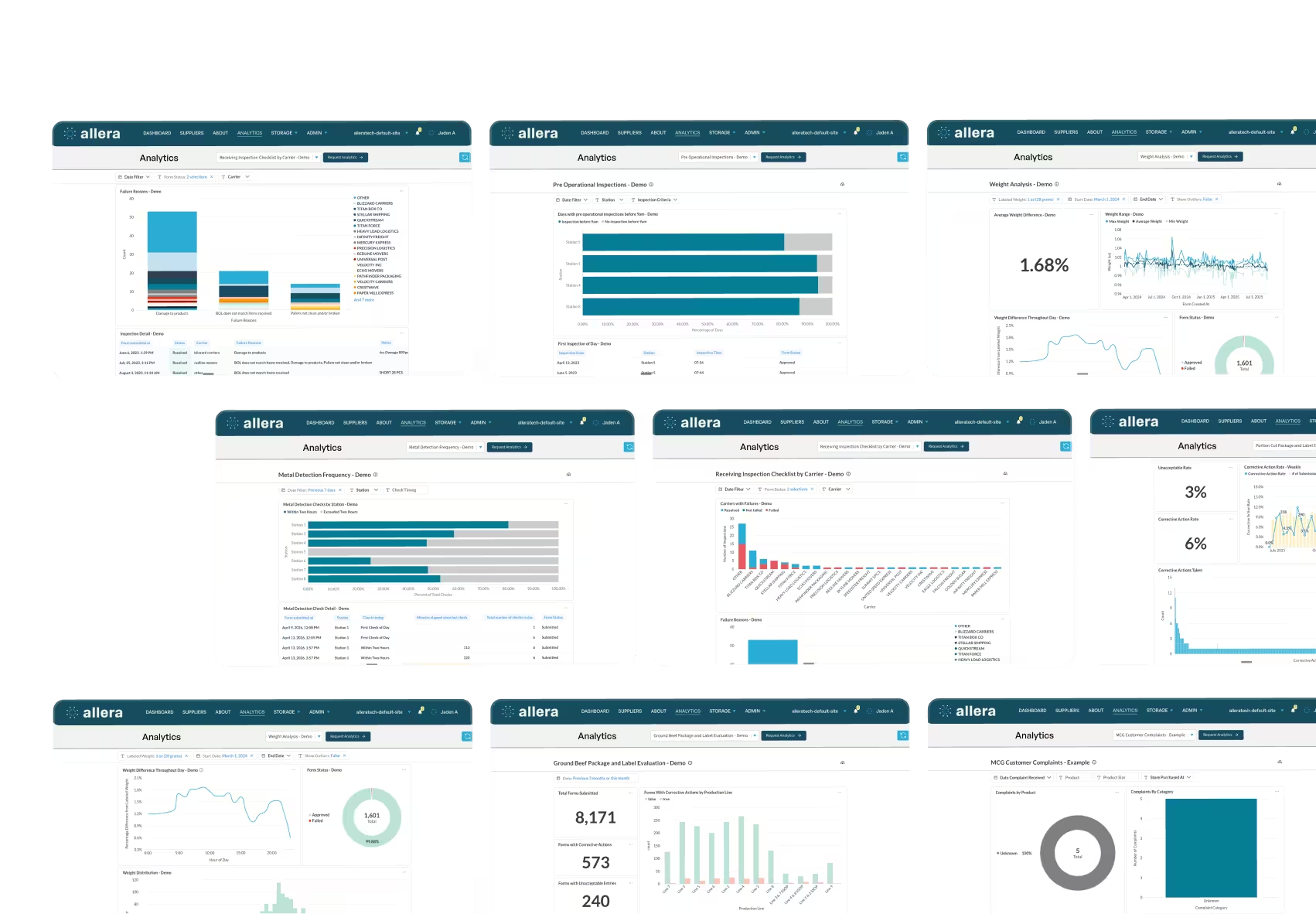
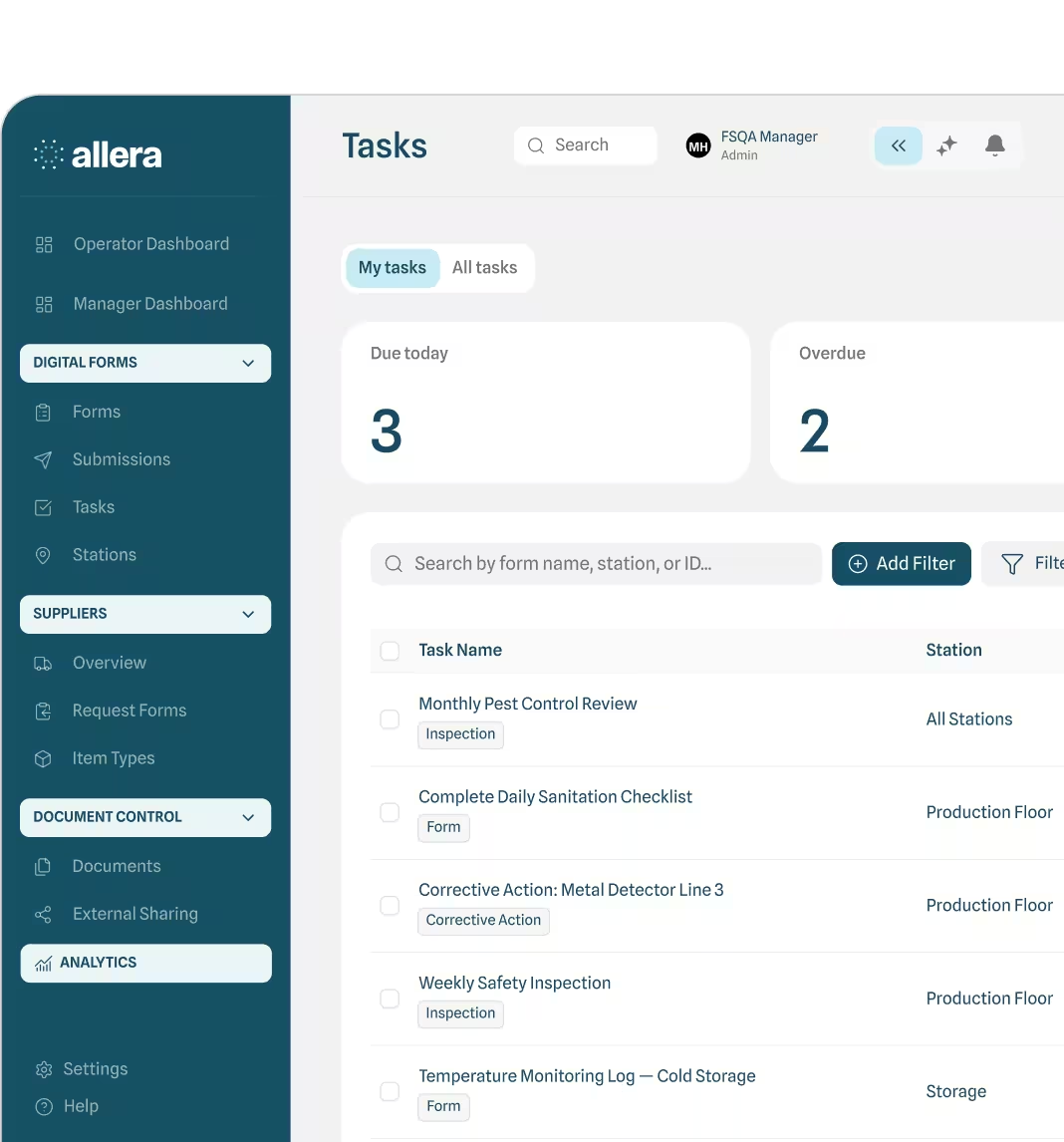
Mapping all eight conditions to procedures, monitoring records, and corrective actions across a whole facility is where paper SSOPs break down. See how Allera's food quality management software keeps every sanitation record connected and inspection-ready.
Pre-Operational vs Operational Sanitation
SSOPs are not a one-time event at the start of the day. Regulators, auditors, and your own food safety risk picture require two distinct types of sanitation: pre-operational and operational.
Pre-Operational Sanitation
Pre-operational sanitation covers everything that happens before production begins. The goal is to start the day with clean, sanitized food-contact surfaces and a facility free of soil, allergen residues, and chemical contaminants from the previous shift.
Pre-op procedures typically include full disassembly and cleaning of equipment, chemical application, rinse cycles, and a verification step before the line runs. That verification step is critical. Under 9 CFR Part 416, establishments must monitor their pre-operational sanitation procedures. In practice, this means a designated person walks the line, checks for visible soil, checks chemical residue on surfaces (where applicable), and signs off before startup. ATP swabbing is increasingly common as an objective verification method alongside visual checks.
The USDA FSIS: Sanitation Performance Standards Compliance Guide provides detailed guidance on what pre-op verification should cover in meat and poultry establishments. The core principle applies broadly: no line starts without a signed, documented pre-op check.
Operational Sanitation
Operational sanitation covers everything that happens during production. This includes mid-shift cleanups for buildup, allergen or product changeover procedures, addressing condensate drips or spills, and any corrective actions triggered by contamination events.
Operational sanitation is harder to manage than pre-op because it happens under production pressure, often quickly and without a scheduled break. Your operational SSOPs need to be specific enough that a crew member can follow them correctly in 10 minutes during a line changeover, not just during a scheduled deep clean. Vague instructions are a consistent finding in audits.
The connection between operational sanitation and cleaning and sanitation in the food industry goes deeper than just the procedures themselves. Chemical selection, concentration validation, surface compatibility, and contact time requirements all feed into whether your operational procedures actually work.
How to Write an SSOP (Step by Step)
The regulatory heart of an SSOP is a four-part discipline: monitoring, corrective action, verification, and recordkeeping. Most guides give you a template. This section builds each piece of that four-part structure into the writing process, so your finished SSOP is auditor-ready by construction.
Step 1: Identify the Task, Equipment, and Scope
Start with a clear, specific name for the equipment or area: "Stainless-steel filler, Model X, Lines 3-5" rather than "filling equipment." Define exactly what the procedure covers and, just as importantly, what it does not. If the filler's hopper is addressed in a separate SSOP, say so. Scope boundaries prevent gaps and prevent the same surface from being covered by two conflicting procedures.
Note the food safety justification: why does this surface require an SSOP? It is a food-contact surface. It follows an allergen. It is in a high-care zone. That context helps the person following the procedure understand what a correct outcome looks like.
Step 2: Write the Cleaning and Sanitizing Steps
This is the technical core of the document. Write the steps in sequence:
- Disassembly: which parts, in which order, where they go.
- Dry pre-clean: removal of gross soil, product debris, and packaging material before water is introduced.
- Pre-rinse: water temperature, pressure, and direction (always rinse toward the drain, away from food and packaging).
- Wash: detergent type, concentration, water temperature, application method, and dwell time.
- Post-rinse: to remove detergent residue; confirm the rinse is complete before sanitizer contact.
- Sanitize: sanitizer type, concentration, application method (spray, foam, immersion), contact time, and whether a final rinse is required.
- Inspect before reassembly: visual check, ATP swab if required, sign-off.
- Reassemble: sequence, torque specs where applicable, final inspection.
Include PPE requirements at each step where they apply. Include the chemical safety data sheet reference. Note who is authorized to prepare dilutions. If any step requires a specific tool (brush size, foam gun setting), name it.
Vague instructions are the single most common SSOP finding. "Clean until visually clean" is not an instruction. "Apply X detergent at 2% concentration at 140°F for a minimum 5-minute contact time, then rinse with potable water" is.
Step 3: Define Monitoring, Corrective Action, Verification, and Recordkeeping
This four-part structure is what separates a compliant SSOP from a procedure sheet.
Monitoring: who checks that the procedure was done correctly, how (visual, ATP, concentration strip, titration), and how often. Pre-op monitoring happens before every production start. Operational monitoring happens on a defined schedule or when triggered by a specific event.
Corrective action: what happens when monitoring finds a problem. Re-clean the surface. Hold product produced since the last satisfactory check. Notify the QA manager. Evaluate whether any product was adulterated. Document the finding and what you did. Corrective action records are specifically required and frequently missing from paper SSOP programs.
Verification: how you confirm the procedure and the monitoring are actually working. This is higher-level than daily monitoring. It includes supervisory observation of the cleaning crew, scheduled ATP or environmental micro sampling, and periodic review of records for completeness. Food safety testing methods like ATP bioluminescence and environmental swabbing are the most common SSOP verification tools.
Recordkeeping: what forms or logs capture monitoring results, corrective actions, and verification activities. Records must be accurate, legible, dated, and signed. They must be retained long enough to satisfy your regulatory requirement (USDA: at least 48 hours for pre-op, 6 months for all others; FDA requirements vary by rule).
Step 4: Assign Responsibility, Signatures, and Frequency
Name the role responsible for performing the procedure (Sanitation Technician, Line Lead, Maintenance Technician), the role responsible for monitoring, and the role responsible for corrective action decisions. Named roles are better than named individuals for document stability, but either is acceptable if turnover is low.
Define the frequency: daily pre-op, every shift, every 4 hours during production, weekly, or event-triggered (allergen changeover, after a pest finding). Under 9 CFR 416.12, the Sanitation SOPs must be signed and dated by the most responsible individual on-site. That signature line is not optional.
Step 5: Control the Document and Train to It
An SSOP that is not version-controlled is an SSOP that drifts. When equipment is replaced, chemical suppliers change, or the line configuration is modified, the SSOP must be updated and the old version removed from the floor. Document control for SSOPs means: version numbers, effective dates, a distribution list, a revision history, and a mechanism for removing superseded versions.
Train every person who performs or monitors the procedure when it is first issued and again every time it is revised. Document that training with a signature. FSIS inspectors and third-party auditors routinely ask crew members to explain the procedure they follow. If the answer does not match the written SSOP, that is a finding regardless of how good the document looks on paper.
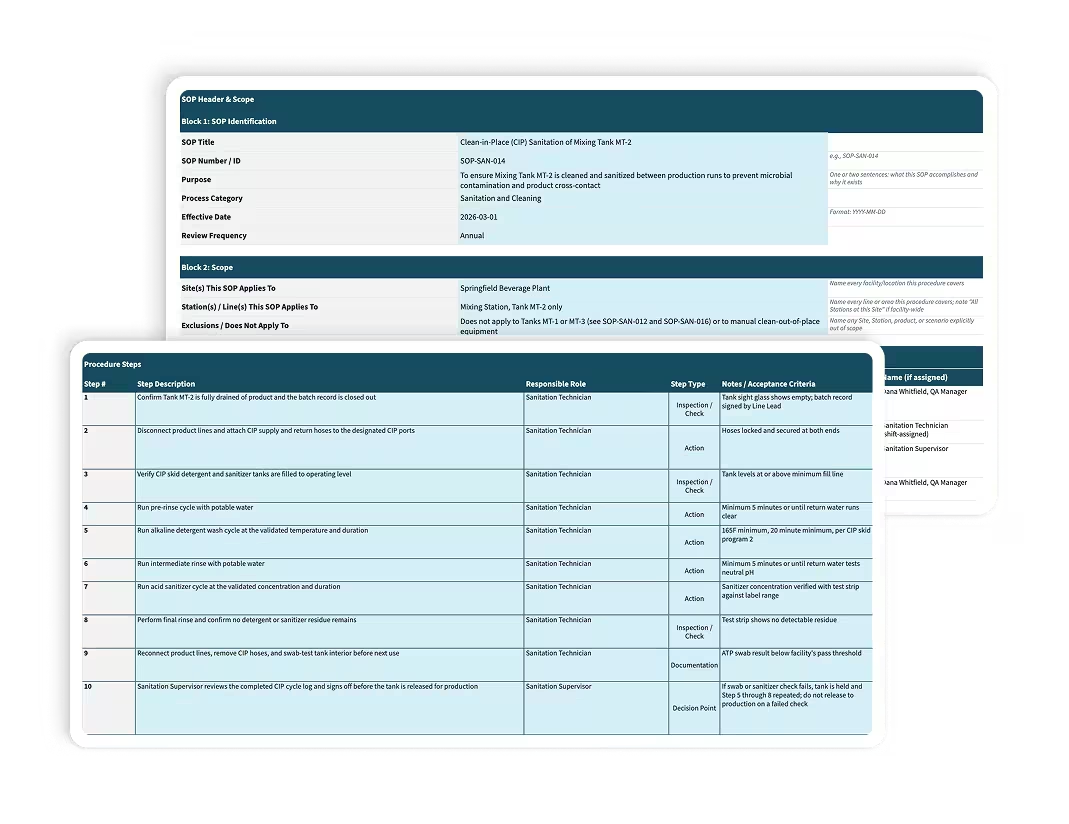
SSOP Example (Annotated)
The SERP for "SSOP" is full of raw example PDFs that show you what a filled-out form looks like without explaining why each field is there. What follows is an annotated example for a single task: cleaning a stainless-steel filler. The same structure applies to any food-contact surface in any FDA- or USDA-regulated facility. For a broader worked example from a meat plant perspective, the USDA FSIS: Sanitation SOP training guide is the most detailed publicly available reference.
| Field | Example Entry | Why It Matters |
|---|---|---|
| SSOP Title | Cleaning and Sanitizing of Stainless-Steel Filler (Lines 3-5) | Specific equipment name prevents ambiguity; the SSOP number and version appear in the header |
| Version / Effective Date | Version 3.1 / 2026-01-10 | Document control requires a version history; inspectors verify that the copy on the floor matches the controlled master |
| Scope | Covers all product-contact surfaces of the filler bowl, pistons, nozzles, and drip trays; excludes the filler frame and conveyor (addressed in SSOP-012) | Scope boundaries close gaps and prevent two procedures from conflicting over the same surface |
| Frequency | Pre-operational (daily), after any allergen changeover, or after a line stop exceeding 4 hours | Multiple trigger types are listed because "daily" alone misses mid-shift events |
| Responsible Role | Sanitation Technician (performs); Line Lead (monitors); QA Manager (approves corrective action) | Named roles, not individuals, so the SSOP stays valid through personnel changes |
| PPE Required | Chemical-resistant gloves, safety glasses, rubber boots during wash-down; allergen-rated lab coat for allergen changeover | PPE is specified per step so shortcuts are visible deviations, not judgment calls |
| Chemicals | Detergent: [Brand] Alkaline Foam Cleaner, 2% solution, 140°F minimum; Sanitizer: [Brand] Quaternary Ammonium, 200 ppm, no-rinse on food-contact surfaces | Concentration and temperature are measurable; "as directed" is not an acceptable instruction |
| Step 1: Disassembly | Power off and lockout/tagout. Remove nozzles, pistons, and drip trays. Place in designated wash sinks. Do not mix with components from other equipment. | LOTO compliance and component segregation are regulatory and safety requirements, not optional steps |
| Step 2: Pre-rinse | Rinse all disassembled parts and internal surfaces at min. 110°F, directing spray toward floor drain. Remove gross soil before detergent application. | Rinsing direction prevents splash contamination; gross soil removal before detergent improves chemical efficacy |
| Step 3: Wash | Apply alkaline foam cleaner at 2% via pump-up foamer. Cover all surfaces. Allow 5-minute contact time. | Contact time is non-negotiable; timing starts when the surface is fully coated |
| Step 4: Post-rinse | Rinse thoroughly with potable water, 140°F minimum, until foam is completely removed. Verify pH of rinse water confirms detergent removal (pH 6.5-7.5). | Detergent residue can react with sanitizer and reduce effectiveness; pH verification is an objective check |
| Step 5: Sanitize | Apply quat sanitizer at 200 ppm via spray. Coat all surfaces. Allow 60-second contact time. Do not rinse (no-rinse sanitizer on food-contact surfaces). | Concentration must be verified with a test strip before application; document the result |
| Step 6: Pre-op Inspection | Visual inspection by Line Lead for visible soil, residue, or damage. ATP swab of nozzle interior (target: <100 RLU). Sign and date pre-op log before production start. | ATP provides an objective pass/fail separate from visual assessment; sign-off is a regulatory requirement under 9 CFR 416 |
| Monitoring Method | Pre-op visual + ATP swab by Line Lead; concentration strip for sanitizer by Sanitation Technician | Two monitoring methods catch two different failure modes: visible soil and inadequate sanitation |
| Corrective Action | If ATP exceeds 100 RLU or visual soil found: re-clean affected surfaces, re-test, notify QA Manager. Do not start production. Document on corrective action log (Form SSOP-CA-01). | Corrective action must be specific enough to follow under pressure; "re-clean as necessary" is not acceptable |
| Verification | QA Manager observation of crew performance monthly; scheduled ATP trend review quarterly | Verification is distinct from monitoring: it confirms the system is working, not just that today's check passed |
| Records | Pre-op Sanitation Log (Form SSOP-03); Corrective Action Log (Form SSOP-CA-01); ATP Swab Log (Form ATP-01) | Every record must be signed, dated, and retained per regulatory requirement; records are your proof |
| Authorized Signature | [Plant Manager / QA Director signature and date per 9 CFR 416.12] | Required for USDA-regulated plants; best practice for all facilities |
This level of detail is what separates an SSOP that passes an audit from one that generates observations. Every line is answerable to an inspector's question.
What SSOPs Look Like Across GFSI Standards (SQF, BRCGS, FSSC 22000)
If your facility holds or is pursuing GFSI certification, your SSOP requirements do not come only from USDA or FDA. Each major GFSI standard has its own cleaning and sanitation requirements, and auditors check documented procedures, monitoring evidence, and effectiveness validation separately.
| Standard | Where Sanitation Procedures Are Required | What Auditors Expect |
|---|---|---|
| SQF | Cleaning and sanitation element (SQF Code, Element 11.2 for food manufacturing) | Documented procedures for each piece of equipment and area; validated chemical effectiveness; completion records with sign-off |
| BRCGS (Issue 9) | Housekeeping and hygiene (Clause 4.11) | Written procedures specifying methods, frequencies, chemical concentrations, and responsibilities; documented evidence of completion and supervisory checks |
| FSSC 22000 (v6) | ISO/TS 22002-1 cleaning and disinfecting (Section 11) | Written cleaning and disinfecting procedures as part of prerequisite program documentation; monitoring of effectiveness; records within the PRP documentation |
SQF code requirements specify that sanitation procedures must be validated: you need evidence that the chemical at the specified concentration and contact time actually achieves the required reduction in your specific application. Frequency alone is not enough.
BRCGS certification auditors are particularly focused on sign-off evidence. A procedure that exists in a binder but has no completion log for the past three months is treated as a non-conformance, not a minor gap.
FSSC 22000 Version 6 incorporates ISO/TS 22002-1 as its PRP specification for food manufacturing. Section 11 on cleaning and disinfection requires that your procedures document the separation between cleaning and disinfection steps, the validation basis for your chemical selection, and the monitoring approach for ongoing effectiveness.
The practical takeaway: if you are certified to any of these three standards, your SSOPs need to be complete enough to satisfy the most demanding of the three. A BRCGS-ready SSOP program will generally satisfy USDA and FDA requirements as well. The reverse is not always true.
For the SQFI: SQF Code, BRCGS: Global Standard for Food Safety (Issue 9), and FSSC 22000: Certification Scheme, each standard's cleaning and sanitation section references documented procedures as a fundamental requirement, not a best practice.
How SSOPs Are Audited and Verified
Knowing what an SSOP must contain is different from knowing what an auditor actually checks. The two are not always the same.
FSIS inspectors perform daily pre-operational sanitation verification. Before production starts, the inspector walks the floor and checks whether your establishment's pre-op sanitation was completed correctly. They look at food-contact surfaces for visible soil. They check whether your Sanitation Supervisor signed off. They check whether the date matches. If anything is wrong, production does not start.
Third-party GFSI auditors work on a different cadence but cover more ground. They will pull your SSOP documents and verify that each one has the required elements: scope, frequency, responsible roles, chemical specifications, monitoring method, corrective action protocol, and recordkeeping references. Then they will pull your records and check for completeness over the past audit period. Common findings in SSOP audits include:
- Missing corrective action records. The monitoring log shows a failing ATP result, but there is no corrective action record. The finding is not the ATP failure itself, since those happen. The finding is the absence of documented follow-through.
- "As needed" frequencies. An SSOP that says "clean as needed" or "per supervisor discretion" is not an SSOP. Frequencies must be defined.
- Missing signatures. A monitoring log with unsigned rows tells an auditor the check may not have happened. Blank signature lines are a consistent minor non-conformance that accumulates into a major one.
- Version drift. The SSOP on the wall is Version 1.0. The controlled master is Version 3.2. The crew has been following an outdated procedure for six months.
- Training records not linked to SSOP revisions. The SSOP was updated in January but the training record shows only the original onboarding date.
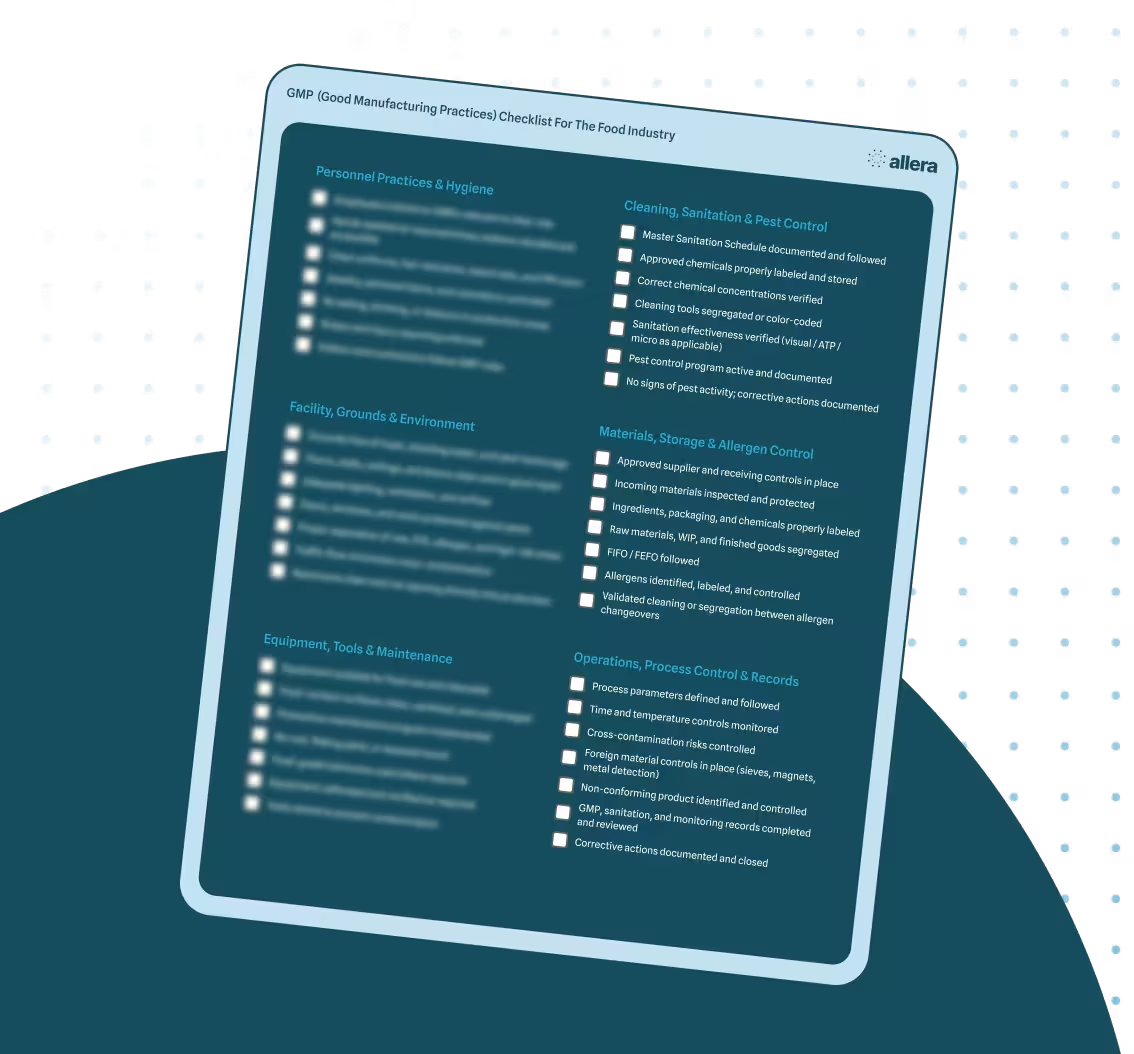
Your GMP audit checklist and food safety audit preparation should both include an SSOP records review. Audit-readiness for SSOPs is not a once-a-year exercise. It is a continuous records discipline.
Managing SSOPs Digitally
Most facilities still manage SSOPs on paper or in static PDF files shared via email. For a small operation with two or three pieces of major equipment, that can work. For anything larger, the cracks appear quickly.
The core problem with paper SSOP programs is version drift compounded by distributed storage. When an SSOP is revised, updated copies need to reach every person who uses that document. In a paper system, this means printing new versions, physically pulling old ones, and confirming that every copy station has the current version. In practice, old versions survive on clipboards, in supervisors' folders, and in laminated sleeves on the wall of the sanitation closet. Your crew follows the version they can see, which may not be the version you filed with your auditor.
Sign-off records in a paper system create a second problem. Daily pre-op logs fill up fast. A 52-week paper trail for a facility with 20+ SSOPs generates a lot of paper, and retrieving a specific record during an unannounced inspection is slower than it should be.
A digital SSOP management system addresses these problems directly. The features that matter most for sanitation management include:
- Linked scheduling: each SSOP is connected to its corresponding task in the master sanitation schedule. When the MSS says the filler is due for a clean, the correct SSOP version is automatically accessible to the crew performing it.
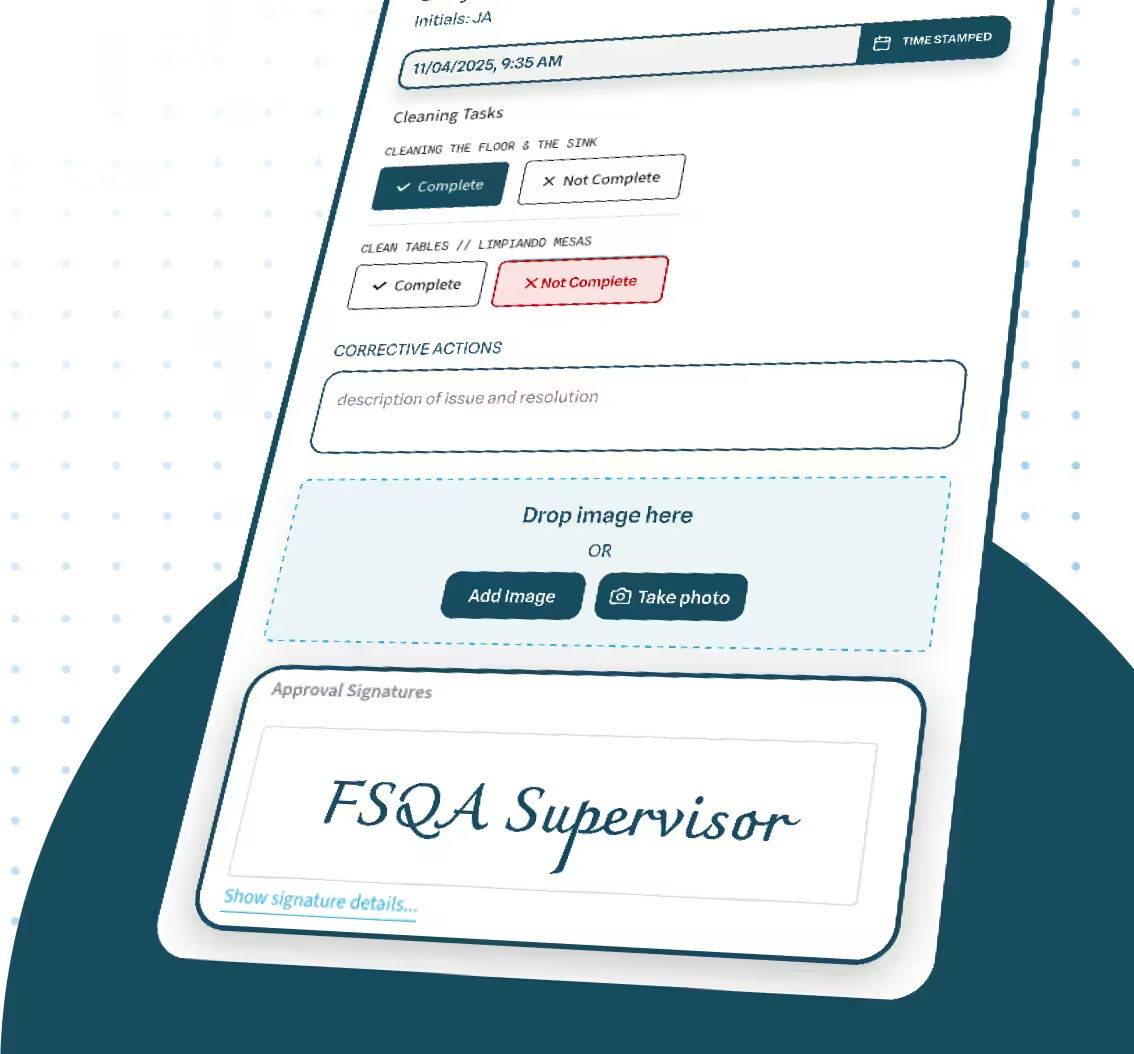
- Time-stamped mobile sign-off: the crew member completes the procedure and signs off on a mobile device. The record captures their identity, the time, and the SSOP version they followed. No paper log required.
- Automatic record retention: records are stored in a central system with a defined retention period. Retrieving last Tuesday's pre-op check takes seconds, not a trip to the filing room.
- Exportable audit trail: when an auditor asks to see six months of cleaning records for your filler, you can export the complete log in minutes.
- Version control with rollout: when an SSOP is revised, the new version is distributed instantly. The old version is archived, not deleted. Every copy accessed from that point forward is the current version.
The food quality management software layer handles scheduling and sign-off. The document control layer handles versioning and distribution.
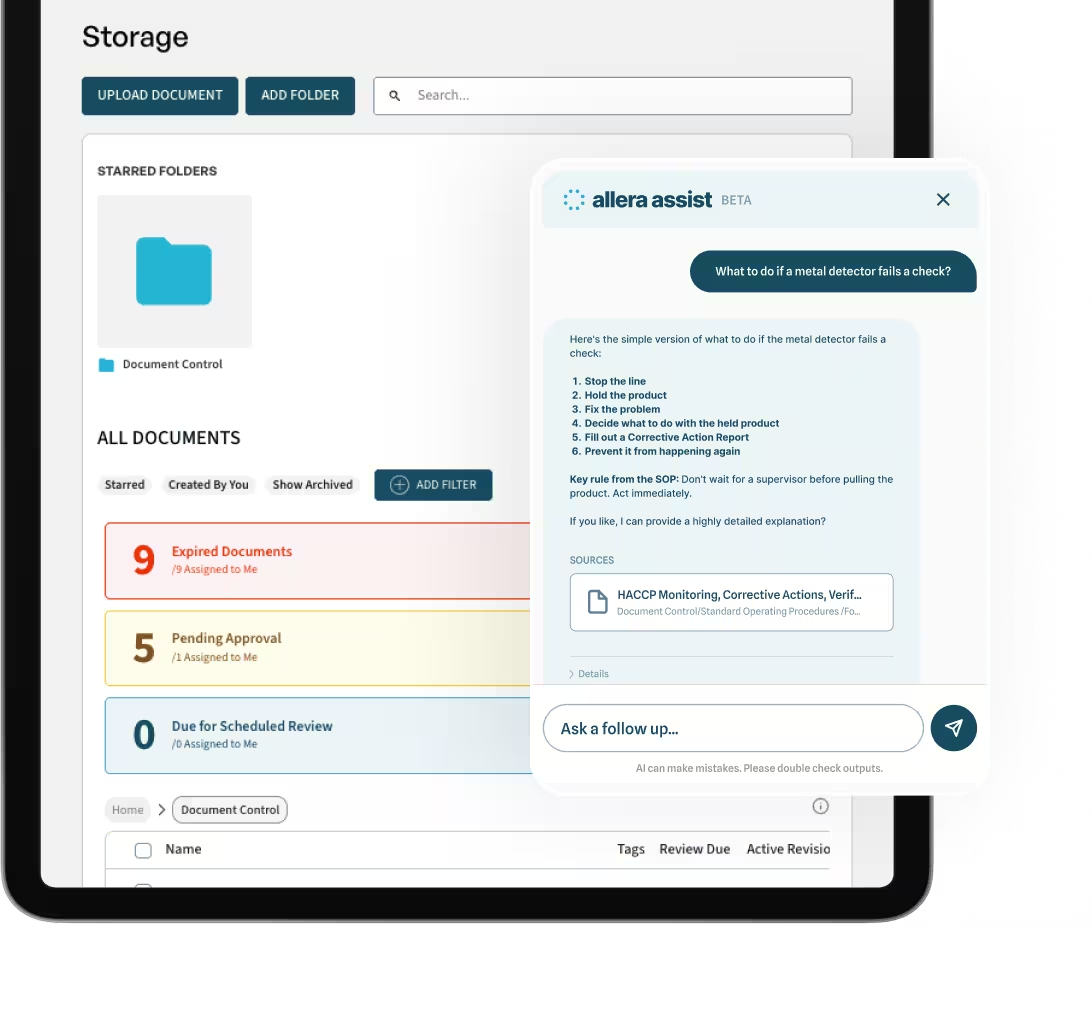
Keeping SSOPs current, signed, and inspection-ready across a busy plant is a document-control problem as much as a sanitation one. See how Allera's document control keeps every procedure versioned and every record where an auditor can find it.
FAQs
What is SSOP and GMP?
GMPs, or Good Manufacturing Practices, are the broad hygiene and facility conditions a food plant must maintain, covering everything from personnel practices to building and equipment design. SSOPs are the specific written procedures that put the sanitation side of those GMP expectations into daily practice.
GMPs set the standard; SSOPs are how you meet and document the cleaning and sanitizing part of it. They work together, with SSOPs operationalizing the sanitation requirements GMPs define.
How to convert SOP to SSOP?
Start with a sanitation task and write the SOP for it, then add the elements regulators require of sanitation procedures specifically. Define the cleaning and sanitizing steps in sequence, with chemicals, concentrations, temperatures, and contact times.
Then build in the four-part discipline that makes it an SSOP: who monitors and how, what corrective action to take on a failure, how effectiveness is verified, and which records capture it all. Add a responsible role, a frequency, and an authorized signature, and put the document under version control.
Is an SSOP required for every food business?
Not in identical form, but some version of documented sanitation applies almost everywhere. USDA-inspected meat and poultry plants must have written, signed SSOPs under 9 CFR Part 416. FDA-regulated facilities need sanitation controls under FSMA (21 CFR 117), seafood HACCP (21 CFR 123), or juice HACCP (21 CFR 120).
Even where the word SSOP is not used, GFSI standards and local health codes still require documented, monitored cleaning procedures. The label varies; the expectation to document and prove sanitation does not.
What are the 4 regulatory requirements for SSOP?
Regulators expect every SSOP to be backed by four disciplines:
- Monitoring: someone checks that the procedure was carried out correctly, using a defined method and frequency.
- Corrective action: a defined response when monitoring finds a problem, including re-cleaning, product disposition, and notification.
- Verification: a higher-level check that the procedure and monitoring are actually working, such as supervisory observation or ATP and micro testing.
- Recordkeeping: accurate, dated, signed records that prove all of the above and are retained for the required period.
Why is SSOP important?
SSOPs are the documented proof that your facility controls sanitation, which is one of the first things an inspector or auditor checks. Missing, incomplete, or unfollowed SSOPs are a common source of findings and can put a USDA grant of inspection at risk.
They also protect product. Consistent, monitored cleaning prevents biological, chemical, and physical contamination, and gives your HACCP plan the clean foundation it needs to work.
What is an SOP in a job?
An SOP, or standard operating procedure, is a written instruction that describes how to perform a routine task consistently and correctly. In a food facility, SOPs cover everything from receiving and production setup to equipment calibration and documentation.
A sanitation SOP, or SSOP, is a specific type of SOP focused on cleaning and sanitizing. The goal of any SOP is the same: anyone trained on it can perform the task the same way, every time.
What is meant by SSOP?
An SSOP is a documented procedure that tells your team exactly how to clean and sanitize a specific piece of equipment, utensil, or surface. It defines the cleaning and sanitizing steps, the chemicals and concentrations, the frequency, the responsible role, how the result is monitored, and what to do when something fails.
The purpose is to prevent contamination and to prove, with records, that sanitation happened correctly every time.
What does SSOP mean in Costco?
It still means Sanitation Standard Operating Procedure. In retail and foodservice settings such as Costco, SSOP refers to the documented cleaning and sanitizing routines staff follow during opening, closing, and shift changes for prep areas, deli cases, and food-contact equipment.
The concept is identical to manufacturing. The regulator may differ, often local health codes rather than USDA FSIS, but the core elements stay the same: define the task, specify the method, assign responsibility, monitor completion, and keep records.
What is the difference between SOP and SSOP?
An SOP is any standard operating procedure for any repeatable task, such as receiving ingredients, calibrating a thermometer, or setting up a line. An SSOP is a sanitation-specific SOP, one whose subject is cleaning and sanitizing.
Every SSOP is an SOP, but only sanitation procedures are SSOPs. The difference matters because SSOPs carry extra regulatory requirements for monitoring, corrective action, verification, and recordkeeping that a generic SOP does not.
What is the difference between SSOP and HACCP?
An SSOP is a prerequisite program that controls general sanitation: keeping surfaces clean, water safe, pests excluded, and chemicals used correctly. HACCP manages specific hazards at defined critical control points in your process, such as a cook step or a metal detection point.
SSOPs come first and create the clean environment HACCP depends on. You cannot run a reliable HACCP plan if the facility is generating contamination in the background, which is why SSOPs are treated as a foundation HACCP is built on.
What does the SSOP stand for?
SSOP stands for Sanitation Standard Operating Procedure. It is a written, step-by-step document describing how a food facility cleans and sanitizes its equipment, utensils, and surfaces to prevent product contamination. A complete SSOP spells out what is cleaned, the method and chemicals used, how often, who is responsible, how the work is monitored, and how it is recorded.

.avif)
.avif)
.avif)
.avif)
%20(1).avif)
.avif)
.avif)

%20(1).png)

.avif)



.avif)