.avif)



Temperature Log Template for Food Manufacturers (Free Template)


A temperature log template is only useful if it matches how your plant actually runs. Most templates online are built for a single restaurant walk-in cooler: one fridge, one column for temperature, one for initials. That works for a diner, not a manufacturer tracking cooler, freezer, receiving dock, and production-line readings across multiple Sites and Stations, where every reading needs to trace back to a critical control point.
This guide gives you a free temperature log template built for food and beverage manufacturers, plus the framework behind it: what to track, how often, what to do when a reading falls out of range, and how temperature logging maps to FSMA, HACCP, SQF, BRCGS, and FSSC 22000.
Download the free temperature log template for food manufacturers
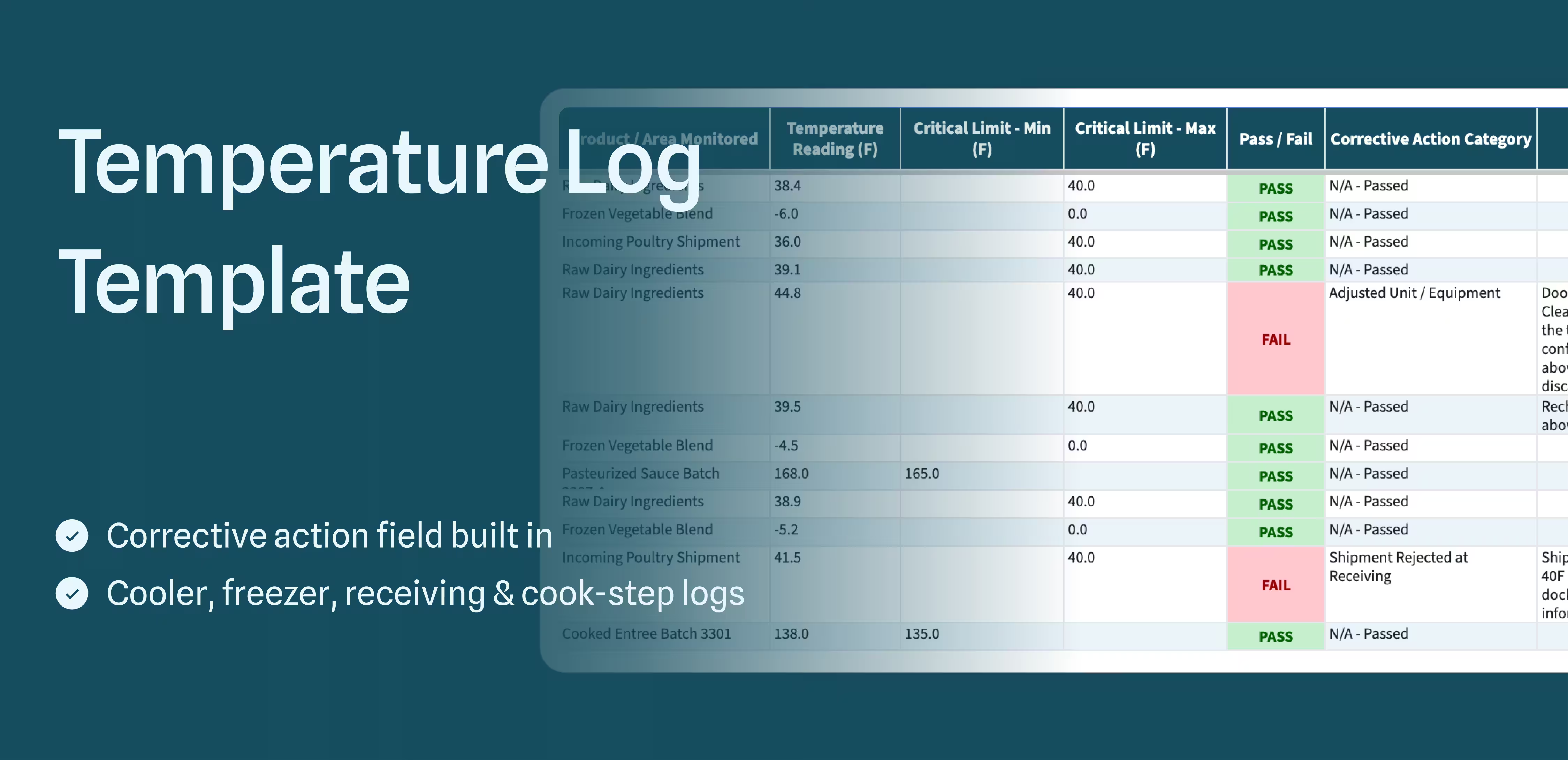
Allera built this template for a manufacturer running multiple Sites and Stations, where a reading needs to trace to a specific monitoring point and an out-of-range result triggers more than a shrug.
The template includes fields for:
- Site and Station: which facility and which line, room, or unit the reading came from
- Monitoring point: cooler, freezer, receiving dock, cook step, hot-hold, or ambient/production floor
- Date and time of the reading
- Reading and target range: the actual temperature against the critical limit for that point
- Pass/fail result
- Corrective action taken, with room to describe what was actually done, not just a blank box
- Initials or signature of the person who took the reading
This one treats a temperature log as a food safety record first, not just a data-entry form.
Download the free Temperature Log Template (Excel)
Keep reading for the compliance context behind every field, including what auditors expect during an SQF, BRCGS, or FSSC 22000 audit.
What should a food manufacturing temperature log actually track?
A manufacturing temperature log needs to answer more than "what was the number." It needs to show where the reading came from, what standard it was measured against, and what happened if it failed.
Site, Station, and monitoring point (not just "which fridge")
If you run more than one facility, "the walk-in cooler" isn't specific enough. Your log needs a Site field and a Station field attached to every reading, the foundation for a documented food safety plan that identifies hazards and controls at that same level. That structure is what lets you pull six months of data across multiple plants in minutes, not an afternoon of cross-referencing binders.
What "temperature" means at each point
Temperature isn't one measurement. It means something different depending on where you take it:
- Cooler and freezer storage: is the unit holding the range needed to keep product safe and within spec
- Receiving dock: is incoming product arriving within the range specified on the supplier agreement
- Cook or pasteurization step: did the product reach the internal temperature and hold time needed for the intended lethality
- Hot-holding: is product held above the temperature where pathogen growth resumes
- Ambient/production floor: is the room environment within the range a process or product spec requires
Several of these points are critical control points like cook and cold-holding steps in your HACCP plan; others are prerequisite-program checks that support your CCPs without being CCPs themselves.
The field every competitor's log omits: corrective action taken
Nearly every generic temperature log template has a "corrective action taken" column with nothing explaining what belongs there, the first thing an auditor checks when a log shows an out-of-range entry.
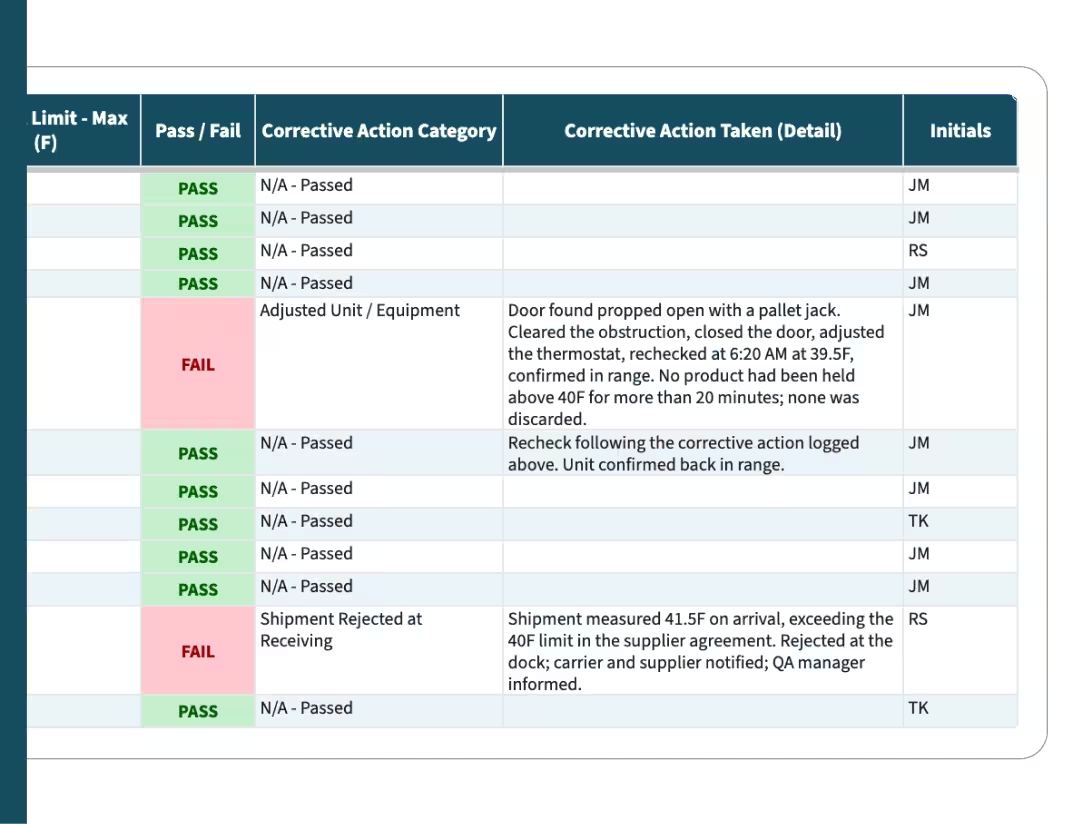
A corrective action field should capture what was actually done: product placed on hold, the unit adjusted, or affected product evaluated for disposition. "Adjusted thermostat, re-checked at 2:15pm, confirmed in range, no product affected" is a record that holds up at audit, tying directly to your HACCP plan and HACCP's monitoring principle, which require a documented corrective action for any deviation from a critical limit.
How often should you log temperatures?
Monitoring frequency depends on the point being measured and how much risk builds up between checks. A cooler holding raw material overnight can be checked less often than a cook step where a single missed reading could mean a whole batch went underprocessed.
| Monitoring point | Target range | Typical frequency | Regulatory hook |
|---|---|---|---|
| Cooler/refrigerated storage | 32-40°F (0-4°C) | Every shift, minimum 2x daily | FSMA monitoring adequacy |
| Freezer storage | 0°F (-18°C) or below | Every shift, minimum 2x daily | FSMA monitoring adequacy |
| Receiving dock | Per supplier spec/PO | Every incoming shipment | Supplier verification under FSMA 117.410/117.420 |
| Cook/pasteurization step | Per validated process | Continuous or per-batch | HACCP Principle 4 (CCP monitoring) |
| Hot-holding | 135°F (57°C) or above | Every 2-4 hours | FDA Food Code time/temperature control |
| Ambient/production floor | Per product/process spec | Continuous or hourly | Supports PRP verification |
Your frequency should be defensible, not arbitrary. FDA's Food Code sets baseline time/temperature expectations, and USDA FSIS's danger zone guidance defines the 40°F to 140°F range where pathogen growth accelerates fastest. Under FSMA, monitoring at a CCP needs to be frequent enough that a failure gets caught before it becomes a safety event, not just a paperwork gap. A cook step checked once a shift may not be adequately monitored, while a cooler checked twice daily usually is, since temperature moves more slowly.
What happens when a temperature reading is out of range?
This is where most temperature logs stop being useful. A reading gets marked "fail," a box gets checked, and nothing documents what happened next, exactly what an auditor is trained to look for.
Correction vs. corrective action
A correction is the immediate fix: adjusting the unit, placing product on hold, moving product to a working cooler. It happens the moment the problem is found.
A corrective action addresses why the reading happened at all, not just the immediate fix. If a cooler ran warm because the door was propped open, the correction is closing the door; the corrective action is fixing why it was propped open. Your log should capture both.
When an out-of-range reading is a food-safety event vs. a routine blip
Not every out-of-range reading is a crisis, but you need a documented way to decide which ones are. A brief 42°F drift caught in twenty minutes is different from a freezer sitting at 20°F overnight with product inside.
The deciding factors are how far out of range, how long, and what product was exposed. A deviation crossing a documented critical limit at a CCP is a food safety event requiring investigation and a disposition decision, per HACCP's monitoring principle. A brief drift at a prerequisite-program point with no product impact may be a routine deviation, but define these thresholds in advance, not in the moment.
Documenting the fix so the log holds up in an audit
An auditor reviewing a fail entry looks for what was found, what was done, what was investigated, and who verified it worked.
The strongest version of this record shows a timestamp for detection, a description of the correction, a note on product disposition, and a follow-up check confirming the fix held. A failed reading shouldn't just sit in a log. It should trigger a task with an owner and a deadline.
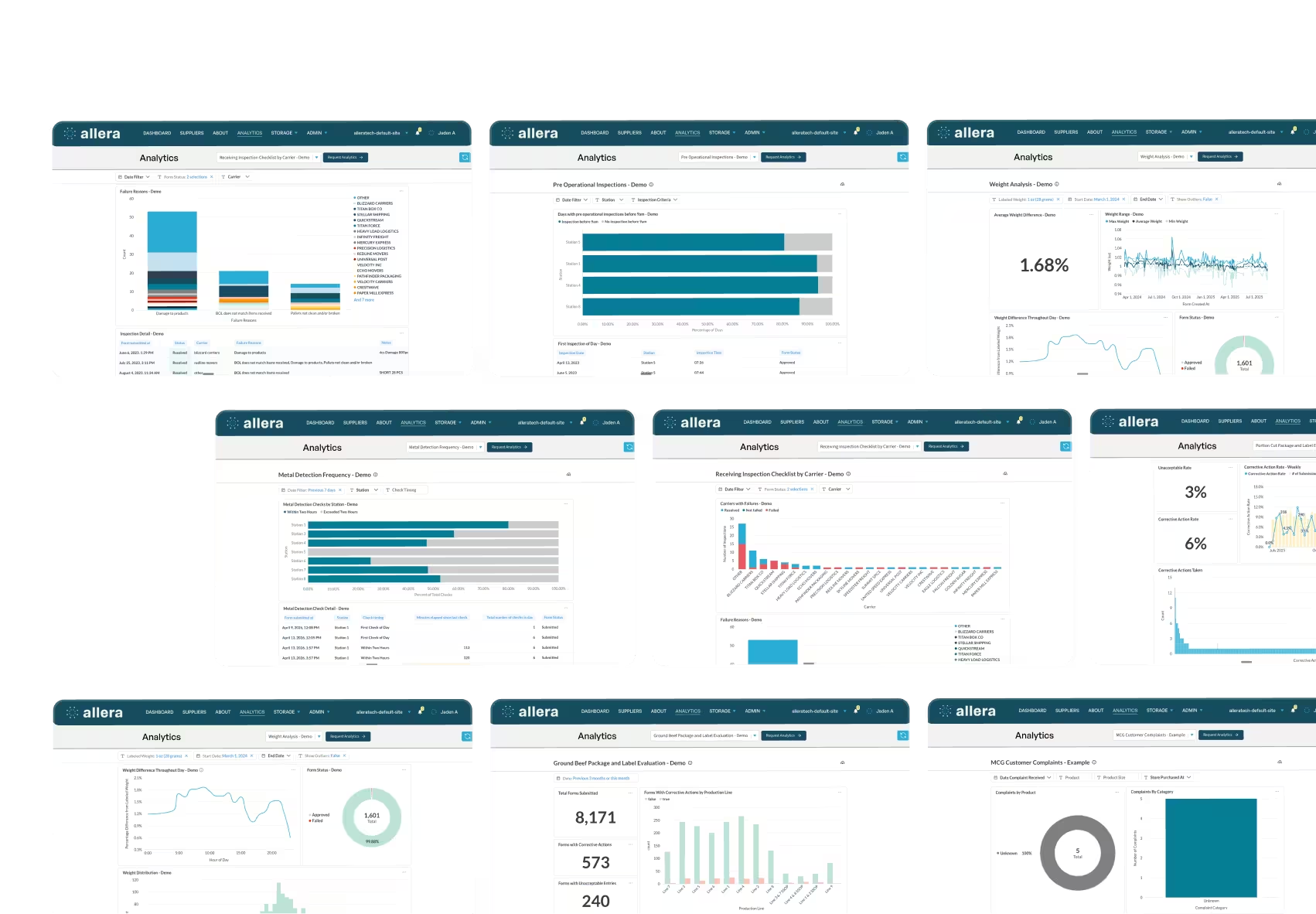
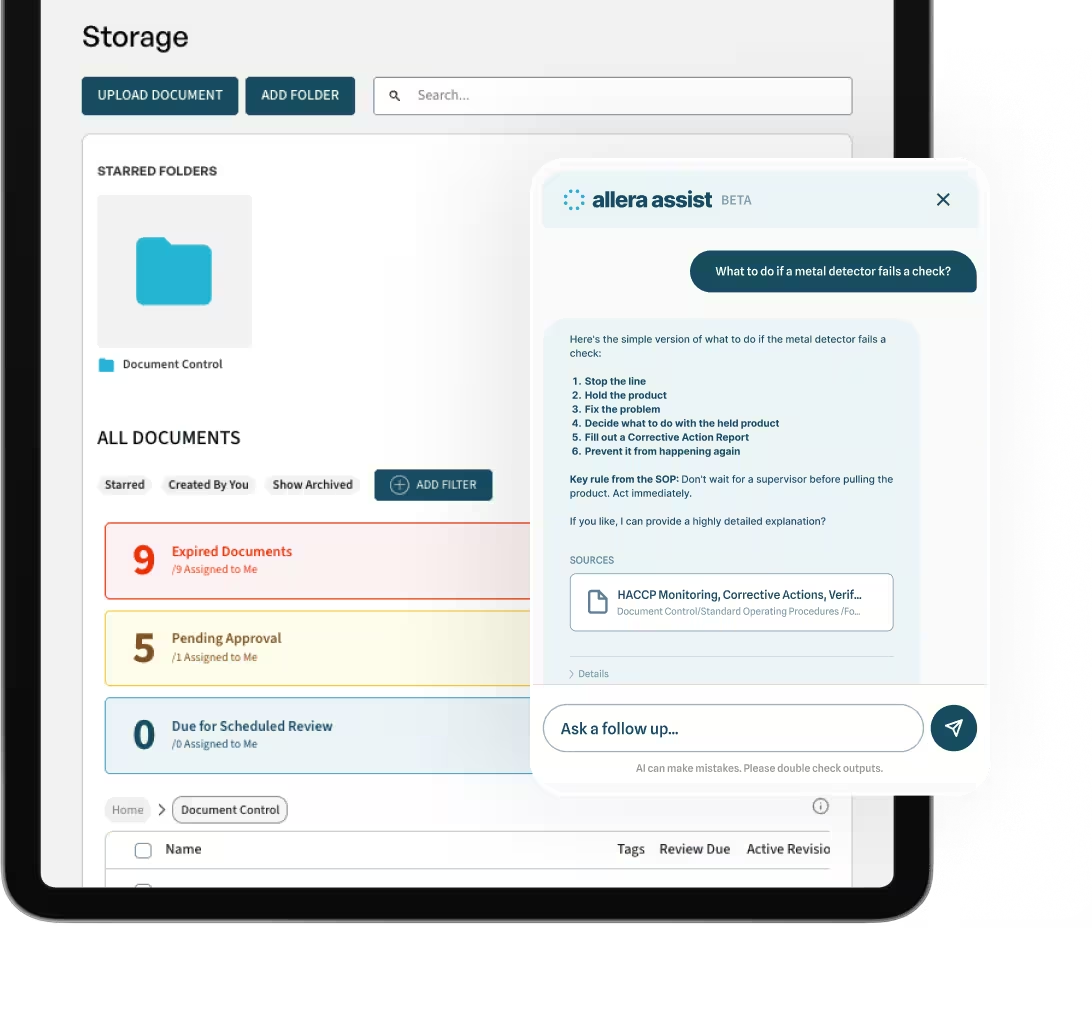
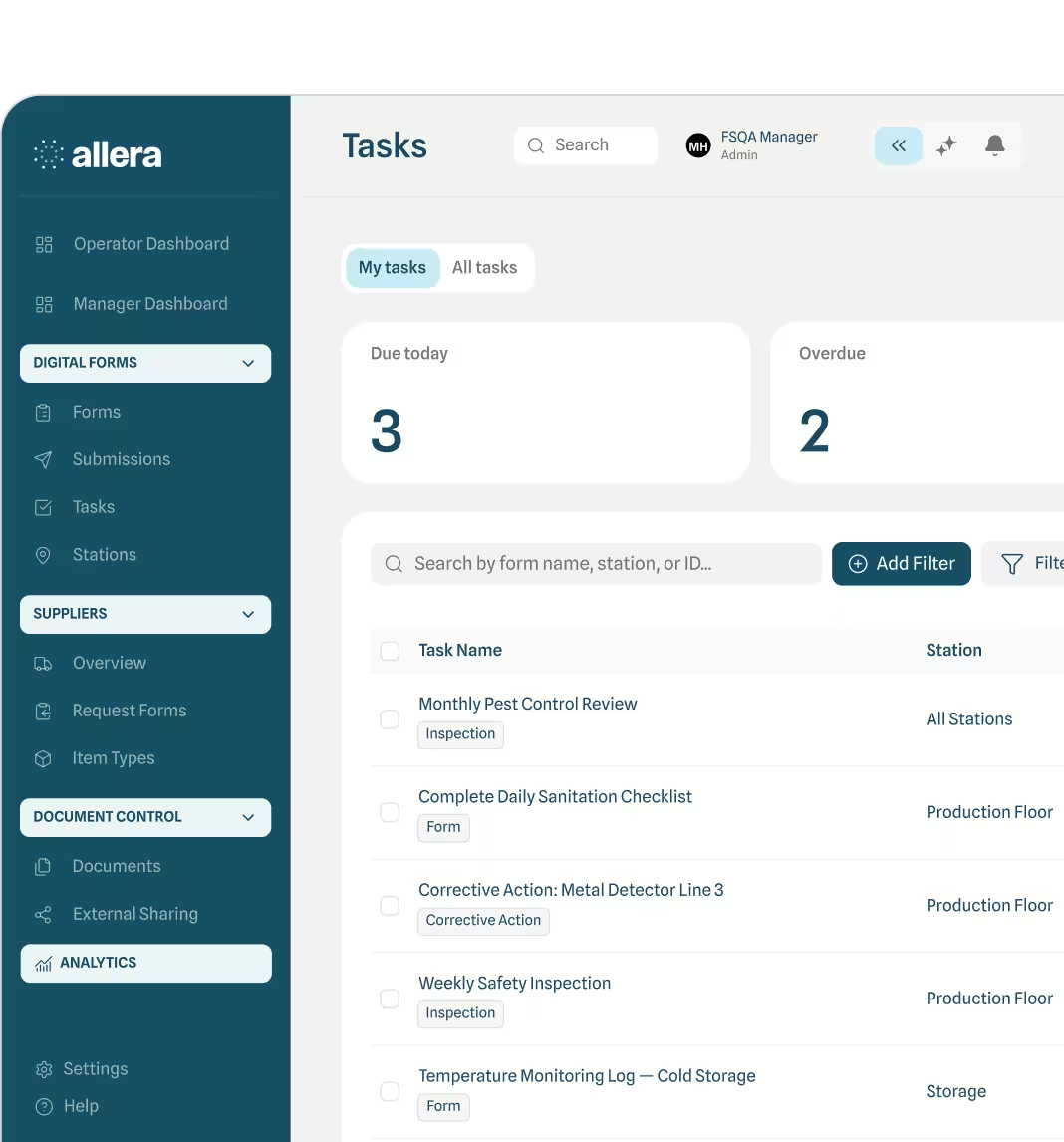
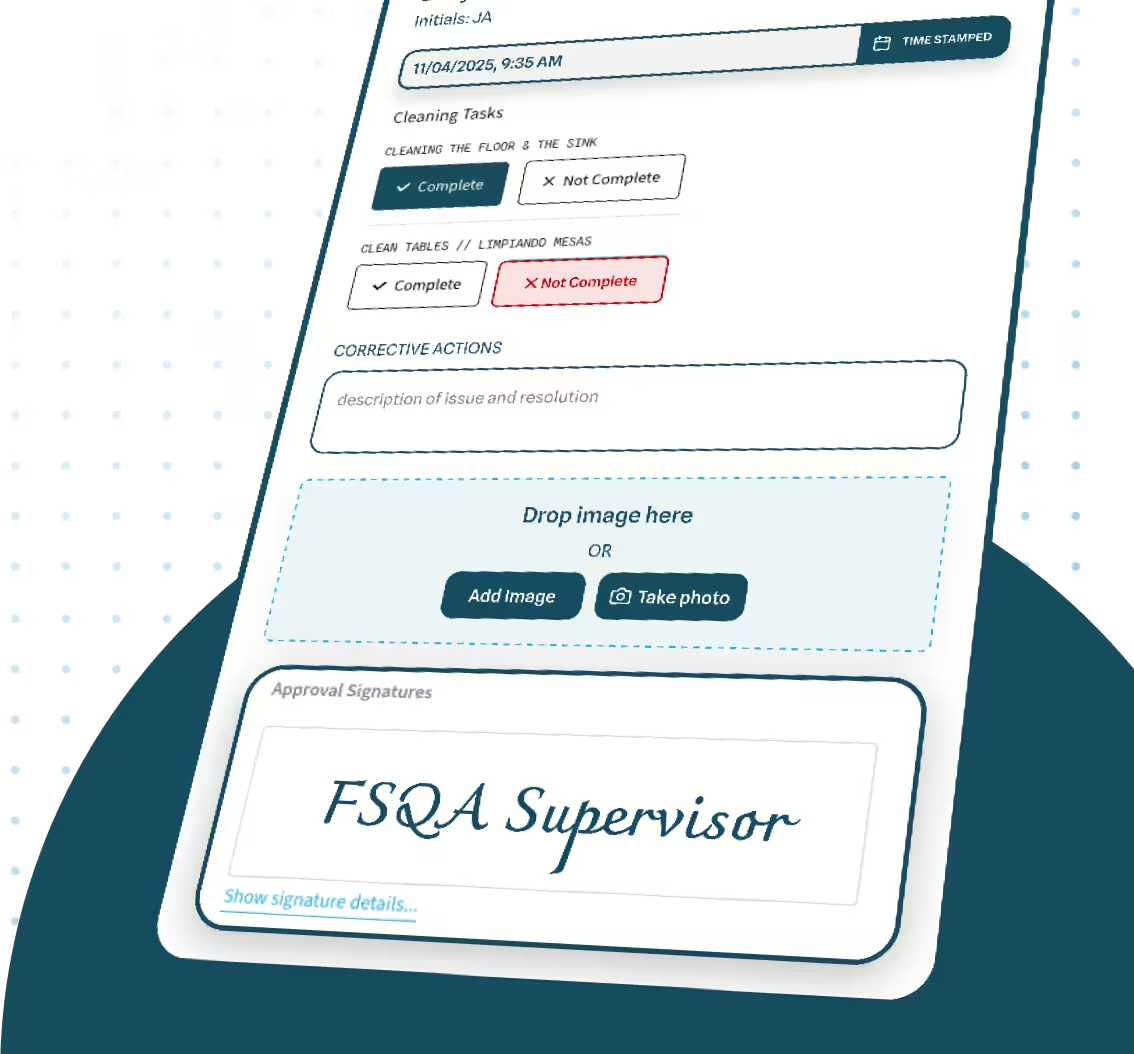
This is where Allera's Digital Forms module handles the handoff automatically. When a rule on a digital form fails, like a temperature reading falling outside a defined range, the platform creates a Corrective Action tied to that submission, a tracked task with an owner from the moment the reading comes in. See how it works on Allera's food quality management software page.
Calibrating the thermometers and probes behind your log
A perfectly filled-out temperature log is worthless if the thermometer reading it is wrong, one of the most overlooked parts of temperature monitoring and a gap in nearly every template: none of them mention calibration.
Why a perfectly filled-out log is worthless if the thermometer is wrong
Every reading is only as accurate as the instrument that produced it. A probe thermometer that drifts a few degrees off true can make an out-of-range product look compliant, or a compliant product look like it needs to be held. Calibration records need to sit alongside your temperature logs, not in a separate binder nobody checks, since a thermometer found out of calibration puts every reading since the last known-good check in question.
NIST-traceable calibration and how often to recalibrate
Calibration should be checked against a reference with NIST-traceable thermometer calibration, meaning the reference has a documented chain back to a national measurement standard, typically an ice-point or boiling-point reference.
Frequency depends on how the instrument is used and how critical the readings are. A thermometer used at a CCP typically gets checked more often than one used for ambient monitoring, and any thermometer that's dropped or shows an unexpected reading should be recalibrated on the spot.
Calibration as one of the most common BRCGS/SQF audit non-conformances
Calibration is consistently one of the most frequently cited findings in GFSI-benchmarked audits. BRCGS Food Safety guidance and the SQF Food Safety Code both expect documented calibration schedules, records of each check, and evidence of what happens when an instrument fails. Passing an SQF audit without a clean calibration record is uncommon. Your SQF audit checklist should include a line item for calibration records tied to your logging instruments.
Temperature logs and food safety compliance
Temperature logging shows up across nearly every food safety regulation and GFSI scheme, but each one frames it a little differently.
| Standard/regulation | Where temperature monitoring is required | Key clause | What auditors expect to see |
|---|---|---|---|
| FSMA Preventive Controls | Monitoring of preventive controls | 21 CFR 117.145 | Monitoring records at adequate frequency, documented and reviewed |
| HACCP Principle 4 / Codex CXC 1-1969 | Monitoring at every CCP | Codex General Principles of Food Hygiene | Records tied to critical limits, with pre-specified corrective actions |
| USDA FSIS (meat & poultry) | Temperature control at CCPs and sanitation | USDA FSIS danger zone guidance | Documented monitoring within the 40°F-140°F danger zone framework |
| SQF Edition 9 | Monitoring and calibration of process control equipment | SQF Food Safety Code | Monitoring records, calibration schedules, documented corrective action |
| BRCGS Issue 9 | Calibration and control of monitoring devices | BRCGS Food Safety guidance | Calibration records tied to specific instruments, action on failed devices |
| FSSC 22000 / ISO 22000 | Monitoring and measurement of process control | ISO 22000:2018; FSSC 22000 scheme documents | Calibrated equipment, records retained per the management system |
None of this is optional paperwork. It's evidence your food safety management system runs the way it says it does, and gaps between your logs, food safety plan, and Good Manufacturing Practices are what a GMP audit checklist review will surface.
Keeping this stack (monitoring records, calibration records, corrective actions, and the plans tying them together) consistent by hand across multiple Sites is a lot to manage on paper. Allera's food quality management software replaces it with digital forms mapped to your monitoring points, so a reading, a calibration check, and a corrective action live in one system.
Why paper temperature logs fail on the plant floor
Paper and spreadsheet logs aren't inherently wrong. They fail because of how they get used in practice, especially at scale.
The "dry-labbed" log problem
"Dry-labbing" is filling in a log from memory after the fact, instead of recording a reading the moment it's taken, usually because a shift gets busy or a clipboard is inconvenient to reach. A dry-labbed log looks identical to a real one, with no way to tell whether a 9:00am reading was actually taken at 9:00am. This lines up with research on cold-chain temperature monitoring, which points to gaps between recorded and actual conditions as a recurring issue in manual documentation.
Lost or damaged paper sheets before an audit
A clipboard near a walk-in cooler gets wet, smudged, or misplaced. Multiply that across several coolers and Sites, and the odds every sheet survives until an audit asks for six months of records drop fast. A missing record reads the same to an auditor as missing monitoring altogether.
No real-time visibility across multiple Sites and Stations
With paper, nobody at the corporate level knows there's a problem until someone physically checks the sheet. A cooler drifting for two days at one plant stays invisible until the next audit or spreadsheet roll-up. That delay makes a strong food safety culture harder to build.
Spotty or no Wi-Fi in coolers, freezers, and production areas
Ironically, the areas where checks happen, walk-in coolers and loading docks, are exactly where Wi-Fi is weakest, one reason some facilities stick with paper. A digital form that can't save when the connection drops is worse than the paper it replaced, a real objection, not a reason to stay on paper indefinitely.
Manual log vs. digital temperature monitoring
Neither paper nor digital is automatically right for every operation, but the gaps between them are worth naming.
| Capability | Paper/spreadsheet | Digital form |
|---|---|---|
| Real-time alerts on failures | No | Yes, immediate notification |
| Works with no/spotty Wi-Fi | Yes, by default | Depends on the platform; needs offline autosave to match paper |
| Audit trail | Manual, easy to lose or damage | Automatic, timestamped, retained digitally |
| Multi-site rollup | Manual consolidation, slow | Instant, one system across all Sites and Stations |
| Corrective action linkage | Manual, easy to skip | Automatic task creation on rule failure |
| Calibration-record linkage | Separate file, easy to disconnect from logs | Can live in the same system as the records it supports |
The offline point deserves a callout, since it's the objection that keeps some manufacturers on paper. Allera's Digital Forms module addresses it directly: forms autosave locally when connectivity drops and recover once it returns, so a reading in a Wi-Fi dead zone doesn't get lost. For manufacturers investing in temperature log integrations with broader traceability systems, a digital record connects cleanly to those systems, and every submission retains a full history, so document control stops being separate from the monitoring itself.
Common temperature log mistakes
A few patterns show up again and again when temperature logs get reviewed, whether at internal review or a third-party audit.
Backfilling or dry-labbing entries. Readings written in after the fact, based on memory rather than an actual check.
Missed readings with no gap noted. A blank cell is worse than it looks, since it's unclear whether the check didn't happen or the paperwork was just skipped.
Illegible handwriting. A reading nobody can read six months later at audit time might as well not exist.
No corrective action recorded for a failed reading. A "fail" with nothing describing what happened next is one of the fastest ways to draw an auditor's attention.
One log per building instead of per Station. A single generic log for an entire facility hides which line, room, or unit a reading actually came from.
Uncalibrated thermometers. Readings taken with an instrument that hasn't been checked against a reference recently enough, quietly undermining every entry in the log.
Most of these trace back to the same root issue: a log that checks whether a number was recorded, without checking whether the process behind that number was sound. That's the difference between quality control vs. quality assurance: catching the bad reading is QC, making sure the system around it actually works is QA.
Frequently asked questions
How often should a food manufacturer log temperatures?
It depends on the monitoring point and how quickly a failure could turn into a safety issue. CCPs like cook or pasteurization steps typically need continuous or per-batch monitoring, while coolers, freezers, and receiving docks are commonly checked at least twice per shift or at every shipment. Document your frequency in your food safety plan so it's defensible against the risk between checks.
What temperature range counts as a food safety violation?
There's no single universal number, since it depends on the product and monitoring point. USDA FSIS defines the danger zone as 40°F to 140°F, with refrigerated storage commonly at or below 40°F, hot-holding at or above 135°F, and freezer storage at 0°F or below. Your own critical limits, set in your HACCP plan, determine whether a reading is a violation.
Do temperature logs need to be signed?
Yes, in practice. Most GFSI schemes and regulatory frameworks expect monitoring records to identify who took the reading, through initials or a signature, for accountability. A log with numbers but no identifier is weaker evidence at audit, even if the readings were accurate.
How long should temperature logs be kept for an audit?
Retention periods vary by regulation, scheme, and product type. FSMA-related preventive control records are generally retained for a period tied to shelf life, and GFSI schemes typically expect at least a year of records available. Check the specific requirement in your food safety plan and the standard you're certified against.
Can a temperature log be digital instead of paper?
Yes. Nothing in FSMA, HACCP, SQF, BRCGS, or FSSC 22000 requires a paper record. What matters is that the record is accurate, retained appropriately, and available when needed. A digital form capturing the same fields (Site, Station, monitoring point, reading, corrective action, and who took it) meets the same requirement, typically with a stronger audit trail.
What's the difference between a temperature log and a HACCP monitoring record?
A temperature log is one type of monitoring record. A HACCP monitoring record is the broader category, and can include time, pH, water activity, or other parameters a CCP controls. A temperature reading taken at a CCP also functions as a HACCP monitoring record, meeting what HACCP's monitoring principle requires: tied to a critical limit, with a pre-specified corrective action.
Get the free temperature log template
A temperature log template built for food manufacturing needs to do more than record a number. It needs to identify the Site and Station a reading came from, tie that reading to a monitoring point and a critical limit, explain what happens when a reading fails, and connect back to the calibration record behind the instrument that took it.
That's what this template is built to do, and it's free to download.
Download the free Temperature Log Template (Excel)
If you're managing this across more than one Site or Station and paper is starting to show its limits, whether that's dry-labbed entries, lost sheets, or no visibility until something's gone wrong, explore how Allera's food quality management software turns this template into a digital, audit-ready workflow across every plant you run.
FAQs
.avif)
.avif)
.avif)
.avif)
%20(1).avif)
.avif)
.avif)



%20(1).png)

.avif)


.avif)