.avif)



Food Safety Plan Template for Food Manufacturers (Free Template)


If you search for a food safety plan template right now, you'll mostly find the same thing: a bare Excel file or Word document sitting on a government or trade-association page with no explanation attached. You open it, see a dozen blank sections, and have no idea where to start or whether what you write will hold up during an audit.
This guide gives you both pieces. A ready-to-use food safety plan template you can start filling in today, and a full walkthrough of what belongs in every section, who is legally allowed to write it, and how it maps to the certification standards your facility is actually audited against.
Get the Free Food Safety Plan Template
What's included at a glance:
- A fillable Excel workbook version of the template
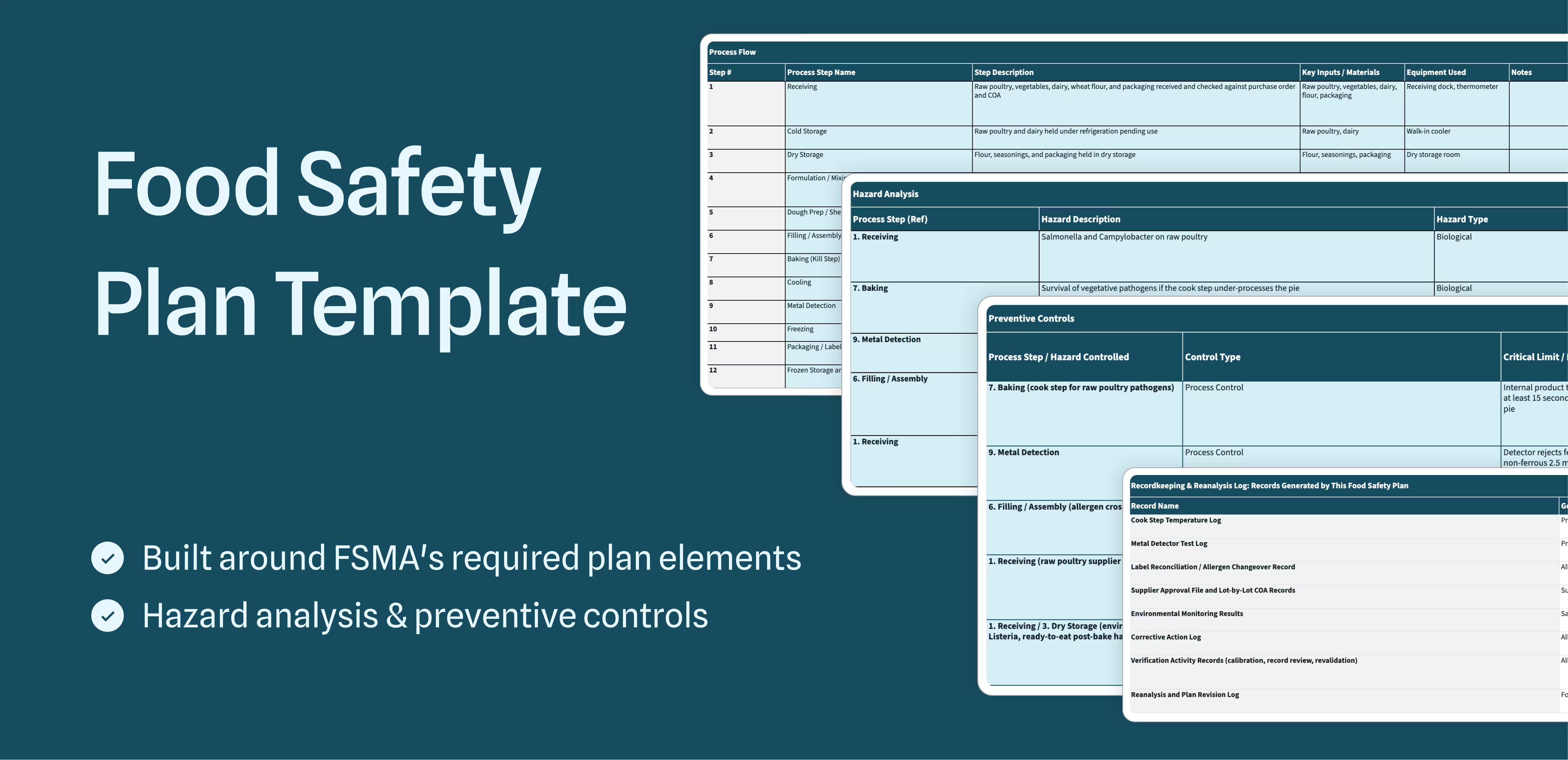
- Sections built around FSMA's required food safety plan elements
- A format you can open and start typing in immediately, no software install required
Download the free Food Safety Plan Template Get instant access to a fillable Excel workbook version of the food safety plan template, built around FSMA's required plan elements. Download the free Food Safety Plan Template below, then keep reading for a section-by-section breakdown of exactly what to put in it.
Why a fillable template beats a static PDF or scanned form
The FDA's free Food Safety Plan Builder tool is a genuinely useful, authoritative resource, but it's desktop software you have to install and learn. Some of the other templates ranking for this search are worse off: a scanned Word document from a state health department, or a macro-enabled spreadsheet built for a trade association's members years ago.
A modern fillable template skips that friction. You open it, the sections are already labeled and organized, and you can start typing without installing anything or learning a new interface. That matters most in the early stages, when you just need to get a working draft in front of your team.
What's Inside the Template (Section-by-Section Walkthrough)
Most templates online hand you a blank file and nothing else. Before you download this one, here's exactly what each section is for and why it exists, so you're not guessing once the file is open.
Facility and product information
This section captures the basics an auditor or inspector needs on page one: your facility name and address, the products covered by the plan, and the process categories involved (refrigerated, frozen, shelf-stable, and so on). It sounds simple, but a plan that doesn't clearly scope which products and processes it covers is one of the first things reviewers flag.
Process flow diagram
A visual, step-by-step map of how raw materials become finished product, from receiving through shipping. Every hazard analysis downstream depends on this diagram being accurate. If a step is missing from the flow, any hazard tied to that step gets missed too.
Hazard analysis table (biological, chemical, physical, radiological)
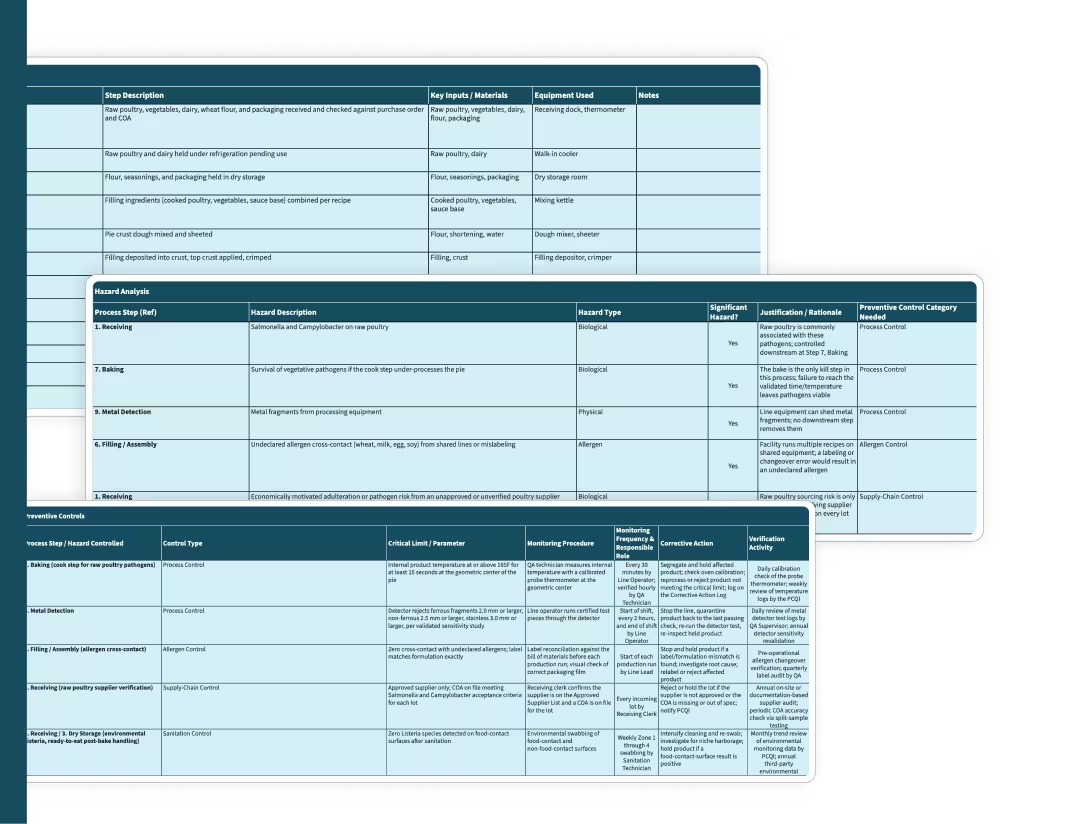
This is where you identify what could go wrong at each step in your process flow and whether that hazard requires a preventive control. The table format keeps you consistent across every process step instead of writing free-form paragraphs that are hard to compare or audit. These four hazard categories trace back to the Codex Alimentarius General Principles of Food Hygiene, the internationally recognized framework that FSMA's own hazard analysis requirements are built on.
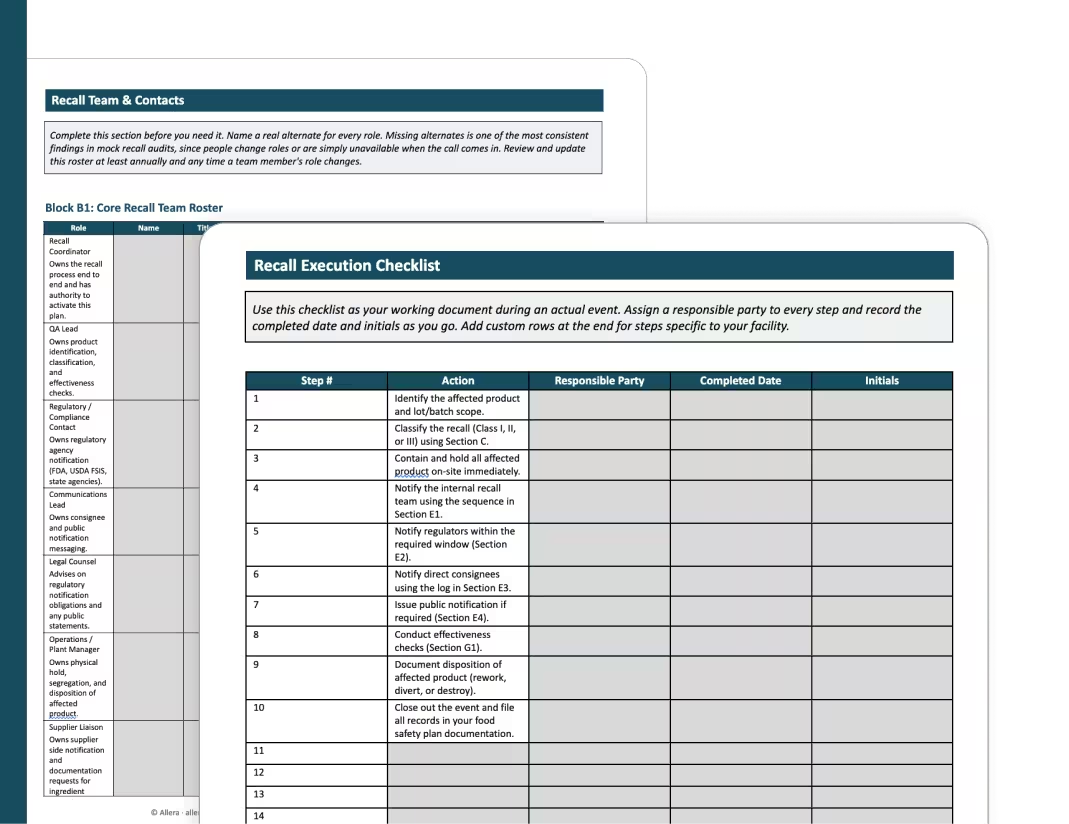
Preventive controls (process, allergen, sanitation, supply-chain, recall)
For every hazard you identified as requiring a control, this section documents what that control actually is. FSMA groups preventive controls into these same categories, so your template mirrors the regulation's own structure rather than inventing a different one.
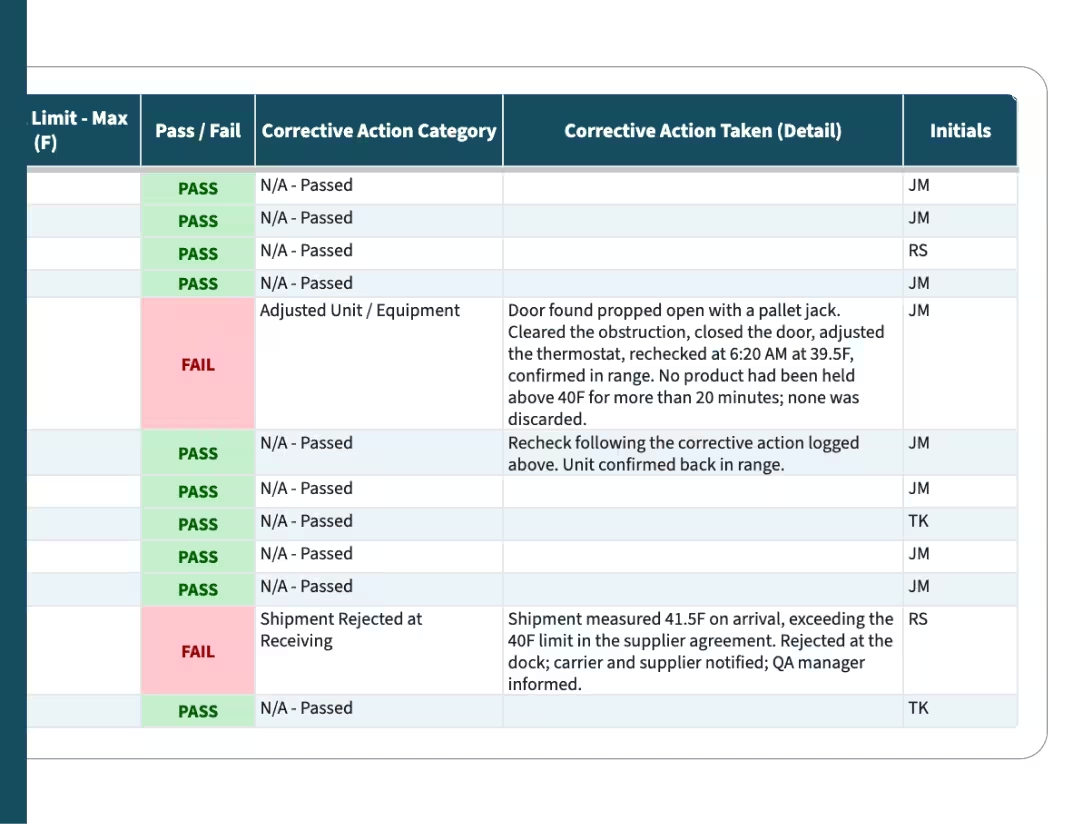
Monitoring, corrective action, and verification procedures
Once a control is in place, you need to say how you'll confirm it's working (monitoring), what happens when it isn't (corrective action), and how you'll periodically confirm the whole system is functioning as designed (verification). These three pieces work together, and templates that treat them as one blended section make it harder to show an auditor how each piece functions independently.
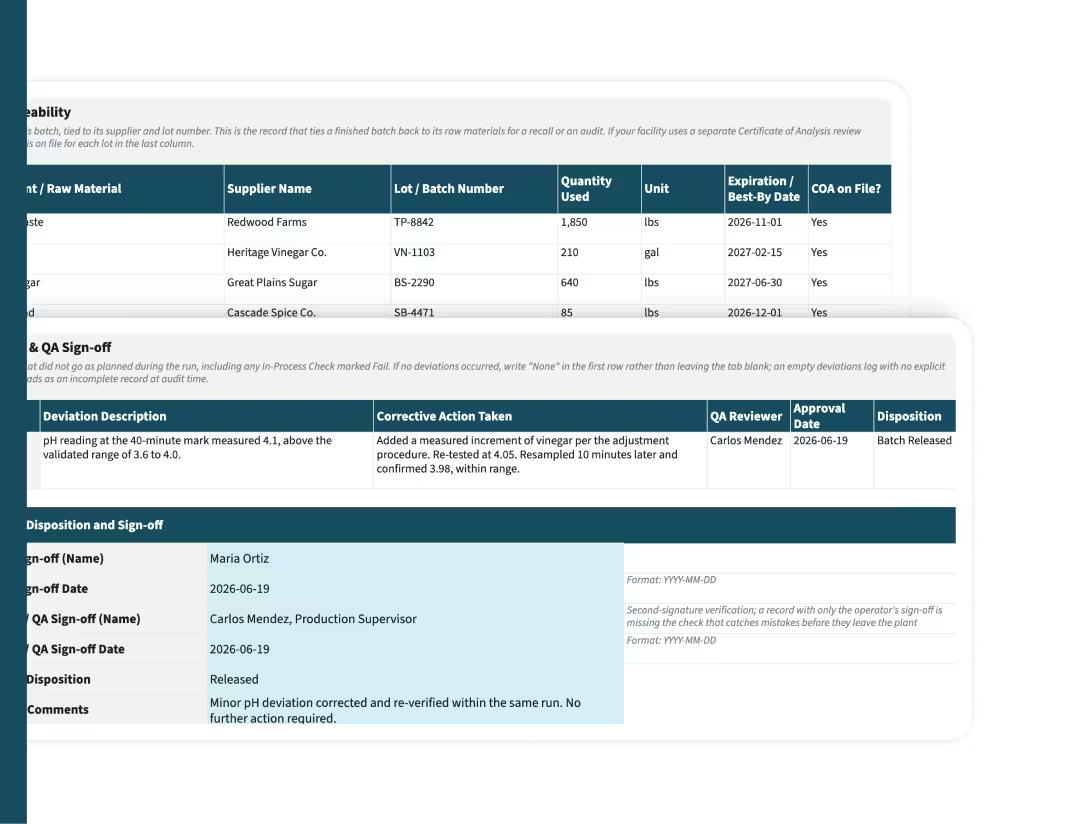
Recordkeeping and reanalysis log
This section tracks what records your plan generates and, separately, a running log of when the plan itself was reviewed or changed. Auditors care about both. Missing product records tell them your controls aren't being followed, and a missing reanalysis log tells them nobody is checking whether the plan itself is still accurate.
Every one of these sections lines up with the required elements FDA lays out under 21 CFR Part 117, Subpart C, so what you fill in follows the exact structure the regulation expects instead of a layout someone invented.
Ready to start filling it in? Download the Food Safety Plan Template and use the breakdown above as your section-by-section guide.
What Is a Food Safety Plan?
A food safety plan is a written, facility-specific document that identifies the hazards in your process and documents the preventive controls you use to manage them, as required under FSMA's Preventive Controls for Human Food rule. Unlike a generic industry template filled out once and shelved, it reflects your specific facility, your specific products, and your specific process flow.
Any facility that manufactures, processes, packs, or holds human food and is subject to FSMA's Preventive Controls rule needs one, with a narrower exemption for "qualified facilities" that meet specific small-business and sales-volume thresholds. If you're not sure whether your facility qualifies for that exemption, that's a conversation worth having with a regulatory consultant before you assume you're covered.
If you want the full narrative version of how to build one from scratch, our guide on how to create an effective food safety plan walks through the process in more depth than this template-focused page does.
Who Is Responsible for Writing Your Food Safety Plan?
This is the part almost no other template page mentions, and it's a real legal detail. FSMA requires that your food safety plan be prepared, or at least overseen, by a Preventive Controls Qualified Individual (PCQI). A PCQI is someone who has completed recognized PCQI training, or who has equivalent job experience that qualifies them to develop and apply a food safety system.
This doesn't mean only one person can ever touch the document. Your quality team, operations leads, and even outside consultants can contribute content. But a PCQI needs to review and sign off on the finished plan, and needs to lead the reanalysis whenever the plan changes.
The standardized training path most facilities use comes from FSPCA's curriculum, which is the industry-recognized program for becoming a PCQI. If your team doesn't have anyone who's completed it yet, our guide to PCQI training programs covers what the course involves and how to get someone at your facility certified.
How to Fill Out Each Section of Your Food Safety Plan
Downloading the template is the easy part. Actually completing each section correctly is where most first-time plans fall short.
Conducting your hazard analysis
Walk your process flow diagram step by step and ask what could realistically go wrong at each point: biological, chemical, physical, or radiological. Don't copy hazards from a generic industry list. A hazard analysis built on your specific ingredients, equipment, and process steps is what actually holds up under review. Our guide to critical control point examples shows what this looks like across different process types.
Identifying and documenting preventive controls
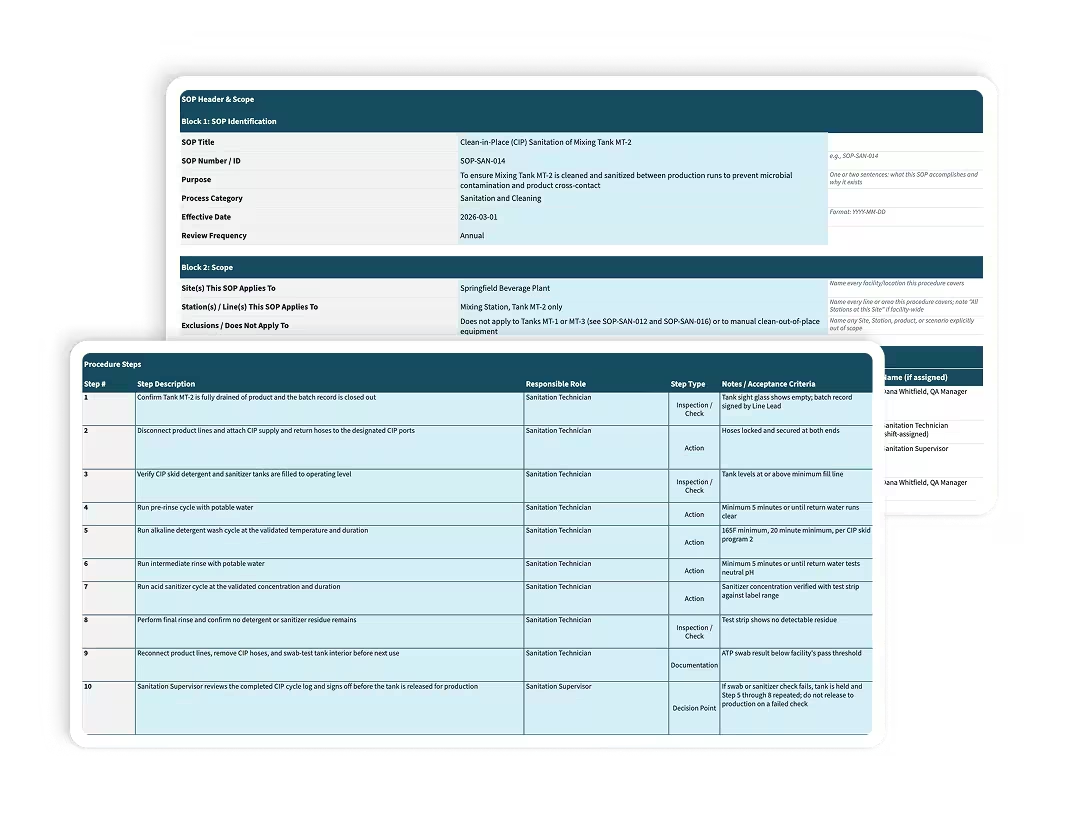
For every hazard that needs a control, write down specifically what that control is, not just that "a control exists." A cook step, a metal detector, an allergen changeover procedure, and a supplier verification requirement are all preventive controls, but each needs its own documented parameters (temperature, time, sensitivity setting, and so on).
Setting monitoring procedures and frequency
Define exactly how often each control is checked, by whom, and how the result gets recorded. Vague language like "monitored regularly" isn't specific enough. An auditor wants to see a stated frequency, a named responsible role, and the actual record it produces.
Defining corrective actions and verification steps
Write down what happens the moment a monitoring check fails a limit, and separately, how you'll periodically confirm the whole system is working as intended. These are two different things: corrective action responds to a single failure, verification confirms the system overall.
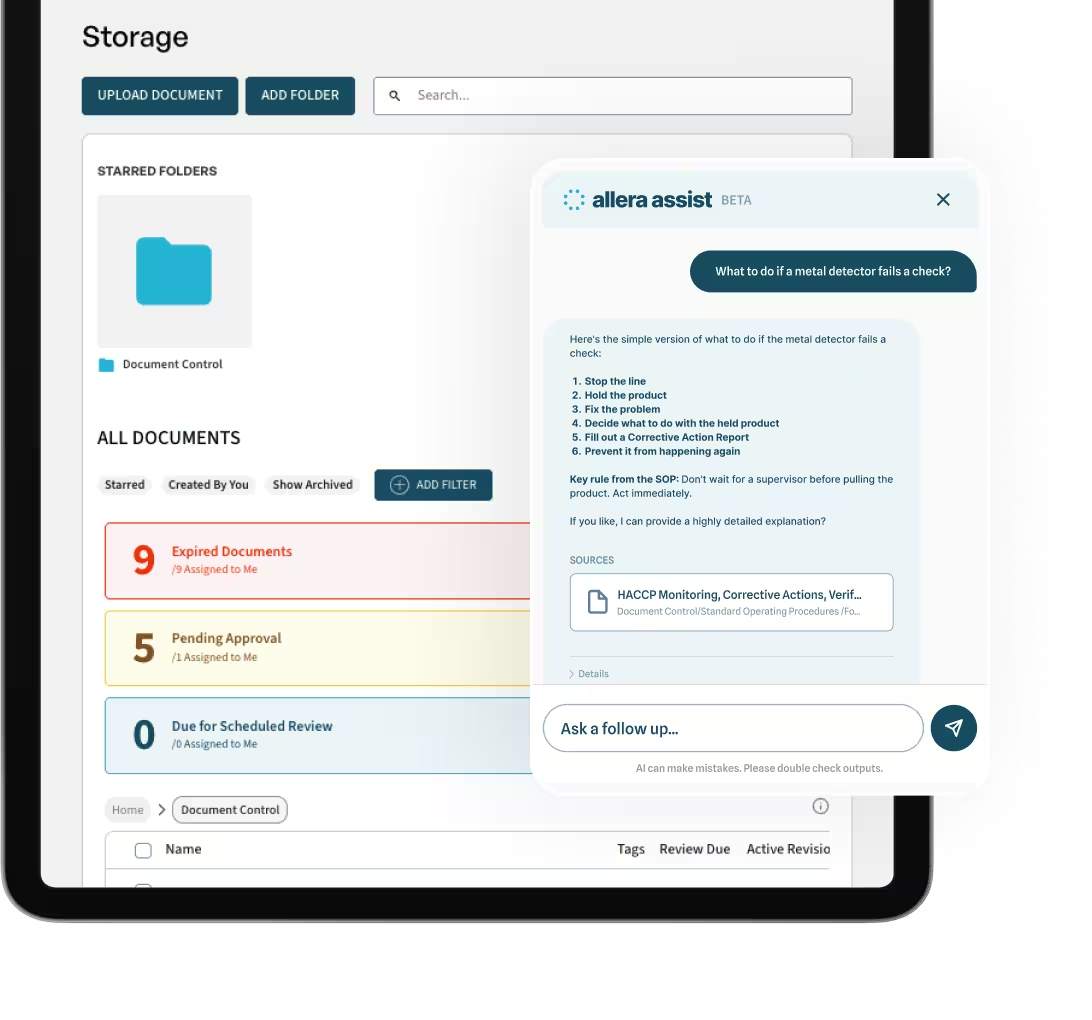
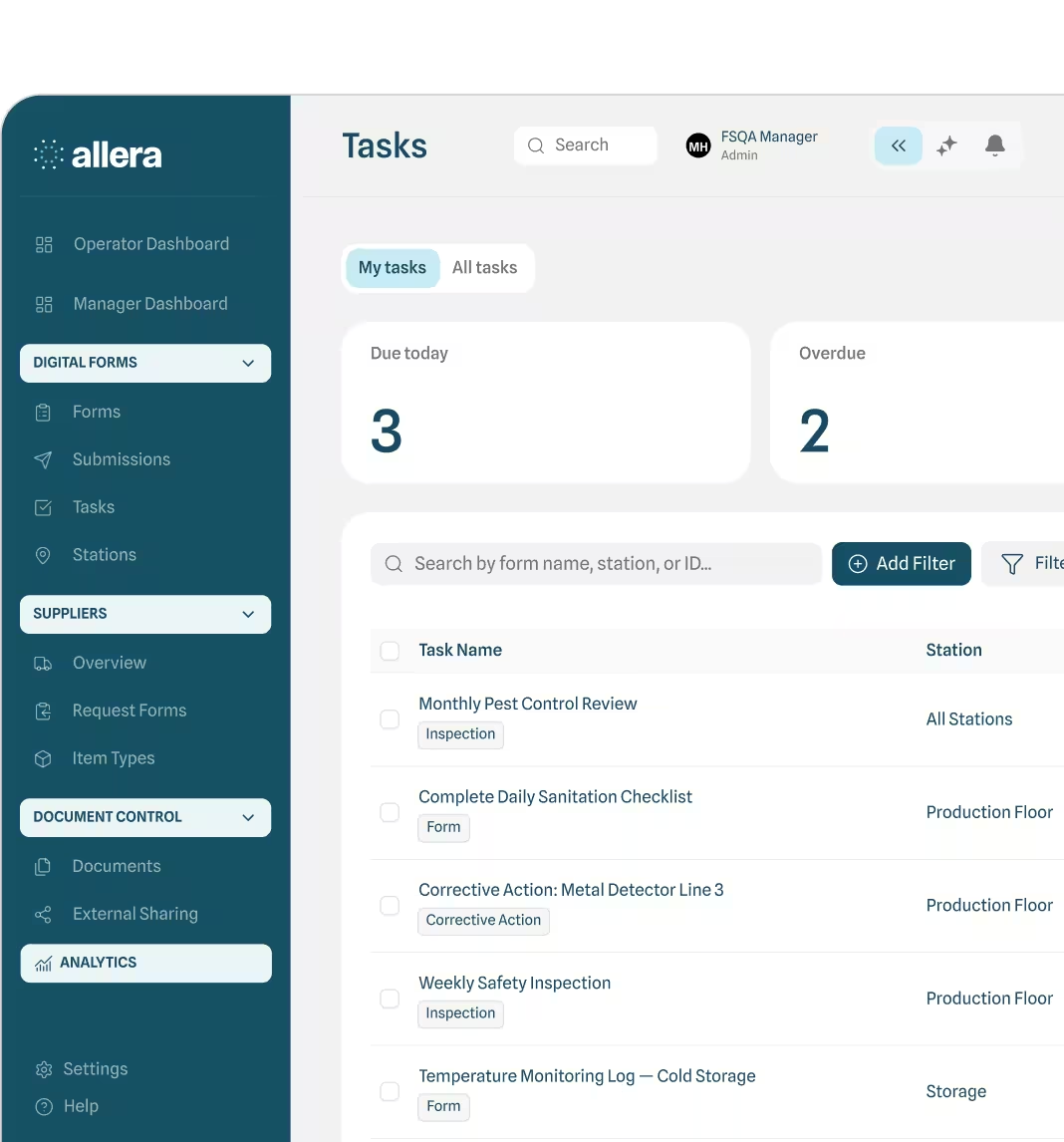
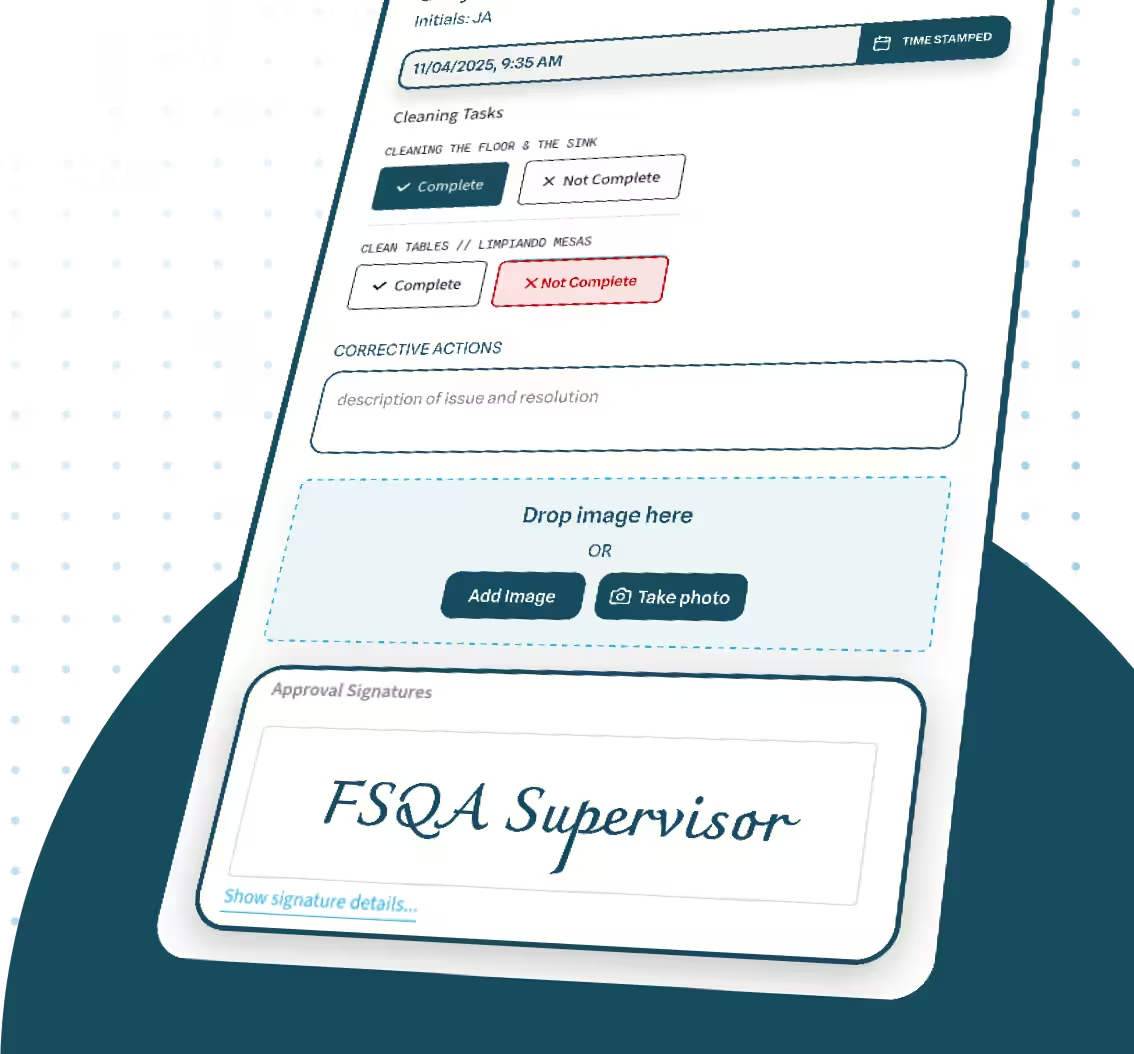
Once your monitoring procedures exist on paper, the next real gap is turning that paper into a living record. Allera's Digital Forms let you build the same monitoring checks your plan describes as a digital form your team fills out on the floor, and when a check fails a rule you've defined, a Corrective Action task gets created automatically instead of sitting in someone's inbox. That's the practical link between what your food safety management system says on paper and what actually happens during a shift.
How Often to Review and Update Your Food Safety Plan
A food safety plan isn't a one-time document. FSMA requires reanalysis at least every three years, or sooner whenever specific triggers occur, under 21 CFR 117.170. Those triggers include a change to your ingredients, process, or equipment, new information about a potential hazard, an unexpected food safety problem, or a recall involving your product.
Treat these triggers as a checklist you revisit any time something changes at your facility, not just a three-year calendar reminder. A food safety audit is also a natural moment to reanalyze your plan, since it's often when gaps between what's written and what actually happens on the floor surface most clearly.
Food Safety Plan vs. HACCP Plan (and Other Food-Safety Documents)
These terms get used interchangeably online, which causes real confusion for anyone trying to figure out which document they actually need. Here's how they differ.
| Document | Who needs it | What it covers |
|---|---|---|
| Food Safety Plan | Any FSMA-covered human food facility (with limited small-business exemptions) | Hazard analysis and preventive controls across biological, chemical, physical, and radiological risks, plus supply-chain and recall-related controls |
| HACCP Plan | Mandatory for meat, poultry, seafood, and juice processors; voluntary elsewhere | The seven-principle system built around Critical Control Points, critical limits, and monitoring at those specific points |
| Food Safety Management System | Any facility pursuing GFSI-benchmarked certification | The broader set of programs (GMPs, sanitation, pest control, training, and your food safety plan or HACCP plan) that a certification audit evaluates as a whole |
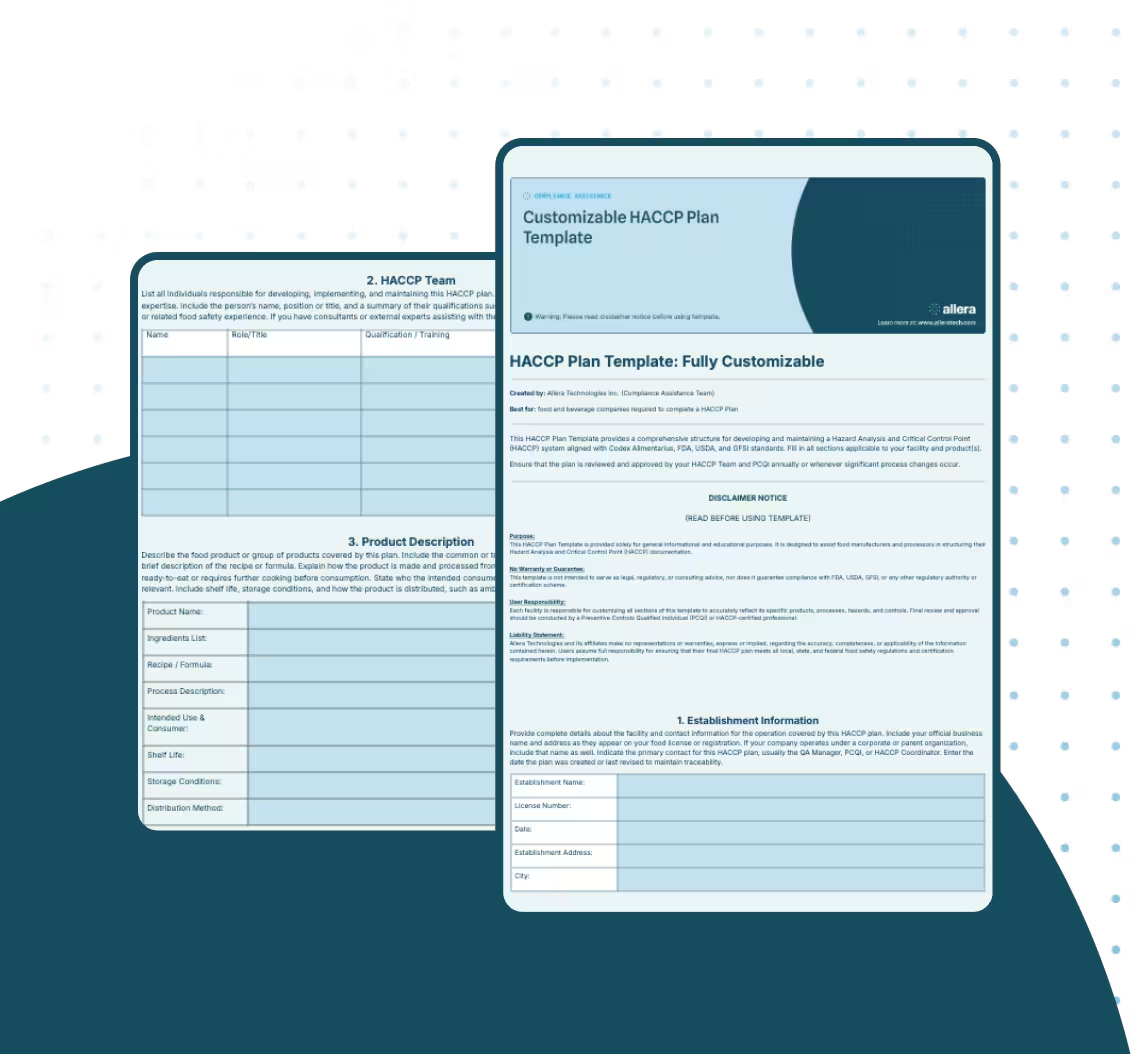
If your products fall under USDA jurisdiction (meat, poultry, or certain egg products), you need a HACCP plan built around the seven HACCP principles, not the broader FSMA food safety plan. If you're building that document instead of (or alongside) this one, our free HACCP plan template is the narrower, CCP-focused counterpart to this page. Most facilities outside those regulated categories need the FSMA-style food safety plan this template is built for. And USDA-regulated facilities can still reference USDA FSIS's HACCP guidance directly.
Mapping Your Food Safety Plan to Compliance and Certification Requirements
This is the part almost every other food safety plan template skips entirely, and it's the one that matters most once you're actually being audited. Your food safety plan doesn't exist in a vacuum. If you're pursuing (or maintaining) a GFSI-recognized certification, auditors are checking your plan against a specific standard's own language, not just against FSMA generally.
| Standard | Where the requirement lives | What auditors expect to see |
|---|---|---|
| FSMA Preventive Controls | 21 CFR 117.126 | A written plan covering hazard analysis, preventive controls, monitoring, corrective actions, and verification for every applicable process |
| SQF Edition 9 | Food Safety Fundamentals / System Elements | A hazard analysis and food safety plan consistent with the facility's HACCP-based approach, reviewed and reanalyzed on a defined schedule |
| BRCGS Issue 9 | Food Safety Plan – HACCP requirement | A documented, cross-functional food safety plan built on HACCP principles, with evidence of management review |
| FSSC 22000 | Built on ISO 22000 plus ISO 22002 prerequisite programs | A food safety plan integrated with prerequisite programs, not treated as a standalone document |
| ISO 22000:2018 | Clause 8, Operation | Hazard analysis and operational planning documented as part of the broader food safety management system |
The SQF Food Safety Code, Food Manufacturing (Edition 9), BRCGS Global Standard Food Safety Issue 9, the FSSC 22000 certification scheme, and ISO 22000:2018 all reference the food safety plan as a required, living document, not a filing-cabinet artifact. If you're currently preparing for one of these specific audits, our SQF audit checklist and guides to BRCGS certification and FSSC 22000 Version 6 go deeper into each standard's specific expectations.
Keeping one document current against several standards at once is where a static Excel or Word file starts to strain. Version control on a single spreadsheet gets messy fast once multiple certifications, and multiple people, are touching the same plan. Allera's document control tools give that plan a real version history, a scheduled review date so it doesn't quietly go stale, and a full audit trail of who changed what and when, which is a meaningfully different experience than tracking edits in a shared folder as part of your broader food quality management system.
Common Mistakes to Avoid with a Generic Food Safety Plan Template
A downloaded template is a starting point, not a finished product. These are the mistakes that show up most often once a generic template gets filled in and put in front of an auditor.
Copy-pasting generic hazards instead of your actual ones. A hazard analysis lifted from an industry template rarely matches your specific ingredients, equipment, or process steps, and auditors notice quickly when it doesn't.
No signature or approval trail. A plan without a documented PCQI review and sign-off is a red flag regardless of how good the content inside it is.
The plan and daily monitoring records living in two disconnected places. If your food safety plan says a step is monitored every two hours but your temperature logs live in a separate spreadsheet nobody cross-checks, that gap is exactly what auditors are trained to find.
Never triggering a reanalysis. Plans that were written once and never revisited, even after a process change or new equipment, stop reflecting reality.
Not mapped to the specific scheme you're certified against. A generic FSMA-only plan can leave real gaps if your facility is also being measured against SQF or BRCGS-specific language.
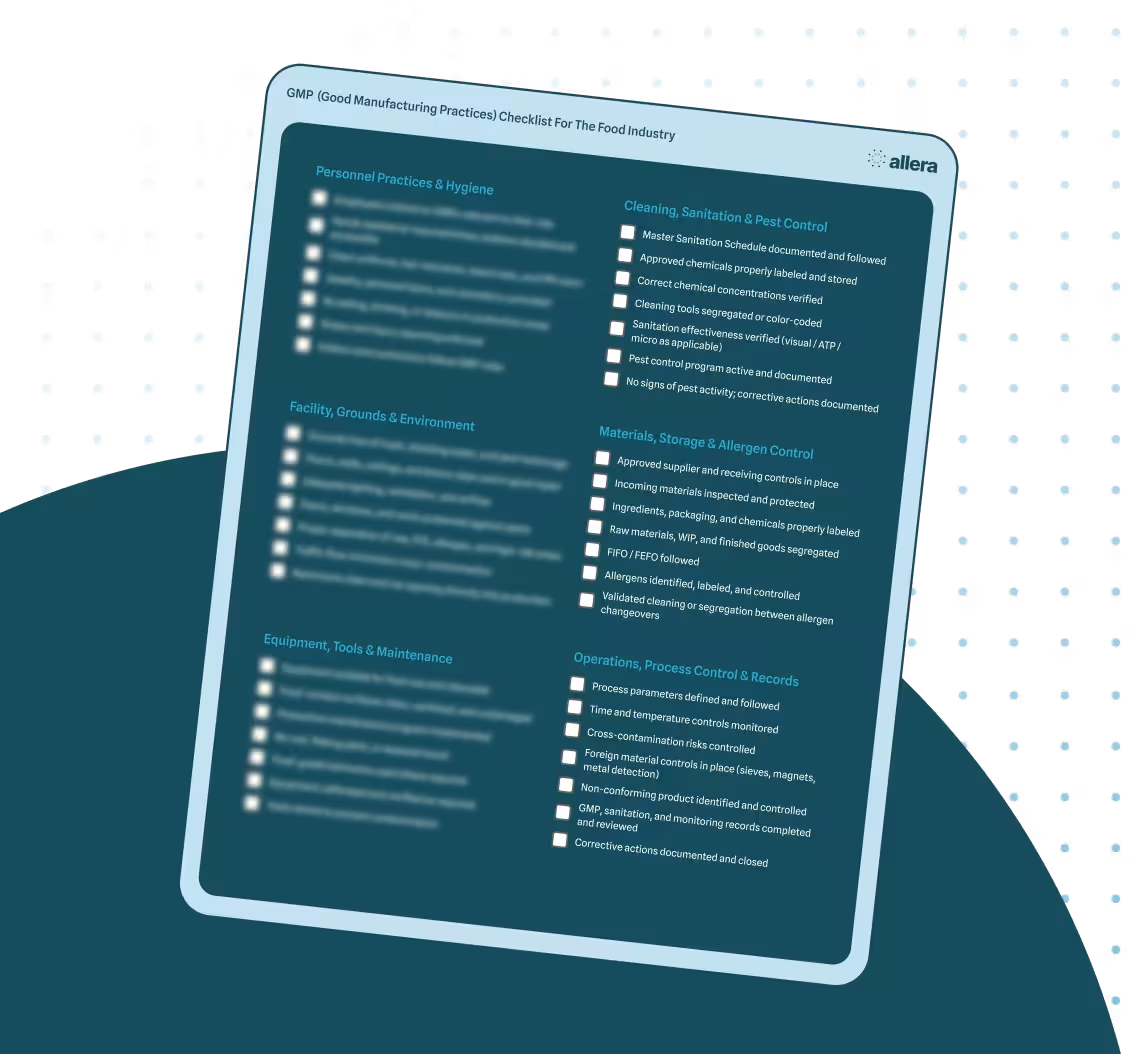
A strong GMP audit checklist catches many of these gaps before an external auditor does, since GMP prerequisite programs are exactly what a hazard analysis assumes are already in place. Beyond the document itself, building a strong food safety culture is what determines whether the plan is actually followed day to day rather than just filed away. And if writing or reviewing the plan feels bigger than your internal team can take on alone, choosing the right food safety consultant can be a faster path than guessing your way through it.
Keeping Your Food Safety Plan Audit-Ready at Scale
A single-facility operation can often manage a food safety plan in Word or Excel and keep it current with some discipline. That approach breaks down as soon as you add a second facility, a second shift, or a second certification.
Version confusion is the first crack. Once more than one person edits the plan, or more than one site needs its own version, tracking which copy is current becomes a manual, error-prone job. The second crack is the disconnect between the plan and the daily verification records it describes, since a static file has no way to link itself to the actual monitoring data your team generates on the floor.
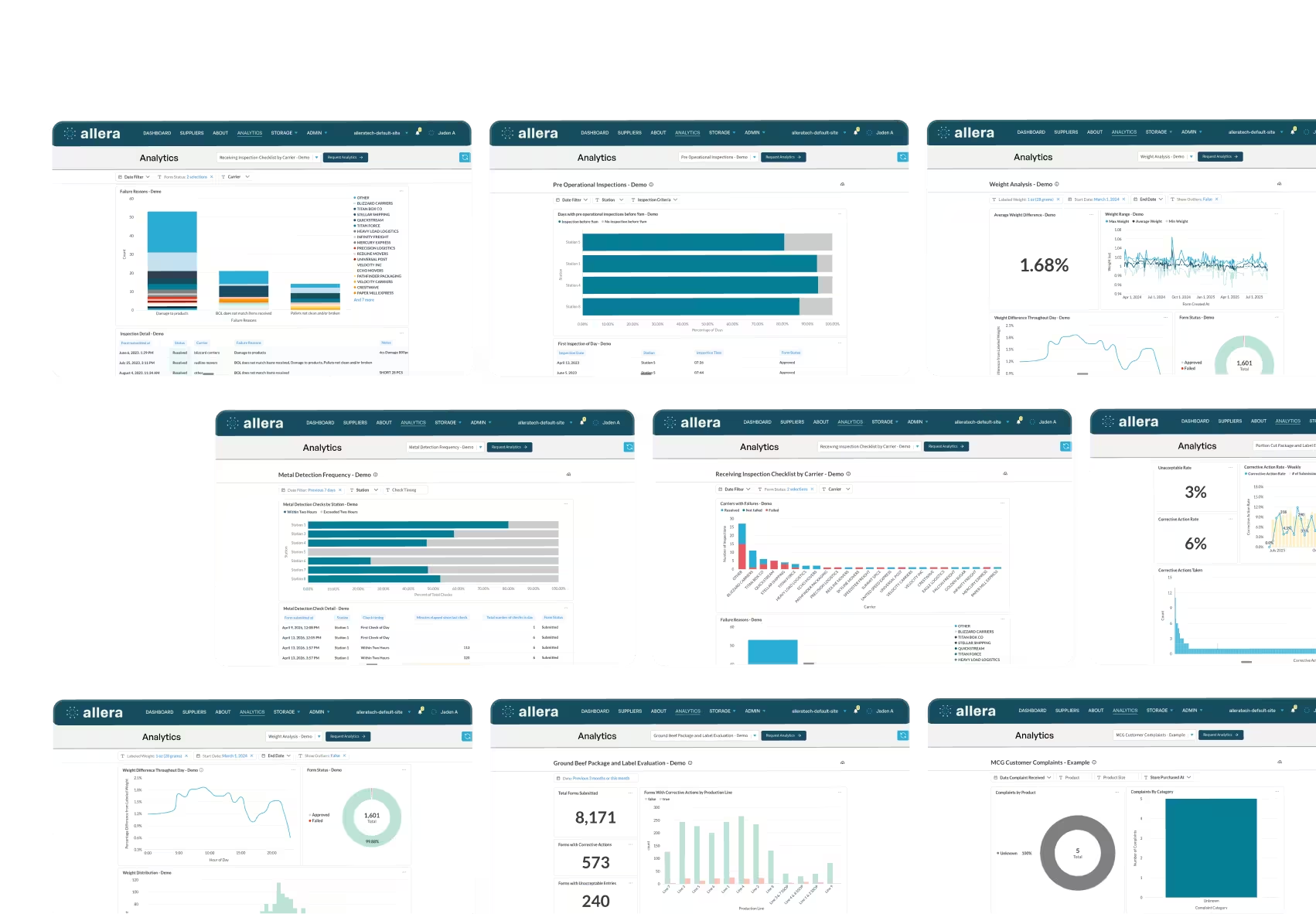
This is where software changes the equation. Allera connects the written plan to the daily records it describes: a failed monitoring check in a digital form automatically creates a Corrective Action task instead of relying on someone to notice, document control software keeps a Scheduled Review date on the plan itself so reanalysis doesn't slip, and a full exportable audit trail shows exactly what changed and when. None of that replaces the plan you just downloaded. It's what keeps that plan alive once your operation outgrows a single shared file.
Frequently Asked Questions
What is a food safety plan template?
A food safety plan template is a pre-formatted document, typically Excel or Word, structured around the hazard analysis and preventive controls elements FSMA requires. It gives you the sections already labeled (facility information, process flow, hazard analysis, preventive controls, monitoring, corrective actions, and recordkeeping) so you're filling in content specific to your facility rather than building the structure from scratch.
Is a food safety plan the same as a HACCP plan?
No. A food safety plan is the broader FSMA-required document that any covered human food facility needs, while a HACCP plan is the narrower, seven-principle system built specifically around Critical Control Points. HACCP plans are mandatory for meat, poultry, seafood, and juice processors and voluntary elsewhere, while food safety plans apply broadly across FSMA-covered facilities.
Do I need a food safety plan if I don't need a HACCP plan?
Yes, in most cases. If your facility manufactures, processes, packs, or holds human food and isn't specifically regulated under a mandatory HACCP program (like meat, poultry, seafood, or juice), you're still likely covered by FSMA's Preventive Controls rule and need a food safety plan, unless you qualify for a specific small-business exemption.
How often do I need to update my food safety plan?
At minimum, every three years. You also need to reanalyze the plan sooner if you change your process, ingredients, or equipment, learn new information about a potential hazard, experience an unexpected food safety problem, or have a recall involving your product.
Can I use a free template, or does my plan need to be custom-built?
A free template is a legitimate, practical starting point, including this one. What matters isn't where the template came from, but whether the content inside it reflects your actual facility, products, and process flow, and whether a PCQI has reviewed and signed off on the finished document.
Keep Your Plan Current, Not Just Filed Away
Download the free Food Safety Plan Template to get a fillable Excel workbook mapped to what FSMA actually requires, then use the walkthrough above to complete each section correctly the first time.
Once your plan is written, the real work is keeping it current: mapped to the certification schemes you're audited against, connected to the daily records that prove your controls are working, and reviewed on a schedule instead of forgotten in a folder. See how Allera's food quality management software helps food manufacturers keep a food safety plan alive long after the first draft is done.
FAQs
.avif)
.avif)
.avif)
.avif)
%20(1).avif)
.avif)
.avif)



%20(1).png)

.avif)



.avif)