

Adulterated Food: What the Law Means for Food Manufacturers

Under US law, adulterated food is food that meets one of the conditions in section 402 of the Federal Food, Drug, and Cosmetic Act. Those conditions cover what is in the food (a harmful substance, filth, an unsafe additive), how it was made (insanitary conditions), and economic adulteration such as substitution or dilution. Most of these clauses need no intent at all, and one of them needs no contaminant. That's why the term matters to anyone who runs a food plant.
It's also separate from intentional adulteration under FSMA's food defense rule, which covers deliberate attacks on the food supply and belongs in your food defense plan.
What Is Adulterated Food?
Adulterated food is food that is unlawful under section 402 of the FD&C Act (21 U.S.C. 342) because of what it contains or how it was handled. If food meets any one of the conditions in section 402, it is adulterated.
"Adulterated" is a legal status. It makes the food unlawful to introduce into interstate commerce, one of the prohibited acts under section 301 of the Act, and that's the hook FDA uses for warning letters, seizures and court action.
Many definitions you'll find online describe adulteration as deliberate cheating. Under the FD&C Act, that describes only one branch: section 402(b), economic adulteration. A plant with no bad intent at all can still make adulterated food, through a sanitation failure, a supplier problem or an allergen carry-over.
Adulteration vs. Contamination
Contamination describes something getting into food: a pathogen, a chemical residue, a piece of metal. Adulteration is the legal conclusion. Contaminated food is usually adulterated, but food can also be adulterated with no contaminant found (insanitary conditions), or with nothing unsafe in it at all (fraud, such as diluted juice).
FDA or USDA? Who Decides Depends on the Food
FDA applies the FD&C Act to most foods. USDA's Food Safety and Inspection Service (FSIS) applies its own statutes to meat, poultry and egg products: the Federal Meat Inspection Act, which defines "adulterated" at 21 U.S.C. 601(m), and the Poultry Products Inspection Act, at 453(g). FSIS also has its own regulatory definitions.
If your plant makes both FDA and USDA products, our guide to food regulatory compliance shows how the two systems divide the work.
The 7 Ways Food Becomes Adulterated Under Section 402
This table covers the section 402 clauses a manufacturer is most likely to meet, with a plant example and the program that usually prevents each.
| Clause | What it says, in plain English | Plant example | Usually prevented by |
|---|---|---|---|
| 402(a)(1) | Contains a poisonous or deleterious substance that may make it injurious to health | Cleaning chemical residue left on a product-contact surface | Chemical controls, SSOPs |
| 402(a)(2) | Contains an added poisonous substance, pesticide residue, food additive or new animal drug that is unsafe | An unapproved additive in a supplied ingredient | Supplier approval, specifications, COAs |
| 402(a)(3) | Filthy, putrid or decomposed, or otherwise unfit for food | Insect fragments above a defect action level | Pest control, supplier controls |
| 402(a)(4) | Prepared, packed or held under insanitary conditions where it may have become contaminated with filth or rendered injurious to health | Listeria harbourage on a filler; condensate dripping onto exposed product | CGMPs, SSOPs, environmental monitoring, sanitary design |
| 402(a)(5) to (7) | Product of a diseased animal; a container made of a poisonous substance; irradiated outside an approved use | Packaging that migrates a harmful substance into the food | Packaging specifications, supplier approval |
| 402(b) | A valuable constituent omitted or substituted, damage concealed, or a substance added to bulk it up or make it look better | Honey extended with syrup; diluted juice | Food fraud vulnerability assessment |
| Other subsections | Unsafe color additives (c); confectionery rules (d); dietary supplement safety and CGMPs (f), (g); re-offered refused imports (h); sanitary transportation (i) | Food shipped without the temperature control the shipper specified | Sanitary transportation and supplier controls |
The four clauses that do most of the work in a food plant are explained below.
Poisonous, Deleterious and Unsafe Substances: 402(a)(1) and (a)(2)
Clause (a)(1) applies two tests. An added substance adulterates food if it "may render it injurious to health." A substance that occurs naturally in the food doesn't adulterate it unless the quantity would ordinarily make the food injurious to health, which is a looser standard.
Clause (a)(2) sends pesticide residues, food additives and new animal drugs to their own safety rules, which is where an unapproved additive in a supplier's ingredient becomes your problem. Our post on chemical hazards covers how plants control these.
Filth, Decomposition and "Unfit for Food": 402(a)(3)
FDA's defect action levels set the point at which FDA may act on natural, unavoidable defects such as insect fragments in raw commodities. FDA says these levels "pose no inherent hazard to health."
Two lines in the handbook matter more than the numbers. Poor manufacturing practices "may result in enforcement action without regard to the action level." And blending a lot at or above an action level with other food to dilute it "is not permitted," which makes the final food unlawful whatever its defect level. Hard foreign material is a separate issue, covered in our guide to physical contamination.
Insanitary Conditions: 402(a)(4), the Clause That Makes the Plant the Problem
Section 402(a)(4) says food is adulterated "if it has been prepared, packed, or held under insanitary conditions whereby it may have become contaminated with filth, or whereby it may have been rendered injurious to health." Read the verb carefully: may have. No positive test result is needed. The conditions themselves are the violation.
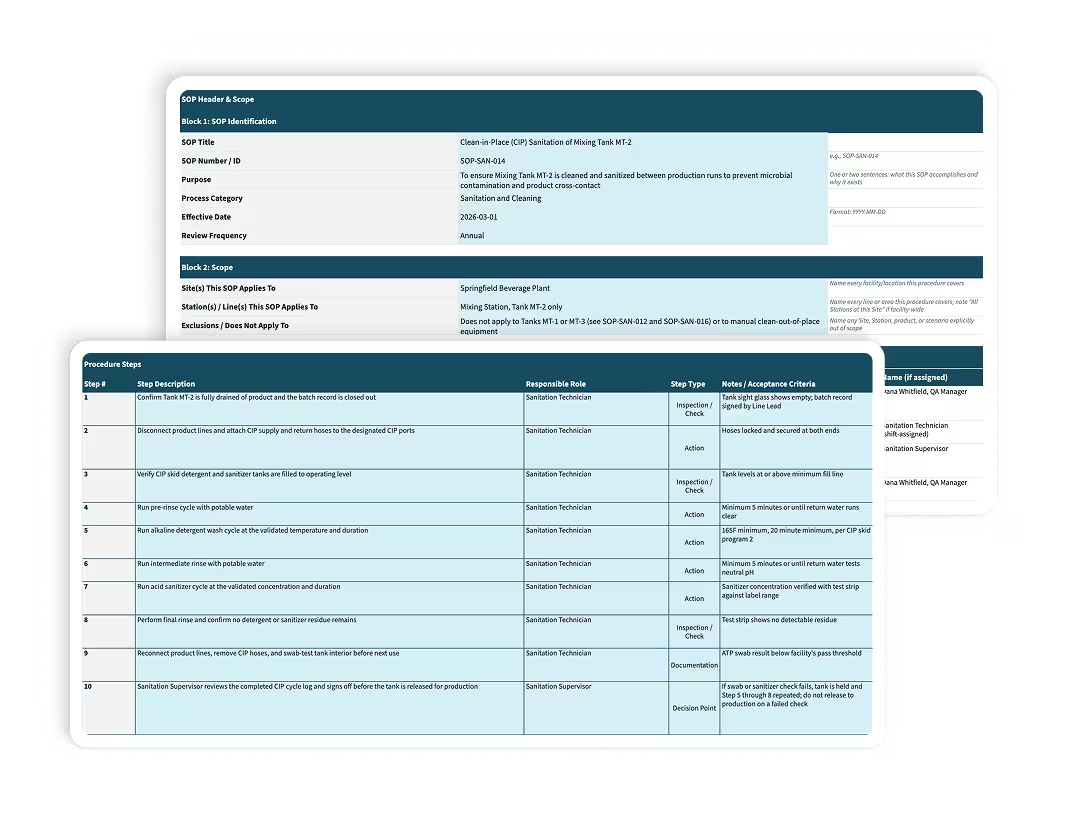
The link to your daily records is written into the regulations. 21 CFR 117.1 says the criteria in Part 117 apply in deciding whether food is adulterated under 402(a)(3) and 402(a)(4). Your good manufacturing practices and sanitation standard operating procedures (SSOPs), and the records that prove they ran, are the evidence on both sides of an insanitary conditions case.
These are the conditions investigators typically document:
- Positive Listeria results in a food-contact zone with no corrective action, which your environmental monitoring program should catch
- Condensation dripping over exposed product
- Pest activity in production or storage areas
- Equipment that can't be cleaned properly, a sanitary design problem
- No working handwashing at the entry to a production area
- Allergen carry-over between products, covered in its own section below
One separate point: under 117.1(b), failing to comply with Part 117's preventive controls requirements is itself a prohibited act under section 301(uu). That's a different charge from adulteration.
Economic Adulteration: 402(b)
Section 402(b) is the only branch that describes deliberate conduct: a valuable constituent left out, a substitution, concealed damage, or a substance added to bulk the food up or make it look better. FDA calls this economically motivated adulteration and gives the classic example: extra-virgin olive oil diluted with cheaper vegetable oil and sold as pure olive oil. Our food fraud vulnerability assessment guide covers how to assess and control it.
Adulterated vs. Misbranded Food: What's the Difference?
Adulteration (section 402) is about the food and how it was made. Misbranding (section 403) is about the label, labeling and package. Both make the food unlawful in interstate commerce.
| Adulterated (section 402) | Misbranded (section 403) | |
|---|---|---|
| What it's about | The food itself and the conditions it was made, packed or held in | The label, labeling and packaging |
| Typical cause in a plant | A sanitation, process or supplier failure | A label or artwork error, or the wrong label applied |
| Examples | Listeria in a ready-to-eat product; product held under insanitary conditions; diluted juice | A missing ingredient declaration; a wrong net quantity; an undeclared major allergen |
| Legal consequence | A prohibited act under section 301(a) | A prohibited act under section 301(a) |
What Makes Food Misbranded (Section 403)
These are the subsections a manufacturer runs into most:
- 403(a): labeling that is false or misleading in any particular
- 403(b): offered for sale under the name of another food
- 403(c): an imitation without the word "imitation" on the label
- 403(d): a misleading container
- 403(e): a package missing the manufacturer, packer or distributor's name and place of business, or an accurate net quantity
- 403(g): claims a standard of identity it doesn't meet
- 403(i): a missing or incomplete ingredient declaration
- 403(q): missing nutrition information
- 403(w): an undeclared major food allergen
Under 403(w), a food that is or contains a major food allergen is misbranded unless the allergen's food source is named, either in the ingredient list or in a "Contains" statement next to it.
Can Food Be Both Adulterated and Misbranded?
Yes. A juice diluted with water but sold under the undiluted juice's name is adulterated under 402(b) and misbranded under 403(b), and FDA can charge both.
Undeclared Allergens: Misbranded, Adulterated or Both?
A common shortcut says an undeclared allergen is misbranding. That's only half the answer: where the allergen came from decides which section applies, and it can be both.
Misbranded under 403(w) is the answer when a major food allergen that is part of the formula isn't declared on the label. Undeclared ingredients that aren't major allergens fall under 403(i).
Adulterated under 402(a)(4) is the answer when an allergen gets into food unintentionally through production practices. FDA's final compliance policy guide on allergens, CPG Sec. 555.250, dated 2005, names improper rework, product carry-over from shared equipment and production sequencing, and allergenic product above exposed lines. It says such practices "may be insanitary conditions that may render the food injurious to health and adulterate the product under section 402(a)(4)."
FDA's 2023 draft revision of CPG 555.250 goes further. It is still a draft as of November 2026, and FDA's page still lists the 2005 version as current, but it shows where FDA's thinking sits:
- FDA "generally regards a product to be adulterated under section 402(a)(4)" when case-by-case review "demonstrates that allergen cross-contact may render the product injurious to health."
- FDA "may deem a product adulterated under section 402(a)(4)… even when the product bears an allergen advisory statement."
- It contrasts two failures: not cleaning shared equipment adequately between runs with different allergen profiles may adulterate the product, while not checking the label may misbrand it under 403(w).
The regulations already cover both tracks in one sentence. 21 CFR 117.135(a)(1) requires preventive controls so that food "will not be adulterated under section 402… or misbranded under section 403(w)." And 21 CFR 117.80 requires adequate precautions so that production procedures don't contribute to allergen cross-contact.
| What happened | Likely charge | Basis |
|---|---|---|
| Milk is in the formula, but the label doesn't declare it | Misbranded | Section 403(w) |
| A shared line had no adequate clean between a peanut run and a peanut-free run | Can be adulterated | Section 402(a)(4); CPG 555.250 (2005) |
| The same shared line, but the label says "may contain peanuts" | Can still be adulterated if cross-contact controls are inadequate | 2023 draft CPG 555.250 (draft, not final) |
| The wrong label went on the right product, and it leaves out an allergen the product contains | Misbranded, and likely a Class I recall | Section 403(w) |
Advisory statements such as "may contain" are voluntary. They must be truthful and not misleading under 403(a)(1), and the 2023 draft says they "are not a substitute for adherence to current good manufacturing practices" or allergen preventive controls.
The US recognizes nine major food allergens: milk, eggs, fish, crustacean shellfish, tree nuts, peanuts, wheat, soybeans and sesame. Your allergen control program manages both tracks, and allergen cross-contact is the half most plants underestimate. Our analysis of why allergen recalls keep happening shows how often the label side fails.
Allergen paperwork starts with your suppliers. In Allera's Supplier Management, you can send an Allergen Statement as a Request Form to every supplier, keep track of who has responded, and approve each submission or send it back for revision. See how Allera keeps supplier documents up to date.
Adulterated Meat, Poultry and Egg Products: How USDA FSIS Uses the Term
The meat and poultry definitions parallel section 402, but FSIS also uses them to declare a specific pathogen an adulterant in a specific raw product. That's how E. coli O157:H7 became an adulterant in raw ground beef.
| Date | Action | Status as of November 2026 |
|---|---|---|
| September 1994 | FSIS announces that raw ground beef contaminated with E. coli O157:H7 is adulterated | In force, and extended to other raw non-intact beef |
| September 20, 2011 | 76 FR 58157 declares six more STEC serogroups (O26, O45, O103, O111, O121 and O145) adulterants of raw non-intact beef products and components | In force |
| June 4, 2012 | FSIS routine verification testing for the six serogroups begins in raw beef manufacturing trimmings | In force |
| May 1, 2024 | 89 FR 35033, a final determination that not-ready-to-eat breaded stuffed chicken with Salmonella at 1 CFU/g or higher is adulterated under the PPIA, effective May 1, 2025 | Final, not withdrawn |
| April 11, 2025 | 90 FR 15433 moves the start of FSIS sampling to November 3, 2025 | Superseded |
| April 25, 2025 | 90 FR 17344 withdraws FSIS's broader proposed Salmonella framework for raw poultry products | Withdrawn |
| December 2, 2025 | 90 FR 55299: FSIS will not begin sampling breaded stuffed chicken on November 3, 2025, and sets no new date | Delayed with no new date |
The breaded stuffed chicken determination is final and hasn't been withdrawn. FSIS has postponed, with no new date, the sampling it would use to enforce it. The December 2025 notice says the available test methods produced false positives near the 1 CFU/g threshold, and that FSIS will give advance notice in the Federal Register before sampling begins. No later notice had been published as of November 13, 2026.
So is Salmonella an adulterant? In raw meat and poultry generally, FSIS has not treated it as one, and the breaded stuffed chicken determination is the first quantitative exception. For ready-to-eat products, the December 2025 notice says FSIS has historically relied on presence or absence testing to verify whether product is adulterated, "when testing ready-to-eat product for Listeria monocytogenes or Salmonella." The pathogens behind most of these decisions are covered in our guide to the Big 6 foodborne pathogens.
What Happens When Food Is Found to Be Adulterated
A finding of adulteration can lead to any of these actions. They don't always come in this order, and most cases stop early.
- Inspection findings. An investigator records observations on a Form FDA 483, such as insanitary conditions or allergen controls that aren't working.
- Warning letter. If your response isn't adequate, FDA can issue a warning letter, published in FDA's public database.
- Recall. Most food recalls are voluntary, and FDA classifies them under 21 CFR 7.3. A reasonable probability of serious harm makes it a Class I recall.
- Reportable Food Registry. When there's a reasonable probability the food will cause serious adverse health consequences or death, the responsible party for a registered facility must report it to FDA no later than 24 hours after determining the food is reportable. Our SAHCODHA guide explains the threshold.
- Mandatory recall. Under section 423, FDA can order a recall of food adulterated under section 402, or misbranded under 403(w), when that same threshold is met, after giving the responsible party the chance to recall voluntarily.
- Import consequences. Imported food that appears adulterated can be refused admission, and a refused article offered again is adulterated under 402(h) unless the importer shows it now complies.
- Court action. FDA can pursue seizure, injunction or prosecution.
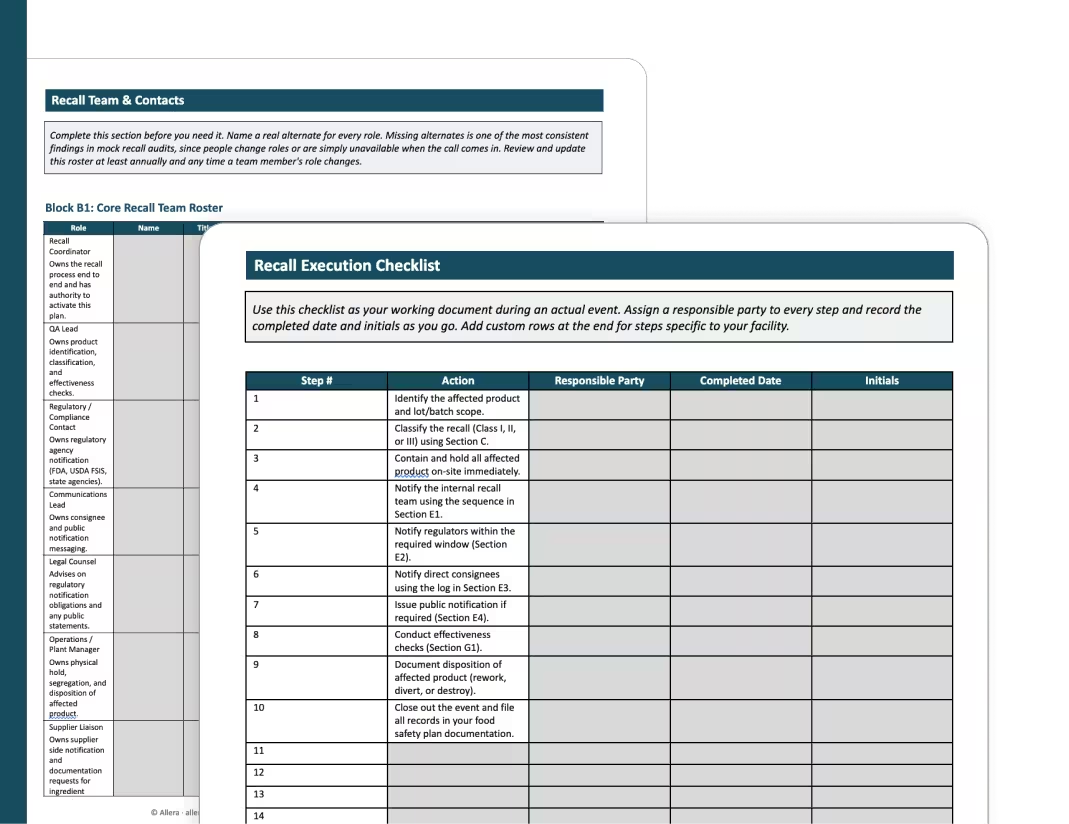
Every step depends on records, and a tested recall plan is part of that.
This is a general explanation of the law, not legal advice. Talk to regulatory counsel about a specific situation.
How Manufacturers Keep Adulteration Out of the Plant
Each adulteration clause maps to a program you probably already run.
| Clause | The program that prevents it |
|---|---|
| 402(a)(4), insanitary conditions | CGMPs, SSOPs, pre-op inspections, environmental monitoring, sanitary design |
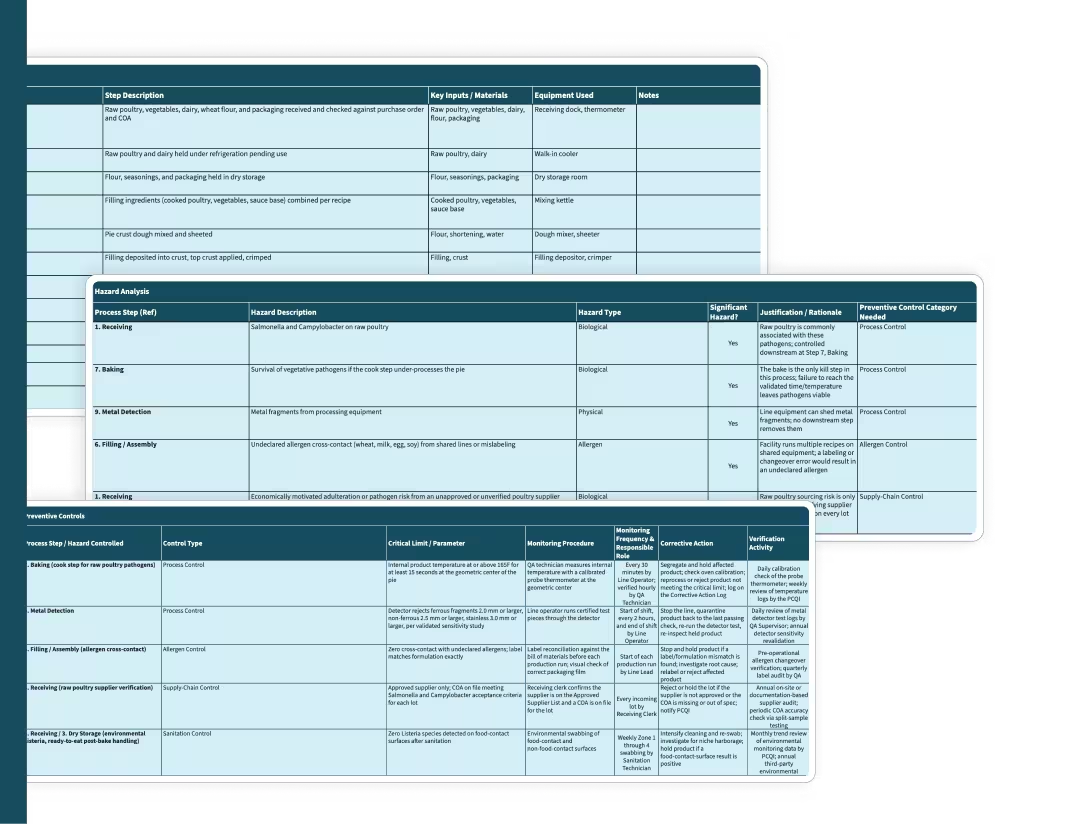
| 402(a)(1) to (a)(3), harmful substances and filth | Hazard analysis, a supplier approval program, pest control |
| Allergens, both tracks | Allergen control program, changeover cleaning, label verification |
| 402(b), economic adulteration | Food fraud vulnerability assessment and supplier controls |
GFSI audits under SQF, BRCGS and FSSC 22000 test the same CGMP, sanitation and allergen controls, but FDA reads your records on its own terms.
In every row, what protects you during an inspection is the same: a record that the control ran, that someone checked it, and that it was corrected when it failed.
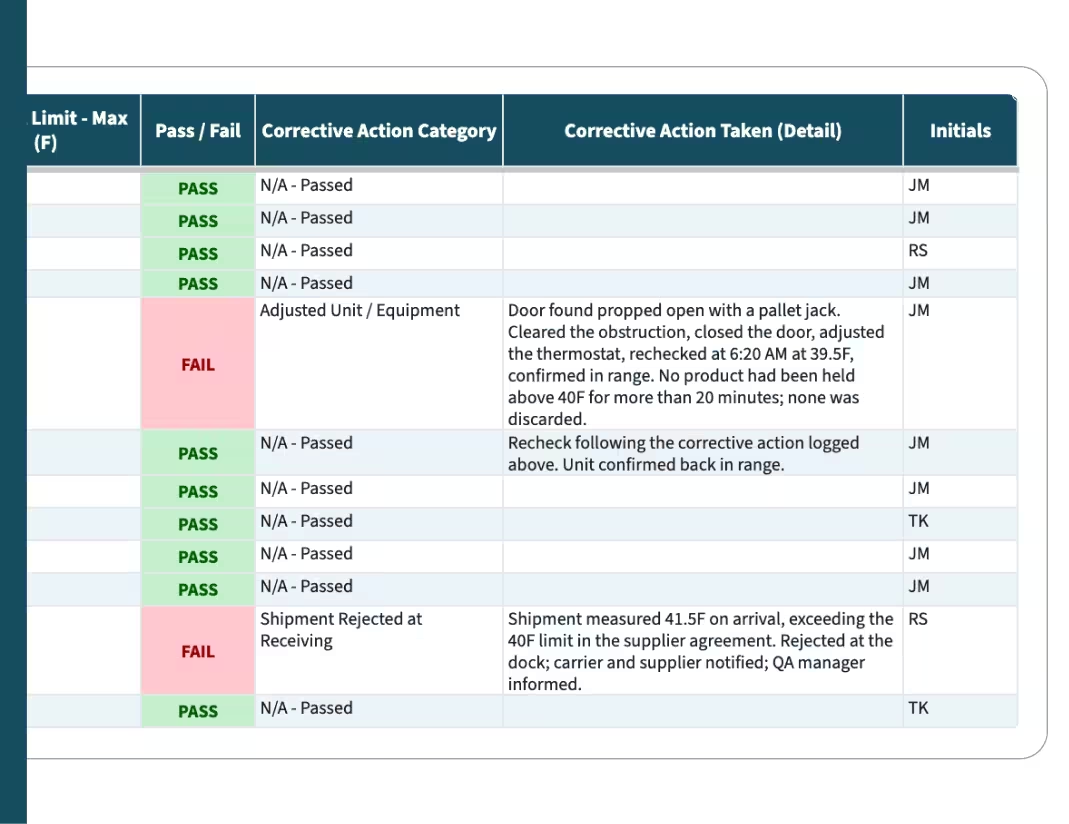
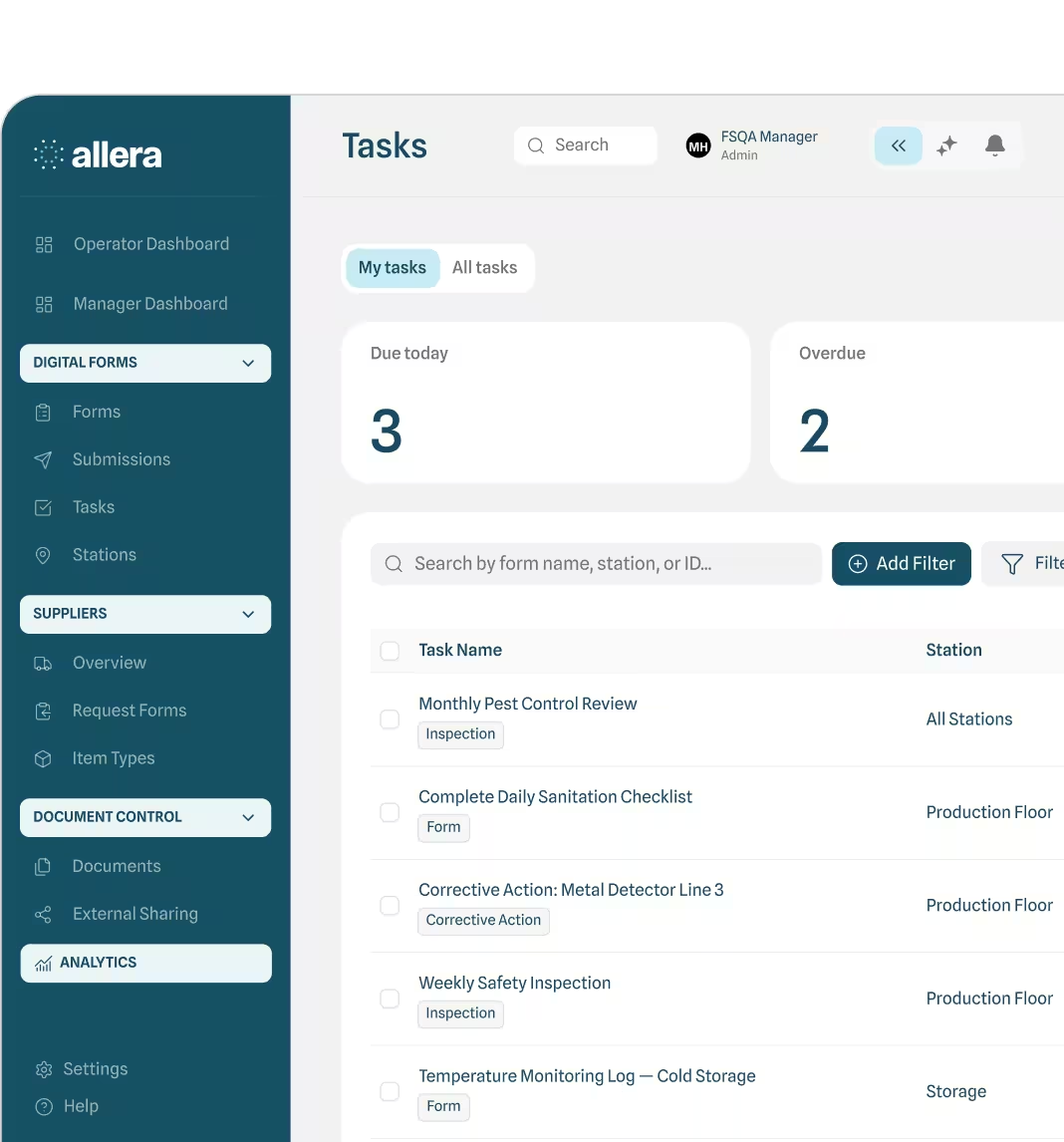
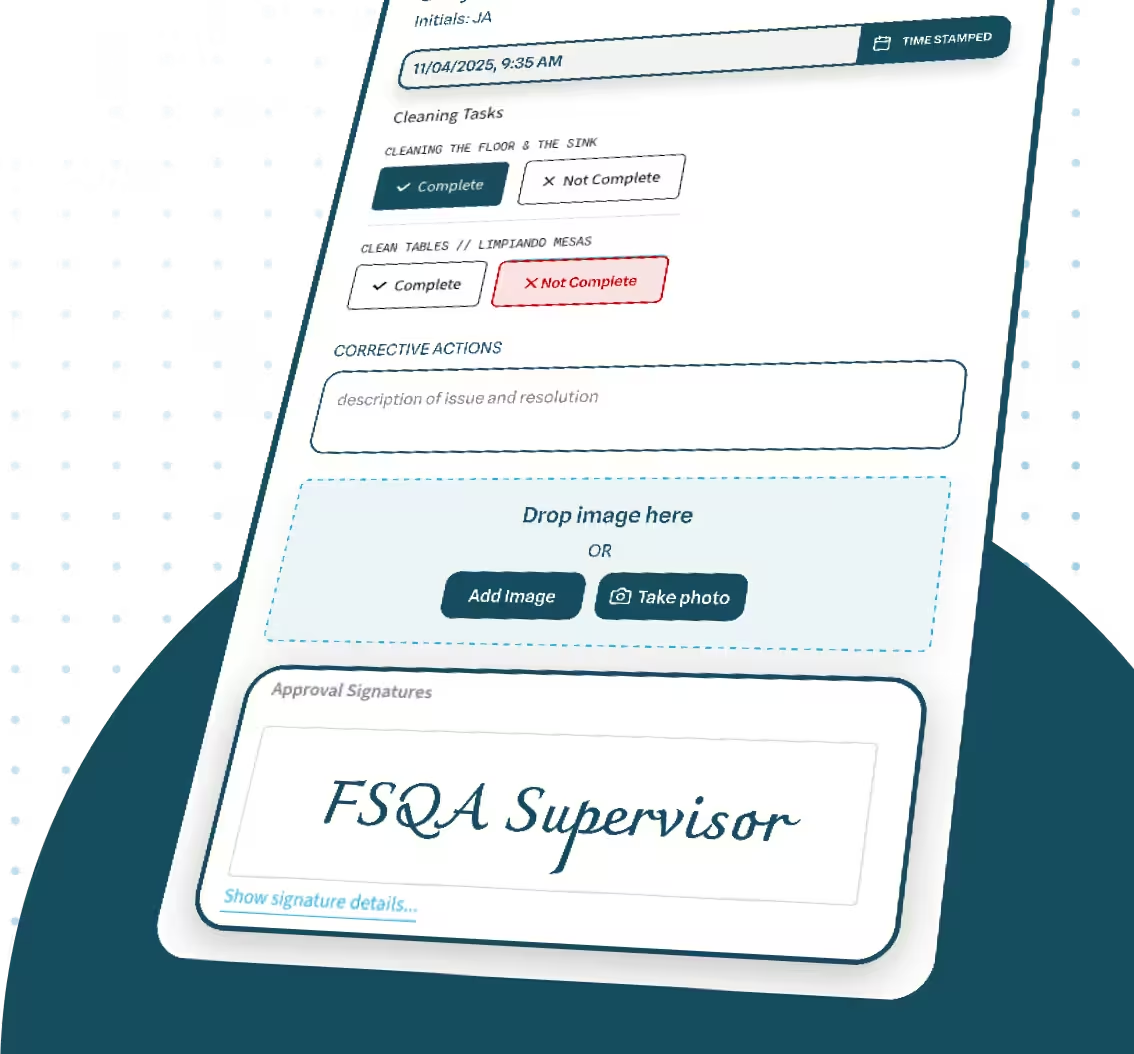
Allera's Digital Forms put sanitation and pre-op checks on a tablet. When a check fails, a Corrective Action task is created automatically and assigned to someone, so the failure doesn't sit unnoticed on a clipboard. Document Control keeps your SOPs under revision control, with a Scheduled Review that flags any SOP overdue for re-approval. Explore Allera's Digital Forms.
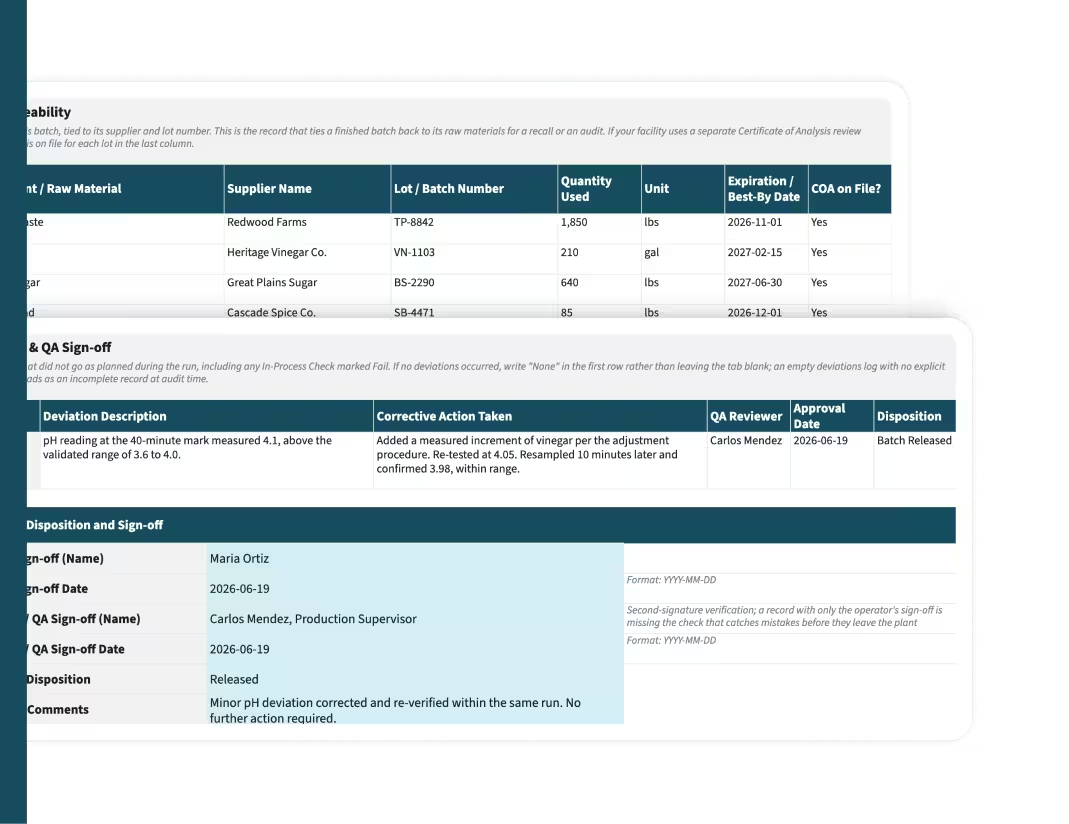
Adulteration cases are built from records. When an investigator asks for the last 30 days of pre-op checks on a line, you want to pull them up in minutes. No Man's Land Foods cut 3 to 4 hours of daily FSQA paperwork per person after moving its checks into Allera. See how Allera keeps food safety records audit ready.
FAQs
Who enforces adulteration rules for meat and poultry?
USDA's Food Safety and Inspection Service (FSIS) does, under the Federal Meat Inspection Act and the Poultry Products Inspection Act. Each defines "adulterated" in terms that parallel section 402 of the FD&C Act. FSIS also declares specific pathogens adulterants in specific raw products, such as E. coli O157:H7 and six other Shiga toxin-producing E. coli serogroups in raw non-intact beef. FDA enforces section 402 for most other foods.
Is food above an FDA defect action level adulterated?
FDA may take action against it. FDA's defect action levels cover natural, unavoidable defects such as insect fragments, and FDA says they "pose no inherent hazard to health." Two rules apply whatever the level:
- Poor manufacturing practices can lead to enforcement action without regard to the action level.
- Blending a lot at or above an action level with other food to dilute it is not permitted, and makes the final food unlawful.
What is economically motivated adulteration?
Economically motivated adulteration (EMA) is food fraud for financial gain, such as leaving out or substituting a valuable ingredient, or adding a substance to make food look better or of greater value. FDA's example is extra-virgin olive oil diluted with cheaper vegetable oil and sold as pure olive oil. FDA charges it under section 402(b), and a food fraud vulnerability assessment is how you control it.
Is Salmonella an adulterant?
In raw meat and poultry generally, USDA FSIS has not treated Salmonella as an adulterant. The exception is not-ready-to-eat breaded stuffed chicken: a May 2024 FSIS final determination declared it adulterated at 1 CFU/g of Salmonella or higher. The determination hasn't been withdrawn, but in December 2025 FSIS postponed the sampling it would use to enforce it, with no new start date. For ready-to-eat products, FSIS says it has historically used presence or absence testing for Listeria monocytogenes or Salmonella to verify whether product is adulterated.
Is an undeclared allergen adulteration or misbranding?
It can be either, or both. It depends on how the allergen got there:
- In the formula but missing from the label: misbranded under section 403(w).
- Introduced through cross-contact, such as shared equipment, rework or production sequencing: can be adulterated under section 402(a)(4). FDA's Compliance Policy Guide Sec. 555.250 (2005) says this.
FDA's 2023 draft revision of that guide, still a draft, says FDA may deem a product adulterated even when it carries a "may contain" statement.
Does food have to contain a contaminant to be adulterated?
No. Section 402(a)(4) makes food adulterated if it was prepared, packed or held under insanitary conditions "whereby it may have become contaminated with filth, or whereby it may have been rendered injurious to health." The conditions themselves are the violation, so no positive test result is needed. 21 CFR 117.1 says the CGMP criteria in Part 117 apply in deciding whether food is adulterated under this clause.
What is the difference between adulterated and misbranded food?
Adulteration (section 402) is about the food itself and how it was made, packed or held. Misbranding (section 403) is about the label, labeling and packaging, such as a missing ingredient declaration, a wrong net quantity or an undeclared major allergen. Both make the food unlawful to put into interstate commerce, and one product can be both.
What does adulterated food mean?
Under US law, adulterated food is food that meets any of the conditions in section 402 of the Federal Food, Drug, and Cosmetic Act. That includes food containing a harmful substance or filth, food made under insanitary conditions, and food that has been diluted or substituted for economic gain. Most of these conditions don't require any intent, so a plant can make adulterated food through a sanitation or supplier failure alone.